


 PLATFORM UPDATE:


A high-energy sandwich-type self-powered biosensor based on DNA bioconjugates and a nitrogen doped ultra-thin carbon shell

Abstract
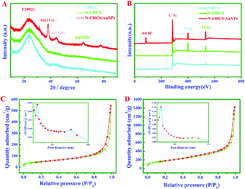
A high-energy self-powered sensing platform for the ultrasensitive detection of proteins is developed based on enzymatic biofuel cells (EBFCs) by using DNA bioconjugate assisted signal amplification. A nitrogen doped ultra-thin carbon shell/gold nanoparticle (N-UHCS/AuNPs) composite was prepared and applied as an electrode supporting substrate to improve the enzyme load. The biocathode of the self-powered sensor is constructed through the step-by-step modification of N-UHCS/AuNPs and bilirubin oxidase (BOD) on carbon paper (CP). To fabricate the bioanode, SiO2 nanospheres@AuNPs–aptamer (SiO2@AuNPs–ssDNA) bioconjugates were prepared and modified on CP. When there is a target protein, the aptamer recognizes it and causes the SiO2@AuNPs–ssDNA bioconjugate to fall off the bioanode, resulting in a significant increase in the open circuit voltage (EOCV) of the sensing device. Under optimal conditions, the developed biosensor shows a wide linear range of 0.1–2000 ng mL−1 with a low detection limit of 21.5 pg mL−1 (S/N = 3). This work shows an effective assay for the sensitive detection of biomolecules by coupling EBFCs, DNA bioconjugates and the biosensing characteristics of smart nanostructures.
 Please wait while we load your content...


