


 PLATFORM UPDATE:

Altered triglyceride and phospholipid metabolism predates the diagnosis of gestational diabetes in obese pregnancy†
 *a
Sara L.
White,
b
Claire L.
Meek,
a
Benjamin
Jenkins,
a
Clive J.
Petry,
c
Matias C.
Vieira,
bd
Susan E.
Ozanne,
a
David B.
Dunger,
ac
Albert
Koulman
a
*a
Sara L.
White,
b
Claire L.
Meek,
a
Benjamin
Jenkins,
a
Clive J.
Petry,
c
Matias C.
Vieira,
bd
Susan E.
Ozanne,
a
David B.
Dunger,
ac
Albert
Koulman
a
Abstract
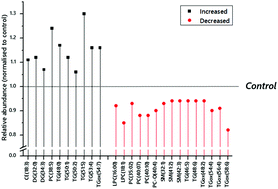
Gestational diabetes (GDM), a common pregnancy complication associated with obesity and long-term health risks, is usually diagnosed at approximately 28 weeks of gestation. An understanding of lipid metabolism in women at risk of GDM could contribute to earlier diagnosis and treatment. We tested the hypothesis that altered lipid metabolism at the beginning of the second trimester in obese pregnant women is associated with a diagnosis of GDM. Plasma samples from 831 participants (16–45 years, 15–18 weeks gestation, BMI ≥ 30) from the UPBEAT study of obese pregnant women were used. The lipid, sterol and glyceride fraction was isolated and analysed in a semi-quantitative fashion using direct infusion mass spectrometry. A combination of uni-, multi-variate and multi-variable statistical analyses was used to identify candidate biomarkers in plasma associated with a diagnosis of GDM (early third trimester; IADPSG criteria). Multivariable adjusted analyses showed that participants who later developed GDM had a greater abundance of several triglycerides (48:0, 50:1, 50:2, 51:5, 53:4) and phosphatidylcholine (38:5). In contrast sphingomyelins (32:1, 41:2, 42:3), lyso-phosphatidylcholine (16:0, 18:1), phosphatidylcholines (35:2, 40:7, 40:10), two polyunsaturated triglycerides (46:5, 48:6) and several oxidised triglycerides (48:6, 54:4, 56:4, 58:6) were less abundant. We concluded that both lipid and triglyceride metabolism were altered at least 10 weeks before diagnosis of GDM. Further investigation is required to determine the functional consequences of these differences and the mechanisms by which they arise.
 Please wait while we load your content...