


 PLATFORM UPDATE:

Comparative study of the effects of phosphatidylcholine rich in DHA and EPA on Alzheimer's disease and the possible mechanisms in CHO-APP/PS1 cells and SAMP8 mice
 a
Yuming
Wang
*ac
a
Yuming
Wang
*ac
Abstract
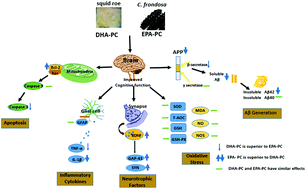
Metabolic stress induced by a high-fat (HF) diet leads to cognitive dysfunction and aging. In the present study, Chinese hamster ovary cells stably transfected with amyloid precursor protein (APP) and presenilin 1 (PS1) (CHO-APP/PS1 cells) and SAMP8 mice fed with an HF diet were used to study the effects of docosahexaenoic acid (DHA)-enriched phosphatidylcholine (DHA-PC) and eicosapentaenoic acid (EPA)-enriched phosphatidylcholine (EPA-PC) on Alzheimer's disease (AD) and the possible mechanisms involved in these effects. Behavior test results indicated that DHA-PC exerted better effects than EPA-PC on improving memory and cognitive deficiency. Further analysis showed that DHA-PC and EPA-PC could significantly decrease β-amyloid (Aβ) concentrations in CHO-APP/PS1 cells and SAMP8 mice by inhibiting APP, PS1, and BACE1 expression. Moreover, both DHA-PC and EPA-PC can increase the activities of the antioxidant index, including SOD, T-AOC, GSH, and GSH-PX, and inhibit levels of MDA, NO, and NOS. In addition, the expressions of inflammatory factors (TNF-α, IL-1β) and apoptosis were significantly suppressed via improving the ratio of Bcl-2/Bax and decreasing the expression of pro-apoptosis factors. Interestingly, only DHA-PC could improve the expression of neurotrophic factors, including BDNF, synaptophysin, and growth associated protein 43. DHA-PC and EPA-PC could ameliorate memory and cognitive function of HF diet-fed SAMP8 mice via inhibiting Aβ generation, suppressing oxidative stress and apoptosis, down-regulating inflammatory response, and improving neurotrophic activity. Therefore, DHA-PC and EPA-PC may be applied as food supplements and/or functional ingredients to relieve neurodegenerative disease.
 Please wait while we load your content...


