


 PLATFORM UPDATE:

PAHs in animal tissues – the analytics of PAHs in new reference materials and their homogeneity
Abstract
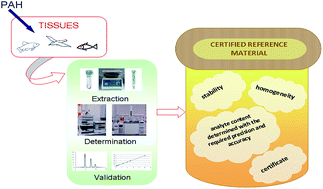
From among a number of matrices, tissues are the most complex and difficult to prepare for the determination of analytes. Trace amounts of numerous substances in tissues must be determined with adequate precision and accuracy. The QuEChERS technique was used for the extraction of six PAHs from four kinds of tissues (porcine, avian, cod, and herring). HPLC coupled with a fluorescence detector and GC/MS were used for the final analysis. In each tissue, moisture and fat content were determined. The method recovery rate was 84–101% (SD = 0.06–0.12) for the pork tissue, 88–107% (SD = 2.6–6.9) for the cormorant tissue, and R = 89–102% (SD = 4.9–8.9) for the cod tissue. The HPLC/FLD determination of pyrene in the herring tissue was the most problematic. Pyrene was determined by GC/MS. The recovery was 93% (SD = 5.5). For three tissues (i.e. pork, cormorant, and fish), homogeneity and the certified values were determined. The above-mentioned tissues were candidates for new certified reference materials.
 Please wait while we load your content...


