


 PLATFORM UPDATE:

A robust water oxidation electrocatalyst from amorphous cobalt–iron bimetallic phytate nanostructures†
Abstract
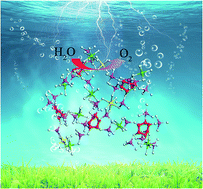
As the rate-limiting step in the water-splitting system, the oxygen evolution reaction (OER) is restricted by sluggish kinetics. Therefore, highly efficient and earth-abundant catalysts are required to lower the anodic overpotential and accelerate the reaction rate. In this study, we developed a cobalt–iron phytate (Co–Fe–phy) nanoparticle oxygen-evolving electrocatalyst that possesses a great degree of amorphization, nanoporous structure and large electrochemically active surface area. These merits with the addition of the synergistic interaction between metals and phytate most probably lead to a superior activity. It can be noted that this catalyst displays a low overpotential of 278 mV to reach a 10 mA cm−2 current density and a small Tafel slope of 34 mV dec−1 in 1 M KOH, of which the performance exceeds commercial RuO2. Moreover, its exceptional durability was evaluated with the current density decreases approximately 5.6% after 10 h when compared to the initial value. More significantly, Co–Fe–phy as an anode shows a decrease in energy consumption in the practical hydrogen production configuration when compared with RuO2 and a commercial electrolyzer. This study not only highlights that the bimetallic phytate-based-catalyst owns extraordinary performance that a monometallic system can hardly reach, but also enables it as an extremely promising catalyst to substitute noble metal catalysts in water electrolysis and other devices.
 Please wait while we load your content...


