


 PLATFORM UPDATE:


Dual-modal light scattering and fluorometric detection of lead ion by stimuli-responsive aggregation of BSA-stabilized copper nanoclusters
Abstract
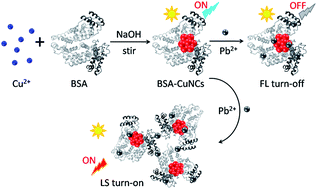
A new and facilely prepared light scattering (LS) and fluorometric dual-mode sensor is developed for lead ion (Pb2+) detection with high sensitivity and selectivity by use of bovine serum albumin stabilized copper nanoclusters (BSA–Cu NCs). This assay relied on changes in optical properties due to Pb2+-responsive state transformation from nanoclusters to nanoparticles. BSA protected Cu NCs exhibit strong fluorescence emission and the sensing mechanism is based on the Pb2+-responsive aggregation induced size change of BSA–Cu NCs and the fluorescence quenching of Cu NCs. While upon addition of Pb2+, the complexation between BSA and the lead ions would lead to the aggregation of BSA–Cu NCs which subsequently results in light scattering signal enhancement. The detection limit of Pb2+ can be as low as 1 nM. In addition, the Cu NCs show a dramatic fluorescence turn-off as a result of the Pb2+-responsive aggregation process from the complex attached Pb2+ to the BSA–Cu NCs, with a detection limit of 10 nM. Both the turn-on light scattering assay and the turn-off fluorometric assay of the dual-mode sensing system exhibit high selectivity toward Pb2+ over interfering substances. Furthermore, we demonstrate the application of the present approach in water samples, which suggests its potential applications such as environmental analysis in the future.
 Please wait while we load your content...


