


 PLATFORM UPDATE:


Oxidation of lignin and lignin β-O-4 model compounds via activated dimethyl sulfoxide†
Abstract
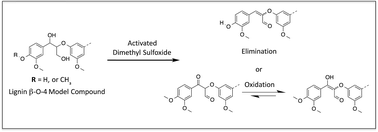
Lignin oxidation reactions are increasingly being utilized in the field of lignin valorization. This is primarily due to the prospect of obtaining high-value aromatic products from cleavage of the Cα–Cβ bond in lignin's β-O-4 linkages. In this work activated dimethyl sulfoxide reactions, namely Swern and Parikh–Doering oxidations, were performed both on lignin and on compounds modeling the β-O-4 linkage. When phenolic moieties were present in the model compounds, enol ethers were formed rather than the ketone expected from oxidation of the β-O-4 alcohol moiety. Conversely, in the absence of phenolic moieties, the β-O-4 alcohol was oxidized to a ketone. These results are interpreted in terms of enol ether formation from a quinone methide intermediate formed via deprotonation of the phenolic –OH in the initial sulfur ylide species. When applied to Kraft lignin, alcohol oxidation was observed at both the α and γ positions in lignin under both Swern and Parikh–Doering conditions, although analytical data were unable to shed light on the relative importance of enol ether versus 1,3-diketone formation (or its tautomer). These results emphasize the importance of working with realistic lignin model compounds in order to understand and develop lignin chemistry.
 Please wait while we load your content...


