


 PLATFORM UPDATE:

Preparation and pervaporation characteristics of novel ethanol permselective polyelectrolyte–surfactant complex membranes
Abstract
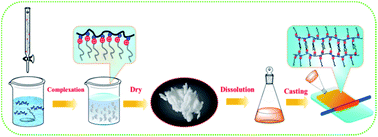
Recovery of ethanol from a low concentration aqueous solution is a critical step for biofuel production. Pervaporation as an energy-efficient separation technology is attracting great attention in ethanol retrieving. Here we introduce polyelectrolyte–surfactant complexes (PESCs) as membrane materials for ethanol recovery from aqueous solution. PESCs with a controlled degree of complexation (DC) were prepared by mixing polyacrylic acid sodium (PAANa) and hexadecyltrimethylammonium bromide (CTAB) at different pH values. Both the PESCs and their membranes (PESCMs) were characterized. Pervaporation data show that PESCMs could selectively transport ethanol molecules in the feed, and the PESCM with the highest hydrophobicity gives the optimum performance in terms of selectivity. For example, the most hydrophobic PESCM (DC 0.79) features the optimum separation factor of 5.38 coupled with a high flux of 4.23 kg m−2 h−1 in processing a 5 wt% ethanol–water feed mixture at 30 °C. The PESCM, which is low cost in terms of starting materials and manufacture engineering, represents an alternative membrane system with considerable potential for biofuel production.
 Please wait while we load your content...


