


 PLATFORM UPDATE:

Oxidation and reduction performance of 1,1,1-trichloroethane in aqueous solution by means of a combination of persulfate and zero-valent iron†
Abstract
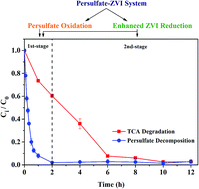
In this study, the degradation performance of 1,1,1-trichloroethane (TCA) involving both oxidation and reduction processes was investigated with an application of the persulfate–ZVI (zero-valent iron) system, in which it is generally believed that SO4−˙-induced oxidation was responsible for pollutant removal. The study was conducted with persulfate and un-pretreated ZVI through batch experiments. The results showed that TCA was stable in the presence of ZVI alone within 12 h and degraded with the addition of persulfate. TCA degradation efficiency was found to increase with increasing persulfate concentration, but to decrease with increasing ZVI dosage. A two-stage process involving persulfate oxidation and ZVI reduction was developed during TCA degradation. The addition of isopropanol and tert-butyl alcohol proved the existence of sulfate and hydroxyl radicals during the 1st-stage (0–2 h), which were absent in the 2nd-stage (2–12 h) when persulfate was exhausted. The degradation performance of carbon tetrachloride, a reduction probe compound, was evidence of the persulfate–ZVI system involving an enhanced ZVI reduction, and which was mainly responsible for TCA degradation in the 2nd-stage. 1,1-Dichloroethane was the only confirmed intermediate emerging during the 2nd-stage.
 Please wait while we load your content...


