


 PLATFORM UPDATE:


A highly selective fluorescence sensor for Tin (Sn4+) and its application in imaging live cells†
Abstract
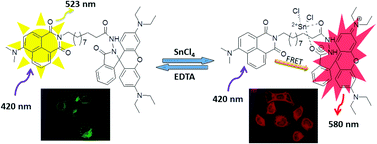
A naphthalimide–rhodamine B derivative was synthesized as a fluorescence turn-ON chemodosimeter for Sn4+. A colour change and marked enhancement of fluorescence was found in the presence of Sn4+, Cu2+ and Cr3+ due to the ring open reaction of rhodamine and a fluorescence resonance energy transfer process. Addition of the strong chelating agent
 Please wait while we load your content...


