


 PLATFORM UPDATE:

Multiresponsive polymers: nano-sized assemblies, stimuli-sensitive gels and smart surfaces
Abstract
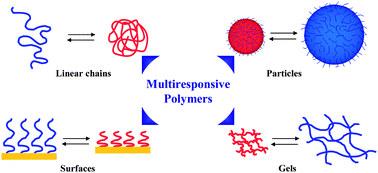
The complex function of living systems is dictated by their inherent cooperative response to multiple external stimuli which induce dynamic changes in their physicochemical properties. Advances in the areas of nano- and bio-technology demand for the development of “smart” synthetic materials that would resemble the living systems in their complex behaviour as a response to applied stimuli. This reversible response directs the formation of hierarchical self-assemblies or stimulates changes in the volume, the shape or the surface characteristics of the system. Progress in this rapidly expanding area can lead to the development of dynamically multiresponsive constructs in the form of
 Please wait while we load your content...


