


 PLATFORM UPDATE:

A simple procedure for the photoregulation of chymotrypsin activity
Abstract
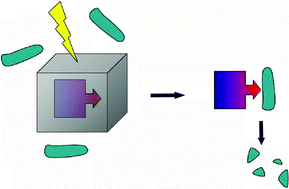
A convenient and rapid method for the photo-regulation of the proteolytic enzyme α-chymotrypsin is described. When α-chymotrypsin is coated with photolytic 1-(2-nitrophenyl)ethanol residues this not only markedly reduces the capability of the enzyme to digest both of the small substrates
 Please wait while we load your content...
