


 PLATFORM UPDATE:

Construction of microfluidic chips using polydimethylsiloxane for adhesive bonding†
Abstract
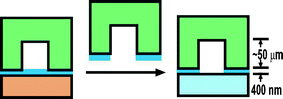
A thin layer of polydimethylsiloxane (PDMS) prepolymer, which is coated on a glass slide, is transferred onto the embossed area surfaces of a patterned substrate. This coated substrate is brought into contact with a flat plate, and the two structures are permanently bonded to form a sealed fluidic system by thermocuring (60 °C for 30 min) the prepolymer. The PDMS exists only at the contact area of the two surfaces with a negligible portion exposed to the microfluidic channel. This method is demonstrated by bonding microfluidic channels of two representative soft materials (PDMS substrate on a PDMS plate), and two representative hard materials (glass substrate on a glass plate). The effects of the adhesive layer on the electroosmotic flow (EOF) in glass channels are calculated and compared with the experimental results of a CE separation. For a channel with a size of approximately 10 to 500 µm, a ∼200–500 nm thick adhesive layer creates a bond without voids or excess material and has little effect on the EOF rate. The major advantages of this bonding method are its generality and its ease of use.
 Please wait while we load your content...


