Organogels based on aromatic amino acids with appended long-chain fatty acids for sustainable oil spill recovery and environmental remediation
Received
11th December 2025
, Accepted 6th February 2026
First published on 9th February 2026
Abstract
Various organogelator molecules based on fatty-acid-appended amino acids have been synthesized via amide coupling between an aromatic amino acid (L-phenylglycine/L-phenylalanine) and fatty acid (palmitic acid/lauric acid), and their organogelation abilities have been tested in various organic solvents, including simple hydrocarbons, aromatic solvents, and oils, namely, kerosene and diesel. Palmitic-acid-appended L-phenylalanine (C15-Phe) and L-phenylglycine (C15-Phg) undergo stable organogelation in organic solvents including iso-octane, heptane, hexane, cyclohexane, methylcyclohexane, petroleum ether, kerosene and diesel. However, lauric-acid-appended L-phenylglycine (C11-Phg) and L-phenylalanine (C11-Phe) undergo transient organogelation and clear solution formation under the same conditions, respectively. Interestingly, the minimum gelation concentration of the organogelator C15-Phg has been estimated to be lower than that of the organogelator C15-Phe. Moreover, C15-Phg organogels in all hydrocarbon solvents show a helical nanofibrillar morphology; however, C15-Phe shows a nanobelt-like straight fibrillar morphology, except in isooctane. C11-Phg also shows a helical nanofibrillar ribbon-like morphology. Powder XRD and FT-IR studies revealed the involvement of π–π stacking, hydrogen bonding and van der Waals interactions in their gel states. The organogels of C15-Phg in diesel and kerosene show thixotropic behaviour. The thermal stabilities of the C15-Phg organogels have been found to be greater than those of C15-Phe. A phase-selective gelation study has been performed in a diesel–water mixture for C15-Phg, in which the gel layer could be easily separated to recover the oils, demonstrating the promising applicability of C15-Phg in oil spill recovery from marine and aquatic water. This study showcases the green and sustainable development of oil spill recovery and environmental remediation by using simple chemistry to save marine and aquatic life.
Environmental significance
The formation of supramolecular organogels based on fatty-acid-appended amino acids in kerosene and diesel demonstrates oil spill recovery using phase-selective gelation through environmentally friendly, green and sustainable pathways. Such biomolecule-based environmental remediation is promising for the protection of the environment from immediate and long-term damage, which is the current state of the art in research. This approach enables the reduction of marine, aquatic and air pollution by balancing the biodiversity in water, marine air, soil, and the food chain.
|
1 Introduction
Low-molecular-weight organogelators are recognized as versatile advanced smart functional materials due to their impactful applications in different fields, including oil spill recovery,1–8 toxic dye and metal ion removal,9–14 drug release,15,16 anti-freezing agents,17 health monitoring materials,18 photonic switches,19 dental composite carriers20 and dye-sensitized solar cells.21 In recent years, an alarming situation has arisen due to oil spills in seawater, which have led to serious damage to marine life and the destruction of sensitive habitats such as coral reefs and mangroves. Oil spills, which occur mainly in seawater, cause immediate and long-term environmental damage by physically smothering wildlife and poisoning animals through toxic exposure. They also affect biodiversity by contaminating the marine water, air, and soil and disrupting food chains. The release of volatile organic compounds (VOCs) and particulate matter into the atmosphere also occurs through evaporation and controlled burning processes during oil clean-up; these VOCs contribute to smog, which poses acute respiratory risks to wildlife and humans. Unless green, sustainable, and successful oil spill recovery processes and techniques can be developed, oil spills present potential long-term effects on populations and ecosystems that can take years to recover. Various methods have been developed to remove oil spills from seawater, including oil skimmers,22 solidifiers,23 microbial degradation,24 and sorbents.25 However, their large-scale practical use is still under consideration due to the long process times, the toxicity of the materials, and the high cost of the processes. Many researchers have dedicated their efforts to the recovery of spilled oil from seawater via phase-selective gelation techniques. Here, organogelator molecules assemble into three-dimensional networks, entrapping huge quantities of organic solvents/oils through weak non-covalent interactions, including π–π stacking, van der Waals, and hydrogen-bonding interactions. As these non-covalent interactions are weak, the structural integrity of the gelator molecules remains unaltered. Thus, after collection, the gel in the oil can be recovered easily by distillation, and the gelator can be reused in most cases. In the year 2001, Bhattacharya and his co-workers first reported phase-selective gelation with a fatty-acid-appended amino acid gelator, which effectively formed an organogel in various hydrocarbon solvents as well as oils, including kerosene, petrol and paraffin oil.26 Since then, several different types of gelator molecules that can remove oils from water through gel formation have been developed.27–37 Various sugar-based molecules,27–31 amino-acid derivatives and peptides,32–39 asymmetric amino acids and aliphatic-chain-functionalized naphthalene diimide,40 cellulose nanofibrils,41 urea,42 lime juice with long-chain amines,43 imines,44 vanillin,45 and other molecules46 have evolved over time for oil spill recovery. Previously, Banerjee and co-workers worked on myristic-acid-appended amino-acid-based gelator molecules.35 They showed that a myristic-acid-appended phenylglycine-based gelator molecule can effectively form an organogel in various organic solvents, including kerosene and diesel and its oil spill recovery.35 Vujičić and co-workers prepared four (N-alkyloxalamido)-amino-acid amide-based gelator molecules, one of which showed very high gelation capabilities in diesel (MGC = 0.015) and petrol (MGC = 0.012).47 Instant phase-selective gelation has been achieved at room temperature in a diesel–water mixture.47 Frostad's group prepared a long-chain unsaturated-fatty-acid-appended amino-acid-based gellant that can form a macroscopic structure in both aqueous and organic solvents.48 The macroscopic structure that formed in the aqueous layer was able to absorb oil slowly, replacing water; no other solvent was required for the deployment of the gelator molecules in this oil spill recovery process.48 Gupta's group synthesised a list of N-hydroxy alkanamides that can form organogels in a variety of plant-based lipophilic solvents. They also studied the use of these types of gelators to remove Cu(II) and Fe(II) metal ions from water through chelation interaction.49 Yadav's group prepared a D-/L-arabinose-modified organogelator that can form a gel in various organic solvents and can take part in a photochemical reaction in the gel state upon irradiation at a particular wavelength.50 De's group prepared polymer-appended amino-acid-based gelator molecules that can form a gel in some organic solvents, as well as in diesel.51 Molla's group prepared an azobenzene-containing photo-switchable organogelator that can form a gel via J-type aggregation in toluene and also H-type aggregation in methylcyclohexane.52 It can be used for the recovery of oil from diesel/water and petrol/water mixtures via organogelation.52 Sureshan and co-workers prepared modified D-glucose organogelators that can be used directly on the seawater surface without applying any gelation triggers for the phase-selective gelation in oil spills on seawater.53 Roy's group prepared various amino-acid-appended, cholesterol-based gelator molecules capable of absorbing toxic organic dyes from water that can also remove oil from water through a phase-selective organogelation process.54 However, to overcome the issues of high synthesis costs, lack of cheaper starting materials, high MGC (minimum gelation concentration) values, slow gel-forming kinetics, and non-thixotropic natures, the design and development of novel amino-acid-based organogelators remains important. In this context, we have materialized organogels by synthesizing four new amino-acid-based long-chain fatty acids appended amides that are thixotropic, mechanoresponsive, and low-cost, with easy synthetic steps, reproducible, lower MGCs, and relatively faster gel formation kinetics. In our research, we have used two fatty acids: one with a greater number of carbons in its aliphatic chain (palmitic acid), and one has fewer carbons (lauric acid), compared to the previously used fatty acid (myristic acid)35 and coupled with the same amino acids (L-phenylalanine and L-phenylglycine), to prepare a total of four long-chain fatty acid–amino acid conjugates for investigating the roles of long-chain fatty acids and amino acids in self-assembly and gelation. We have synthesized and purified four new compounds, C11-Phg, C11-Phe, C15-Phg, and C15-Phe (Fig. 1). It has been found that C15-Phg and C15-Phe form organogels selectively in hydrocarbon-based organic solvents, including kerosene and diesel oils, whereas C11-Phg forms transient gels that precipitate after 1 to 2 days, and C11-Phe fails to form gels. C15-Phg has been found to be the superior gelator due to its lower MGCs and higher thermal stability compared to C15-Phe organogels. Interestingly, in kerosene and diesel, C15-Phg forms thixotropic gels. The selective thixotropic organogelation in kerosene and diesel is promising for real-world usage, as after the breakage of the gels, the self-assembled viscous solutions of the gels have the ability to reform without losing the recovered oils from the marine aquatic environment. To the best of our knowledge of the literature, most of the organogelators applied for oil spill recovery are not thixotropic in nature or not mentioned about their thixotropic behaviour. Moreover, palmitic-acid-appended L-phenylglycine shows helical-ribbon-like nanostructures; however, palmitic-acid-appended L-phenylalanine forms a nanobelt-like straight fibrillar morphology.
A previous study by Banerjee's group35 and this study suggest that L-phenylglycine induces a chiral helical nanofibrillar morphology. A phase-selective gelation study has been performed in a diesel–water mixture for C15-Phg, from which the gel layer can easily be separated to recover oils and prevent oil spills from causing aquatic marine pollution. This research describes the roles of different fatty-acid attached amino-acid-appended gelators in phase-selective organogelation and their application in oil spill recovery and environmental remediation, following green and sustainable platforms.
 |
| | Fig. 1 Synthesized fatty-acid-appended amino acid derivatives chemical structures. | |
2 Experimental section
2.1 Materials and methods
2.1.1 Materials.
The amino acids L-phenylalanine and L-phenylglycine, and the long-chain fatty acids lauric acid, palmitic acid, HOBt, disodium hydrogen phosphate, dihydrogen sodium phosphate, sodium carbonate, sodium chloride, all the organic solvents used in this work, and 100–200 mesh size silica were purchased from Sisco Research Laboratories Pvt. Ltd. (SRL)–India. DCC was purchased from Molychem India LLP. Hydrochloric acid was purchased from Avra Synthesis Pvt. Ltd. Ethyl acetate and petroleum ether were purchased from Rankem Laboratory.
2.1.2 Syntheses of C11-Phe, C11-Phg, C15-Phe, and C15-Phg.
The syntheses of all these gelators (Fig. 1) were performed by following a solution-phase peptide synthetic protocol using the coupling reagent DCC with the additive HOBt [Scheme S1]. After synthesis, the gelator molecules were purified by column chromatography using 100–200 mesh size silica gel with an ethyl acetate and petroleum ether solvent mixture as the eluent. All four purified compounds (C11-Phg, C11-Phe, C15-Phg, and C15-Phe) appeared as powdered white solids. The purified compounds were used for the organogelations and all other studies. All these compounds were thoroughly characterised by mass spectrometry, elemental and NMR analyses (see synthetic protocols and Fig. S1 to S16, SI). A detailed experimental section, sample preparation, instrumentation, and methods of analysis are provided in the SI.
3 Results and discussion
3.1 Gelation studies and gel melting point measurement
We studied the gelation abilities and thermal stabilities of four gelator molecules, C11-Phe, C11-Phg, C15-Phe, and C15-Phg (Fig. 1). Two different long-chain fatty acids, with 11 or 15 methylene carbon atoms, excluding the carboxylic acid carbon, were judiciously coupled with two different amino acid (L-phenylalanine and L-phenylglycine) methyl esters to understand the effects of alkyl chain length and aromatic amino acids in organogelation, keeping the aromatic amino acids the same as in a previous study.35
20 mg of the gelator molecules were taken into 3 mL glass vials, and then 1 mL of various organic solvents, including diesel and kerosene-like petroleum oils, were added separately to the glass vials. The vials were heated using a hot air gun with continuous shaking by hand until all the gelator molecules had dissolved, followed by cooling in ice-cold water to obtain stable self-supported organogels (Fig. 2). The inverted vial test method was used to confirm organogelation. Sometimes, it was observed that after being kept at room temperature after gelation, the gel reverted to a solution state, and interestingly, stable gel formation occurred again with time. This procedure was followed for the gelation and self-assembly of the synthesized compounds C11-Phe, C11-Phg, C15-Phe, and C15-Phg.
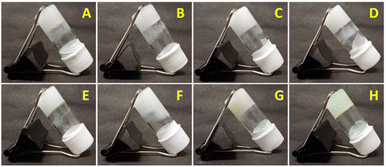 |
| | Fig. 2 Organogels of C15-Phg in isooctane (A), heptane (B), cyclohexane (C), methylcyclohexane (D), hexane (E), petroleum ether (F), kerosene (G), and diesel (H). | |
Various organic solvents, namely, isooctane, heptane, cyclohexane, methylcyclohexane, hexane, petroleum ether, kerosene, diesel, 1,2-dichlorobenzene, benzene, toluene, chlorobenzene, isopropyl alcohol, and n-hexanol, were selected for the gelation studies. Among the four gelator molecules C11-Phe, C11-Phg, C15-Phe, and C15-Phg, it was observed that C15-Phg showed superior gelation ability (Tables 1 and 2), as well as the highest thermal stability in many of these different hydrocarbon solvents, including isooctane, heptane, cyclohexane, methylcyclohexane, hexane, petroleum ether, kerosene, and diesel. The gelator C15-Phe forms stable gels (Fig. S17) in these solvents; however, their MGCs are higher, and their thermal stabilities are lower compared to those of C15-Phg (Table 2). C11-Phg formed gels in these solvents; however, after 1–2 days, the gels had disintegrated, and precipitation had formed (Fig. S18). Interestingly, C11-Phe did not form a gel in any of these solvents; instead, the formation of precipitation and transparent solutions were observed (Fig. S19). The outcomes of the gelation experiments are given in tabular form (Table 1). The minimum gelation concentrations and thermal stabilities of these organogels have been tabulated in Table 2. Nevertheless, it was observed that after heating to dissolve the gelator molecules, immediate cooling in ice-cold water resulted in better gel formation compared to that obtained without cooling.
Table 1 Outcomes of the gelation experiments of C11-Phe, C11-Phg, C15-Phe, and C15-Phg in different organic solvents
| Solvent |
C11-Phe
|
C11-Phg
|
C15-Phe
|
C15-Phg
|
| Isooctane |
P |
MS |
G |
G |
| Heptane |
P |
MS |
G |
G |
| Cyclohexane |
S |
MS |
G |
G |
| Methylcyclohexane |
S |
MS |
G |
G |
| Hexane |
S |
MS |
G |
G |
| Pet ether |
S |
MS |
G |
G |
| Kerosene |
S |
MS |
G |
G |
| Diesel |
S |
MS |
G |
G |
| 1,2-Dichlorobenzene |
S |
S |
S |
S |
| Benzene |
S |
S |
S |
S |
| Toluene |
S |
S |
S |
S |
| Chlorobenzene |
S |
S |
S |
S |
| IPA |
S |
S |
S |
S |
|
n-hexanol |
S |
S |
S |
S |
Table 2 MGCs of C15-Phe and C15-Phg in different organic solvents, and the gel melting point temperatures at concentrations higher than their MGCs
| Solvent |
Concentration at which Tgel was measured (% w/v) |
C15-Phg
|
C15-Phe
|
| MGCs (% w/v) |
T
gel (°C) |
MGCs (% w/v) |
T
gel (°C) |
| Isooctane |
1.1 |
0.4 |
46.66 ± 0.577 |
0.6 |
40 ± 1.00 |
| Heptane |
1.0 |
0.4 |
41.66 ± 1.154 |
0.6 |
35.66 ± 0.577 |
| Cyclohexane |
2.3 |
1.18 |
36.33 ± 1.154 |
1.9 |
31 ± 1.00 |
| Methylcyclohexane |
2.4 |
0.84 |
42 ± 0.00 |
1.6 |
35 ± 0.00 |
| Hexane |
1.1 |
0.37 |
42.33 ± 0.577 |
0.7 |
35.66 ± 0.577 |
| Pet ether |
1.3 |
0.56 |
42 ± 1.00 |
0.9 |
35 ± 1.00 |
| Kerosene |
2.4 |
0.95 |
46 ± 0.00 |
2 |
34.66 ± 0.577 |
| Diesel |
1.2 |
0.59 |
42.66 ± 0.577 |
1 |
34.66 ± 0.577 |
To investigate their thermal stability, the melting point temperatures of the gels prepared in glass vials were determined by dipping the vials into a digitally temperature-controlled water bath for 5 minutes and testing the stability of the gels using the vial inversion method. Every 5 minutes, the temperature was increased by 1 °C, and the gel melting temperatures were recorded. Tgel measurements for all the organogels were performed in triplicate for each concentration of each gelator in the different solvent systems, and their standard deviation errors are given in Table 2. As the gelator molecules C15-Phg and C15-Phe form stable gels, the gel melting temperatures for these two organogelator molecules were determined in various solvents, while keeping the concentration constant for both gelator molecules in each solvent. The melting temperatures of the organogels in isooctane, heptane, cyclohexane, methylcyclohexane, hexane, petroleum ether, and kerosene solvents are given in Table 2. The concentration-dependent gel melting temperatures of C15-Phg and C15-Phe in diesel at four different concentrations are shown in Fig. 3.
 |
| | Fig. 3 Gel melting temperatures of C15-Phg and C15-Phe gels in diesel at various concentrations. | |
3.2 Rheological measurement
The viscoelastic properties of the gels were measured via rheological measurements. Gels of C15-Phg and C15-Phe in diesel and kerosene at 1.4% (w/v) and 2.4% (w/v), respectively, were used for the angular frequency sweep experiment. As shown in Fig. 4, the results suggest a higher storage modulus (G′) compared to the loss modulus (G″) under a constant shear stress of 0.1%. This indicates stable organogelation [Fig. 4 and S20]. Interestingly, in kerosene and diesel, thixotropic organogelation was observed, as is evident from Fig. 4 and S20.
 |
| | Fig. 4 Frequency sweep profiles for the gels of C15-Phg in kerosene (A) and diesel (B). Thixotropic profiles of gel breaking and recovery of the gels of C15-Phg in kerosene (C) and diesel (D). | |
3.3 Morphological study
To understand their morphological behaviour, field-emission scanning electron microscopy (FE-SEM) was performed for C11-Phe, C11-Phg, C15-Phe, and C15-Phg in various organic solvents. The C15-Phg gelator molecules in their gel state exhibit right-handed helical fibres in isooctane, heptane, cyclohexane, methylcyclohexane, hexane, petroleum ether, and kerosene solvents [Fig. 5]. The C15-Phe gelator molecules in their gel state show right-handed twisted fibres in isooctane, whereas in other solvents, they show straight nanobelt-type fibres [Fig. S21]. Interestingly, C11-Phg shows twisted fibres in isooctane [Fig. S21] and kerosene [Fig. S22]. FE-SEM analysis of the C11-Phe solution in kerosene is shown in Fig. S22.
 |
| | Fig. 5 FE-SEM images of the organogels of the gelator C15-Phg in isooctane (A), heptane (B), cyclohexane (C), methylcyclohexane (D), hexane (E), petroleum ether (F) and kerosene (G). | |
3.4 FT-IR analysis
Fourier-transform infrared (FT-IR) analysis was performed for all the organogels obtained from C15-Phg and C15-Phe in their xerogel states in the solvents isooctane, heptane, cyclohexane, methylcyclohexane, hexane, petroleum ether, kerosene, and diesel. FT-IR analysis was also carried out for the amorphous solid compounds to understand the involvement of different functional groups in various non-covalent interactions (Fig. S23). The pure amorphous compound C15-Phg shows characteristic peaks (Fig. 6) at 3309.84 cm−1 for N–H stretching, 2914.44 cm−1 and 2848.86 cm−1 for the alkyl C–H stretching, 1735.93 cm−1 for the C![[double bond, length as m-dash]](https://www.rsc.org/images/entities/char_e001.gif) O stretching of the ester bond, 1651.06 cm−1 for the CO stretching of the amide bond, and 1529.55 cm−1 for the N–H bending/stretching of the amide bond. The amorphous compound C15-Phe shows corresponding peaks at 3338.78 cm−1, 2914.44 cm−1, 2848.86 cm−1, 1751.36 cm−1, 1647.20 cm−1, and 1525.69 cm−1 (Fig. S24). The xerogels of C15-Phg obtained in different solvents show a small increase in the N–H stretching frequencies in all the solvents, suggesting the involvement of hydrogen-bonding interactions,9 except in the case of cyclohexane, in which no change was observed compared to the amorphous state. The CO stretching frequency of the ester bond was red-shifted for the solvents methylcyclohexane and diesel; for the other solvents, no change was observed compared to the amorphous state. At the same time, a blue-shift of the amide CO stretch was identified for all the solvents except isooctane, in which no change was observed.
O stretching of the ester bond, 1651.06 cm−1 for the CO stretching of the amide bond, and 1529.55 cm−1 for the N–H bending/stretching of the amide bond. The amorphous compound C15-Phe shows corresponding peaks at 3338.78 cm−1, 2914.44 cm−1, 2848.86 cm−1, 1751.36 cm−1, 1647.20 cm−1, and 1525.69 cm−1 (Fig. S24). The xerogels of C15-Phg obtained in different solvents show a small increase in the N–H stretching frequencies in all the solvents, suggesting the involvement of hydrogen-bonding interactions,9 except in the case of cyclohexane, in which no change was observed compared to the amorphous state. The CO stretching frequency of the ester bond was red-shifted for the solvents methylcyclohexane and diesel; for the other solvents, no change was observed compared to the amorphous state. At the same time, a blue-shift of the amide CO stretch was identified for all the solvents except isooctane, in which no change was observed.
 |
| | Fig. 6 FT-IR spectra of the xerogels of the gelator C15-Phg in isooctane, heptane, cyclohexane, methylcyclohexane, hexane, petroleum ether, and kerosene. | |
The N–H bending frequency was red-shifted for the organogels in the solvents isooctane, cyclohexane, petroleum ether, and kerosene, whereas for diesel it was shifted to the blue (Fig. 6 and Table S1), suggesting the involvement of hydrogen-bonding interactions.9 The xerogels obtained from C15-Phe show blue-shifts of the N–H stretching frequency in all these solvents (Fig. S24).
 |
| | Fig. 7 XRD patterns of the xerogels obtained from the gelator C15-Phg in isooctane, heptane, cyclohexane, methylcyclohexane, hexane, petroleum ether, and kerosene solvents. | |
The CO stretching frequency of the ester bond remains unchanged for the native compound and for the xerogels obtained from the corresponding organogels in all the solvents except diesel, for which a blue-shift was observed. The N–H bending vibration was red-shifted for the xerogels derived from the isooctane, petroleum ether, and diesel organogels, whereas for the other xerogels, no change was observed compared to the amorphous solid. No change was observed in the alkyl C–H stretching frequencies (Fig. S23, S24 and Table S2).
3.5 X-ray diffraction study
X-ray diffraction studies were performed for the xerogels obtained from the organogels in different solvents to identify possible non-covalent interactions involved in the formation of the organogels. All the xerogels obtained from C15-Phg show characteristic peaks between 2θ = 10.98° to 2θ = 11.30° (7.82 Å to 8.05 Å), representing the distance between two adjacent β-strands. The peaks found between 2θ = 22.61° to 2θ = 23.65° (3.75 Å to 3.92 Å) represent π–π stacking interactions that take place through the aromatic rings of the amino acids.9,35 Another set of peaks were found in between 2θ = 18.83° to 2θ = 19.63° (4.51 Å to 4.70 Å), which represents the hydrogen-bonding distance between two adjacent β-strands (Fig. 7).9,35 The xerogels obtained from C15-Phe also show this type of peak patterns in their XRD profiles, with peaks at 2θ = 11.04° to 2θ = 11.32° (7.81 Å to 8.00 Å), 2θ = 22.61° to 2θ = 24.16° (3.68 Å to 3.92 Å) and 2θ = 18.49° to 2θ = 20.06° (4.42 Å to 4.79 Å) (Fig. S25).9,35
3.6 Oil spill recovery
C15-Phg and C15-Phe successfully formed organogels in various hydrocarbons and oils selectively. Between these two organogelators, C15-Phg was found to be a better gelator molecule. Phase-selective gelation was performed using the C15-Phg gelator in diesel. The oil spill recovery experiment was carried out by taking 60 mg of the gelator molecule C15-Phg in a glass vial and dissolving it in 5 mL of diesel (at 1.2% w/v, which is twice the MGC of C15-Phg in diesel) via heating with a hot air gun. This clear, transparent solution was poured into a beaker containing 7 mL of tap water, which was then cooled in ice-cold water for 1–2 minutes to form phase-selective gelation in the diesel layer, as shown by the inverted beaker method (Fig. 8). Later, the gel was scooped out, and the diesel oil was successfully extracted through a distillation setup. This oil spill recovery experiment was also performed using kerosene as a solvent. However, we found that the oil spill experiment involving the gelation of C15-Phg in diesel resulted in better gel formation compared to that of C15-Phg in kerosene.
 |
| | Fig. 8 Immiscible layer formation of water and the C15-Phg gelator hot solution in diesel (A), phase-selective gel formation (B), and separated gel in the diesel layer (C). | |
4 Conclusions
Herein, we report the gelation abilities of the fatty-acid-appended amino-acid derivatives C15-Phg, C15-Phe, C11-Phg, and C11-Phe in various organic solvents and oils. It has been found that the use of phenylglycine substitutes in place of phenylalanine, while keeping the fatty acid residue the same, bestows superior gelation ability. Moreover, the use of the fatty acid with a greater alkyl chain length results in improved gelation ability when keeping the amino acid residue the same. Palmitic-acid-appended phenylglycine ester (C15-Phg) is the best gelator among the four compounds (C15-Phg, C15-Phe, C11-Phg, and C11-Phe) synthesized, and we studied its selective gelation in various hydrocarbon solvents, including diesel and kerosene oils. L-phenylglycine is an important amino acid that, when appended with long-chain fatty acids, induces the formation of selectively twisting ribbon-like right-handed helical chiral fibres. This study shows the importance of the judicious selection of amino acid side chains and indeed the elegant beauty of the self-assembly in the formation of reproducible chiral right-handed helical nanofibers followed by organogelation. Phase-selective gelation of the gelator C15-Phg in a diesel–water mixture, followed by the recovery of the gel layer in diesel from water, represents oil spill recovery. The excellent thixotropic behaviour of the C15-Phg organogels in diesel and kerosene is promising for their real-world applicability in oil spill recovery while balancing the biodiversity of marine water, air, soil, and food chains, thus protecting the environment from immediate and long-term damage. This study showcases the green and sustainable development of oil spill recovery and environmental remediation materials using simple chemistry to save marine and aquatic life. In the future, chain length variation of the fatty acids while keeping L-phenylglycine as the fixed amino acid could be attempted to generalize the helical tape formation, self-assembly mechanism, and environmental remediation.
Author contributions
All authors have approved the final version of the manuscript. A. B. was responsible for the syntheses, purifications, organogelations, methodology, investigations, characterizations, data curation, graph preparation from raw data and their calculations, writing the early-stage draft, and formatting. N. J. was responsible for rheological measurements and rheological data curation. B. D. responsible for HR-MS and elemental analyses. S. R. was responsible for project administration, funding acquisition, conceptualization, supervision, writing of the manuscript, review, editing, and finalization of the manuscript and SI.
Conflicts of interest
The authors declare that there are no conflicts to declare.
Data availability
The data supporting this article have been included as part of the supplementary information (SI). Supplementary information: all synthesized compounds were characterised by mass spectrometric, elemental and NMR spectral analyses (Synthetic protocol section and Fig. S1 to S16, SI file). SI file also contains instrumentation techniques and method of analysis, synthetic protocols, gels and solution photographs, FE-SEM, rheology, FT-IR profiles and tables. See DOI: https://doi.org/10.1039/d5va00467e.
Acknowledgements
ANRF (previously known as SERB)-SURE Research Grant, DST, New Delhi, India (Project no. SUR/2022/000101), is gratefully acknowledged for the financial support. S. R. sincerely thanks ANRF for the research grant. A. B. sincerely thanks BITS-Pilani, K. K Birla Goa Campus, for the PhD position and institute fellowship for PhD. The authors acknowledge the central sophisticated instrumentation facility (CSIF) and the Department of Chemistry of BITS-Pilani, K. K Birla Goa Campus, for the infrastructural and instrumental facilities. Technical experts of Chemistry Department and CSIF BITS-Pilani, K K Birla Goa Campus are highly acknowledged.
Notes and references
- A. Prathap and K. M. Sureshan, Organogelator–Cellulose Composite for Practical and Eco-Friendly Marine Oil-Spill Recovery, Angew. Chem., Int. Ed., 2017, 56, 9405–9409 CrossRef CAS PubMed.
- K. R. C. Siva, B. Pramanik, T. Kar, P. V. C. Rao, N. V. Choudary and R. Ravishankar, Low molecular weight gels: potential in remediation of crude oil spillage and recovery, RSC Adv., 2016, 6, 53415–53420 RSC.
- C. S. K. Raju, B. Pramanik, R. Ravishankar, P. V. C. Rao and G. Sriganesh, Xylitol based phase selective organogelators for potential oil spillage recovery, RSC Adv., 2017, 7, 37175–37180 RSC.
- D. Yang, S. Xia, M. Bao, X. Chen, H. Kang, H. Zhao and Y. Li, A new class of amide-based organogels: from oil spill recovery to self-assembly structure analysis, J. Mater. Chem. A, 2023, 11, 6181–6190 RSC.
- B. A. Kumar and R. R. Nayak, Phenoxy-Alkyl Maleates as Phase-Selective Organogelators for Gelation of Edible Oils, Eur. J. Lipid Sci. Technol., 2019, 121, 1800364 CrossRef.
- J. Li, Y. Huo and H. Zeng, Combinatorial identification of a highly soluble phase-selective organogelator with high gelling capacity for crude oil gelation, J. Mater. Chem. A, 2018, 6, 10196–10200 RSC.
- L. Yan, G. Li, Z. Ye, F. Tian and S. Zhang, Dual-responsive two-component supramolecular gels for self-healing materials and oil spill recovery, Chem. Commun., 2014, 50, 14839–14842 RSC.
- S. Mukherjee, C. Shang, X. Chen, X. Chang, K. Liu, C. Yu and Y. Fang, N-Acetylglucosamine-based efficient, phase-selective organogelators for oil spill remediation, Chem. Commun., 2014, 50, 13940–13943 RSC.
- B. Mondal, D. Bairagi, N. Nandi, B. Hansda, K. S. Das, C. J. C. Edwards-Gayle, V. Castelletto, I. W. Hamley and A. Banerjee, Peptide-Based Gel in Environmental Remediation: Removal of Toxic Organic Dyes and Hazardous Pb2+ and Cd2+ Ions from Wastewater and Oil Spill Recovery, Langmuir, 2020, 36, 12942–12953 CrossRef CAS.
- A. Roy, S. Das, M. Khan and S. Roy, Pyridine-Based Gemini and Heterogemini Amphiphiles: Synthesis, Organogel Formation, Bioinspired Catalysis, Hydroxyl Ion Sensing, and Removal of Hazardous Pb(II) and Cd(II) Ions, ACS Sustainable Chem. Eng., 2022, 10, 14309–14321 CrossRef CAS.
- S. Guchhait and S. Roy, Efficient peptide based gelators for aromatic organic solvents and vegetable oils: application in phase selective gelation and dye entrapment, J. Sol-Gel Sci. Technol., 2019, 89, 852–865 CrossRef CAS.
- V. Bhardwaj, A. M. Patel and A. Ballabh, Stimuli responsive gelation of tert-butylacetic acid based LMOGs – applications in remediation of marine oil spills, dye removal and heavy metal sensing, Soft Matter, 2023, 19, 8595–8603 RSC.
- K. Soundarajan and T. Mohan Das, Sugar-benzohydrazide based phase selective gelators for marine oil spill recovery and removal of dye from polluted water, Carbohydr. Res., 2019, 481, 60–66 CrossRef CAS.
- M. Chetia, S. Debnath, S. Chowdhury and S. Chatterjee, Self-assembly and multifunctionality of peptide organogels: oil spill recovery, dye absorption and synthesis of conducting biomaterials, RSC Adv., 2020, 10, 5220–5233 RSC.
- E. H. Fragal, L. Metilli, F. Pignon and S. Halila, A scalable and eco-friendly carbohydrate-based oleogelator for vitamin E controlled delivery, RSC Adv., 2025, 15, 2988–2995 RSC.
- M. Khuphe, B. Mukonoweshuro, A. Kazlauciunas and P. D. Thornton, A vegetable oil-based organogel for use in pH-mediated drug delivery, Soft Matter, 2015, 11, 9160–9167 RSC.
- X. Ma, J. Tang, T. Ren, J. Zhang, Y. Liang, J. Wei and E. Feng, A multifunctional organogel for constructing artificial light harvesting systems with excellent energy transfer efficiency, RSC Appl. Interfaces, 2024, 1, 215–221 RSC.
- F. Sheng, B. Zhang, Y. Zhang, Y. Li, R. Cheng, C. Wei, C. Ning, K. Dong and Z. L. Wang, Ultrastretchable Organogel/Silicone Fiber-Helical Sensors for Self-Powered Implantable Ligament Strain Monitoring, ACS Nano, 2022, 16, 10958–10967 CrossRef CAS PubMed.
- K. Narasimha and M. Jayakannan, π-Conjugated Polymer Anisotropic Organogel Nanofibrous Assemblies for Thermoresponsive Photonic Switches, ACS Appl. Mater. Interfaces, 2014, 6, 19385–19396 CrossRef CAS PubMed.
- E. A. Wilder, K. S. Wilson, J. B. Quinn, D. Skrtic and J. M. Antonucci, Effect of an Organogelator on the Properties of Dental Composites, Chem. Mater., 2005, 17, 2946–2952 CrossRef CAS.
- W. Kubo, T. Kitamura, K. Hanabusa, Y. Wada and S. Yanagida, Quasi-solid-state dye-sensitized solar cells using room temperature molten salts and a low molecular weight gelator, Chem. Commun., 2002, 374–375 Search PubMed.
- V. Broje and A. A. Keller, Improved Mechanical Oil Spill Recovery Using an Optimized Geometry for the Skimmer Surface, Environ. Sci. Technol., 2006, 40, 7914–7918 Search PubMed.
- É. Pelletier and R. Siron, Silicone-based polymers as oil spill treatment agents, Environ. Toxicol. Chem., 1999, 18, 813–818 CrossRef.
- L. Vergeynst, S. Wegeberg, J. Aamand, P. Lassen, U. Gosewinkel, J. Fritt-Rasmussen, K. Gustavson and A. Mosbech, Biodegradation of marine oil spills in the Arctic with a Greenland perspective, Sci. Total Environ., 2018, 626, 1243–1258 Search PubMed.
- H. Zhu, S. Qiu, W. Jiang, D. Wu and C. Zhang, Evaluation of Electrospun Polyvinyl Chloride/Polystyrene Fibers As Sorbent Materials for Oil Spill Cleanup, Environ. Sci. Technol., 2011, 45, 4527–4531 CrossRef CAS.
- S. Bhattacharya and Y. Krishnan-Ghosh, First report of phase selective gelation of oil from oil/water mixtures. Possible implications toward containing oil spills, Chem. Commun., 2001, 2, 185–186 RSC.
- Rajkamal, N. P. Pathak, D. Chatterjee, A. Paul and S. Yadav, Arabinose based gelators: rheological characterization of the gels and phase selective organogelation of crude-oil, RSC Adv., 2016, 6, 92225–92234 RSC.
- M. Khan, S. Das, A. Roy and S. Roy, Reusable Sugar-Based Gelator for Marine Oil-Spill Recovery and Waste Water Treatment, Langmuir, 2023, 39, 899–908 CrossRef CAS PubMed.
- A. Prathap and K. M. Sureshan, A mannitol based phase selective supergelator offers a simple, viable and greener method to combat marine oil spills, Chem. Commun., 2012, 48, 5250–5252 RSC.
- S. Mukherjee, C. Shang, X. Chen, X. Chang, K. Liu, C. Yu and Y. Fang, N-Acetylglucosamine-based efficient, phase-selective organogelators for oil spill remediation, Chem. Commun., 2014, 50, 13940–13943 Search PubMed.
- S. R. Jadhav, P. K. Vemula, R. Kumar, S. R. Raghavan and G. John, Sugar-Derived Phase-Selective Molecular Gelators as Model Solidifiers for Oil Spills, Angew. Chem., Int. Ed., 2010, 49, 7695–7698 CrossRef CAS.
- D. Podder, S. R. Chowdhury, S. K. Nandi and D. Haldar, Tripeptide based super-organogelators: structure and function, New J. Chem., 2019, 43, 3743–3749 RSC.
- R. M. Reja, R. Patel, V. Kumar, A. Jha and H. N. Gopi, Divergent Supramolecular Gelation of Backbone Modified Short Hybrid δ-Peptides, Biomacromolecules, 2019, 20, 1254–1262 CrossRef CAS.
- C. Ren, F. Chen, F. Zhou, J. Shen, H. Su and H. Zeng, Low-Cost Phase-Selective Organogelators for Rapid Gelation of Crude Oils at Room Temperature, Langmuir, 2016, 32, 13510–13516 Search PubMed.
- S. Basak, J. Nanda and A. Banerjee, A new aromatic amino acid based organogel for oil spill recovery, J. Mater. Chem., 2012, 22, 11658–11664 RSC.
- K. Basu, N. Nandi, B. Mondal, A. Dehsorkhi, I. W. Hamley and A. Banerjee, Peptide-Based Ambidextrous Bifunctional Gelator: Applications in Oil Spill Recovery and Removal of Toxic Organic Dyes for Waste Water Management, Interface Focus, 2017, 7, 20160128 CrossRef PubMed.
- M. Konda, I. Maity, D. B. Rasale and A. K. Das, A New Class of Phase-Selective Synthetic β-Amino Acid Based Peptide Gelator: From Mechanistic Aspects to Oil Spill Recovery, ChemPlusChem, 2014, 79, 1482–1488 CrossRef CAS.
- X. Zhang, K. Ma, Z. Yu, J. Zhou, C. Zhang and R. Dai, Reusable Solid-form Phase-Selective Organogelators for Rapid and Efficient Remediation of Crude Oil Spill, Langmuir, 2024, 40, 2091–2101 CrossRef CAS PubMed.
- C. S. K. Raju, B. Pramanik, T. Kar, P. V. C. Rao, N. V. Choudarya and R. Ravishankar, Low molecular weight gels: potential in remediation of crude oil spillage and recovery, RSC Adv., 2016, 6, 53415–53420 RSC.
- S. Datta, S. Samanta and D. Chaudhuri, Near instantaneous gelation of crude oil using naphthalene diimide based powder gelator, J. Mater. Chem. A, 2018, 6, 2922–2926 RSC.
- Y. Shen, B. Li, X. Chen, S. Wang, Y. Guan and Y. Li, Phase-selective cellulose nanofibril-based oil gelling agent for oil spill recovery, Environ. Sci.: Nano, 2022, 9, 489–498 RSC.
- W. J. Peveler, H. Packman, S. Alexander, R. R. Chauhan, L. M. Hayes, T. J. Macdonald, J. K. Cockcroft, S. Rogers, D. G. A. L. Aarts, C. J. Carmalt, I. P. Parkin and J. C. Bear, A new family of urea-based low molecular-weight organogelators for environmental remediation: the influence of structure, Soft Matter, 2018, 14, 8821–8827 RSC.
- A. Biswas and S. Bera, Limes to Remediate Marine Oil Spill via Green and Ecofriendly In Situ Salt Formation, Langmuir, 2023, 39(7), 2667–2675 CrossRef CAS PubMed.
- S. Mondal, P. Bairi, S. Das and A. K. Nandi, Phase selective organogel from an imine based gelator for use in oil spill recovery, J. Mater. Chem. A, 2019, 7, 381–392 RSC.
- A. Das, S. Naskar, M. Dhar and U. Manna, Rapid and Scalable Synthesis of a Vanillin-Based Organogelator and Its Durable Composite for a Comprehensive Remediation of Crude-Oil Spillages, ACS Appl. Mater. Interfaces, 2021, 13, 46803–46812 CrossRef CAS.
- E. Paul, R. Raza, S. R. Dhara and K. Ghosh, Design of Benzocoumarin-Based Small Molecular Gelators in CN– Recognition, Oil Spill Recovery, and Dye Adsorption through Phase-Selective Gelation, Langmuir, 2025, 42(4), 3164–3175 CrossRef.
- N. Š. Vujičić, J. Makarević, J. Popović, Z. Štefanić and M. Žinić, (N-Alkyloxalamido)-Amino Acid Amides as the Superior Thixotropic Phase Selective Gelators of Petrol and Diesel Fuels, Gels, 2023, 9, 852 CrossRef PubMed.
- D. J. Walls, E. Espitalié, G. Hum, J. Chen, M. Gattrell, A. Li and J. M. Frostad, Demonstrating Aqueous-Phase Low-Molecular-Weight-Gel Wicking of Oil for the Remediation of Oil Spilled into Surface Water, Langmuir, 2020, 36, 13155–13165 CrossRef CAS PubMed.
- M. Monika, A. Kumar, M. Ahmed, A. Ansari and M. K. Gupta, Long Alkyl Chain Hydroxylalkanamide-Based Gels for Efficient Phase-Selective Metal Ion Removal and Oil Spill Recovery, ChemistrySelect, 2025, 10, e202405608 CrossRef.
- D. C. Rajkamal, A. Paul, S. Banerjee and S. Yadav, Enantiomeric organogelators from D-/L-arabinose for phase selective gelation of crude oil and their gel as a photochemical micro-reactor, Chem. Commun., 2014, 50, 12131–12134 RSC.
- M. Nandi, B. Maiti, S. Banerjee and P. De, Hydrogen bonding driven self-assembly of side-chain amino acid and fatty acid appended poly(methacrylate)s: Gelation and application in oil spill recovery, J. Polym. Sci. Part A: Polym. Chem., 2019, 57, 511–521 CrossRef CAS.
- S. Sk, S. M. Ali, A. Aash, S. Kolay, A. Mondal, S. Mondal, A. H. Khan, N. Sepay and M. R. Molla, Solvent Geometry Regulated J- and H-Type Aggregates of Photoswitchable Organogelator: Phase-Selective Thixotropic Gelation and Oil Spill Recovery, Chem. Eur. J., 2024, 30, e202303369 CrossRef CAS PubMed.
- A. M. Vibhute, V. Muvvala and K. M. Sureshan, A Sugar-Based Gelator for Marine Oil-Spill Recovery, Angew. Chem., Int. Ed., 2016, 55, 7782–7785 CrossRef CAS.
- A. Singha, M. Khan and S. Roy, Cholesterol Based Organogelators in Environmental Remediation: Applications in Removal of Toxic Textile Dyes and Oil Spill Recovery, Langmuir, 2024, 40, 20071–20081 CrossRef CAS PubMed.
|
| This journal is © The Royal Society of Chemistry 2026 |
Click here to see how this site uses Cookies. View our privacy policy here. 

 Open Access Article
 This Open Access Article is licensed under a
  *a
*a


