DOI:
10.1039/D5VA00445D
(Paper)
Environ. Sci.: Adv., 2026, Advance Article
Techno-economic analysis and life cycle assessment of sustainable farnesene production by genetically engineered cyanobacteria utilizing carbon dioxide: a step towards commercial viability
Received
30th November 2025
, Accepted 11th May 2026
First published on 21st May 2026
Abstract
Escalating atmospheric carbon dioxide from anthropogenic activities, notably fossil fuel combustion, deforestation, and industrial processes, represents a significant global challenge, impacting climate, ecosystems, and human health. CO2 is a prominent component found in flue gas. Autotrophic organisms like cyanobacteria sequester CO2 to produce value-added products. Farnesene is a terpenoid with a wide range of applications in various sectors like cosmetics, biofuel, pesticides/insecticides and lubes. Recently, we have demonstrated the highest farnesene productivity from genetically engineered Synechococcus elongatus UTEX 2973 when grown in 5% CO2. The lab-scale results show promising prospects for the commercial viability of the process utilizing CO2. Therefore, in the present study, a techno-economic analysis of the process was conducted with calculated capital expenses (CapEx), operating expenses (OpEx), minimum farnesene selling price (MFSP), net present value (NPV), internal rate of return (IRR), and payback period time. The estimated CapEx for the plant amounts to $28.16 million (MM), encompassing equipment, installation and other costs. Considering both fixed and variable operating costs, the total annual OpEx is projected to be $30.75 MM. The key cost drivers of the MFSP were determined by single-point sensitivity analysis. The study identified that farnesene productivity and the cost of electricity, isopropyl myristate and the inducer, mainly influence the MFSP. A NPV of $12.87 MM was calculated for the plant with an IRR of 12%. Moreover, a life cycle assessment of the conceptual process is conducted, indicating that the process is carbon neutral. The study provides future insight into the commercialization of sustainable farnesene production by cyanobacteria.
Environmental significance
Increasing atmospheric CO2 levels from fossil fuel combustion and industrial activities threaten global climate stability. Converting CO2 into value-added products offers a sustainable route for carbon mitigation and circular bioeconomy development. In this study, a genetically engineered Synechococcus elongatus UTEX 2973 strain was employed to capture flue-gas-level CO2 and convert it into farnesene, a high-value terpenoid used in biofuels, cosmetics, lubricants, and specialty chemicals. The engineered strain showed enhanced farnesene production under 5% CO2 conditions, indicating strong industrial applicability. Integrated techno-economic analysis (TEA) and life cycle assessment (LCA) demonstrated favorable economic feasibility and a near carbon-neutral environmental footprint. These findings highlight the potential of cyanobacteria-based bioprocesses for sustainable CO2 valorization and bio-based chemical production.
|
1 Introduction
Farnesene (C15H24) is a sesquiterpenoid naturally produced by plants as a defence mechanism following aphid infestation. It possesses a wide range of applications across numerous sectors.1 It is used as a flavouring agent due to its characteristic aroma. Farnesene, upon hydrogenation, transforms into farnesane, which can potentially be used as a drop-in fuel. Farnesane exhibits a low freezing point, low cetane number and high flash and boiling point, making it a suitable jet fuel substitute. Apart from this, farnesene finds applications in cosmetics, thermoplastic elastomers, pharmaceuticals and insecticides/pesticides.2–5 It is also a precursor molecule for vitamin E production.6 Farnesene's versatility in various industries has driven its current market size to an estimated 1.72 million metric tonnes annually. Its market size surpassed $315 million (MM) in 2020 and is anticipated to expand at a compound annual growth rate of over 6% in the coming years.1 Earlier natural extraction and chemical synthesis are to be relied on which are not feasible and economical.7 Recently, the use of microbial cell factories for farnesene production has been widely considered. The host organisms having a mevalonate (MVA) and/or methylerythritol phosphate (MEP) pathway are engineered with the farnesene synthase (AFS) gene to effectively produce farnesene. The utilization of microbial cell factories presents a promising alternative to address the drawbacks associated with natural extraction and chemical synthesis.
Currently, Amyris Biotechnologies Inc., USA, with a production plant in Brazil, leads the global production of farnesene and sells under the brand name Biofene®.8 The company utilizes Saccharomyces cerevisiae equipped with an MVA pathway, which is engineered with an AFS gene derived from Artemisia annua.9 Total Energies, the world's seventh-largest oil and gas company, in partnership with Amyris, encouraged the commercialization of farnesene by fermentation and proposed that by 2025, farnesene production costs will match ethanol production costs. Presently, Amyris is vending farnesene at a price of $2.15 per kg. Process scaling is one of the approaches for reducing the cost of production. Amyris initiated scaling up of farnesene production by high-throughput screening which is screening of the best performing strain. A large number of microbial strain variants were screened at a nominal 300 µl scale. They constructed a regression model with a simplified equation with the fermentation yield, recovery yield and rate. Gradually, the high-throughput screening scale (300 µl) was increased to a laboratory scale (500 ml), and all fermentation parameters were monitored likewise.10
Since yeast is a heterotrophic organism, sugar is required as a carbon source. Amyris employs sugarcane as a feedstock to facilitate yeast growth and farnesene production. The increasing cost of sugar production demands a shift towards sustainable sources for farnesene production.11 Carbon dioxide (CO2) is one such source that cyanobacteria can assimilate to produce value-added products.1 The National Oceanic and Atmospheric Administration has reported the January 2024 CO2 concentration to be 423 ppm, which was 365 ppm in 2002.12 Uncontrolled utilization of fossil-based fuels and other man-made activities are the pivotal causes of GHG emissions. These emissions are mostly in the form of flue gas with 3–6% CO2.13 CO2 is a heat-trapping gas that constitutes the major component of greenhouse gases. Since CO2 concentration is increasing, there is an increase in global temperature making Earth 1.17 °C hotter in 2023. One of the major concerns is restricting this increase in temperature to 2 °C. Elevated CO2 levels significantly impact human health by causing sweat, and high blood pressure and heart rate.14 Naturally, plants and various microorganisms act as efficient CO2 fixers.15 Cyanobacteria are one such propitious host organism which sequesters CO2 for its growth.
Cyanobacteria possess an MEP pathway to generate the precursor molecules for terpenoids. Since they lack the AFS gene, it has to be engineered to produce farnesene along with the bottleneck gene(s) of the MEP pathway to increase production. Several strains of cyanobacteria have been studied in this aspect, such as Synechococcus elongatus PCC 7942, Synechocystis PCC 6803, and Synechococcus elongatus PCC 7002.16–20 The studies demonstrated farnesene production utilizing CO2 as a carbon source. For instance, the PCC 7942 strain showed a productivity of 1.2 mg per L per day farnesene when grown on 5% CO2.16 Meanwhile, PCC 6803 and PCC 7002 showed a productivity of 1.52 mg per L per day and 0.095 mg per L per day, respectively.19,20 The cyanobacterial strains studied have a higher doubling time corresponding to low product formation with low farnesene productivity. In the latest work from our lab, the engineered Synechococcus elongatus UTEX 2973 showed the highest farnesene productivity of 2.57 g per m3 per day.1 The strain was engineered with AFS, and the bottleneck gene(s) of the MEP pathway, 1-deoxy-D-xylulose-5-phosphate synthase (dxs) and fusion of isopentenyl diphosphate isomerase and farnesyl diphosphate synthase (idispA) into the genomic neutral site to generate the UTEX AFS::dxs::idispA strain. The engineered strains were grown using 5% CO2.
The lab-scale studies show promising results for farnesene production in UTEX AFS::dxs::idispA with high productivity. Transitioning any new technology from the lab scale to an industrial scale necessitates thorough technical, economic, and environmental implications.21 Techno-economic analysis (TEA) analyzes the economic feasibility or performance of a process based on the already published literature, whereas life cycle assessment (LCA) analyzes the environmental impacts like the carbon footprint, acidification potential, eutrophication potential, ozone layer depletion potential, photochemical smog potential, and human toxicity potential. To the best of our knowledge, no TEA and LCA are available for farnesene production from engineered cyanobacteria utilizing CO2 from flue gas. Therefore, the present study evaluates the economic potential and environmental sustainability of this process by computing the capital costs, operation costs, minimum farnesene selling price (MFSP) and environmental impact. Since the farnesene manufacturing plant is hypothetical, the process configurations and parameters are assumed to drive future research in the right direction.
2 Materials and methods
2.1. Process overview
In the present work, a conceptual design of 100 m3 batch fermentation is proposed for farnesene production by engineered cyanobacteria (UTEX AFS::dxs::idispA) using CO2 as a carbon source.1 As shown in Fig. 1, a simplified process flow diagram consists of a gas supply, and a farnesene production and farnesene extraction unit. Aspen Plus software (AspenTech, Cambridge, MA, USA) was used to generate a simulation model for material and energy balance with a targeted annual capacity of 90 tonnes of farnesene, selected to represent a commercially relevant production scale for bio-based chemicals and to enable meaningful techno-economic analysis, based on the literature and preliminary data. Based on the model, an in-house Excel spreadsheet was generated, which was used for the estimation of process economics, which includes capital expenses (CapEx), operating expenses (OpEx), MFSP and farnesene revenue (FR). Table 1 summarizes the details of the assumptions used for farnesene production, which were acquired from the extensive literature review.
 |
| | Fig. 1 Simplified block diagram for farnesene production by cyanobacteria. The values shown are for one photobioreactor (PBR, 100 m3). | |
Table 1 Financial and productivity baseline assumptions for farnesene production
| Financial assumption |
Value |
| Internal rate of return |
12% |
| Plant financing by equity |
50% |
| Plant life (years) |
20 |
| Income tax |
20% |
| Interest rate of debt financing |
8% |
| Term of debt financing (years) |
10 |
| Depreciation schedule (years) |
7 |
| Startup time (years) |
0.5 |
![[thin space (1/6-em)]](https://www.rsc.org/images/entities/char_2009.gif) |
| Productivity baseline assumptions |
| Production scale (tonnes per year) |
90 |
| Volume of PBR (m3) |
100 |
| Number of PBRs |
1177 |
| Facility size (acre, PBRs only) |
1455 |
| Total facility size (acre) |
1732 |
| Farnesene productivity (g per m3 per day) |
2.574 (ref. 1) |
| Batch time (day) |
50 |
| Number of batches per year |
6 |
| Downtime (day) |
5 |
| Operating days per year |
330 |
2.2. CO2 supply component
Earlier studies have suggested the use of flue gas for terpenoids, such as squalene production by cyanobacteria.13,22 Flue gas contains 3–6% CO2, which can be used as a carbon source by cyanobacteria, enabling them to thrive. Apart from CO2, flue gas also contains 11.99% O2, 21.72 ppm NOx, 1.43 ppm CO, water vapour and dust.13 It is evident from recent studies that 5% CO2 can be used as the sole carbon source for farnesene production by engineered cyanobacteria.1 The utilization of flue gas for farnesene production will reduce the overall process cost by establishing CO2 allowance incentives.23 Therefore, the present TEA study envisioned utilizing CO2 as a sole carbon source, which was delivered from a power plant near the facility to photobioreactors (PBRs). To avoid pressure fluctuations in the PBRs, flue gas is compressed to 5 bar pressure before being fed to the PBRs at a flow rate of 0.1 vvm.24 It is important to desulfurize the flue gas prior to being fed to the PBRs by passing it through the desulfurization unit. It is assumed that out of 100% CO2 injected, 20% is released into the environment, and the remaining is distributed between farnesene production and biomass generation.25,26
2.3. Farnesene production
Farnesene production has been reported by many researchers in different cyanobacterial strains.17,19,20 We recently engineered UTEX 2973 by expressing the AFS gene and overexpressing dxs and idispA.1 In brief, the codon-optimized AFS gene from Malus domestica was engineered into the genomic neutral site I of UTEX 2973. To increase the farnesene productivity, bottleneck genes of the MEP pathway, dxs and idispA were also engineered into the genomic neutral site II and III, respectively, of UTEX 2973. This resulted in the UTEX AFS::dxs::idispA strain, which showed the highest productivity of 2.57 g per m3 per day, the highest among engineered cyanobacterial strains studied so far. In the proposed TEA, PBRs with 100 m3 working volume are fed with CO2, water and nutrients to generate biomass and farnesene, as described by using eqn (1) and (2), respectively. It is considered that 90% of the water is recycled to the PBRs.27| | |
CO2 + 0.622H2O + 0.23NH3 → CH1.939O0.473N0.23 + 1.0745O2
| (1) |
| | |
15CO2 + 12H2O → C15H24 + 21O2
| (2) |
In the above stoichiometric equation, CH1.934O0.473N0.23 represents cyanobacteria biomass. The equations are acquired from the already published literature.24 There are several systems available for the cultivation of cyanobacteria, but given that farnesene, upon continuous bubbling, can escape the system, the use of closed tubular PBRs is proposed.24,25 PBRs have an advantage over open pond systems as they are less susceptible to contamination and can maintain monocultures effectively.28 Moreover, PBRs also prevent evaporative loss of media and the product.25 According to Davis et al. (2011) and Markham et al. (2016), it is estimated that a tubular PBR of 100 m3 capacity covers an area of 1.23 acre.25,29 A single PBR will run for 50 days with 6 batches annually. After 50 days of run time, there will be a downtime of 5 days, giving 330 operating days per year. Based on the farnesene productivity of 2.57 g per m3 per day, a single PBR produces approximately 0.07–0.08 tonnes annually. To achieve the base-case production capacity of 90 tonnes per year, multiple reactors operating in parallel are required. Accordingly, the process design considers 1177 tubular PBR units (Table 1), which collectively provide the desired annual production capacity. This scaling approach reflects an industrially relevant configuration for PBR production systems.
2.4. Farnesene extraction
On the lab scale, to capture farnesene, an overlay of immiscible organic solvents like dodecane, decane, hexadecane and isopropyl myristate (20% v/v) is applied.17,30 The problem associated with applying an overlay is that it reduces the working volume of PBRs. In addition to this, the overlay proves to be toxic to the cyanobacteria and is not feasible to be used on a large scale.1 Therefore, in the present TEA, a separate extraction vessel with isopropyl myristate (IM) is proposed in which the farnesene extraction will take place. The method relies on the difference in solubility of farnesene in the aqueous phase and the organic phase.31 To avoid loss of farnesene in the off-gas, the off-gas is also directed inside the extraction vessel, where it will pass through the IM, and farnesene will solubilize into it. The solution from the extraction vessel is passed through a decanter centrifuge to separate the organic phase from the aqueous phase. Furthermore, the organic phase is passed through a distillation column where the farnesene recovery occurs. 99% recovery of the organic phase is assumed, which is recycled back to the extraction vessel.31
2.5. Biomass recovery
The biomass is separated from the aqueous phase through a decanter centrifuge. The recovered biomass can be used for the production of value-added products and is important in food, energy, cosmetics, agriculture and medicine.32 Therefore, cyanobacteria biomass can be sold at a price of $0.74 per kg, contributing to the revenue generation for the process.25 This will aid in reducing the selling price of the farnesene.
2.6. Process economics evaluation
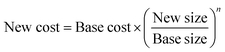
The economic feasibility of farnesene production from CO2 using engineered cyanobacteria was analyzed by Aspen Plus economic evaluation software. After the simulation of the process, an Excel spreadsheet was generated, which was used to assess CapEx, OpEx, and MFSP ($ per kg). The CapEx calculation was based on the total cost of equipment, which was assumed from the previous reported studies, vendor quotations, and Aspen Plus analyzer. For instance, the cost of PBRs was deduced by using the following formulae from Markham et al.25| |
 | (3) |
where ‘n’ is the scaling factor which varies with the equipment. The cost of other equipment to be used, such as pumps, decanters, distillation columns, extraction vessels and preheaters, were taken from Aspen Plus Economic Analyzer. The cost of land was assumed to be $3000 per acre, according to previous NREL reports and other TEA studies.33,34
The OpEx calculation was based on the cost of raw materials, which are summarized in Table 2. The utilities and raw materials like ammonia, K2HPO4, water, inducer, IM, and electricity make up the variable operating cost (VOC), which can vary with the production, while the salaries and facility maintenance make up the fixed operating cost (FOC). The costs of these are majorly derived from the already published literature, vendor quotations and Aspen Plus simulation software. All the costs have been adjusted to 2023-dollar values according to the inflation rate.
Table 2 Cost of utilities and raw materials used in techno-economic analysisa
| Raw materials |
Cost ($ per kg) |
Ref. |
| The prices have been adjusted to 2023-dollar values according to the inflation rate. |
| Input |
| Ammonia |
0.15 |
35 |
| K2HPO4 |
0.91 |
25 |
| Water |
0.0002 |
24 |
| Isopropyl myristate |
0.0167 |
Vendor quotation |
| Inducer |
7.00 |
Vendor quotation |
| Electricity |
0.088 $ per kWh |
24 |
|
| Output |
| Carbon credit |
0.056 |
23 |
| Biomass credit |
0.74 |
25 |
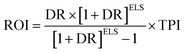
The MFSP is based on investment expense and is calculated using the following formulae:36
| |
 | (4) |
| |
 | (5) |
| | |
IT = TR × (FR + ER − OC − DC)
| (6) |
| | |
FR + ER = OC + ROI + IT
| (7) |
| |
 | (8) |
| |
 | (9) |
| | |
Net cash flow = Total revenue − OpEx
| (10) |
| |
 | (11) |
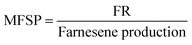
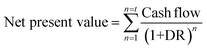
where ‘DC’ is depreciation cost, ‘ROI’ is the return on investment, ‘DR’ is the discount rate, ‘ELS’ is the economic life of the project (year), ‘TPI’ is total project investment, ‘TR’ is the tax rate, ‘ER’ is revenue without farnesene, ‘OC’ is operating cost, ‘IT’ is income tax, ‘FR’ is farnesene revenue, ‘FC’ is fixed capital, ‘WC’ is working capital, ‘FOC’ is fixed operating cost, ‘VOC’ is variable operating cost, and ‘
n’ is project length in year.
The MFSP was determined from the FR. The FR is calculated based on the sales of these process components, which is decided at the breakeven point where total revenues and total costs are equal. All the values used in the formulae to derive MFSP can be seen in the SI. Finally, sensitivity analysis was performed to quantify the resulting cost impact on the overall MFSP.
Apart from this evaluation of the payback period (PBP), the net present value (NPV) and internal rate of return was obtained while considering the following assumptions:
(1) The revenue from the production is assumed to be 50% for the first year followed by 100% for the following years.
(2) 100% CapEx and 50% is utilized in the first year.
(3) 6.74% is the discount rate used for NPV calculation.
2.7. Life cycle assessment
A cradle-to-gate LCA was performed to assess the potential environmental impact of farnesene production from genetically engineered cyanobacteria. The cradle-to-gate approach involves analysis starting from the raw materials to the production of farnesene. In the study, CCaLC2 LCA software (University of Manchester, UK) was used to quantify the impact of all inputs and outputs associated with the production process.37,38 The detailed instructions for the LCA are indicated in ISO 14040 and ISO 14044.39,40 According to the guidelines, the goal of the study was defined with the consideration of using 1 kg of farnesene as a functional unit to investigate global warming potential. Furthermore, based on the assumptions and process conditions defined in Sections 2.1–2.5 a life cycle inventory for farnesene production was made (Table 3). The amount of raw materials (ammonia, K2HPO4, and inducer) required for the process was based on the lab scale experiments.1 As mentioned in TEA the biomass will be sold and will be utilized in a manner to be sequestered. Some of the applications in which biomass can be sequestered are biochar formation, soil amendments, and bio composites.41–44
Table 3 Life cycle inventory for per kg farnesene production
| Materials |
Value |
| Ammonia |
11.7 kg |
| K2HPO4 |
0.31 kg |
| CO2 |
4430 kg |
| Water |
7770 kg |
| Isopropyl myristate |
66 kg |
| Electricity |
3138.94 Wh |
3 Results and discussion
3.1. Base case economics
In the previous study from our lab, we engineered UTEX 2973 to produce farnesene.1 The AFS, dxs and idispA genes were integrated into the genomic DNA of UTEX 2973 at NSI, NSII and NSIII, respectively, resulting in the strain UTEX AFS::dxs::idispA. The highest productivity of 2.574 g per m3 per day was obtained from the engineered strain. In the present study, this productivity was assumed to be the base productivity (2.574 g per m3 per day). This productivity assumed here is not a theoretical limit and can be further increased by improving strains at the genetic level and optimization of process parameters. It is important to highlight here that the analysis provided is based on pre-commercial technology. Therefore, the analysis is conceptual and reflects reasonable projections for scaling up the technology. The schematic representation of process flow is shown in Fig. 2. The results of TEA for farnesene production from engineered cyanobacteria are discussed below, with MFSP determined at the base case productivity of 2.574 g per m3 per day or higher.
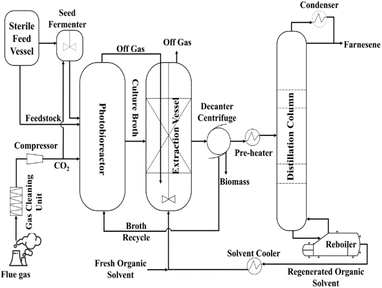 |
| | Fig. 2 Schematic process flow diagram for farnesene production through genetically engineered cyanobacteria utilizing carbon dioxide. | |
3.2. Capital expense distribution
The CapEx was determined by taking into account the purchase and installed cost of equipment and other costs derived from previous TEAs, commissioning charges, vendor quotations and Aspen plus economic evaluation software.24,25,34,45,46 Table 4 lists the cost of equipment and other costs such as land, piping, paint, and IM. The total cost for installed equipment was reckoned to be $10.90 MM, whereas the total CapEx was $28.16 MM. The other costs (having commissioning charges) account for the largest portion of CapEx i.e., $17.25 MM followed by costs of PBRs and land. In the previous study by Markham et al. the largest portion of CapEx was accounted for by the cost of PBRs due to the fact that commissioning charges were not considered.25 Reduction in the number of PBRs will decrease the land requirement and hence land cost. This can be achieved by increasing farnesene productivity from the base case or reducing the targeted annual capacity. Apart from PBRs, there are other equipment required for the proper functioning of the facility, such as gas compressors, pumps, extraction vessels, decanter centrifuges, distillation columns and preheaters, which contribute 14% of the capital investment (Fig. 3(a)). About 8% of the total CapEx is contributed by overhead contracts, contingencies, and construction of the facility, which includes piping and paint.
Table 4 Capital investments (CapEx) of the process
| Equipment |
Installed cost ($ MM) |
| Flue gas desulfurization unit |
0.006 |
| Gas compressor |
1.073 |
| Pumps |
0.072 |
| Closed tubular PBRs |
6.87 |
| Decanter |
1.52 |
| Distillation unit |
1.2 |
| Extraction vessel |
0.161 |
| Preheater |
0.00337 |
| Total equipment cost |
10.90537 |
|
| Indirect costs |
| Land |
5.19 |
| Piping |
0.103721 |
| Civil |
0.013835 |
| Steel |
0.011238 |
| Instrumentation |
0.570811 |
| Electrical |
0.691579 |
| Insulation |
0.025664 |
| Paint |
0.005988 |
| G & A overhead |
0.060022 |
| Contract fee |
0.168106 |
| Total design, eng, and procurement cost |
0.6783 |
| Contingencies |
0.523291 |
|
| Additional costs |
| Miscellaneous costs |
1.1878 |
| Commissioning charges |
7.68 |
| Equipment setting |
0.002185 |
| Isopropyl myristate |
0.334150 |
| Total indirect and additional costs |
17.25629 |
| Total CapEx |
28.16166 |
 |
| | Fig. 3 Cost distribution of the proposed farnesene production plant. (a) Annual capital expenditure (CapEx) and (b) annual operating expenditure (OpEx). | |
3.3. Operating expense distribution
The operating expenses are divided into VOC and FOC and are shown in Table 5. The total operation cost amounts to $30.75 MM, out of which VOC and FOC account for 95% and 5%, respectively (Fig. 3(b)). The VOC includes the cost of raw materials (water, K2HPO4, ammonia, inducer, isopropyl myristate, and electricity), while the FOC includes salaries, labour burden and facility maintenance. The largest operating expense is shared by the electricity consumption, followed by the inducer cost. The cost of electricity consumption is deemed to be $27.62 MM annually, accounting for 90% of total operating costs. The annual cost of the inducer accounts for 4% of the OpEx. To reduce the inducer cost, strong constitutive promoters or light-inducible promoters can be used to express the gene(s) of interest.47,48 Since it is assumed that the flue gas is being used as a sole carbon source and is getting supplied from the powerplant near the facility, the cost of CO2 is not added to the operating cost. Moreover, utilizing CO2 from the flue gas generates revenue in the form of carbon incentives at $0.056 per kg of CO2 consumed.23
Table 5 Annual operating cost (OpEx) distribution
| Variable operating cost (VOC) |
Annual cost ($ MM) |
| Ammonia |
0.158 |
| K2HPO4 |
0.025 |
| Water |
0.141 |
| Isopropyl myristate |
0.020 |
| Inducer |
1.176 |
| Electricity |
27.62 |
| Total VOC |
29.142 |
|
| Fixed operating cost (FOC) |
| Salaries |
0.277 |
| Labor burden |
0.475 |
| Facility maintenance |
0.864 |
| Total FOC |
1.616 |
| Total OpEx (VOC + FOC) |
30.758 |
3.4. Minimum farnesene selling price
The MFSP for the design basis of 90 tonnes annual capacity was calculated to be $148.44 per kg. The MFSP was calculated based on the capital costs, production costs and financial assumptions with a base farnesene productivity of 2.574 g per m3 per day. The upper and lower bound of base case farnesene productivity was taken into account for the MFSP calculation. A negative correlation between farnesene productivity and MFSP can be seen in Fig. 4. This was in accordance with the previous studies where an increase in productivity decreases the minimum selling price of a product.31 The highest cost driver of the MFSP was the electricity consumption. The next highest contribution belongs to the capital cost of PBRs. The revenue generated by carbon credits and biomass reduces the total impact on the plant by generating a revenue of $22.55 MM per year and $0.52 MM per year, respectively. It is worth noting that farnesene's market price, as per Amyris's report, ranges between $3.07 to $6.15 per kg.49 This cost is for the farnesene derived from a heterotrophic source, i.e., yeast (Saccharomyces cerevisiae). The highest farnesene productivity by S. cerevisiae was reported to be 4710 g per m3 per day (4.71 g per L per day).50 This is approximately more than 1800 times the productivity assumed in this study (2.574 g per m3 per day). In order to meet the market price, the farnesene productivity needs to be at least 180.18 g per m3 per day (where MFSP is $5.57 per kg). This implies that to make the process economically feasible, a 70-fold enhancement in productivity is imperative.
 |
| | Fig. 4 Variation of MFSP over a range of farnesene productivity (g per m3 per day). | |
This improvement can be brought about by strain improvement strategies, which include promoter and ribosome binding site engineering, metabolic engineering, genome mining, and selection of high-yielding mutants. Apart from this, the optimization of culture conditions can also significantly improve the farnesene productivity.51
3.5. Sensitivity analysis: impact of uncertainty in production factors on MFSP
Since the production process outlined in the present study is at the conceptual stage, there exist inherent risks associated with the process itself and the economic parameters. In the pursuit of addressing these risks and to gain thorough insight into how various factors influence the economic parameters a single point or one-to-one sensitivity analysis was performed. The sensitivity analysis was performed for the design variables. The baselines for the variables were the same as those assumed earlier. The analysis involves adjusting one variable at a time within its lower and upper bound while keeping the other variables constant.24,31
As shown in Fig. 5, farnesene productivity, cost of electricity, isopropyl myristate, and the inducer impact the overall cost of farnesene, acting as the key cost drivers. The farnesene productivity and project length are negatively correlated, whereas the cost of electricity, isopropyl myristate, and inducer are positively correlated. How the variations in assumptions affects the overall cost can be seen in the spreadsheet provided as supplementary data. Since the farnesene productivity predominates as a cost-driving force, it significantly impacts MFSP. This is due to the fact that as the productivity increases, so does the yield, thereby reducing the necessity for large numbers of PBRs (whose cost accounts for 24% of CapEx) and the total land area (and hence the cost of land, which is 19% of CapEx).25,46 As mentioned in Section 3.4, the farnesene productivity can be increased by strain improvement strategies and media optimization. Up to a 9% increase in the MSFP was observed on increasing the cost of the inducer. In the present study, the inducer is crucial as all the genes engineered in the genetically modified strains are under the control of the trc promoter (IPTG inducible promoter).1 Inducible promoters provide a regulation of the product formation if the product is toxic to the host organism.52 To reduce the cost of the inducer, whey can be used as a substitute which induces the trc promoter as efficiently as IPTG.53 Whey not only acts as an inducer but can also be used as a carbon source by the microorganisms, increasing the biomass and hence the product formation.54 To further reduce the price of using whey, cheese whey wastewater can be used in the production plant. This not only eliminates the requirement for freshwater but also aids in the bioremediation of wastewater. In addition to this, naturally, inducible promoters like light-inducible promoters can be used.55
 |
| | Fig. 5 Single-point sensitivity analysis showing impacts of different variables on MFSP (base case price: $148.44 per kg). | |
Following the farnesene productivity, electricity cost is the driving factor for MFSP. A reduced electricity cost reduces the MFSP. This cost can be reduced by utilizing electricity generated through renewable sources such as solar energy.56 An increase in the cost of isopropyl myristate also increases MFSP. Previously, a column filled with Supelpak 2SV resins attached to the exit port was used to trap farnesene.57 However, due to their higher cost and the replacement of resins every 3 days, organic solvents are now being sought to extract farnesene.58,59 Utilization of organic solvents can be a reliable method at the lab scale, but as observed, larger quantities are required at the industrial scale, which adds up to the selling cost of the product. This calls for the exploration of better alternative methods for trapping farnesene rather than extracting it in the organic solvent.60 Utilization of the strategies discussed can lead to a substantial decrease in MFSP and a successful scale-up of the technology.
3.6. Financial performance indicator evaluation
Three financial performance indicators, PBP, NPV and IRR, were analyzed. PBP is a useful metric and aids in determining the time taken to recover the initial investment costs.61 In the present study, a PBP of 7.9 years was calculated and compared to the economic life of the year (20 years). Shorter PBPs are preferred, indicating quicker recovery and a more appealing investment opportunity.62,63 A PBP of ∼7.9 years can be further reduced upon utilizing the strategies defined in Section 3.5. Meanwhile, the PBP does not consider factors such as the time value of money, cash flows and overall profitability.62 In this regard, the NPV and IRR provide a better understanding. NPV analysis utilizes projected cash flows, discount rate and the project length. The NPV can be positive or negative, indicating that the project is expected to generate more value than its cost or might lead to a loss, respectively.64 A NPV of $12.87 MM was estimated for the farnesene production plant (supplementary data), which considers CapEx, OpEx, total revenue generated, cash flow, discounted cash flow and length of the project. This indicates that the impact on the CapEx, OpEx and total revenue generated will have a direct impact on the NPV. IRR is the discount rate at which the investment's NPV becomes zero, signifying the breakeven point for cash flow.65 A positive IRR corresponds to a profitable investment. An IRR of 12% was calculated, indicating a 12% discount rate to reach zero NPV.
3.7. Life cycle assessment for potential environmental impacts
Aside from the economics of the process, evaluation of the environmental impacts of the process plays a crucial role in scaling up the process to the industrial level. Hence, LCA was conducted to determine potential environmental impacts linked to producing 1 kg of farnesene (Table 6). The global warming potential (GWP) values associated with the different stages of farnesene production can be seen in Fig. 6. The most significant GWP value is attributed to the production stage in which the highest CO2 emission is from the energy consumed by PBRs required for the fermentation process. This was followed by the raw materials used in the process, such as the carbon source (CO2), nitrogen (NH3) and potassium and phosphorus source (K2HPO4). Since the process utilizes CO2 (as a carbon source) from flue gas, unlike the farnesene production from sugarcane feedstock, there is no CO2 equivalent for the cultivation of sugarcane and pretreatment.66,67 Therefore, the total carbon emission of the current process is negative, and the process is carbon neutral.
Table 6 Potential environmental impacts associated with the production of 1 kg of farnesene
| Environmental impacts |
Total |
Unit |
| Acidification potential |
12.32 |
kg SO2 eq. |
| Eutrophication potential |
0.88 |
kg PO4 eq. |
| Ozone layer depletion potential |
0.00 |
kg R11 eq. |
| Photochemical smog potential |
0.70 |
kg C2H4 eq. |
| Human toxicity potential |
159.23 |
kg DCB eq. |
 |
| | Fig. 6 Global warming potential analysis of cradle-to-gate life cycle assessment for per kg of farnesene produced by engineered cyanobacteria. | |
4 Conclusions
The present study explored the economic and environmental aspects of farnesene production from engineered cyanobacteria, building upon previous research where Synechococcus elongatus UTEX 2973 was genetically engineered to produce farnesene with the highest productivity. The analysis serves as a conceptual framework for scaling up farnesene production with 90 tonnes annual capacity, highlighting key factors influencing MFSP and potential avenues for increasing productivity and reducing the cost of the process. The majority of investments in CapEx are attributed to plant commissioning charges, followed by PBRs and land cost, whereas in OpEx, it is predominated by the cost of electricity. Sensitivity analysis highlighted farnesene productivity and electricity cost as the factors affecting MFSP. The NPV of $12.87 MM indicates that the plant will generate profit. Furthermore, LCA reinforced the sustainability potential of cyanobacteria-based farnesene production compared to the conventional methods utilizing sugarcane as feedstock.
Author contributions
Akhil Rautela: conceptualization, formal analysis, visualization, methodology, investigation, writing – original draft, writing – review & editing; Indrajeet Yadav: formal analysis, methodology, writing – review & editing; Agendra Gangwar: formal analysis, methodology, writing – review & editing; Preeti Yadav: writing – review & editing; Sanjay Kumar: writing – review & editing, conceptualization, formal analysis, visualization, supervision, funding acquisition, project administration.
Conflicts of interest
The authors declare that they have no known competing financial interests or personal relationships that could have appeared to influence the work reported in this paper.
Data availability
All data generated or analysed during this study are included in this published article and its supplementary information (SI) files. Supplementary information is available. See DOI: https://doi.org/10.1039/d5va00445d.
Acknowledgements
AR and IY thank the Ministry of Human Resource and Development (MHRD), India, for financial aid. AG is thankful to the Department of Biotechnology (DBT), India, for providing research support. PY is thankful to the Department of Science and Technology (DST), India, for financial support. This study was supported and funded by the Science and Engineering Research Board (SERB) of India under Grant agreement SERB-CRG/2022/002338.
References
- A. Rautela, I. Yadav and A. Gangwar, et al., Bioresour. Technol., 2024, 396, 130432 CrossRef CAS PubMed.
- M. E. Arslan, H. Türkez and A. Mardinoğlu, Int. J. Neurosci., 2021, 131, 745–754 CrossRef CAS PubMed.
- J. Zhang, J. Chen, M. Yao and Z. Jiang, et al., J. Appl. Polym. Sci., 2019, 136, 47673 CrossRef.
- A. M. Elgamal, R. F. Ahmed and A. M. Abd-Elgawad, et al., Plants, 2021, 10(4), 667 CrossRef CAS PubMed.
- L.-L. Cui, F. Francis and S. Heuskin, et al., Biol. Control, 2012, 60, 108–112 CrossRef CAS.
- Z. Ye, B. Shi and Y. Huang, et al., Innovation, 2022, 3, 100228 CAS.
- Y.-R. Ma, K.-F. Wang and W.-J. Wang, et al., Bioresour. Technol., 2019, 281, 449–456 CrossRef CAS PubMed.
- R. Mawhood, E. Gazis and S. de Jong, et al., Biofuels, Bioprod. Biorefin., 2016, 10, 462–484 CrossRef CAS.
- S. S. Chandran, J. T. Kealey and C. D. Reeves, Process Biochem., 2011, 46, 1703–1710 CrossRef CAS.
- B. H. Davison and J. Lievense, Chem. Eng. Prog., 2016, 112(6), 35–42 Search PubMed.
- M. Cheng, H. Huang and B. S. Dien, et al., Biofuels, Bioprod. Biorefin., 2019, 13, 723–739 CrossRef CAS.
- Climate Change – NASA Science, https://science.nasa.gov/climate-change/, accessed 20 November 2025 Search PubMed.
- S. Y. Choi, S. J. Sim and S. C. Ko, et al., J. Agric. Food Chem., 2020, 68, 10050–10055 CrossRef CAS PubMed.
- A. Saravanan, V. C. Deivayani and P. K. Senthil, et al., Bioresour. Technol., 2022, 363, 127982 CrossRef CAS PubMed.
- A. Nisar, S. Khan and M. Hameed, et al., Microbiol. Res., 2021, 251, 126813 CrossRef CAS PubMed.
- N. Pattharaprachayakul, H. J. Lee and A. Incharoensakdi, et al., J. Agric. Food Chem., 2019, 67, 13658–13664 CrossRef CAS PubMed.
- H. J. Lee, J. Il Choi and H. M. Woo, J. Agric. Food Chem., 2021, 69, 698–703 CrossRef CAS PubMed.
- J. Sun, X. Xu and Y. Wu, et al., GCB Bioenergy, 2023, 15, 1154–1165 CrossRef CAS.
- C. Chenebault, V. Blanc-Garin and M. Vincent, et al., Biomolecules, 2023, 13, 504 CrossRef CAS PubMed.
- V. Blanc-Garin, C. Chenebault and E. Diaz-Santos, et al., Biotechnol. Biofuels Bioprod., 2022, 15, 110 CrossRef CAS PubMed.
- R. Mahmud, S. M. Moni and K. High, et al., J. Cleaner Prod., 2021, 317, 128247 CrossRef.
- Y. Y. Choi, J. M. Joun and J. Lee, et al., Bioresour. Technol., 2017, 244, 1235–1244 CrossRef CAS PubMed.
- C. H. Geissler and C. T. Maravelias, Appl. Energy, 2021, 302, 117539 CrossRef CAS.
- B. Liang, R. Fu and Y. Ma, et al., Biotechnol. Biofuels Bioprod., 2022, 15, 107 CrossRef CAS PubMed.
- J. N. Markham, L. Tao and R. Davis, et al., Green Chem., 2016, 18, 6266–6281 RSC.
- E. Rueda, Z. Senatore and T. Zarra, et al., Sustainable Mater. Technol., 2023, 35, e00579 CrossRef CAS.
- T. F. Lopes, C. Cabanas and A. Silva, et al., Bioresour. Technol. Rep., 2019, 6, 113–122 CrossRef.
- P. Fasahati, J. J. Liu and J. B. Ohlrogge, et al., Appl. Energy, 2019, 239, 1459–1470 CrossRef CAS.
- R. Davis, A. Aden and P. T. Pienkos, et al., Appl. Energy, 2011, 88, 3524–3531 CrossRef.
- H. J. Lee, J. Lee and S.-M. Lee, et al., J. Agric. Food Chem., 2017, 65, 10424–10428 CrossRef CAS PubMed.
- C. Sun, C. Theodoropoulos and N. S. Scrutton, Bioresour. Technol., 2020, 300, 122666 CrossRef CAS PubMed.
- J. Pathak, Rajneesh and P. K. Maurya, et al., Front. Environ. Sci., 2018, 6, 7 CrossRef.
- Y. Zhu, S. Jones and D. Anderson, Pacific Northwest National Lab, Report No. 28201, 2018, DOI:10.2172/14851332018.
- R. Davis, J. Markham and C. Kinchin, et al., Process design and economics for the production of algal biomass: Algal biomass production in open pond systems and processing through dewatering for downstream conversion, NREL, Golden, CO United States, 2016 Search PubMed.
- H. Kim, B.-I. Sang and P. Tsapekos, et al., Energies, 2023, 16, 3227 CrossRef CAS.
- S. M. Sen, E. I. Gürbüz and S. G. Wettstein, et al., Green Chem., 2012, 14, 3289–3294 RSC.
- K. A. Adsal, F. G. Üçtuğ and O. A. Arikan, Sustainable Prod. Consumption, 2020, 22, 110–125 CrossRef.
- A. Bor and F. G. Üçtuğ, Environ. Prog. Sustainable Energy, 2022, 41, e13716 CrossRef CAS.
- ISO 14040: 2006, https://www.iso.org/standard/37456.html, accessed June 3, 2024 Search PubMed.
- ISO 14044: 2006, https://www.iso.org/standard/38498.html, accessed June 3, 2024 Search PubMed.
- I. M. Goodchild-Michelman, G. M. Church and M. G. Schubert, et al., Mater. Today Bio, 2023, 19, 100583 CrossRef CAS PubMed.
- P. In-na, A. A. Umar and A. D. Wallace, et al., J. CO2 Util., 2020, 42, 101348 CrossRef CAS.
- H. Kheirfam, J. Arid Environ., 2020, 172, 104022 CrossRef.
- J. Park, H. Lee and J. De Saeger, et al., Rev. Environ. Sci. Bio/Technol., 2024, 23, 1041–1061 CrossRef CAS.
- A. K. Kumar, S. Sharma and G. Dixit, et al., Renewable Energy, 2020, 145, 1620–1632 CrossRef.
- Q. Fei, B. Liang and L. Tao, et al., Biochem. Eng. J., 2020, 158, 107500 CrossRef CAS.
- S. Kobayashi, S. Atsumi and K. Ikebukuro, et al., Microb. Cell Fact., 2022, 21, 7 CrossRef CAS PubMed.
- P. Till, J. Toepel and B. Bühler, et al., Appl. Microbiol. Biotechnol., 2020, 104, 1977–1991 CrossRef CAS PubMed.
- Amyris will sell farnesene plant to DSM, https://cen.acs.org/articles/95/i47/Amyris-sell-farnesene-plant-DSM.html, accessed 20 November 2025 Search PubMed.
- S. Wang, C. Zhan and S. Nie, et al., J. Agric. Food Chem., 2023, 71, 12452–12461 CrossRef CAS PubMed.
- Y. Bao, P. Feng and C. Xu, et al., Ind. Crops Prod., 2024, 209, 117977 CrossRef CAS.
- H. Tegel, J. Ottosson and S. Hober, FEBS J., 2011, 278, 729–739 CrossRef CAS PubMed.
- M. I. Viitanen, A. Vasala and P. Neubauer, et al., Microb. Cell Fact., 2003, 2, 2 CrossRef PubMed.
- J. Ding, S. You and W. Ba, et al., Bioresour. Technol., 2021, 341, 125739 CrossRef CAS PubMed.
- T.-S. Liu, K.-F. Wu and H.-W. Jiang, et al., ACS Synth. Biol., 2023, 12, 1320–1330 CrossRef CAS PubMed.
- R. Musi, B. Grange and S. Sgouridis, et al., AIP Conf. Proc., 2017, 1850(1) DOI:10.1063/1.4984552.
- C. Halfmann, L. Gu and W. Gibbons, et al., Appl. Microbiol. Biotechnol., 2014, 98, 9869–9877 CrossRef CAS PubMed.
- J. Wang, W. Jiang and C. Liang, et al., J. Agric. Food Chem., 2021, 69, 3103–3113 CrossRef CAS PubMed.
- J. Z. Xu, S. L. Chen and S. Q. Niu, Fuel Process. Technol., 2023, 247, 107757 CrossRef CAS.
- R. Yang, L. Zhu and T. Li, et al., Front. Bioeng. Biotechnol., 2021, 9, 779437 CrossRef PubMed.
- M. Chandel, G. D. Agrawal and S. Mathur, et al., Case Stud. Therm. Eng., 2014, 2, 1–7 CrossRef.
- S. Luthra, S. K. Mangla and R. K. Kharb, Renewable Sustainable Energy Rev., 2015, 47, 58–73 CrossRef.
- X. Han, J. Garrison and G. Hug, Renewable Sustainable Energy Rev., 2022, 158, 112028 CrossRef.
- S. Abdelhady, Renewable Energy, 2021, 168, 332–342 CrossRef.
- M. Patrick and N. French, J. Prop. Invest. Finance, 2016, 34(6), 664–669 CrossRef.
- M. Moreira, A. C. Gurgel and J. E. A. Seabra, et al., Environ. Sci. Technol., 2014, 48, 14756–14763 CrossRef CAS PubMed.
- S. Michailos, Environ. Prog. Sustainable Energy, 2018, 37, 1227–1235 CrossRef CAS.
|
| This journal is © The Royal Society of Chemistry 2026 |
Click here to see how this site uses Cookies. View our privacy policy here. 

 Open Access Article
 This Open Access Article is licensed under a
  ,
Indrajeet Yadav
,
Indrajeet Yadav


