


Observation of delayed fluorescence/room-temperature phosphorescence emissions in organic small-molecule emitters, their properties, and electroluminescent performance

Abstract
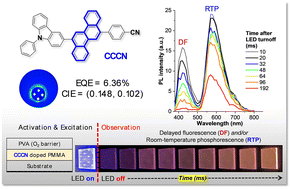
Organic emitters with the ability to harvest triplet excitons in their electroluminescent (EL) process are desired to boost the efficiencies of fluorescent organic light-emitting diodes (OLEDs). Herein, three fused polyaromatic hydrocarbon (PAH)-based blue fluorophores, namely, CCCN, CTCN, and CACN, are designed and synthesized using chrysene, triphenylene, and anthracene as PAH cores functionalized with benzonitrile and phenyl carbazole. Their delayed fluorescence/room-temperature phosphorescence emissions in solid films are inspected by time-resolved emission spectroscopy (TRES) and observed by the naked eye. The experimental results and theoretical calculations prove that CCCN, CTCN, and CACN are blue triplet–triplet annihilation (TTA) emitters with a hybridized local and charge transfer (HLCT) state, which can utilize both the lowest triplet energy level (T1) and high-lying triplet energy levels (Tn, n ≥ 2) in the device. They are successfully fabricated as non-doped blue emitters in OLEDs. The devices display exceptional EL performance (maximum external quantum efficiencies (EQEmax) = 6.00%–8.46%), low turn-on voltages (2.7–2.9 V), and high exciton utilization efficiencies (EUEs) (55%–81%), which are attributed to the combination of the TTA and HLCT characteristics of the emitters. These findings show the great potential of PAH-based fluorophores as multi-channel triplet exciton harvesting fluorescent emitters for the development of highly efficient OLEDs.
 Please wait while we load your content...


