


 PLATFORM UPDATE:


Exosome-modified mesoporous polydopamine with saikosaponin D and ferric ions for immunotherapy of metastatic breast cancer

Abstract
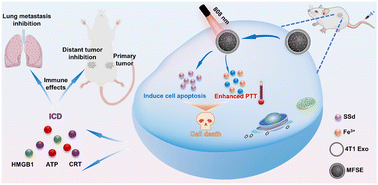
Metastatic breast cancer remains a critical clinical challenge with limited therapeutic options, severe tumor metastasis and unsatisfactory single-treatment efficacy, and it is urgent to develop targeted and synergistic therapeutic strategies to improve anti-tumor outcomes. In this study, we developed a novel tumor-targeted nanomedicine (MFSE) based on exosome-modified mesoporous polydopamine (MPDA) loaded with saikosaponin D (SSd) and ferric ions (Fe3+) to achieve synergistic photothermal and drug therapies for improved anti-tumor efficacy. The internal pore size of MPDA matched the structural characteristics of SSd molecules, facilitating efficient loading and controlled release of SSd and preventing drug degradation. Importantly, Fe3+ doping enhanced the photothermal conversion efficiency by 38.68% compared with that of undoped MPDA. Owing to the homing effect of exosomes, MFSE exhibited superior cellular internalization and tumor accumulation. Upon 808 nm laser irradiation, the released SSd combined with the photothermal effect of MPDA to exert a synergistic anti-tumor effect, which effectively eliminated tumor cells, elicited immune responses, and significantly suppressed primary tumors, distant tumors, and lung metastases. Meanwhile, the MFSE-based therapeutic strategy displayed no obvious adverse effects and excellent biocompatibility in vivo. Overall, this study established a reliable and effective paradigm for the rational design of exosome-integrated nanoplatforms for precise targeting and synergistic therapy against metastatic breast cancer.
- This article is part of the themed collection: Journal of Materials Chemistry B HOT Papers
 Please wait while we load your content...


