


A nanoscale cascade system integrating calcium interference with phototherapy–chemotherapy synergy for enhanced antitumor efficacy

Abstract
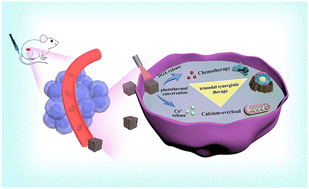
Combination therapy has emerged as a potent and highly promising strategy for the effective eradication of cancer cells. In this study, polydopamine-coated Prussian blue@polyacrylic acid-calcium peroxide nanoparticles (PB@PAA-CaO2@PDA NPs) were constructed via a simple and mild synthetic method. These NPs were engineered to integrate photothermal therapy (PTT), chemotherapy, and calcium overload therapy for the combined treatment of breast cancer. Within the acidic tumor microenvironment, Ca2+ ions released from the hydrolysis of CaO2 induce lethal calcium overload. The PDA coating and PB core exhibited excellent photothermal properties under near-infrared (NIR) irradiation. The anticancer drug doxorubicin (DOX), loaded onto the PDA surface via π–π stacking, demonstrates dual pH- and NIR-responsive release characteristics. The released DOX acted in concert with the photothermal effect generated by PDA/PB, collectively inflicting irreversible damage on cancer cells. In summary, this study provides a novel pathway for developing simple and efficient multimodal combined antitumor strategies.
- This article is part of the themed collection: Journal of Materials Chemistry B HOT Papers
 Please wait while we load your content...


