


 PLATFORM UPDATE:


MXene-loaded hydrogels for tissue regeneration: a review of recent advances and future perspectives

Abstract
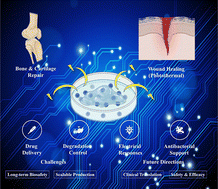
MXene-loaded hydrogels represent a promising class of multifunctional biomaterials that combine the remarkable physicochemical properties of MXenes with the adjustable structure and biocompatibility of hydrogels for tissue regeneration. Due to their distinctive two-dimensional structure, elevated surface area, electrical conductivity, and plentiful surface functional groups, MXenes promote improved cell adhesion, proliferation, and differentiation while enhancing bioelectronic communication inside tissues. When incorporated into hydrogel matrices, these nanoparticles enhance mechanical strength, electrical responsiveness, and antibacterial properties, thereby addressing key challenges in tissue-engineering scaffolds. Recent advancements have demonstrated their efficacy in enhancing wound healing, regenerating bone and cartilage, and improving drug delivery. Notwithstanding these considerable accomplishments, obstacles persist regarding long-term biosafety, degradation management, and the scalable production of MXene-based composites. This review comprehensively examines recent advancements in the synthesis, functionalization, and biomedical applications of MXene-loaded hydrogels, critically assesses their existing limitations, and delineates future research directions for their safe and effective clinical implementation in regenerative medicine.
- This article is part of the themed collection: Journal of Materials Chemistry B Recent Review Articles
 Please wait while we load your content...


