


Dual-functional urinary PVC catheters via peptide surface modification for the prevention of biofilm formation and fibrotic response in vitro

Abstract
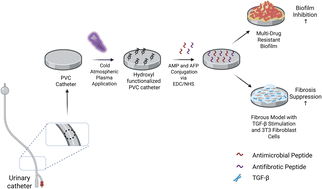
Prolonged urinary catheterization often leads to two major complications, bacterial biofilm formation and fibrotic tissue development, both of which hinder catheter function. However, current catheter designs fail to address these challenges simultaneously. In this study, the surface of a polyvinyl chloride (PVC) catheter was conjugated with TetraF2W-RR, an antimicrobial peptide (AMP) effective against drug-resistant methicillin-resistant Staphylococcus aureus (MRSA) and Pseudomonas aeruginosa (MDRPA) strains, and DR8, an antifibrotic peptide (AFP) that inhibits excessive extracellular matrix (ECM) buildup to provide both antimicrobial and antifibrotic effects. Covalently co-immobilizing TetraF2W-RR and DR8 peptides onto PVC surfaces (PVC–AMP/AFP) via cold atmospheric plasma (CAP) created dual-functional urinary catheters that prevent biofilm formation by MRSA and MDRPA while diminishing fibrotic responses in vitro. PVC–AMP/AFP surfaces demonstrated strong antibacterial and antibiofilm activity without harming NIH 3T3 cells. In a TGF-β1-stimulated fibroblast model, PVC–AMP/AFP catheter groups significantly reduced fibrotic gene expression (COL1A1, FN1, ACTA2, and TGF-β1), lowered total collagen levels, and decreased COL1A1 and α-SMA expression by immunofluorescence staining. A wound healing assay in a TGF-β1-induced fibrotic fibroblast model further confirmed suppressed fibroblast migration in PVC–AMP/AFP catheter groups. To the best of our knowledge, this is the first attempt to simultaneously impart antibacterial and antifibrotic functionalities to PVC urinary catheters via covalent co-immobilization of AMP and AFP. This combined approach offers a promising strategy to improve the long-term safety and efficacy of indwelling urinary catheters and could be applied to a variety of implantable biomaterials.
 Please wait while we load your content...


