


Polycationic silk fibroin chelating nano-hydroxyapatite promotes angiogenesis for burn wound healing

Abstract
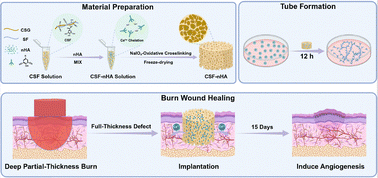
The regeneration of deep burn wounds, which cause dermal tissue necrosis, remains a significant clinical challenge. Herein, we report a skin dressing fabricated by integrating nano-hydroxyapatite (nHA) with a polycationic silk fibroin (CSF) to promote burn wound healing via enhanced angiogenesis. The nHA was firmly incorporated into the CSF matrix through metal–phenolic coordination, improving the mechanical robustness and stability of the composite. The CSF-nHA dressing significantly promoted the proliferation of NIH-3T3 fibroblasts and enhanced the recruitment and migration of human umbilical vein endothelial cells (HUVECs) in vitro. Furthermore, the dressing demonstrated a remarkable pro-angiogenic capacity, as validated by the tube formation assays. In a rat model with deep partial-thickness burns, treatment with the CSF-nHA dressing resulted in the formation of highly vascularized neo-tissue. This enhanced vascularization facilitated superior collagen deposition, tissue regeneration, and accelerated wound closure. This study combined inorganic nHA nanoparticles with bioactive CSF macromolecules, offering a promising strategy for the management of burn wounds by promoting rapid revascularization.
- This article is part of the themed collection: Wound healing materials
 Please wait while we load your content...


