


 PLATFORM UPDATE:


Advances and challenges of ZIF-based nanocomposites in immunotherapy and anti-inflammatory therapy
 †c
Jianqiang
Liu
*a
†c
Jianqiang
Liu
*a
Abstract
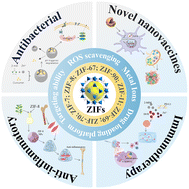
Zeolitic imidazolate frameworks (ZIFs) have garnered significant attention in immunotherapy and anti-inflammatory therapy due to their tunable porosity, high drug-loading capacity, pH responsiveness, and biocompatibility. This review systematically summarizes recent advancements in ZIF-based composites for immunotherapy and anti-inflammatory therapy, emphasizing their dual roles in enhancing therapeutic efficacy and minimizing adverse effects. In immunotherapy, ZIFs serve as versatile platforms for targeted drug delivery, immune checkpoint modulation, and synergistic cancer therapies (photodynamic/chemodynamic therapy), demonstrating remarkable potential in reversing immunosuppressive tumor microenvironments and activating anti-tumor immunity. For anti-inflammatory applications, ZIFs enable sustained release of therapeutic agents, mitigate oxidative stress, and promote tissue regeneration, particularly in osteoarthritis management and wound healing. In addition, the performance optimization of AI-assisted synthesis of ZIFs, as well as AI-assisted disease detection and treatment, was also discussed. It is hoped to provide ideas for the synthesis and application of ZIFs in immunotherapy and anti-inflammatory therapy.
- This article is part of the themed collection: Journal of Materials Chemistry B Recent Review Articles
 Please wait while we load your content...


