


Metal-ion-driven self-assembly of sequence-controlled polyprodrugs for pH-responsive tumor theranostics
 *a
*a
Abstract
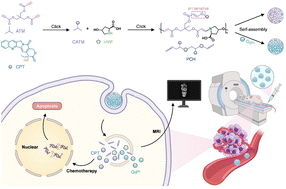
Rationally designed theranostic nanoplatforms offer a new direction for precise and personalized cancer treatments. Researchers have focused on developing multifunctional nanocarriers that can co-deliver anticancer drugs and imaging agents and achieve enhanced therapeutic effects and real-time visual monitoring by releasing their payload in response to the tumor microenvironment (TME). This study introduces a novel metal-coordinated-polyprodrug PCH@Gd featuring pH-responsive biodegradation and enhanced MRI for tumor theranostics. This platform was constructed using efficient alkyne-X click polymerization to create a high-payload polyprodrug (PCH) with an acid-sensitive backbone, built from a camptothecin (CPT) prodrug monomer (CATM) and hydroxyproline (HYP). The resulting polyprodrug has a high CPT loading capacity (46.07%), excellent physiological stability, and its nanoparticle self-assembly can be precisely controlled through metal ion coordination. Upon the introduction of metal ions, PCH@M (Gd3+, Mn2+ or Fe3+) forms various nanomorphologies. The PCH@Gd are capable of both pH-triggered controlled release and T1-weighted magnetic resonance imaging (MRI). In vitro and in vivo studies showed that PCH@Gd significantly inhibited tumor growth with minimal systemic toxicity, as no pathological damage was observed in major organs. The designed nanoplatform offers a promising strategy for efficient and precise theranostic agents.
 Please wait while we load your content...


