


Bismuth chalcogenides: multifunctional enhancement of radiopacity, mechanical resilience, and osteogenesis in PMMA bone cements for vertebroplasty
 *c
and
*c
and
Abstract
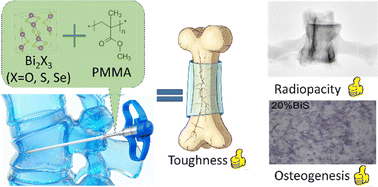
Current polymethyl methacrylate (PMMA) bone cements face significant trade-offs between radiopacity, mechanical strength, and biocompatibility when incorporating conventional additives like barium sulfate. This study introduces bismuth chalcogenides (Bi2X3, X = O, S, Se) as advanced multifunctional radiopacifiers for PMMA bone cement, identifying Bi2S3 as a breakthrough candidate. At 20 wt% loading, Bi2S3–PMMA achieves a compressive strength of 82.4 ± 3.1 MPa—exceeding the clinical threshold (70 MPa)—while matching the radiopacity of commercial 30% BaSO4–PMMA. The composite exhibits exceptional biocompatibility, maintaining >95% cell viability and reducing Bi3+ ion leaching to 0.424 ppm, significantly lower than levels observed with Bi2O3 (9.495 ppm) and Bi2Se3 (0.607 ppm). Notably, Bi2S3–PMMA significantly enhances osteogenesis, inducing a 2.3-fold increase in alkaline phosphatase activity in bone marrow mesenchymal stem cells compared to unmodified PMMA. Radiographic analyses confirm superior visibility across clinical X-ray energies (80.9–140.9 kV), and three-point bending tests reveal a 25% increase in fracture toughness (work of fracture, WOF = 1.8 kJ m−2) over BaSO4–PMMA. These results establish Bi2S3–PMMA as a next-generation bone cement that resolves the longstanding compromise between mechanical integrity, imaging capability, and bioactivity. Owing to its balanced performance, this material holds transformative potential for vertebroplasty, spinal surgeries, and load-bearing orthopedic applications.
 Please wait while we load your content...


