


Engineering a buried interface using a conductive polymer to mediate carrier behavior for efficient Solar-driven water splitting on a Si-based photocathode
 *ab
*ab
Abstract
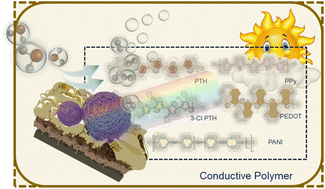
Photoelectrochemical (PEC) water splitting is regarded as a promising route for producing sustainable hydrogen fuel using sunlight and water as the sole inputs. To date, buried interfaces in Si-based PEC photocathodes have remained challenging for efficient photocarrier extraction and injection due to non-ideal energy alignment and interfacial recombination, ultimately limiting device efficiency. Herein, a series of conductive polymers were introduced as interlayers in Si/CdS hybrid photocathodes to investigate their role in mediating photocarriers. Our analysis shows that the polymer interlayer alters the electrostatic potential profile on the Si surface, thereby modulating the effective barrier height for charge carriers. Inspired by these findings, the direct deposition of a conductive polymer interlayer by a facile electrodeposition process is a promising strategy for engineering buried interfaces. It was found that polythiophene forms a more energetically favorable interface and boosts the efficiency of the photocathode. The optimized Si/PTH/CdS/Co-P photocathode achieved an applied bias photon-to-current efficiency (ABPE) of 4.05%, with a photocurrent of 30.8 mA cm−2 at 0 VRHE. In addition, a bias-free PEC tandem system was successfully constructed using the configuration Si/PTH/CdS/Co-P‖Ti/TiO2/CdS/ZnSe, which exhibited an approximate photocurrent density of 0.53 mA cm−2 and demonstrated good operational stability for 10 hours. These findings highlight that the strategically incorporated conductive polymer framework effectively mediates carrier extraction and injection through favorable energy level alignment, thereby promoting interfacial charge transfer. This work offers a new paradigm for guiding the design of efficient solar water-splitting devices.
 Please wait while we load your content...


