



Oligo(ethylene glycol)-modified benzotriazole-based ultra-narrow bandgap acceptors for efficient transparent organic photovoltaics
 *abcd
*abcd
Abstract
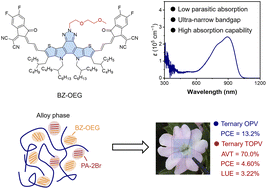
The development of effective small-molecule acceptors (SMAs) processed by non-halogenated solvents has become crucial for realizing eco-friendly and high-performance transparent organic photovoltaics (TOPVs). In this study, a pentacyclic fused-ring ultra-narrow bandgap acceptor (BZ-OEG) was designed and synthesized, featuring a benzotriazole core modified with oligo(ethylene glycol) (OEG) side chains. BZ-OEG demonstrates favorable solubility in o-xylene, which enables the fabrication of binary organic photovoltaics (OPVs) based on PTB7-Th:BZ-OEG from an o-xylene solution, achieving a power conversion efficiency (PCE) of 11.7%. To further improve the device performance, PA-2Br was incorporated as a guest acceptor. Strong π–π stacking and halogen bonding interactions between PA-2Br and BZ-OEG optimized the light-harvesting capability and molecular packing of the blend film, forming an acceptor alloy phase that effectively suppressed voltage losses and improved charge carrier dynamics. As a result, the optimized opaque ternary device based on PTB7-Th:BZ-OEG:PA-2Br attained a PCE of 13.2%. Furthermore, TOPVs employing the same ternary system as the active layer achieved a PCE of 4.60% while maintaining an average visible transmittance (AVT) of 70.0%. This study presents a viable strategy for the fabrication of high-performance TOPVs processed from non-halogenated solvents.
 Please wait while we load your content...


