DOI:
10.1039/D5TA09053A
(Paper)
J. Mater. Chem. A, 2026,
14, 6858-6866
Ni single-atom anchored N-doped carbon deposited on BaTiO3 for efficient piezocatalytic CO2 reduction
Received
7th November 2025
, Accepted 26th December 2025
First published on 21st January 2026
Abstract
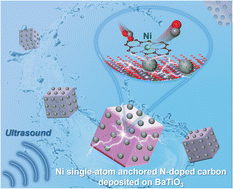
Excessive CO2 emissions disrupt the global carbon cycle and necessitate the development of sustainable strategies for carbon-neutral energy conversion. Piezocatalysis, which harvests mechanical energy to drive CO2 reduction under mild conditions, is a promising but underexplored approach for converting CO2 into valuable chemical feedstocks. In this study, single Ni atoms immobilised on N-doped carbon deposited on BaTiO3 exhibit a high piezocatalytic performance for CO2-to-CO conversion under ultrasonic vibration. The single Ni atoms are coordinated in the Ni-N4 structure within the N-doped carbon. Comprehensive analyses show that the N-doped carbon facilitates charge separation and transfer, whereas the atomically dispersed Ni centres substantially accelerate the CO2-reduction process. The synergistic effect of Ni single-atoms and N-doped carbon significantly promotes piezocatalytic CO2-to-CO conversion, resulting in a rate 3.1 times higher than that of pristine BaTiO3. These findings may open a new strategy for designing atomically dispersed transition-metal sites integrated with piezoelectric materials for CO2 reduction.
1. Introduction
Developing a sustainable carbon-neutral economy is essential, as excessive CO2 emissions disrupt the global carbon cycle and cause severe environmental and climatic impacts. Converting CO2 into chemical feedstocks using renewable energy provides an effective strategy for mitigating emissions while storing intermittent energy from sources such as solar and thermal power.1–3 Beyond these well-established options, vibration, tidal, and wind energy represent abundant and sustainable resources with significant potential for future exploitation and utilisation.4,5
Piezoelectric materials, which are characterised by their non-centrosymmetric structures, can convert mechanical energy into electricity through the piezoelectric effect.6 When coupled with electrochemical redox reactions, this property enables piezocatalysis, a process that harvests mechanical energy to drive catalytic reactions.7 Compared with photocatalysis and electrocatalysis, piezocatalysis offers several advantages, including operation under ambient conditions, the utilisation of diverse mechanical energy sources, environmental compatibility, and a high energy-conversion efficiency.8–10
Barium titanate (BaTiO3, BT), a lead-free perovskite material with outstanding piezoelectric properties, has been widely employed in devices such as multilayer ceramic capacitors (MLCCs) and piezoelectric elements (piezoelectric sensors, actuators, and energy-harvesting devices).11,12 In recent years, BT has also shown great potential in applications such as water splitting, bacterial disinfection, and wastewater treatment owing to its exceptional piezocatalytic properties.11–13 However, the use of BT for piezocatalytic CO2 reduction remains largely underexplored because of the substantial challenges associated with the activation and reduction of CO2. The main obstacles include low conversion rates; poor selectivity for desired products such as CO, CH4, and HCOOH; and strong competition from hydrogen evolution.14,15 Consequently, the rational design of tailored active sites on piezocatalysts is essential for advancing CO2 reduction.15,16
Single-atom catalysts based on transition metals such as Ni, Co, and Cu provide promising active sites on piezocatalysts for CO2 reduction owing to their nearly complete atomic utilisation, well-defined coordination environment, and tuneable electronic structures.16–18 As reported by Wang et al., atomically dispersed Ni centres in an imine-linked covalent organic framework (COF) can strengthen the adsorption of *COOH intermediates and facilitate electron transfer from the Ni sites to *COOH, thereby promoting CO2 activation and enhancing CO production.19 A N-doped carbon nanoparticle (NC) is an attractive support owing to its abundant surface functional groups, high electrical conductivity, and structural versatility.20 In addition, a NC can prevent aggregation and ensure stabilisation through coordination with metal–N bonds, while also enhancing the catalytic activity.21–23 A NC provides distinct advantages over conventional bulk N-doped carbon frameworks used for single-atom Ni catalysts. While bulk carbon materials (such as nanosheets,24 nanotubes,25 and MOF-derived porous carbon26) often limit the dispersion and accessibility of Ni sites and offer poor interfacial contact, an ultrasmall NC enables more effective stabilization and exposure of single-atoms and enhances interfacial charge transfer.27 In addition, its composition can be precisely tuned by varying precursor amounts, allowing controlled N content and metal loading. Ni-NC can also be integrated with substrates without high-temperature annealing. These features collectively endow Ni-NC with exceptional structural flexibility and processing advantages for high-performance single-atom catalysis.
In this study, Ni single-atoms incorporated into NC (Ni-NC) were employed as an interfacial modifier in BT piezocatalysts for CO2-to-CO conversion. The N-doped carbon matrix stabilised the single Ni atoms in Ni-N4 coordination sites and established strong interfacial binding with BT. The resulting composite Ni-NC/BT achieved a CO production of 377 µmol g−1 in 5 h of sonication, which was 3.1 times higher than that of pristine BT. The immobilisation of single Ni atoms on NC improved its piezocatalytic activity for CO2-to-CO conversion by providing specific active sites and facilitating electron transfer, as evidenced by electrochemical measurements and comparative experiments.
2. Experimental
2.1. Materials
Titanium(IV) butoxide (Ti(Bu)4), and oleic acid (OA) were obtained from Sigma-Aldrich Co., LLC (St. Louis, USA). Barium nitrate (Ba(NO3)2), sodium hydroxide (NaOH), acetic acid, 1-butanol, absolute ethanol, ethylenediamine (EDA), nickel nitrate hexahydrate (Ni(NO3)2·6H2O), citric acid (CA), hydrochloric acid (HCl), perchloric acid (HClO4), and Nafion were purchased from FUJIFILM Wako Pure Chemical Corporation (Osaka, Japan). Oxo[5,10,15,20-tetra(4-pyridyl)porphinato]titanium(IV) (TiO(tpypH4)4+) was purchased from Tokyo Chemical Industry (Tokyo, Japan). All reagents were of analytical grade and used without further purification.
2.2. Synthesis of Ni-NC
Ni-NC was synthesised via a hydrothermal method.28 CA (5.0 mmol), EDA (5.0 mmol), and Ni(NO3)2·6H2O (1.0 mmol) were dissolved in ultrapure water (50 mL) under vigorous stirring for 30 min to obtain a homogeneous solution. The solution was transferred to a 100-mL Teflon-lined stainless-steel autoclave and heated at 200 °C for 5 h. After cooling to room temperature, the brown supernatant was collected by centrifugation at 8000 rpm for 5 min and filtered through a 0.2-µm polytetrafluoroethylene (PTFE) membrane. The resulting product was freeze-dried to obtain Ni-NC powder. NC was synthesised under identical conditions without the addition of Ni(NO3)2·6H2O.
2.3. Synthesis of BT
An aqueous solution of Ba(NO3)2 (5.0 mL, 0.2 mol L−1) was mixed with an aqueous solution of NaOH (5.0 mL, 2.4 mol L−1). Separately, Ti(OBu)4 (1.0 mmol) was dissolved in 1-butanol (5.0 mL), and OA (2.5 mL) was dissolved in 1-butanol (5.0 mL). All solutions were combined and transferred into a 100-mL Teflon-lined stainless-steel autoclave, which was heated at 220 °C for 18 h. After cooling to room temperature, the product was collected by centrifugation and washed three times with an acetic acid solution (5%) and absolute ethanol. The resulting solid was dried in a vacuum oven at 60 °C to obtain OA-modified BT (BT@OA).
For ligand removal, BT@OA powder (5.0 mg) was dispersed in toluene (5.0 mL), followed by the addition of EDA (1.0 mL). The mixture was stirred at room temperature for 24 h. The solid was then collected by centrifugation and washed sequentially with an acetic acid solution (20%), absolute ethanol, and ultrapure water. The resulting product was dried in a vacuum oven at 60 °C to obtain BT.
2.4. Synthesis of Ni-NC/BT
BT (50 mg) and Ni-NC (1.0 wt% relative to BT) were dispersed in ultrapure water (10 mL) and stirred gently at 60 °C for 6 h. The resulting product was collected by centrifugation and dried under vacuum at 60 °C to obtain Ni-NC/BT. NC-modified BT (NC/BT) was prepared following the same procedure without the addition of Ni.
2.5. Characterization studies
Powder X-ray diffraction (XRD; D8 ADVANCE, Bruker AXS, Germany) with Cu Kα radiation (40 kV, 40 mA) was used to analyse the crystal phase. XRD patterns were recorded over a 2θ range of 20–80° with a step size of 0.02° and step time of 0.5 s. The morphologies of the samples were observed using field-emission scanning electron microscopy (FE-SEM), scanning transmission electron microscopy (STEM; SU9000, Hitachi High-Tech Co., Tokyo, Japan), and high-resolution transmission electron microscopy (HR-TEM; ARM200F, JEOL, Ltd, Tokyo, Japan). Elemental distributions were determined by energy-dispersive X-ray spectroscopy (EDS; EMAX Evaluation X-Max, HORIBA, Ltd, Kyoto, Japan). Surface ligand groups were investigated using Fourier-transform infrared spectroscopy (FT-IR; FT/4100, JASCO Co., Tokyo, Japan) via the potassium bromide (KBr) disk method. Thermogravimetric differential thermal analysis (TG-DTA; Thermo Plus EVO II, Rigaku, Tokyo, Japan) was performed in air from room temperature to 1000 °C at a heating rate of 10 °C min−1. N2 sorption isotherms were measured at −196 °C (NOVA 4200e, Quantachrome Instruments JAPAN, Kanagawa, Japan), and the specific surface area (SBET) was calculated using the multipoint Brunauer–Emmett–Teller method over the relative pressure range p/p0 = 0.05–0.3. Raman spectra were recorded using a laser Raman microscope with a 532-nm excitation laser (HR800, Nanophoton, Bruker AXS, Germany) over 100–2000 cm−1 with a resolution of 1.0 cm−1. Surface chemical states were characterized by X-ray photoelectron spectroscopy (XPS; KRATOS, Shimadzu, Kyoto, Japan) using Mg Kα radiation, with calibration based on the C 1s peak at 284.8 eV. Diffuse reflectance UV-vis spectroscopy (V-650, JASCO Co., Tokyo, Japan) was performed over 300–800 nm, and optical band gaps were estimated from Tauc plots derived from Kubelka–Munk-transformed spectra. Ni K-edge X-ray absorption fine structure (XAFS) spectra were collected in the fluorescence mode using an ionisation chamber at the Kyushu University Beamline (BL-06) of the Kyushu Synchrotron Light Research Centre (SAGA-LS; Tosu, Japan). The X-ray absorption near edge structure (XANES) and extended XAFS (EXAFS) data were processed using Athena software. The Ni content was calculated by inductively coupled plasma optical emission spectrometry (ICP-OES; Optima 8300, PerkinElmer Japan Co., Ltd, Yokohama, Japan) and X-ray fluorescence spectrometry (XRF; ZSX-100e, Rigaku, Tokyo, Japan).
2.6. Piezocatalytic CO2 reduction
The catalyst powder (0.5 mg) was dispersed in ultrapure water (15 mL) in a glass reactor. Prior to the piezocatalytic reaction, the reaction vessel was purged with CO2 to saturate the solution. The reaction was performed at room temperature under ultrasonic vibration using an ultrasonic bath (US-101; 48 kHz/55 W; SANYSO, Osaka, Japan). Gaseous products were analysed by gas chromatography (GC-14B, Shimadzu, Kyoto, Japan).
2.7. Piezocatalytic H2 production
The catalyst powder (0.5 mg) was dispersed in ultrapure water (15 mL) in a glass reactor. Prior to the piezocatalytic reaction, the reaction vessel was purged with argon to remove dissolved oxygen. Piezocatalytic H2 production was performed under ultrasonic vibration in an ultrasonic bath (US-101; 48 kHz/55 W; SANYSO, Osaka, Japan) at room temperature. The yield of H2 gas was determined by gas chromatography (GC2014, Shimadzu, Kyoto, Japan).
2.8. Quantification of produced H2O2
The amount of H2O2 produced was determined by spectroscopic titration with an acidic solution of [TiO(tpypH4)]4+ complex (Ti-TPyP reagent). The [TiO(tpypH4)]4+ complex (3.4 mg) was dissolved in 50 mmol L−1 HCl aqueous solution (100 mL). This solution was used as the Ti-TPyP solution. The sample solution diluted with distilled water (0.25 mL) was mixed with 4.8 mol L−1 HClO4 aqueous solution (0.25 mL) and Ti-TPyP solution (0.25 mL). After several minutes, the mixture was diluted to 2.5 mL with purified water. The absorbance of this solution at λ = 434 nm (AS) was measured using a Shimadzu UV-2600 UV-vis spectrophotometer. A blank solution was prepared by adding distilled water in place of the sample solution (0.25 mL) and its absorbance was defined as AB. The difference in absorbance (ΔA434) was determined from the following equation: ΔA434 = AB – AS. Based on ΔA434 and the volume of the reaction solution, the amount of H2O2 was determined.
2.9. Electrochemical measurement
Electrochemical impedance spectroscopy (EIS) and piezocurrent measurements were conducted using a three-electrode system in a Na2SO4 electrolyte solution (0.5 mol L−1, pH = 6.8) on an electrochemical workstation (INTERFACE 1010E; Gamry, America). A platinum wire served as the counter electrode, Ag/AgCl served as the reference electrode, and fluorine-doped tin oxide (FTO) glass served as the working electrode. Ultrasonic vibrations were applied using an ultrasonic bath.
For sample preparation, the as-prepared samples (5.0 mg) were mixed with absolute ethanol (490 µL) and ultrapure water (490 µL), followed by the addition of the Nafion solution (20 µL). The mixture was sonicated for 30 min to achieve a uniform dispersion. The resulting catalyst ink was carefully pipetted and evenly applied to the conductive side of the FTO glass, which was then air-dried at room temperature, producing a precisely coated area of 1.0 cm × 1.0 cm.
2.10. Calculation of the energy-band structure
The band gap energy (Eg) was determined from the Tauc plot by linearly extrapolating the linear portion of the (αhν)n curve to zero, using the equation (αhν)n = A(hν – Eg), where α is the absorption coefficient, h is Planck's constant, ν is the light frequency, A is a constant, and n represents the type of semiconductor transition.
The valence band maximum (VBmax), defined as the energy difference between the VBmax of the material and Fermi level (Efvs. vacuum), was determined from the valence band (VB) XPS spectra. The standard electrode potential (ENHE) was calculated using the equation ENHE/eV = Φ + Ef − 4.44, where Φ is the work function of XPS, which was taken as 4.5 eV in this work.29
3. Results and discussion
3.1. Characterization of Ni-NC and Ni-NC/BT
Scheme 1 illustrates the synthesis of NC/BT and Ni-NC/BT. Ni-NC was prepared via a one-pot hydrothermal method using CA and EDA as C and N sources, respectively.28 Through a sequence of coordination interactions, condensation reactions, and intramolecular cyclization processes, Ni2+, CA, and EDA self-assemble into cross-linked polymer nanoparticles.30
 |
| | Scheme 1 Schematic illustration of the preparation of NC/BT and Ni-NC/BT. | |
The powder XRD pattern of Ni-NC closely resembles that of NC (Fig. S1a), which is consistent with literature reports.20 Both Ni-NC and NC display a broad diffraction peak at approximately 25.4°, corresponding to the 002 diffraction plane of carbon-based materials.31,32 No characteristic diffraction peaks of Ni-containing compounds are observed, suggesting that the Ni species in Ni-NC are present in low amounts or as single-atoms embedded within the carbonaceous framework. The Raman spectra of Ni-NC and NC display four distinct peaks (Fig. S1b). The peaks at 1210 and 1356 cm−1 are assigned to sp3-hybridized carbon, originating from the carbon core and surface functional groups, whereas the bands at 1472 and 1577 cm−1 correspond to sp2-hybridized carbon, which are attributed to disordered and graphitic domains, respectively. The intensity ratio of sp3-to-sp2 carbon (Isp3/Isp2) is 1.05, which is lower than that of NC (1.65), indicating that Ni incorporation facilitates the graphitisation of the carbon framework.21,33 FT-IR and XPS measurements were performed to investigate the chemical bonding in the as-synthesised NC and Ni-NC. As shown in Fig. 1a, the FT-IR spectra of NC and Ni-NC exhibit absorption bands at 1770 and 3397 cm−1, corresponding to C
O and O–H stretching vibrations, respectively.20,34 These results indicate the presence of carboxyl (−COOH) and hydroxyl (–OH) functional groups in both NC and Ni-NC, with their positions and intensities remaining unchanged after Ni incorporation. Additional peaks at 1292, 1538 (and 3228), and 1711 cm−1 are assigned to C–N, N–H, and C
N stretching vibrations, respectively.35,36 In the spectrum of Ni-NC, a new peak at 826 cm−1 is attributed to the stretching vibration of the metal–N or –O bond.37 Furthermore, the C–N band at 1292 cm−1 exhibits a slight weakening upon Ni incorporation, likely due to the coordination between the Ni and N atoms.35 The C 1s XPS spectra of both NC and Ni-NC exhibit three peaks at 284.8, 286.2, and 287.9 eV, corresponding to C
C/C–C, C–O/C–N, and C
O species, respectively (Fig. S2a). Compared with NC, the intensity of the C–O/C–N peak in Ni-NC decreases slightly, suggesting a subtle modification of the chemical environment upon Ni incorporation.38 The N 1s XPS spectra of NC (Fig. S2b) can be deconvoluted into three components at 398.0, 399.0, and 400.1 eV, assigned to pyridinic-, pyrrolic-, and graphitic-N, respectively.39 Compared with that of NC, the pyridinic-N peak in Ni-NC decreases significantly in intensity and shifts slightly toward a higher binding energy, likely resulting from interactions between Ni and pyridinic-N.40
 |
| | Fig. 1 (a) FT-IR spectra of NC and Ni-NC. (b) XRD patterns of BT, NC/BT, and Ni-NC/BT. | |
Fig. 1b presents XRD patterns of BT, NC/BT, and Ni-NC/BT. All samples exhibited characteristic diffraction peaks indexed to the perovskite phase of BT (PDF#89-024-2475). No significant differences were observed before or after the deposition of NC or Ni-NC on BT, indicating that the crystal structure of BT remained unchanged and no detectable secondary phases were generated. After the deposition of NC or Ni-NC onto BT, new peaks appeared at 1151 and 1231 cm−1 in the FT-IR spectra of NC/BT and Ni-NC/BT, which were assigned to C–O stretching vibrations (Fig. S3).41,42 These observations confirm the deposition of NC and Ni-NC on the surface of BT.27 To evaluate the influence of NC and Ni-NC deposition on the specific surface area of BT, N2 adsorption–desorption measurements were conducted (Fig. S4). The Brunauer–Emmett–Teller (BET) specific surface areas (SBET) of NC/BT and Ni-NC/BT were 62.3 and 60.9 m2 g−1, respectively, both of which exceed that of BT (33.2 m2 g−1).
The morphologies of the as-synthesized samples were further examined by FE-SEM and HR-TEM. The FE-SEM images revealed that BT consisted of nanocubes with an average size of approximately 20 nm (Fig. S5a). No significant changes in the particle size or morphology were observed for NC/BT and Ni-NC/BT after NC and Ni-NC loading (Fig. 2a and S5b). Elemental mapping of Ni-NC/BT confirmed the uniform distribution of C, N, O, Ni, Ba, and Ti. The Ni content in Ni-NC/BT was determined to be 0.03 wt% by ICP-OES, which is consistent with the intended loading. The HR-TEM image of BT displayed lattice fringes with a spacing of 0.40 nm, corresponding to the (100) plane of BT (Fig. 2h).43 As shown in Fig. 2i, Ni-NC nanoparticles adhere to the BT surface. The observed lattice fringes (0.39 nm) correspond to the (100) plane of BT. No lattice fringes assignable to metallic Ni or nickel oxides were detected, indicating that the Ni doping into NC and subsequent loading onto BT preserved the atomic dispersion of the Ni species and prevented their reaggregation.
 |
| | Fig. 2 (a) FE-SEM image and (b–g) EDS elemental mapping of Ni-NC/BT. HR-TEM images of (h) BT and (i) Ni-NC/BT. | |
The surface chemical compositions and interactions between the Ni-NC and BT were further analysed using XPS. The Ba 2d XPS spectra of BT and Ni-NC/BT exhibited two sets of peaks at 778.8/794.2 and 779.8/795.0 eV (Fig. S6a), corresponding to Ba in the perovskite and nonperovskite structures, respectively. The Ti 2p spectra showed peaks at 458.5 and 464.3 eV, which were assigned to Ti 2p3/2 and Ti 2p1/2, respectively (Fig. S6b).44,45 The O 1s spectra of BT and Ni-NC/BT were deconvoluted into three components at 529.8 (lattice oxygen), 531.2 (chemisorbed hydroxyl), and 533.5 eV (surface-adsorbed H2O) (Fig. S6c).46 These results indicate that the chemical states of Ba, Ti, and O remained unchanged after loading NC and Ni-NC on BT. Moreover, the Ni 2p spectrum of Ni-NC displayed spin–orbit doublets at 872.91 (Ni 2p1/2) and 855.65 eV (Ni 2p3/2), confirming that the Ni species in Ni-NC are present as divalent Ni2+ (Fig. 3a).47 To further elucidate the coordination environment of the Ni species, Ni K-edge X-ray absorption spectroscopy (XAS) was conducted. Fig. 3b shows the Ni K-edge X-ray absorption near edge structure (XANES) spectra of Ni-NC and reference samples, indicating that the Ni species in Ni-NC are divalent, which is consistent with the Ni 2p XPS results of Ni-NC (Fig. 3a). Fig. 3c presents the Fourier-transform EXAFS (FT-EXAFS) spectra in R-space for Ni-NC and the references, with fitting parameters summarised in Table S1. The FT-EXAFS spectrum of Ni-NC exhibits a first coordination peak at 1.6 Å, which is attributed to Ni-N coordination.48 Fitting of the FT-EXAFS data yields a coordination number of 4.3 for Ni-N scattering (Fig. 3d), suggesting a square-planar Ni-N4 configuration. Wavelet-transform EXAFS (WT-EXAFS) analysis was also performed for Ni-NC, Ni foil, and Ni phthalocyanine (Ni-Pc) (Fig. 3e–g). The WT-EXAFS spectra show that Ni-Pc exhibits a maximum k-space intensity at 6.4 Å−1, corresponding to Ni-N scattering, whereas Ni foil shows a maximum intensity at 8.2 Å−1, corresponding to Ni-Ni scattering. Ni-NC displays its highest k-space intensity at 5.8 Å−1, which is consistent with Ni-N scattering. These results indicate the presence of isolated Ni-N4 single-atom sites in Ni-NC.49,50
 |
| | Fig. 3 (a) Ni 2p XPS spectra of Ni-NC. (b) Ni K-edge XANES spectra and (c) Ni K-edge FT-EXAFS spectra of Ni-NC and reference samples. (d) First-coordination shell fitting of the FT-EXAFS spectrum for Ni-NC. WT-EXAFS spectra of (e) Ni foil, (f) Ni Pc, and (g) Ni-NC. | |
3.2. Piezocatalytic CO2 reduction using Ni-NC/BT
The piezocatalytic activity for CO2 reduction was evaluated under sonication in ultrapure water containing the catalyst without any additives. As illustrated in Fig. S7a, increasing the amount of Ni-NC/BT (0.5, 1.0, and 2.0 mg) led to a decrease in the CO yield from piezocatalytic CO2 reduction. The optimal catalyst amount was determined to be 0.5 mg, which demonstrated the highest CO production. Fig. 4a compares the CO2 reduction performances of BT, NC/BT, and Ni-NC/BT. All samples exhibited continuous CO generation under sonication, with BT producing 123 µmol g−1 in 5 h, while NC/BT and Ni-NC/BT yielded 152 and 377 µmol g−1, respectively. Notably, Ni-NC/BT exhibited a CO yield approximately 3.1 times higher than that of pristine BT, whereas NC/BT showed only a slight improvement. H2, CH4, and HCOOH were not detected during the reaction, confirming CO as the sole reduction product across all tested samples, with a CO selectivity of 100% (Fig. S7b). Ni-NC alone does not produce CO2 under sonication and the piezocatalytic CO2 to CO conversion of the physically mixed samples containing 1 wt% Ni-NC and 99 wt% BT was comparable to that of pristine BT, both significantly lower than that of Ni-NC/BT (Fig. S7c). These results indicate that piezoelectric charges are indeed generated by BT rather than Ni NC. In piezocatalytic CO2 reduction reactions conducted in pure water, water oxidation has been reported to occur, leading to the formation of oxygen (O2) and hydrogen peroxide (H2O2). In the CO2 reduction over Ni-NC/BT, H2O2 was detected after the reaction in the liquid phase (Fig. S8). Stoichiometrically, H2O2 should be produced in a 1
:
1 ratio with CO. However, although H2O2 was formed, its amount corresponded to 67.2% of the produced CO. Therefore, the remaining fraction is presumed to be generated as O2. In CO2 reduction systems, it has been reported that H2O2 production is favored over O2 evolution during water oxidation. This preference arises because the two-electron water oxidation pathway, mediated by carbonates and bicarbonates formed from dissolved CO2, is more likely to occur.51,52
 |
| | Fig. 4 (a) Time-dependence of CO production using BT, NC/BT, and Ni-NC/BT under sonication. (b) Recycling tests of piezocatalytic CO2 reduction using Ni-NC/BT over 5 h of sonication. (c) CO yields using Ni-NC/BT under various conditions. (d) Comparison of the piezocatalytic H2 evolution rates of BT, NC/BT and Ni-NC/BT. | |
Table S2 compares the piezocatalytic performances for CO2-to-CO conversion between Ni-NC/BT (this study) and previously reported piezocatalysts. Remarkably, under a low ultrasonic power (55 W) and sacrificial agent-free conditions, the CO yield of Ni-NC/BT was comparable to those of other piezocatalysts operated at a higher power or with sacrificial agents. Ni-NC/BT also retained stable CO production over three consecutive CO2 reduction cycles (Fig. 4b). The morphology was well retained after three catalytic cycles of sonication, confirming its excellent structural stability during the piezocatalytic CO2 reduction (Fig. S9). As shown in Fig. S10 and Table S4, both TG-DTA and XRF analyses demonstrate that the NC content and the Ni loading remain essentially unchanged after the reaction, indicating that Ni and Ni-NC are firmly anchored on BT. Furthermore, XPS analysis confirms that the valence state of the Ni species is retained after CO2 reduction, highlighting the excellent stability of the Ni active sites during the piezocatalytic reaction.
Control experiments were conducted to clarify the mechanism of piezocatalytic CO2 reduction using Ni-NC/BT. As shown in Fig. 4c, no CO was detected when CO2, the catalyst, or sonication was absent. These results confirm that CO was piezocatalytically generated from CO2 and H2O over Ni-NC/BT. To investigate the promoting effect of Ni-NC on the piezocatalytic performance, H2 production via water splitting, primarily governed by electron transfer, was employed as a probe reaction. As shown in Fig. 4d and Table S3, the H2 production rates of BT, NC/BT, and Ni-NC/BT were 1820, 2628, and 4140 µmol g−1 h−1, respectively. The deposition of NC significantly enhanced H2 production, while the atomically dispersed Ni sites further amplified this effect. Interestingly, deposition of NC alone deposition did not markedly improve CO production during CO2 reduction (Fig. 4a). These results indicate that the single Ni atoms incorporated into NC are crucial for enhancing the efficiency of piezocatalytic CO2-to-CO conversion.
3.3. Electrochemical analysis
For efficient CO2 reduction, piezocatalysts must have an energy-band structure with a conduction band (CB) potential more negative than the redox potential for CO2-to-CO conversion (−0.52 V vs. NHE).16 The energy-band structures of BT, NC/BT, and Ni-NC/BT were determined using diffuse reflectance UV-vis spectroscopy and XPS VB spectra. The energy-band gaps (Eg) of BT, NC/BT, and Ni-NC/BT were 3.54, 3.47, and 3.45 eV, respectively (Fig. 5a). Fig. 5b shows XPS VB spectra of BT, NC/BT, and Ni-NC/BT, with VB energies (EVB) of 2.66, 2.64, and 2.59 V vs. NHE, respectively, as summarized in Table S5. Consequently, the calculated CB potentials (ECB) of BT, NC/BT, and Ni-NC/BT are −0.88, −0.83, and −0.86 V vs. NHE, respectively. Table S4 summarises the corresponding Eg, EVB, and ECB of BT, NC/BT, and Ni-NC/BT. The energy-band structure diagrams are shown in Fig. 5c. All three samples exhibit similar band structures. The ECB of all samples are thermodynamically favourable for CO2 reduction to CO (−0.53 V vs. NHE, pH = 7) and H2 production (−0.41 V vs. NHE, pH = 7).53 Therefore, the band structure is likely not the primary factor responsible for the enhanced CO2-reduction performance resulting from Ni-NC deposition.
 |
| | Fig. 5 (a) UV-vis spectra and Tauc plots, (b) XPS VB spectra, (c) energy-band structures, (d) EIS, (e) transient piezocurrent under intermittent sonication, and (f) LSV curves under a CO2 atmosphere with sonication for BT, NC/BT, and Ni-NC/BT. | |
A series of diagnostic electrochemical experiments were conducted to elucidate the enhanced piezocatalytic CO2-reduction performance of Ni-NC/BT. EIS is a key technique for evaluating the interface resistance under ultrasonic vibration. As shown in Fig. 5d, the Nyquist plot of Ni-NC/BT displays a smaller radius than those of BT and NC/BT. In Nyquist plots, the semicircular arc corresponds to the charge-transport resistance, with a smaller radius indicating lower resistance.54 This result demonstrates that the combination of NC and Ni single-atoms reduces the resistance, thereby promoting charge transfer. Chronoamperometry measurements were performed under alternating “on” and “off” ultrasonic vibration to confirm the generation of intrinsic piezoelectric carriers in the samples.8,55 All electrodes exhibited a rapid transient piezocurrent response during the periodic on–off cycles (Fig. 5e). BT showed the lowest piezocurrent intensity, whereas that of NC/BT was higher. Notably, Ni-NC/BT exhibited the highest piezocurrent intensity under sonication. The EIS and piezocurrent results correlated well with the observed differences in the piezocatalytic performance for H2 evolution. These results suggest that both NC and Ni-NC enhance the separation and transfer of piezoelectric-induced charge carriers, directly contributing to piezocatalytic H2 evolution.56 On the other hand, variations in the CO2-reduction activity cannot be fully explained solely by the EIS measurements or piezoelectric response alone.
To further assess the piezocatalytic activity of Ni-NC/BT for CO2 reduction, linear sweep voltammetry (LSV) measurements were conducted in a CO2-saturated 0.1 M NaHCO3 electrolyte under sonication over a potential range of −0.5 to −1.46 V (vs. Ag/AgCl) (Fig. 5f). Among the three samples, Ni-NC/BT exhibited the highest current density, demonstrating a significantly enhanced piezocatalytic activity under sonication. The LSV results align well with the observed CO2-reduction performance (Fig. 4a), which can be attributed to the atomically dispersed Ni sites. As reported by Wang et al., single Ni atoms enhance the adsorption of *COOH intermediates and promote electron transfer from the Ni centre to *COOH, facilitating CO2 activation and leading to a high CO-production rate.19 These results suggest that incorporating Ni-NC onto BT promotes electron transfer and provides specific catalytic sites for CO2 reduction, thereby accelerating piezocatalytic CO2 reduction.57
3.4. Proposed reaction mechanism for piezocatalytic CO2 reduction over Ni-NC/BT
Scheme 2 illustrates the proposed reaction mechanism for piezocatalytic CO2 reduction over BT, NC/BT, and Ni-NC/BT. BT generates piezoelectric-induced charge carriers due to its polarized surfaces under mechanical stress. The negatively polarized regions serve as electron-rich sites for CO2 adsorption and activation.58 However, its catalytic performance is limited by sluggish charge transfer and a lack of active sites, as shown in Fig. 5e, resulting in low efficiencies for both CO2 reduction and H2 production (Scheme 2a). The deposition of NC on BT facilitates charge transfer, thereby enhancing H2 evolution. Conversely, NC deposition only slightly improves the CO yield, underscoring the need for efficient active sites (Scheme 2b). Ni-NC/BT exhibits markedly higher piezocatalytic CO2 reduction activity than the physical mixture of BT and Ni-NC, demonstrating the presence of efficient interfacial charge transfer. The incorporation of Ni-NC reduces interfacial resistance, enhances transient piezocurrent, and substantially promotes CO2-reduction performance, in line with the increased current density. These findings indicate that the Ni-NC/BT system integrates Ni single-atoms into the NC matrix, which not only facilitates efficient interfacial charge separation and transfer through the conductive NC but also provides abundant, highly Ni active sites for CO2-to-CO conversion (Scheme 2c). LSV measurements under ultrasonic vibration show higher current densities under a CO2 atmosphere than under an Ar atmosphere, with the onset potential for the reduction reaction appearing at a more positive potential, suggesting that CO2 reduction is more favourable than H2 generation under a CO2 atmosphere (Fig. S11). Consequently, the Ni-NC/BT piezocatalyst overcomes the limitations of BT and NC/BT by simultaneously enhancing charge separation and active-site availability, leading to a superior piezocatalytic performance for CO2-to-CO conversion.
 |
| | Scheme 2 Proposed mechanism of piezocatalytic CO2-to-CO reduction over (a) BT, (b) NC/BT, and (c) Ni-NC/BT. | |
4. Conclusions
In conclusion, an effective strategy was developed for designing highly efficient piezocatalysts through the deposition of NC containing atomically dispersed Ni sites on BT. The Ni-NC/BT piezocatalyst achieved a CO-production rate of 75.8 µmol g−1 h−1 under sonication without sacrificial agents, demonstrating a 3.1-fold enhancement compared with that of pristine BT. Comprehensive analyses revealed that the deposition of Ni-NC on BT facilitated the transfer and separation of piezo-induced charges and provided specific active sites for piezocatalytic CO2-to-CO conversion. These findings demonstrate a promising strategy for enhancing the activity for CO2 reduction and offer valuable insights into the rational design of single-atom catalysts in the emerging field of piezocatalysis.
Author contributions
Jing Cao: investigation, writing – original draft, writing – review & editing. Yoshifumi Kondo: conceptualization, methodology, investigation, funding acquisition, writing – review & editing. Yeongjun Seo: supervision, writing – review & editing. Tomoyo Goto: supervision, writing – review & editing. Tohru Sekino: conceptualization, supervision, funding acquisition.
Conflicts of interest
There are no conflicts to declare.
Data availability
The data that support the findings of this study are available upon reasonable request.
Supplementary information (SI): all data generated during this study are included in this article and its supplementary information are available from the corresponding authors upon request. See DOI: https://doi.org/10.1039/d5ta09053a.
Acknowledgements
This work was partially supported by a Grant-in-Aid for JSPS KAKENHI Grant Numbers JP25K17915, JP23K19181, JP25H00816, and JP23H01688. This work was partially supported by “Crossover Alliance to Create the Future with People, Intelligence and Materials” from MEXT, Japan. This work was partially supported by the Kazuchika Okura Memorial Foundation and Tokuyama Science Foundation. Y. K. thanks the “Young FS Research Proposals” in the Crossover Alliance Program (No. 2024Y002). We thank the members of the Comprehensive Analysis Center, SANKEN, The University of Osaka, for TG-DTA and XPS measurements. The ICP-OES measurement was conducted at the Core Facility Center, The University of Osaka, Japan. We also thank Mr Shigeru Tamiya (The University of Osaka, Japan) for his support with ICP-OES measurement. This work was the result of using research equipment shared in MEXT Project for promoting public utilization of advanced research infrastructure (Program for supporting construction of core facilities) Grant Numbers JPMXS0441200024 and JPMXS0441200025. A part of this work was conducted in Advanced Research Infrastructure for Materials and Nanotechnology Open Facilities in the University of Osaka, supported by ARIM Program of the Ministry of Education, Culture, Sports, Science and Technology (MEXT), Japan, Grant Numbers JPMXP1224OS1019 and JPMXP1225OS1010. The XAFS experiments were performed at the Kyushu University Beamline (SAGA-LS/BL06) with the proposal of No. 2024IIK009 and No. 2023IIK004. The authors are grateful to Prof. Takeharu Sugiyama (Kyushu University, Japan) for his technical support with the XAFS measurements. We thank Prof. Takeharu Yoshii (Tohoku University, Japan) for XAFS analysis.
Notes and references
- W. Wang, W. Zhang, C. Deng, H. Sheng and J. Zhao, Angew. Chem., Int. Ed., 2024, 63, e202317969 Search PubMed.
- T. Y. Li, P. Wang, M. He, T. B. Zhang, C. Yang and Z. X. Li, Coord. Chem. Rev., 2024, 521, 216179 Search PubMed.
- Z. J. Wang, H. Song, H. Liu and J. Ye, Angew. Chem., Int. Ed., 2020, 59, 8016–8035 Search PubMed.
- Y. Xi, J. Wang, Y. Zi, X. Li, C. Han, X. Cao, C. Hu and Z. Wang, Nano Energy, 2017, 38, 101–108 Search PubMed.
- Y. Zhang, M. Xie, V. Adamaki, H. Khanbareh and C. R. Bowen, Chem. Soc. Rev., 2017, 46, 7757–7786 RSC.
- K. S. Hong, H. Xu, H. Konishi and X. Li, J. Phys. Chem. Lett., 2010, 1, 997–1002 CrossRef CAS.
- J. Cao, H. Zhou, C. Huang, Q. Wu and W. Yao, J. Colloid Interface Sci., 2023, 645, 794–805 CrossRef CAS PubMed.
- R. Zhou, D. Wu, J. Ma, L. Ruan, Y. Feng, C. Ban, K. Zhou, S. Cai, L. Y. Gan and X. Zhou, J. Colloid Interface Sci., 2024, 661, 512–519 CrossRef CAS PubMed.
- J. P. Ma, S. J. Jing, Y. Wang, X. Liu, L. Y. Gan, C. Wang, J. Y. Dai, X. D. Han and X. Y. Zhou, Adv. Energy Mater., 2022, 12, 2200253 Search PubMed.
- H. Sudrajat, I. Rossetti and J. C. Colmenares, J. Mater. Chem. A, 2023, 11, 24566–24590 RSC.
- R. Su, H. A. Hsain, M. Wu, D. Zhang, X. Hu, Z. Wang, X. Wang, F. T. Li, X. Chen, L. Zhu, Y. Yang, Y. Yang, X. Lou and S. J. Pennycook, Angew. Chem., Int. Ed., 2019, 58, 15076–15081 CrossRef CAS PubMed.
- Q. Zhang, Y. Jia, W. Wu, C. Pei, G. Zhu, Z. Wu, L. Zhang, W. Fan and Z. Wu, Nano Energy, 2023, 113, 108507 CrossRef CAS.
- D. Masekela, N. C. Hintsho-Mbita, S. Sam, T. L. Yusuf and N. Mabuba, Arabian J. Chem., 2023, 16, 104473 CrossRef CAS.
- Y. Zhang, P. T. Thuy Phuong, N. P. Hoang Duy, E. Roake, H. Khanbareh, M. Hopkins, X. Zhou, D. Zhang, K. Zhou and C. Bowen, Nanoscale Adv., 2021, 3, 1362–1374 RSC.
- Q. Xu, J. Jiang, X. Sheng, Q. Jing, X. Wang, L. Duan and H. Guo, Inorg. Chem. Front., 2023, 10, 2939–2950 RSC.
- Z. Ren, F. Chen, Q. Zhao, G. Zhao, H. Li, W. Sun, H. Huang and T. Ma, Appl. Catal., B, 2023, 320, 122007 CrossRef CAS.
- Q. Xu, L. Wang, X. Sheng, Y. Yang, C. Zhang, L. Duan and H. Guo, Appl. Catal., B, 2023, 338, 123058 CrossRef CAS.
- Y. Wen, J. Chen, X. Gao, W. Liu, H. Che, B. Liu and Y. Ao, Nano Energy, 2023, 107, 108173 CrossRef CAS.
- P. Wang, Y. Dai, Z. Song, Y. Wang, J. Wei, Z. Liu, Y. Ma, F. Yang, J. Qu, S. Liu, Y. Cai, X. Yang, C. M. Li and J. Hu, Chem. Eng. J., 2025, 511, 162084 CrossRef CAS.
- J. Liu, F. Gao, L. Zhao, Y. Wu, F. Wang, L. Dong and Y. Jiang, Ceram. Int., 2023, 49, 25253–25260 CrossRef CAS.
- J. Huang, Y. Chen, P. Rao, Z. Ni, X. Chen, J. Zhu, C. Li, G. Xiong, P. Liang, X. He, S. Qu and J. Lin, Small, 2022, 18, e2106863 CrossRef PubMed.
- Z. Zhu, K. Ge, Z. Li, J. Hu, P. Chen and H. Bi, Small, 2023, 19, e2205234 CrossRef PubMed.
- Q. Wang, J. Li, X. Tu, H. Liu, M. Shu, R. Si, C. T. J. Ferguson, K. A. I. Zhang and R. Li, Chem. Mater., 2019, 32, 734–743 CrossRef.
- Q. Zhao, J. Sun, S. Li, C. Huang, W. Yao, W. Chen, T. Zeng, Q. Wu and Q. Xu, ACS Catal., 2018, 8, 11863–11874 Search PubMed.
- Y. Liu, X. Xu, S. Zheng, S. Lv, H. Li, Z. Si, X. Wu, R. Ran, D. Weng and F. Kang, Carbon, 2021, 183, 763–773 Search PubMed.
- J. H. Cho, C. Lee, S. H. Hong, H. Y. Jang, S. Back, M. G. Seo, M. Lee, H. K. Min, Y. Choi, Y. J. Jang, S. H. Ahn, H. W. Jang and S. Y. Kim, Adv. Mater., 2023, 35, e2208224 CrossRef PubMed.
- J. Lin, R. Liu, X. Li, Y. Zhao, L. Kong, Y. Li, S. Zhu and L. Wang, Appl. Catal., B, 2024, 343, 123544 CrossRef CAS.
- W. Kong, C. Li, Z. Sun, F. Gao, J. Zheng and Y. Jiang, Molecules, 2023, 28, 5526–5533 CrossRef CAS PubMed.
- Y. L. Huang, B. Y. Lv, C. L. Zhao, J. Yin, Y. B. Wang, Y. Wang, X. M. Fu, T. M. Wu, J. G. Wu and X. Z. Zhang, Adv. Funct. Mater., 2023, 33, 2210726 CrossRef CAS.
- R. Ma, D. P. Dean, J. X. Gao, M. S. Wang, Y. Liu, K. J. Liang, J. B. Wang, J. T. Miller, B. Zhou, G. J. Zou and J. J. Kou, Appl. Catal. B Environ., 2024, 347, 123798 CrossRef CAS.
- H. Yang, Y. Liu, Z. Guo, B. Lei, J. Zhuang, X. Zhang, Z. Liu and C. Hu, Nat. Commun., 2019, 10, 1789 CrossRef PubMed.
- A. Zeb, S. Sahar, S. Y. Lv, A. B. Yousaf, P. Kasak, X. Lin, Z. Tang, Y. Wu, G. Li and A. W. Xu, Small, 2022, 18, e2202522 CrossRef PubMed.
- W. Kong, C. Li, Z. Sun, F. Gao, J. Zheng and Y. Jiang, Molecules, 2023, 28, 5526 CrossRef CAS PubMed.
- W. Lu, Y. Guo, J. Zhang, Y. Yue, L. Fan, F. Li, C. Dong and S. Shuang, ACS Appl. Mater. Interfaces, 2022, 14, 57206–57214 CrossRef CAS PubMed.
- B. Tian, S. Liu, L. Feng, S. Liu, S. Gai, Y. Dai, L. Xie, B. Liu, P. Yang and Y. Zhao, Adv. Funct. Mater., 2021, 31, 2100549 CrossRef CAS.
- P. Zhao, B. Jin, Q. Zhang and R. Peng, Langmuir, 2021, 37, 1760–1767 CrossRef CAS PubMed.
- S. Sun, Q. Chen, Z. Tang, C. Liu, Z. Li, A. Wu and H. Lin, Angew. Chem., Int. Ed., 2020, 59, 21041–21048 CrossRef CAS PubMed.
- Y. Ma, M. Zhang, J. Wu, Y. Zhao, X. Du, H. Huang, Y. Zhou, Y. Liu and Z. Kang, Small, 2023, 19, e2300883 CrossRef PubMed.
- Z. H. Sheng, L. Shao, J. J. Chen, W. J. Bao, F. B. Wang and X. H. Xia, ACS Nano, 2011, 5, 4350–4358 CrossRef CAS.
- J. Zhuang, S. Ren, B. Zhu, C. Han, Y. Li, X. Zhang, H. Gao, M. Fan and Q. Tian, Chem. Eng. J., 2022, 446, 136873 CrossRef CAS.
- L. Tian, J. Wang, K. Wang, H. Wo, X. Wang, W. Zhuang, T. Li and X. Du, Carbon, 2019, 143, 457–466 CrossRef CAS.
- S. Goel, A. Tyagi, A. Garg, S. Kumar, H. B. Baskey, R. K. Gupta and S. Tyagi, J. Alloys Compd., 2021, 855, 157411 CrossRef CAS.
- Q. Tang, J. Wu, D. Kim, C. Franco, A. Terzopoulou, A. Veciana, J. Puigmartí-Luis, X. Z. Chen, B. J. Nelson and S. Pané, Adv. Funct. Mater., 2022, 32, 2202180 CrossRef CAS.
- H. Zheng, X. Li, K. Zhu, P. Liang, M. Wu, Y. Rao, R. Jian, F. Shi, J. Wang, K. Yan and J. Liu, Nano Energy, 2022, 93, 106831 CrossRef CAS.
- M. Seki, H. Tanaka, N. Kataoka and S. Kishida, J. Surf. Anal., 2015, 22, 103–109 CrossRef CAS.
- Y. L. Huang, B. Y. Lv, C. L. Zhao, J. Yin, Y. B. Wang, Y. Wang, X. M. Fu, T. M. Wu, J. G. Wu and X. Z. Zhang, Adv. Funct. Mater., 2023, 33, 2210726 CrossRef CAS.
- Y. Kondo, K. Honda, Y. Kuwahara, K. Mori, H. Kobayashi and H. Yamashita, ACS Catal., 2022, 12, 14825–14835 CrossRef CAS.
- X. Jin, R. Wang, L. Zhang, R. Si, M. Shen, M. Wang, J. Tian and J. Shi, Angew. Chem., Int. Ed., 2020, 59, 6827–6831 CrossRef CAS PubMed.
- S. Y. Liang, T. Y. Zhang, Y. Zheng, T. S. Xue, Z. Wang, Q. Wang and H. He, Appl. Catal., B, 2023, 333, 122801 CrossRef CAS.
- Q. Tong, Y. Tang, W. Zou, Y. X. Ye, L. Dong and G. Ouyang, Chemistry, 2024, 30, e202402629 CrossRef CAS PubMed.
- K. Fuku and K. Sayama, Chem. Commun., 2016, 52, 5406–5409 RSC.
- T. Soltani, A. Yamamoto, S. P. Singh, A. Anzai, E. Fudo, A. Tanaka, H. Kominami and H. Yoshida, ACS Appl. Energy Mater., 2021, 4, 6500–6510 CrossRef CAS.
- H. Qiu, A. Yamamoto and H. Yoshida, ACS Catal., 2023, 13, 3618–3626 CrossRef CAS.
- X. Ning, A. Z. Hao, R. Q. Chen, M. F. Khan and D. Z. Jia, Carbon, 2024, 218, 118772 CrossRef CAS.
- X. Zhao, X. Lu, W. J. Chen, M. Q. Yang, X. Pan and Z. Bian, J. Colloid Interface Sci., 2024, 659, 11–20 CrossRef CAS PubMed.
- W. Feng, J. Yuan, F. Gao, B. Weng, W. Hu, Y. Lei, X. Huang, L. Yang, J. Shen, D. Xu, X. Zhang, P. Liu and S. Zhang, Nano Energy, 2020, 75, 104990 CrossRef CAS.
- W. Tian, N. Li, D. Chen, Q. Xu, H. Li, C. Yan and J. Lu, Angew. Chem., Int. Ed., 2023, 62, e202306964 CrossRef CAS PubMed.
- J. Ma, D. Wu, Y. Feng, C. Ban, L. Xia, L. Ruan, J. Guan, Y. Wang, J. Meng, J.-Y. Dai, L.-Y. Gan and X. Zhou, Nano Energy, 2023, 115, 10258 Search PubMed.
|
| This journal is © The Royal Society of Chemistry 2026 |
Click here to see how this site uses Cookies. View our privacy policy here.