


Polydimethylsiloxane-assisted low-energy anodization: a fluoride-free tunable strategy for engineering porous TiO2 films

Abstract
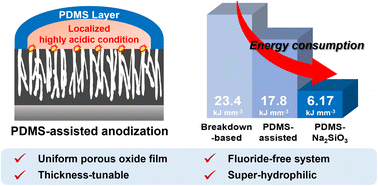
A polydimethylsiloxane (PDMS)-assisted anodization strategy is presented for the fabrication of uniform, mechanically robust, and strongly adherent porous TiO2 films under low-energy and fluoride-free conditions. Unlike conventional anodization processes that rely on direct metal–electrolyte contact and hazardous fluoride ions to induce pore formation, this approach introduces an insulating PDMS interlayer that fundamentally regulates the interfacial electrochemical environment during anodic polarization. Under an applied electric field, the initially hydrophobic PDMS layer undergoes electrochemically induced modification, enabling controlled electrolyte penetration while effectively suppressing excessive oxygen evolution. This interfacial regulation stabilizes dielectric breakdown and allows uniform porous oxide growth with significantly reduced energy input. The incorporation of silicate ions provides additional functional enhancement, leading to low-level silicon doping of the oxide layer and further reduction in energy consumption without altering the core PDMS-assisted anodization mechanism. The resulting porous TiO2 films exhibit tunable thickness, morphology, and wettability, achieving superhydrophilic surfaces under optimized conditions. Mechanical integrity and interfacial adhesion were rigorously validated by both progressive-load scratch testing and complementary tape-based cross-validation, revealing markedly improved adhesion compared to conventional fluoride-derived nanotubular TiO2 films, which exhibited immediate delamination. Overall, this work establishes PDMS-assisted anodization as a chemically clean, energy-efficient, and mechanically reliable interfacial engineering strategy for the controlled formation of porous TiO2 films, offering a versatile platform for fluoride-free anodic oxide fabrication.
 Please wait while we load your content...


