Universal asymmetric single-halogenation of the central unit in non-fullerene acceptors enables high-performance organic solar cells with efficiencies approaching 20%

Yingjie Xie a, Xiaoqin Guo a, Shuaijing Deng a, Bowei Wang b, Yue Wang a, Shaoxiong Liu a, Yaonan Ma a, Ruirui Yan a, Qiong Wu a, Changmin Yu a, Jianqi Zhang c, Kun Lu cd, Chin Foo Goh e and Shiming Zhang *abe
aKey Laboratory of Flexible Electronics (KLOFE) & School of Flexible Electronics (Future Technologies) (SoFE), Jiangsu National Synergetic Innovation Center for Advanced Materials (SICAM), Nanjing Tech University (Nanjing Tech), 30 South Puzhu Road, Nanjing, 211816, PR China
bCity University of Hong Kong (Dongguan), 8 Gaoxiong Road, Dongguan, Guangdong 523808, China. E-mail: shiming.zhang@cityu-dg.edu.cn
cCAS Key Laboratory of Nanosystem and Hierarchical Fabrication, CAS Center for Excellence in Nanoscience, National Center for Nanoscience and Technology, Beijing 100190, China
dUniversity of Chinese Academy of Sciences, Beijing 100049, China
eCity University of Hong Kong, Tat Chee Avenue 83, Kowloon, Hong Kong SAR 999077, P. R. China

Received 24th September 2025 , Accepted 21st November 2025

First published on 23rd November 2025


Abstract

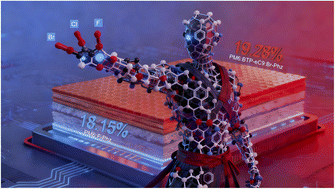
Halogenation of non-fullerene acceptors (NFAs) has been widely recognized as an effective strategy to enhance the power conversion efficiency (PCE) of organic solar cells (OSCs). Substantial-halogenation progress has been widely applied in both terminal-group and the central core units of NFAs to increase the performance of OSCs. In this study, three asymmetrical acceptor molecules with halogen-substituted central units (F-Phz, Cl-Phz, and Br-Phz) were rationally designed and synthesized. Among them, F-Phz exhibits stronger intermolecular interactions, higher crystallinity, and a larger molecular dipole moment, along with more efficient charge generation and transport in blend films. Consequently, with donor of PM6, the binary OSC based on F-Phz achieves a notable PCE of 18.15%, outperforming those based on Cl-Phz (17.83%) and Br-Phz (17.30%). More importantly, upon introducing a third component, BTP-eC9, the ternary PM6:BTP-eC9:Br-Phz device achieves an enhanced efficiency of 19.28%, while the ternary devices based on F-Phz and Cl-Phz also exhibit high PCE performance, 19.03% and 19.17%, respectively. This work highlights the synergistic effects of central unit halogenation and molecular asymmetry in improving device performance, offering a promising, universal molecular design strategy for the development of high-efficiency OSCs.

1. Introduction

Organic solar cells (OSCs) have emerged as a highly promising next-generation photovoltaic technology, owing to their lightweight nature, mechanical flexibility, controllable transparency, and compatibility with cost-effective solution-processing techniques such as large-area roll-to-roll printing.1–5 In recent years, the rapid development of non-fullerene acceptors (NFAs), particularly Y-series small-molecule acceptors (SMAs) with A–D–A1–D–A-based structures, has significantly boosted the power conversion efficiency (PCE) of OSCs, pushing single-junction devices beyond 19% and tandem devices past 20%.6–15 These molecular innovations not only optimize energy level alignment and light absorption but also enhance molecular packing, charge transfer/transport, and exciton diffusion. Moreover, advanced molecular design strategies, such as two-dimensional (2D) conjugation extension of central units, precise halogenation, and isomerization strategy, further enhance intermolecular interactions and improve device performance.16 With these groundbreaking advancements, OSCs are rapidly progressing toward commercialization, positioning themselves as a viable and sustainable alternative to conventional silicon-based photovoltaics.

Building on the progress in NFAs and their crucial role in enhancing the PCE of OSCs, halogenation strategies, particularly those involving fluorine (F), chlorine (Cl), and bromine (Br), have emerged as indispensable tools for optimizing NFA performance. The incorporation of halogen atoms into the molecular framework, especially at the central core or terminal groups, imparts several key advantages, including enhanced intermolecular interactions, optimized molecular packing, and enhanced charge transport properties.17–20 Among them, fluorination is the most widely explored halogenation strategy due to its high electronegativity, which effectively modulates the absorption spectra and energy levels. This facilitates improved alignment with donor materials and facilitates charge separation. Moreover, the incorporation of F atoms can effectively modify the molecular polarity, lower the coulombic attraction between electrons and holes, and promote more efficient charge separation. This strategy not only improves the stability and morphology of the active layer but also contributes to lower energy losses, enabling OSCs to achieve remarkable PCE exceeding 19%.

In addition to F, Cl and Br substitutions have also demonstrated promising effects in enhancing the performance of NFAs. For example, Cl substitution plays a comparable role in tuning energy levels and facilitating charge transport.21,22 Bromine's larger atomic size and polarizable electron cloud result in stronger intermolecular interactions, improving charge transport.23,24 Additionally, introducing of Br could enhance crystallinity for better molecular ordering and is easier and more cost-effective to synthesize compared to fluoride and chloride. Notably, when these halogenation strategies are applied to the central core units of NFAs, they have been shown to significantly improve the three-dimensional (3D) molecular packing networks, which is crucial for minimizing charge recombination and improving device efficiency. The combination of halogenation with other molecular design strategies, such as conjugation extension, central core modifications, and asymmetric strategy, represents a powerful approach to optimizing the electronic properties and molecular packing of OSCs.25–27 By introducing different substituents into the molecular backbone or constructing asymmetric structures, the molecular dipole moment can be effectively enhanced, intermolecular interactions strengthened, and molecular packing and crystallinity improved, thereby facilitating efficient charge transport and separation. Moreover, asymmetric design enables precise regulation of the molecular packing patterns between the central core and terminal groups, further optimizing film morphology and optoelectronic performance. For example, asymmetric acceptor molecules based on quinoxaline structures have shown promising potential application in OSCs. In particular, the incorporation of halogen atoms such as F, Cl, and Br enables a balanced optimization among efficient charge generation, charge transport, and energy loss reduction, thereby further enhancing the overall device performance.28–30

Based on the rationale above, this study reports the design and synthesis of three asymmetric acceptor molecules with halogen substitutions on the central unit, namely F-Phz, Cl-Phz, and Br-Phz (Fig. 1a). Owing to the high electronegativity of F and the inherent molecular asymmetry, F-Phz exhibits a stronger molecular dipole moment, enhanced crystalline order, a narrower bandgap, and a favorable fibrillar network morphology compared to Cl-Phz and Br-Phz. These attributes significantly promote charge generation and transport within the devices. Consequently, binary OSCs based on F-Phz achieved a notable PCE of 18.15%, with an open-circuit voltage (VOC) of 0.908 V, a short-circuit current density (JSC) of 26.23 mA cm−2, and a fill factor (FF) of 76.2%. Furthermore, the ternary device comprising PM6:BTP-eC9:Br-Phz, facilitated by the introduction of BTP-eC9, demonstrated optimized morphology, enhanced exciton dissociation efficiency, improved charge transport, and effectively suppressed charge recombination, culminating in an outstanding PCE of 19.28%. The ternary devices based on F-Phz and Cl-Phz also exhibit high PCE performance, 19.03% and 19.17%, respectively. These findings underscore the pivotal role of asymmetric central halogenation strategies in the molecular design of high-performance OSCs.


image file: d5ta07801f-f1.tif
Fig. 1 (a) Molecular structures of F-Phz, Cl-Phz, and Br-Phz, (b) normalized absorption spectra of F-Phz, Cl-Phz, and Br-Phz in dilute chloroform, (c) normalized absorption spectra of neat films for PM6, F-Phz, Cl-Phz, and Br-Phz, (d) energy level diagram of PM6, F-Phz, Cl-Phz, Br-Phz, and BTP-eC9 neat films derived from cyclic voltammograms (CVs).

2. Results and discussion

2.1 Materials synthesis and characterization

The molecular structures and synthetic procedures of F-Phz, Cl-Phz, and Br-Phz are illustrated in Fig. 1a and Scheme S1 (SI). The structures and purities of all intermediates and three new acceptors were confirmed by 1H and 13C nuclear magnetic resonance (NMR) spectroscopy, and matrix-assisted laser desorption/ionization time-of-flight spectroscopy (MALDI-TOF), shown in Fig. S17–S25. In addition, all three NFAs exhibited excellent solubility in commonly used organic solvents, including chloroform, o-xylene, toluene, and chlorobenzene. Their thermal stabilities were further investigated by thermogravimetric analysis (TGA), with decomposition temperatures (Td) of 323.3 °C, 322.3 °C, and 325.0 °C for F-Phz, Cl-Phz, and Br-Phz, respectively, as shown in Fig. S1. These results indicate that all three acceptors possess high thermal stability, which is beneficial for enhancing their miscibility with the donor polymer PM6 in chloroform-based processing.

2.2 Optoelectronic characteristics

The ultraviolet-visible (UV-vis) spectroscopy was employed to investigate the absorption properties of the three acceptors, with the corresponding results summarized in Table 1. As shown in Fig. 1b and c, F-Phz, Cl-Phz, and Br-Phz exhibited nearly identical absorption profiles in the solution state, spanning from 500 to 850 nm. The maximum peaks for the three NFAs were centered approximately at 746 nm, indicating that halogenation with different electronegativity had little effect on their absorption characteristics in solution. In the film state, the absorption spectra of the three NFAs exhibited significant redshifts due to enhanced intermolecular π–π stacking interactions, with similar absorption profiles observed for each. Upon transitioning from solution to film, F-Phz exhibited the largest redshift in its maximum absorption peak (λmax,film), shifting by 74 nm, compared to 65 nm for Cl-Phz and Br-Phz, indicating stronger intermolecular interaction of F-Phz. The films of all three acceptors exhibited broad and intense absorption across the range of 600 to 900 nm, indicating good compatibility with the donor material PM6 (Fig. S2). The maximum absorption peaks for the three NFAs were measured at 819, 811, and 811 nm, respectively, with absorption onsets at 903, 896, and 894 nm, respectively. Additionally, the optical band gaps (Eoptg) were calculated to be 1.37, 1.38, and 1.39 eV for F-Phz, Cl-Phz, and Br-Phz, respectively.
Table 1 The photophysical and electrochemical characteristics of F-Phz, Cl-Phz, and Br-Phz
Acceptor λ max,solution (nm) λ max,film (nm) Δλ (nm) λ onset,film (nm) E optg[thin space (1/6-em)]a (eV) E LUMO /EHOMOb (eV) E CVg[thin space (1/6-em)]b (eV)
a The optical bandgap was calculated using the equation: Eoptg = 1240/λonset,film. b The energy levels ELUMO and EHOMO were determined by cyclic voltammetry. ECVg = ELUMOEHOMO.
F-Phz 745 819 74 903 1.37 −3.88/−5.60 1.72
Cl-Phz 746 811 65 896 1.38 −3.89/−5.63 1.74
Br-Phz 746 811 65 894 1.39 −3.90/−5.64 1.74


Cyclic voltammetry (CV) measurements (Fig. S3) were conducted to determine the energy levels of these three NFAs. Based on the onset potentials of oxidation and reduction, the highest occupied molecular orbital (HOMO) and the lowest unoccupied molecular orbital (LUMO) energy levels were estimated to be −5.60 eV and −3.88 eV for F-Phz, −5.63 eV and −3.89 eV for Cl-Phz, and −5.64 eV and −3.90 eV for Br-Phz, respectively. These values are consistent with the variations observed in their absorption spectra. The favorable energy-level alignment of the three NFAs makes them promising acceptor materials for organic photovoltaic applications. Furthermore, the energy level alignments derived from CV measurements are in good agreement with the results predicted by density functional theory (DFT) calculations (Fig. S4). The DFT analysis also reveals that all three halogenated derivatives exhibit comparable optical band gaps of approximately 2.02 eV, which is in line with the nearly identical maximum absorption peaks observed in Fig. 1b.

2.3 DFT simulations

DFT calculations were carried out using Gaussian 09 at the B3LYP/6-311G(d) level to investigate the influence of different halogenation strategies on the central cores of F-Phz, Cl-Phz, and Br-Phz. For computational simplicity, the long alkyl chains were substituted with methyl groups. As illustrated in Fig. 2a, the optimized molecular geometries of the three NFAs exhibit similar, nearly planar banana configurations. The calculated N–C–C–N dihedral angles for F-Phz, Cl-Phz, and Br-Phz are 9.48°, 9.51°, and 8.94°, respectively. These values are closely aligned with those of Y6 (10.07°).31 These results indicate that the three NFAs possess comparable molecular planarity, which may facilitate charge transport. The electrostatic potential (ESP) on the van der Waals surfaces and the corresponding averaged ESP distributions of the three NFAs were simulated using Multiwfn to investigate their intermolecular interaction.32 As shown in Fig. 2b, the backbones of F-Phz, Cl-Phz, and Br-Phz predominantly exhibit positive ESP, while the carbonyl and cyano groups in the end-group display negative ESP. Typically, NFAs possess positive ESP distributions, in contrast to polymer donor materials, which generally show negative ESP distributions.33 This difference in ESP at the donor–acceptor (D–A) interface facilitates the formation of an intermolecular electric field (IEF), thereby promoting efficient charge transfer across the D/A interface.34 To further elucidate this process, we performed a detailed electron–hole analysis. The results are presented in Fig. S4b of the revised manuscript. As shown in Fig. S4b, the spatial distributions of the hole and electron densities are clearly separated between the donor and acceptor moieties, confirming the existence of a strong intramolecular charge transfer (ICT) process in all three molecules. The calculated hole–electron contribution ratios are 99.20%, 99.01%, and 99.03% for F-Phz, Cl-Phz, and Br-Phz, respectively, indicating that the S1 excitations are predominantly composed of a single hole → electron transition. Additionally, the average ESP distribution values (V) for F-Phz, Cl-Phz, and Br-Phz were calculated to be 4.734, 4.842, and 4.837 kcal mol−1, respectively, indicating only minor variation among the three (Fig. S5). As illustrated in Fig. S6, the higher electronegativity of F (4.0), compared to Cl (3.0) and Br (2.8), results in a larger dipole moment for F-Phz. Specifically, F-Phz exhibits a dipole moment of 1.97 debye, whereas Cl-Phz and Br-Phz display slightly lower values of 1.92 and 1.85 debye, respectively. Owing to the asymmetric molecular structures, the dipole moments are oriented at oblique angles relative to the molecular backbone.35 Notably, a relatively large dipole moment may enhance intermolecular electrostatic interactions, which could indirectly influence molecular packing and aggregation behavior, thereby facilitating electron migration from the central donor unit to the electron-deficient end groups upon photoexcitation, which ultimately enhances charge transfer efficiency and improves FF of OSCs.
image file: d5ta07801f-f2.tif
Fig. 2 (a) Optimized molecular geometries of F-Phz, Cl-Phz, and Br-Phz at B3LYP/6-311G(d) level; (b) electrostatic potential (ESP) distributions of F-Phz, Cl-Phz, and Br-Phz.

2.4 Photovoltaic performances

To further investigate the effect of halogen substitution on the central unit regarding device performance, OSCs were fabricated using a conventional architecture: ITO/2PACZ/active layer/PNDIT-F3N/Ag. In this configuration, ITO denotes indium tin oxide, 2PACZ refers to 2-(3,6-dimethoxycarbazol-9-yl)ethylphosphonic acid and PNDIT-F3N represents [(9,9-bis(3′-(N,N-dimethylamino)propyl)-2,7-fluorene)-alt-5,5′-bis(2,2′-thiophene)-2,6-naphthalene-1,4,5,8-tetracarboxylic-N,N′-di(2-ethylhexyl)imide], as illustrated in Fig. 3a. The polymeric donor PM6,36 featuring complementary absorption and well-matched energy levels with the NFAs (Fig. 1c and d), was selected to form blend films with F-Phz, Cl-Phz, and Br-Phz. The optimized current density–voltage (JV) curves and corresponding photovoltaic parameters are presented in Fig. 3b and c and summarized in Table 2. It is worth noting that high VOC values of over 0.9 V can be achieved in F-Phz, Cl-Phz, and Br-Phz-based binary OSCs. Devices based on PM6:Br-Phz show a PCE of 17.30% with VOC of 0.926 V, JSC of 24.88 mA cm−2, and FF of 75.1%. The enhanced VOC is primarily attributed to the elevated LUMO energy level of the acceptor. To further understand the origin of the VOC differences among the binary devices, the energy-loss behavior was analyzed using the intersection between the FTPS-EQE and EL spectra, as shown in Fig. S16. The photovoltaic bandgaps (EPVg) derived from these crossings are 1.430 eV, 1.440 eV, and 1.441 eV for PM6:F-Phz, PM6:Cl-Phz, and PM6:Br-Phz, respectively, following the same trend as their optical bandgaps (Eoptg). The corresponding total energy losses (Eloss) are 0.522, 0.518, and 0.515 eV, respectively (Table S5). Although the EPVg difference between Cl-Phz and Br-Phz is extremely small (∼0.001 eV), their measured VOC values still differ slightly because VOC is determined by both EPVg and the energy-loss components (ΔE1, ΔE2, and ΔE3). Among the three systems, Br-Phz exhibits the smallest total Eloss (0.515 eV) due to its slightly lower non-radiative loss (ΔE3 = 0.200 eV) and weaker sub-gap absorption, resulting in a marginally higher VOC (0.926 V). In contrast, the F-Phz system shows a slightly higher Eloss (0.522 eV) caused by stronger sub-gap absorption and a larger non-radiative loss (ΔE3 = 0.211 eV). These results indicate that the EPVg trend is consistent with Eoptg, and the subtle VOC differences among the binary devices mainly arise from small variations in non-radiative recombination and energetic disorder. However, the low FF can be attributed to the poor aggregation morphology. The photovoltaic devices based on PM6:F-Phz and PM6:Cl-Phz yield an exceptional JSC of 26.23 and 25.08 mA cm−2, respectively, which are partially due to their broader optical absorption and more efficient photon harvesting capabilities, as evidenced by the UV-vis spectra and the afore mentioned external quantum efficiency (EQE) spectra.
image file: d5ta07801f-f3.tif
Fig. 3 (a) Device structure of OSCs, (b) the current density–voltage (JV) curves of PM6:F-Phz, PM6:Cl-Phz, and PM6:Br-Phz, (c) EQE spectra and integrated JSC of PM6:F-Phz, PM6:Cl-Phz, and PM6:Br-Phz, (d) the photocurrent density (Jph) versus effective voltage (Veff) curves, (e) the dependence of the JSC on the light intensity curves, (f) the dependence of the VOC on the light intensity curves for the PM6:F-Phz, PM6:Cl-Phz, and PM6:Br-Phz based optimum OSCs.
Table 2 Summary of device parameters of the optimized OSCsa
Active layer V OC (V) J SC (mA cm−2) Calc. JSCb (mA cm−2) FF (%) PCE (%)
a The optimal and statistical results are presented outside and inside the parentheses. All average values were derived from 10 independently fabricated devices. b Current densities obtained by integrating the EQE spectra.
PM6:F-Phz 0.908 (0.907 ± 002) 26.23 (26.03 ± 0.20) 25.06 76.2 (76.0 ± 0.2) 18.15 (18.03 ± 0.12)
PM6:Cl-Phz 0.922 (0.920 ± 0.02) 25.08 (24.77 ± 0.31) 23.98 77.1 (76.5 ± 0.6) 17.83 (17.63 ± 0.25)
PM6:Br-Phz 0.926 (0.922 ± 0.03) 24.88 (24.66 ± 0.22) 23.79 75.1 (74.6 ± 0.5) 17.30 (17.13 ± 0.21)
PM6:BTP-eC9 0.840 (0.835 ± 0.05) 27.66 (27.51 ± 0.15) 26.56 79.2 (79.0 ± 0.2) 18.40 (18.25 ± 0.15)
PM6:BTP-eC9:F-Phz 0.875 (0.874 ± 0.02) 27.50 (27.20 ± 0.30) 26.83 79.1 (78.7 ± 0.4) 19.03 (18.83 ± 0.23)
PM6:BTP-eC9:Cl-Phz 0.877 (0.875 ± 0.03) 27.46 (27.13 ± 0.33) 26.79 79.6 (78.3 ± 0.3) 19.17 (19.01 ± 0.18)
PM6:BTP-eC9:Br-Phz 0.873 (0.870 ± 0.04) 27.82 (27.70 ± 0.12) 27.14 79.4 (78.8 ± 0.6) 19.28 (19.15 ± 0.15)


The EQE spectra of devices based on F-Phz, Cl-Phz, and Br-Phz are presented in Fig. 3b. The PM6:F-Phz, PM6:Cl-Phz, and PM6:Br-Phz OSCs exhibit strong photo-response in the range of 500–800 nm, which is consistent with the absorption spectra of the corresponding blend films (Fig. S7a). As shown in Fig. 3c and Table 2, the deviation between the integrated JSC values obtained from the EQE spectra and those derived from the JV measurements is within 5%, confirming the accuracy and reliability of the experimental data. Among the binary OSCs, the Br-Phz-based devices show a relatively lower spectral response intensity within the 500–800 nm range, resulting in a decreased JSC of 23.79 mA cm−2. In contrast, the PM6:F-Phz-based devices display an enhanced EQE response over the entire spectral range, indicating more efficient photon-to-electron conversion and contributing to the higher JSC value.

To gain a deeper understanding of the charge generation and dissociation mechanisms in OSCs, photocurrent density (Jph) versus effective voltage (Veff) plots were measured, as shown in Fig. 3d. The Jph is defined as the difference between the current densities under illumination (JL) and dark conditions (JD). According to the equation Jph = JLJD, the Veff is calculated using the equation Veff = V0Vapp, where V0 is defined as the voltage at which Jph = 0 and Vapp denotes the applied voltage. The saturation current (Jsat) can be determined when Veff exceeds 2 V, indicating that the charge recombination can be ignored at a high voltage. The exciton dissociation probability (ηdiss = Jph/Jsat) under short-circuit conditions for PM6:F-Phz, PM6:Cl-Phz, and PM6:Br-Phz devices were calculated to be 98.21%, 97.96%, and 97.46%, respectively. At the maximum power point, the corresponding charge collection probability (ηcoll = Jph/Jsat) were determined to be 88.93%, 88.21%, and 87.86% (Fig. 3d). The higher ηdiss and ηcoll values observed in the PM6:F-Phz system may partially account for its enhanced photocurrent response as reflected in the EQE spectra (Fig. 3c). In addition, photoluminescence (PL) quenching measurements of the three blend films (Fig. S7b) reveal quenching efficiencies of 95.38%, 94.22%, and 88.17% for PM6:F-Phz, PM6:Cl-Phz, and PM6:Br-Phz, respectively, under 810 nm excitation. The higher PL quenching efficiencies observed for PM6:F-Phz suggest more efficient electron and hole transfer processes, contributing to its superior EQE response and the highest JSC among the three devices. Then, bimolecular recombination of OSCs was evaluated by exploring the relationships between JSC and light intensity (Plight). The data were fitted using the power-law equation: JSCPlight. The PM6:F-Phz-based devices exhibit an α value of 0.987, surpassing those of the PM6:Cl-Phz based devices (0.983) and PM6:Br-Phz-based devices (0.981) (Fig. 3e). The α values for all three devices are close to 1, suggesting weaker bimolecular recombination in these devices. The VOC of the PM6:F-Phz, PM6:Cl-Phz, and PM6:Br-Phz devices were plotted as a function of the ln[thin space (1/6-em)]Plight, as shown in Fig. 3f. The corresponding slopes were determined to be 1.14kT/q, 1.17kT/q, and 1.21kT/q, respectively. These values, being close to 1kT/q, indicate that monomolecular (trap-assisted) recombination is not the predominant recombination mechanism in any of the three systems. This result offers important insights into the recombination dynamics and charge transport characteristics of the devices, thereby deepening our understanding of their photovoltaic behavior. To evaluate the carrier transport, hole (µh) and electron (µe) mobilities were determined using the space charge limited current (SCLC) method37 as shown in Fig. S8 and summarized in Table S1. The µe/µh values for the PM6:F-Phz blend film were measured to be 6.07 × 10⁻⁴/4.52 × 10−4 cm2 V−1 s−1, while those of the PM6:Cl-Phz are 5.52 × 10⁻⁴/3.76 × 10−4 cm2 V−1 s−1, and the PM6:Br-Phz's values are 5.06 × 10⁻⁴/2.96 × 10−4 cm2 V−1 s−1. Devices based on the PM6:F-Phz exhibit a more balanced µe/µh ratio of 1.34 compared with the devices based on the PM6:Cl-Phz (1.46) and PM6:Br-Phz (1.71), respectively. Such balanced charge mobility promotes efficient carrier transport and suppresses recombination losses, thereby contributing to an enhanced JSC in OSCs.

To further enhance device efficiency, a small amount of X-Phz (X = F, Cl, or Br) was incorporated into the PM6:BTP-eC9 binary system to form a ternary blend with a mass ratio of 1[thin space (1/6-em)]:[thin space (1/6-em)]1[thin space (1/6-em)]:[thin space (1/6-em)]0.2. Remarkably, this ternary configuration reversed the PCE trend observed in the corresponding binary devices, which is attributed to the formation of an acceptor alloy structure, as discussed in detail below. As shown in Fig. S9c and Table 2, the ternary device based on PM6:BTP-eC9:Br-Phz achieved a champion PCE of 19.28% with a VOC of 0.873 V, an excellent JSC of 27.82 mA cm−2, and a high FF of 79.4%. In comparison, the ternary devices based on PM6:BTP-eC9:F-Phz and PM6:BTP-eC9:Cl-Phz achieved PCE of 19.03% and 19.17%, respectively, with VOC values of 0.875 V and 0.877 V, JSC values of 27.5 mA cm−2 and 27.46 mA cm−2, and FF of 79.1% and 79.6%, respectively. Compared with the binary devices, all three ternary devices exhibited enhancements in JSC and FF, whereas a slight decrease in VOC was observed, which may be attributed to their cascade energy level alignment. Notably, the PM6:BTP-eC9:Br-Phz device outperformed the other two in both JSC and FF. As shown in Fig. S1 and Table S1, the PM6:BTP-eC9:Br-Phz-based device exhibits the most balanced µe/µh values ratio (1.13), which facilitates efficient charge transport and contributes to enhanced FF. The JSC values calculated from the EQE spectra (Fig. S9d and Table 1) were consistent with those obtained from the JV measurements. However, the EQE values of the PM6:BTP-eC9:F-Phz and PM6:BTP-eC9:Cl-Phz based devices are slightly lower than those of the PM6:BTP-eC9:Br-Phz-based device in the 350–850 nm range, leading to marginally reduced JSC values. Furthermore, as illustrated in Fig. S10 and Table S1, the PM6:BTP-eC9:Br-Phz ternary device exhibits slightly higher ηdiss (99.81%) and ηcoll (92.71%) values compared to the other two ternary devices. The corresponding S values were 1.11, 1.09, and 1.08kT/q for the PM6:BTP-eC9:F-Phz, PM6:BTP-eC9:Cl-Phz, and PM6:BTP-eC9:Br-Phz devices, respectively. Additionally, the PM6:BTP-eC9:Br-Phz device exhibited a slightly higher α value of 99.3%, indicating more efficient charge collection and reduced trap-assisted and bimolecular recombination. These factors that contribute to its superior JSC and FF. The performance differences are mainly attributed to distinct blend film morphologies, which will be discussed in detail in the following sections.

2.5 Morphology analysis

To gain deeper insight into the influence of central unit halogenation on phase separation behavior in blend films, atomic force microscopy (AFM) and transmission electron microscopy (TEM) were employed to characterize the film morphology. As shown in Fig. 4, the PM6:F-Phz, PM6:Cl-Phz, and PM6:Br-Phz blend films exhibit uniform and relatively smooth surface morphologies, with root-mean-square (RMS) roughness values of 1.50, 1.23, and 1.18 nm, respectively. The AFM phase images reveal well-defined fiber-like domains with appropriate dimensions across all blend films, a morphology widely regarded as ideal for achieving high-performance OSCs.38 Furthermore, TEM images (Fig. S13) corroborate the presence of continuous interpenetrating fibrillar networks, which are conducive to enhanced charge carrier mobility and efficient charge transport. Upon incorporation of BTP-eC9 as a third component into the PM6:X-Phz binary systems, the resulting ternary blend films exhibit smoother, more homogeneous surface morphology, along with more pronounced fibrillar structures and enlarged phase separation domains. This morphological evolution is partially responsible for the improved charge transport dynamics. In summary, precise halogenation of the central unit offers an effective means of modulating donor/acceptor distribution and phase separation characteristics within the active layer, thereby promoting simultaneous enhancements in JSC and FF, ultimately leading to superior photovoltaic performance. It is essential to note that the nanofiber size is closely related to the miscibility between PM6 and the NFAs. To further evaluate this relationship, contact angle measurements were performed, and the corresponding Flory–Huggins interaction parameters (χ) for each donor–acceptor pair were calculated.39 As shown in Fig. S14 and Table S2, the χD:A value for the PM6:F-Phz blend (0.38) is higher than those for PM6:Cl-Phz (0.25) and PM6:Br-Phz (0.26), indicating reduced miscibility and enhanced crystallinity of F-Phz, likely due to the fluorination of its central unit.40 This increased crystallinity may contribute to the higher domain purity and larger nanofiber dimensions, which are consistent with the morphological features observed in the AFM and TEM images. In addition, the χ values of the Cl-Phz:BTP-eC9 and Br-Phz:BTP-eC9 blends are 0.004 K and 0.003 K, respectively, confirming the good miscibility between the two NFAs. To further elucidate the location of the guest acceptor BTP-eC9 within the ternary blend films, the wetting coefficient (ω) was calculated based on Young's equation: image file: d5ta07801f-t1.tif.41 The obtained ω values for BTP-eC9 in the PM6:BTP-eC9:F-Phz, PM6:BTP-eC9:Cl-Phz, and PM6:BTP-eC9:Br-Phz blend systems were 2.68, −1.27, and −1.31, respectively (Table S3). These results indicate that BTP-eC9 predominantly resides in the PM6-rich phase in the PM6:BTP-eC9:F-Phz blend, whereas it is mainly distributed within the domains of the primary acceptors Cl-Phz and Br-Phz in the other two blends. Notably, the smallest ω value observed in the PM6:BTP-eC9:Br-Phz system suggests a greater propensity for Br-Phz and BTP-eC9 to form an acceptor alloy structure. This favorable distribution is expected to facilitate improved morphology and charge transport, thereby contributing to the enhanced PCE observed in PM6:BTP-eC9:Br-Phz-based devices. These findings provide valuable insights into the rational design of high-performance ternary OSCs.42,43
image file: d5ta07801f-f4.tif
Fig. 4 Graphology characterization of blend films, (a–c) AFM height images, (d–f) AFM phase images.

To further elucidate the impact of halogen substitution at the central unit on the crystallinity, molecular orientation, and intermolecular stacking of the blend films, two-dimensional grazing-incidence wide-angle X-ray scattering (2D GIWAXS) measurements were conducted. As shown in Fig. 5 and summarized in Table S4, the neat films of F-Phz, Cl-Phz, and Br-Phz exhibit prominent (010) diffraction peaks in the out-of-plane (OOP) direction at 1.72, 1.71, and 1.72 Å−1, corresponding to π–π stacking distances of 3.65, 3.67, and 3.65 Å, respectively. In the in-plane (IP) direction, distinct (100) diffraction peaks were observed at 0.32, 0.31, and 0.31 Å−1, corresponding to lamellar stacking distances of approximately 19.38, 20.27, and 20.27 Å, respectively. These results indicate that all three acceptors possess a favorable face-on molecular orientation. Among them, F-Phz exhibits the shortest π–π stacking distance and the largest crystal coherence length (CCL), suggesting enhanced crystallinity and more ordered molecular packing. Although bromine atoms usually enhance molecular ordering due to their larger polarizability, in our asymmetric system, fluorination of the central unit generates a stronger molecular dipole moment, leading to tighter π–π stacking and higher crystallinity. Upon blending with the PM6 donor, all three blend films retained distinct (010) and (100) diffraction peaks in both the OOP and IP directions, indicating that the favorable face-on orientation is well preserved. As listed in Table S4, the (010) peaks for the PM6:F-Phz, PM6:Cl-Phz, and PM6:Br-Phz blend films are located at 1.72, 1.71, and 1.70 Å−1, corresponding to π–π stacking distances of 3.65, 3.67, and 3.69 Å, and CCLs of 18.2, 17.6, and 17.7 Å, respectively. Overall, the PM6:F-Phz blend demonstrates the most compact π–π stacking and slightly higher molecular order, which is primarily attributed to the fluorination of the central unit. These findings are further supported by atomic force microscopy (AFM) analysis, where the PM6:F-Phz blend film exhibits the highest root-mean-square (RMS) surface roughness (1.50 nm, Fig. 4). Moreover, in the ternary blend films (Fig. S15), strong (010) and (100) diffraction peaks remain visible in both the OOP and IP directions, suggesting that the face-on orientation is well maintained. Notably, the PM6:BTP-eC9:Br-Phz ternary film exhibits the shortest π–π stacking distance (3.61 Å) and the largest CCL (18.9 Å), whereas the π–π stacking distances of PM6:BTP-eC9:F-Phz and PM6:BTP-eC9:Cl-Phz are 3.63 Å and 3.61 Å, with corresponding CCLs of 18.5 Å and 18.7 Å, respectively. In summary, the blend films demonstrate well-defined fiber-like morphology, optimized phase separation, and a predominant face-on molecular orientation. These characteristics collectively promote efficient charge transport, thereby contributing to the observed high JSC and FF, and ultimately resulting in superior device performance.


image file: d5ta07801f-f5.tif
Fig. 5 GIWAXS characterization of the blended films (a) 2D GIWAXS patterns of optimized PM6:F-Phz, PM6:Cl-Phz, and PM6:Br-Phz blended films and (b) 2D GIWAXS patterns of optimized PM6:BTP-eC9:F-Phz, PM6:BTP-eC9:Cl-Phz, and PM6:BTP-eC9:Br-Phz blended films, (c) the corresponding in-plane (IP) and out-of-plane (OOP) extracted line-cut profiles of PM6:F-Phz, PM6:Cl-Phz, and PM6:Br-Phz blended films, (d) the corresponding in-plane (IP) and out-of-plane (OOP) extracted line-cut profiles of PM6:F-Phz, PM6:Cl-Phz, and PM6:Br-Phz blended films.

2.6 Ternary system analysis

To gain deeper insight into the structure–property relationships in ternary organic solar cells, we systematically investigated the morphology and molecular packing of PM6:BTP-eC9:X-Phz blends using GIWAXS, AFM, TEM, and surface-energy analyses, complemented by SCLC, EQE, and charge-collection measurements. Upon incorporating BTP-eC9 into the binary systems, the GIWAXS patterns display clear evolution (Fig. S15). The (010) diffraction peaks of the ternary films shift slightly toward higher q values, and the CCL increases, indicating shorter π–π stacking distances and improved molecular ordering. These observations suggest that BTP-eC9 participates in the molecular packing process and promotes more ordered stacking within the active layer. The degree of structural evolution strongly depends on the halogen substituent on the Phz core. PM6:BTP-eC9:Br-Phz exhibits the most compact π–π stacking (3.61 Å) and the largest CCL (18.9 Å), implying partial co-crystallization between Br-Phz and BTP-eC9 and the formation of an acceptor-alloy structure. This alloying enhances the balance of electron and hole mobilities (Table S1), increases ηdiss and ηcoll (Fig. S10), and consequently improves both JSC and FF, resulting in the highest ternary PCE (19.28%). By contrast, PM6:BTP-eC9:F-Phz shows only a minimal shift in the (010) peak, indicating that BTP-eC9 poorly incorporates into the crystalline domains of F-Phz due to limited miscibility (ω = 2.68). In this case, BTP-eC9 preferentially segregates into the PM6-rich phase, disrupting the continuity of the acceptor network and diminishing exciton collection and charge-transport balance. Therefore, although F-Phz binary devices exhibit the highest crystallinity and JSC, their ternary counterparts show slightly lower PCE. The PM6:BTP-eC9:Cl-Phz film demonstrates intermediate packing behavior, with moderate π–π contraction and increased CCL, leading to relatively lower JSC but higher FF.

Overall, these results indicate that the transition from binary to ternary device performance is governed not only by the intrinsic crystallinity of the primary acceptor but also by the extent of alloy formation and the resulting donor–acceptor and acceptor–acceptor distributions within the blend film. The observed reversal in PCE trends among the ternary devices arises from the differences in miscibility and co-crystallization tendencies between BTP-eC9 and each halogenated acceptor.

3. Conclusion

In summary, this study reports the design and synthesis of a series of asymmetric NFAs with A–D–A1–D–A architectures, featuring different halogen substitutions on the central unit. A systematic investigation was performed to elucidate the impact of central-unit halogenation on the optoelectronic properties, film morphology, and photovoltaic performance PCE of OSCs. Notably, fluorination at the central unit markedly enhanced the material's crystallinity and molecular dipole moment, while promoting the formation of well-defined fibrillar network morphologies. These improvements facilitated efficient exciton dissociation, balanced charge carrier mobilities (µe/µh), and suppressed charge recombination. Binary OSCs based on PM6:F-Phz demonstrated a high PCE of 18.15%. More importantly, the introduction of BTP-eC9 as a structurally analogous third component formed an alloy-type acceptor with Br-Phz, significantly optimizing device morphology and yielding a ternary OSC with an improved PCE of 19.28%, ranking among the highest efficiencies reported for state-of-the-art OSCs. This work not only highlights the pivotal role of central-unit halogenation in tuning the performance of asymmetric SMAs but also provides valuable insights and guidelines for future innovative molecular designs based on the structural diversity of this series.

Conflicts of interest

The authors declare that they have no known competing financial interests.

Data availability

The data supporting this article have been included as part of the supplementary information (SI). Supplementary information is available. See DOI: https://doi.org/10.1039/d5ta07801f.

Acknowledgements

Authors thank Special Science and Technology Innovation Fund of Jiangsu Province on Carbon Peak and Carbon Neutralization-Frontier Fundamental Project (no. BK20220010).

References

  1. Y. Zhou, Z. Zhou, Y. Wang, Q. Jiang and D. Liu, Small, 2025, 2500536 CrossRef CAS PubMed.
  2. B. Deng, Z. Lu, K. Zheng, B. Wei, G. Lévêque, B. Grandidier, J. Zhang and T. Xu, Small, 2025, 2503646 CrossRef CAS PubMed.
  3. Y. Ji, L. Liang, T. Chen, X. Liu, M. Mao, Y. Hu, Y. Jin, X. Huang, X. Ren, D. Xie, R. Hu, Y. Zhang, X. Yang and W. Huang, Adv. Energy Mater., 2025, 2501698 CrossRef CAS.
  4. Z. Wang, D. Zhang, L. Yang, O. Allam, Y. Gao, Y. Su, M. Xu, S. Mo, Q. Wu, Z. Wang, J. Liu, J. He, R. Li, X. Jia, Z. Li, L. Yang, M. D. Weber, Y. Yu, X. Zhang, T. J. Marks, N. Stingelin, J. Kacher, S. S. Jang, A. Facchetti and M. Shao, Science, 2025, 387, 381–387 CrossRef CAS PubMed.
  5. Y.-F. Shen, H. Zhang, J. Zhang, C. Tian, Y. Shi, D. Qiu, Z. Zhang, K. Lu and Z. Wei, Adv. Mater., 2023, 35, 2209030 CrossRef CAS PubMed.
  6. J. Yuan, Y. Zhang, L. Zhou, G. Zhang, H.-L. Yip, T.-K. Lau, X. Lu, C. Zhu, H. Peng, P. A. Johnson, M. Leclerc, Y. Cao, J. Ulanski, Y. Li and Y. Zou, Joule, 2019, 3, 1140–1151 CrossRef CAS.
  7. C. Li, J. Zhou, J. Song, J. Xu, H. Zhang, X. Zhang, J. Guo, L. Zhu, D. Wei, G. Han, J. Min, Y. Zhang, Z. Xie, Y. Yi, H. Yan, F. Gao, F. Liu and Y. Sun, Nat. Energy, 2021, 6, 605–613 CrossRef CAS.
  8. Y. Wei, Z. Chen, G. Lu, N. Yu, C. Li, J. Gao, X. Gu, X. Hao, G. Lu, Z. Tang, J. Zhang, Z. Wei, X. Zhang and H. Huang, Adv. Mater., 2022, 34, 2204718 CrossRef CAS PubMed.
  9. Z. Zheng, J. Wang, P. Bi, J. Ren, Y. Wang, Y. Yang, X. Liu, S. Zhang and J. Hou, Joule, 2022, 6, 171–184 CrossRef CAS.
  10. X. Jiang, S. Qin, L. Meng, G. He, J. Zhang, Y. Wang, Y. Zhu, T. Zou, Y. Gong, Z. Chen, G. Sun, M. Liu, X. Li, F. Lang and Y. Li, Nature, 2024, 635, 860–866 CrossRef PubMed.
  11. Y. Han, J. Fu, Z. Ren, J. Yu, Q. Liang, Z. Xu, X. Xie, D. Li, R. Ma, M. Cao, Y. Sun, C. Yang, J. He, X. Chang, K. Liu, P. W. K. Fong, J. Huang, H. Liu, Z. Liu, D. Xu, L. Cheng, J. Zhang, G. Yang, X. Lu, Y. Zhu, Q. Tai, Q. Lin, H. Hu, Y. Yang and G. Li, Nat. Energy, 2025, 10, 513–525 CrossRef.
  12. B. Cheng, X. Xia, S. Cheng, C. Han, F. Sun, Z. Fu, W. Hou, F. Hua, H. Wang, W. Sun, Y. Huo, S. Ji, X. Guo, H. Yin, X. Du, X. Hao, Y. Li and M. Zhang, Adv. Mater., 2025, 37, 2500357 CrossRef CAS PubMed.
  13. H. Wang, B. Zhang, L. Wang, X. Guo, L. Mei, B. Cheng, W. Sun, L. Kan, X. Xia, X. Hao, T. Geue, F. Liu, M. Zhang and X.-K. Chen, Angew. Chem., Int. Ed., 2025, 64, e202508257 CrossRef CAS PubMed.
  14. C. Han, B. Cheng, Z. Fu, H. Wang, S. Ji, J. Wu, S. Cheng, X. Xia, H. Yin, X. Du, E. Wang, X. Guo, X. Hao, Y. Li and M. Zhang, Angew. Chem., Int. Ed., 2025, 64, e202501592 CrossRef CAS PubMed.
  15. F. Sun, J. Wu, B. Cheng, L. Kan, F. Hua, W. Sun, H. Wang, Y. Huo, S. Chen, X. Xia, X. Du, F. Liu, E. Wang, X. Guo, Y. Li and M. Zhang, Energy Environ. Sci., 2025, 18, 7071–7081 RSC.
  16. X. Cao, T. He, H. Liang, Z. Yao, J. Yang, Y. Guo, G. Long, B. Kan, C. Li, X. Wan and Y. Chen, Small, 2024, 20, 2401054 CrossRef PubMed.
  17. L. Wang, Q. An, L. Yan, H.-R. Bai, M. Jiang, A. Mahmood, C. Yang, H. Zhi and J.-L. Wang, Energy Environ. Sci., 2022, 15, 320–333 RSC.
  18. Z. Chen, S. Zhang, T. Zhang, J. Ren, J. Dai, H. Li, J. Qiao, X. Hao and J. Hou, Angew. Chem., Int. Ed., 2024, 63, e202317892 CrossRef CAS PubMed.
  19. H. Chen, H. Liang, Z. Guo, Y. Zhu, Z. Zhang, Z. Li, X. Cao, H. Wang, W. Feng, Y. Zou, L. Meng, X. Xu, B. Kan, C. Li, Z. Yao, X. Wan, Z. Ma and Y. Chen, Angew. Chem., Int. Ed., 2022, 61, e202209580 CrossRef CAS PubMed.
  20. Y. Zou, H. Chen, X. Bi, X. Xu, H. Wang, M. Lin, Z. Ma, M. Zhang, C. Li, X. Wan, G. Long, Y. Zhaoyang and Y. Chen, Energy Environ. Sci., 2022, 15, 3519–3533 RSC.
  21. H. Liang, H. Chen, P. Wang, Y. Zhu, Y. Zhang, W. Feng, K. Ma, Y. Lin, Z. Ma, G. Long, C. Li, B. Kan, Z. Yao, H. Zhang, X. Wan and Y. Chen, Adv. Funct. Mater., 2023, 33, 2301573 CrossRef CAS.
  22. T. Xu, Z. Luo, R. Ma, Z. Chen, T. A. Dela Peña, H. Liu, Q. Wei, M. Li, C. e. Zhang, J. Wu, X. Lu, G. Li and C. Yang, Angew. Chem., Int. Ed., 2023, 62, e202304127 CrossRef CAS PubMed.
  23. H. Liang, X. Bi, H. Chen, T. He, Y. Lin, Y. Zhang, K. Ma, W. Feng, Z. Ma, G. Long, C. Li, B. Kan, H. Zhang, O. A. Rakitin, X. Wan, Z. Yao and Y. Chen, Nat. Commun., 2023, 14, 4707 CrossRef CAS PubMed.
  24. H. Tian, K. Sun, Y. Wang, Z. Chen, G. Zhang and Z. Luo, Chem. Commun., 2024, 60, 14656–14659 RSC.
  25. H. Chen, Y. Zou, H. Liang, T. He, X. Xu, Y. Zhang, Z. Ma, J. Wang, M. Zhang, Q. Li, C. Li, G. Long, X. Wan, Z. Yao and Y. Chen, Sci. China: Chem., 2022, 65, 1362–1373 CrossRef CAS.
  26. J. Wang, H. Chen, C. Li, Y. Lin, Y. Yang, Z. Ma and Y. Lu, Chem. Eng. J., 2023, 477, 147091 CrossRef CAS.
  27. Y. Li, X. Jia, X. Bi, K. Wang, W. Zhao, X. Cao, Z. Yao, Y. Guo, Z. Zhang, G. Long, C. Li, X. Wan and Y. Chen, J. Mater. Chem. A, 2025, 13, 12339–12348 RSC.
  28. W. Liu, J. Zhang, S. Xu and X. Zhu, Sci. Bull., 2019, 64, 1144–1147 CrossRef PubMed.
  29. K. Liu, Y. Jiang, F. Liu, G. Ran, F. Huang, W. Wang, W. Zhang, C. Zhang, J. Hou and X. Zhu, Adv. Mater., 2023, 35, 2300363 CrossRef CAS PubMed.
  30. J. Tao, K. Yang, D. Qiu, C. Wang, H. Zhang, M. Lv, J. Zhang, K. Lu and Z. Wei, Nano Energy, 2024, 125, 109540 CrossRef CAS.
  31. Y. Cui, P. Zhu, X. Liao and Y. Chen, J. Mater. Chem. C, 2020, 8, 15920–15939 RSC.
  32. T. Lu and F. Chen, J. Comput. Chem., 2012, 33, 580–592 CrossRef CAS PubMed.
  33. L. Chen, C. Zhao, H. Yu, A. Sergeev, L. Zhu, K. Ding, Y. Fu, H. M. Ng, C. H. Kwok, X. Zou, J. Yi, X. Lu, K. S. Wong, H. Ade, G. Zhang and H. Yan, Adv. Energy Mater., 2024, 14, 2400285 CrossRef CAS.
  34. Y. Cui, P. Zhu, H. Hu, X. Xia, X. Lu, S. Yu, H. Tempeld, R.-A. Eichel, X. Liao and Y. Chen, Angew. Chem., Int. Ed., 2023, 62, e202304931 CrossRef CAS PubMed.
  35. C. He, Q. Shen, B. Wu, Y. Gao, S. Li, J. Min, W. Ma, L. Zuo and H. Chen, Adv. Energy Mater., 2023, 13, 2204154 CrossRef CAS.
  36. M. Zhang, X. Guo, W. Ma, H. Ade and J. Hou, Adv. Mater., 2015, 27, 4655–4660 CrossRef CAS PubMed.
  37. H. Yu, M. Pan, R. Sun, I. Agunawela, J. Zhang, Y. Li, Z. Qi, H. Han, X. Zou, W. Zhou, S. Chen, J. Y. L. Lai, S. Luo, Z. Luo, D. Zhao, X. Lu, H. Ade, F. Huang, J. Min and H. Yan, Angew. Chem., Int. Ed., 2021, 60, 10137–10146 CrossRef CAS PubMed.
  38. T. Xia, Y. Cai, H. Fu and Y. Sun, Sci. China: Chem., 2019, 62, 662–668 CrossRef CAS.
  39. J. Comyn, Int. J. Adhes. Adhes., 1992, 12, 145–149 CrossRef CAS.
  40. S. Nilsson, A. Bernasik, A. Budkowski and E. Moons, Macromolecules, 2007, 40, 8291–8301 CrossRef CAS.
  41. M. Sumita, K. Sakata, S. Asai, K. Miyasaka and H. Nakagawa, Polym. Bull., 1991, 25, 265–271 CrossRef CAS.
  42. A. D. de Zerio and C. Müller, Adv. Energy Mater., 2018, 8, 1702741 CrossRef.
  43. F. Liu, L. Zhou, W. Liu, Z. Zhou, Q. Yue, W. Zheng, R. Sun, W. Liu, S. Xu, H. Fan, L. Feng, Y. Yi, W. Zhang and X. Zhu, Adv. Mater., 2021, 33, 2100830 CrossRef CAS PubMed.

Footnote

These authors contributed equally to this work.

This journal is © The Royal Society of Chemistry 2026
Click here to see how this site uses Cookies. View our privacy policy here.