


A highly efficient electrode material based on waste plastic derived rGO decorated with polypyrrole and zinc oxide nanoparticles for supercapacitor applications

Abstract
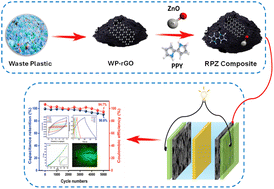
The rising concern over non-biodegradable plastics, along with the global energy issue, necessitates new and sustainable solutions. One viable method is to convert plastic trash into value-added materials for electrochemical applications. In this study, we describe a two-step catalytic pyrolysis approach for producing reduced graphene oxide (rGO) from waste plastics. Additionally, we illustrate the fabrication of a waste plastic derived rGO-based ternary composite with ZnO and PPy, WP-rGO/ZnO/PPy (RPZ), which improves its electrochemical performance by providing a variety of active sites. The ternary RPZ composite's properties were evaluated by XRD, Raman spectroscopy, FT-IR, SEM, and XPS whereas the electrochemical efficiency was examined by CV, GCD, and EIS. The ternary RPZ composite electrodes exhibit a remarkable specific capacitance value of 676.4 F g−1 at 0.5 A g−1 and a strong capacitance retention of 90.6% over 5000 cycles. Moreover, the assembled symmetric energy storage device achieved an energy density of 27.23 Wh kg−1 at a high-power density of 499.97 W kg−1. Notably, LED light can be powered for up to 10 minutes using two symmetric devices that use a ternary RPZ composite as a very effective electrode material in a series configuration. This study contributes to the development of environmentally friendly energy storage systems by highlighting the potential of repurposing waste materials for advanced energy applications.
- This article is part of the themed collection: Supercapacitors for a sustainable energy future
 Please wait while we load your content...


