Febri
Baskoro
a,
Pin-Chieh
Chiang
b,
Thuy Thi Bich
Tran
b,
Hui Qi
Wong
b,
Afriyanti
Sumboja
a,
Wanyi
Nie
c,
Hsinhan
Tsai
*d and
Hung-Ju
Yen
*a
aMaterial Science and Engineering Research Group, Faculty of Mechanical and Aerospace Engineering, Institut Teknologi Bandung, Jl. Ganesha 10, Bandung 40132, Indonesia
bInstitute of Chemistry, Academia Sinica, Taipei 115, Taiwan. E-mail: hjyen@gate.sinica.edu.tw
cDepartment of Physics, The State University of New York at Buffalo, Buffalo, NY 14260, USA
dDepartment of Chemical and Biological Engineering, The State University of New York at Buffalo, Buffalo, NY 14260, USA. E-mail: htsai7@buffalo.edu
First published on 20th November 2025
Organic/inorganic hybrid perovskites are attracting research attention due to their great potential in energy storage applications. This study reported three-dimensional (3D) and two-dimensional (2D) lead halide inorganic/organic perovskites used as anode-active materials for Li-ion batteries. A doping strategy was successfully applied to enhance the cycling performance of the 3D hybrid perovskite anode. A moderate amount of chlorine (Cl) was doped into the 3D hybrid perovskite crystals to increase the polarization inside the network and support Li-ion transfer. The Cl-doped 3D hybrid perovskite anodes showed an outstanding improvement in cycling performance up to 1000 cycles at a high current density of 500 mA g−1. Furthermore, three 2D hybrid perovskites (BAPbCl4, BZAPbCl4, and PEAPbCl4) were applied as anode-active materials for the first time. Results revealed that aromatic organic ammonium made a great contribution to battery capacity and stability. The 2D hybrid perovskite anode delivered an excellent capacity of over 1000 mA h g−1 under 100 mA g−1, which is, by far, the highest reported Li-ion storage capacity for perovskite-based anode materials.
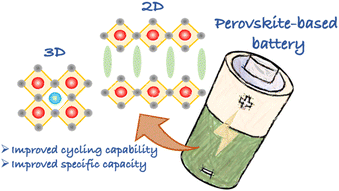
In paerticluar interest of LiB anode materials, organic/inorganic lead halide perovskites have emerged as promising candidates due to their high theoretical capacity, resource abundance, low-cost production and fabrication, as well as their rapid Li+ diffusion.16–19 In contrast to the intercalation-limited capacities of graphite and spinel Li4Ti5O12 (LTO), hybrid organic/inorganic lead halide perovskites can utilize multi-mechanism storage such as insertion, conversion, and alloying that can boost the battery performance.20–23 Together with their compositional/dimensional tunability (A-site cation, 2D/3D frameworks, and halide composition), these features allow perovskites to attain higher specific capacities and robust rate performance21 while avoiding the dendrite formation and safety concerns of Li metal,24,25 as well as the volume expansion of silicon-based anodes.22
Generally, organic/inorganic lead halide perovskites form an octahedron structure with the coordination of six halogen anions around a lead cation ([PbX6]2−).26,27 The arrangement of organic ammonium and [PbX6]2− can be varied depending on the organic chain, thus leading to differences in the crystal structure. In 3D crystals, denoted as APbX3 (A: organic ammonium cation, X: halogenic anion), the A cations are located between an octahedron to form a cubic framework around [PbX6]2−.17 Meanwhile, in the 2D perovskite structure, the crystal consists of a layer structure with the interleaved arrangement of [PbX6]2− and the organic ammonium cations layers, which is usually a longer side chain, that forms cross-links via hydrogen bonds or van der Waals force.16,28,29 Furthermore, besides the dimensionality of lead halide perovskites, it has been reported that other structural properties such as size, shape and composition of such micro/nanostructures could have a strong influence on the electrochemical performance as a LiB electrode.30
The first use of an organic/inorganic lead halide perovskite as an active anode material for Li-ion batteries was reported by Xia et al. via a facile hydrothermal process.31 Therein, the prepared CH3NH3PbBr3 anode delivered an initial capacity of 331.8 mA h g−1 before it decreased rapidly in the first 30 cycles and reached 121 mA h g−1 after 200 cycles.31 After that, another nanostructured form of CH3NH3PbBr3 was prepared by a slow precipitation method combined with thermal treatment.32 The resulting CH3NH3PbBr3 crystal showed electrochemical behavior comparable to that of the one prepared by the hydrothermal process. However, an improve Li+ storage capacity of up to 200 mA h g−1 was achieved,32 implying that different structural properties impact the lithium-ion storage capability. However, the low specific capacity and poor cycling stability beyond 500 cycles is still major challenges for its practical applications.30 To improve both storage capability and cycling stability, several strategies such as doping,33–35 tuning dimensionality,11,36 and changing the type of organic cation and anion15,37 have been proposed.
Herein, we report the electrochemical performance of 3D/2D hybrid organic/inorganic lead halide perovskites as a LiB anode material. To improve the electrochemical performance of 3D organic/inorganic lead halide perovskites, chlorine (Cl) doping was introduced, along with varying material preparation via slow evaporation (slow evap.) and inverse temperature crystallization (ITC) methods. The effect of changing the organic ammonium cation was also examined by introducing phenylethylammonium (PEA) and formamidinium (FA) to replace the conventional methyl ammonium (MA) organic cation. Thus, series of 3D organic/inorganic lead halide perovskites, namely MAPbBr3-5%Cl slow evap., MAPbBr3-5%Cl ITC, MAPbBr3-5%PEACl, and FAPbBr3-10%Cl, were successfully prepared and applied as LiB anodes. The results show that after Cl doping, a major capacity fading of the 3D perovskite anode could be greatly avoided. Interestingly, the Cl-doped anodes could retain nearly their first capacities even up to 1000 cycles at a current density of 500 mA g−1. In addition, 2D organic/inorganic lead halide perovskites, namely BAPbBr4, BZAPbBr4, and PEAPbBr4, were prepared by varying the organic cation (BA: butyl ammonium; BZA: benzyl ammonium; PEA: phenyl ethyl ammonium) to evaluate the effect of organic cation on electrochemical performance. Surprisingly, the maximum capacity could reach over 1000 mA h g−1 at a current density of 100 mA g−1 for the 2D perovskite anode and stayed stable up to 100 cycles. Systematic spectroscopic analyses were performed to understand the charge storage phenomena in the 3D/2D hybrid perovskites during the electrochemical process. This study paves the way for the development of perovskite-based materials for energy storage applications.
m), consistent with previous reports.38,39 This further indicates that 5% doping of Cl does not change the crystal structure of 3D MAPbBr3. Interestingly, the crystal structure of MAPbBr3 did not significantly change and still matched the reported literature,38,39 even after additional organic ammonium doping of PEA was introduced into the system (Fig. 1c). Additionally, the crystal structure of FAPbBr3 with the increased doping content of Cl up to 10% (Fig. 1d) was maintained and was consistent with previous reports,39,40 indicating high structural stability.
![]() | ||
| Fig. 1 Material characterization of 3D hybrid perovskites. (a–d) XRD spectra. (e–h) FESEM images. The inset images show the zoom-in images of the red-dashed area. | ||
To investigate the morphological properties, the field-emission scanning electron microscope (FESEM) was employed. As shown in Fig. 1e–h, the 3D hybrid perovskites showed similar features, comprising non-uniform grains agglomerated together. Some small grains were stuck on the surface of large grains, resulting in a rough surface for 3D perovskites. Notably, the FAPbBr3 crystals displayed a smoother surface compared to the MAPbBr3 crystals (Fig. 1h). Energy-dispersive spectroscopy (FESEM/EDS) further confirmed Cl doping into the 3D hybrid perovskites (Fig. S1). As shown in Fig. S1, the major elements detected were carbon (C), nitrogen (N), lead (Pb), and bromide (Br) along with the presence of the Cl element.
In addition, XRD spectroscopy was used to determine the structural properties of the 2D hybrid perovskites. As shown in Fig. 2a–c, the diffraction spectra of the 2D hybrid perovskites showed a good fit with the simulated peaks reported in previous studies,41,42 suggesting the successful formation and excellent crystallization of the 2D perovskites. The XRD peaks confirmed the layered structure of the 2D inorganic/organic lead perovskites, in which all the peaks were indexed to the monoclinic structure (space group C2/m). The assigned peaks at (200), (400), (600), (800), (1000), (1200), and (1400) in all three XRD patterns could be ascribed to the [PbCl6]2− crystal structure, while the other peaks might be related to organic ammonium. Furthermore, FESEM images showed that the 2D hybrid perovskites exhibited typical Ruddlesden–Popper 2D perovskites with irregular shapes and distinct features depending on the organic cation (Fig. 2d–f). As shown in Fig. 2d–f, increasing the size of the aromatic ammonium spacer (e.g., phenethylammonium, PEA) led to smoother terraces and more defined edge steps, reflecting cation-dependent nucleation and growth kinetics. The elemental compositions are confirmed by FESEM/EDS (Fig. S2), showing elements C, N, Pb, and Cl in the 2D hybrid perovskite crystal.
![]() | ||
| Fig. 2 Material characterization of 2D hybrid perovskites. (a–c) XRD spectra. (d–f) FESEM images. The inset images show the zoom-in images of the red-dashed area. | ||
| Pb(II) + 2e → Pb(0) |
| Pb(0) + Li+ → PbLix (x ≤ 4.5) |
Furthermore, the FAPbBr3 anode with 10% Cl doping exhibited distinct electrochemical behavior from that of the MAPbBr3 anodes (Fig. 3b). As shown in Fig. 3b, the reduction of Pb(II) to Pb(0) shifted to a higher voltage of 1.89 V relative to the MAPbBr3 anodes. Additionally, a new redox peak appeared at 0.9/1.04 V, which can be attributed to Li+ adsorption on the FAPbBr3 anode. We believe these distinct redox properties are associated with the different ammonium cations and the higher Cl doping content. Furthermore, the oxidation peaks associated with the Li+ de-insertion and de-alloying mechanism were slightly shifted to higher voltages compared to MAPbBr3 anodes (Fig. 3b), implying strong Li+ binding during the lithiation process. These distinctions in the CV profile of the FAPbBr3-10%Cl anode could indicate an exceptional Li+ storage mechanism during the electrochemical process. Consistent with the CV behavior, the galvanostatic charge/discharge profile shows four plateaus for the Cl-doped MAPbBr3 anodes (Fig. S3a–c), indicating a successful lithiation/delithiation process. Unlike the Cl-doped MAPbBr3 anodes, the FAPbBr3-10%Cl shows a different profile with a slope at a lower potential of 1.0 V due to the different ammonium cation and higher Cl doping content (Fig. S3d).
To further investigate the effects of Cl doping on cycling performance, LiB half-cells were then fabricated using 3D hybrid perovskite anode and tested over a voltage range of 0.02–2.5 V at a current rate of 100 mA g−1. As shown in Fig. 3c and a rapid capacity drop was observed for the undoped MAPbBr3 anode from 556 to 295.1 mA h g−1 after the first 10 cycles.32 Interestingly, all Cl-doped MAPbBr3 anodes demonstrated significant improvement on cycling stability. As shown in Fig. 3c, the capacities of MAPbBr3-5%Cl prepared via slow evaporation and ITC methods and MAPbBr3-5%PEACl anodes were maintained at 352, 349.6, and 322 mA h g−1, respectively, after 100 cycles at a current density of 100 mA g−1. This phenomenon could be associated with the higher electronegativity of Cl (Cl: 3.5 vs. Br: 3.45) and the smaller radius of Cl than those of Br, leading to a charge polarization in the Cl-doped active material and strengthening the ionic bonding between MA and [PbBr6]2−.47 Additionally, the combined effects of a different organic ammonium (FA) and higher Cl doping content were revealed by testing the electrochemical performance of the FAPbBr3 with a 10% Cl anode. As shown in Fig. 3c, the FAPbBr3-10%Cl anode achieved the largest capacity among the 3D electrodes studied, reaching up to 523.8 mA h g−1 and showing only 32.2 mA h g−1 capacity loss after 100 cycles at a current density of 100 mA g−1. This remarkable enhancement could be attributed to the increased electronic conductivity of FAPbBr3 (Eg: MAPbBr3: 2.332 eV, FAPbBr3: 2.292 eV) and the higher amount of Cl, which increases charge polarization, therefore supporting Li-ion diffusion kinetics.48
Furthermore, as shown in Fig. 3d, the Cl-doped 3D hybrid perovskite anode demonstrated excellent rate capability up to a current density of 5000 mA g−1. In line with the cycling performance, the FAPbBr3-10%Cl anode showed the highest storage capacities of 570.6, 436.7, 372.2, 314.1, and 235.1 mA h g−1 at current densities of 100, 500, 1000, 2000, and 5000 mA g−1, respectively. Meanwhile, the MAPbBr3-5%Cl anode prepared by slow evaporation exhibited specific capacities of 309, 225, 195, 162, and 118 mA h g−1 at current densities of 100, 500, 1000, 2000, and 5000 mA g−1, respectively. The MAPbBr3-5%Cl anode prepared by the ITC method showed specific capacities of 336, 252, 214, 175, and 124 mA h g−1 at current densities of 100, 500, 1000, 2000, and 5000 mA g−1, respectively. By contrast, the MAPbBr3-5%PEACl anode exhibited capacities of 262, 194, 167, 139, and 100 mA h g−1 at current densities of 100, 500, 1000, 2000, and 5000 mA g−1, respectively. The excellent rate capability was demonstrated as their highest capacity was recovered after the current density was reduced back to 100 mA g−1.
The long-term cycling performance of the Cl-doped 3D hybrid perovskite anodes again proved the considerable improvement in material and cycling stability. As depicted in Fig. 3e and a slight growth in capacities at around 360 mA h g−1 at a current density of 500 mA g−1 during the first 700 cycles could be observed for MAPbBr3-5%Cl anodes prepared by slow evaporation and the ITC method. Interestingly, these performances were stable up to 1000 cycles. By contrast, the capacity of MAPbBr3-5%PEACl anode slowly increased to over 340 mA h g−1 at a current density of 500 mA g−1 during the first 600 cycles and then dropped quickly to 217.7 mA h g−1 at the 1000th cycle, suggesting the effect of PEA cation on cycling stability under long-term operation. Notably, although the FAPbBr3-10%Cl anode achieved the highest capacity among the four anodes, it showed a slightly reduced stability under long-term cycling compared with the MAPbBr3-5%Cl anodes after ∼700 cycles. Specifically, the FAPbBr3-10%Cl anode revealed a remarkable increase in its capacity from 260.5 to 474 mA h g−1 at the first 400 cycles; its capacity dropped to 324 mA h g−1, slightly lower than the capacities of the MAPbBr3-5%Cl anodes after 1000 cycles (Fig. 3e). Additionally, the performance of our 3D hybrid perovskite anodes is comparable to the best-reported hybrid perovskite anodes (Table S3).
To probe the charge transport phenomena, electrochemical impedance spectroscopy (EIS) was first performed to examine Li-ion transfer at different cycling intervals (Fig. S4). The fitted parameters are summarized in Table S1. Two types of charge transfer resistance (Rct) were observed in the mid-frequency region, associated with Li+ transport across different interfaces during electrochemical operation: (i) electrode–electrolyte interfaces/solid–electrolyte interphase (SEI) (Rcta), and (ii) material interfaces within the electrode (Rctb). As presented in Table S1, a slight change in the Rctb was observed for the MAPbBr3-5%Cl anodes, which reduced from 147.1 (before cycling) to 141.6 Ω (after 100 cycles) for MAPbBr3-5%Cl prepared by the slow evaporation method and increased from 164.8 (before cycling) to 175.2 Ω (after 100 cycles) for MAPbBr3-5%Cl prepared by the ITC method. Interestingly, the Li-ion diffusion co-efficient (DLi) was significantly enhanced from 8.82 × 10⁻¹⁴ (before cycling) to 1.54 × 10⁻¹³ cm2 s−1 (after 100 cycles) for MAPbBr3-5%Cl (slow evaporation) and from 1.36 × 10⁻¹³ (before cycling) to 3.06 × 10⁻¹³ cm2 s−1 (after 100 cycles) for MAPbBr3-5%Cl (ITC method). After 1000 cycles, these two 3D perovskites show significant reduction in Rctb and an increase in DLi (Table S1). This indicates that lower interfacial resistances on the materials inside the electrode boosted Li+ mobility and helped in maintaining the excellent performance of the MAPbBr3-5%Cl anodes prepared by slow evaporation and ITC methods after 1000 cycles.
Furthermore, the MAPbBr3-5%PEACl and FAPbBr3-10%Cl anodes showed distinct features compared to the MAPbBr3-5%Cl anodes prepared by slow evaporation and ITC methods. As shown in Fig. S4 and Table S1, the MAPbBr3-5%PEACl anode showed a considerable reduction in Rctb values before and after 100 cycles from 410.5 to 155.4 Ω, respectively, along with an increase in DLi, implying a significant increase in Li+ mobility. However, the Rctb in the MAPbBr3-5%PEACl anode increased to 248 Ω after 1000 cycles, suggesting an increase internal resistance possibly due to structural instability, thus reduced its performance after 1000 cycles (Fig. 3e). Similarly, the FAPbBr3-10%Cl anode demonstrated a significant reduction in Rctb from 215.4 (before cycling) to 140.9 Ω (after 100 cycles), along with an increase in DLi from 6.22 × 10⁻¹³ to 9.40 × 10⁻¹³. Furthermore, the Rcta was lower than that of the MAPbBr3-5%Cl anodes prepared by the ITC method and the MAPbBr3-5%PEACl anode (Table S1). These phenomena confirm that during the first 100 cycles, progressive wetting, SEI stabilization and reduced interfacial/transport resistances enhanced Li+ mobility and storage capacity for FAPbBr3-10%Cl in the first 100 cycles (Fig. 3e). Unlike the MAPbBr3-5%PEACl anode, FAPbBr3-10%Cl showed an increase in the Rcta value and DLi after 1000 cycles (Fig. S4 and Table S1). This indicates that cumulative SEI thickening during repeated cycling hindered Li+ mobility and reduced storage capacity (Fig. 3e). These results further suggest that doping large organic cation A, such as PEACl, in the 3D hybrid perovskite anodes impact structural integrity under the long-term cycling test. Meanwhile, increasing halogen doping in 3D hybrid perovskite anodes can contribute to significantly increased resistive SEI formation at the electrolyte–electrode interface during long-term operation.
To further examine the effect of the doping element on charge storage behavior, sweep-rate CV measurements were performed at different scan rates ranging from 0.1 to 1.0 mV s−1 (Fig. 4a–d). The total accumulated charge in the active materials during electrochemical process generally consist of different faradaic contributions, from the diffusion controlled (ion insertion) or surface-controlled process, which is referred to pseudocapacitance or the non-faradaic contribution (double layer effect).49–52 These faradaic processes, which are related to reaction kinetics, can be expressed as follows:53,54
| i = avb |
log(i) = log(a) + b log(v), |
![]() | ||
| Fig. 4 Charge storage behavior of 3D hybrid perovskites. (a–d) CV curves at different scan rates and (e–h) charge storage contributions at different scan rates. | ||
Moreover, the total contribution at a specific scan rate can be calculated using57,58
| i = k1v + k2v1/2, |
As shown in Fig. S5, the b-values for MAPbBr3-5%Cl prepared by slow evaporation, MAPbBr3-5%Cl prepared by the ITC method, MAPbBr3-5%PEACl, and FAPbBr3-10%Cl were 0.557, 0.693, 0.827, and 0.857, respectively, suggesting that the MAPbBr3-5%Cl anode prepared by the slow evaporation method has a stronger contribution from diffusion-controlled processes rather than surface-controlled (capacitive) contributions. Meanwhile the higher b-values observed for MAPbBr3-5%Cl prepared by the ITC method, MAPbBr3-5%PEACl, and FAPbBr3-10%Cl indicate that these 3D hybrid perovskites have a synergic contribution from both capacitive and diffusion-controlled processes during electrochemical operation. Fig. 4e–h show the distribution of diffusion and capacitive contributions in the 3D hybrid perovskites at various scan rates. In good agreement with the b-values, the charge storage behavior of the MAPbBr3-5%Cl anode prepared by the slow evaporation method was dominated by diffusion contribution (more than 80%) rather than the capacitive contribution (Fig. 4e). By contrast, although having the same chemical composition, MAPbBr3-5%Cl prepared by the ITC method exhibited a nearly 40% capacitive contribution at high scan rates of 0.5–1 mV s−1, before gradually decreased at slow scan rate 0.01 mV s−1 (Fig. 4f). This suggests that different synthesis methods could significantly impact the charge storage behavior of 3D hybrid perovskites. Furthermore, doping a larger ammonium cation (PEA) into the MAPbBr3-5%PEACl system further increased the capacitive behavior of the anode (Fig. 4g). Meanwhile, doping 10% Cl into the FAPbBr3 anode also enhanced the capacitive behavior. These results imply that higher-electronegativity doping materials significantly tune the charge storage characteristic by increasing the capacitive contribution.
Fig. 5b shows the cycling performance of the 2D hybrid perovskites at a current density of 100 mA g−1. As shown in Fig. 5b, the initial cycles of the 2D hybrid perovskite anodes exhibited comparable capacities of 582.6 (BAPbCl4), 584.8 (BZAPbCl4), and 616.9 (PEAPbCl4) mA h g−1 at the 10th cycle. However, after 25 cycles, the cycling performance showed gradual upward capacity trends for BZAPbCl4 and PEAPbCl4, consistent with the galvanostatic profiles (Fig. S6). BZAPbCl4 and PEAPbCl4 anodes showed optimal capacities of 1008.3 and 874 mA h g−1, respectively, after 100 cycles under a current density of 100 mA g−1, respectively. This specific capacity by far is the highest Li+ storage capacity reported for perovskites-based anodes (Table S3). Meanwhile, BAPbCl4 exhibited steady performance and delivered a specific capacity of 679.4 mA h g−1 after 100 cycles (Fig. 5b). The significant increase in capacity of BZAPbCl4 and PEAPbCl4 can be associated with the additional Li+ binding sites on the benzene rings of the organic ammonium cation (BZA and PEA) compared with BAPbCl4.59 Additionally, the rate capability of the 2D hybrid perovskite anode was examined at various current densities ranging from 100 to 5000 mA g−1. As shown in Fig. 5c, BZAPbCl4 revealed the highest rate capability, delivering storage capacities of 667.8, 680.0, 621.4, 551.8, and 425.0 mA h g−1 at current densities of 100, 500, 1000, 2000, and 5000 mA g−1, respectively. BAPbCl4 and PEAPbCl4 anodes delivered capacities of 562 498.5, 425.9, 343.1, and 225.2 mA h g−1 and 443.7, 409.4, 375, 337.5, and 471.9 mA h g−1, respectively, under current densities of 100, 500, 1000, 2000, and 5000 mA g−1. Furthermore, excellent rate capability was confirmed as the capacities recovered to 957, 672, and 537 mA h g−1 when the current density was returned to 100 mA g−1. Interestingly, an upward capacity trend was also observed during the rate capability test.
To probe the cycling stability, long-term cycling performance was tested at a current rate of 500 mA g−1 up to 1000 cycles (Fig. 5d). As shown in Fig. 5d, the 2D hybrid perovskite anodes exhibited increasing trend up to an optimum storage capability and then decreased slowly up to 1000 cycles. The BAPbCl4 anode showed an increase in capacity from 505.6 to 622.2 mA h g−1 during the first 50 cycles and then gradually decreased to 250 mA h g−1 after 1000 cycles. Meanwhile, BZAPbCl4 and PEAPbCl4 anodes demonstrated better long-term cycling stability compared with BAPbCl4. Specifically, the PEAPbCl4 anode achieved its optimum capacity of over 760 mA h g−1 after 250 cycles, before gradually decreasing to 146.9 mA h g−1 at 1000 cycles. Meanwhile, the BZAPbCl4 anode reached its optimum capacity of 740 mA h g−1 after 180 cycles before it stepwise dropped to 181.3 mA h g−1 over 1000 cycles.
To understand the Li+ transport properties during long-term operation of 2D hybrid perovskites, EIS measurement were carried out at different cycling intervals (Fig. S7 and Table S2). As shown in Table S2, a gradual decrease in Rctb was observed for the BAPbCl4 anode during cycling, from 214.4 (before cycling) to 203.4 Ω (after 100 cycles) and then reached 188.1 Ω (after 1000 cycles). However, a significant increase in Rcta was observed for BAPbCl4 from 80.9 (after 100 cycles) to 159.5 Ω (after 1000 cycles), suggesting that a huge resistive electrolyte–electrode interface significantly hindered Li+ mobility. Furthermore, consistent with the increasing Rcta, the DLi was also significantly dropped by one order of magnitude, from 1.27 × 10⁻¹² (after 100 cycles) to 8.38 × 10⁻¹³ cm2 s−1 after 1000 cycles, implying significantly hindered Li+ transport after 1000 cycles. A similar phenomenon was observed for BZAPbCl4 and PEAPbCl4, where the Rcta value significantly increased, and the DLi was dramatically restricted after 100 and 1000 cycles (Table S2). Notably, BAPbCl4 demonstrated a significant increase in Rcta than that of BZAPbCl4 and PEAPbCl4 (Fig. S7 and Table S2). The BZAPbCl4 anode showed an increase in Rcta from 9.146 Ω (100 cycles) to 47.77 Ω (after 1000 cycles), while PEAPbCl4 showed an increase from 18.22 Ω (100 cycles) to 39.9 Ω (after 1000 cycles). This further suggests that the shorter organic ammonium, such as butylammonium in BAPbCl4, results in higher excessive growth of the resistive SEI layer compared with larger organic ammonium benzylammonium (BZA) and phenyl ethyl ammonium (PEA) due to the presence of delocalized electron on the benzene ring that helps stabilize interfaces and prevent excessive SEI growth.60–62 These observations further indicate that the significant capacity drop in 2D hybrid perovskites is associated with excessive growth of the resistive SEI layer, which restricts Li+ transport. This phenomenon, which hinders Li+ transport between the electrolyte and the anode during long-term operation, is known as one of the main aging mechanisms in LiBs.19,63,64
X-ray photoelectron spectroscopy (XPS) analysis was performed on BZAPbCl4 at different charge/discharge states to understand the Li+ storage mechanism in the 2D hybrid perovskite. As shown in Fig. 6a, three peaks were observed in the C 1s spectra at binding energy (BE) of 284.5, 285.4, and 290.4 eV, which correspond to C–C, C–N, and π–π bonding, respectively. A new BE associated with C–Li can be observed at 283.9 eV in the fully charged state, suggesting successful insertion of Li-ions into the benzene rings. Meanwhile, the BE associated with Pb(0) was observed at BEs of 136.4 (Pb 4f5/2) and 141.2 (Pb 4f7/2) eV in the full charge state (Fig. 6b), indicating Li+ storage contribution from Pb via the conversion reaction of Pb(II) to Pb(0), followed by the alloying mechanism (LiyPb). However, the binding energy of the LiyPb alloy could not be identified due to the overlap BE with the Pb(0) signals. Furthermore, when the BZAPbCl4 anode was fully discharged, the BEs of Pb(0) were still present, indicating unrecovered Pb(0) after discharge. Additionally, BEs of Li–Cl were observed in the Cl 2p spectra during both full charge and full discharge states (Fig. 6c).
Consistent with the C 1s core spectra, the Li 1s spectrum exhibited additional specific BE of C–Li at 53.8 eV during the full charge state, which disappeared in the full discharge state (Fig. 6d), suggesting successful Li-ion insertion/de-insertion into the organic cation. Meanwhile, the BE of Li–Cl was observed at 55.8 eV in the full charge state, indicating Li-ion interaction with Cl atoms within the BZAPbCl4 structure, which is consistent with the Pb 4f and Cl 2p core spectra. Notably, the BE of Li–Cl persisted alongside specific BEs of Li2CO3 (55.2 eV) and LiF (56.5 eV) in the full discharge state (Fig. 6d). This indicates the detachment of Cl atoms from the octahedron coordination within the BZAPbCl4 structure. The additional BEs of Li2CO3 and LiF are ascribed to the formation of the SEI layer. These XPS results further suggested that during lithiation, Li+ can be stored in BZAPbCl4via insertion into the organic moiety (benzene ring), followed by conversion and alloying reactions. Unfortunately, the octahedron coordination between Pb and Cl seems to be disturbed and unrecovered during electrochemical cycling.
To gain a better understanding of the charge storage characteristics, sweet-rate CV measurements were again performed at scan rates ranging from 0.1 to 1.0 mV s−1 (Fig. 6e–g). As shown in Fig. S8a, the b-values of the 2D hybrid perovskites were estimated to be around 0.743, 0.797, and 0.794 for BAPbCl4, BZAPbCl4, and PEAPbCl4 anodes, respectively. This indicates that the total charge stored in the 2D hybrid perovskites are contributed from both diffusion- and surface (capacitive)-controlled reactions. Fig. 6h–j show the charge storage distribution between diffusion and capacitive contributions at various scan rates. As depicted in Fig. 6h, the BAPbCl4 anode exhibited nearly 50% capacitive contribution at high scan rates of 0.6–1.0 mV s−1 and then dropped to 18% at 0.1 mV s−1 along with an increasing diffusion contribution. Additionally, the BZAPbCl4 (Fig. 6i) and PEAPbCl4 (Fig. 6j) anodes displayed relatively higher capacitive contributions of over 60 and 70%, respectively, at high scan rates of 0.6–1 mV s−1 and then decreased gradually to 33 and 36% at 0.1 mV s−1, suggesting that additional aromatic systems in the 2D hybrid perovskites could promote higher capacitive contributions. In brief, this study indicates that different organic ammonium cations have a significant impact on the charge storage behavior of 2D hybrid perovskites.
Furthermore, EIS analysis was again employed to probe the activation energy (Ea) of the 2D hybrid perovskite anodes. The relationship between the current response (i0) and the charge transfer resistance at the electrode interface (Rct) over different temperature ranges can be used to estimate the Ea using the following Arrhenius equation:65–69
| i0 = RT/(nFRct) |
i0 = A exp(−Ea/RT), |
ln
10, where k is the slope of the Arrhenius plots (log10
i0 as a function of 1000/T).65–68 As shown in Fig. 7a–c, the semicircle on the Nyquist plot of the 2D perovskite decreases as the test temperature increases, suggesting temperature dependent of the Rct. Based on the Arrhenius plot (Fig. 7d), the Ea values of the 2D hybrid perovskite anodes were estimated to be around 28.07, 9.82, and 33.83 kJ mol−1 for the BAPbCl4, BZAPbCl4, and PEAPbCl4 anodes, respectively. The lowest Ea for the BZAPbCl4 anode suggests that the minimum energy is required to activate the structure for charge transfer reactions inside the battery, resulting in the largest rate performance. In contrast, the highest energy is required for PEAPbCl4 to promote charge transfer reactions. This may be ascribed to the more stable structure of PEAPbCl4 compared with BZAPbCl4 due to stronger van der Waals forces inside the PEAPbCl4 network. In summary, we found that the organic ammonium cation plays an important role in tuning the charge storage characteristics and Ea of 2D hybrid perovskite anode, which further enhances their electrochemical performance as LiB electrodes.
![]() | ||
Fig. 7 Activation energy calculation of 2D hybrid perovskites. (a), (b) and (c) Nyquist plots of BAPbCl4, BZAPbCl4, and PEAPbCl4 at various temperatures, respectively. (d) Log i0vs. 1000/T plot. | ||
:
1 v/v) were purchased from UBIQ Technology Co., Ltd. N-Methylpyrrolidone (NMP; >99%) was purchased from Alfa Aesar (Thermo Fisher Scientific). All materials were used as received without further purification.
:
1.2
:
0.5. The precursor solution was filtered through a 0.2 µm PTFE syringe filter to remove undissolved particles and then placed in a 20 ml scintillation vial for slow evaporation at room temperature. MAPbBr3-5%PEACl and FAPbBr3-5%Cl were prepared following the same procedure, with MACl replaced by PEACl for MAPbBr3-5%PEACl, and MABr replaced by FABr for FAPbBr3-5%Cl.
For the ITC growth of MAPbBr3-5%Cl, we dissolved PbBr2, MABr, and MACl powders in DMF solution at a molar ratio of 1
:
1.2
:
0.5. The precursor solution was filtered through a 0.2 µm PTFE syringe filter to remove undissolved particles. The solution temperature was ramped slowly from room temperature to 80 °C at a rate of 4 °C per hour, yielding large crystals with high transparency. The raw materials were characterized with an X-ray diffraction to assess their purity and crystallinity. The absorption spectra were measured in reflection mode by a Jasco V-730 UV-Visible Spectrophotometer for characterization of doped samples.
:
RA = 1
:
2. After constant stirring and evaporating the HCl solution, the raw 2D perovskites started to crystalize, and the beaker was removed from the hot plate to cool to room temperature overnight. The raw materials were characterized with X-ray diffraction to assess their purity and crystallinity.
:
1 v/v) (UBIQ Technology Co., Ltd) as the electrolyte.
| This journal is © The Royal Society of Chemistry 2026 |