Efficient synthesis of a protic organic ionic plastic crystal as an ionic conductive matrix for energy storage

Yasmine Benabed a, Sergey Krachkovskiy a, Benoit Fleutot a, David Lepage a, Chisu Kim a, Sanjeet Kumar Singh b, Abdessamia Rhazaoui b, Sadollah Ebrahimi b, Armand Soldera b and Jean-Christophe Daigle *a
aCentre of Excellence in Transportation Electrification and Energy Storage (CETEES), Hydro-Québec, 1806 Boul. Lionel-Boulet, Varennes, Québec J3X 1S1, Canada. E-mail: daigle.jean-christophe@hydroquebec.com
bDepartment of Chemistry, Université de Sherbrooke, Sherbrooke, Québec J1K2R1, Canada

Received 28th June 2025 , Accepted 28th November 2025

First published on 2nd December 2025


Abstract

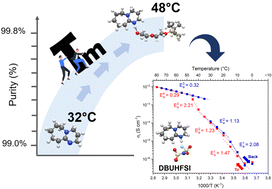
We present a novel, scalable, and acid-free synthesis route for protic organic ionic plastic crystals (POIPCs). Among the various compounds tested, 2,3,4,6,7,8,9,10-octahydropyrimido[1,2-a]azepin-1-iumbis(fluorosulfonyl)-imide (DBUHFSI) demonstrated the best performance, achieving a yield of 84% and a purity of 99.8%. The synthesis leverages a silane-derived promoting agent to stabilize hydrogen bonding between the cation and anion, as confirmed by differential scanning calorimetry (DSC), nuclear magnetic resonance (NMR), and density functional theory calculations. These results shed light on the critical influence of purity on the melting point and phase behavior of POIPCs, which directly impacts their suitability for energy storage applications. NMR analyses confirmed strong cation–anion interactions and minimal proton hopping, while DSC, electrochemical impedance spectroscopy, X-ray diffraction and force-field computations revealed several structural regimes correlating with changes in ionic mobility. To explore its potential for integration into energy storage devices, DBUHFSI was tested as a conductive matrix with Li6PS5Cl, a high-performance sulfide-based solid electrolyte, and a polymer binder. The resulting film demonstrated ionic conductivity up to 0.4 mS cm−1 at 30 °C, while enabling roll-to-roll processability and maintaining structural integrity. These results confirm DBUHFSI's role as an ionically conductive matrix, making it a material of choice to consider for scalable solid-state battery manufacturing.

Introduction

Organic ionic plastic crystals (OIPCs) are a promising class of electrolytes for energy devices such as fuel cells and lithium-ion batteries.1 While often compared to ionic liquids, OIPCs offer distinct advantages, including higher melting points that enable them to remain solid and thermally stable at elevated temperatures. Their inherent plasticity also contributes to improved electrode–electrolyte interfaces, enhancing overall device performance.2 Additionally, the chemical structure of OIPCs can be tailored to adjust key physical properties—such as melting point and ionic conductivity—making them highly adaptable for a wide range of applications.3 OIPCs represent a promising alternative to liquid, polymer, and ceramic electrolytes in lithium batteries due to several key advantages: (1) high thermal stability, offering greater safety than liquid electrolytes; (2) enhanced ionic conductivity at lower temperatures (<45 °C), outperforming polymer electrolytes; (3) superior interfacial compatibility with lithium metal compared to ceramic electrolytes; (4) low vapor pressure, making them safe to use in Li metal batteries, as demonstrated by Forsyth et al.4,5 A related class of compounds, known as protic ionic plastic crystals (POIPCs), which are characterized by hydrogen bonding, has also garnered significant interest. Although POIPCs have traditionally been employed in fuel cells, the recent demonstration of strong potential for protic ionic liquids (PILs) as components in lithium batteries (e.g., solid electrolytes) suggests that POIPCs may also hold promise for application in lithium battery technologies.7 One of the key advantages of POIPCs, or PILs, is their relatively simple and cost-effective synthesis. They are typically prepared by neutralizing a base with a proton source and a counter-ion (a Brønsted acid), resulting in a hydrogen-bonded complex between the cation and anion. This hydrogen bond brings the donor and acceptor into close proximity, forming a densely packed crystalline structure. Unlike the synthesis of OIPCs, preparing POIPCs does not involve the additional amine alkylation step, which may help streamline the synthesis workflow and offer potential time and cost advantages in industrial applications.6 These characteristics highlight the promising potential of POIPCs for advancing lithium battery technologies. Nonetheless, the application of POIPCs in energy storage demands a high level of purity, as impurities can significantly impact their melting point and crystallinity. For instance, insufficiently purified POIPCs often exhibit lower melting points, leading to their misclassification as liquids rather than solids.8 When their thermal behavior is analyzed through differential scanning calorimetry (DSC), POIPCs are characterized by two thermal events. The first event corresponds to a solid–solid phase transition and the second to a solid–liquid transition which represents the crystal's melting point. The nature of both the cation and anion in a POIPC will affect these phase transitions. To serve effectively in lithium batteries – with high ionic conductivity, thermal stability, and mechanical integrity – POIPCs must remain solid across the entire operating temperature range. A high melting point is therefore critical to ensure the stability and performance of POIPCs across a wide temperature range. This underscores the importance of achieving high purity in POIPCs, as it directly affects their melting point, for their integration in lithium batteries.6,9

In this work, we present a scalable and cost-effective method for synthesizing high-yield, high-purity POIPC, 2,3,4,6,7,8,9,10-octahydropyrimido[1,2-a]azepin-1-iumbis(fluoro-sulfonyl)imide (DBUHFSI). The approach relies on stabilizing the cations using a promoting agent (organic molecule) and trace water in the solvent to promote hydrogen bonding. This eliminates the need for acid and enables straightforward scalability. The method's versatility was confirmed using various precursors. After a thorough electrochemical and structural characterization of the material, we demonstrated the applicability of DBUHFSI in all-solid-state Li-metal batteries as an ionic conductive matrix for the sulfide-based electrolyte Li6PS5Cl.

Results and discussion

Material synthesis, mechanistic investigation, and comprehensive characterization

We first investigated the influence of an organic promoting agent on several syntheses of POIPCs, focusing on its impact on yield and purity. We selected candidate molecules derived from silane as promoting agents due to silane's known ability to form complexes with hydrogen10 and its ability to form active species when bonding with Schiff bases,11 both of which contribute to improved reaction yields. Glycol was chosen as the backbone because of its high solubility in a wide range of polar organic solvents. The overall reaction is presented in Fig. 1A. In total, three promoting agents (Fig. 1B), five Schiff bases (Fig. 1C) and five salts (Fig. 1D) were evaluated. The synthesis details are provided in SI (e.g., Table S1). In comparison, the POIPC synthesis was conducted without any promoting agent or source of protons (dried solvent was used), the results are presented in Table 1 (ID1). This reaction occurs with an acceptable yield of 60% when the Schiff base I (1,8-diazabicyclo[5.4.0]undec-7-ene (DBU)) is used. The resulting product ID1 (DBUHFSI) has a melting point of 48 °C, indicating a good purity. The absence of significative impurities was confirmed through DSC and 1H nuclear magnetic resonance (NMR) measurements (Fig. S1).127Li NMR measurements were also performed on the complex and no trace of residual salt was detected. Nonetheless, maximizing yield is critical for successful scale-up and industrial implementation, making even small percentage gains highly valuable and worth pursuing. In this context, the use of a promoting agent or a source of protons can be valuable options to maximize yield and improve purity. Watanabe et al. used a strong acid to promote the protonation of nitrogen in DBU.8 They reported a low melting point, likely indicating the presence of impurities (residual acid or water). Similarly, we tested formic acid as proton source in the synthesis of DBUHFSI (Table S2). We obtained a yield as low as 62% and a lower melting point of 39 °C (Fig. S20). The presence of water is evidenced by a broad signal at 5.9 ppm on the 1H NMR spectrum (Fig. S2), associated with hydrogen exchange between NH protons of the crystal and water. Extensive drying was not sufficient to remove it.
image file: d5ta05241f-f1.tif
Fig. 1 Scheme outlining the synthesis global reaction (A) and the candidates selected to be tested as promoting agents (B), Schiff bases (C) and salts (D).
Table 1 Summary of the 10 DBUHFSI complex syntheses performed using different promoting agents and solvents. Schiff base I (DBU) and Li-salt VIII (LiFSI) were used for all syntheses. ND = not determined
ID Agent (eq.) Solvent (0.7 M) T (°C) Yield (mol%) Purity (mol%) T s–s (°C) T m (°C)
1 None ACN 21 60 99.0 14 48
2 1 (1.0) 62 ND 11 38
3 2 (1.0) 54 99.9 14 47
4 3 (1.0) 72 99.2 12 41
5 DMC 48 ND 12 38
6 65 69 33.0 24
7 ACN 52 96.0 12 32
8 ETOH 66 90.5 5 32
9 Ketone 0
10 3 (0.25) ACN 21 84 99.8 13 48


To better identify the parameters influencing purity and yield, we evaluated the relative purity of ten DBUHFSI complex syntheses – each performed with different promoting agents and solvents – using melting point measurements, NMR data (Fig. S1–S10) and time-of-flight mass spectrometry (TOF-MS) (Fig. S11–S19). The results are presented in Table 1. Specifically, relative purity was estimated based on residual solvent, water traces and promoting agent detected by 1H NMR. These values are not absolute but are presented to illustrate general trends. It is worth mentioning that initial syntheses were conducted over 48 hours but resulted in low yields (∼50%). The reaction times were therefore extended to 96 hours to improve yields.

The comparison of samples ID2,3,4 in Table 1 highlights the influence of the glycol backbone length on the performance of the promoting agent. Better yield and purity are achieved with longer chains (ID2 vs. ID3 vs. ID4), which can be attributed to two factors: (1) enhanced London dispersion interactions in longer chains stabilize transition states and intermediates, lowering the reaction's Gibbs free energy and making the process more thermodynamically favorable.13 (2) steric shielding from longer chains reduces side reactions by limiting access to reactive sites, leading to higher product purity.14 This spatial constraint reduces undesired side reactions and promotes the formation of well-defined molecular interactions, such as hydrogen bonds, when functional groups are properly oriented. The steric bulk can also stabilize specific conformations, favoring cleaner reaction pathways.

We also observe that the type of solvent significantly influences the reaction yield, with polar solvents, therefore higher dielectric constants, leading to improved yields. However, the solvent's solvation type – whether protic or aprotic – appears to have little to no effect. When comparing complexes ID4-9, we notice that ethanol hinders the removal of residual DBU. More specifically, DBU was detected in ID8 using 1H NMR (Fig. S10), suggesting an interaction with the alcohol, and a signal attributed to ethanol is observed at 1.2 ppm, resulting in lower purity. The lower purity of ID8 is further evidenced by its lower melting point, likely resulting from ethanol interacting with the crystal and affecting the temperatures of both thermal transitions. Similarly, at 21 °C, dimethyl carbonate (DMC) negatively impacts both yield and purity (ID4 vs. ID5). At 65 °C, DMC further compromises purity, though not necessarily the yield (ID6 vs. ID7). The purity calculated from 1H NMR correlates well with the absence of a second thermal event on the DSC trace (Fig. S26), where only melting is observed. Heating was found to have no significant effect on the reaction kinetics. However, a comparison between ID4 and ID7 reveals that the complex synthesized at a higher temperature (ID7) exhibits lower melting points, reduced yield, and decreased purity – likely due to thermal degradation of the lithium salt. All samples prepared at higher temperature exhibit a brown light color, attributed to the salt degradation.15 On the other hand, complexes with good purity and high melting points displayed an off-white color with apparent crystallite domains. We observe that decreasing the amount of promoting agent from 1.0 to 0.25 eq. vs. Schiff base (ID4 vs. ID10) greatly enhances the yield and purity, resulting in higher melting points. Finally, based on the relative purities reported in Table 1, we establish a clear relationship between high purity and high melting point in POIPCs, further supported by DSC data (Fig. S20–28).

To better understand the role of the promoting agent in POIPCs synthesis, we performed density functional theory (DFT) calculations and computed the formation energy of DBUHFSI using promoting agent 2, promoting agent 3 and in the absence of any promoting agent (summarized in Fig. 2). The computed formation energy of DBUHFSI using promoting agent 2 is based on the following equations:

 
DBU + Promoting agent 2 + H2O ⇌ Intermediate 2 + SiC6H15OH(1A)
 
Intermediate 2 + LiFSI ⇌ DBUHFSI + SiC8H19OOLi(1B)


image file: d5ta05241f-f2.tif
Fig. 2 Scheme summarizing the DFT computed energies for the formation of the POIPC DBUHFSI using promoting agent 3 (in green). The results are compared to the formation energy of DBUHFSI without the use of any promoting agent (in red).

The same set of equations was used with promoting agent 3:

 
DBU + Promoting agent 3 + H2O ⇌ Intermediate 3 + SiC6H15OH(2A)
 
Intermediate 3 + LiFSI ⇌ DBUHFSI + SiC10H23O2OLi(2B)

The formation energy computed for DBUHFSI using no promoting agent was based on the following equation:

 
DBU + H2O + LiFSI ⇌ DBUHFSI + LiOH(3)

The computational details and energies are provided in SI (Table S3). Although DBUHFSI is synthesized in a crystalline form, we model it as an isolated molecule within a hypothetical cell for computational purposes, consistent with the treatment of the other precursors (i.e., SI). While this approach yields a slightly different absolute total energy compared to the crystal, it enables a meaningful comparison of formation energies across different promoting agents. From our computations, we find that, although both thermodynamically favored, the intermediate formation reaction (described in eqn (1A) and (2A)) is much more exothermic when promoting agent 3 is used instead of promoting agent 2, with reaction enthalpies of −383.56 kJ mol−1 and −34.70 kJ mol−1 respectively. The formation of DBUHFSI from intermediates 2 and 3 (described in eqn (1B) and (2B)) is slightly endothermic, with reaction enthalpies of 57.43 kJ mol−1 and 51.07 kJ mol−1 respectively. This observation explains the long synthesis times required experimentally to complete the reaction (96 hours). The total reaction energy of DBUHFSI is of 22.73 kJ mol−1 when promoting agent 2 is used, suggesting that forming DBUHFSI from DBU and promoting agent 2 is not thermodynamically favored. The reaction must therefore proceed through a kinetically governed mechanism, resulting in low yield or purity in the synthesis conditions. On the other hand, the total reaction energy of DBUHFSI is of −332.48 kJ mol−1 when promoting agent 3 is used, suggesting a thermodynamically favored reaction. This observation is in agreement with the higher yields obtained for ID4 and ID10 when compared with ID3 (72% and 84% vs. 54% respectively) as previously discussed (Table 1). The formation of DBUHFSI using promoting agent 3 was also found to be more exothermic than the formation of DBUHFSI using no promoting agent (eqn (3)), computed at −117.91 kJ mol−1, emphasizing the benefit of using a promoting agent for synthesizing POIPCs.

We also investigated the effect of the counterion and the Schiff base on the formation of POIPCs. For this purpose, we maintained the use of promoting agent 3 and ACN solvent at 21 °C for 96 hours, while varying the Schiff base and salt (structures detailed in Fig. 1) to synthesize new POIPCs. The corresponding results are presented in Table 2, supporting DSC data are provided in SI (Fig. S29–S34). Most of the tested combinations achieved yields over 55%, with the exception of ID11 (BF4 anion), which resulted in a significantly lower yield of 10%, a value consistent with that previously reported by Nti et al.16 The purity of these samples is generally above 90%, with a few exceeding 99%, except for ID15 and ID18. No clear correlation between purity and melting point can be established for these samples. When comparing ID11-14, we observe that melting point, purity and yield strongly depend on the nature of the counter ion used.17 Complexes formed with Li salt VII (LiPF6) and Li salt VI (LiBF4) display lower purity (ID11-12), attributed to poor solubility of LiPF6 and LiBF4 in dichloromethane, which hinders the effective residue removal from these complexes. Most POIPCs reported in the literature contain FSI or TFSI counter anions.8 These anions were proved to be more thermally and chemically stable than PF6, which decomposes into HF gas at low temperature.15,18 In addition, the nature of the anion influences the length – and consequently the strength – of the hydrogen bonding between the cation and anion in the complex. A weakening of the hydrogen bonding will directly impact the melting temperature and crystal structure of POIPCs.19 Finally, we observe from Table 2 that ID15-18, synthesized using phosphazene-derived Schiff bases, demonstrate comparable efficiency in promoting POIPC formation but fail to deliver consistent purity. Although phosphazenes are less suitable for industrial applications due to their high cost, their inclusion in this study underscores the versatility of our method.

Table 2 Summary of the 8 syntheses performed using different Schiff bases and Li salts (promoting agent 3 and ACN solvent were used at 21 °C for all syntheses)
ID Base Salt Yield (mol%) Purity (mol%) T (°C) T m (°C)
a Temperatures of all pre-melting thermal events observed by DSC, not all could be identified as transition temperatures.
11 I VI 10 90.0
12 VII 59 90.0
13 IX 80 99.5 26
14 X 57 98.0 76 100
15 II VIII 60 ND 42
16 III ND 99.9 48, 107 131
17 IV 83 90.0 20, 69, 72 132
18 V 82 80.0 −16, 19, 26 71


From the results presented in Tables 1 and 2, we consider ID10 to be the most promising synthesis route for DBUHFSI, providing high melting point (48 °C), yield (84%) and purity (99.8%). The synthesis was carried out using conventional DBU as the Schiff base, LiFSI as the salt, and a simple silane-derived promoting agent 3 in acetonitrile at room temperature. This work demonstrates that excellent results can be achieved through an affordable and scalable synthetic route that avoids the use of strong acids. The synthesis has been successfully scaled to over 200 grams. While transitioning to kilogram or industrial scale introduces several important challenges—such as safely managing the exothermic DBU/LiFSI reaction, ensuring homogeneous mixing of viscous and concentrated solutions, and maintaining strict moisture control due to the sensitivity of reagents like LiFSI—these considerations are manageable with appropriate protocols. Purification strategies, particularly crystallization, must also be carefully adapted to preserve product quality, as scale-up can influence crystal growth and morphology. Additionally, the use of fluorinated compounds like LiFSI requires robust waste management to minimize environmental impact and meet regulatory standards.

The characterization of ID10 was carried out using DSC, as presented in Fig. 3. The first thermal event is observed at 13 °C and is attributed to the solid–solid transition mentioned in introduction. The second thermal event is initiated at 33 °C and reaches a maximum at 48 °C, indicating a first order endothermic phase transition. This latter transition corresponds to the melting point of DBUHFSI. The water content was determined in ID10 to be below 20 ppm (∼15) using the Karl Fischer titration.


image file: d5ta05241f-f3.tif
Fig. 3 DSC trace of complex ID10 performed under N2 (heating rate of 3 °C min−1).

The nature of the interactions between the Schiff base, salt, and promoting agent to form ID10 were then investigated using 1H NMR. A solution containing deuterated acetonitrile, promoting agent 3, Schiff base I (DBU), and Li-salt VIII (LiFSI) was prepared in an NMR tube and analyzed at 25 °C. The peak assignment of the initial reaction medium is reported in SI (Fig. S3). Fig. 4A and B show evolution of the reactional medium up to 21 days after the reaction is started. The appearance of an additional minor peak (∼1% of the main compound) is observed at 4.16 ppm after 2 days of reaction (Fig. 4B). The peak position and its multiplicity suggest the presence of protons from a CH2 moiety that belongs to the promoting agent, in the absence of the silane group. Simultaneously, the peak corresponding to NH (8–9 ppm) observed in Fig. 4A becomes narrower and moves to higher frequencies. This behaviour is typical of hydrogen bond formation, which causes deshielding of the proton. Based on these measurements, the formation of a promoting agent 3/Schiff base I complex is suggested and presented in Fig. 4C. The slow formation rate of the complex within the NMR tube is attributed to the absence of both stirring in the reactional medium and water traces in the solvent, which would have facilitated the hydrogen bonding. Nevertheless, the successful formation of DBUHFSI confirms the favorable interaction between the promoting agent and the Schiff base, allowing the stabilization and promotion of hydrogen bonding.


image file: d5ta05241f-f4.tif
Fig. 4 1H NMR spectrum collected within 6–10 ppm (A) and [4–4.3] ppm (B) chemical shift ranges. (C) Suggested structure of the complex formed from the Schiff base I/promoting agent 3 reaction.

Crystalline phase investigation via NMR

NMR is further used to study ionic dynamics in DBUHFSI. We applied pulsed-field gradient NMR (PFGNMR) to extract the ionic diffusion coefficients of DBUH+ and FSI representing translational motion of the molecules in a millisecond time scale. Longitudinal relaxation measurements, describing the recovery of the nuclear spin magnetization towards its thermal equilibrium after an excitation pulse, were also performed to acquire information on the local dynamics of the molecules in a nanosecond scale. Finally, we used heteronuclear Overhauser effect spectroscopy (HOESY) to assess the spatial proximity between the fluorines of FSI and the hydrogens of DBUH+. Short-duration magnetic field gradient pulses are introduced into spin-echo sequence to detect particles displacement in PFGNMR.20 The resulting NMR signal intensity (I) depends on parameters of the applied gradients and the self-diffusion coefficient (D) of the observed species following the equation:
 
I = I0eBD(4A)
where I0 is the NMR signal intensity without gradients application and B represents experimental conditions as:
 
B = γ2g2δ2(Δ − δ/3)(4B)
with γ – gyromagnetic ratio of observed nuclei, g and δ – strength and duration of the gradient pulses, Δ – delay between the encoding and the decoding gradients called “diffusion time”. An example of linear logarithmic plot of 19F NMR signal attenuation vs. B-factor obtained for ID7 sample at 30 °C is shown in Fig. S35A. We used 1H and 19F NMR experiments to extract diffusion coefficients of DBUH+ and FSI. Arrhenius plots of measured diffusivities in samples ID7 and ID10 are shown on Fig. 5A and B. Both samples represent the same compound, with slight differences in purity and water content—ID7 at 96% purity with 6.5 mol% water, and ID10 at 99.8% purity with less than 20 ppm water. Despite these modest variations, their ionic diffusion behaviors differ significantly. For ID7, two linear regions are observed in the Arrhenius plot, described by eqn (5), with activation energies of 0.4 eV and 1.2 eV, and a transition occurring between 30 and 35 °C. This is attributed to a phase transition consistent with its melting point at 34 °C (Table 1). For sample ID10, all measured diffusivities follow a single linear trend with an activation energy of 0.7 eV. A slight deviation is observed only at 50 °C, which aligns well with the sample's melting point at 48 °C. Diffusivity measurements using NMR could not be performed above 50 °C (probe-related limitation), preventing further exploration of temperature-dependent behavior beyond this point. It is important to note that PFG-NMR has limitations when applied to concentrated electrolytes, as it cannot distinguish between nuclei in neutral and charged aggregates. As a result, ion association is not accounted for, and the calculated activation energy should be regarded as an approximate estimate.
 
image file: d5ta05241f-t1.tif(5)

image file: d5ta05241f-f5.tif
Fig. 5 Arrhenius plot of PFGNMR measured DBUH+ and FSI diffusion coefficients in ID7 (A) and ID10 (B) samples.

Longitudinal relaxation data offer valuable insights into the charge transfer mechanism. The T1 relaxation time characterizes the spontaneous return of nuclear spin orientations to equilibrium. This process is driven by transient magnetic fields, typically generated by nearby nuclei or electrons on the same or adjacent molecules, as they tumble at the resonance frequency of the observed nucleus (ω0, 300 MHz for 1H and 282 MHz for 19F in our case). T1 relaxation data reflect local molecular dynamics occurring on the nanosecond timescale. The rate of longitudinal relaxation can be described by eqn (6):

 
image file: d5ta05241f-t2.tif(6)
where K is a constant dependent on the local structural environment of the nucleus, and τc represents the reorientational correlation time—i.e., the average time required for a structural fragment to rotate by one radian. By fitting the experimental T1 values (Fig. 6A) to eqn (6) using K and τc as independent fitting parameters, the correlation times of DBUH+ and FSI are extracted (Fig. 6B). Notably, the local dynamics of FSI occur approximately 2.5 times faster than those of DBUH+ across the entire temperature range, within the nanosecond timescale. However, this difference does not translate to the millisecond timescale of translational diffusion, as the measured diffusivities of the cation and anion remain very similar (Fig. 5). This behavior is commonly observed in concentrated electrolytes, where the long-range motion of cations and anions is strongly correlated due to significant interactions between them.21 The ionic transport number can serve as a qualitative indicator of the extent of these interactions. In this system, where DBUH+ and FSI are the only ionic species present, the transport number of FSI (tFSI) can be calculated using eqn (7):
 
image file: d5ta05241f-t3.tif(7)


image file: d5ta05241f-f6.tif
Fig. 6 (A) Longitudinal relaxation times of NMR signals of DBUH+ and FSI measured for ID10 sample. (B) The reorientational correlation time τc calculated based on these data. (C) 1H–19F HOESY NMR spectrum recorded for ID10. (D) Plot of 1H–19F NOE transfer in the experiment as a function of the mixing time, DBUH protons are color coded.

It is important to note, however, that the transport number defined in this way should not be interpreted as the ionic transference number. PFG-NMR provides ensemble-averaged diffusivities for species containing DBUH+ and FSI, including both free ions and neutral ion aggregates. This means that DDBUH in eqn (7) reflects the average diffusivity of species such as DBUH+, [DBUH-FSI]0, [DBUH(FSI)2], and others. Similarly, DFSI represents the average diffusivity of species like FSI, [DBUH-FSI]0, and [DBUH(FSI)2]. In contrast, the calculation of the transference number—defined as the fraction of the total ionic current carried by ions of a given charge—must consider only charged species. For cations, this means isolating the diffusivity of DBUH+ from that of neutral or anionic complexes such as [DBUH-FSI]0 and [DBUH(FSI)2]. For anions, it is essential to exclude the contribution of [DBUH-FSI]0 from the diffusivity associated with FSI and [DBUH(FSI)2].22 Therefore, transport numbers derived from PFG-NMR and transference numbers are not equivalent—except in cases where ion pairing is negligible, such as in very dilute solutions.

For sample ID7, the FSI transport number (tFSI) is 0.58 ± 0.03, indicating that, on average, FSI diffuses slightly faster than DBUH+. This may be attributed to the presence of a small fraction of free ions—particularly FSI—that remain unassociated and thus exhibit higher mobility. In sample ID10, stronger ion association is evident, likely involving not only neutral ion pairs but also more complex aggregates such as [DBUH(FSI)2]. This is reflected in a slightly lower FSI diffusivity compared to DBUH+, with (tFSI) equal to 0.48 ± 0.02. The presence of impurities in ID7 appears to disrupt ion aggregation, reducing both the viscosity and melting point of the POIPC. Additionally, free DBUH molecules can exchange labile NH protons, enabling a proton hopping mechanism. This mode of charge transport is undesirable in lithium battery systems, as it could compete with Li+ conduction. Therefore, stabilizing the DBUH–FSI complex is advantageous for battery applications, as it helps retain labile protons on the DBU base and suppresses parasitic proton transport.

1H–19F HOESY experiment was performed on the ID10 sample to gain further insight into cation–anion interactions.23 In the resulting two-dimensional spectrum, cross-peaks arise from nuclear spin polarization transfer, i.e., nuclear Overhauser effect (NOE), between the fluorine nuclei of the FSI and the corresponding protons of the DBUH+ (Fig. 6C). For such transfer to be observable, the lifetime of the ion pair or complex must be sufficiently long to allow for cross-relaxation. By plotting the intensity of these cross-peaks as a function of the mixing time (tm)—the delay during which polarization transfer occurs—the NOE effect can be quantified (Fig. 6D). The initial signal build-up reflects NOE transfer, while the decay at longer mixing times is primarily due to longitudinal relaxation of both nuclei.24 The observed NOE between the fluorine atoms of FSI and the NH protons of DBUH+ is consistent with that involving other protons, confirming the stability of the NH proton within the DBUH–FSI complex in ID10. This stability suggests that the NH proton does not contribute to ionic conductivity, as it remains bound within the complex. Combined with the absence of water confirmed by Karl Fischer titration, this supports the conclusion that ionic conductivity in ID10 can be confidently attributed to DBUH+ and FSI ions.

Ionic conductivity-phase transition relationship

To complement the NMR data and evaluate the total conductivity of DBUH+/FSI ions in ID10, electrochemical impedance spectroscopy (EIS) measurements were conducted over a temperature range of 0–80 °C. The cell was filled with 500 µL of DBUHFSI and sealed inside a glovebox (water level < 0.5 ppm). Measurements were performed using symmetrical Pt electrodes, details are given in SI. Fig. 7 shows the Arrhenius plot of ionic conductivities derived from EIS spectra at various temperatures. The ionic conductivity of DBUH+/FSI at room temperature is approximatively 5 × 10⁻⁵ S cm−1. The temperature-dependent conductivity (0 °C to 80 °C, red curve) reveals four distinct regimes, each characterized by a different activation energy: regime 1 (0–15 °C): DBUHFSI is in its first solid phase, with an activation energy of 1.47 eV. Regime 2 (15–35 °C): a second solid phase appears, with a slightly lower activation energy of 1.23 eV. Regime 3 (35–50 °C): a transition occurs, associated with a much higher activation energy of 2.21 eV. Regime 4 (50–80 °C): this range coincides with DBUHFSI's melting point (48 °C). The activation energy drops to 0.29 eV, indicating enhanced ionic mobility in the molten state. Regimes 1–3 all exhibit activation energies above 0.9 eV, implying that conductivity is dominated by DBUH+ and FSI ion diffusion rather than proton transport (via Grotthuss or Vehicle mechanisms).25,26 The initiation of the Regime 2 concurs with the first thermal event observed by DSC around 13 °C, while the initiation of Regime 3 coincides with the onset melting temperature of 33 °C observed by DSC (Fig. 3). This second transition suggests a structural transformation in DBUHFSI that might restrict ionic mobility or introduce a bottleneck effect, thereby resulting in an increased activation energy. Similar multi-solid-phase behavior has been reported for other POIPCs.26,27 Notably, the two distinct activation energies between 25 and 50 °C in Fig. 7 differ from the unique activation energy in Fig. 5B obtained using NMR. This discrepancy can be attributed to the fact that ion association is not considered in PFGNMR. Given that ion association has been shown to be strong in ID10, as discussed above, such a difference in behavior is to be expected. When the sample is cooled from 80 °C to 0 °C (blue curve), a hysteresis appears around the melting point and only three regimes are observed. The post-melting regime now spans from 80 °C to 35 °C (instead of 50 °C previously), indicating that the new melting point has shifted to 35 °C. This change suggests that DBUHFSI has undergone a structural change upon recrystallization, resulting in altered physical properties. The first and second regimes remain (30–15 °C and 15–0 °C), though activation energies differ. Room-temperature conductivity remains essentially unchanged. To further investigate the structural behavior of DBUHFSI as a function of temperature, we performed operando X-ray diffraction (XRD) measurements.
image file: d5ta05241f-f7.tif
Fig. 7 Ionic conductivity of DBUHFSI complex as a function of the temperature from 0 °C to 80 °C (red) and back to 0 °C (blue).

Fig. 8A presents the XRD patterns of the sample, which was placed in a quartz holder and sealed under a controlled atmosphere. The sample was gradually heated from 25 °C to 55 °C. As the temperature increased, a shift of many diffraction peaks toward lower angles was observed (a, d, i–l, n, o, s and t). Subtle changes were detected after 35 °C, including peak shifts to lower angles (o, r, s) and the disappearance of peak e, suggesting a deformation of the crystal lattice passed 35 °C. Moreover, several peak intensity inversions are observed with increasing temperature (b, h, k, m and n), suggesting the onset of structural disorder such as cation exchange, site inversions or antisite defects. This transition overlaps with the change in activation energy previously observed around 35 °C in electrochemistry (Fig. 7) and the decrease in enthalpy observed around 33 °C in DSC (Fig. 3). Significant structural changes began to emerge after 45 °C, marked by the appearance (b, j, ∼r), disappearance (c, f, k, s) and shift (g, I, q) of peaks at 50 °C, followed by a complete transition to an amorphous phase beyond 50 °C. This transformation aligns with the melting point of DBUHFSI at 48 °C characterized by DSC and the drastic change of activation energy observed in electrochemistry at 50 °C. To elucidate the nature of this reorganization, further Rietveld refinement and detailed structure resolution are required. Upon cooling, DBUHFSI recrystallizes with a small shift toward lower angles, and notable changes in peaks (c, e, j, l and p), indicating a slight irreversibility of the phase transition. However, no change in ionic conductivity was observed after undergoing after recrystallization.


image file: d5ta05241f-f8.tif
Fig. 8 (A) Operando XRD measurements on DBUHFSI performed between 25 and 55 °C under controlled atmosphere. Variation of the mean rotational displacement (α) of vectors as a function of temperature for (B) all rigid and flexible vectors (Group 1 & 2) and (C) selected Group 1 rigid vectors (see Fig. S36 for vector identification).

To investigate the origin of the subtle structural changes of DBUHFSI before its melting point (Tm), we run molecular dynamic (MD) simulations, allowing us to probe the localized rotational dynamics of the ions. We hypothesize that these structural changes are primarily driven by the rotational or reorientational disorder of the ion.28 The specific details of the MD simulation methodology are provided in another publication.29Fig. 8B illustrates the temperature-dependent rotational dynamics of various normal and bond vectors within the [DBUH]–[FSI] ion pair. The corresponding atom labels used in the simulations are shown in Fig. S36. To quantify rotational motion, we calculate rotational autocorrelation functions (RACFs), which measure the change in orientation of a given vector relative to its initial orientation.29 The average RACF value over the final 4 ns of the simulation is denoted as α, representing the mean rotational displacement of a vector during this period. As shown in Fig. 8B, certain vectors—specifically the normal vectors C2–C5–C6 and S1–N3–S2, along with the bond vectors S1–F1 and S2–O4—exhibit greater rotational mobility compared to others, such as the normal vectors C7–C9–C8 and N1–C1–N2, and the bond vectors N1–C1 and S1–S2. Interestingly, the less mobile vectors display remarkably similar rotational behavior. We categorize these into two groups: Group 1 includes the more rigid vectors, while Group 2 comprises the more flexible ones. From Fig. 8B we also notice that Group 1 vectors show sharp changes in their rotational dynamics (α) near the phase transition temperature, suggesting that they play a key role in governing the phase transition behavior. Moreover, the degree of rotational mobility within Group 1 allows us to distinguish between different solid phases present in the system.

Fig. 8C illustrates the temperature-dependent evolution of the rotational parameter α for the Group 1 vectors, along with the corresponding phases identified in the system. Below 300 K, these vectors exhibit limited rotational mobility, indicating a rigid and constrained dynamic regime. However, above 300 K, a noticeable increase in mobility is observed—particularly for the normal vector C7–C9–C8. The most significant change in α occurs between 360 K and 380 K, culminating in complete decorrelation (α = 0) at 380 K. This indicates that full rotational freedom of the Group 1 vectors is only achieved at or above this temperature. Based on these observations, the system can be divided into distinct phases as a function of temperature: solid III (<300 K), solid II (300–360 K), solid I (360–380 K), and melt (>380 K). The solid III phase observed at 300 K corresponds to the first solid–solid transition and is likely associated with the initial thermal event identified at 13 °C (286 K) for ID10 by DSC. Likewise, the solid II and solid I phase-transition, observed at 360 K in Fig. 8C, can be associated with the structural evolution detected around 33–35 °C (306–308 K) in DSC, EIS, and XRD analyses. Finally, the melt phase, corresponding to the simulated melting temperature (Tm), occurs at 380 K, which is higher than the experimentally determined melting point of 321 K (48 °C). This difference reflects the known tendency of MD simulations to overestimate absolute transition temperatures. However, the relative temperatures at which structural changes occur remain meaningful and can be reliably compared. Importantly, the MD results support the interpretation that the intermediate variations in behavior observed between the two thermal events of DBUHFSI—evidenced by DSC, EIS, and operando XRD—are primarily driven by the presence of multiple distinct solid phases.

Electrochemical measurements

To further assess the suitability of DBUHFSI as an ionic conductive matrix for lithium batteries, its electrochemical stability window (ESW) – a critical parameter for safe and efficient operation – was investigated. The ESW was determined using potentiostatic intermittent titration technique (PITT). In order to ensure an accurate determination of the ESW, the measurements were ran using a composite configuration of DBUHFSI and extensively dried carbon black, more details can be found in SI. The oxidation and reduction of the DBUHFSI were conducted separately and presented in Fig. 9. During reduction, each potential step from open-circuit potential to 1.75 V vs. Li+/Li is followed by a small current jump that rapidly decreases to 0. A first small reduction current appears at 1.75 V and increases slowly after every potential step. At 1.3 V, the intensity of the current response increases drastically, suggesting that a second and stronger reaction is taking place at this potential. On the oxidation side, the current response is steady from open-circuit potential up to 3.85 V, where the first current response increase is observed. We observe a second change in slope at 4.3 V, suggesting a second and more intense reaction. Based on these primary observations, we conclude the ESW of DBUHFSI to be [1.75–3.85] V vs. Li+/Li. Further investigation is necessary to assess the nature, reversibility and stability of the reactions taking place at 1.75 and 3.85 V. The possibility of the ESW extending to [1.3–4.3] V can be considered if the reactions at 1.75 and 3.85 V form a stable interface with the electrode's materials.
image file: d5ta05241f-f9.tif
Fig. 9 PITT measurements on DBUHFSI at 25 °C in oxidation (right) and reduction (left). The two measures were taken on two distinct cells. A potential step of 50 mV and a time limit of 3 h/step were used for both oxidation and reduction (no current limit).

Building on the findings presented in the previous sections—where DBUHFSI was shown to possess high purity, ionic conductivity (DBUH+/FSI) at room temperature, mechanical integrity across the battery operating temperature range, and an acceptable electrochemical stability window—we now turn to evaluating its potential as a conductive matrix in all-solid-state batteries (ASSBs). This final section focuses on assessing DBUHFSI's ability to support solid electrolyte processing and enhance interfacial ion transport, particularly in its lithium-free form. To illustrate the need for such materials, consider sulfide-based ceramic electrolyte Li10GeP2S12 (LGPS). While LGPS offers excellent lithium-ion conductivity, its practical use is constrained by two major challenges: (1) chemical instability when in contact with lithium metal, and (2) the necessity for high stack pressure during cell assembly. To mitigate these issues, polymers like polyethylene oxide (PEO) have been introduced to improve mechanical flexibility and processability. However, as reported by Bieker et al.,30 incorporating 10 wt% PEO into LGPS results in porous membrane formation, particle agglomeration, and a marked decrease in ionic conductivity compared to compressed ceramic pellets. Furthermore, PEO acts primarily as a mechanical binder and does not enhance interfacial electrochemical performance with lithium metal. Li6PS5Cl, another promising sulfide-based electrolyte known for its malleability and favorable mechanical properties, faces similar limitations. For industrial-scale applications—particularly in the fabrication of sulfide electrolyte sheets—a binder is essential to maintain particle cohesion. If the binder is ionically conductive or exhibits favorable interactions with the electrolyte particles, the overall performance of the composite can be significantly improved.

In this context, DBUHFSI, and POIPCs in general, emerge as a promising alternative. They exhibit a mesophase state—intermediate between liquid and solid—at typical battery operating temperatures, a property that may promote enhanced cation exchange at the ceramic–polymer interface. This hypothesis is supported by the findings of Paolella et al.,31 who observed similar interfacial enhancements using an ionic liquid with the Li1.5Al0.5Ge1.5(PO4)3 ceramic solid electrolyte. Alarco et al. demonstrated the potential of plastic crystals as conductive matrices,32 while P. Howlett et al. successfully incorporated plastic crystals as binders in positive electrodes, highlighting their versatility in different battery components.33,34 To demonstrate this application, DBUHFSI was tested as conductive matrix with Li6PS5Cl. The two materials were co-processed into a dense composite film and characterized using EIS. For benchmarking, a reference system incorporating the ionically conductive matrix poly(propylene oxide)-co-poly(ethylene oxide) (PPO-co-PEO) was included, chosen for its thermal stability, adequate room-temperature ionic conductivity, and favorable processability.35 The resulting ionic conductivities of various films are presented in Fig. 10A, and details are provided in Table S4.


image file: d5ta05241f-f10.tif
Fig. 10 (A) Arrhenius plot of the ionic conductivity of a pristine Li6PS5Cl powder pellet (red), a pristine PPO-co-PEO (30[thin space (1/6-em)]:[thin space (1/6-em)]1 LiTFSI) film (black), a pristine DBUHFSI plastic crystal (gold), an [Li6PS5Cl 90 wt% + PPO-co-PEO 10 wt% (30[thin space (1/6-em)]:[thin space (1/6-em)]1 LiTFSI)] film (pink), an [Li6PS5Cl 90 wt% + DBUHFSI 10 wt%] composite paste (green), and an [Li6PS5Cl 90 wt% + PPO-co-PEO 4 wt% + DBUHFSI 6 wt%] composite film (blue). (B) Li diffusion coefficients computed for the [Li6PS5Cl 90 wt% + PPO-co-PEO 10 wt% (30[thin space (1/6-em)]:[thin space (1/6-em)]1 LiTFSI)] film (pink), the [Li6PS5Cl 90 wt% + DBUHFSI 10 wt%] composite paste (green), and the [Li6PS5Cl 90 wt% + PPO-co-PEO 4 wt% + DBUHFSI 6 wt%] composite film (blue) extracted from NMR measurements performed at −5, 10 and 25 °C.

At 30 °C, the pristine Li6PS5Cl powder exhibits a high ionic conductivity of approximately 2.5 mS cm−1. However, achieving scalable roll-to-roll processing into thin 40 µm films typically requires the addition of a binder such as PPO-co-PEO, combined with a lithium salt in a 1[thin space (1/6-em)]:[thin space (1/6-em)]30 ratio. This addition, while improving processability, causes a tenfold decrease of the total ionic conductivity, lowering it to around 0.1 mS cm−1 at 30 °C, as seen in Fig. 10A. To mitigate this trade-off, we investigated the incorporation of DBUHFSI as a conductive matrix. At 30 °C, pristine DBUHFSI plastic crystal has a better ionic conductivity than pristine [PPO-co-PEO + LiTFSI] film (0.1 vs. 0.04 mS cm−1). Consequently, processing Li6PS5Cl powder with DBUHFSI into a composite delivered significantly good performance, reaching 2 mS cm−1 at the same temperature while maintaining the same thickness. This suggests a favorable interaction between Li6PS5Cl particles and the DBUHFSI matrix. However, unlike the flexible [Li6PS5Cl + PPO-co-PEO + LiTFSI] film, the resulting [Li6PS5Cl + DBUHFSI] composite is dense and rigid, rendering it unsuitable for roll-to-roll processing. To enable roll-to-roll processability, Li6PS5Cl was combined with both PPO-co-PEO (saltless) and DBUHFSI, producing a dense yet flexible film (shown in Fig. S37). The ionic conductivity of this [Li6PS5Cl + PPO-co-PEO + DBUHFSI] film is approximatively 0.4 mS cm−1 at 30 °C – four times higher than its DBUHFSI-free counterpart, indicating that DBUHFSI likely contributes to ionic transport.

Activation energies for all samples are summarized in Table 3. Incorporating PPO-co-PEO to Li6PS5Cl increases the activation energy from 0.30 to 0.50 eV, suggesting a hindered ionic transport at the polymer-Li6PS5Cl interface and likely through the polymer phase itself, given its inherently low bulk ionic conductivity. The multiple regimes observed in DBUHFSI are also present in the [Li6PS5Cl + DBUHFSI] composite, which exhibits three distinct regimes (described in Table 3) well overlapped to those of DBUHFSI. In the first and second regimes, activation energies exceed those of pristine Li6PS5Cl (>0.4 eV). Once the final regime is reached, above DBUHFSI's melting point, the activation energy of the composite drops to 0.17 eV, and its ionic conductivity matches that of pristine Li6PS5Cl. For the [Li6PS5Cl + PPO-co-PEO + DBUHFSI] sample, the activation energy increases to 0.47 eV, suggesting that ion diffusion is primarily governed by the interfacial effects between the three components.

Table 3 Activation energies extracted from Arrhenius plots presented in Fig. 10A
Sample Regime Range (°C) E a (eV)
Li6PS5Cl powder 1 −20 to 70 °C 0.30
Li6PS5Cl + PPO-co-PEO + LiTFSI film 1 −20 to 70 °C 0.50
PPO-co-PEO + LiTFSI film Non-Arrhenius
DBUHFSI plastic crystal 1 −10 to 15 °C 1.47
2 15 to 35 °C 1.23
3 35 to 50 °C 2.21
4 50 to 80 °C 0.29
Li6PS5Cl + DBUHFSI composite 1 −20 to 10 °C 0.43
2 10 to 50 °C 0.57
3 50 to 70 °C 0.17
Li6PS5Cl + PPO-co-PEO + DBUHFSI film 1 0 to 70 °C 0.47


To further assess the impact of DBUHFSI on lithium transport within the solid electrolyte films, 7Li NMR diffusion measurements were performed on three samples: the [Li6PS5Cl 90 wt% + PPO-co-PEO 10 wt% (30[thin space (1/6-em)]:[thin space (1/6-em)]1 LiTFSI)] film, the [Li6PS5Cl 90 wt% + DBUHFSI 10 wt%] composite and the [Li6PS5Cl 90 wt% + PPO-co-PEO 4 wt% + DBUHFSI 6 wt%] film, as shown in Fig. 10B. Unlike the linear fit of the NMR signal intensity observed for pure DBUHFSI (Fig. S35A), these films required a double-exponential fit to accurately describe their behavior (Fig. S35B), indicating two distinct lithium transport processes. The fast-diffusing component (D1 in Fig. 10B) is consistent across all samples and aligns well with previously reported diffusion coefficients for Li6PS5Cl,36 representing bulk diffusion within Li6PS5Cl. The slower component (D2) varies with film composition and likely corresponds to lithium transfer across Li6PS5Cl particle interfaces (grain boundaries). Analysis of the D2 curves in Fig. 10B reveals a clear enhancement of interfacial lithium transport in the presence of DBUHFSI. This improvement highlights both its intrinsic ionic conductivity and its favorable interaction with Li6PS5Cl, reinforcing its potential as a multifunctional component in scalable solid-state battery architectures.

This study highlights the innovative application of POIPCs as highly conductive matrices for hybrid Li6PS5Cl-based solid electrolytes. In particular, DBUHFSI was shown to effectively alleviate the diffusion limitations associated with the PPO-co-PEO binder, necessary for roll-to-roll processing. Achieving optimal performance requires balancing these two components—one improving processability, the other enhancing ionic conductivity—both of which are critical. Further optimization of their ratio (4[thin space (1/6-em)]:[thin space (1/6-em)]6 in this study) offers a promising route to improve overall performance. While the current work focuses on DBUHFSI as an ionic conductive matrix in its lithium-free form, future investigations will explore its lithiated counterpart, which may further broaden its role as a hybrid polymer solid electrolyte in lithium-based battery systems.

Conclusion

This work presents a novel and efficient synthesis route for the protic organic ionic plastic crystal DBUHFSI, achieving high yield (84%) and excellent purity (99.8%). The optimized method, which avoids the use of strong acids and leverages a silane-derived promoting agent, was validated through DSC and DFT calculations. These results shed light on the direct relationship between purity and melting point, a critical factor influencing the usability of POIPCs in lithium battery applications. Comprehensive NMR studies provided insights into the molecular interactions and dynamics within DBUHFSI. The formation of a stable hydrogen-bonded complex between the cation and the promoting agent was confirmed, and PFG-NMR and HOESY experiments revealed distinct ionic diffusion behaviors and strong cation–anion interactions. These findings suggest that DBUHFSI maintains structural integrity and suppresses undesirable proton hopping, which is essential for its application in lithium-based systems. Thermal and electrochemical characterization using DSC, EIS, operando XRD and force-field computations revealed four distinct structural regimes transitioning at 13 °C, 35 °C, and 48 °C approximatively, corresponding to solid–solid transitions, pre-melting rearrangements, and full melting, respectively. These transitions were correlated with changes in ionic conductivity and activation energy, highlighting the complex phase behavior of DBUHFSI and its impact on ion transport.

To assess its practical applicability, DBUHFSI was tested as an ionic conductive matrix with PPO-co-PEO binder and Li6PS5Cl, a high-performance but challenging sulfide-based solid electrolyte. The resulting composite films (∼40 µm) demonstrated ionic conductivities up to 0.4 mS cm−1 at 30 °C, while enabling roll-to-roll processability. This confirms DBUHFSI's role as ionically conductive matrix, making it a promising enabler for scalable solid-state battery manufacturing. Looking forward, the next phase of this research will focus on the lithiated form of DBUHFSI, investigating its interactions with lithium salts and evaluating its potential as a standalone solid electrolyte. This will further clarify the role of POIPCs in lithium-ion transport and broaden their applicability in advanced energy storage systems.

Author contributions

J. C. D. conceived and designed the study. All authors, except C. K., performed the experiments. Y. B., S. K., B. F., D. L., A. S. and J. C. D. analyzed the data. All authors, except D. L., contributed to writing the manuscript. J. C. D., A. S. and C. K. supervised the research. All authors discussed the results and provided feedback on the manuscript.

Conflicts of interest

Two patent applications covering this work have been filed by Hydro-Québec (International Patent Application No. WO2022165598 A1 and WO2021237335 A1).

Data availability

The data supporting this article have been included as part of the supplementary information (SI). Supplementary information: (1) details on all the experimental and computational methods used, (2) the NMR peak assigments and spectra, (3) the TOF-MS spectra, (4) the DSC traces and other supporting figures. See DOI: https://doi.org/10.1039/d5ta05241f.

Acknowledgements

The authors acknowledge financial support from Hydro-Québec. The authors would like to thank Annie-Pier Larouche, Mélanie Beaupré, Vincent Gariépy and Sylviane Rochon for technical support. The authors gratefully acknowledge the high-performance computing center of Hydro-Québec Calcul Scientifique de l'IREQ (CaSIR) for providing computational resources and CPU time. The authors would also like to thank Dr Ashok Vijh, Dr Charlotte Mallet and Prof. Laurence Piché for their insightful comments on the manuscript.

References

  1. L. Meabe, I. Aldalur, S. Lindberg, M. Arrese-Igor, M. Armand, M. Martinez-Ibañez and H. Zhang, Mater. Futures, 2023, 2, 033501 CrossRef CAS.
  2. C. Wang, K. R. Adair, J. Liang, X. Li, Y. Sun, X. Li, J. Wang, Q. Sun, F. Zhao, X. Lin, R. Li, H. Huang, L. Zhang, R. Yang, S. Lu and X. Sun, Adv. Funct. Mater., 2019, 29, 1900392 CrossRef.
  3. (a) N. Sirigiri, F. Chen, C. M. Forsyth, R. Yunis, L. O'Dell, J. M. Pringle and M. Forsyth, Mater. Today Phys., 2022, 22, 100603 CrossRef CAS; (b) M. Díaz, A. Ortiz, J. M. Pringle, X. Wang, R. Vijayaraghavan, D. R. MacFarlane, M. Forsyth and I. Ortiz, Electrochim. Acta, 2017, 247, 970–976 CrossRef.
  4. H. Zhu, D. R. MacFarlane, J. M. Pringle and M. Forsyth, Trends Chem., 2019, 1, 126–140 CrossRef CAS.
  5. P. C. Howlett, Y. Shekibi, D. R. MacFarlane and M. Forsyth, Adv. Eng. Mater., 2009, 11, 1044–1048 CrossRef CAS.
  6. T. Vogl, S. Menne, R.-S. Kühnel and A. Balducci, J. Mater. Chem. A, 2014, 2, 8258–8265 RSC.
  7. (a) T. Stettner and A. Balducci, Energy Storage Mater., 2021, 40, 402–414 CrossRef; (b) S. Menne, J. Pires, M. Anouti and A. Balducci, Electrochem. Commun., 2013, 31, 39–41 CrossRef CAS; (c) G. Lingua, M. Falco, T. Stettner, C. Gerbaldi and A. Balducci, J. Power Sources, 2021, 481, 228979 CrossRef CAS; (d) A. T. Nasrabadi and V. Ganesan, J. Phys. Chem. B, 2019, 123, 5588–5600 CrossRef CAS.
  8. (a) A. Triolo, F. Lo Celso, C. Ottaviani, P. Ji, G. B. Appetecchi, F. Leonelli, D. S. Keeble and O. Russina, Phys. Chem. Chem. Phys., 2019, 21, 25369–25378 RSC; (b) Z. Wang, F. Gao, P. Ji and J.-P. Cheng, Chem. Sci., 2018, 9, 3538–3543 RSC; (c) M. S. Miran, H. Kinoshita, T. Yasuda, M. A. B. H. Susan and M. Watanabe, Phys. Chem. Chem. Phys., 2012, 14, 5178–5186 RSC; (d) M. Marium, M. Hoque, M. S. Miran, M. L. Thomas, I. Kawamura, K. Ueno, K. Dokko and M. Watanabe, Langmuir, 2020, 36, 148–158 CrossRef CAS PubMed; (e) G. d. A. Lima e Souza, M. Enrica di Pietro, F. Castiglione, P. F. M. Martinez, C. C. Fraenza, P. Stallworth, S. Greenbaum, A. Triolo, G. B. Appetecchi and A. Mele, Electrochim. Acta, 2023, 143466 Search PubMed.
  9. (a) L. Jin, P. C. Howlett, J. M. Pringle, J. Janikowski, M. Armand, D. R. MacFarlane and M. Forsyth, Energy Environ. Sci., 2014, 7, 3352–3361 RSC; (b) R. Yunis, D. Al-Masri, A. F. Hollenkamp, C. M. Doherty, H. Zhu and J. M. Pringle, J. Electrochem. Soc., 2020, 167, 070529 CrossRef CAS; (c) M. Watanabe, M. L. Thomas, S. Zhang, K. Ueno, T. Yasuda and K. Dokko, Chem. Rev., 2017, 117, 7190–7239 CrossRef CAS PubMed.
  10. (a) F. L. Taw, R. G. Bergman and M. Brookhart, Organometallics, 2004, 23, 886–890 CrossRef CAS; (b) E. D. Voronova, I. E. Golub, A. A. Pavlov, N. V. Belkova, O. A. Filippov, L. M. Epstein and E. S. Shubina, Chem.–Asian J., 2018, 13, 3084–3089 CrossRef CAS PubMed.
  11. C. Lee, A. J. Cook, J. E. Elisabeth, N. C. Friede, G. M. Sammis and N. D. Ball, ACS Catal., 2021, 11, 6578–6589 CrossRef CAS PubMed.
  12. S. Mathkar, S. Kumar, A. Bystol, K. Olawoore, D. Min, R. Markovich and A. Rustum, J. Pharm. Biomed. Anal., 2009, 49, 627–631 Search PubMed.
  13. L. Goerigk, A. Hansen, C. Bauer, S. Ehrlich, A. Najibi and S. Grimme, Phys. Chem. Chem. Phys., 2017, 19, 32184–32215 Search PubMed.
  14. Y. Chen and P. Dral, Chem. Sci., 2025, 16, 15901–15912 Search PubMed.
  15. R. P. Swatloski, J. D. Holbrey and R. D. Rogers, Green Chem., 2003, 5, 361–363 RSC.
  16. F. Nti, H. Ueda, C. S. M. Kang, G. W. Greene, J. M. Pringle, H. Zhu, P. Howlett, M. Forsyth and X. Wang, J. Phys. Chem. C, 2022, 126, 3839–3852 CrossRef CAS.
  17. N. Terasawa, S. Tsuzuki, T. Umecky, Y. Saito and H. Matsumoto, Chem. Commun., 2010, 46, 1730–1732 RSC.
  18. (a) D. H. Zaitsau, A. V. Yermalayeu, V. N. Emel'yanenko, S. Butler, T. Schubert and S. P. Verevkin, J. Phys. Chem. B, 2016, 120, 7949–7957 CrossRef CAS PubMed; (b) D. H. Zaitsau, Y. U. Paulechka and G. J. Kabo, J. Phys. Chem. A, 2006, 110, 11602–11604 CrossRef CAS.
  19. S. L. Piper, C. M. Forsyth, M. Kar, D. R. MacFarlane, K. Matuszek and J. M. Pringle, Mater. Adv., 2021, 2, 7650–7661 RSC.
  20. W. S. Price, Concepts in Magnetic Resonance, John Wiley & Sons, 1998, 10, pp. 197–237 Search PubMed.
  21. R. Mills, and V. M. M. Lobo, Self-diffusion in Electrolyte Solutions: A Critical Examination of Data Compiled from the Literature, Elsevier Science, 2013, p. 36 Search PubMed.
  22. S. Krachkovskiy, J. Bazak, S. Fraser, I. Halalay and G. Goward, J. Electrochem. Soc., 2017, 164, A912 CrossRef CAS.
  23. W. S. Price and P. Stilbs, ChemPhysChem, 2012, 13, 261–266 Search PubMed.
  24. P.-A. Martin, E. Salager, M. Forsyth, L. O'Dell and M. Deschamps, Phys. Chem. Chem. Phys., 2018, 20, 13357–13364 Search PubMed.
  25. J. Rao, R. Vijayaraghavan, Y. Zhou, P. Howlett, D. MacFarlane, M. Forsyth and H. Zhu, Phys. Chem. Chem. Phys., 2018, 20, 4579 Search PubMed.
  26. A. Shigematsu, T. Yamada and H. Kitagawa, J. Am. Chem. Soc., 2011, 133, 2034–2036 Search PubMed.
  27. J. Luo, A. Jensen, N. Brooks, J. Sniekers, M. Knipper, D. Aili, Q. Li, B. Vanroy, M. Wübbenhorst, F. Yan, L. Van Meervelt, Z. Shao, J. Fang, Z.-H. Luo, D. De Vos, K. Binnemans and J. Fransaer, Energy Environ. Sci., 2015, 8, 1276–1291 RSC.
  28. C. B. Park and B. J. Sung, J. Phys. Chem. B, 2020, 124(31), 6894–6904 CrossRef CAS.
  29. S. Ebrahimi, S. K. Singh, A. Rhazaoui, C. Letendart, J.-C. Daigle, Y. Benabed and A. Soldera, J. Phys. Chem. B, 2025, 129(19), 4832–4843 Search PubMed.
  30. M. Li, M. Kolek, J. Frerichs, W. Sun, X. Hou, M. Hansen, M. Winter and P. Bieker, ACS Sustainable Chem. Eng., 2021, 9, 11314–11322 CrossRef CAS.
  31. A. Paolella, G. Bertoni, W. Zhu, D. Campanella, A. La Monaca, G. Girard, H. Demers, A. Cristina, G. Nita, Z. Feng, A. Vijh, A. Guerfi, M. Trudeau, M. Armand and S. Krachkovskiy, J. Am. Chem. Soc., 2022, 144(8), 3442–3448 CrossRef CAS PubMed.
  32. P. J. Alarco, Y. Abu-Lebdeh, A. Abouimrane and M. Armand, Nat. Mater., 2004, 3, 476–481 CrossRef CAS.
  33. P. Howlett, M. Forsyth, R. Kerr, T. Mendes, H. Ueda, and Y. Liang, WO2023/019322A1, Deakin University, 2023.
  34. D. Josepetti, M. Forsyth, P. Howlett and H. Ueda, Batteries, 2025, 11(1), 1–21 Search PubMed.
  35. (a) K. Zaghib, M. Perrier, A. Guerfi, E. Dupuis, P. Charest, F. Allaire, and M. Armand. WO2003063287 A2, Hydro-Quebec, 2003; (b) K. Zaghib, P. Charest, A. Guerfi, J. Shim, M. Perrier and K. Striebel, J. Power Sources, 2005, 146, 380–385 CrossRef CAS; (c) K. Zaghib, P. Charest, A. Guerfi, J. Shim, M. Perrier and K. Striebel, J. Power Sources, 2004, 134, 124–129 CrossRef CAS.
  36. P. Adeli, J. Bazak, K. Park, I. Kochetkov, A. Huq, G. Goward and L. Nazar, Angew. Chem., Int. Ed., 2019, 58, 8681–8686 CrossRef CAS PubMed.

This journal is © The Royal Society of Chemistry 2026
Click here to see how this site uses Cookies. View our privacy policy here.