Nanoarchitectured Pt–Pd foams as novel hydrogen reservoirs through Pt–H bonding
Received
27th May 2025
, Accepted 8th October 2025
First published on 9th October 2025
Abstract
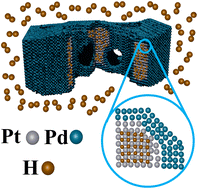
Hydrogen is a promising candidate to be the main renewable energy source in the future, but there has been limited development of hydrogen storage methods. PtxPd100−x (25 ≤ x ≤ 75) nanostructures composed of a mixture of nanofoams and nanoparticles are synthesized with a Pt-rich core and a Pd-rich shell atomic structure. We observed that the higher the amount of Pd, the higher the hydrogen uptake. Nevertheless, AP-XPS measurements show that hydrogen is mainly stored at the Pt core subsurface. Pd is not a bystander, but rather it helps the hydrogen diffusion, enabling an improved hydrogen storage capacity. This occurs in the nanofoams as nano-XANES measurements at the Pt L3 edge demonstrate that the main phases of the nanofoams and nanoparticles are metallic Pt and PtO, respectively. Finally, DFT calculations show a d-band upshift for the Pd-richer samples, which gives a stronger bonding with hydrogen, and helps to explain the distinguished hydrogen storage capacity found.
Introduction
In the last few decades, energy demands have quickly increased due to the growing world population and changes in living styles in several countries.1 Fossil fuels are still an essential source of energy to fulfill the global energy demand, but their use presents issues due to carbon emissions and their finite nature.2 The development of renewable and sustainable energy sources is an urgent need for a better and sustainable world in the future. There are many ways to generate renewable and sustainable energy.3–6 In particular, several studies have aimed at improving photocatalytic hydrogen production, and there have been great advances in the last few years.6,7 However, the current methods used for hydrogen storage are still far from satisfactory.8 Compressed hydrogen requires a small storage density, and liquid hydrogen should be kept at cryogenic temperatures, thus requiring the wastage of energy to maintain these conditions. The disadvantages of both conventional forms of storing hydrogen hinder the development of a hydrogen economy widely used around the world.
Solid materials are an alternative to storing hydrogen efficiently, where the hydrogen can be either adsorbed at the surface or stored with the formation of a hydride phase.9 Recently, researchers have focused on elucidating hydrogen–matter interactions and designing materials capable of efficient hydrogen storage.10 The US Department of Energy (DOE) targets for 2025 for the hydrogen gravimetric capacity and other parameters have not yet been achieved.11 The interaction of hydrogen with solid materials through a quasi-molecular bonding regime, where the hydrogen molecule presents a binding energy between −0.2 and −0.6 eV, represents the ideal situation for applications.10 This enables efficient hydrogen storage under mild conditions and its release at relatively low temperatures. Achieving such a regime is not an easy task, but metal nanostructures appear to be good candidates.10
Among the transition metals, Pd is widely studied due to its strong affinity with hydrogen.12 However, the performance demonstrated by Pd nanoparticles for hydrogen storage is still not satisfactory and should be improved.13 Some recent studies have demonstrated the possibility of improving the hydrogen storage capacity of Pd nanoparticles by replacing some Pd with Pt atoms and making Pt–Pd bimetallic nanoparticles.14,15 It was demonstrated that the small amount of Pt (∼15 at%) in the Pt–Pd nanoparticles improves the hydrogen storage capacity as compared to pure Pd nanoparticles.14,15 Furthermore, Pt–Pd nanoparticles with a Pd-rich core and a Pt-rich shell region present hydrogen atoms adsorbed at the interface of the Pd core and Pt shell regions.16,17 Despite the promising results, there is a lack of information about the precise influence of the Pt/Pd ratio on the hydrogen storage capacity and the atomic events occurring during hydrogen storage, which are necessary for designing improved systems.
In parallel, the control over the morphology of the nanostructures can also be used to improve the hydrogen storage capacity. Nanofoams have promising characteristics like low density, high surface area, and enhanced mass transport.18 Recently, we demonstrated that NiO and Pd nanofoams present a hydrogen binding energy between the cluster and slab cases, thus matching the quasi-molecular bonding regime.12,19 This study clarified that Pd nanofoams are a good alternative for hydrogen storage applications, and considering the aforementioned studies with nanoparticles, better results could be achieved using Pt–Pd nanofoams instead. This work aims to investigate bimetallic PtxPd100−x (25 ≤ x ≤ 75) nanofoams with tunable electronic properties for hydrogen storage applications. The elucidation of the intricate atomic events in this system helps to explain the ability of the nanostructures to store hydrogen.
Results and discussion
Fig. 1(a–c) illustrate the SEM images of the Pt–Pd nanostructures. The SEM images show the presence of clear channels represented as black holes. This is typical of the existence of nanofoams.12,19 Fig. S1 shows the EDS measurements of each case, where it is possible to identify the presence of Pt, Pd, C, and O, without impurities, and to determine the Pt/Pd ratio, which agrees with the expected stoichiometry (Table S1). Fig. 1(e–g) display typical TEM images showing a clear presence of nanofoams together with some nanoparticles. The nanofoams are identified by the presence of a single unit forming big holes that are not formed by agglomerated nanoparticles. The walls of the nanofoams present a width of around 100 nm, and the nanoparticles have a size of around 25 nm. Fig. S2 shows the STEM-EDS mapping results, which demonstrate compositional uniformity in all cases. EDS measurements at specific points of the nanofoams and nanoparticles show the same amount of O in both cases, which indicates that PdO is distributed in both regions (Fig. S3). The Pt–Pd nanostructures likely form due to the contact between the reagent salts and glucose at the interface of the lipid (monoolein) and aqueous domains of the template. After calcination, the monoolein is removed, and nanostructures are formed. The TEM images confirm the effective synthesis of nanoparticles mixed with nanofoams, which is a promising system for hydrogen storage applications.19
 |
| | Fig. 1 Typical SEM images of (a) Pt25Pd75, (b) Pt50Pd50, and (c) Pt75Pd25 bimetallic nanostructures. (d) XRD measurements with their respective Rietveld refinement results. Typical TEM images and their histograms of size distribution of (e) Pt25Pd75, (f) Pt50Pd50, and (g) Pt75Pd25 bimetallic nanostructures. (h) SAXS measurements with the best fit results found. The colored dots represent the data-background. | |
The XRD patterns are presented in Fig. 1(d) with their respective Rietveld refinement results. The XRD patterns are consistent with the metallic Pt–Pd (ICSD 65-6418) and PdO (ICSD 43-1024) crystal structures. PdO comes from the calcination procedure during the synthesis. Nevertheless, it is known that PdO is readily reduced to metallic Pd during H2 storage at room temperature.12 Overall, the Bragg reflections are narrow, which indicates the presence of relatively big crystallites, consistent with the predominant presence of nanofoams in the samples, as observed by TEM. The Rietveld refinement results (Table S2) show that a higher Pd amount results in a higher percentage of the PdO compound.
Fig. 1(h) shows the SAXS patterns of the Pt–Pd nanostructures, fitted using the Beaucage model to account for both a population of core–shell nanoparticles and the presence of nanofoams. The core–shell population presents an optimized η value bigger at the core as compared to the shell region, which is consistent with a Pd-rich shell and Pt-rich core atomic structure. In the literature, it is known that it is possible to synthesize Pt–Pd nanoparticles with a Pd-rich shell20 or a Pt-rich shell.21 Considering only the minimization of the surface free energy, a Pd-rich shell is expected, as obtained in the synthesized nanostructures.22 Fig. S4 shows the size distributions obtained from SAXS analysis, which are consistent with those obtained from TEM (Fig. 1(e–g)). The Beaucage model does not include a core–shell atomic arrangement as it uses a mean electronic density to describe the full nanofoam, but a core–shell structure may be present in the nanofoams as well.
Fig. 2(a) shows the Pd 3d + Pt 4d3/2 XPS spectra of the nanostructures synthesized. These results show the presence of three chemical components, namely Pd(0) at 335.5 eV,23 PdO at 336.9 eV,24 and Pd(OH)x at 337.6 eV.25 PdO was already observed in the XRD measurements and comes from the calcination step, while Pd(OH)x was formed due to air exposure. The Pt 4f XPS spectra (Fig. 2(b)) are fitted with Pt(0) at 70.1 eV,26 Pt(OH)x at 71.3 eV,27 and PtO at 73.1 eV,26 components. Both Pt(OH)x and PtO probably occur due to exposure to air. The results also show that the higher the amount of Pd, the more oxidized the sample is at the surface for both Pt and Pd atoms, consistent with the bulk-sensitive XRD results. XPS measurements were also used to probe the atomic arrangement in the bimetallic nanostructures synthesized. Table S3 shows the Pt/Pd normalized ratio for different inelastic mean free path (λ) values, where there is a huge increase in the Pt/Pd ratio for deeper regions in all samples. These results are consistent with the formation of a Pd-rich shell and a Pt-rich core, which is also in agreement with the SAXS data. Considering the predominant presence of nanofoams in comparison to nanoparticles, as shown by TEM, from XPS analysis, one can confirm that the core–shell structure is present in both nanostructures.
 |
| | Fig. 2 (a) Pd 3d + Pt 4d3/2 and (b) Pt 4f XPS spectra with their respective fit results. XANES measurements at the (c) Pd K edge and (d) Pt L3 edge. k2-weighted EXAFS oscillations at the (e) Pd K edge and (f) Pt L3 edge and the corresponding FT at the (g) Pd K edge and (h) Pt L3 edge, together with the best fit found. | |
The XANES measurements at the Pd K edge and Pt L3 edge are displayed in Fig. 2(c and d). The fingerprints in the XANES region are consistent with a mixture of metal and oxide compounds for both edges.28 The height of the white line at the Pd K edge and Pt L3 edge increases with the Pd amount, indicating higher Pd and Pt oxidation states, consistent with the trends observed in both XRD and XPS measurements. This is observed for both edges, so it cannot be attributed to a charge transfer effect between the Pt and Pd atoms. The k2-weighted EXAFS oscillations and their respective FT are displayed in Fig. 2(e–h). The EXAFS oscillations present the characteristic signature of the fcc crystal structure for both the Pd K and Pt L3 edges.29 The change in the stoichiometry is associated with slight changes in the oscillation around 4.5 Å−1 and 5.5 Å−1 for both edges. The Fourier transform (FT) presents a main peak at around 2.8 Å (not phase corrected) that is split due to the variation of the backscattering amplitude with k for heavy atoms.30 Table S3 shows the coordination numbers obtained from the fit procedure, which are consistent with a Pt-rich core and Pd-rich shell structure (see discussion in the SI). Given the above, the Pt–Pd nanostructures synthesized allow the influence of the Pt/Pd ratio with a fixed initial core–shell atomic structure and nanoparticle size on the hydrogen storage process to be studied.
Table S4 presents the gravimetric capacity of the 1 wt% Pt–Pd/C nanostructures obtained from the GC measurements shown in Fig. S5. For comparison purposes, the pure activated carbon presents a gravimetric capacity of 0.08 wt%. The results point to an increase in the gravimetric capacity value with the Pd amount, reaching 0.58 wt% in the best case (Pt25Pd75). In the literature, the gravimetric capacity result for Pt21Pd79 nanoparticles is 0.32 wt% for similar conditions of hydrogen pressure of 1 atm and RT.14 This means that the synthesized nanostructures present an approximately 80% improvement in the gravimetric capacity compared to previous Pt–Pd systems. This value is not close to the DOE target of 5.5 wt%, but, despite that, the DOE considers a minimum temperature of operation of −40 °C and a hydrogen pressure up to 12 bar for practical applications. Both factors improve the gravimetric capacity observed and could be used for practical applications. Indeed, the gravimetric capacity of the Pt25Pd75 nanostructures was measured at 0 °C, and it increased to 0.87 wt%.
The initial amount of PdO in the as-prepared nanostructures is quickly reduced to Pd(0) at RT[12], and thus does not influence the H2 adsorption kinetics. Fig. S6 shows a comparison of the gravimetric capacity as a function of time for the Pt25Pd75 nanostructures after Ar treatment at 150 °C (27.5% PdO, see Table S2) and H2 treatment at 200 °C (without PdO), and no significant differences are found in the kinetics. Furthermore, TGA measurements allowed the H2 desorption temperature for the best case, namely Pt25Pd75 nanostructures, to be determined, as shown in Fig. S7. The H2 molecules are desorbed at around 158 °C, which is relatively low for practical applications. This distinguished behavior of the synthesized Pt–Pd nanostructures was investigated with AP-XPS measurements during the hydrogen storage reaction.
Fig. 3 shows the AP-XPS measurements of the 20 wt% Pt–Pd/C nanostructures with hν = 690 eV. After cleaning, the same chemical components found in the conventional XPS analysis of non-supported nanostructures (Fig. 2) were observed in the samples. The exception is the presence of a new small PdC component at 336.0 eV in the Pd 3d AP-XPS region,31 which arises from the use of supported Pt–Pd/C nanostructures rather than conventional XPS measurements. Although small, the absence of this component significantly impairs the fit quality in the Pd 3d region. The same trend of higher Pt and Pd oxidation states with increasing Pd content is observed here. After the insertion of hydrogen, the Pd 3d AP-XPS region quickly changes with the presence of an apparent single chemical component. It is known that Pd(0) and Pd–H present almost the same binding energy with a small separation of 0.2 eV,29,32 so this chemical component may come from the convolution of Pd(0) and Pd–H, which would be observed as an increase in the FWHM value used in the fit procedure. In parallel, the Pt 4f AP-XPS region also shows the increase of the Pt(0) component, although PtO and Pt(OH)x are not completely eliminated with the introduction of hydrogen. Again, the Pt(0) and Pt–H chemical components are quite close and barely differentiated,33 so the change in the FWHM value of this component was further considered in the analysis. The same general trends are observed for AP-XPS measurements with hν = 1200 eV (Fig. S8).
 |
| | Fig. 3 AP-XPS measurements at the (a–c) Pd 3d + Pt 4d3/2 and (d–f) Pt 4f regions with hν = 690 eV of the Pt–Pd bimetallic nanostructures after the cleaning procedure (UHV) and during 5.0 mbar H2 exposure at RT and 7 °C. | |
The normalized Pt/Pd ratio was calculated using the Pd 3d and Pt 4d3/2 AP-XPS regions with hν = 690 eV and hν = 1200 eV, which gives λ = 11 Å and λ = 15 Å, respectively. Table 1 shows the Pt/Pd normalized ratio, where the nanostructures after heating at 90 °C in UHV remain with a Pd-rich shell and Pt-rich core region because this ratio increases with the probed depth. The insertion of hydrogen induces changes in the atomic arrangement. For a fixed photon energy and sample, it is possible to observe an increase in this ratio after dosing hydrogen at room temperature, which is consistent with Pt migration towards the surface of the nanostructures.
Table 1 The Pt/Pd normalized ratio calculated from AP-XPS for photoelectrons coming from different depths of bimetallic Pt–Pd nanostructures
However, a Pt-rich core and Pd-rich shell are still present, as observed by comparing the Pt/Pd ratio at two distinct photon energies. Surprisingly, the opposite behavior occurs for the samples exposed to the same hydrogen pressure but at a lower temperature of around 7 °C. In this case, the normalized Pt/Pd ratio decreases back to values in some cases even smaller than the case after heating in UHV conditions. This anomalous behavior is observed in all samples and for both photon energies.
Fig. 4 shows the FWHM of the Pd(0)/Pd–H and Pt(0)/Pt–H components as a function of the condition of measurement for both the Pd 3d and Pt 4f AP-XPS regions and photon energies. The initial UHV case corresponds to the pure Pd(0) and Pt(0) components as hydrogen has not been inserted yet. Interestingly, only slight changes in the FWHM value are observed for the Pd 3d component in both photon energies during hydrogen exposure. A completely different behavior is observed in the Pt 4f region, where significant changes are observed with the introduction of hydrogen. Further slight changes occur for the low temperature case, as expected, as the formation of the metal–H bond is an exothermic reaction. This shows that hydrogen interacts mainly with Pt instead of Pd atoms, and, furthermore, it is stored at the Pt subsurface instead of the Pt–Pd interface, as no significant changes are observed in the Pd 3d region. The possibility of not being sensitive to the interface region for Pd 3d is discarded since the FWHM of Pd 3d does not change for the thinnest shell thickness (Pt75Pd25) probed by the higher photon energy (hv = 1200 eV), while Pt 4f region does show significant changes in this case. Moreover, the FWHM of Pt 4f at hv = 690 eV, which is more surface sensitive, does not change under hydrogen exposure, again consistent with hydrogen storage at the subsurface region. Higher amounts of Pd give stronger changes in the FWHM, as expected from GC measurements, but, surprisingly, the changes are in the Pt 4f region. This means that Pd is not a bystander at the surface, but helps the hydrogen diffuse to its storage site in the Pt subsurface reservoir. These observations explain the improved performance of the Pt25Pd75 nanostructure as compared to Pt21Pd79, with a Pt-rich shell, from the literature.14 The improved affinity of Pt with hydrogen as compared to Pd also explains the anomalous behavior of the change in the atomic arrangement during the hydrogen storage process (Table 1). With the insertion of hydrogen, Pt atoms start to migrate towards the surface to make Pt–H bonds. After this, new Pt atoms from the core region migrate to the surface for the same reason, replacing those with Pt–H bonds that migrate back to the inner region. The decrease in temperature reduces the ability of new Pt atoms to migrate toward the surface. Combined with the Pt core region being almost fully saturated with Pt–H bonds, this effectively stops the atomic migration.
 |
| | Fig. 4 FWHM values of the (a and b) Pd 3d and (c and d) Pt 4f AP-XPS regions for (a and c) hν = 690 eV and (b and d) hν = 1200 eV as a function of the treatment employed. The FWHM refers to the main component for the cases of hydrogen exposure (RT and 7 °C) and the metallic component for the UHV condition. | |
As the bimetallic nanostructures contain both nanofoams and nanoparticles (Fig. 1), it is important to determine their respective roles in the hydrogen storage process. Nano-XANES measurements were conducted at the Pt L3 edge of the Pt25Pd75 nanofoam and nanoparticle regions, which is the case with the best gravimetric capacity results. Fig. 5 shows the fluorescence maps of the Pt25Pd75 nanostructures at the nanofoam (Fig. 5(a)) and nanoparticle (Fig. 5(b)) regions. Fig. 5(c) shows that the nano-XANES of the nanofoams present a smaller height in the white line region than the nano-XANES of the nanoparticles. These results are consistent with a more metallic character at the nanofoam region with respect to the nanoparticle one. As it is known that metallic Pt is the active phase of Pt for hydrogen storage, it demonstrates that the hydrogen storage process occurs at the nanofoam region, which represents the main morphology of the nanostructures synthesized.
 |
| | Fig. 5 (a and b) The fluorescence maps of the nanofoams and nanoparticles (10 μm × 10 μm for both cases) and (c) the corresponding Nano-XANES measurements at the Pt L3 edge of both regions (200 nm × 600 nm spot size). (d) Work function for different x values calculated for the Pt–Pd(111) slabs and Pt–Pd clusters. | |
The dependence of the hydrogen storage capability on the stoichiometry was elucidated with DFT calculations. Fig. 5(d) shows the dependence of the work function on the Pd amount for Pt–Pd slab and cluster structures. It shows a decrease in the work function with the Pd amount, which is consistent with the increased gravimetric capacity for the Pd-rich samples that was observed. Recently, we demonstrated that the H2 adsorption process in nanofoams can be modelled by DFT as an intermediate case of cluster and slab structures.19 Considering this, nanofoams should present the same trend in the work function as that demonstrated in Fig. 5(d). This elucidates the dependence of the gravimetric capacity on Pd in the Pt–Pd nanofoams, which is the active phase for hydrogen storage.
Conclusions
In this study, novel PtxPd100−x (25 ≤ x ≤ 75) nanostructures composed of a mixture of nanofoams and nanoparticles were obtained. These nanostructures present a Pt-rich core and Pd-rich shell atomic structure, and the surface atomic population is easily tuned. Furthermore, the higher the amount of Pd, the higher the hydrogen storage capacity. This occurs because Pd atoms facilitate the hydrogen diffusion through the nanofoam structure to make Pt–H bonds at the core region. The d-band center upshifts for higher Pd amounts, thus making an electronic configuration of stronger bonding with the hydrogen molecule. Consequently, an improved gravimetric capacity was obtained, and it is demonstrated that hydrogen storage occurs mainly at the nanofoams. This result gives valuable information for the design of future smart hydrogen storage systems composed of the already widely used Pt and Pd metals. One possibility is to use this system to store hydrogen at the Pt core and, after saturation, to store hydrogen at the Pd surface as well (like in the Pd monometallic case), thus improving the gravimetric capacity even more.
Experimental section/methods
All chemicals were purchased from Sigma-Aldrich and used without further purification. The PtxPd100−x (x = 25, 50, 75) nanostructures were synthesized by reducing the potassium hexachloroplatinate (K2PtCl6, 99.9%) and palladium acetate (Pd (OCOCH3)2), 99.9%) salts using glucose (C6H12O6, 99.9%) as a reducing agent. The monoolein/water system was used as a template for synthesizing the nanofoams. The monoolein was technical grade (ca. 40% of 1-oleoyl-rac-glycerol; impurities are a mixture of diolein and triolein). The total mass of K2PtCl6 + Pd(OCOCH3)2 salts was kept fixed at 0.1426 g in all cases, and the individual K2PtCl6 and Pd(OCOCH3)2 masses were chosen aiming to obtain the x values above. First, K2PtCl6 and glucose (0.0389 g) were dissolved in MilliQ® water (7.2 mL), forming a homogenous light yellowish solution. Another solution, constituted by Pd(OCOCH3)2 salt dissolved in technical grade monoolein (20.0 g), was kept in an ultrasonic bath for 5 minutes, while it was constantly stirred with a spatula. In this case, the Pd(OCOCH3)2 salt dissolved in monoolein results in an orange-colored mixture. Then, this mixture was added to the aqueous solution containing the Pt salt, resulting in an orange lotion-like liquid. The liquid was then kept in a water heating bath for 1 h at 80 °C and mixed every 5 min with a spatula, and the liquid turned black. After that, the liquid was rested for 2 h at room temperature. Then, it was dropped into a crucible for the calcination procedure at 500 °C for 4 h. In the end, a dark powder was obtained, and it was washed 10 times with MilliQ® water by using a centrifuge at 3000 rpm for 10 min and dried in a desiccator for 24 h.
Thermogravimetric analysis (TGA)
Thermogravimetric analysis (TGA) was conducted to determine the calcination temperature of the samples using the SDT Q600 (TA Instrument) equipment at LAMAT-UFRGS. For the measurements, 50 mL of the solution before the calcination procedure (K2PtCl6 + Pd(OCOCH3)2 + monoolein + C6H12O6) was spread out on an alumina crucible and heated up to 700 °C with a heating rate of 10 °C min−1 and a flux of 100 mL min−1 of synthetic gas (air). Fig. S9 shows the TGA results. The TGA measurements were also conducted on the Pt25Pd75 nanostructures after the H2 storage experiment (see Gas Chromatography measurements section below) to determine the H2 desorption temperature in the nanostructures.
Scanning electron microscopy (SEM) and energy dispersive X-ray spectroscopy (EDS)
The SEM measurements were performed at CMM BR-Sul-UFRGS by using a Zeiss EVO MA10 microscope. A thin layer of the sample powder was dispersed over the carbon tape placed in the sample holder and coated with carbon to increase the conductivity of the sample surface. An acceleration voltage of 20 kV was applied to obtain the SEM images. Additionally, EDS measurements were performed to investigate the elemental composition using the characteristic X-ray detector INCAx-act.
Transmission electron microscopy (TEM)
The TEM measurements were carried out in the FEI-Spirit Biotwin microscope operated at 120 kV at CM-UFMG. For the measurements, a homogeneous solution of the Pt–Pd samples was dispersed in acetone, stirred in an ultrasound bath for 30 min, dropped on the carbon-coated Cu grid, and dried. The size of the nanoparticles was manually obtained by measuring their area using the ImageJ version 6.0 software.34 Around 200 nanoparticles were considered for each histogram of the size distribution. The grids prepared for TEM measurements were also used for Scanning Transmission Electron Microscopy (STEM)-EDS mapping in the FEI-Tecnai G2-20 SuperTwin microscope operated at 200 kV at CM-UFMG.
X-ray diffraction (XRD)
XRD measurements were performed in a Rigaku Ultima IV diffractometer at CNANO-UFRGS. The equipment worked in the Bragg–Brentano geometry with 40 kV voltage and 17 mA current using a Cu Kα X-ray source with a wavelength of 1.5405 Å. The measurements were performed on powder samples in the 2θ range from 10° to 100°, with the step size of 0.05° and the acquisition time of 3 s per point. The crystal phases were identified using the Crystallographic Search Match software version 2.1 and the JCPDS-ICDD database. The Rietveld refinement method was employed using the FullProf software version of January 2021 to obtain the lattice parameters, crystallite size, and composition of the samples.35 The Thompson-Cox-Hasting pseudo-Voigt Axial divergence asymmetry profile function was used in the analysis. The cubic metallic Pt–Pd and tetragonal PdO crystal structures were used as input in the FullProf software. The diffraction pattern of a quartz standard sample was refined to generate the equipment resolution file.
Small-angle X-ray scattering (SAXS)
The Nano-inXider (Xenocs) equipment at CNANO-UFRGS was used for the SAXS measurement of the bimetallic nanostructures. A Kapton tape-sealed sample holder was filled with around 5 mg of the Pt–Pd powder. A Dectris Pilatus 3 detector and a Cu Kα X-ray source were used to obtain the SAXS patterns. The measurements were taken in transmission mode at room temperature, with each scan having an exposure time of 60 s and a 2θ range of 0.00° to 5.25°. The final SAXS patterns were obtained from an average of 60 scans. The SAXS data transformation of symmetric 2D into 1D data, along with the averaging of multiple scans, was performed using FOXTROT software. The obtained data were then analyzed using the SASfit software package (version 0.94.9). Furthermore, the background function was subtracted from the raw SAXS data using| | | I(q) = C0 + C1q + C4q−α | (1) |
These parameters were optimized for suitable results, where the α value achieved was close to 4.0. The lognormal size distribution of the core–shell (spherical shell i) model was employed during the fitting procedure. The contrast of the electronic densities at the core to the shell was kept at 1.3 in all cases. The Beaucage model36 was also used together with the core–shell model to fit the data collected. The P parameter was constrained to be smaller than 3 and the Ps one, between 3 and 4.
Ex situ X-ray photoelectron spectroscopy (XPS)
The chemical components and oxidation state at the surface of the nanostructures synthesized were determined using the XPS technique with the Omicron Sphere electron analyzer at LAMAS-UFRGS. A thin layer (∼5 mg) of the sample powder was dispersed over Cu tape that was stacked in the sample holder and inserted into the ultra-high vacuum (UHV) chamber. During the measurement, the pressure in the chamber was around 10−9 mbar. The measurements were conducted at room temperature using the Al Kα X-ray source (1486.6 eV) in the long scan, Pd 3d, Pd 4p, Pt 4d, Pt 4f, O 1s, and C 1s electronic regions of each sample. The electron analyzer was set at a pass energy of 50 eV and 10 eV with energy steps of 1.0 eV and 0.1 eV, and acquisition time of 0.2 s per point and 2 s per point for the long scan and high-resolution regions, respectively. The adventitious carbon position was considered at 284.5 eV for the correction of charging effects. The XPS spectra were analyzed using the XPSPeak 4.1 software with a Shirley-type background and a Lorentzian–Gaussian function with 18% Lorentzian contribution, as determined from the analysis of the Au 4f XPS spectrum of an Au foil. During the fitting procedure, the FWHM and relative binding energy values of a given chemical component were constrained to the same value for all the samples.
X-ray absorption spectroscopy (XAS)
The XAS measurements were performed at the NOTOS beamline at the ALBA Synchrotron. The samples consisted of 1 wt% PtxPd1−x/C (activated carbon) nanostructures to match the condition for hydrogen storage measurements. The measurements were conducted in fluorescence mode at the Pd K edge (24
350 eV) and Pt L3 edge (11
564 eV). The Pd K edge and Pt L3 edge XAS measurements were carried out with 20 mg and 10 mg of powder samples, respectively. The powder was pressed to make a homogeneous pellet of 5 mm diameter. The XAS fluorescence measurements were collected at room temperature and ambient pressure using a 13-element Si Drift Detector (SDD) from Mirion Technologies coupled to two Xpress3 readout electronic modules from Quantum Detectors. An average of 15 scans was used for each sample.
The Extended X-ray absorption fine structure (EXAFS) spectra were analyzed following the standard procedure of data reduction30 using the IFEFFIT package.37 The EXAFS signal χ(k) was extracted and then Fourier transformed using a Kayser-Bessel window with a Δk range of 8.75 Å−1 (Pd K edge) and 9.7 Å−1 (Pt L3 edge). All data were k2-weighted. FEFF6 was used to obtain the phase shift and amplitudes.38 The phase shift and amplitudes were obtained considering PtxPd100−x (x = 25, 50, 75), PdO, and PtO clusters. Single scattering events were considered in the fitting procedure of the coordination shell. The S02 value was fixed to 0.8 (Pd K edge) and 0.7 (Pt L3 edge), as determined from the analysis of Pd and Pt standard foils, respectively. The Debye-Waller and interatomic distances associated with the Pt–Pd and Pd–Pt scattering paths were constrained to the same value for the data analysis of both edges. The R-factor obtained from the analysis was always lower than 0.006, which demonstrates the excellent agreement between the proposed model and the experimental result.
Gas chromatography (GC) measurements
The gas chromatography (GC) experiments were performed utilizing an SRI Instruments GC apparatus model 310 USB to determine the hydrogen storage capacity. The GC measurements were done with Ar as the carrier gas and with a Thermal Conductivity Detector (TCD). The reactions were carried out in a homemade reactor. First, 1 wt% of Pt–Pd nanostructures were supported on activated carbon (Activated Charcoal Norit®) mechanically and then mixed with an ultrasonic batch for 20 min. The activated carbon had a surface area of 1042 ± 15 m2 g−1. The samples were heated to 150 °C under a 1 atm Ar atmosphere and kept at this temperature for 1 h. After that, the system was cooled to room temperature or 0 °C (through an ice bath), where Ar was replaced by 1 atm H2. After this, aliquots of 150 μL of the gas atmosphere were taken every 30 min for the GC measurements. The amount of H2 adsorbed in the sample is obtained by comparing it to the original amount inside the reactor. Pressure and temperature sensors were also used to monitor slight changes in pressure and temperature during the hydrogen storage, and these values were taken into account while calculating the amount of hydrogen stored.
Ambient pressure X-ray photoelectron spectroscopy (AP-XPS)
The AP-XPS measurements were performed at the CIRCE beamline at the ALBA Synchrotron. The measurements were conducted with 20 wt% Pt–Pd/C (activated carbon) powdered nanostructures compressed in 13 mm diameter pellets. The samples were inserted into the Ultra-High Vacuum (UHV) chamber and heated to 90 °C under vacuum (p = 1 × 10⁻⁹ mbar) to clean the sample surface using an infrared (IR) laser. The sample was kept at 90 °C for 30 min. After that, the sample was cooled to RT and a 5.0 mbar H2 atmosphere was introduced. Then, the sample was cooled to ∼7 °C under 5.0 mbar H2. AP-XPS measurements were taken in each step described above. The AP-XPS measurements were conducted in a SPECS PHOIBOS 150 NAP analyzer with photon energies of 690 eV and 1200 eV. Different energy regions were collected in these measurements, including long scan, Pd 3d, Pt 4f, C 1s, and O 1s. The AP-XPS spectra were collected with a 20 eV pass energy, 0.5 s dwell time, and 0.1 eV or 1.0 eV energy step for the high-resolution and long scan regions, respectively. Charging effects were corrected considering the adventitious carbon position at 284.5 eV. The high-resolution spectra were fitted with XPSPeak 4.1 software with a Shirley-type background and a Lorentzian–Gaussian function with 26% (hv = 690 eV) and 19% (hv = 1200 eV) Lorentzian contributions. During the fitting procedure, the FWHM and relative binding energy values of each chemical component were constrained to be the same for all samples, except for the FWHM of the Pd(0) and Pt(0) components. The metallic Pd component was fitted considering an asymmetric peak, as reported in the literature for metallic Pd,23 with an asymmetry factor (TS value in XPSPeak) optimized to 0.4 and kept fixed to this value in all samples.
Nano-X-ray absorption near-edge structure (XANES)
Nano-XANES measurements were carried out at the CARNAUBA beamline at the Brazilian Synchrotron Light Source (LNLS). The sample powder was dispersed in acetone with the use of an ultrasonic bath for 1 h. After this, the homogeneous solution was added dropwise over a Si (100) p-type wafer at room temperature. After this, fiducial marks with W were done in the different regions of the Pt–Pd nanostructures with the Focused Ion Beam (FIB) technique using the Helios 5 PFIB CXE dual beam equipment at LNLS. The fiducial marks were done to distinguish the different regions during the nano-XANES measurements. Initially, a 2D X-ray fluorescence (XRF) map was obtained with a photon energy of 12 keV using a Vortex ME-4 SDD detector. This map was done to identify the fiducial marks in the samples, enabling the acquisition of nano-XANES measurements in the different regions. The nano-XANES measurements were taken at the Pt L3 edge in fluorescence mode. The beam size during the measurements was 200 nm × 600 nm. An average of 3 scans was used to obtain the final XAS spectrum.
Density functional theory (DFT) calculations
DFT calculations were employed in the Quantum ESPRESSO 6.4.1 package,39 which uses a plane wave basis set to describe the behavior of the valence electrons. Considering the valence electrons of Pd, Pt, and H atoms, the ultrasoft pseudopotential with the projector-augmented wave (PAW) method40 was employed. The generalized gradient approximation (GGA) was used with the exchange-correlation functional of Perdew–Burke–Ernzerhof (PBE) for all the calculations. The Broyden–Fletcher Goldfarb–Shanno (BFGS) approach was used for the energy minimization until the total energy change was less than 10−4 Ry between two consecutive self-consistent field (SCF) steps and the force was less than 10−3 Ry Bohr−1. The Gaussian smearing was used to describe electronic occupations. It used a cutoff energy of 55 Ry and a charge density value of 380 Ry. The k-point grid was selected at the gamma point in the first Brillouin zone. The relaxation of the atomic structure was done until a minimum pressure of −0.53 kbar and a total force per atom of 4.2 × 10⁻⁴ Ry Bohr−1 was achieved. Pt–Pd(111) slabs and a cluster of 38 atoms were constructed for the PtxPd100−x (25 ≤ x ≤ 75) samples, with a 20 Å vacuum layer used around the cluster, to prevent the interaction between periodic images of the adsorbate. Fig. S10 shows the schematic representation of the structures used. Furthermore, the SCF and non-self-consistent field (NSCF) calculations were performed to determine the electronic properties under the same conditions of geometry optimization. The density of states (DOS) of the Pt–Pd clusters is computed at the gamma point.
Conflicts of interest
There are no conflicts to declare.
Data availability
The data supporting this article have been included as part of the supplementary information (SI). Supplementary information is available. See DOI: https://doi.org/10.1039/d5ta04270d.
Acknowledgements
This study was funded by FAPERGS (project number 23/2551-0000177-2 and 24/2551-0001283-4), CNPq (project number 310142/2021-0 and 307504/2025-5), and CAPES (finance code 001). W. K., and M. A. H. V. thank CAPES for the research grant. A. S. T., G. Z. G., and F. B. thank CNPq for the research grant. C. E. acknowledges the MICINN-FEDER funding through the PID2021-124572OB-C33 grant. The authors also thank CNANO-UFRGS, CMM BR-Sul-UFRGS, LAMAS-UFRGS, LAMAT-UFRGS, CESUP-UFRGS, CM-UFMG, LNLS-Sirius, and ALBA for the use of the infrastructure (in particular, the measurements through NOTOS in house proposal 2023117933 and CIRCE proposal 2023027432).
Notes and references
- D. G. Nocera, Daedalus, 2006, 135, 112–115 CrossRef.
-
J. Twidell, Renewable Energy Resources, Routledge, 2021 Search PubMed.
- H. Kojima, K. Nagasawa, N. Todoroki, Y. Ito, T. Matsui and R. Nakajima, Int. J. Hydrogen Energy, 2023, 48, 4572–4593 CrossRef CAS.
- G. Ji, J. G. Yao, P. T. Clough, J. C. D. Da Costa, E. J. Anthony, P. S. Fennell, W. Wang and M. Zhao, Energy Environ. Sci., 2018, 11, 2647–2672 RSC.
- D. Das and T. N. Veziroǧlu, Int. J. Hydrogen Energy, 2001, 26, 13–28 CrossRef CAS.
- J. Corredor, M. J. Rivero, C. M. Rangel, F. Gloaguen and I. Ortiz, J. Chem. Technol. Biotechnol., 2019, 94, 3049–3063 CrossRef CAS.
- A. S. Thill, F. O. Lobato, M. O. Vaz, W. P. Fernandes, V. E. Carvalho, E. A. Soares, F. Poletto, S. R. Teixeira and F. Bernardi, Appl. Surf. Sci., 2020, 528, 146860 CrossRef CAS.
- S. Dutta, J. Ind. Eng. Chem., 2014, 20, 1148–1156 CrossRef CAS.
- A. Züttel, Mater. Today, 2003, 6, 24–33 CrossRef.
- P. Jena, J. Phys. Chem. Lett., 2011, 2, 206–211 CrossRef CAS.
-
https://www.energy.gov/eere/fuelcells/hydrogen-storage
.
- L. P. Matte, W. Khan, A. S. Thill, C. Escudero, F. Poletto and F. Bernardi, Mater. Res. Express, 2024, 11, 105010 CrossRef CAS.
- S. K. Konda and A. Chen, Mater. Today, 2016, 19, 100–108 CrossRef CAS.
- L. S. R. Kumara, O. Sakata, H. Kobayashi, C. Song, S. Kohara, T. Ina, T. Yoshimoto, S. Yoshioka, S. Matsumura and H. Kitagawa, Sci. Rep., 2017, 7, 14606 CrossRef PubMed.
- H. Kobayashi, M. Yamauchi, R. Ikeda, T. Yamamoto, S. Matsumura and H. Kitagawa, Chem. Sci., 2018, 9, 5536–5540 RSC.
- A. Tayal, O. Seo, J. Kim, H. Kobayashi, T. Yamamoto, S. Matsumura, H. Kitagawa and O. Sakata, ACS Appl. Mater. Interfaces, 2021, 13, 23502–23512 CrossRef CAS.
- H. Kobayashi, M. Yamauchi, H. Kitagawa, Y. Kubota, K. Kato and M. Takata, J. Am. Chem. Soc., 2010, 132, 5576–5577 CrossRef CAS PubMed.
- B. C. Tappan, S. A. Steiner III and E. P. Luther, Angew. Chem., Int. Ed., 2010, 49, 4544–4565 CrossRef CAS PubMed.
- A. S. Thill, D. S. Lima, O. W. Perez-Lopez, R. L. Manfro, M. M. Souza, D. L. Baptista, B. S. Archanjo, F. Poletto and F. Bernardi, Mater. Adv., 2023, 4, 476–480 RSC.
- F. Bernardi, M. C. Alves, A. Traverse, D. O. Silva, C. W. Scheeren, J. Dupont and J. Morais, J. Phys. Chem. C, 2009, 113, 3909–3916 CrossRef CAS.
- S. I. Sanchez, M. W. Small, J. M. Zuo and R. G. Nuzzo, J. Am. Chem. Soc., 2009, 131, 8683–8689 CrossRef CAS PubMed.
- H. Akiba, H. Kobayashi, H. Kitagawa, K. Ikeda, T. Otomo, T. Yamamoto, S. Matsumura and O. Yamamuro, J. Phys. Chem. C, 2019, 123, 9471–9478 CrossRef CAS.
- M. C. Militello and S. J. Simko, Surf. Sci. Spectra, 1994, 3, 387–394 CrossRef CAS.
- P. Wu, Y. Huang, L. Kang, M. Wu and Y. Wang, Sci. Rep., 2015, 5, 14173 CrossRef CAS PubMed.
- J. X. Tang, Q. S. Chen, L. X. You, H. G. Liao, S. G. Sun, S. G. Zhou, Z. N. Xu, Y. M. Chen and G. C. Guo, J. Mater. Chem. A, 2018, 6, 2327–2336 RSC.
- F. Wei, J. Liu, Y. N. Zhu, X. S. Wang, C. Y. Cao and W. G. Song, Sci. China: Chem., 2017, 60, 1236–1242 CrossRef CAS.
- Y. Kang, W. Wang, J. Li, C. Hua, S. Xue and Z. Lei, Int. J. Hydrogen Energy, 2017, 42, 18959–18967 CrossRef CAS.
- A. A. Saraev, S. A. Yashnik, E. Y. Gerasimov, A. M. Kremneva, Z. S. Vinokurov and V. V. Kaichev, Catalysts, 2021, 11, 1446 CrossRef CAS.
- L. P. Matte, M. Jaugstetter, A. S. Thill, T. P. Mishra, C. Escudero, G. Conti, F. Poletto, S. Nemsak and F. Bernardi, ACS Nano, 2025, 19, 10312 CrossRef CAS PubMed.
-
D. C. Koningsberger and R. Prins, X-ray absorption: principles, applications, techniques of EXAFS, SEXAFS and XANES, John Wiley and Sons Inc., New York, 1987 Search PubMed.
- A. Tayal, O. Seo, J. Kim, L. S. R. Kumara, C. Song, S. Hiroi, Y. Chen, H. Kobayashi, H. Kitagawa and O. Sakata, J. Alloys Compd., 2019, 791, 1263–1269 CrossRef CAS.
- P. A. Bennett and J. C. Fuggle, Phys. Rev. B: Condens. Matter Mater. Phys., 1982, 26, 6030 CrossRef CAS.
- R. Toyoshima, T. Tanaka, T. Kato, K. Uchida and H. Kondoh, Chem. Commun., 2020, 56, 10147–10150 RSC.
- J. Lam, P. Katti, M. Biete, M. Mungai, S. AshShareef, K. Neikirk, E. Garza Lopez, Z. Vue, T. A. Christensen, H. K. Beasley and T. A. Rodman, Cells, 2021, 10, 2177 CrossRef CAS PubMed.
- L. B. McCusker, R. B. Von Dreele, D. E. Cox, D. Louër and P. Scardi, Appl. Crystallogr., 1999, 32, 36–50 CrossRef CAS.
- G. Beaucage and D. W. Schaefer, J. Non-Cryst. Solids, 1994, 172, 797–805 CrossRef.
- M. Newville, Synchrotron Radiat., 2001, 8, 322–324 CrossRef CAS.
- S. I. Zabinsky, J. J. Rehr, A. Ankudinov, R. C. Albers and M. J. Eller, Phys. Rev. B: Condens. Matter Mater. Phys., 1995, 52, 2995 CrossRef CAS.
- P. Giannozzi, S. Baroni, N. Bonini, M. Calandra, R. Car, C. Cavazzoni, D. Ceresoli, G. L. Chiarotti, M. Cococcioni, I. Dabo and A. Dal Corso, J. Phys.: Condens. Matter, 2009, 21, 395502 CrossRef.
- N. A. W. Holzwarth, Comput. Phys. Commun., 2019, 243, 25–29 CrossRef CAS.
|
| This journal is © The Royal Society of Chemistry 2026 |
Click here to see how this site uses Cookies. View our privacy policy here.