DOI:
10.1039/D5RA09257D
(Review Article)
RSC Adv., 2026,
16, 28777-28826
Total synthesis of natural products facilitated by prins reaction: a review
Received
30th November 2025
, Accepted 11th May 2026
First published on 27th May 2026
Abstract
Natural products have been identified as bioactive compounds, featuring anticancer, antibacterial, antiviral and anti-inflammatory properties. Synthesis of natural products is the field of high interest with an ongoing need for efficient synthetic methodologies leading to these intricate compounds. Prins reaction is one of the valuable strategies for the construction of sophisticated natural products and their derivatives. In this account, we have reviewed recent research accomplishments in synthesizing several natural products such as alkaloids, terpenoids, polyketides, steroids, spiroketals and polyphenolic compounds utilizing Prins protocol.
1. Introduction
Establishing unprecedented synthetic pathways is always a lasting motivation for the preparation of bioactive pharmaceuticals and intricate natural products.1 In organic synthesis, C–C bond construction reactions stand as cornerstone synthetic transformations. For instance, the Friedel–Crafts reaction is an effective bond-forming process, which originally leverages stoichiometric Lewis acids, has evolved to encompass greener and milder conditions.2 In addition, aldol reaction requires stoichiometric enolate preparation, affecting its efficiency.3 However, the Prins reaction offers more ecofriendly alternatives by using catalytic asymmetric approach.4 Moreover, Prins reaction is acknowledged as a leading approach towards tetrahydropyran (THP) construction owing to its robust stereoselective synthesis aspects, rendering it crucial for natural product preparation.5 The promising bioactivities of THP motifs have stimulated significant interest in their asymmetric synthesis, notably via Prins cyclization.6 Furthermore, segment-coupling Prins cyclization circumvents key obstacles of prior methods.7 In addition, Prins reaction paves the way for building complex carbohydrate ring structures.8 The value of Prins reaction in synthetic chemistry has been amplified by recent catalytic methods, component diversification, enantioselective versions and cascade processes.9 Further, Prins-Pinacol sequence involves migration reaction for quenching cation, rendering it highly atom economical.10 Initially, Kriewitz performed the condensation reaction between olefins and aldehydes; in 1899, he observed the formation of unsaturated alcohols by heating dipentene or pinene with paraformaldehyde.11 Hendrik Jacobus Prins, the inventor of Prins reaction, in 1917, pioneered the first study of chemical reaction between formaldehyde and ethylenic hydrocarbons. Additionally, Prins explored the reaction pathways of styrene, camphene, anethole and pinene with formaldehyde facilitated by sulfuric acid catalyst, leveraging glacial acetic acid or water as solvent. In aqueous solution, formals of unsaturated alcohols or of 1,3-butanediols were achieved, whereas acetic acid typically gave its esters.12 Owing to this seminal work, the Prins reaction is the widely recognized term for these transformations. Moreover, in 1919, the Prins reaction was first appeared in English language.12 In 1955, Hanschke achieved the key milestone in this reaction by constructing THP ring selectively through the acid-mediated reaction of 3-butene-1-ol with diverse ketones or aldehydes.13
The original Prins reaction documented in 1919 was the acid-facilitated addition reaction between an aldehyde 1a and an alkene 1b (Scheme 1).10 The obtained carbocation 1c may give a substitution product with a nucleophile or undergo deprotonation to produce homoallylic alcohol 1d.
 |
| | Scheme 1 Acid catalyzed Prins reaction. | |
Further, oxocarbenium ions are regarded as electrophiles and π-nucleophiles as nucleophilic reactants, broadening the synthetic utility of Prins reaction. The similar additions to thiocarbenium and iminium ions have been termed as thia-Prins and aza-Prins reactions, respectively. The array of products resulting from Prins reaction included unsaturated alcohols, 1,3-diols or 1,3-dioxanes, depending on substrate and the reaction conditions.14 Additionally, the Prins-type cyclization, involving the reaction of unsaturated alcohol with aldehyde to render heterocyclic compound, is a groundbreaking synthetic strategy widely employed in the preparation of important targets. Significantly, Prins reaction is a valuable and crucial tool in synthesis, enabling direct formation of products with molecular frameworks, commonly present in bioactive compounds and fragrances.4 The key breakthrough is attained by cascade/tandem reactions owing to their expedient access, high atom economy and remarkable bond-forming features.15 Among these, new approaches such as, Prins/Friedel–Crafts reaction,16 Prins/Peterson reaction,15 and Prins/Conia-ene cascade cyclization17 have been developed from Prins cyclization. For example, naturally occurring phomactin A was synthesized employing Prins/Conia-ene cascade reaction.18 Thus, Prins reaction and its ensuing tandem reaction have been emerged as pivotal processes in the preparation of carbocyclic and heterocyclic natural products.14 Various catalysts such as Lewis acids, Brønsted acids, heterogeneous catalysts (solid-anchored acids or zeolites), ionic liquids, iodine and heteropolyacids have been leveraged in prior methodologies regarding catalytic Prins reaction.4
Natural products research has provided numerous bioactive compounds and potent leads, accelerating remarkable advancements in their total synthesis in recent times. Excess literature exists on the preparation of intricate natural products and structurally sophisticated organic compounds featuring the Prins reaction.8,9 Various natural products, including alkaloids,19 terpenoids,20 lactones,21 macrolides,22 steroids,23 spiroketals,24 and polyketides,25 have been constructed employing the Prins reaction. In this context, Marumoto and co-workers in 2002, attempted the total synthesis of (−)-centrolobine (II) utilizing Prins cyclization.26 Further, Bahnck and Rychnovsky (2008) accomplished the synthesis of a macrocycle (−)-kendomycin (III) (osteoprotective agent) employing this protocol.25 Similarly, other bioactive compounds such as, (−)-citreoviral (I),27 vindorosine (IV)28 and bryostatin 1 (V)29 were also synthesized utilizing Prins reaction (Fig. 1).
 |
| | Fig. 1 Structures of some natural products synthesized via Prins reaction. | |
The Prins reaction has shown exponential growth in recent times and its importance necessitates a thorough assessment. In 2022, Tadiparthi et al. reported a review which delves into Prins cyclization, showcasing the significance of various aspects of the Prins reaction in the total synthesis of natural products.1 Since then, there has been significant advancement towards the applications of Prins reaction. Thus, this review article aims to discuss the recent progress (reported within 2020–2025), describing the recent applications of broadened Prins reaction towards the synthesis of natural products belonging to different classes.
2. Review of literature
2.1. Synthesis of alkaloid-derived natural products
2.1.1. Talatisamine synthesis. The densely oxygenated C19-diterpenoid alkaloid, talatisamine (2i) isolated from Aconitum species, exhibited antiarrhythmic and potassium ion channel inhibitory activities.27 This natural product is characterized by complex 6/7/5/6/6/5-membered rings (ABCDEF) having 12 contiguous stereogenic centers. In 1970s, Wiesner group30 attempted the first total synthesis of talatisamine with 5 oxygen substituents in a 43-step sequence. Later, in 2020, Kamakura and co-workers31 accomplished its second synthesis in a 33-step sequence from 2-cyclohexenone. The total synthesis of 2i commenced with the construction of AE-ring system 2b from 2-cyclohexenone 2a with appropriate stereochemical configuration at C1, C4 and C11 after several transformations. The obtained fragment 2b was coupled to D-ring fragment 2c introducing the C5 stereochemistry at neopentyl position and leaving the methoxy carbonyl moieties intact. As such, the compound 2c was derivatized to Grignard compound, followed by chemoselective addition at C5-carbonyl moiety, providing compound 2d (85% yield) (a-OH/b-OH = 1/1). Next, compound 2d gave β-oriented triflate 2e over a few steps, completing the carboskeleton of (2i) with 19 carbon atoms. The compound 2e then underwent heating in DMSO (dimethyl sulfoxide) with DBU (1,8-diazabicycloundec-7-ene); the antiperiplanar conformation of bonds C8–C10 and C9–O caused the incorporation of C9-stereocenter through 1,2-shift. The resulting allylic cation 2f was trapped by DMSO at sterically favored C-16 position, affording ABCDE-pentacycle 2g. Next, the building block i.e., ABCDE-ring 2h was assembled from 2g over a few steps. Lastly, the optimized conditions for achieving aza-Prins cyclization to forge the remaining F-ring in compound 2h included Hg(OAc)2 and acetic acid which was then followed by deacetylation in 1,4-dioxane to afford the desired compound 2i (29% yield). The synthetic strategy reported herein should offer valuable insights for the construction of other bioactive C18- and C19-diterpenoid alkaloids (Scheme 2).
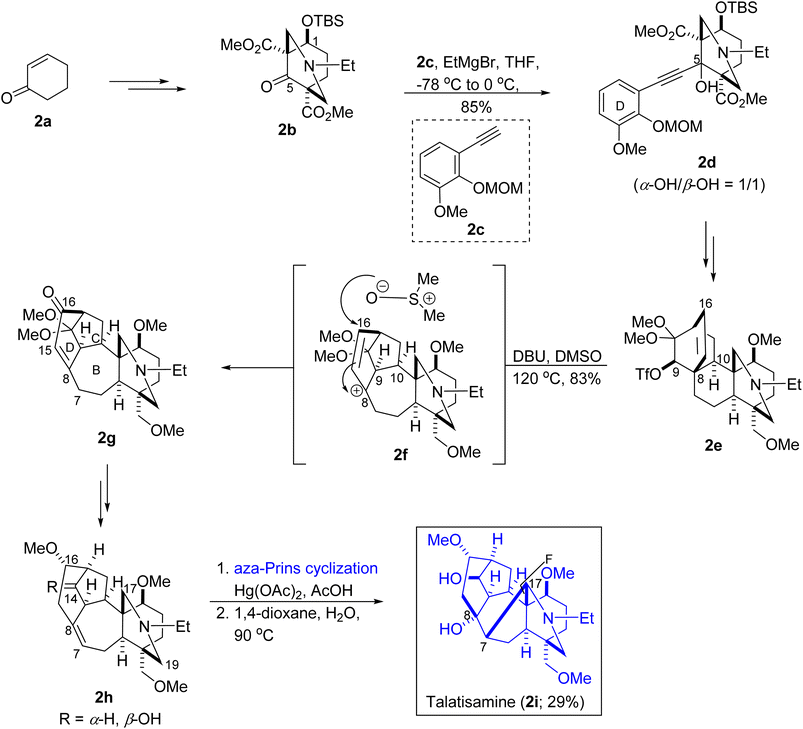 |
| | Scheme 2 Total synthesis of talatisamine (2i) according to Kamakura and co-workers.31 | |
2.1.2. Yuzurimine-based daphniphyllum alkaloids synthesis.
2.1.2.1. (+)-Caldaphnidine J synthesis. The yuzurimine-related daphniphyllum alkaloid (+)-caldaphnidine J (3g) was isolated in 2008 by Yue group,32 characterized by hexacyclic framework possessing six consecutive stereocenters, two quaternary carbon centers, and an α, β, γ, δ-unsaturated ester moiety. Owing to promising bioactivities, including neurotrophic, anti-HIV and anticarcinogenic properties, daphniphyllum alkaloids have attracted interest from research community. Regarding this, Guo and co-workers33 in 2020, accomplished the enantioselective synthesis of (+)-caldaphnidine J 3g. The synthetic route for (+)-caldaphnidine J began with ketone 3a which gave intermediate acetate 3b over a few-step sequence followed by DIBAL-H mediated reduction to furnish ketene dithioacetal 3c (94%). Intriguingly, one-pot Swern oxidation and ketene dithioacetal-based Prins reaction (to forge C14–C15 bond) occurred with trifluoroacetic anhydride (TFAA) and DMSO to transform compound 3c into product 3d (62% yield). While the reported methods required strong Lewis acids (TiCl4, BF3·Et2O and trimethylsilyl trifluoromethanesulfonate (TMSOTf)) for intermolecular ketene dithioacetal Prins-type reaction, the ketone intermediate obtained from 3c reacted effectively without using strong Lewis acid. The resulted compound 3d was exposed to methanolic iodine, followed by the treatment with SOCl2 in the presence of base and then subjected to E2cB elimination to afford allylic alcohol 3f in 92% yield via an intermediate 3e. Next, compound 3f afforded intended diastereomer of 3g (81% yield, d. r. = 8/1) over a few steps (Scheme 3).
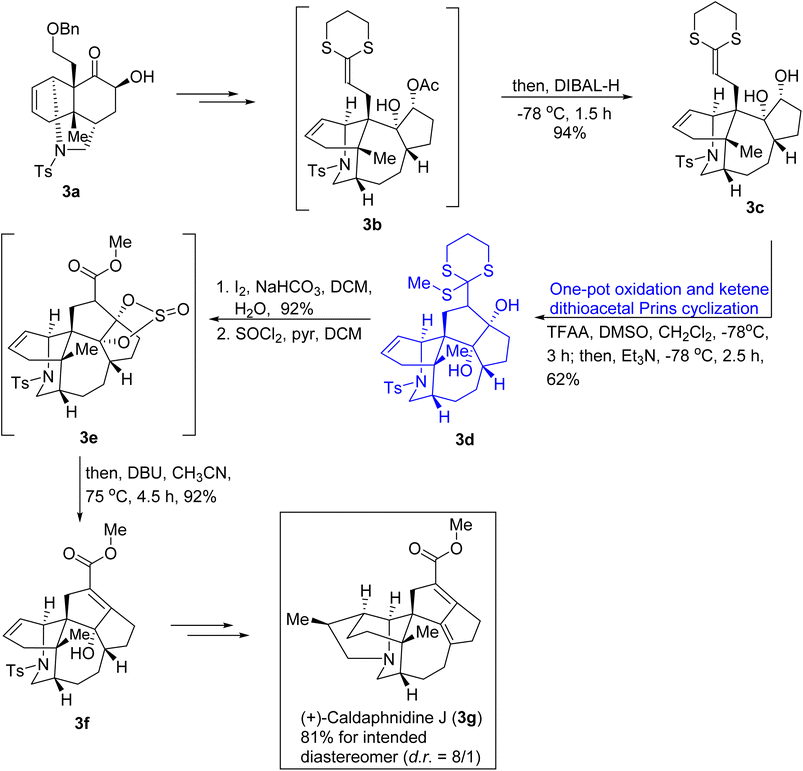 |
| | Scheme 3 Total synthesis of (+)-caldaphnidine J (3g) according to Guo and co-workers.33 | |
 |
| | Scheme 4 Total synthesis of C14–epi-deoxycalyciphylline H (4h) according to Hu & Xu.35 | |
2.1.3. Kopsia alkaloids synthesis.
2.1.3.1. Kopsinitarine E synthesis. Kopsinitarine E (5f), a structurally complex octacyclic Kopsia alkaloid, isolated by Lim and colleagues,36 possesses a strained cage-like architecture with distinct cyclic features. The structural nuances of kopsinitarine E render its total synthesis formidable. In 2020, Nagaraju and co-workers37 disclosed the first-time total synthesis of kopsinitarine E. Their synthetic sequence for kopsinitarine E commenced with reported Boc-masked carbazolone 5a. First, compound 5a provided bromide 5b over a few steps. Next, tetracyclic intermediate 5b gave β-keto lactam 5c (87%) via subsequent reduction, SmI2 treatment, and oxidation. The oxidation product 5c was then subjected to cyclization through Prins reaction as the position of ketone and indole was suitable to promote such cyclization to afford alcohol 5d. Importantly, Prins cyclization strategy facilitated the construction of characteristic 5,7-fused ring structure in the natural product (5f). Next, compound 5d was sequentially made to react with LDA, iodine (for anion trapping) and silver carbonate under refluxing toluene conditions through semi-pinacol rearrangement approach to produce rearranged product 5e (86% yield). Further, compound 5e was transformed into desired 5f (64% yield) over a few steps. The total synthesis of kopsinitarine E was reported to be attempted in total of 20 steps, starting from readily accessible carbazolone. This developed strategy is expected to be highly versatile for the construction of other related Kopsia alkaloids featuring the fundamental architecture and the synthetic success fully showcases the power of the demonstrated strategy (Scheme 5).
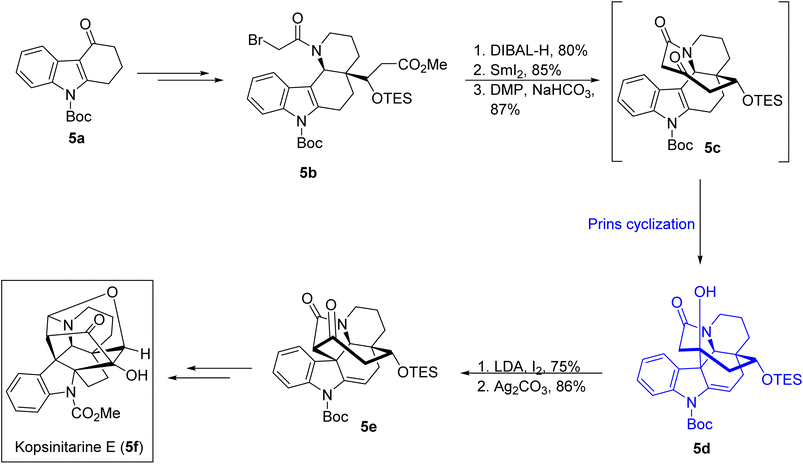 |
| | Scheme 5 Total synthesis of kopsinitarine E (5f) according to Nagaraju and co-workers.37 | |
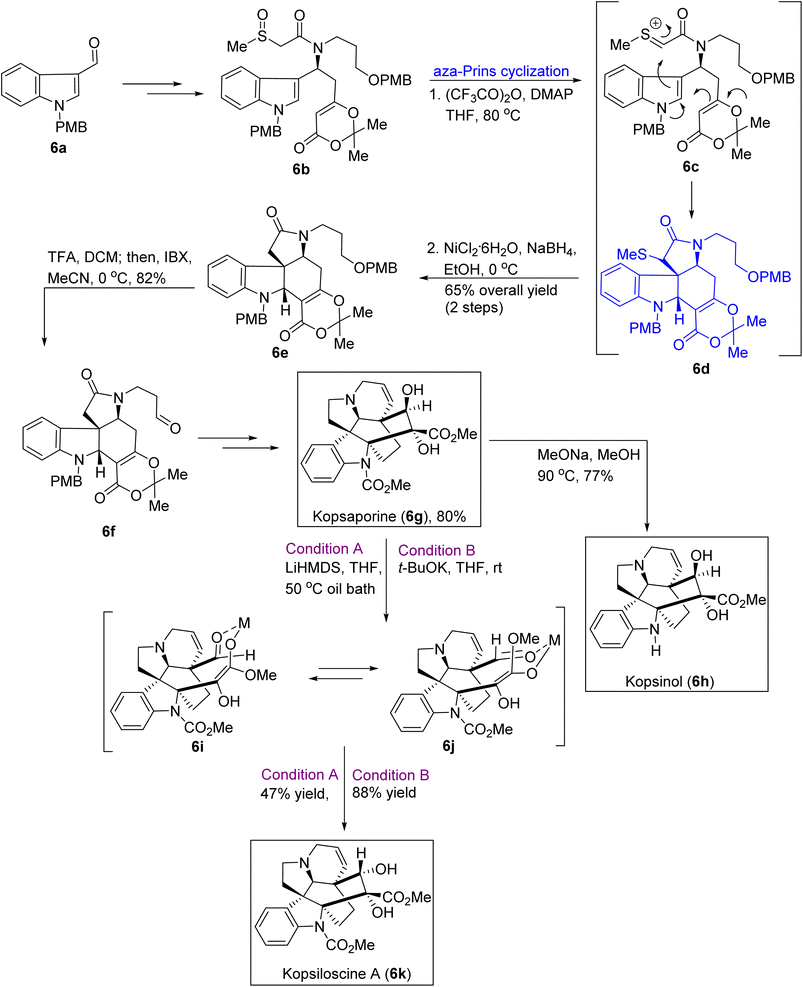 |
| | Scheme 6 Total synthesis of kopsaporine (6g), kopsinol (6h) and kopsiloscine A (6k) according to Tian and co-workers.40 | |
2.1.4. Alkaloid (−)-205B synthesis. The lipid-soluble bioactive (−)-205B alkaloid (7p) was first introduced by Daly and colleagues.41 The (−)-205B (7p) alkaloid is featured by 8b-azaacenonaphthylene architecture having five stereocenters. In 2003, Toyooka and colleagues42 attempted the first 29-step synthesis of enantiomer of this natural product and hence determined its absolute stereochemistry. Tripathy and Schneider43 in 2020, proposed the shortest straightforward 6-step synthetic sequence to achieve the natural product in 12% overall yield. Their synthetic sequence began with the construction of lactam 7d using aldehyde 7a with compound 7b and 7c in a few steps. The synthesized lactam 7d was then treated with Cp2ZrHCl to circumvent side reactions, followed by the treatment with zinc and methallylbromide under Barbier conditions (zinc, 2-methallyl bromide), affording compound 7e in 71% yield with the maintenance of stereoselectivity (trans/cis = 15/1). No isolation and purification of the uncyclized pyrrolidine 7f was observed and the intended trans-diastereomer 7e was produced as the major product. Next, in compound 7e, the methyl group was introduced at 6-position in the presence of base LDA/THF and then treated with methyl iodide which provided good yield but generated the unintended stereoisomer predominantly (7g/7h = 1/3). Next, the formation of third ring between lactam and methallyl group was formed via employing Vaska's complex (IrCl(CO)(PPh 3) 2) with 1,1,3,3-tetramethyldisiloxane (TMDS) to convert amides into enamines. By employing established conditions, the model substrate 7e was elaborated into amino alcohol 7i (21% yield, as major product) through aza-Prins cyclization. The polar nature of amino alcohol likely resulted in reduced yield owing to the significant loss during chromatography and workup. In order to get good yield and to avoid workup problems, the lactam 7g/7h underwent one-pot aza-Prins cyclization and dehydration in the presence of Vaska's complex and TMDS to furnish compound 7j which further gave rise to enamine 7k and iminium ion 7l in the form of equilibrating mixture. Compound 7l was then subjected to aza-Prins reaction with methallyl moiety to form tertiary carbocation 7m which upon exposure to water afforded alcohol 7n. The final step consisted of acid-assisted dehydration, delivering natural product 7p and its C6-epimer 7o (in 70% combined yield) (Scheme 7).
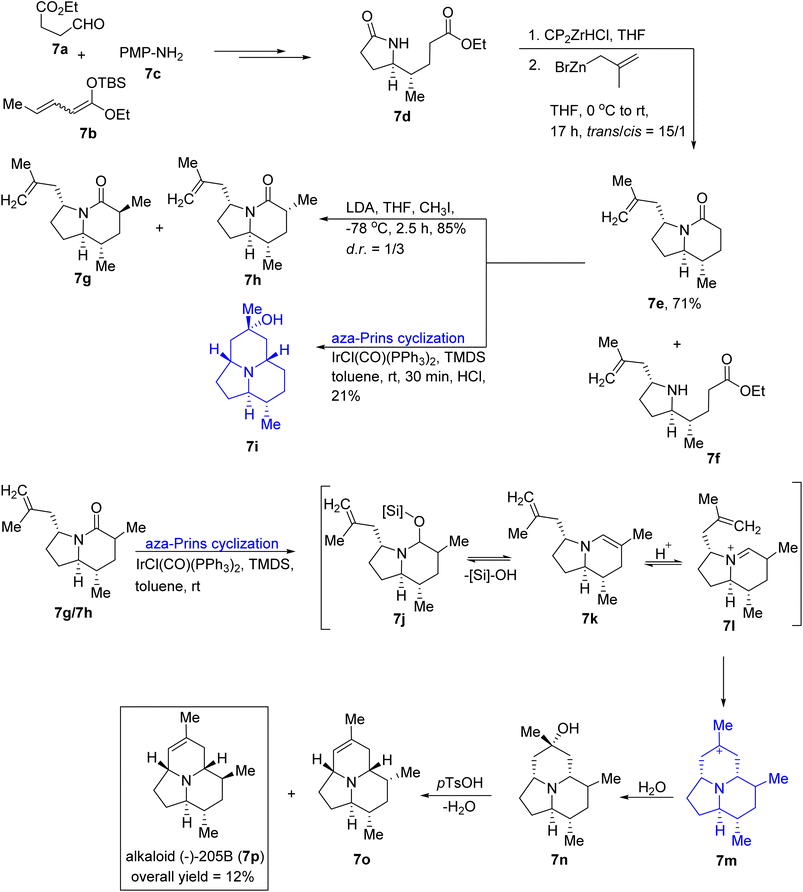 |
| | Scheme 7 Total synthesis of alkaloid (−)-205B (7p) according to Tripathy and Schneider.43 | |
The rare tricyclic lipophilic (−)-205B alkaloid (8g) was obtained from Dendrobate pumilio (an amphibian) skin.44 Selectively, unnatural enantiomer was reported to suppress α7 nicotinic receptors. However (−)-205B (8g) alkaloid in its natural form demonstrated the modest allosteric behavior against α7 nAChRs at low concentrations of 1 µM, with antagonist effects at higher concentrations of 100 µM. While Tripathy & Schneider (2020, aforementioned strategy) prepared this natural product's stereoisomer via a short-step sequence, Mazeh and co-workers45 in 2023, achieved the total synthesis of (−)-205B alkaloid (8g), starting from chiral hydroxy-indolizidinone 8b (obtained from (R)-Stericol®). First, the hydroxy group in intermediate 8b was silylated by readily available dimethylbromosilane 8a and then treated with a strong base i.e., LiHMDS, resulting in the formation of alkylation product 8c (91% yield). Next, lactam 8c was subjected to aza-Prins cyclization with lactam partial reduction under iridium catalysis (IrCl(CO)(PPh3)2) followed by the utilization of CsF (fluoride source) and dry dimethyl sulfoxide for the unmasking of C6 methyl group to give tricyclic structure 8d (46% two-step yield). Further, compound 8d was converted to 8e (exocyclic) over a few steps. Next, the compound 8e was transformed into amino alcohol 8f (43% overall yield) via chiral auxiliary cleavage, methylenation, and HAT reaction. The obtained compound 8f then gave the desired natural alkaloid 8g (38% yield from 8f) over a few steps (Scheme 8).
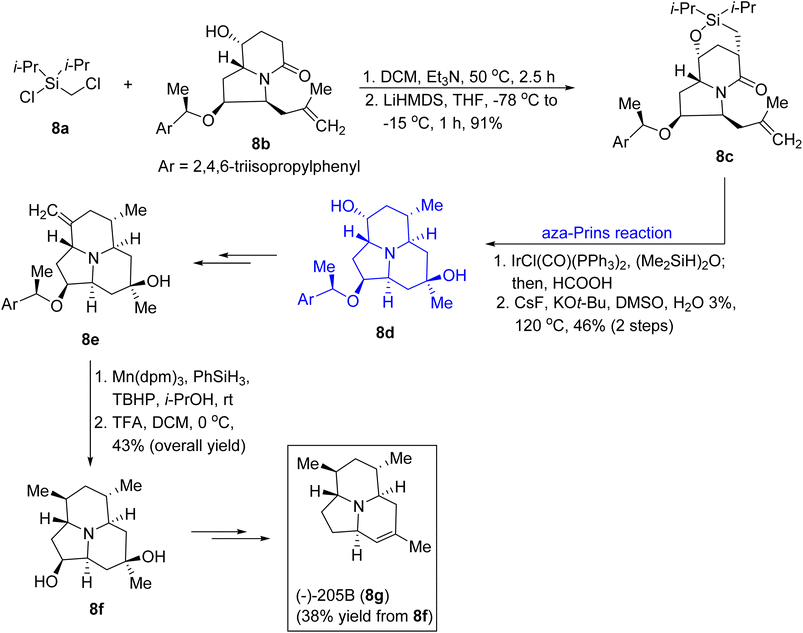 |
| | Scheme 8 Total synthesis of (−)-205B alkaloid (8g) according to Mazeh and co-workers.45 | |
2.1.5. Aristoquinoline synthesis. The natural nicotinic receptor antagonist aristoquinoline (9e) was obtained from Aristotelia chilensis leaves in 1993.46 The Aristotelia alkaloids are mainly characterized by 3-azabicyclo[3.3.1]nonane structure. Preferably, 9e exhibited rare α3, β4 subtype (nAChRs) selectivity, addressing polysubstance usage issues.47 In 2021, this motivated Argade and co-workers48 to accomplish the first-time synthesis of 9e. The total synthesis involved key aza-Prins reaction for improving the enantiopurity of the product. Towards this, tertiary alcoholic functionality in (−)-α-terpineol (−)-9a was first transformed into azide 9b, which was then subjected to reduction with zinc to give rise to primary amine (−)-9c. The obtained compound (−)-9c was condensed with 4-quinolinecarboxaldehyde by means of molecular sieves (3 Å) to form imine 9d. Next, the solution of compound 9d was added to TFA to provide the desired aristoquinoline (−)-9e, with improved enantiopurity (e.r. = 89(−)/11(+)). Further, detailed analysis of (−)-9c through (R)-Mosher amide production and (−)-9a through optical rotation revealed comparable enantiopurity. Thus, aza-Prins reaction was proceeded with perfect stereospecificity. Additionally, the aforementioned technique was also applicable for the synthesis of aristoquinoline (+)-9e (e.r. ≤ 1(−)/99(+), overall yield = 13%) (Scheme 9).
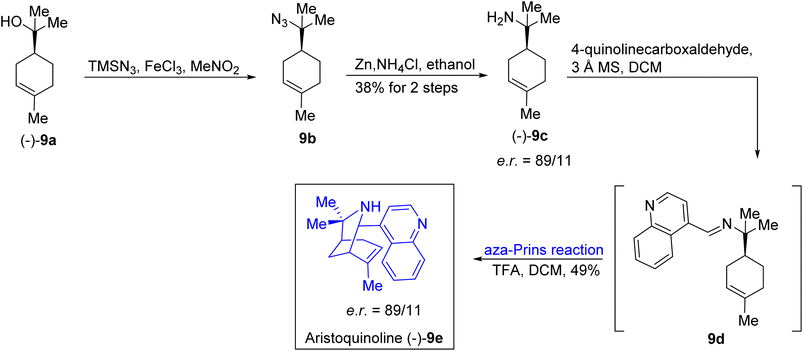 |
| | Scheme 9 Total synthesis of aristoquinoline (−)-9e according to Argade and co-workers.48 | |
2.1.6. Stemona alkaloids synthesis. Up to now, over 250 distinct Stemona alkaloids have been identified with various bioactivities, possessing diverse structures owing to various oxidation states in nitrogen-containing five-membered ring.49 Thus, Stemona alkaloids can be categorized as pyrrolidone type, pyrrole type and pyrrolidine type compounds. In 2022, Wang and co-workers50 attempted the divergent syntheses of five pyrrole-based Stemona alkaloids namely, bisdehydroneostemonine (10g), bisdehydroprotostemonine (10i), parvistemonine A (10l), 3-n-butylneostemonine (10n) and bisdehydrostemonine (10k), which were extracted from Stemona japonica or Stemona parviflora47 with a common pyrrole-based 5/7/5 tricyclic system. Moreover, 10l and 10n possess n-butyl group substituted on pyrrole ring while 10i and 10k contain lactone functionality on pyrrole ring. The natural products 10g, 10i and 10n contain γ-butyrolactone moiety substituted on lactone ring of 5/7/5 structure via C![[double bond, length as m-dash]](https://www.rsc.org/images/entities/char_e001.gif) C bond. The synthesis started with the preparation of stemoamide (10d) from known compound 10a which first gave alkyne 10b over a few-step sequence. The obtained compound 10b was then subjected to Prins cyclization in the presence of both Brønsted acid and Lewis acid to form 7-membered ring. In this regard, the optimum reaction conditions involved trifluoromethanesulfonic acid (TfOH) and dichloromethane (DCM), producing cyclized allenol 10c (84% yield, d. r. = 11/1). Next, the compound 10c underwent reaction with Ru3(CO)12, followed by reduction (Mg/methanol), providing the intended 10d in 93% yield. The synthesized 10d underwent reaction with RuCl3 and NaIO4, followed by the treatment with Lawesson's reagent, affording key intermediate 10e in 56% yield. The compound 10e then provided 10g along with its E-isomer 10f (28% yield, Z/E = 1/2) via several steps. The synthesized 10g underwent Vilsmeier–Haack reaction to form γ-butyrolactone ring, followed by the sequential treatment with Grignard reagent 10h (for nucleophilic addition), tetrabutylammonium fluoride (TBAF), tetrapropylammonium perruthenate and N-methylmorpholine N-oxide, to provide 10i and its 18α-H epimer (9.6% 3-step yield, d. r. = 2/1). Similarly, 10k was prepared by first subjecting the synthesized intermediate 10e to sequential Vilsmeier–Haack reaction to afford aldehyde 10j (58%) and then, nucleophilic addition, cleavage of protecting group and oxidation were carried out, giving 18% yield over a three-step sequence with improved diastereomeric ratio of 4.4/1. Further, the compound 10j underwent Wittig reaction, followed by hydrogenation, resulting in 10l with 89% yield. The obtained natural product 10l gave rise to another natural product 10n and its E-isomer 10m (E/Z = 2/1 ratio) over a few-step sequence (Scheme 10).
C bond. The synthesis started with the preparation of stemoamide (10d) from known compound 10a which first gave alkyne 10b over a few-step sequence. The obtained compound 10b was then subjected to Prins cyclization in the presence of both Brønsted acid and Lewis acid to form 7-membered ring. In this regard, the optimum reaction conditions involved trifluoromethanesulfonic acid (TfOH) and dichloromethane (DCM), producing cyclized allenol 10c (84% yield, d. r. = 11/1). Next, the compound 10c underwent reaction with Ru3(CO)12, followed by reduction (Mg/methanol), providing the intended 10d in 93% yield. The synthesized 10d underwent reaction with RuCl3 and NaIO4, followed by the treatment with Lawesson's reagent, affording key intermediate 10e in 56% yield. The compound 10e then provided 10g along with its E-isomer 10f (28% yield, Z/E = 1/2) via several steps. The synthesized 10g underwent Vilsmeier–Haack reaction to form γ-butyrolactone ring, followed by the sequential treatment with Grignard reagent 10h (for nucleophilic addition), tetrabutylammonium fluoride (TBAF), tetrapropylammonium perruthenate and N-methylmorpholine N-oxide, to provide 10i and its 18α-H epimer (9.6% 3-step yield, d. r. = 2/1). Similarly, 10k was prepared by first subjecting the synthesized intermediate 10e to sequential Vilsmeier–Haack reaction to afford aldehyde 10j (58%) and then, nucleophilic addition, cleavage of protecting group and oxidation were carried out, giving 18% yield over a three-step sequence with improved diastereomeric ratio of 4.4/1. Further, the compound 10j underwent Wittig reaction, followed by hydrogenation, resulting in 10l with 89% yield. The obtained natural product 10l gave rise to another natural product 10n and its E-isomer 10m (E/Z = 2/1 ratio) over a few-step sequence (Scheme 10).
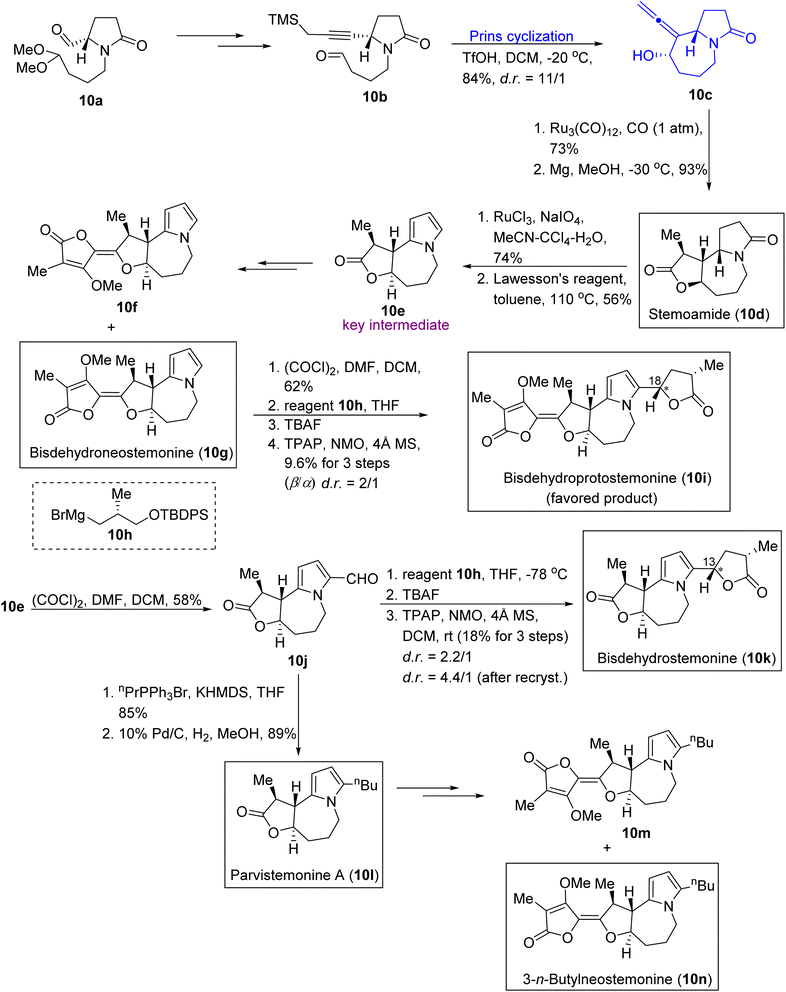 |
| | Scheme 10 Total synthesis of Stemona alkaloids 10g, 10i, 10k, 10l and 10n according to Wang and co-workers.50 | |
2.1.7. Suaveoline & sarpagine alkaloids synthesis. In 2023, Cheng and co-workers51 synthesized the six indole-based sarpagine and suaveoline alkaloids namely (−)-suaveoline (11o), (−)-norsuaveoline (11n), (−)-macrophylline (11m), (+)-Na-methyl-16-epipericyclivine (12a), (+)-normacusine B (12d) and (+)-affinisine (12c). These alkaloids were particularly found in genera Alstronia or Rauwolfia (Apocynaceae family) which showed potential cytotoxicity towards various cancerous cells and circumvented multidrug resistance mechanisms.52,53 The total synthesis commenced from compound 11a which was subjected to aza-Achmatowicz rearrangement under oxone-KBr to synthesize 11b. The obtained compound 11b then underwent intramolecular aza-Prins reaction in the presence of bismuth tribromide catalyst to afford 9-ABN (−)-11e via intermediates 11c and 11d, in 79% yield. Notably, the efficient production of 9-ABN was due to the electron-donating masking groups (OTBS & OBn) on allylic alcohol. Next, the unified protocol began with enantiopure 9-ABN (−)-11e which underwent conjugate reduction, followed by Fischer indolization, giving tetracyclic indole-based 9-ABN 11f as a common intermediate. Next, the N-methylation or protection was attempted with the assistance of methyl iodide and tosyl chloride to achieve derivatives 11g and 11h respectively. The three intermediates 11f–11h then gave their enals 11i–11k upon sequential tert-butyldimethylsilyl group elimination, oxidation and HBr elimination, in 74%, 70% and 61% yields, respectively. Further, enals 11i and 11j were reacted with propargylic amine in the presence of base to promote alkyne isomerization which was followed by 6π 3-azatriene electrocyclization and Boc-deprotection in sequence, resulting in desired (−)-suaveoline (11o; 39% yield from 11j) and norsuaveoline (11n; 41% yield from 11i). Furthermore, enal 11j was also condensed with 4-((triisopropylsilyl)oxy)but-2-yn-1-amine to afford pentacyclic pyridine 11l (31% yield) which underwent sequential protodesilylation, Boc-cleavage and reductive amination to form (−)-macrophylline (11m, 31% yield over a three-step sequence) (Scheme 11). Next, tetracyclic indole-based 9-ABN intermediates 11j and 11k were utilized to accomplish sarpagine alkaloids through a unified strategy. Regarding this, compounds 11j and 11k gave rise to corresponding (+)-Na-methyl-16-epipericyclivine (12a, 51% yield) and compound 12b (63%) over few steps. Further, the synthesized (12a) was subjected to reduction to afford (+)-affinisine (12c, 67% yield). In the same manner, the compound 12b underwent sequential N-Ts deprotection and ester reduction to produce (+)-normacusine B (12d, 52% yield) (Scheme 12).
 |
| | Scheme 11 Total syntheses of (−)-suaveoline (11o), norsuaveoline (11n) and (−)-Macrophylline (11m) according to Cheng and co-workers.51 | |
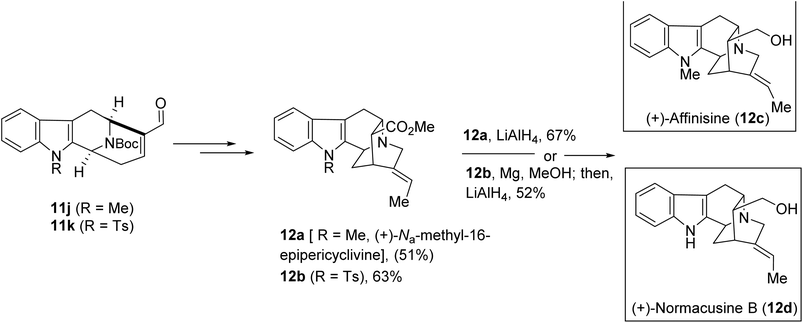 |
| | Scheme 12 Syntheses of (+)-Na-methyl-16-epipericyclivine (12a), (+)-normacusine B (12d) and (+)-affinisine (12s) according to Cheng and co-workers.51 | |
2.2. Terpene-derived natural products synthesis
2.2.1. Synthetic approach towards mollanol A. In 2014, an unprecedented grayanoid, mollanol A (13p) was obtained from Rhododendron mole fruits.54 Biosynthetically, it was characterized by grayanane-based skeleton with tandem ring-rearrangement and ring-cyclization. Further, it exhibits the therapeutic activity against ulcerative colitis and showed transcriptional activation of xbp1 promoters in various cell types.54 In 2020, Miao and co-workers55 accomplished the stereoselective synthesis of A-ring section and designed an efficacious Prins reaction to establish E-ring of 13p. The synthesis began with the construction of ring aldehydes 13g and 13b separately over a few steps from symmetric dione 13a, which was obtained from readily accessible 2-methylcyclopentane-1,3-dione. Next, synthesized ring segments 13b underwent Prins reaction with methylenecyclohexane 13c in the presence of Me2AlCl to afford a mixture of 13d and TMS-unmasked product. The mixture was subjected to react with TBAF to obtain diol 13e (40% yield) as single diastereomer. Further, the cyclization product 13f was prepared from compound 13e over a few steps. Afterwards, the unmasked hydroxyaldehyde 13g was also treated with compound 13c in the presence of Et2O·BF3 (Prins reaction) to produce [3 + 2] product 13f as single diastereomeric compound directly through the cyclization of cationic intermediate 13h (40% yield). Remarkably, this single step strategy is more efficient than aforementioned 4-step protocol. Additionally, the Prins reaction was also proceeded with other olefins 13i and 13j, giving cyclized products 13k and 13l with good diastereoselectivity and yields. Afterwards, the synthesis of ester 13o implied the notable strength of Prins [3 + 2] cyclization strategy for accomplishing the synthesis of 13p. Hence, this key strategy provided two new asymmetric carbons and one tetrahydrofuran (THF) ring which had not been previously synthesized via Prins reaction of unmasked hydroxyaldehydes (Scheme 13).
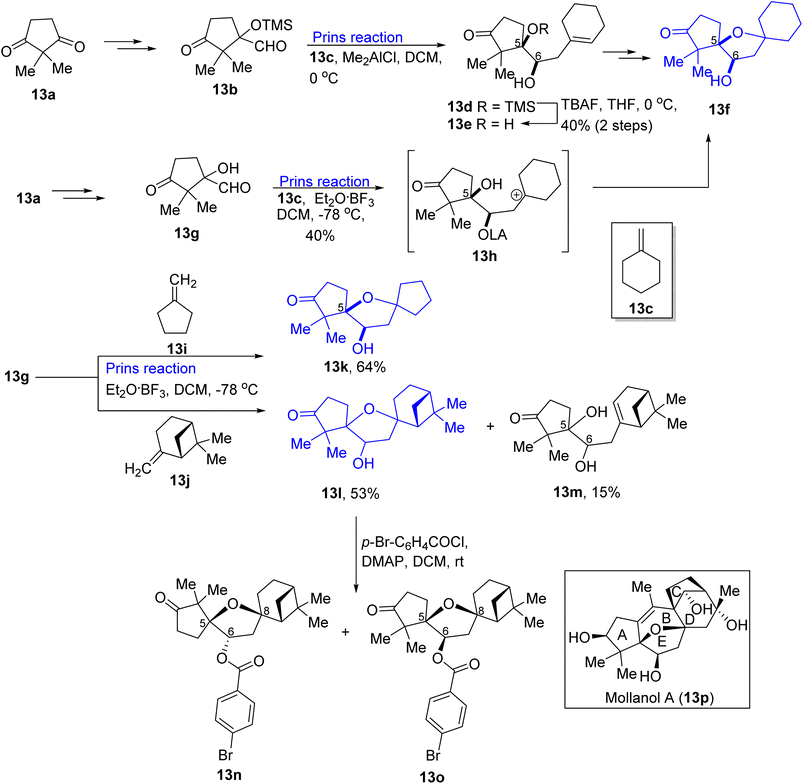 |
| | Scheme 13 Synthetic approach toward mollanol A (13p) by Miao and co-workers.55 | |
2.2.2. Cephanolide A synthesis. Cephanolide A (14g), a highly complex C18 dinorditerpenoid, was isolated from Cephalotaxus sinensis, characterized by the cage-like hexacyclic framework with a tetracyclic core, a fused lactone and a THF ring.56 In 2020, Zhang and co-workers57 accomplished the first enantioselective synthesis of 14g employing a unified strategy. Aside from the intricate skeleton, the biological activities of cephanolide A attracted the research community. The optimized total synthesis of 14g commenced with the treatment of the enone 14a (acquired from (−)-quinic acid in a three-step sequence) with lithium dimethylcuprate and TMSCl to afford silyl enolate 14b. Next, allyl chloroformate captured the lithium enolate produced by Si–Li exchange protocol, affording the diastereomeric mixture of allyl carbamate 14c (82% two-step yield, d. r. = 6.5/1 at C-4). The obtained compound 14c was transformed into intended coupling product 14d over a few-step sequence. After successful screening of Prins cyclization conditions, the compound 14d was subjected to one-pot Prins cyclization (BF3·Et2O, Et2O) and oxidation to give enone 14e (73%). The compound 14e then provided precursor 14f over a few steps. Afterwards, methyl group cleavage generated the compound 14g in 62% yield. Hence, the total synthesis of cephalotaxus dinorditerpenoid cephanolide A was reported to be accomplished in a 15-step sequence (Scheme 14).
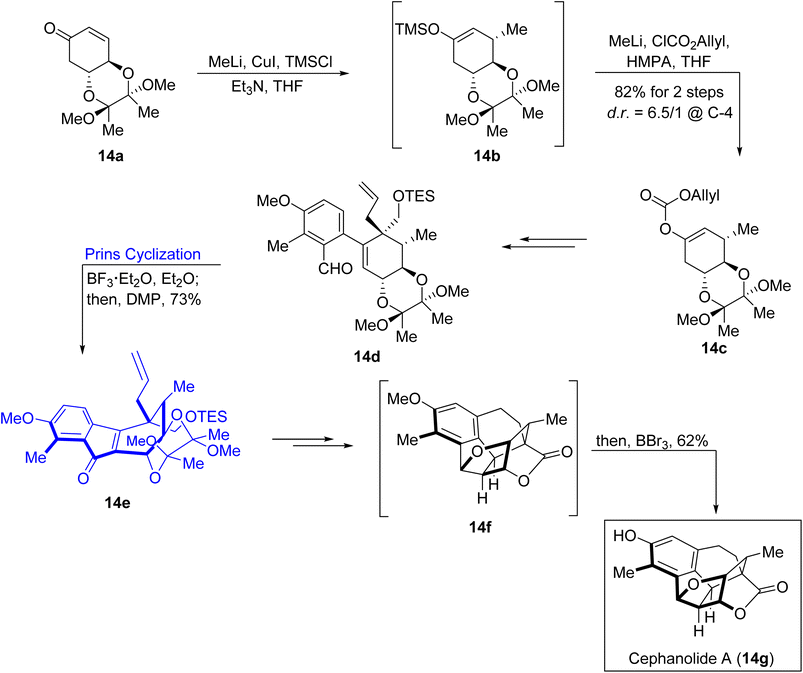 |
| | Scheme 14 Synthesis of cephanolide A (14g) by Zhang and co-workers.57 | |
2.2.3. Synthesis of ansellone derivatives.
2.2.3.1. Ansellone A synthesis. Ansellone A (15g), a marine sesterterpenoid, isolated from Cadlina luteomarginata (dorid nudibranch) and Phorbas sp., exhibits LRA (latency-reversing agent) properties and contains unprecedented “ansellane” carbon skeleton.58 This remarkable bioactivity and novel structural framework renders ansellone A an attractive prospect to enable the design of LRA tools and pharmaceutical leads. Tong's group in 2017, described the total synthesis of 15g from (+)-sclareolide in 24 steps, featuring a 16-step linear sequence.59 In 2021, Yanagihara and co-workers60 achieved the concise total synthesis of this compound 15g along with its analogues from (+)-sclareolide in 17 steps with a 13-step linear sequence. Their synthetic sequence for attaining the natural product commenced with the preparation of key aldehyde 15c. First, the diol 15b (52% yield) was prepared in a four-step sequence from (+)-sclareolide 15a. The obtained compound 15b gave key aldehyde 15c in a series of steps. Importantly, the incorporation of TfO group enabled the Prins cyclization by stabilizing acid-sensitive tert-allylic alcohol. Finally, aldehyde 15c was subjected to Prins cyclization with cis-γ-hydroxycarvone 15d facilitated by TMSOTf, to give 2,6-cis-THP moiety stereoselectively. The resulting isomers exo-olefin 15e and endo-olefin 15f were produced in 3.2/1 ratio. Further, the compound 15e provided the natural product 15g over a few steps. The compound 15g was then subjected to hydrolysis with lithium hydroxide, followed by methylation with methyl iodide in the presence of Ag2O to afford methyl ether 15h in 70% yield (Scheme 15). The compound 15g was reported to exhibit the EC50 value of 1.14 µM.
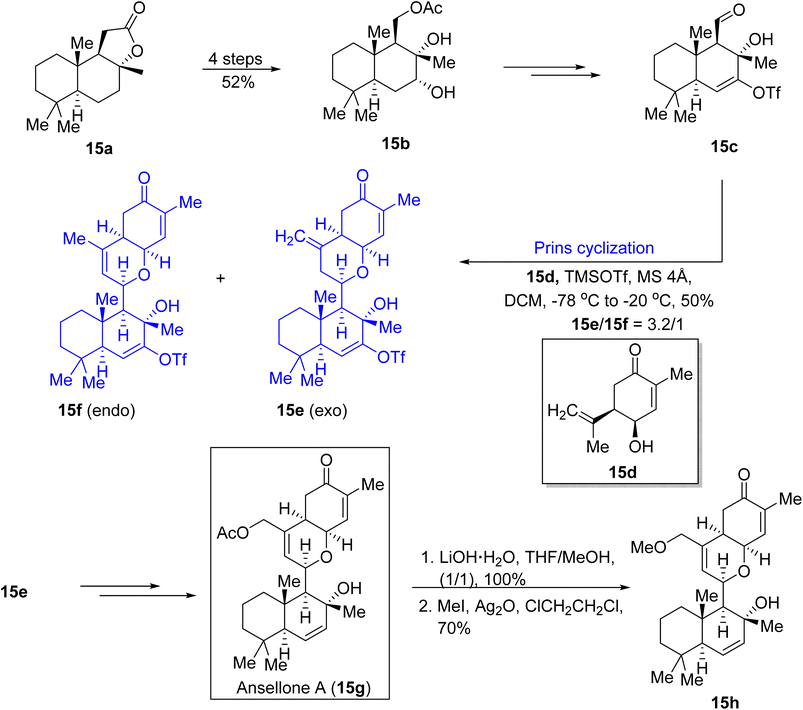 |
| | Scheme 15 Synthesis of ansellone A (15g) by Yanagihara and co-workers.60 | |
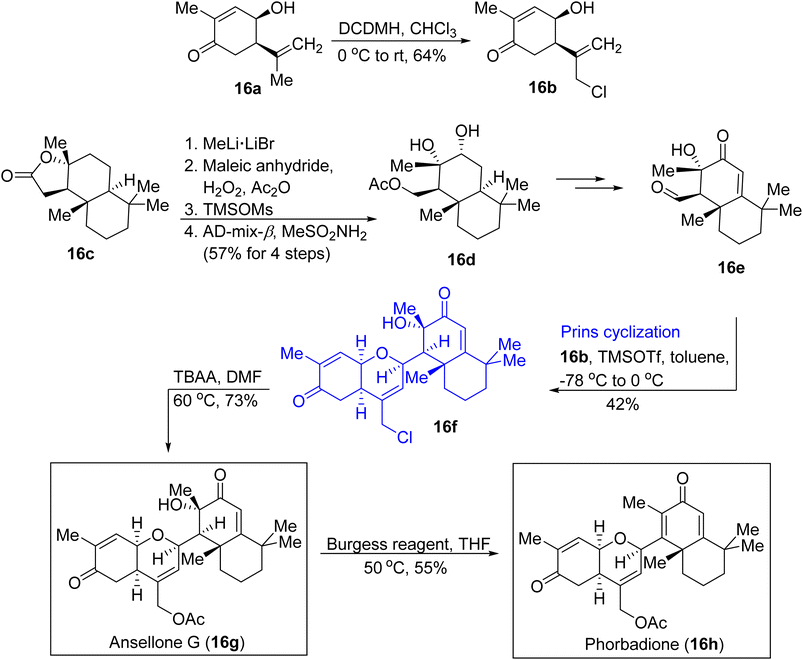 |
| | Scheme 16 Total syntheses of ansellone G (16g) and phorbadione (16h) according to Yanagihara and co-workers.63 | |
2.2.4. (+)-Toxicodenane A synthesis. Toxicodenane A (17f), a sesquiterpenoid was isolated from Toxicodendron vernicifluum,64 which had been utilized in Chinese traditional medicine for treating atherosclerosis, stomach cancer and gastritis. Structurally, this natural product contains oxa-bridged [6.6.5]-tricyclic skeleton with all-carbon stereocenter at ring junction. In 2021, Qin and co-workers65 attempted the first chiral synthesis of (17f) in nine steps. In this context, the compound 17a underwent enantioselective desymmetric reduction with organocatalyst P-stereogenic phosphinamide 17b and N,N diisopropylnaphthalen-2-amine 17c (as additive), followed by the addition of prenylmagnesium bromide with Et2O, resulting in the formation of trans-product 17d (81% yield). A negligible amount of stereoisomer was isolated and there was no realization of unintended cis-product. Next, the synthesized compound 17d was subjected to secondary alcohol protection, followed by crystallization (CH2Cl2/n-hexane) and transacetalation/Prins cyclization in cascade sequence with TMSOTf, providing an oxa-bridged tricyclic structure 17e (88% yield). Further, the compound 17e gave the desired compound 17f (61% two-step yield) over a few steps. Finally, the p-bromobenzoic ester of (+)-toxicodenane A [i.e. (+)-p-BrC6H4CO-17f], was synthesized from (+)-toxicodenane A under the presence of 4-bromobenzoyl chloride, Et3N and DMAP in DCM (Scheme 17).
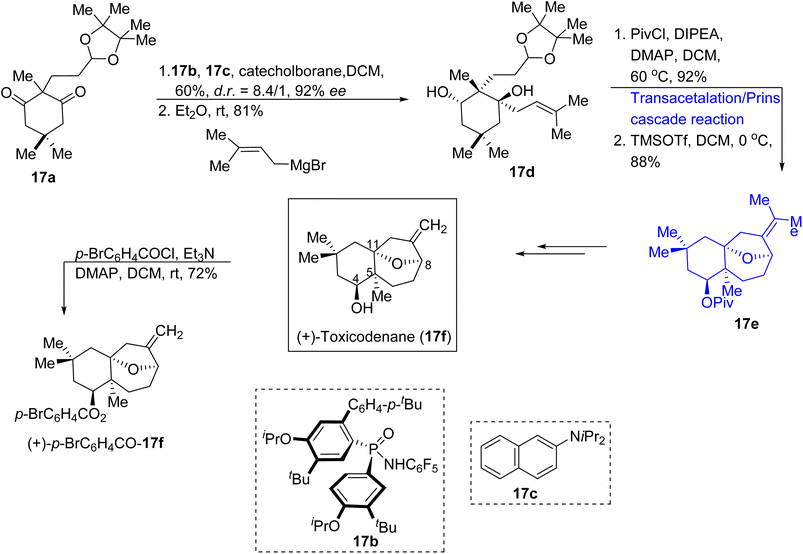 |
| | Scheme 17 Total synthesis of (+)-toxicodenane A (17f) by Qin and co-workers.65 | |
2.2.5. Synthesis of western sections of janthitrem B, JBIR-137, and shearinine G. The indole diterpenoids namely janthitrem B, JBIR-137, and shearinine G were isolated from Penicillium janthinellum, Epichloë sp. and Penicillium sp., respectively.66 The pyrano[4′,3′![[thin space (1/6-em)]](https://www.rsc.org/images/entities/char_2009.gif) :3,4]cyclopenta[1,2-f]indole is the common structural motif present in these natural products. Intriguingly, many shearinines and janthitrems demonstrated tremorgenic effect by targeting calcium-activated potassium channels.67 Additionally, they also exhibited insect-repelling activities.68 In 2022, Fresia & Lindel69 reported the synthesis of tetracyclic structures as western sections of JBIR-137 18f, shearinine G 18h and janthitrem B (18i, rac) employing Prins cyclization approach. The total synthesis commenced from N-tosyl-6-iodoindoline 18c which underwent formylation, leveraging Rieche conditions, to attain compound 18d (87%). Next, Suzuki–Miyaura coupling was performed between aldehyde 18d and dihydropyranylboronic ester 18b (obtained from tetramethyltetrahydropyranone 18a over few steps), leading to the generation of formylated dihydropyranylindoline 18e in 81% yield. The prepared compound 18e was treated with TMSOTf via Prins cyclization to give tetracyclic diene 18f in 48% yield and allylic alcohol 18g with tetracyclic structure as byproduct in 28% yield. Importantly, compound 18f was represented as “western half” of JBIR-137. The obtained compound 18g was oxidized to form tetracycle 18h, which was the substructure of shearinine G. Next, the western section of janthitrem B (18i, rac), which was isomeric with compound 18g, was constructed from compound 18f through oxygenation. In this regard, compound 18f was subjected to direct reduction with borane and subsequent oxidative workup to provide western fragment of janthitrem B (18i, 38% yield, 68% brsm). This western section was obtained in eight-step sequence and in an overall yield of 10% (Scheme 18).
:3,4]cyclopenta[1,2-f]indole is the common structural motif present in these natural products. Intriguingly, many shearinines and janthitrems demonstrated tremorgenic effect by targeting calcium-activated potassium channels.67 Additionally, they also exhibited insect-repelling activities.68 In 2022, Fresia & Lindel69 reported the synthesis of tetracyclic structures as western sections of JBIR-137 18f, shearinine G 18h and janthitrem B (18i, rac) employing Prins cyclization approach. The total synthesis commenced from N-tosyl-6-iodoindoline 18c which underwent formylation, leveraging Rieche conditions, to attain compound 18d (87%). Next, Suzuki–Miyaura coupling was performed between aldehyde 18d and dihydropyranylboronic ester 18b (obtained from tetramethyltetrahydropyranone 18a over few steps), leading to the generation of formylated dihydropyranylindoline 18e in 81% yield. The prepared compound 18e was treated with TMSOTf via Prins cyclization to give tetracyclic diene 18f in 48% yield and allylic alcohol 18g with tetracyclic structure as byproduct in 28% yield. Importantly, compound 18f was represented as “western half” of JBIR-137. The obtained compound 18g was oxidized to form tetracycle 18h, which was the substructure of shearinine G. Next, the western section of janthitrem B (18i, rac), which was isomeric with compound 18g, was constructed from compound 18f through oxygenation. In this regard, compound 18f was subjected to direct reduction with borane and subsequent oxidative workup to provide western fragment of janthitrem B (18i, 38% yield, 68% brsm). This western section was obtained in eight-step sequence and in an overall yield of 10% (Scheme 18).
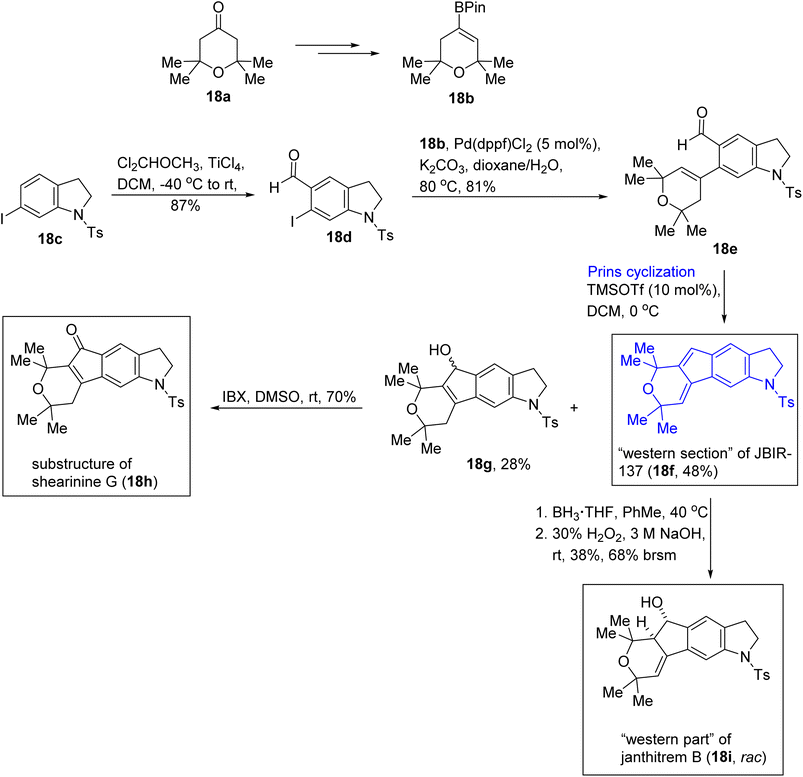 |
| | Scheme 18 Preparation of western part of JBIR-137 18f, janthitrem B (18i, rac) and substructure of shearinine G 18h by Fresia & Lindel.69 | |
2.2.6. Synthesis of erectones A and B, and revised structure of hyperelodione D. Erectone A (19i), erectone B (19j) and hyperelodione D (20d) are the biogenetically related meroterpenoids which were isolated from Hypericum plant.70 In 2022, Franov and co-workers71 demonstrated the biomimetic total syntheses of erectones A and B and the structural revision of hyperelodione D employing Prins cyclization as one of the significant steps. To achieve the target, they initially attempted the concise total synthesis of the proposed structure of hyperelodione D 19e. For this purpose, the synthetic sequence commenced with prenylation and geranylation of readily available 2,4,6-trihydroxybenzaldehyde 19a to afford aldehydes 19b and 19c. The compounds 19b and 19c were then subjected to sequential Dakin oxidation, intermolecular Diels–Alder reaction, Prins cyclization and cycloetherification, providing di-prenylated analogue 19d (71% yield) and proposed framework of hyperelodione D 19e (60% yield). It was realized that the NMR results for the synthesized compound 19e were not in correspondence with the reported data for naturally occurring hyperelodione D. Thus, the structural revision of hyperelodione D was confirmed by devising the synthetic route that involved the construction of erectquione A 19f (quinone dienophile). In this context, the compound 19f was attained from 2,4,6-trihydroxybenzaldehyde 19a over a few steps which underwent water-catalyzed Diels–Alder reaction with E-β-ocimene to afford the regioisomeric mixture of Diels–Alder adducts 19g and 19h (70%, 1/1 ratio). Next, the compounds 19g and 19h upon treatment with Eu(fod)3 in the presence of C6H6 afforded the mixture of natural compounds i.e., 19i and 19j (64%, 1/1 ratio) through Prins cyclization and cycloetherification. In an alternative approach, the direct construction of compounds 19i and 19j was made possible through a one-pot Diels–Alder cascade, in combined yield of 55% (ratio = 1/1) (Scheme 19). Further, treatment of erectquione A 19f with E,E-α-farnesene (found in Hypericum species) in the presence of water provided natural regioisomers 20a and 20b (46%, 1/1 ratio). Next, Prins reaction and cycloetherification were performed on compounds 20a and 20b, yielding the tetracyclic compounds 20c and 20d in the form of mixture (54%, 1/1 ratio). This tetracyclic mixture could also be obtained directly from the combination of compound 19f and E,E-α-farnesene utilizing the aforementioned Diels–Alder cascade protocol, in 61% yield and 1/1 ratio (Scheme 20). Fortunately, the authors realized that the NMR results for the revised structure of 20d were identical to those of natural hyperelodione D, thus confirming the structural revision of this intricate meroterpenoid.
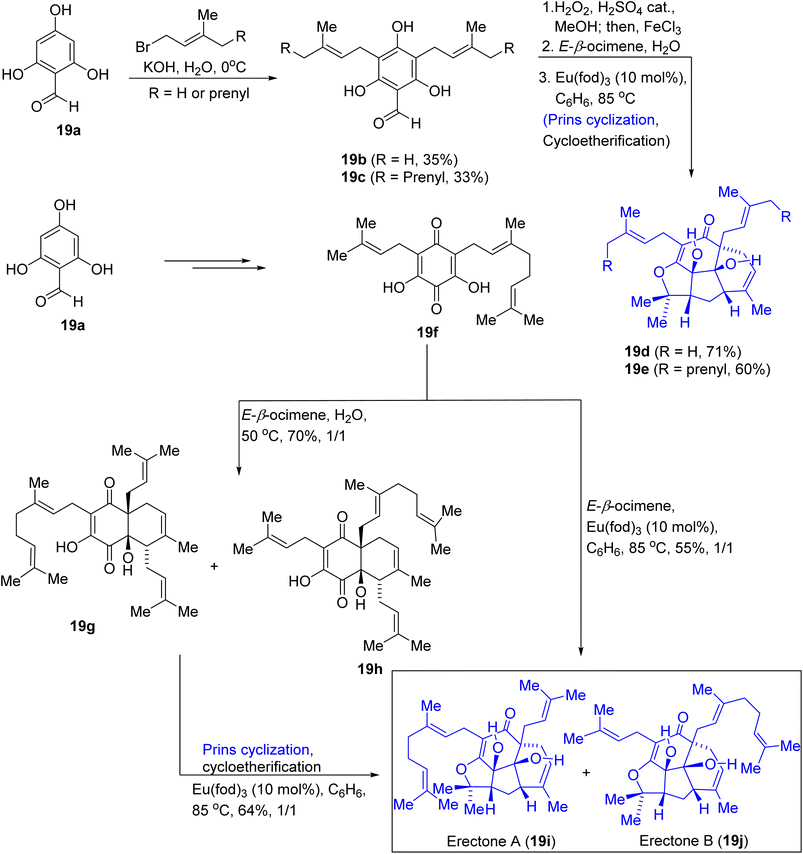 |
| | Scheme 19 Syntheses of Erectones A (19i) and B (19j) according to Franov and co-workers.71 | |
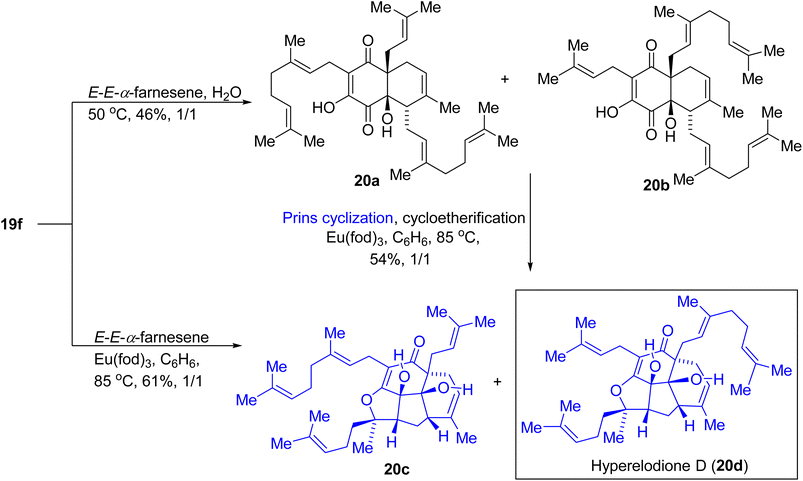 |
| | Scheme 20 Synthesis of hyperelodione D (20d). | |
2.2.7. (+)-Isolaurepinnacin & (+)-Neoisoprelaurefucin syntheses. The marine naturally-occurring compounds (+)-isolaurepinnacin (21f) and (+)-neoisoprelaurefucin (21j) were isolated from Laurencia pinnata Yamada and Laurencia nipponica Yamada, respectively.72,73 These compounds contained 7-membered cyclic ether moiety with α,α′-cis-disubstitution, functionalized with terminal enyne fragment and halogen atoms. The enyne was configured as E in (+)-isolaurepinnacin and Z in (+)-neoisoprelaurefucin. In 1993, Overman and co-workers74 achieved the total synthesis and in 2001, Suzuki75 et al. attempted the formal synthesis of 21f. Whereas, in 2003, Kim and co-workers accomplished the only total synthesis of 21j.76 In 2022, Sinka and co-workers77 synthesized 21f and 21j via a shortest convergent synthetic route, utilizing a common strategy with the Prins–Peterson cyclization (PPC) as a significant step. The total synthesis of 21f began with 1,5-hexadien-3-ol 21a which afforded silyl alcohol 21b over a few steps. The obtained compound 21b underwent Prins–Peterson cyclization with freshly synthesized aldehyde 21c in the presence of stoichiometric quantity of FeBr3. The resulting product Δ4-2,7-disubstituted 7-membered oxygen-containing ring 21d was obtained in 58% yield. The bulky tert-butyldiphenylsilyl (TBDPS) group promoted Prins–Peterson cyclization, leading to the formation of cis-oxepene as a major product. Next, the benzoate group in oxepene 21d was replaced with bromine atom, with suitable configuration of 21f. To this end, the compound 21d underwent sequential basic hydrolysis, Appel reaction and silyl group cleavage, giving alcohol 21e in 94% yield. Further, the compound 21e was subjected to sequential Appel reaction, Grubbs catalyst-mediated olefin metathesis and Colvin rearrangement, providing 21f in 54% yield. Next, the total synthesis of 21j commenced with the utilization of common protocol of 21f. First, the alcohol 21a generated silyl alcohol ent-21b over a few steps. Then, the Prins–Peterson cyclization of ent-21b and aldehyde 21c was performed to produce oxepene 21g (52% yield) which then gave alcohol 21h over a few step-sequence. Further, the alkyne group was introduced in the side chain utilizing allyl enyne ether 21i, followed by TIPS-cleavage, resulting in the preparation of 21j (72% yield). The enantioselective syntheses described herein were completed through the shortest synthetic route in a ten-step sequence for (+)-isolaurepinnacin (5% overall yield) and in a twelve-step sequence for (+)-neoisoprelaurefucin (1.3% overall yield) (Scheme 21).
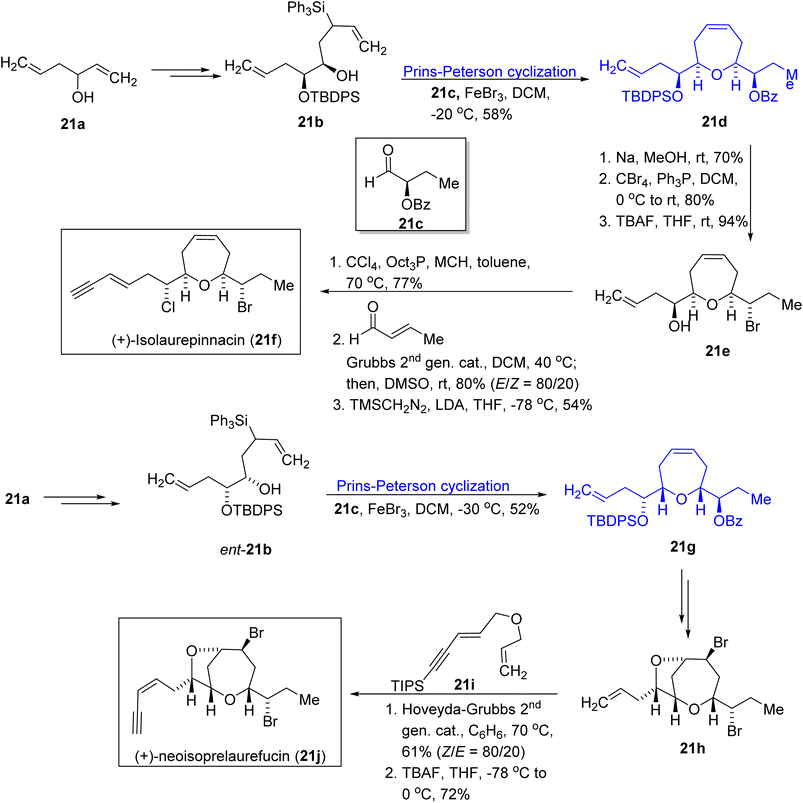 |
| | Scheme 21 Total syntheses of (+)-isolaurepinnacin (21f) and (+)-neoisoprelaurefucin (21j) according to Sinka and co-workers.77 | |
2.2.8. (−)-Halichonic acid & (−)-halichonic acid B syntheses. Halichonic acid, an aminobisabolene sesquiterpenoid isolated from Halichondra sp., by Tsukamoto78 et al., (2019) possess 3-azabicyclo[3.3.1]nonane ring structure with four stereocenters in piperidine ring. Architecturally, halichonic acid B is the derivative of pipecolic acid bearing a cyclohexenyl ring with four stereocenters (three of these stereocenters are found in piperidine ring) and contains tertiary alcohol. In 2022, Reber & Niner79 accomplished the first total synthesis of the enantiomers of halichonic acids. The syntheses began with (−)-α-bisabolol 22a which was reported to be a commercially accessible sesquiterpenoid. In this context, 22a was converted into imine intermediate 22b over a number of synthetic steps. The 1H NMR spectroscopy revealed that the imine 22b was produced as single stereoisomer and its configuration was assigned as (E)-isomer. Next, intramolecular aza-Prins cyclization was realized to build bicyclic halichonic acid frameworks. For this purpose, the solution of imine 22b in chloroform was reacted with formic acid (in excess), affording major bicyclic compound 22c (64% yield). The compound 22c is (−)-halichonic acid ester which contains 3-azabicyclo[3.3.1]nonane ring structure of this natural compound. The isomeric lactones 22d (8%) and 22e (11%) were also formed after the cyclization process. In order to achieve the enantiomers of natural product, the obtained bicyclic product 22c was hydrolyzed with aqueous lithium hydroxide, followed by the neutralization with phosphate buffer, producing halichonic acid ((−)-22f, 88% yield). Likewise, the lactone 22d and 22e upon hydrolysis under the similar conditions produced halichonic acid B ((−)-22g, 76% yield) and “unnatural” compound 22h (70% yield) which was identified as (−)-isohalichonic acid B, respectively. The syntheses of stereoisomers of halichonic acid B and halichonic acid, described herein, were completed in a ten-step sequence (Scheme 22).
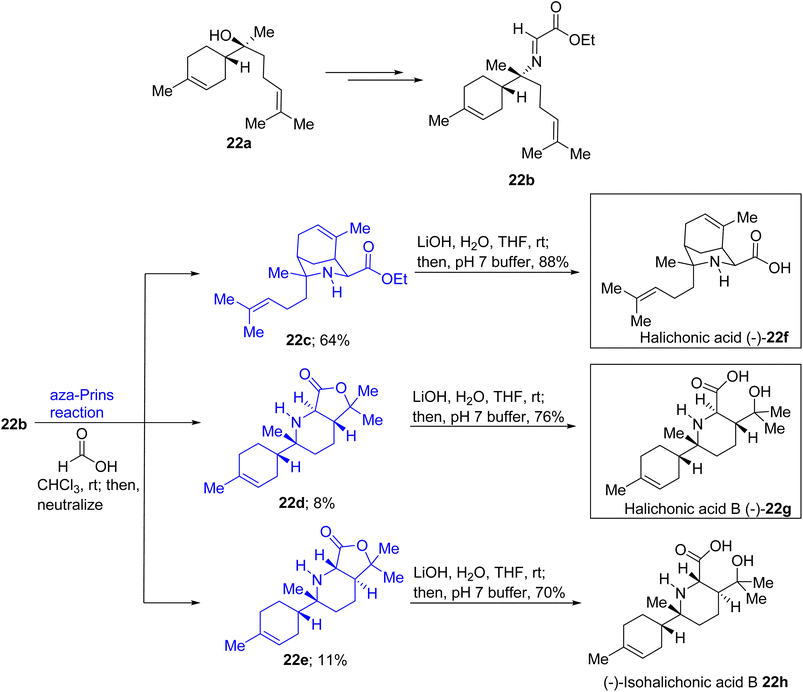 |
| | Scheme 22 Syntheses of (−)-halichonic acid (−)-22f & (−)-halichonic acid B (−)-22g. | |
2.2.9. Wickerols A & B syntheses. The cage-like tetracyclic diterpenoid, wickerol A (23i) was isolated from Trichoderma atroviride (filamentous fungus) which showed potential antiviral activity towards influenza A H1N1 strains (A/PR/8/34 & A/WSN/33) with IC50 of 0.07 µg mL−1. Another cage-like tetracyclic diterpenoid, wickerol B (23g), demonstrated reduced antiviral activity towards A/PR/8/34 strain, having IC50 of 5 µg mL−1.80 In 2023, Chung and co-workers81 achieved the total synthesis of 23i and 23g by employing Prins cyclization. The total synthesis commenced with enantioselective preparation of key intermediate 23a from cyclohexanone 2a over few steps. The obtained compound 23a then afforded Prins cyclization precursors 23b and 23c over a series of synthetic steps. Next, investigations for ring closure in wickerol B were initiated and for this purpose, aldehyde 23b was treated with SnCl4 (Prins condition) to give fused cyclopentane 23d through π-cyclization resulting in undesired alkyl shift. Further, aldehyde 23c was reacted with aqueous HCl in the presence of dioxane and the concentration was increased under vacuum to synthesize chlorinated Prins product i.e., chloro-norwickerol B 23e. Next, bridged tetracycle 23f was obtained under the influence of optimal Prins reaction conditions including hexafluoroisopropanol/dioxane, in an isolated yield of ∼50%. Notably, the Prins reaction played its role in the formation of sterically strained and congested bridging ring, leading to the desired framework of natural product. The compound 23f was then subjected to altered Simmons–Smith cyclopropanation, followed by hydrogenolysis (Adam's catalyst), providing product (23g, 45%). Additionally, in accord with Gui's conditions,79 8-O-acetyl wickerol B (23h, 18%) was also produced through hydrogenolysis reaction. Afterwards, Barton–McCombie protocol was utilized smoothly to give 23i without optimization, in ∼30% yield (Scheme 23).
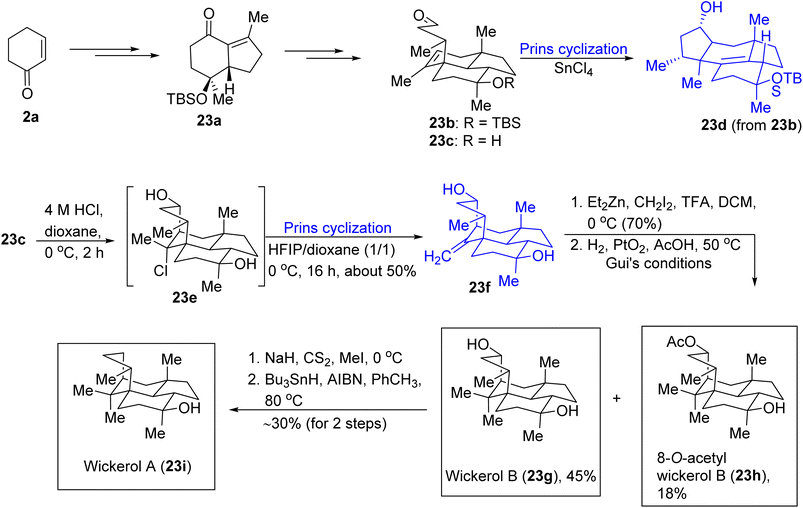 |
| | Scheme 23 Total syntheses of wickerol A (23i) and wickerol B (23g) according to Chung and co-workers.81 | |
2.2.10. (−)-Retigeranic acid A synthesis. A sesterterpene, retigeranic acid A (24i) first extracted from Lobaria retigera as the mixture containing retigeranic acid B.82 Structurally, 24i contains angular triquinane core and pentacyclic framework with fused trans-hydrindane structure having eight stereocenters with three quaternary centers and two vicinal quaternary carbons at bridgehead sites. In 2023, Chen and co-workers83 attempted the convergent and concise total synthesis of (−)-retigeranic acid A (24i) by applying the key diastereoselective intramolecular Prins cyclization. This strategy began with ester 24a, which gave aldehyde 24b over a few steps. Next, the complex trans-hydrindane structure 24g was constructed utilizing another aldehyde 24c. The compound 24c (obtained from geraniol) was subjected to Horner–Wadsworth–Emmons reaction with 24d to provide ketone 25e (90% yield). Next, one C–C bond and two continuous stereocenters were expected to be established by Prins cyclization. After the successful screening of reaction conditions, the Prins product 24f (47% yield, 84% brsm, d. r. = 3/1) was formed in the presence of AlCl3 catalyst and K2CO3 as base additive. The compound 24f then underwent sequential reaction with PtO2/H2 and CBr4/PPh3 in one-pot fashion. In next step, optimized conditions were examined for the formation of bond between carbon 1 and 2. Thus, deprotonation and subsequent phenyl triflimide treatment afforded vinyl triflate 24g (57% yield) with forged bond. Further, Nozaki–Hiyama–Kishi reaction was performed between compound 24b and compound 24g in the presence of NiCl2/CrCl2 which was followed by Dess–Martin oxidation to give ketone 24h (83%). Next, the compound 24h led to the formation of desired (−)-retigeranic acid A (24i, 30% yield) over a few modifications. Further, 24i provided (−)-methyl retigeranic acid A (24j, 96% yield) in the presence of TMS diazomethane. (−)-Retigeranic acid A was synthesized in a linear sequence of 18 steps. The strategy described herein would facilitate the preparation of the related cyclopentanes having quaternary stereocenters, incorporated in several natural products (Scheme 24).
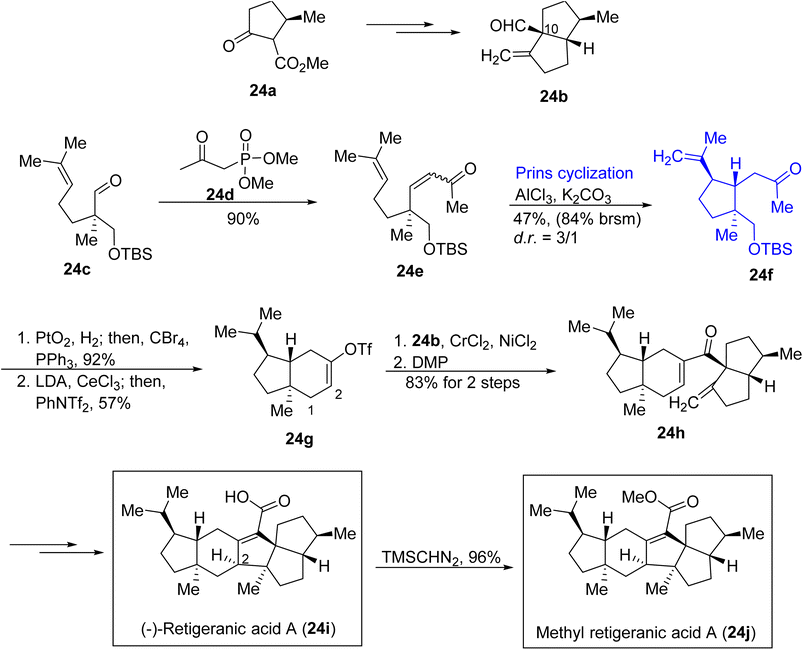 |
| | Scheme 24 Total synthesis of (−)-retigeranic acid A (24i) according to Chen and co-workers.83 | |
2.2.11. Truncated rhopaloic acid & natural doremox derivative. Rhopaloic acid C was extracted from Rhopaloeides sp. (marine sponge) which displays potential inhibitory effect on Asterina pectinifera (starfish) embryo gastrulation and triggered autophagy and apoptosis in cancerous cells of human bladder.84 In 2024, Peña and co-workers85 achieved the selective short-time synthesis of cis-2,6-dihydropyrans through silyl-Prins cyclization (Scheme 26), leading toward the syntheses of natural doremox derivative (25f) and rhopaloic acid analogue (25l). In their synthetic approach, racemic Z-vinylsilyl alcohol 25a was reacted with aldehyde 25b under optimal silyl-Prins reaction conditions (TMSOTf, DCM, −78 °C, 20 min), to give dihydropyran 25c (74% yield, d. r. > 95/5). In this context, the generation of E-oxocarbenium ion 25d at initial stage contributed to the formation of 2,6-cis-dihydropyrans with high stereoselectivity. The obtained E-oxocarbenium ion 25e underwent 6-endo cyclization via transition state having stable chair-like conformation with equatorially oriented C2- and C6-substituents. The obtained β-silyl carbocation 25e was subjected to silyl group cleavage to generate dihydropyran 25c. The synthesized compound 25c gave doremox derivative (25f), a fragrance equivalent to rose oxide, through standard hydrogenation, in 80% yield. Moreover, the silyl-Prins methodology was also applied for the preparation of rhopaloic acid C analogue. In this regard, vinyl silyl alcohol 25g underwent silyl-Prins cyclization with methyl 3,3-dimethoxypropionate 25h and 2-(isobutyryloxy)acetaldehyde 25i, to provide dihydropyrans 25j and 25k, respectively, having ester functionality attached to C2. In the next step, compound 25j led to the formation of truncated product (25l) through saponification, in 82% yield (Scheme 25).
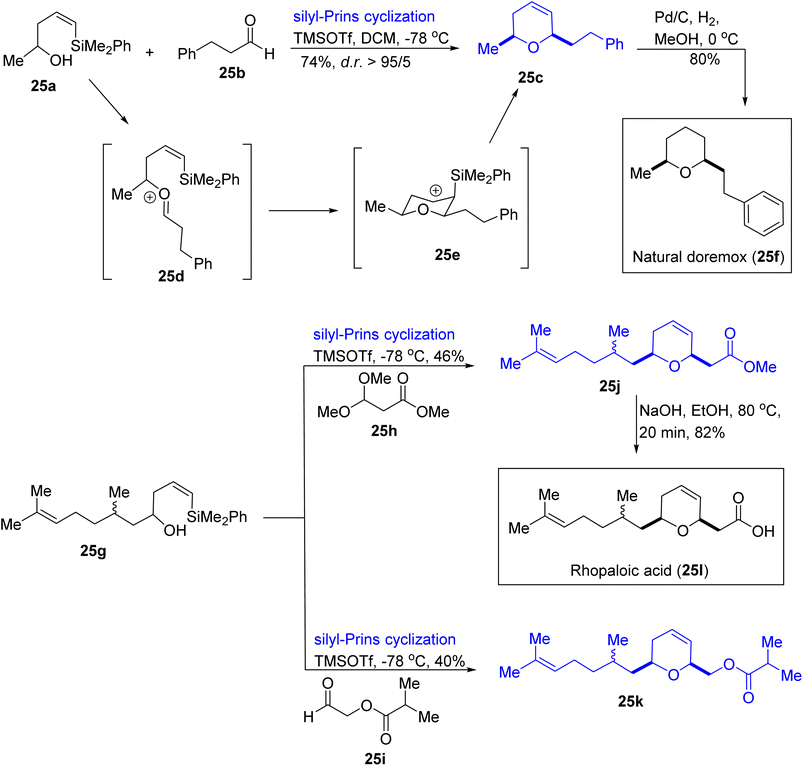 |
| | Scheme 25 Synthesis of natural doremox derivative (25f) and rhopaloic acid (25l) according to Peña and co-workers.85 | |
2.2.12. Bipolarolides A and B. The novel ophiobolin-based sesterterpenoids bipolarolides A (26j) and B (26i) were isolated from Bipolaris sp. TJ403-B1 by Zhang et al., in 2019.86 The natural product (26j) was reported to exhibit potential 3-hydroxy-3-methylglutaryl-CoA reductase (HMGR) inhibitory properties with the IC50 of 2.46 ± 0.07 µM, leading to the decrease in intracellular lipid concentration within HepG2 cells. Commonly, bipolarolides A and B contain caged 5/6/6/6/5 framework with seven continuous stereogenic centers. Apart from isolation, the biosynthetic pathway was also proposed by Zhang86 et al. for achieving 26j and 26i from ophiobolin F via Prins cyclization. However, the first total synthesis of these natural products was accomplished through biologically inspired cascade cyclization by Li and co-workers,87 in 2024. The synthetic sequence began with the formation of alkenyl bromide 26b from established (4S)-hydroxycyclopent-2-enone 26a over few steps. Next, bromide 26b was reacted with t-BuLi to produce alkenyllithium species which were then treated with aldehyde 26c (prepared from readily available (−)-citronellal) to give rise to vinyl alcohol 26d which led to the construction of 5/8/5 tricycle 26e, over a few steps. The compound 26e then underwent sequential hydrogenation and mesylation, followed by tert-butyldimethylsilyl (TBS) group cleavage and subsequent oxidation to give cyclopentadiene 26f which was isomerized to 26g. At this stage of synthesis, not only the cis-fused 5/8 ring was forged but also the stereocenter was correctly established at carbon 3. The synthesized compound 26f (during its purification) provided an unexpected compound 26h (5% yield) which was the product of Prins-facilitated ether cyclization. Thus, the conditions were optimized for the better conversion to compound 26h, which was then achieved in an overall yield of 92% by employing 4-methylbenzenesulfonic acid pyridinium salt (PPTS). In the next step, the natural products 26i and 26j were obtained from Prins product 26h over a number of steps in 91% and 95% yield, respectively (Scheme 26).
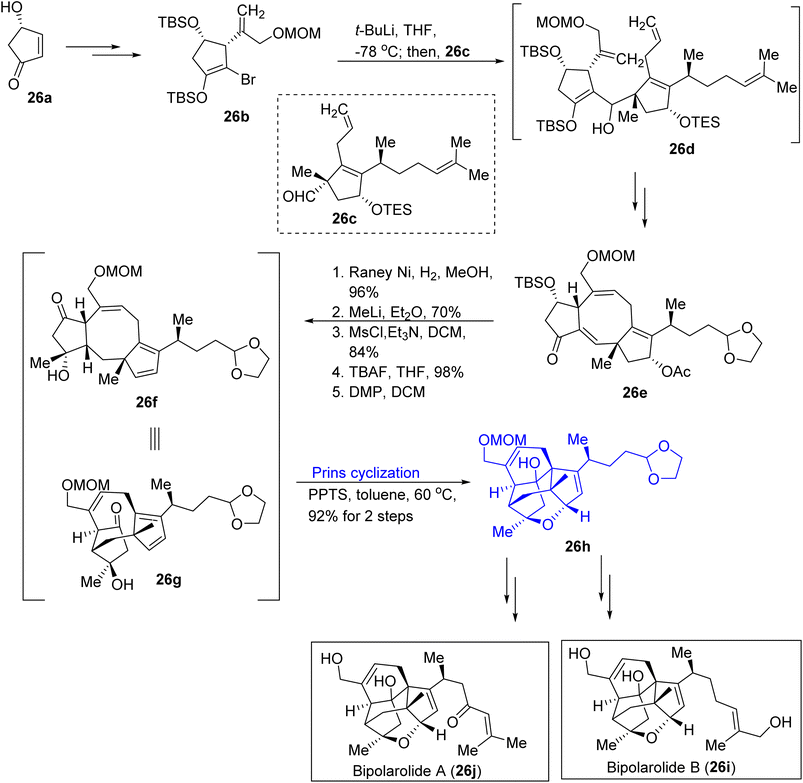 |
| | Scheme 26 Total syntheses of bipolarolides A (26j) and B (26i) according to Li and co-workers.87 | |
2.2.13. (−)-Lucidumone synthesis. Lucidumone, a novel cage-like Ganoderma meroterpenoids isolated from Ganoderma lucidum by Cheng and colleagues, contains polycyclic 6/5/6/6/5 ring structure with unmasked secondary alcohol, indanone scaffold and bicyclo[2.2.2]octane framework having six stereogenic centers.88 The enantiomers of lucidumone display robust inhibition of COX-1 and COX-2. Selectively, (−)-lucidumone (27h) shows inhibition against COX-2 by binding to Ser530 and Tyr385 residues, proving as a therapeutic lead for the treatment of inflammatory diseases. The biological relevance and structural complexity renders 27h a promising candidate for synthetic chemists. In 2024, Liao and co-workers89 accomplished the enantioselective synthesis of natural (−)-lucidumone, involving Cu-assisted asymmetric silicon-based intramolecular Diels–Alder reaction to construct the bicyclo[2.2.2]octane architecture and sequential O-deprotection, Prins reaction, cycloetherification, and oxidation reactions for the concurrent formation of THF and indanone motif. The total synthesis of 27h began with the construction of silyl ether 27c. For this, commercially available silyl-substituted acrylate imide 27a was treated with triflic acid, followed by the treatment with primary alcohol 27b, resulted in the preparation of silyl ether 27c (91% yield). Next, the Diels–Alder reaction of obtained compound 27c was realized employing the optimized conditions (Cu(OTf)2, ligand (S,S)-L1) to afford cycloadduct 27d (96% yield, 92% ee). The obtained asymmetric bicyclo[2.2.2]octane intermediate 27d then gave substituted tetracycle 27e (69% yield) in a series of steps. Afterwards, tetracycle 27e was transformed into the diastereomeric hexacyclic intermediate 27g (86% yield) through intermediate 27f by acid-mediated tandem O-deprotection-Prins cyclization-cycloetherification under optimal conditions (DCM, HCl, −78 °C, 24 h). Next, hexacyclic intermediate 27g gave rise to desired 27h, in 70% yield, over a few steps (Scheme 28). This study demonstrates the feasibility of Prins cyclization towards the synthesis of biologically active (−)-lucidumone (Scheme 27).
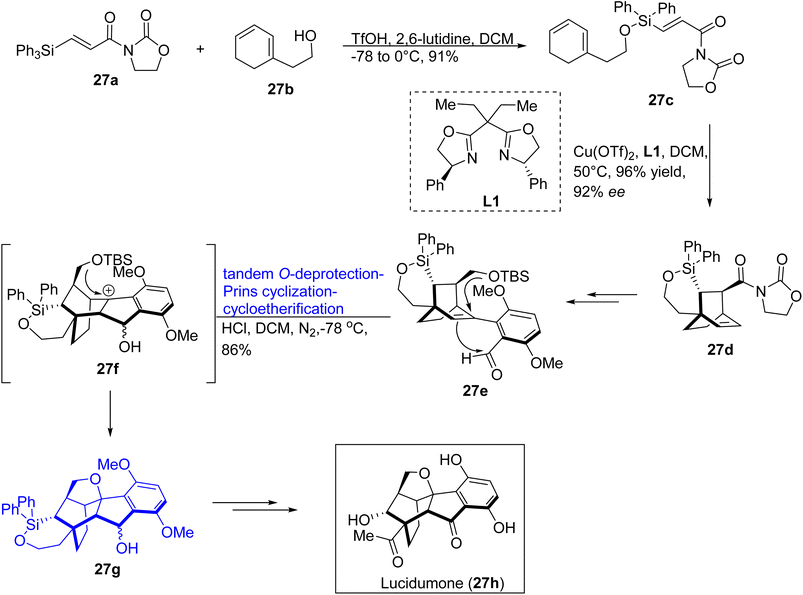 |
| | Scheme 27 Total synthesis of (−)-lucidumone (27h) according to Liao and co-workers.89 | |
2.2.14. 11-Epi-badkhysin synthesis. Badkhysin, an intricate 6,12-guaianolide-type sesquiterpene lactone, extracted from Ferula oopoda roots, contains 5-7-5 tricyclic ring structure characterized by sequence of five stereocenters with cis-fused γ-butyrolactone functionality.90 In 2024, Xu and co-workers91 accomplished the asymmetric synthesis of 11-epi-badkhysin (28m) employing Prins cyclization as one of the significant steps. The flexible total synthesis commenced with the coupling of dioxinone-based lithium dienolate (obtained from 28b) and chiral aldehyde 28a through vinylogous addition, to give alcohol 28c (77% yield). Next, isopropenyl alkene functionality in 28c was subjected to the oxidative cleavage to give hemiketal 28d (87% yield). Further, various Prins cyclization conditions were investigated to get the desired product but the steric strain due to protons on carbon 4 and 7 in structure 28e inhibited product formation. Thus, the authors inferred that the stereochemistry inversion at C-6 might circumvent this unfavorable interaction to enable efficient cyclization through framework 28f. Based on this observation, alcohol 28c was subjected to oxidation, reduction, and oxidative cleavage (osmium tetroxide/sodium periodate), leading to the formation of another hemiketal 28g (92% yield) with stereochemistry inversion at C-6. Compound 28g was then treated with Prins cyclization conditions (BF3·Et2O, DCM) to generate the intended adduct 28h (67% yield). In order to enhance the product yield, the conditions for Prins cyclization were optimized (silica-based FeCl3 and DCM), which then gave desired oxa-bridged adduct 28h in 85% yield. After obtaining the intermediate 28h, next, the focus was on installing cis-fused γ-butyrolactone functionality. To this end, intermediate 28h was reacted with BBr3, followed by the treatment under Pfitzner–Moffatt reaction conditions, to furnish ketone 28i (77% yield for two steps). Next, ketone 28i sequentially underwent alkylation with ethyl 2-bromoacetate 28j, reduction and lactonization, in conjugation with installation of hydroxyl functionality on carbon 2 with selenium dioxide and tert-butyl hydroperoxide, affording γ-butyrolactone intermediate 28k in excellent yield. Next, compound 28k afforded the desired alcohol intermediate 28l in a series of steps. Finally intermediate 28l was transformed into 28m (62% yield) over a few steps, which was then identified as 11-epi-badkhysin employing NMR spectroscopy (Scheme 28).
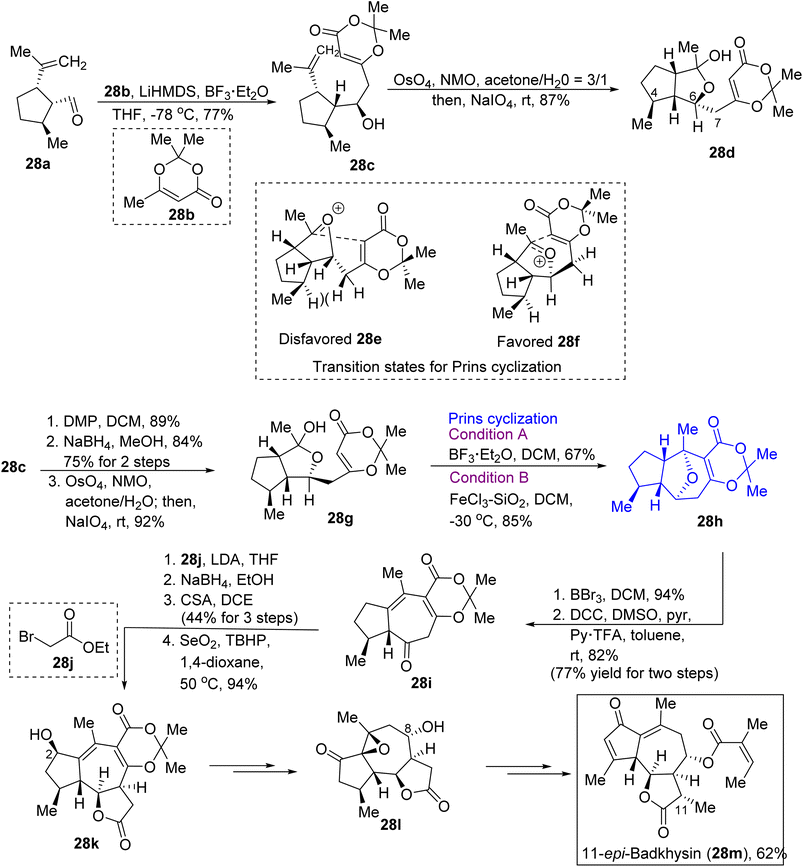 |
| | Scheme 28 Synthesis of 11-epi-badkhysin (28m) according to Xu and co-workers.91 | |
2.2.15. (±)-Rubriflordilactone A synthesis. (±)-Rubriflordilactone A (367), a nortriterpenoid lactone isolated from Schisandra rubriflora (herbal medicine) in 2006 by Sun and colleagues92 which contains unique polyfunctionalized aromatic moiety and displays anti-HIV properties. In 2024, Zheng and co-workers93 reported the total synthesis of 367. The synthesis commenced with the preparation of intermediate 29d which was the required substrate for key Prins cyclization reaction. To this end, phenol 29a was subjected to Fries–Finck rearrangement and Nazarov cyclization, followed by sequential Rosenmund–von Braun cyanation, masking of phenol hydroxyl moiety, ketone-carbonyl's reduction and cyano group's partial reduction, to generate aldehyde 29b (60%). Next, aldehyde 29b was treated with N,N,N′-trimethylethylenediamine in the presence of n-butyllithium, followed by the treatment with isopentenyl chloride and sodium borohydride to afford olefin 29c (71% yield). Further, compound 29c was sequentially transformed into 29d over few steps. After achieving the required substrate 29d, key Prins cyclization reaction was investigated. In this regard, intermediate 29d was treated with BF3·OEt2 to afford tetracyclic compounds 29e and 29f (yield = 58%, d. r. = 2.3/1) in the form of mixture. Next, tetracycle 29e was treated with MOMCl and then subjected to Mukaiyama hydration to generate pentacyclic indanone 29g (53% yield for two steps). Next, compound 29g was converted to compounds 29h and 29i over a few steps. Finally, rubriflordilactone A (29j, 75% yield) was accomplished via a two-step protocol encompassing photocatalytic oxidation and NaBH4-mediated reduction (Scheme 29).
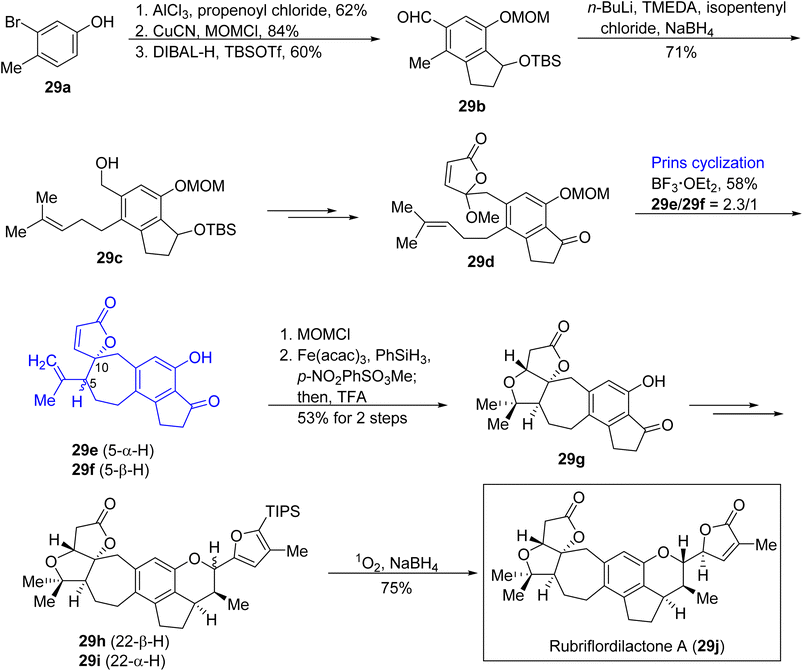 |
| | Scheme 29 Total synthesis of (±)-rubriflordilactone A (29j) by Zheng and co-workers.93 | |
2.3. Syntheses of amino acid and lipid-derived natural products
2.3.1. (_)-Galantinic acid & 1-deoxy-5-hydroxysphingolipids syntheses. Galantinic acid is a 1,3-diol-containing 7C non-proteinogenic amino acid that provides core framework for antibiotic galantin.94 The first-time total synthesis of galantinic acid was attempted by Sakai & Ohfune.95 Another natural product 1-deoxy-5-hydroxysphingolipid (30g) is found in cell membrane with notable efficacy towards prostate cancer cells.96 In 2020, Rahman and co-workers97 described the total syntheses of 30f and 30g by employing Prins cyclization reaction as a key step. The synthesis began with the preparation of homoallylic alcohol 30b. For this purpose, benzyl ether 30a was treated with (S,S)-Jacobsen catalyst for hydrokinetic resolution and then subjected to reaction with vinyl Grignard reagent for regioselective ring opening, followed by debenzylation, resulting into the formation of intended homoallylic alcohol 30b (75% yield). The obtained compound 30b was coupled with acrolein 30c under Prins cyclization conditions (TFA, DCM, 0 °C to 25 °C, 5 h), followed by the reaction with methanolic potassium carbonate, generating 2,4,6-cis-trisubstituted tetrahydropyranol 30d (65% yield in a two-step sequence) with strong diastereoselectivity. Next, Prins product 30d was transformed into epoxide 30e over a few steps. The obtained common intermediate 30e provided 30f (89% yield) and 30g (91% yield) in sequential steps. The syntheses of other bioactive leads including enigmol VI, N-methyl enigmol VII, SSR-enigmol VIII, SRR-enigmol IX, were also reported to be achieved from common epoxide intermediates (Fig. 2). Altogether (_)-galantinic acid and 1-deoxy-5-hydroxysphingolipid were synthesized in seven linear steps each, with overall yields of 16.79% and 15.59%, respectively. The protocol described herein successfully utilizes Prins cyclization to afford natural products along with their congeners through the utilization of common epoxide intermediate (Scheme 30).
 |
| | Fig. 2 Bioactive leads via common intermediates by Rahman and co-workers. | |
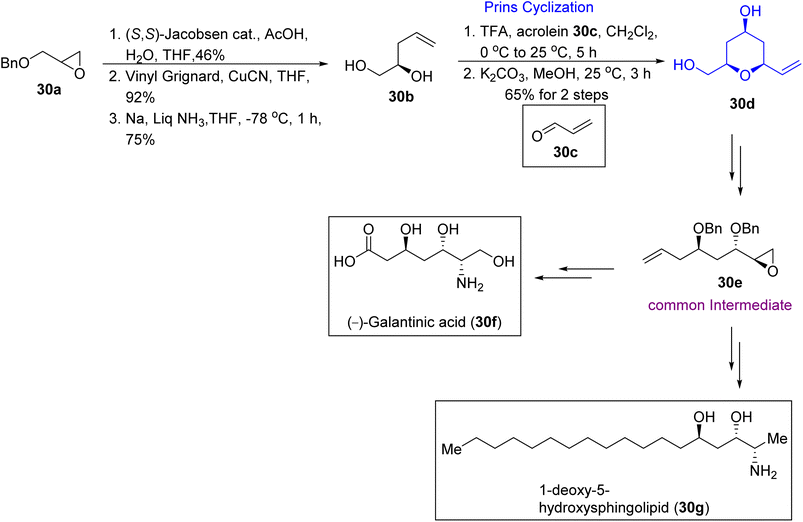 |
| | Scheme 30 Total syntheses of (_)-galantinic acid (30f) and 1-deoxy-5-hydroxysphingolipid (30g) according to Rahman and co-workers.97 | |
2.3.2. Synthesis of prostaglandins. Up to now, more than twenty prostaglandins have been established as therapeutic compounds including cloprostenol, fluprostenol, bimatoprost, and travoprost.98 In 2021, Zhu and co-workers99 adopted a common, modular and efficient route to prostaglandins. The synthetic route involved the stereocontrolled preparation of versatile lactone intermediate 31b from bicyclic ketone 31a over a number of synthetic steps. Next, dechlorination of compound 31b was achieved in a packed reactor via continuous flow approach containing zinc particles, providing normal lactone 31c (90% yield). Next, compound 31c was added in formic acid/sulfuric acid (10/1) solution with already dissolved paraformaldehyde and then this mixture was added into polytetrafluoroethylene reactor coil, affording crude 31d predominantly, through Prins reaction with full conversion of substrate (Scheme 30). Following the neutralization and elimination of inorganic salt, the methanolic crude 31d was reacted with NaOMe and added in reactor coil for deformylation through T-junction. This reaction step was then followed by termination with AcOH to generate diol 31e smoothly (81% 2-step yield). Thus, this three-step transformation was remarkably more expeditious than batch reactions. The compound 31e then gave enones 31f–31i through several transformations in isolated yields (71% to 75%) as single E-isomer, with newly incorporated C13–C14 bond. Further, compound 31f was subjected to ChKRED20-mediated reduction under optimized reaction conditions to impart intended allylic alcohol 31j in isolated yield of 91% with 97.9/2.1 d. r. Interestingly, α-configuration was assigned to the newly formed C-15 stereocenter in prostaglandin. Next, the prepared PPB ester 31j was hydrolyzed into alcohol, followed by lactone reduction to hemiacetal with DIBAL-H and Wittig reaction to provide cloprostenol (32a) in 44% yield over a 3-step sequence. Similarly, allylic alcohols 31k–31m were also prepared by ChKRED20-facilitated reduction from enones 31g–31i in 80 to 90% yields with 87/13 to 99/1 d. r. (Scheme 31). According to the aforementioned protocol to synthesize cloprostenol (32a), PGF2α (32b), bimatoprost (32c) and fluprostenol (32d) were also generated from 31k, 31l and 31m in three steps with yields of 31%, 63%, and 51%, respectively. For the synthesis of travoprost (32e, 68% yield), fluprostenol (32d) was reacted with 2-iodopropane employing cesium carbonate in a mixture of DCM/DMF. Hence, the syntheses of cloprostenol (32a), PGF2α (32b), bimatoprost (32c), fluprostenol (32d) and travoprost (32e) were accomplished in eleven to twelve steps, in 3.8 to 8.4% overall yields (Scheme 32).
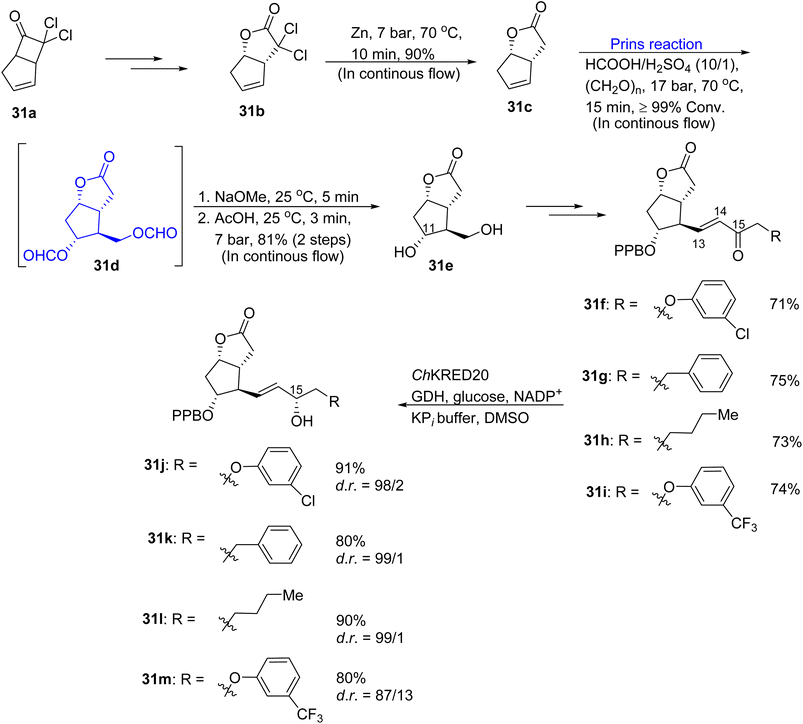 |
| | Scheme 31 Utilization of Prins reaction in common synthetic route towards the synthesis of prostaglandins 32a–32e. | |
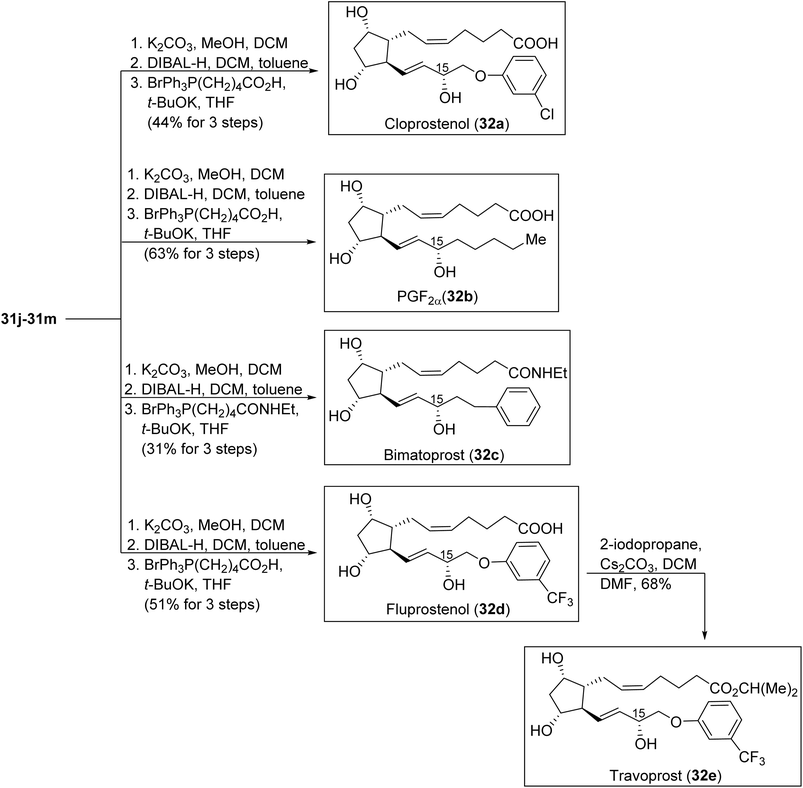 |
| | Scheme 32 Syntheses of cloprostenol (32a), PGF2α (32b), bimatoprost (32c), fluprostenol (32d) and travoprost (32e) according to Zhu and co-workers.99 | |
2.4. Synthesis of polyketide-derived natural products
2.4.1. Exiguolide synthesis. Exiguolide, a twenty-membered macrolide with a novel bis-THP structural motif, isolated in 2006 by Ohta and co-workers from Geodia exigua Thiele.100 Cossy demonstrated that this natural product may be bryostatin-like which are effective protein kinase C activators and exhibit activities against cancer, HIV and Alzheimer's disease.101 Moreover, Fuwa and Scheidt102 proposed that exiguolide displays inhibitory activities against various cancerous cells such as human lung cell carcinoma (NCI–H460, IC50 = 0.60 µM), lung adenocarcinoma cells (A549, IC50 = 1.66 µM), pancreatic cancer (BxPC3) and breast cancer (MB-231) cells. In 2020, Oka and co-workers103 accomplished a novel stereocontrolled 21-step synthesis of 33h and pioneered preparation of its diastereomer i.e., 15-epi-exiguolide 34e. First, the C12–C21 segment i.e., phosphonate 33b was constructed from readily accessible aldehyde 33a over a few steps. Next, C1–C11 chiral THP segment 33f was prepared in a short-step sequence utilizing Prins reaction. In this context, 1,3-propanediol 33c underwent sequential Ir-mediated double allylation, mono-benzylation, Mitsunobu inversion and oxy-Michael addition to afford enol ester 33d. The compound 33d was then subjected to intramolecular Prins cyclization with TFA to give rise to THP 33e (73% yield, d. r. = 8/1) and its C3-epimer. The obtained compound 33e then underwent silylation, followed by Lemieux–Johnson oxidation to afford the intended aldehyde 33f (87% yield). Next, the synthesized phosphonate 33b was coupled with aldehyde 33f through Horner–Wadsworth–Emmons (HWE) protocol in the presence of NaH, giving ester 33g (68% yield). The compound 33g gave the intended 33h (75%) over a few steps (Scheme 33). Notably, the promising stereochemistry at C15 arising from stereochemical transfer via Johnson–Claisen rearrangement led to investigating secondary alcohol inversion in compound 34a. For this purpose, the compound 34a was then converted into phosphonate 34b over a few steps. The resulting compound 34b underwent HWE reaction with the already synthesized aldehyde 33f to form compound 34c (83% yield). Next, reaction of compound 34c with Stryker's reagent (Cu(OAc)2.H2O, BDPB (1,2-bis(diphenylphosphino)benzene), PMHS (polymethylhydroxysilane, a hydride source) and TMSI, followed by silane reduction, provided THP ring-containing compound 34d, in 71% yield (d.r. > 20/1). Noteworthily, cis stereochemistry was detected in prepared compound 34d. The obtained compound 34d was converted into desired 15-epi-exiguolide (34e; 100% yield, Scheme 36) over a few steps (Scheme 34).
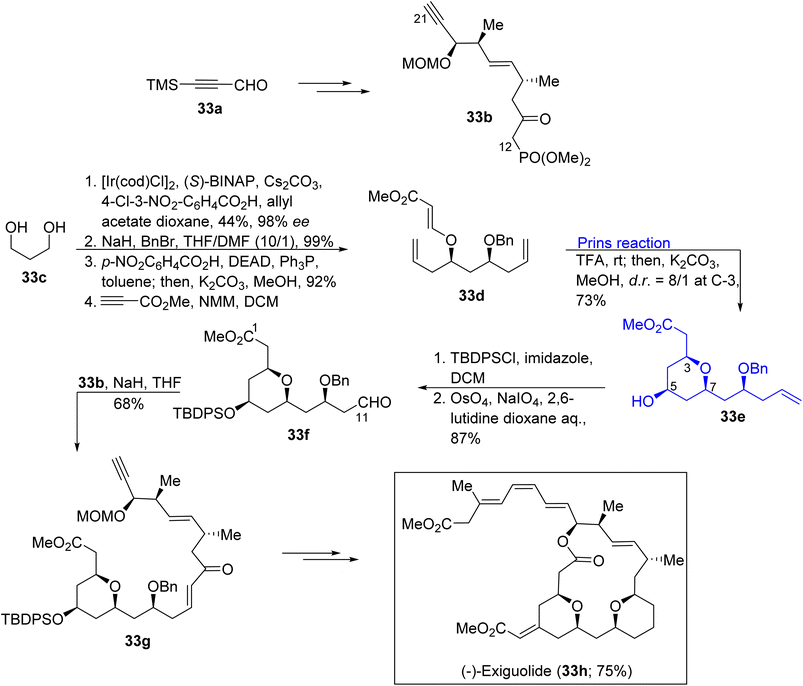 |
| | Scheme 33 Synthesis of exiguolide (33h) according to Oka and co-workers.103 | |
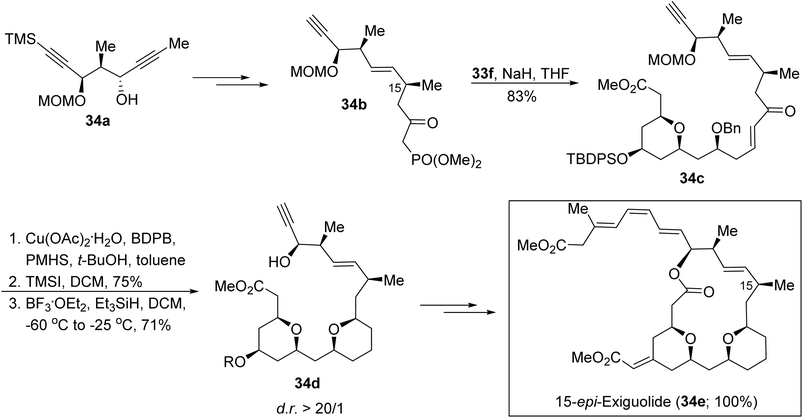 |
| | Scheme 34 Synthesis of 15-epi-exiguolide (34e) according to Oka and co-workers.103 | |
2.4.2. Tetraketide & euscapholide syntheses. Tetraketide (35e) and euscapholide (35f), the natural products isolated from Euscaphis japonica leaves, feature dioxabicyclo[3.3.1]nonan-3-one and α,β-unsaturated D-lactone moieties.104 Owing to the novel structural motif, electrophilic nature, and diverse bioactivities such as, antifungal, antibacterial, analgesic, antidiabetic, antiparasitic, and cytotoxic properties, these natural products have garnered significant interest by research communiuty. The scarce availability of tetraketide and euscapholide prompted Biradar and co-workers105 in 2022, to achieve their total syntheses via unified approach. The total syntheses began with the preparation of (S)-pent-4-ene-1,2-diol which served as the precursor for achieving Prins cyclization reaction. Notably, epichlorohydrin 35a can serve as a valuable precursor to both homoallylic alcohol enantiomers (R) and (S). To this end, racemic epichlorohydrin 35a underwent reaction with sodium hydride, followed by Jacobsen's kinetic resolution with (R,R)–(salen)Co(II) complex, and subsequent regioselective epoxide ring opening and debenzylation generated homoallylic alcohol 35b (90% yield). Next, the compound 35b was subjected to key Prins cyclization reaction with acetaldehyde in the presence of TFA and DCM, followed by hydrolysis, affording 2,6-cis-THP 35c exclusively (52% yield). Further, a sequence of synthetic steps transformed compound 35c into ester 35d. The obtained key intermediate 35d underwent ring-closing methathesis (RCM) reaction with Grubbs' catalyst, followed by TiCl4-mediated debenzylation to afford 35e and 35f via oxa-Michael reaction, in combined yield of 89%. Both natural products 35e and 35f were synthesized in a ten-step sequence with 10% overall yield. Thus, this synthetic strategy facilitates the synthesis of α-pyrones and α,β-unsaturated d-lactones derivatives (Scheme 35).
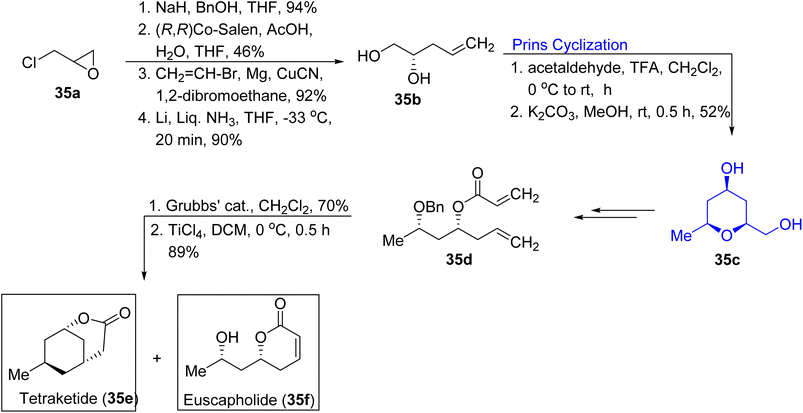 |
| | Scheme 35 Total syntheses of tetraketide (35e) and euscapholide (35f) according to Biradar and co-workers.105 | |
2.4.3. Cryptoconcatone H synthesis. The styryl-bearing tetrahydropyranol-dihydropyranone, cryptoconcatone H (36h), extracted from the branches and leaves of Cryptocarya concinna (monsoon evergreen) by Luo, and coworkers.106 In 2023, Ford and co-workers107 achieved the facile and concise syntheses of 36h and its C6 diastereomer 36i using Prins cyclization as a key contributor. Their synthetic approach for the natural product cryptoconcatone H (36h) began with the preparation of diols syn-36b and anti-36c from 1,1,3,3-tetramethoxypropane 36a through the procedure reported by Samoshin108 et al. Next, the Mitsunobu esterification of anti-36c with crotonic acid 36d gave homoallylic alcohol 36e (67% yield). The obtained compound 36e underwent Prins cyclization reaction with cinnamaldehyde 36f to acquire 2,4,6-cis-tetrahydropyranol ring structure found in natural product (36h). The optimal Prins reaction conditions for attaining 2,4,6 cis-tetrahydropyranol 36g entailed Re2O7 (as catalyst), DCM (as solvent), and 4 hour duration. As a result, the mixture of compound 36g and its epimer was obtained in 10/1 ratio in 69% yield. Next, dihydropyranone ring was constructed through ring-closing metathesis of utilizing Grubbs second-generation catalyst to obtain the intended 36h (74% yield) from compound 36g. C6 Diastereomer 36i (71% yield) was also synthesized from diol syn-36b via aforementioned protocol. The stereochemistry of Prins cyclization reaction can be understood by its mechanistic pathway which first involved the Re2O7-mediated condensation of compounds 36e and 36f. The resulting perrhenate ester 36j was ionized to generate oxonium ion 36k which was then cyclized in a chair-like geometry, resulting in cis-positioning substituents on carbons 2′ and 6′ through pseudoequatorial orientations, commonly found in Prins reactions. The obtained carbocation 36l was then transformed into perrhenate ester 36m as a consequence of the equatorial attack, which was favored by steric factors in Prins reactions featuring oxygen nucleophiles. Next, compound 36m was made to react with perrhenic acid to produce the intended 2,4,6 cis-tetrahydropyranol 36g, leading to the regeneration of Re2O7 catalyst. Altogether, cryptoconcatone H along with its C6 diastereomer were obtained utilizing (±)- and meso-1,8-nonadiene-4,6-diol with 32% and 36% yields, sequentially in three steps. This synthetic strategy is free from any type of protecting group and redox transformation and demonstrates the unique applicability of Re2O7 as the catalyst for achieving Prins cyclization (Scheme 36).
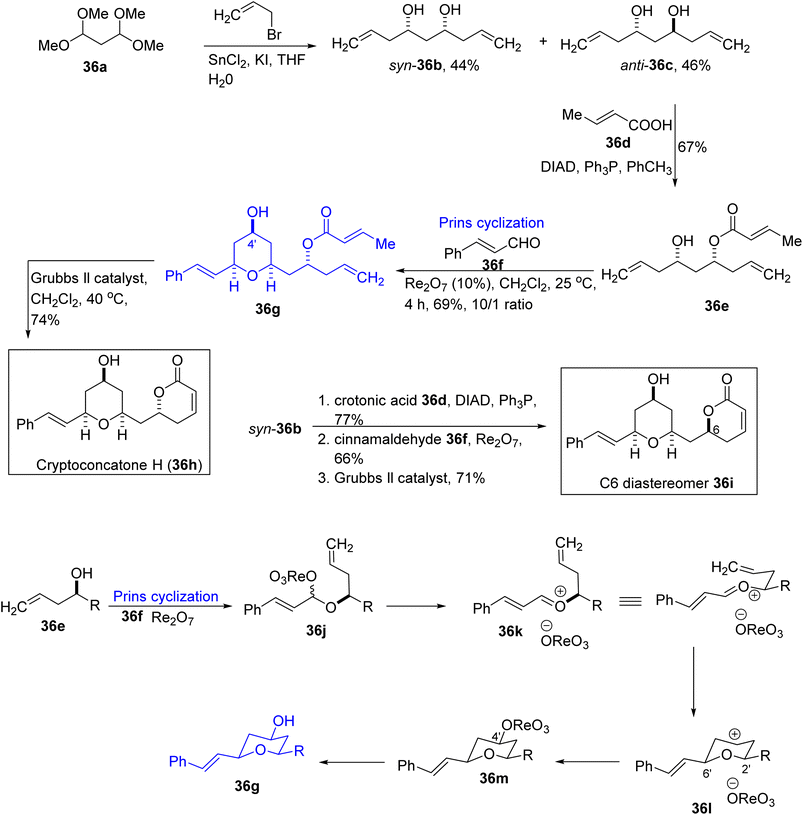 |
| | Scheme 36 Total synthesis of cryptoconcatone H (36h) by Ford and co-workers.107 | |
2.4.4. Cryptorigidifoliol G synthesis. Cryptorigidifoliol G is a polyketide-derived aliphatic lactone, isolated in 2015 from Cryptocarya rigidifolia (family Lauraceae) root wood by Kingston and co-workers,109 possesses bicyclic tetrahydropyrone scaffold with three stereocenters on carbons 1, 5 and 7 and connected to aliphatic lateral chain on carbon 7, having Z-olefinic bond between carbons 8′ and 9′. Moreover, cryptorigidifoliol G exhibits antiproliferative and antimalarial activity towards human ovarian cancerous cell line (A2780, IC50 > 10 µM) and Plasmodium falciparum's Dd2 (IC50 > 10 µM), respectively. In 2022, Choudhury and co-workers110 attempted the pioneering syntheses of (1S,5R,7S)-cryptorigidifoliol G and (1S,5R,7R)-cryptorigidifoliol G (37f). Their total synthesis of 37f began with the protection of 1,9-nonanediol 37a with benzyl bromide in the presence of NaH, followed by oxidation and cis-Wittig olefination, that resulted in the formation of single Z-isomer 37b (61% yield for two steps). Next, compound 37b was subjected to oxidative cleavage, oxidation, silica gel purification and Keck allylation to afford homoallyl alcohol 37c (80% yield in a two-step sequence, 95/5 enantiomeric ratio). Next, alcohol 37c was subjected to Prins cyclization (TFA, DCM, 6 h) with aldehyde 37d in conjugation with hydrolysis to generate diol 37e (42% yield in a two-step sequence). Further, diol 37e provided desired 37f, in 82% yield, over a few step involving sequence (Scheme 37).
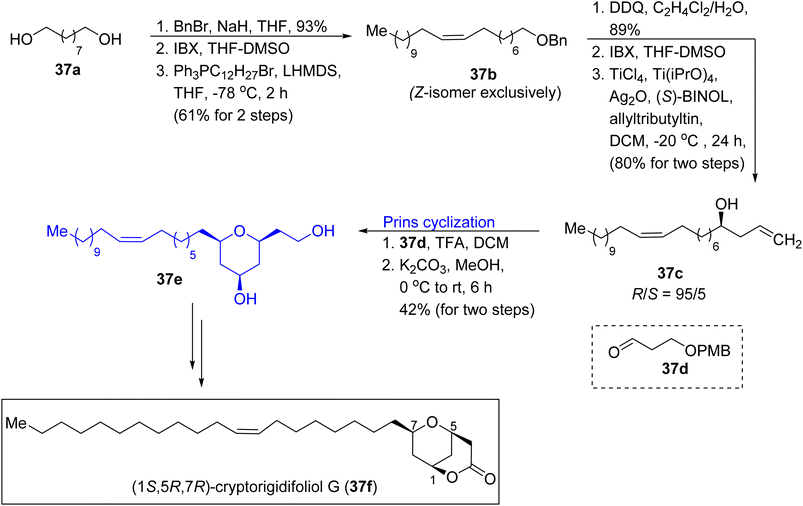 |
| | Scheme 37 Total synthesis of (1S,5R,7R)-cryptorigidifoliol G (37f) according to Choudhury and co-workers.110 | |
2.4.5. Viridistratin A synthesis. In 2020, the secondary metabolite viridistratin A (38h) isolated from Annulohypoxylon viridistratum stomata, contained highly oxidized benzo[j]fluoranthene architecture and showed wide range of cytotoxic and antimicrobial activities.111 Concerning this, Jeong and co-workers112 in 2024, optimized a Lewis acid-mediated Prins-like cyclization approach for the synthesis of benzfluorenes and benzo[j]fluoranthene core structures and utilized this strategy for the total synthesis of 38h. The total synthesis began with 1,8-dimethoxynaphthalene 38a (obtained from naphthalene-1,8-diol), which afforded key acenaphthenone 38b over few steps. Afterwards, commercially available 2-bromo-6-methoxybenzaldehyde 38c was subjected to react with Wittig reagent to afford enol ether 38d (pro-electrophilic) (E/Z = 4/1, 93% yield). Next, boration of compound 38d with B2Pin2 in the presence of Pd catalyst (Pd(dppf)Cl2) gave boronate 38e in 76% yield. The obtained compound 38e was cross-coupled with acenaphthylene triflate 38b to get tetracyclic precursor 38f in 91% yield. Further, compound 38f was exposed to Bu2BOTf to afford benzo[j]fluoranthene architecture 38g (87% yield) through Prins-type cycloaromatization. In final step, global demethylation with BBr3 smoothly gave 38h in 64% yield and 22% overall from ten-step sequence (Scheme 38).
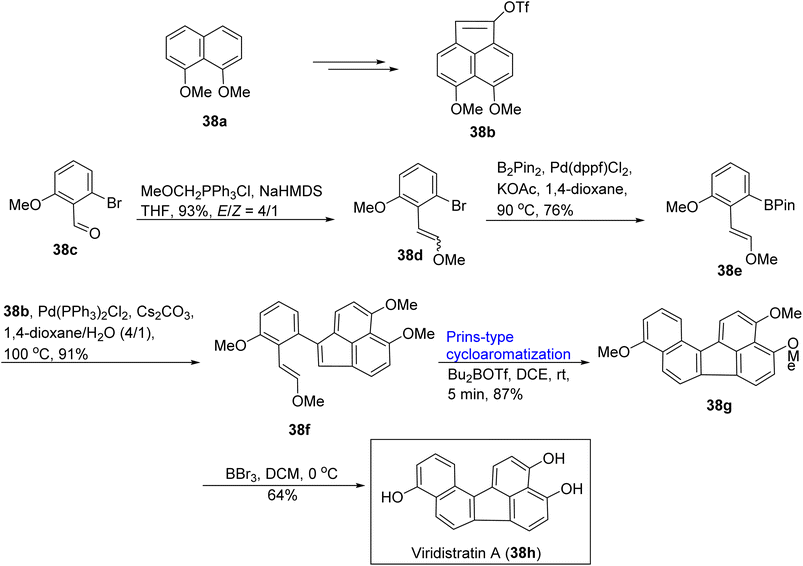 |
| | Scheme 38 Total synthesis of viridistratin A (38h) according to Jeong and co-workers.112 | |
2.4.6. Polyrhacitide A synthesis. The polyketide-based natural products such as polyrhacitides are ant-sourced secondary metabolites. Jiang and co-workers113 (in 2008), obtained bicyclic lactones i.e., polyrhacitide A (39i) and its homologue polyrhacitide B from medicinal Polyrhacis Lamellidens (ant species). This specie exhibits anti-inflammatory and analgesic properties. The polyrhacitide A and polyrhacitide B structurally possess bicyclic lactone and syn-1,3-polyhydroxy segment. Menz and co-workers114 in 2009, reported the pioneering synthesis of these natural products employing chiral Overmann's esterification. Further, in 2025, Biradar and co-workers115 accomplished the total synthesis of 39i using Prins cyclization as main step, for the first time. The synthetic route commenced with the construction of 35b from racemic epichlorohydrin 35a over a number of steps. Next, Prins cyclization was performed between compound 35b and n-octanal 39a mediated by TFA in conjugation with hydrolysis with methanolic potassium carbonate to afford trisubstituted THP 39b (70% yield, d. e. = >96). Intriguingly, the feasible mechanism and stereochemical consequences of Prins cyclization are depicted (Fig. 3). Furthermore, compound 39b underwent tosylation, tert-butyldimethylsilyl chloride (TBSCl) protection and NaI treatment in sequence to give iodide 39c (88% yield) which was then subjected to reductive cleavage to provide key intermediate 39d with desired anti-1,3-diol (88% yield). The compound 39d gave aldehyde 39e through several transformations. The obtained compound 39e then underwent TFA-facilitated key Prins cyclization with pent-4-ene-1,2-diol 39f in DCM, followed by hydrolysis with methanolic K2CO3, generating trisubstituted THP 39g (52% yield, >96% cis-selectivity). Next, compound 39g underwent regioselective tosylation and then reacted with NaI in refluxing acetone, followed by esterification, affording ester 39h (74% yield, 98% d.e.) with configurational inversion. In the final stage, the synthesized compound 39h provided intended 39i as diastereopure compound, over few steps. Stereoselectively, Prins cyclization was employed to achieve the preparation of polyrhacitide A in total of 16 steps, in 1.1% overall yield (Scheme 39).
 |
| | Fig. 3 Feasible mechanism and stereochemical consequences of Prins cyclization. | |
 |
| | Scheme 39 Synthetic approach towards polyrhacitide A (39i) according to Biradar and co-workers.115 | |
2.5. Synthesis of polyphenol derived-natural products
2.5.1. Synthesis of (+)- & (−)-Codonopiloneolignanin A. The unprecedented polycyclic neolignane, codonopiloneolignanin A (40i), isolated by Shi116 et al., in 2016 from Codonopsis pilosula roots, contained 2,9:2,9:7,7 tricyclo-8,9′-neolignane structure with two benzocycloheptane units. Additionally, it was reported to be first naturally occurring lignin with a tricyclic [5, 3, 0, 0 (ref. 3 and 8)] decane structure and four contiguous stereocenters. The compounds 40i and ent-40i are reported to exhibit induced apoptosis, cell cycle arresting and antiproliferative effects against HT-29 and SW-480 cancer cells. In 2021, Li and co-workers117 attempted the inaugural gram-scale chiral total synthesis of both (+)- and (−)-codonopiloneolignanin A. The synthesis began with the construction of key cis-cyclopentene 40b (53% yield, >99.5% ee) from multi-substituted cinnamaldehyde 40a (obtained from readily available sinapic acid) through enantio- and diastereoselective dimerization. The obtained cis-cyclopentene 40b underwent stereoselective reduction at double bond in the presence of nickel(II) chloride hexahydrate and NaBH4 followed by further reduction with diisobutylaluminum hydride (DIBAL-H), that resulted in epimeric mixture of targeted compound cis-1,2,3-trisubstituded cyclopentane 40d (d.r. = 17/1, 85% yield) and undesired 40c (obtained due to over-reduction), which was then converted to 40d (78% yield) through Dess–Martin oxidation. Next, the Lewis acids such as, aluminum trichloride and zinc chloride were tried to facilitate cascade cyclization. As such, no reaction occurred with ZnCl4, however, the use of AlCl3 resulted in 40i formation, in 53% yield, whereas, the use of TFA enhanced the yield of 40i upto 86%. Thus, the authors speculated that aldehyde functionality in compound 40d was activated using TFA to give the intermediate 40f. This intermediate 40f then underwent Prins cyclization with β-aryl to forge a ring, giving rise to a benzyl carbocation 40g. The formed compound 40g could be subjected to electrophilic substitution in the presence of γ-aryl to give tricyclic [5, 3, 0, 0 (ref. 3 and 8)] decane structure 40h. Next, the protecting group MOM was cleaved utilizing TFA in one-pot manner, resulting in the preparation of 40i. The natural product 40i was further derivatized to afford the compound 40j, leading to the confirmation of stereochemistry. Hence, the total syntheses of (+)- and (−)-codonopiloneolignanin A were achieved in a four-step sequence with an overall yield of 37% (Scheme 40).
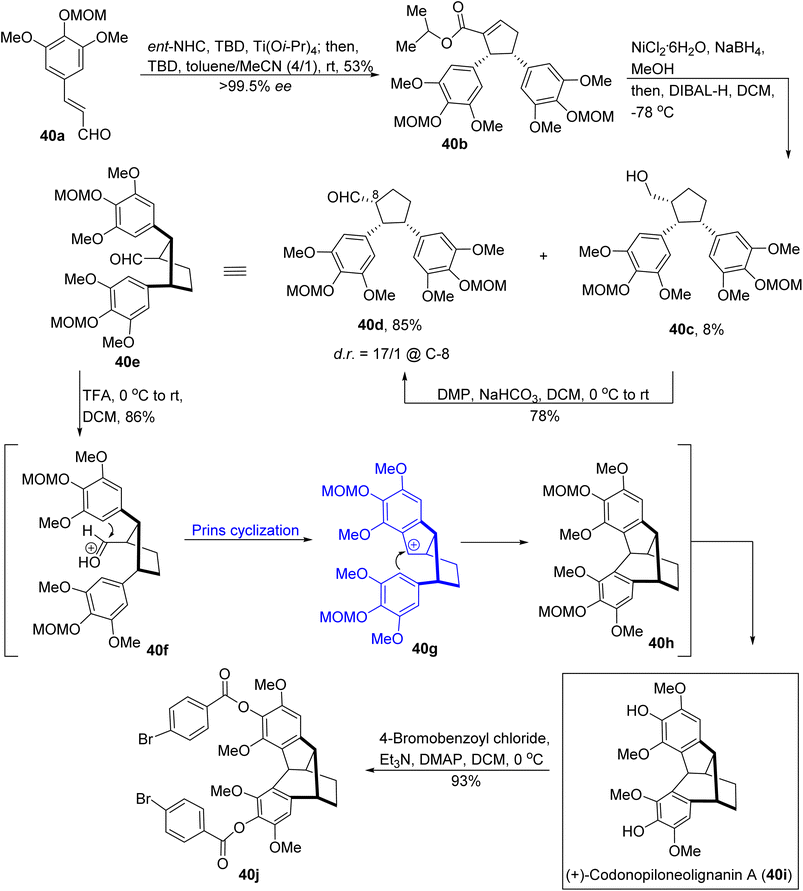 |
| | Scheme 40 Total syntheses of (+)-codonopiloneolignanin A (40i) by Li and co-workers.117 | |
2.5.2. (−)-Brazilane synthesis. Brazilane is a tetracyclic natural product with homoisoflavonoid structure, isolated from Caesalpinia sappan L. (family Leguminosae) heartwood which have been traditionally utilized in Chinese medicine for treating convulsions, menstrual disorders, straumatic disease, and emmeniopathy.118 In 2022, Guo and co-workers119 accomplished an expedient asymmetric synthesis of (−)-brazilane (41f). Their synthetic route for attaining 41f began with the transformation of readily accessible 3,4-dimethoxybenzyl alcohol 41a into diol 41b (87% yield) under the presence of tosyl chloride and triethylamine which was followed by subsequent SN2 reaction (diethyl malonate, sodium hydride) and reduction. The diol 41b then underwent reaction with lipase (in the presence of vinyl acetate) to provide mono-protected alcohol 41c (99% yield, 96% ee) with supposed stereochemistry as R, consistent with the configuration of end product. The compound 41c was then made to react with 3-methoxyphenol 41d in the presence of 1,1′-(azodicarbonyl)-dipiperidine/Bu3P, followed by acetyl group cleavage and subsequent Dess–Martin oxidation to yield aldehyde 41e (83%). Finally, aldehyde 41e was subjected to one-pot Prins/Friedel–Crafts reaction under the presence of p-TsOH in DCM followed by its deprotection under the presence of BBr3 in DCM to afford 41f in about 63% yield with 96% ee. The synthetic route described herein shows an alternative approach towards brazilane and related compounds with indane and chromane scaffold, focusing on the potential applications of the outlined approach to access pharmaceuticals and natural products (Scheme 41).
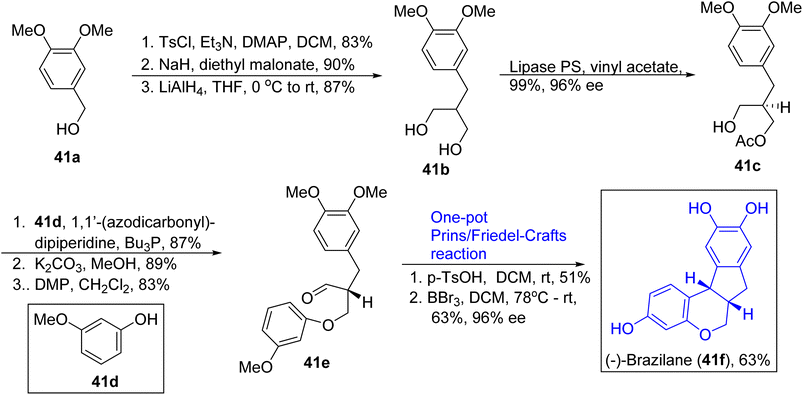 |
| | Scheme 41 Total synthesis of (−)-brazilane (41f) by Guo and co-workers.119 | |
2.5.3. (+)-Brazilin synthesis. The naturally occurring homoisoflavonoid, brazilin is the representative of Caesalpinia sappan L. (Chinese traditional medicine) and is characterized by chromane framework with cis-fused 2,3-dihydro-1H-indene component. The bioactivities exhibited by this natural product include antitumor, anti-inflammatory, antibacterial, hypoglycemic, hepatoprotective activities.120 In 2022, Xu and co-workers121 designed a concise nine-step route to construct the cis-annulated chromane core and indane skeleton of (+)-brazilin (+)-42h via tandem Prins/Friedel–Crafts protocol. Their synthetic sequence commenced with the synthesis of (±)-42h which initially involved the preparation of intermediate 42b from readily available 3,4-dimethoxy benzyl alcohol 42a through several modifications. The compound 42b upon treatment with Ac2O and tetrabutylammonium acetate afforded diol (±)-42c (86% yield). Next, the compound (±)-42c was converted to its p-toluenesulfonate (±)-42d (83% yield) in the presence of p-toluenesulfonyl chloride, Et3N and DMAP. The obtained compound (±)-42d underwent several steps transformation to afford the intended ether (±)-42e. Next, the compound (±)-42e underwent oxidation to give aldehyde (±)-42f which was further subjected to Prins/Friedel–Crafts reaction with TFA to afford the intended cyclized product (±)-42g in one-pot manner (71% yield). Successfully, 42h (80% yield) was attained by deprotection in the presence of boron tribromide. The chiral total synthesis of (+)-brazilin 42h was attempted utilizing enzyme-mediated desymmetrization protocol. For this purpose, the intermediate 42b was subjected to lipase-mediated enantioselective esterification followed by aforementioned protocol to provide (+)-42h in 80% yield. Hence (+)-brazilin was achieved from compound 42a utilizing the concise synthetic strategy consisting of overall nine steps (Scheme 42).
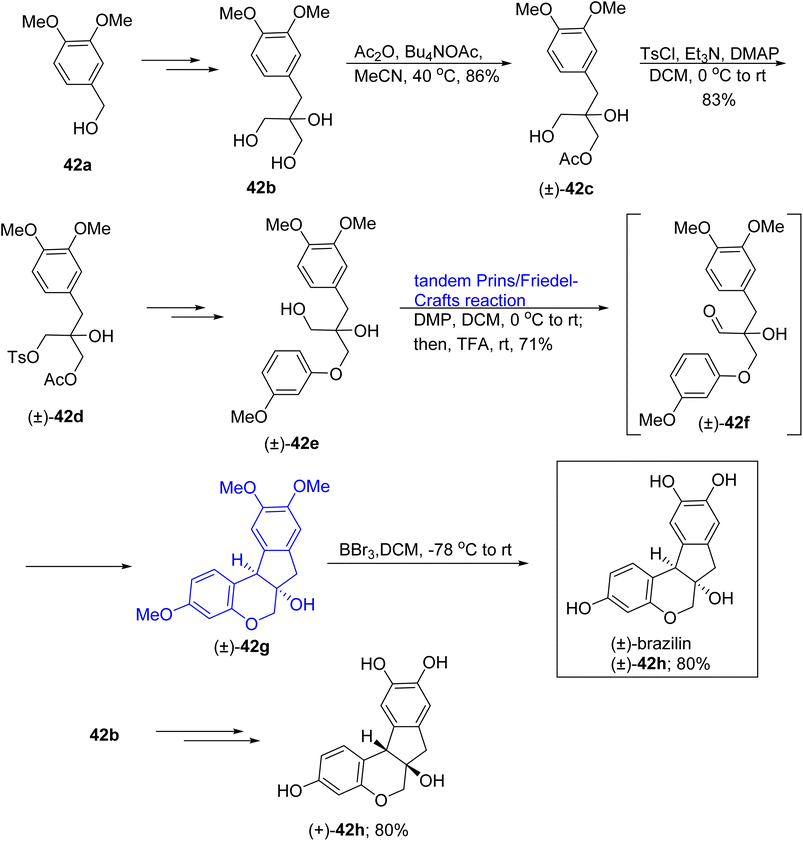 |
| | Scheme 42 Total synthesis of (+)-brazilin (+)-42h by Xu and co-workers.121 | |
2.6. Miscellaneous
2.6.1. Bufospirostenin A & ophiopogonol A synthesis. Bufospirostenin A (43e) and ophiopogonol A (43l) are intricate naturally occurring abeo-steroids isolated from bile of Bufo bufo gargarizans and Ophiopogon japonicus rhizomes.122,123 Both compounds contain 5/7/6/5/5/6 hexacyclic structure with ten stereogenic centers and exhibit potential sodium/potassium ATPase inhibitory activities. In 2022, Yang124 et al. attempted the syntheses of 43e and 43l through the selective generation of cis- and trans-fused hydroazulenols via stereoselective transannular Prins cyclization. The total synthesis of 43e commenced with the preparation of olefin 43b for transannular Prins reaction. In this regard, diosgenin acetate 43a afforded compound 43b over few-steps. Next, the synthesis of N5/7-fused bicyclic alcohol 43c was achieved in the presence of increased quantity of Lewis acid BBr3 and Cs2CO3, in 43% yield. In addition, undesired compound 43d was also formed along with recovered compound 43b, in 11% and 30% yields, respectively. The compound 43c was reported to be obtained via parallel conformation 43f while compound 43d was produced via crossed conformation 43g. Finally, compound 43c gave rise to 43e over a few steps. Next, 43l was also synthesized employing the transannular Prins reaction. The synthesis of 43l began with tert-butyldiphenylsilyl-masked diosgenin 43h which afforded (E)-olefin 43i over a few-step sequence. The compound 43i was then subjected to cis-selective Prins reaction in the presence of BBr3 and DCM, generating cis alcohol 43j (45% yield), together with recovered 43i (25% yield). Further, the compound 43j was subjected to sequential dehydration, tert-butyldiphenylsilyl group cleavage, acidic workup, and selective Mukaiyama hydration (with Carreira's cobalt catalyst 43k) to attain 43l in 65% yield. Hence, the syntheses of both abeo-steroids were completed independently in total of seven steps, by utilizing the affordable starting materials (Scheme 43).
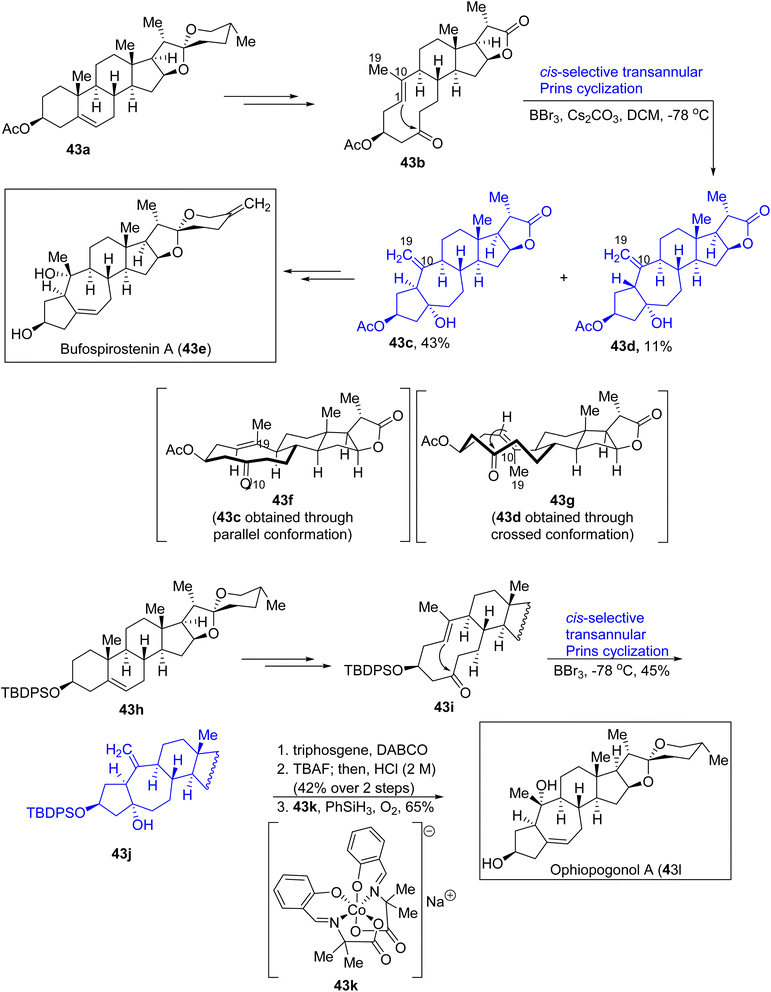 |
| | Scheme 43 Total syntheses of bufospirostenin A (43e) and ophiopogonol A (43k) by Yang and co-workers.124 | |
2.6.2. Dodoneine & epi-dodoneine syntheses. The unsaturated γ-lactone, dodoneine (44f) was extracted from Tapinunthus dodoneifolius and Agelanthus dodoneifolius which contain ((R)-6-[(S)-2-hydroxy-4 (4-hydroxyphenyl) butyl]-5,6-dihydropyran-2-one) structure.125 T. dodoneifolius is the therapeutic plant used for treating respiratory diseases, abdominal pain, diarrhea, cholera and wounds. Dodoneine demonstrates diverse bioactivities including HIV protease suppression, anti-leukemic response, potent vasorelaxant response and apoptosis induction (IC50 = 81.4 ± 0.9 µM).126 In 2023, Biradar and co-workers127 attempted the diastereoselective syntheses of 44f and its stereoisomer epi-dodoneine 44e leveraging Prins cyclization as a key strategy. The synthesis began from readily accessible racemic epichlorohydrin 35a that yielded the precursor (S)-pent-4-ene-1,2-diol 35b for Prins cyclization over few steps. Next, another substrate i.e., aldehyde 44b (94% yield was formed from p-hydroxybenzaldehyde 44a via subsequent benzylation, C2-Wittig reaction, reduction and Swern oxidation. The obtained aldehyde 44b underwent Prins cyclization with synthesized compound 35b mediated by TFA in DCM at 0 °C to room temperature to deliver trifluoroacetate 44c. The synthesized cyclized product 44c gave key intermediate 44d with desired anti-1,3-diol, over few steps. In sequence, the compound 44d was then subjected to acryloyl chloride-facilitated esterification, RCM reaction, and debenzylation to produce epi-dodoneine (44e, 74% yield). Likewise, dodoneine 44f along with bicyclic lactone 44g, were prepared by subjecting the compound 44d to acrylic acid-mediated esterification, RCM reaction and debenzylation, in 56% and 31% yields, respectively. Overall, both natural products 44f and 44e were generated in 11.2% yield (Scheme 44).
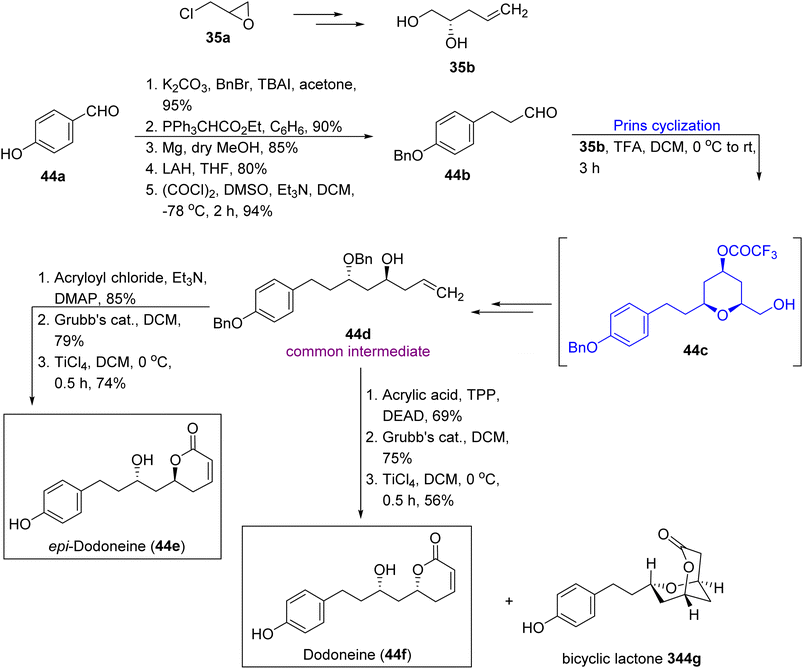 |
| | Scheme 44 Total synthesis of dodoneine (44f) and epi-dodoneine (44e) by Biradar and co-workers.127 | |
2.6.3. Insect pheromones synthesis. The spiroketal unit is a spirocyclic acetal structure with two carbocycles connected at central carbon with two oxygen atoms on separate rings. Many natural products contain this spiroketal unit such as insect pheromones.128 In 2024, Trevorrow and co-workers129 attempted the syntheses of two insect pheromones 45f and 45j employing Prins reaction. The synthetic strategy involved the racemic preparation of 45f found in mining bee's (Andrena haemorrhoa) mandibular secretions. This synthesis began with the utilization of sequential Prins reaction and treatment of hept-1-en-4-ol 45a with 3,4-dihydro-2H-pyran 45b by means of concentrated HCl, followed by the addition of TiCl4 to afford hydroxy THP (45c, 52% yield). Next, dehalogenation gave cyclization precursor 45d (95%) which upon oxidation rendered natural compound 45e (26%) along with its stereoisomer 45f (9%). Another pheromone was enantiopure (2R,6S)-2-methyl-1,7-dioxaspiro[5.5]undecane 45j found in cuckoo bee's (Epeolus cruciger) mandibular secretions. The synthetic sequence for this natural product commenced with the reaction of epoxide 45g with TMS-acetylene followed by treatment with n-BuLi, BF3·OEt2, and (R)-propylene oxide, that afforded Z-vinylsilane 45h (80% yield) as single enantiomer via reduction. Next, silyl-Prins reaction occurred in the presence of 3,4-dihydro-2H-pyran and Lewis acid (InCl3) to give single enantiomer of dihydropyran 45i (64% yield). Further, catalytic hydrogenation resulted in cyclized product 44j (25% yield) and reduced compound 44k (44%) in the form of mixture, which was further subjected to oxidative photocyclization to furnish the compound 45j in an isolated yield of 12%. To circumvent rearrangement in hydrogenation step, addition of iodine monochloride and spiroketalisation took place in two-step sequence and one-pot manner, converting cyclized product 45i into inseparable mixture of compound 45l and 45m (2/1, 73% yield). Next, dehalogenation was performed using tris(trimethylsilyl)silane with AIBN, leading to the complete reduction and formation of stereopure 45j (79% isolated yield) with an overall yield of 26% within five-step sequence (Scheme 45).
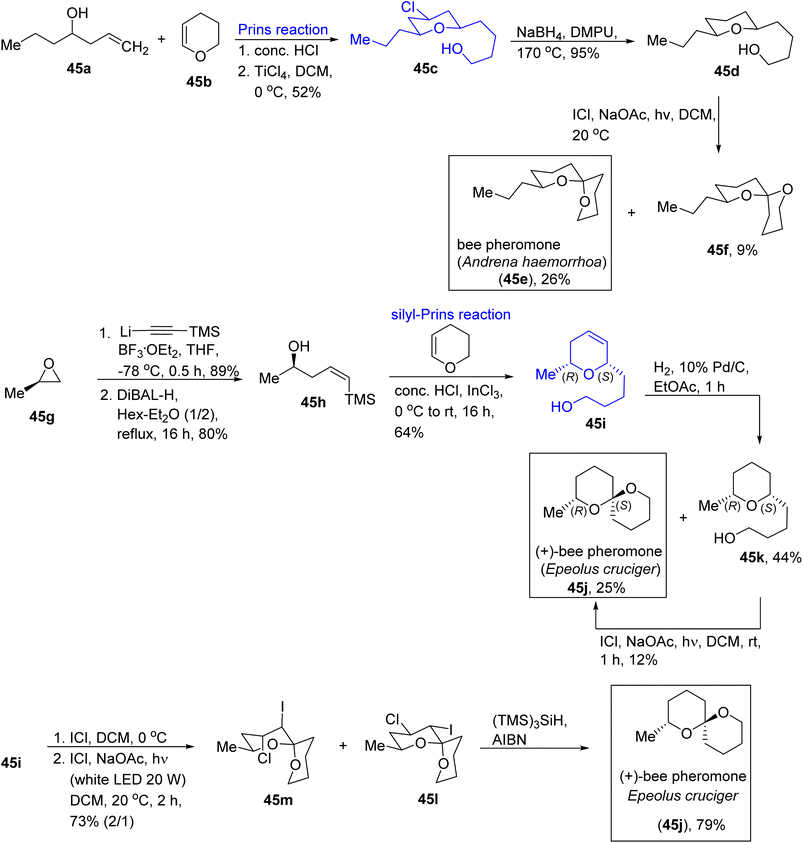 |
| | Scheme 45 Total syntheses of insect pheromones (45e) and (45j) according to Trevorrow and co-workers.129 | |
3. Conclusion and outlook
In this review article, the importance of Prins reaction in the total synthesis of bioactive natural products has been highlighted. This protocol enables the C–C bond formation, leading towards the construction of significant scaffolds in many natural products, such as complex THP motifs. Moreover, the Prins reaction exhibits stereoselectivity and enhanced enantioselectivity, facilitating the generation of specific stereocenters within the target compound. Research advancements render the Prins reaction effective in streamlining complex compounds synthesis. This manuscript summarizes the total synthesis of diverse natural products, including alkaloids, terpenoids, lactones, flavonoids and polyketides via Prins reaction, showcasing its applications in natural product chemistry, reported since 2020. Though the employed Prins reactions resulted in efficient yields of corresponding products, however, its applications in asymmetric synthesis are yet to be explored broadly. With ongoing developments, innovations in designing of the green catalyst, mild reaction conditions and environmentally benign solvents may potentially enhance its utility in natural product and complex organic synthesis. Additionally, the scalability and sustainability of Prins reaction would be reinforced by implementing flow chemistry techniques.
Conflicts of interest
The authors declare no conflicts of interest.
Data availability
No primary research results, software or code have been included and no new data were generated or analysed as part of this review
Acknowledgements
Authors are thankful to the facilities provided by Government College University Faisalabad, Pakistan. A. Irfan extends his appreciation to the Deanship of Research and Graduate Studies at King Khalid University for funding this work through the Large Groups Research Project under grant number (RGP2/73/46). Authors are thankful to the Deanship of Graduate Studies and Scientific Research at the University of Bisha for supporting this work through the Fast-Track Research Support Program.
References
- K. Tadiparthi, A. Roy, R. Sakirolla, B. Subba Reddy and J. Singh Yadav, Synthetic applications of Prins cyclization in natural product syntheses, Chem. Rec., 2022, 22, e202200044 CrossRef CAS PubMed
 .
. - M. Bandini, A. Melloni and A. Umani-Ronchi, New catalytic approaches in the stereoselective Friedel–Crafts alkylation reaction, Angew. Chem., Int. Ed., 2004, 43, 550–556 Search PubMed .
- B. Alcaide and P. J. Almendros, The direct catalytic asymmetric aldol reaction, Eur. J. Org Chem., 2002, 2002, 1595–1601 Search PubMed .
- C. D. Díaz-Oviedo, R. Maji and B. List, The catalytic asymmetric intermolecular prins reaction, J. Am. Chem. Soc., 2021, 143, 20598–20604 Search PubMed .
- A. Budakoti, P. K. Mondal, P. Verma and J. Khamrai, Prins cyclization-mediated stereoselective synthesis of tetrahydropyrans and dihydropyrans: an inspection of twenty years, Beilstein J. Org. Chem., 2021, 17, 932–963 CrossRef CAS PubMed .
- K. Zheng, X. Liu, S. Qin, M. Xie, L. Lin, C. Hu and X. J. Feng, Completely OH-selective FeCl3-catalyzed Prins cyclization: highly stereoselective synthesis of 4-OH-tetrahydropyrans, J. Am. Chem. Soc., 2012, 134, 17564–17573 CrossRef CAS PubMed .
- S. D. Rychnovsky, Y. Hu and B. Ellsworth, Segment-coupling Prins cyclizations, Tetrahedron Lett., 1998, 39, 7271–7274 Search PubMed .
- S. Dubbu and S. Jampani, Advancements in Carbohydrate Scaffold Synthesis: Exploring Prins Cyclization Methodology, Reactions, 2025, 6, 3 CrossRef CAS .
- E. Reyes, L. Prieto, U. Uria, L. Carrillo and J. L. Vicario, Recent Advances in the Prins Reaction, ACS Omega, 2022, 7, 31621–31627 CrossRef CAS PubMed .
- X. Han, G. Peh and P. E. Floreancig, Prins-type cyclization reactions in natural product synthesis, Eur. J. Org Chem., 2013, 2013, 1193–1208 Search PubMed .
- E. Arundale and L. Mikeska, The Olefin-Aldehyde Condensation. The Prins Reaction, Chem. Rev., 1952, 51, 505–555 Search PubMed .
- F. Doro, N. Akeroyd, F. Schiet and A. Narula, The Prins reaction in the fragrance industry: 100th anniversary (1919–2019), Angew. Chem., 2019, 131, 7248–7253 Search PubMed .
- E. Hanschke, Zur Kenntnis der Prinsschen Reaktion, III. Mitteil. 1): Über die Reaktion von Allylcarbinol mit Aldehyden und Ketonen, Chem. Ber., 1955, 88, 1053–1061 CrossRef CAS .
- I. M. Pastor and M. Yus, Focused update on the Prins reaction and the Prins cyclization, Curr. Org. Chem., 2012, 16, 1277–1312 Search PubMed .
- P. P. Padmaja, P. N. Reddy and S. Reddy, Tandem Prins cyclizations for the construction of oxygen containing heterocycles, Org. Biomol. Chem., 2020, 18, 7514–7532 Search PubMed .
- B. S. Reddy, P. Borkar, J. S. Yadav, B. Sridhar and R. Gree, Tandem Prins/Friedel–Crafts cyclization for stereoselective synthesis of heterotricyclic systems, J. Org. Chem., 2011, 76, 7677–7690 Search PubMed .
- S. Huang, G. Du and C.-S. J. Lee, Construction of the tricyclic furanochroman skeleton of phomactin A via the prins/conia-ene cascade cyclization approach, J. Org. Chem., 2011, 76, 6534–6541 CrossRef CAS PubMed .
- L. Sun, J. Huang, B. Wang, G. Du and C. Lee, Formal Synthesis of (+)-Phomactin A via a Prins/Conia-ene Cascade and γ-Hydroxylation Strategy, ChemistrySelect, 2023, 8, e202304204 CrossRef CAS .
- A. K. Saikia, K. Indukuri and J. Das, Stereoselective synthesis of O-tosyl azabicyclic derivatives via aza Prins reaction of endocyclic N-acyliminium ions: application to the total synthesis of (±)-epi-indolizidine 167B and 209D, Org. Biomol. Chem., 2014, 12, 7026–7035 RSC .
- A. Y. Sidorenko, Y. M. Kurban, A. Kravtsova, I. Il'ina, N. Li-Zhulanov, D. Korchagina, J. Sánchez-Velandia, A. Aho, K. Volcho and N. Salakhutdinov, Clays catalyzed cascade Prins and Prins-Friedel-Crafts reactions for synthesis of terpenoid-derived polycyclic compounds, Appl. Catal., A, 2022, 629, 118395 CrossRef CAS .
- Y. Duan, Y. Yang, Z. Qin, X. Liang, Z. Zhang, B. Fang, H. Li and X. She, Construction of the Lactone-Bridged Scaffold of Alstoscholactine through an Acid-Catalyzed Prins Cyclization/Lactonization Cascade, Org. Lett., 2025, 27, 8764–8769 Search PubMed .
- E. A. Crane and K. E. Scheidt, Prins-Type Macrocyclizations as an Efficient Ring-Closing Strategy in Natural Product Synthesis, Angew. Chem., Int. Ed., 2010, 49, 8316–8326 Search PubMed .
- H. M. Lee, C. Nieto-Oberhuber and M. D. Shair, Enantioselective synthesis of (+)-cortistatin A, a potent and selective inhibitor of endothelial cell proliferation, J. Am. Chem. Soc., 2008, 130, 16864–16866 Search PubMed .
- J. Yadav, M. A. Rahman, N. M. Reddy and A. Prasad, Synthesis of spiroketal fragment of ossamycin via Prins cyclization, Tetrahedron Lett., 2015, 56, 365–367 Search PubMed .
- K. B. Bahnck and S. D. Rychnovsky, Formal synthesis of (−)-kendomycin featuring a Prins-cyclization to construct the macrocycle, J. Am. Chem. Soc., 2008, 130, 13177–13181 Search PubMed .
- S. Marumoto, J. J. Jaber, J. P. Vitale and S. D. Rychnovsky, Synthesis of (−)-centrolobine by Prins cyclizations that avoid racemization, Org. Lett., 2002, 4, 3919–3922 CrossRef CAS PubMed .
- N. Hanaki, J. Link, D. W. MacMillan, L. E. Overman, W. G. Trankle and J. A. Wurster, Stereoselection in the prins-pinacol synthesis of 2, 2-disubstituted 4-acyltetrahydrofurans. Enantioselective synthesis of (−)-citreoviral, Org. Lett., 2000, 2, 223–226 CrossRef CAS PubMed .
- W. Chen, X. D. Yang, W. Y. Tan, X. Y. Zhang, X. L. Liao and H. Zhang, Total synthesis of (−)-Vindorosine, Angew. Chem., Int. Ed., 2017, 56, 12327–12331 Search PubMed .
- P. A. Wender, B. A. DeChristopher and A. J. Schrier, Efficient synthetic access to a new family of highly potent bryostatin analogues via a Prins-driven macrocyclization strategy, J. Am. Chem. Soc., 2008, 130, 6658–6659 CrossRef CAS PubMed .
- K. Wiesner, T. Tsai, K. Huber, S. Bolton and R. Vlahov, Total synthesis of talatisamine, a delphinine type alkaloid, J. Am. Chem. Soc., 1974, 96, 4990–4992 CrossRef CAS .
- D. Kamakura, H. Todoroki, D. Urabe, K. Hagiwara and M. Inoue, Total synthesis of talatisamine, Angew. Chem., Int. Ed., 2020, 59, 479–486 Search PubMed .
- C.-R. Zhang, S.-P. Yang and J.-M. Yue, Alkaloids from the twigs of Daphniphyllum calycinum, J. Nat. Prod., 2008, 71, 1663–1668 Search PubMed .
- L.-D. Guo, Y. Zhang, J. Hu, C. Ning, H. Fu, Y. Chen and J. Xu, Asymmetric total synthesis of yuzurimine-type Daphniphyllum alkaloid (+)-caldaphnidine J, Nat. Commun., 2020, 11, 3538 Search PubMed .
- J. i. Kobayashi and T. Kubota, The daphniphyllum alkaloids, Nat. Prod. Rep., 2009, 26, 936–962 Search PubMed .
- J. Hu and J. Xu, Total synthesis of a putative yuzurimine-type Daphniphyllum alkaloid C14-epi-deoxycalyciphylline H, Chin. Chem. Lett., 2024, 35, 108733 CrossRef CAS .
- S.-H. Lim, K.-M. Sim, Z. Abdullah, O. Hiraku, M. Hayashi, K. Komiyama and T.-S. Kam, Leuconoxine, kopsinitarine, kopsijasmine, and kopsinone derivatives from Kopsia, J. Nat. Prod., 2007, 70, 1380–1383 CrossRef CAS PubMed .
- K. Nagaraju, D. Ni and D. Ma, Total synthesis of kopsinitarine E, Angew. Chem., 2020, 132, 22223–22226 Search PubMed .
- S.-L. Mok, K. Yoganathan, T.-M. Lim and T.-S. Kam, Cardiovascular effects of aspidofractinine-type alkaloids from Kopsia, J. Nat. Prod., 1998, 61, 328–332 Search PubMed .
- T.-S. Kam and K. Yoganathan, Three aspidofractinine-type alkaloids from Kopsia teoi, Phytochemistry, 1996, 42, 539–541 CrossRef CAS .
- H. Tian, Y. Wu, X. Li, Z. Hao, W. He, X. Huang, W. Chen and H. Zhang, Total Syntheses of Kopsaporine, Kopsinol and Kopsiloscine A, Angew. Chem., 2023, 135, e202218935 CrossRef .
- J. W. Daly, T. F. Spande and H. M. Garraffo, Alkaloids from amphibian skin: a tabulation of over eight-hundred compounds, J. Nat. Prod., 2005, 68, 1556–1575 CrossRef CAS PubMed .
- N. Toyooka, A. Fukutome, H. Shinoda and H. Nemoto, Total synthesis of the antipode of alkaloid 205 B, Angew. Chem., Int. Ed., 2003, 42, 3808–3810 Search PubMed .
- M. Tripathy and C. Schneider, Short synthesis of alkaloid (−)-205B, J. Org. Chem., 2020, 85, 12724–12730 Search PubMed .
- T. Tokuyama, N. Nishimori, A. Shimada, M. Edwards and J. Daly, New classes of amidine, indolizidine and quinolizidine alkaloids from a poison-frog, Dendrobates pumilio (Dendrobatidae), Tetrahedron, 1987, 43, 643–652 Search PubMed .
- S. Mazeh, M. D. Garcia-Fernandez, B. Pelletier, C. Moreau and P. Delair, Chemistry, Total synthesis of the natural (−)-205B alkaloid and its activity toward α7 nAChRs, Org. Biomol. Chem., 2023, 21, 817–822 RSC .
- C. Cespedes, J. Jakupovic, M. Silva and F. Tsichritzis, A quinoline alkaloid from Aristotelia chilensis, Phytochemistry, 1993, 34, 881–882 CrossRef CAS .
- H. R. Arias, M. O. Ortells, D. Feuerbach, V. Burgos and C. Paz, Alkaloids purified from Aristotelia chilensis inhibit the human α3β4 nicotinic acetylcholine receptor with higher potencies compared with the human α4β2 and α7 subtypes, J. Nat. Prod., 2019, 82, 1953–1960 CrossRef CAS PubMed .
- M. D. Argade, C. J. Straub, L. E. Rusali, B. D. Santarsiero and A. P. Riley, Synthesis of aristoquinoline enantiomers and their evaluation at the α3β4 nicotinic acetylcholine receptor, Org. Lett., 2021, 23, 7693–7697 CrossRef CAS PubMed .
- H. Greger, Structural classification and biological activities of Stemona alkaloids, Phytochem. Rev., 2019, 18, 463–493 CrossRef CAS .
- X. Wang, T. Shi, G. Yin, Y. Wang, Z. Li and Z. Wang, Asymmetric total syntheses of five pyrrole-type Stemona alkaloids, Org. Chem. Front., 2022, 9, 3818–3822 RSC .
- W. F. Cheng, S. Ma, Y. T. Lai, Y. T. Cheung, K. Akkarasereenon, Y. Zhou and R. Tong, BiBr3-Mediated Intramolecular Aza-Prins Cyclization of Aza-Achmatowicz Rearrangement Products: Asymmetric Total Synthesis of Suaveoline and Sarpagine Alkaloids, Angew. Chem., 2023, 135, e202311671 CrossRef .
- S.-H. Lim, Y.-Y. Low, S. K. Sinniah, K.-T. Yong, K.-S. Sim and T.-S. Kam, Macroline, akuammiline, sarpagine, and ajmaline alkaloids from Alstonia macrophylla, Phytochemistry, 2014, 98, 204–215 CrossRef CAS PubMed .
- M. T. Rahman, V. V. N. P. B. Tiruveedhula, M. R. Stephen, S. K. Rallapalli, K. P. Pandey and J. M. Cook, Completion of the Total Synthesis of Several Bioactive Sarpagine/Macroline Alkaloids including the Important NF-κB Inhibitor N 4-Methyltalpinine, Molecules, 2022, 27, 1738 CrossRef CAS PubMed .
- Y. Li, Y.-B. Liu, Y.-L. Liu, C. Wang, L.-Q. Wu, L. Li, S.-G. Ma, J. Qu and S.-S. Yu, Mollanol A, a diterpenoid with a new C-nor-D-homograyanane skeleton from the fruits of Rhododendron molle, Org. Lett., 2014, 16, 4320–4323 CrossRef CAS PubMed .
- J. Miao, Y.-X. Zheng, L. Wang, S.-C. Lu, S.-P. Zhang, Y.-L. Gong and S. Xu, Toward the total synthesis of grayanane diterpene mollanol A by a Prins [3+ 2] strategy, Org. Biomol. Chem., 2020, 18, 1877–1880 RSC .
- H. Abdelkafi and B. Nay, Natural products from Cephalotaxus sp.: chemical diversity and synthetic aspects, Nat. Prod. Rep., 2012, 29, 845–869 Search PubMed .
- H. Zhang, H. He and S. Gao, Asymmetric total synthesis of cephanolide A, Angew. Chem., Int. Ed., 2020, 59, 20417–20422 CrossRef CAS PubMed .
- J. Daoust, A. Fontana, C. E. Merchant, N. J. de Voogd, B. O. Patrick, T. J. Kieffer and R. Andersen, Ansellone A, a sesterterpenoid isolated from the nudibranch Cadlina luteromarginata and the sponge Phorbas sp., activates the cAMP signaling pathway, Org. Lett., 2010, 12, 3208–3211 CrossRef CAS PubMed .
- W. Zhang, H. Yao, J. Yu, Z. Zhang and R. Tong, Total syntheses of Sesterterpenoid ansellones A and B, and Phorbadione, Angew. Chem., 2017, 129, 4865–4869 CrossRef .
- M. Yanagihara, K. Murai, N. Kishimoto, T. Abe, S. Misumi and M. Arisawa, Total synthesis and biological evaluation of the potent HIV latency-reversing agent Ansellone A and its analogues, Org. Lett., 2021, 23, 1720–1725 CrossRef CAS PubMed .
- H. J. Shirley, M. L. Jamieson, M. A. Brimble and C. D. Bray, A new family of sesterterpenoids isolated around the Pacific Rim, Nat. Prod. Rep., 2018, 35, 210–219 RSC .
- M. Wang, I. Tietjen, M. Chen, D. E. Williams, J. Daoust, M. A. Brockman and R. Andersen, Sesterterpenoids isolated from the sponge Phorbas sp. activate latent HIV-1 provirus expression, J. Org. Chem., 2016, 81, 11324–11334 CrossRef CAS PubMed .
- M. Yanagihara, K. Nakahara, N. Kishimoto, T. Abe, S. Miura, S. Misumi, M. Sako, M. Arisawa and K. Murai, Total synthesis of ansellone G and phorbadione, Tetrahedron, 2022, 87, 16913–16917 CAS .
- J.-B. He, J. Luo, L. Zhang, Y.-M. Yan and Y.-X. Cheng, Sesquiterpenoids with new carbon skeletons from the resin of Toxicodendron vernicifluum as new types of extracellular matrix inhibitors, Org. Lett., 2013, 15, 3602–3605 CrossRef CAS PubMed .
- X.-L. Qin, G.-J. Wu and F.-S. Han, Enantioselective Total Synthesis and Absolute Configuration Assignment of (+)-Toxicodenane A, Org. Lett., 2021, 23, 8570–8574 CrossRef CAS PubMed .
- G. N. Belofsky, J. B. Gloer, D. T. Wicklow and P. F. Dowd, Antiinsectan alkaloids: Shearinines AC and a new paxilline derivative from the ascostromata of Eupenicillium shearii, Tetrahedron, 1995, 51, 3959–3968 CrossRef CAS .
- M. Xu, G. Gessner, I. Groth, C. Lange, A. Christner, T. Bruhn, Z. Deng, X. Li, S. H. Heinemann and S. Grabley, Shearinines D–K, new indole triterpenoids from an endophytic Penicillium sp.(strain HKI0459) with blocking activity on large-conductance calcium-activated potassium channels, Tetrahedron, 2007, 63, 435–444 CrossRef CAS .
- J. Babu, A. Popay, C. Miles, A. Wilkins, M. E. di Menna and S. Finch, Identification and structure elucidation of janthitrems A and D from Penicillium janthinellum and determination of the tremorgenic and anti-insect activity of janthitrems A and B, J. Agric. Food Chem., 2018, 66, 13116–13125 Search PubMed .
- M. Fresia and T. Lindel, Synthesis of Pyranocyclopentaindolines Representing the Western Sections of Janthitrem B, JBIR-137, and Shearinine G., Eur. J. Org Chem., 2022, 2022, e202101454 CrossRef CAS .
- T.-y. An, L.-h. Hu, Z.-l. Chen, K.-Y. Sim and A. and B. Erectones, two dome-shaped polyprenylated phloroglucinol derivatives, from Hypericum erectum, Tetrahedron Lett., 2002, 43, 163–165 CrossRef CAS .
- L. J. Franov, J. D. Hart, G. A. Pullella, C. J. Sumby and J. H. George, Bioinspired total synthesis of erectones A and B, and the revised structure of hyperelodione D, Angew. Chem., 2022, 134, e202200420 CrossRef .
- A. Fukuzawa and T. Masamune, Laurepinnacin and isolaurepinnacin, new acetylenic cyclic ethers from the marine red alga Laurencia pinnata Yamada, Tetrahedron Lett., 1981, 22, 4081–4084 Search PubMed .
- M. Suzuki, Y. Mizuno, Y. Matsuo and M. Masuda, Neoisoprelaurefucin, a halogenated C15 non-terpenoid compound from Laurencia nipponica, Phytochemistry, 1996, 43, 121–124 Search PubMed .
- D. Berger, L. E. Overman and P. A. Renhowe, Enantioselective total synthesis of (+)-isolaurepinnacin, J. Am. Chem. Soc., 1993, 115, 9305–9306 CrossRef CAS .
- T. Suzuki, R. Matsumura, K.-i. Oku, K. Taguchi, H. Hagiwara, T. Hoshi and M. Ando, Formal synthesis of (+)-isolaurepinnacin, Tetrahedron Lett., 2001, 42, 65–67 CrossRef CAS .
- H. Lee, H. Kim, S. Baek, S. Kim and D. Kim, Total synthesis and determination of the absolute configuration of (+)-neoisoprelaurefucin, Tetrahedron Lett., 2003, 44, 6609–6612 CrossRef CAS .
- V. Sinka, D. A. Cruz, V. S. Martín and J. I. Padrón, Shortest Enantioselective Total Syntheses of (+)-Isolaurepinnacin and (+)-Neoisoprelaurefucin, Org. Lett., 2022, 24, 5271–5275 CrossRef CAS PubMed .
- K. Raiju, Y. Hitora, H. Kato, Y. Ise, E. D. Angkouw, R. E. Mangindaan and S. Tsukamoto, Halichonic acid, a new rearranged bisabolene-type sesquiterpene from a marine sponge Halichondria sp, Tetrahedron Lett., 2019, 60, 1079–1081 CrossRef CAS .
- K. P. Reber and E. L. Niner, Synthesis of (−)-halichonic acid and (−)-halichonic acid B, Beilstein J. Org. Chem., 2022, 18, 1629–1635 CrossRef CAS PubMed .
- T. Yamamoto, N. Izumi, H. Ui, A. Sueki, R. Masuma, K. Nonaka, T. Hirose, T. Sunazuka, T. Nagai and H. Yamada, Wickerols A and B: novel anti-influenza virus diterpenes produced by Trichoderma atroviride FKI-3849, J. Am. Chem. Soc., 2012, 68, 9267–9271 CAS .
- J. Chung, J. S. Capani Jr, M. Göhl, P. C. Roosen and C. D. Vanderwal, Enantioselective syntheses of Wickerols A and B, J. Am. Chem. Soc., 2023, 145, 6486–6497 CrossRef CAS PubMed .
- P. Rao, K. Sarma and T. Seshadri, Chemical components of the Lobaria lichens from the western Himalayas, Curr. Sci., 1965, 34, 9–11 Search PubMed .
- X. Chen, W. Yao, H. Zheng, H. Wang, P.-P. Zhou, D.-Y. Zhu and S.-H. Wang, Enantiocontrolled total synthesis of (−)-retigeranic acid A, J. Am. Chem. Soc., 2023, 145, 13549–13555 CrossRef CAS PubMed .
- M. Yanai, S. Ohta, E. Ohta and S. Ikegami, Novel norsesterterpenes, which inhibit gastrulation of the starfish embryo, from the marine sponge Rhopaloeides sp, Tetrahedron, 1998, 54, 15607–15612 CrossRef CAS .
- L. F. Peña, P. González-Andrés and A. Barbero, Towards an efficient methodology for the synthesis of functionalized dihydropyrans by silyl-Prins cyclization: access to truncated natural products, RSC Adv., 2024, 14, 707–711 RSC .
- M. Liu, W. Sun, L. Shen, Y. He, J. Liu, J. Wang, Z. Hu and Y. Zhang, Bipolarolides A–G: ophiobolin-derived sesterterpenes with three new carbon skeletons from Bipolaris sp. TJ403-B1, Angew. Chem., Int. Ed., 2019, 58, 12091–12095 CrossRef CAS PubMed .
- B. Li, C. Tan, T. Ma and Y. Jia, Bioinspired total synthesis of bipolarolides A and B, Angew. Chem., Int. Ed., 2024, 63, e202319306 CrossRef CAS PubMed .
- Y.-M. Yan, H.-X. Zhang, H. Liu, Y. Wang, J.-B. Wu, Y.-P. Li and Y.-X. Cheng, (+/−)-Lucidumone, a COX-2 inhibitory caged fungal meroterpenoid from Ganoderma lucidum, Org. Lett., 2019, 21, 8523–8527 CrossRef CAS PubMed .
- X.-Z. Liao, R. Wang, X. Wang and G. Li, Enantioselective total synthesis of (–)-lucidumone enabled by tandem prins cyclization/cycloetherification sequence, Nat. Commun., 2024, 15, 2647 CrossRef CAS PubMed .
- S. Serkerov and V. Sheichenko, Structure of isobadkhysin. The stereochemistry of badkhysin and isobadkhysin, Chem. Nat. Compd., 1970, 6, 433–436 CrossRef .
- X. Xu, P. Hua, Y. Xu, B. He, J. Zhao, L. Li, W. Chen and H. Zhang, Prins cyclization of 1, 3-dioxinone: synthesis of 11-epi-badkhysin, Org. Chem. Front., 2024, 11, 2332–2338 Search PubMed .
- W.-L. Xiao, L.-M. Yang, N.-B. Gong, L. Wu, R.-R. Wang, J.-X. Pu, X.-L. Li, S.-X. Huang, Y.-T. Zheng, R.-T. Li, Y. Lu, Q.-T. Zheng and H.-D. Sun, Rubriflordilactones A. and B., Two Novel Bisnortriterpenoids from Schisandra rubriflora and Their Biological Activities, Org. Lett., 2006, 8, 991–994 Search PubMed .
- X. Zheng, X. Guo, H. Wang, P.-P. Zhou and X. Chen, Total synthesis of (±)-rubriflordilactone A, J. Am. Chem. Soc., 2024, 146, 7198–7203 CrossRef CAS PubMed .
- J. I. Shoji, R. Sakazaki, Y. Wakisaka, K. Koizumi, M. Mayama and S. Matsuura, Isolation of galantins I and II, water-soluble basic peptides studies on antibiotics from the genus Bacillus. III, J. Antibiot., 1975, 28, 122–125 CrossRef CAS PubMed .
- N. Sakai and Y. Ohfune, Efficient synthesis of the revised structure of (−)-galantinic acid, Tetrahedron Lett., 1990, 31, 4151–4154 CrossRef CAS .
- E. C. Garnier-Amblard, S. G. Mays, R. F. Arrendale, M. T. Baillie, A. S. Bushnev, D. G. Culver, T. J. Evers, J. J. Holt, R. B. Howard and L. S. Liebeskind, Novel synthesis and biological evaluation of enigmols as therapeutic agents for treating prostate cancer, ACS Med. Chem. Lett., 2011, 2, 438–443 CrossRef CAS PubMed .
- M. A. Rahman, A. Haque and J. Yadav, Stereoselective total synthesis of (−)-galantinic acid and 1-deoxy-5-hydroxysphingolipids via prins cyclization, Tetrahedron Lett., 2020, 61, 152149 CrossRef CAS .
- H. Peng and F.-E. Chen, Recent advances in asymmetric total synthesis of prostaglandins, Org. Biomol. Chem., 2017, 15, 6281–6301 RSC .
- K. Zhu, M. Jiang, B. Ye, G.-T. Zhang, W. Li, P. Tang, Z. Huang and F. Chen, A unified strategy to prostaglandins: chemoenzymatic total synthesis of cloprostenol, bimatoprost, PGF 2α, fluprostenol, and travoprost guided by biocatalytic retrosynthesis, Chem. Sci., 2021, 12, 10362–10370 RSC .
- S. Ohta, M. M. Uy, M. Yanai, E. Ohta, T. Hirata and S. Ikegami, Exiguolide, a new macrolide from the marine sponge Geodia exigua, Tetrahedron Lett., 2006, 47, 1957–1960 CrossRef CAS .
- J. Cossy, Exiguolide, a simplified analogue of the bryostatins by Nature?, Chimie, 2008, 11, 1477–1482 CrossRef CAS .
- H. Fuwa, K. Mizunuma, M. Sasaki, T. Suzuki and H. Kubo, Total synthesis and biological evaluation of (−)-exiguolide analogues: importance of the macrocyclic backbone, Org. Biomol. Chem., 2013, 11, 3442–3450 RSC .
- K. Oka, S. Fuchi, K. Komine, H. Fukuda, S. Hatakeyama and J. Ishihara, Catalytic Asymmetric Total Synthesis of Exiguolide, Chem. Eur J., 2020, 26, 12862–12867 CrossRef CAS PubMed .
- Y. Takeda, Y. Okada, T. Masuda, E. Hirata, A. Takushi and H. Otsuka, Euscapholide and its glucoside from leaves of Euscaphis japonica, Phytochemistry, 1998, 49, 2565–2568 CrossRef CAS .
- D. O. Biradar, Y. D. Mane and B. V. Reddy, Stereoselective Synthesis of Euscapholide and Tetraketide via Prins Cyclisation and Ring-Closing Metathesis, SynOpen, 2022, 6, 312–318 CrossRef CAS .
- B.-Y. Yang, L.-Y. Kong, X.-B. Wang, Y.-M. Zhang, R.-J. Li, M.-H. Yang and J.-G. Luo, Nitric oxide inhibitory activity and absolute configurations of arylalkenyl α, β-unsaturated δ/γ-lactones from Cryptocarya concinna, J. Nat. Prod., 2016, 79, 196–203 CrossRef CAS PubMed .
- H. G. Ford, E. C. Hastry, J. B. Choi, C. J. Terranova and K. J. Quinn, Expedient Synthesis of the Proposed Structure of Cryptoconcatone H Exploiting Hidden Symmetry, Synlett, 2023, 34, 259–262 CrossRef CAS .
- V.-V. Samoshin, D.-E. Gremyachinskiy, L.-L. Smith, I.-V. Bliznets and P.-H. Gross, Practical synthesis of bis-homoallylic alcohols from dialdehydes or their acetals, Tetrahedron Lett., 2002, 43(36), 6329–6330 CrossRef CAS .
- Y. Liu, L. H. Rakotondraibe, P. J. Brodie, J. D. Wiley, M. B. Cassera, J. S. Miller, F. Ratovoson, E. Rakotobe, V. E. Rasamison and D. G. Kingston, Antimalarial 5, 6-dihydro-α-pyrones from Cryptocarya rigidifolia: related bicyclic tetrahydro-α-pyrones are artifacts1, J. Nat. Prod., 2015, 78, 1330–1338 Search PubMed .
- U. M. Choudhury, K. L. Mendhekar, A. C. Kunwar and D. K. Mohapatra, Total synthesis and determination of absolute configuration of cryptorigidifoliol G, J. Org. Chem., 2022, 89, 5219–5228 CrossRef PubMed .
- K. Becker, A.-C. Wessel, J. J. Luangsa-Ard and M. Stadler, Viridistratins A− C, antimicrobial and cytotoxic benzo [j] fluoranthenes from stromata of Annulohypoxylon viridistratum (Hypoxylaceae, Ascomycota), Biomolecules, 2020, 10, 805 Search PubMed .
- M. Jeong, M. Yoon, L. H. Nguyen, S. Kim, J. Han, C. S. Tran, J. Kim, J. Jo, Y. S. Jung and J. W. Yoo, Catalysis, Synthesis of Benzo [a] fluorene, Benzo [c] fluorene, and Benzo [j] fluoranthene via a Lewis Acid-Catalyzed Prins-Type Cycloaromatization: Application to the Total Synthesis of Viridistratin A, Adv. Synth. Catal., 2024, 366, 390–395 Search PubMed .
- Z.-H. Jiang, Q.-X. Yang, T. Tanaka and I. Kouno, Bicyclic polyketide lactones from Chinese medicinal ants, Polyrhacis lamellidens, J. Nat. Prod., 2008, 71, 724–727 Search PubMed .
- H. Menz and S. F. Kirsch, Total synthesis of polyrhacitides A and B by use of an iterative strategy for the stereoselective synthesis of 1, 3-polyol arrays, Org. Lett., 2009, 11, 5634–5637 Search PubMed .
- D. O. Biradar, Y. D. Mane, J. S. Yadav and B. Subba Reddy, Prins cyclization: new strategy for the stereoselective total synthesis of Polyrhacitide A, Nat. Prod. Res., 2025, 39, 2080–2090 Search PubMed .
- Y.-P. Jiang, Q.-L. Guo, Y.-F. Liu, J.-G. Shi and A. Codonopiloneolignanin, a polycyclic neolignan with a new carbon skeleton from the roots of Codonopsis pilosula, Chin. Chem. Lett., 2016, 27, 55–58 Search PubMed .
- X. Li, H. Yong, X. Fan, Y. Zheng, Z. Wang and Z. Xie, Scalable Total Synthesis of (+)-and (−)-Codonopiloneolignanin A via Ti (IV)/NHC Cooperative Control Highly Enantioselective Dimerization of Multisubstituted Cinnamaldehyde, Org. Lett., 2021, 23, 6573–6577 Search PubMed .
- W. Insuan, N. Sillawatthumrong, T. Chahomchuen, S. Khamchun, F. Chueahongthong and O. Insuan, Brazilin content and potential biological properties of Caesalpinia sappan L. heartwood extracts from different extraction methods, Discov. Appl. Sci., 2024, 6, 509 CrossRef CAS .
- X. Guo, Z. Xue, D. Xu, Q. Tu, H. Chang, X. Yang and S. Huang, Total synthesis of (–)-brazilane via a lipase-catalyzed desymmetrisation reaction, Nat.
Prod. Res., 2022, 36, 5125–5133 Search PubMed .
- B. M. Abegaz, J. Mutanyatta-Comar and M. Nindi, Naturally occurring homoisoflavonoids: Phytochemistry, biological activities and synthesis, Nat. Prod. Commun., 2007, 2, 1934578X0700200418 CrossRef .
- D. Xu, J. Liu, X. Han, S. Huang and X. Yang, A novel total synthesis of (+)-brazilin, Synth. Commun., 2022, 52, 724–732 CrossRef CAS .
- H.-Y. Tian, L.-J. Ruan, T. Yu, Q.-F. Zheng, N.-H. Chen, R.-B. Wu, X.-Q. Zhang, L. Wang, R.-W. Jiang and W.-C. Ye, Bufospirostenin A and Bufogargarizin C, steroids with rearranged skeletons from the toad Bufo bufo gargarizans, J. Nat. Prod., 2017, 80, 1182–1186 CrossRef CAS PubMed .
- B. Liu, B. Li, G. Chen, Y. Pan, D. Zhou and N. Li, Spirostane saponins with a rearranged A/B ring system isolated from the rhizomes of Ophiopogon japonicus, Phytochemistry, 2022, 193, 112975 CrossRef CAS PubMed .
- P. Yang, Y.-Y. Li, H. Tian, G.-L. Qian, Y. Wang, X. Hong and J. Gui, Syntheses of bufospirostenin A and ophiopogonol A by a conformation-controlled transannular prins cyclization, J. Am. Chem. Soc., 2022, 144, 17769–17775 Search PubMed .
- M. Ouedraogo, H. Carreyre, C. Vandebrouck, J. Bescond, G. Raymond, I.-P. Guissou, C. Cognard, F. Becq, D. Potreau, A. Cousson, J. Marrot and J.-M. Coustard, Structure Elucidation of a Dihydropyranone from Tapinanthus dodoneifolius, J. Nat. Prod., 2007, 70, 2006–2009 CrossRef CAS PubMed .
- F. Allais and P.-H. Ducrot, Stereoselective total synthesis of (+)-dodoneine, Synthesis, 2010, 1649–1653 Search PubMed .
- D. O. Biradar, Y. D. Mane, B. S. Reddy and J. Yadav, Stereoselective total syntheses of dodoneine and its diastereomer, epidodoneine via Prins cyclisation, Tetrahedron, 2023, 132, 133242 CrossRef CAS .
- R. M. Gillard and M. A. Brimble, Benzannulated spiroketal natural products: isolation, biological activity, biosynthesis, and total synthesis, Org. Biomol. Chem., 2019, 17, 8272–8307 RSC .
- J. Trevorrow, N. Sibanda, A. O'Kearney-McMullan, L. Miller Potucka and A. P. Dobbs, Catalysis, Oxidative photochemical cyclisations to access spiroketals, Adv. Synth. Catal., 2024, 366, 4694–4701 CrossRef CAS .
|
| This journal is © The Royal Society of Chemistry 2026 |
Click here to see how this site uses Cookies. View our privacy policy here. 

 Open Access Article
 This Open Access Article is licensed under a Creative Commons Attribution-Non Commercial 3.0 Unported Licence
 *a,
Rabia Ashrafa,
Kulsoom Ghulam Alia,
Bushra Parveena,
Asim Manshaa,
Arif Mermer
*a,
Rabia Ashrafa,
Kulsoom Ghulam Alia,
Bushra Parveena,
Asim Manshaa,
Arif Mermer


