


 PLATFORM UPDATE:


Mitigation of Aβ neurotoxicity in Alzheimer's disease using a non-toxic platinum complex derived from retinamide
 b
and
Xiaoyong
Wang
*a
b
and
Xiaoyong
Wang
*a
Abstract
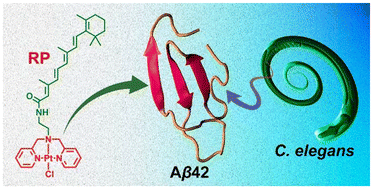
Accumulation of amyloid-β peptide (Aβ) is a key hallmark of Alzheimer's disease (AD). A retinamide–platinum complex (RP) consisting of an Aβ-binding group, [Pt(bipyridine)Cl]+, and a derivative of neurotrophic retinoic acid was designed to diminish the neurotoxicity associated with Aβ aggregates and to quell the Aβ-induced neuroinflammation. RP remarkably inhibited the self- and metal-induced Aβ aggregation, reduced the production of reactive oxygen species, lowered the neurotoxicity of Aβ aggregates, and protected the plasma membrane of neural cells. The RP–Aβ conjugates are readily phagocytosed and degraded by microglial cells, thus preventing them from polarizing into the inflammatory M1 phenotype and secreting proinflammatory cytokines. Moreover, RP alleviated the behavioral dysfunction and paralysis of Aβ-transgenic C. elegans. The results demonstrate that RP is a potential nontoxic anti-AD agent capable of inhibiting Aβ aggregation and protecting nerve cells simultaneously. The dual action of RP expands the application range of platinum complexes and the structural types of anti-Alzheimer's drugs.
 Please wait while we load your content...


