


An effective strategy to synthesize a novel biodegradable isosorbide-based polycarbonate
 *a
*a
Abstract
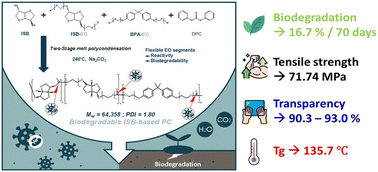
We report a solvent-free melt polycondensation strategy for synthesizing a partially biodegradable isosorbide-based polycarbonate (ISB-based PC) incorporating ethylene oxide (EO)-functionalized comonomers. The incorporation of a minor fraction of EO-modified bisphenol A (5 mol%) significantly enhanced polymerizability, yielding PC with enhanced molecular weight (Mw up to 64 360; dispersity (Đ) ≈ 1.80), improved tensile strength (up to 71.7 MPa, surpassing conventional non-degradable biomass-based PCs at ∼60 MPa), and excellent optical transparency (90.3–93.0%). The polymer exhibited a high glass transition temperature (Tg = 135.7 °C) and enhanced mechanical flexibility due to EO-containing segments. ISO 14855-1-based biodegradation tests revealed 16.7% mineralization over 70 days, significantly exceeding the rates of both petroleum-derived and biomass-based non-degradable polycarbonates. MTT assays confirmed negligible cytotoxicity toward HaCaT keratinocytes, affirming the material's biocompatibility. Green chemistry metrics (E-factor = 0.98, PMI = 1.98, atom economy = 50.5%) demonstrate the environmental efficiency of the process, outperforming conventional phosgene-based approaches. This study presents a scalable and sustainable approach for designing bio-based polycarbonates combining partial biodegradability, cytocompatibility, and desirable material properties. Strategic inclusion of a minimal amount of BPA-EO facilitates bridging high performance with green design, laying a foundation for future development toward fully bio-based systems. The results align with green chemistry principles, highlighting ISB-based PC as a promising candidate for applications in packaging, coatings, and medical devices.
 Please wait while we load your content...


