


MXene–silk fibroin hybrid films with synergistic conductive networks for efficient EMI shielding and thermal management

Abstract
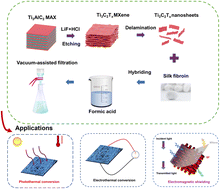
The rapid expansion of 5G and high-frequency electronics has intensified electromagnetic radiation, driving the demand for light weight, flexible, and sustainable materials with efficient electromagnetic interference (EMI) shielding and thermal management. Silk fibroin (SF), a natural biopolymer, offers flexibility and biocompatibility but lacks electrical conductivity. Here, we present a green, scalable strategy to fabricate MXene–silk fibroin (MXene–SF) composite membranes through vacuum-assisted assembly in a mild formic acid medium. This process enables hydrogen-bond-mediated interfacial coupling between Ti3C2Tx MXene nanosheets and SF fibers, yielding a robust, continuous conductive network. The resulting membranes exhibit high conductivity (147 S cm−1), a tensile strength of 3.76 MPa, and the EMI shielding effectiveness exceeding 40 dB, along with stable photothermal and electrothermal performances. These multifunctional properties arise from the synergistic integration of MXene's electrical pathways and SF's structural flexibility, which enhance charge transport and thermal conversion. This work provides a sustainable route to bio-derived conductive films and offers insights into interfacial design in 2D material–biopolymer hybrids for flexible electronics, wearable heaters, and EMI-shielding applications.
 Please wait while we load your content...


