Deterministic mode analysis of InP plasmonic nanowire lasers

Yu-Shi Tsai a, Hung-Jung Shen b, Chia-Hung Wu a, Guan-Ting Lin b, Kuo-Ping Chen b, Jhih-Sheng Wu c and Tien-Chang Lu *a
aDepartment of Photonics, College of Electrical and Computer Engineering, National Yang Ming Chiao Tung University, Hsinchu 30010, Taiwan. E-mail: timtclu@nycu.edu.tw
bInstitute of Photonics Technologies, College of Electrical and Computer Engineering, National Tsing Hua University, Hsinchu 30013, Taiwan
cCollege of Photonics, National Yang Ming Chiao Tung University, Hsinchu 30010, Taiwan

Received 20th October 2025 , Accepted 14th January 2026

First published on 15th January 2026


Abstract

As on-chip integration advances, nanoscale light sources become critical, necessitating lasers that overcome the diffraction limit. Plasmonic nanowire lasers, leveraging surface plasmon polaritons at metal–semiconductor interfaces, enable ultracompact mode confinement. While recent efforts have enhanced their performance through structural design and two-dimensional materials, the complex multimode dynamics in nanowire cavities remain insufficiently understood. Here, we present a systematic approach to identify dominant transverse and longitudinal modes in InP nanowire lasers, offering insights into internal mode distributions. Building upon our previous demonstration of graphene-assisted threshold reduction and mode volume confinement in near UV nanowire lasers, we extend this strategy to the near-infrared regime. This work provides a deeper understanding of lasing behavior in nanowire systems, contributing to the design of integrated photonic components for high-density optical interconnects.

Introduction

The rapid expansion of artificial intelligence (AI) applications has driven increasing demands for high-speed data communication and processing in platforms such as autonomous vehicles and edge computing systems.1,2 Photonic integrated circuits (PICs) have therefore emerged as a promising solution to overcome the bandwidth, latency, and power limitations of electronic interconnects.3–6 Central to PIC functionality is the realization of compact, coherent on-chip light sources, for which semiconductor lasers remain the most practical candidates due to their scalability and integration compatibility.7–9 However, further miniaturization of conventional photonic lasers is fundamentally constrained by the diffraction limit. Surface plasmon polaritons (SPPs), originating from the coupling of photons with collective electron oscillations at metal–dielectric interfaces, provide a pathway to bypass this limitation by enabling deep-subwavelength optical confinement.10–13 The first demonstrations of plasmonic nanolasers established coherent light generation well below the diffraction limit,14–18 triggering extensive exploration of SPP-based nanowire laser architectures.19–21 Various configurations, including metal–insulator–metal (MIM),15,22,23 semiconductor–insulator–metal (SIM),24–26 and gap-plasmon,27–29 have since been developed to enhance confinement and feedback.

Among these, the SIM nanowire configuration has garnered particular attention due to its unique advantages. The nanowire geometry naturally supports a Fabry–Pérot cavity along its longitudinal axis and facilitates strong transverse plasmonic confinement at its interface with the underlying metal substrate.30 Combined with the material versatility of semiconductor nanowires,31–35 this geometry enables flexible wavelength control and high integration density. Recent studies further show that substrate selection, dielectric spacers, and the incorporation of two-dimensional materials such as graphene can substantially modify lasing thresholds, confinement strength, and emission characteristics.36–40 Owing to its atomic thickness, broadband transparency, and high carrier mobility,41–43 graphene offers an effective means to modulate plasmonic mode behavior in nanowire cavities.44,45

Despite the remarkable progress in device engineering and performance optimization, most existing research has primarily focused on threshold behavior, wavelength tuning, and output intensity. Although previous works have investigated individual transverse modes in nanowire plasmonic lasers,46–48 a systematic analysis that delineates the relative contributions of coexisting photonic, plasmonic, and hybrid modes across varying nanowire diameters is still lacking. Because these modes may simultaneously exist and affect emission in distinct ways, our study provides a more integrated framework to interpret the spectral behavior and to inform optimized cavity design.

In this work, we develop an integrated approach to identify the dominant transverse modes in nanowire plasmonic lasers through combined mode analysis and experimental correlation. By comparing the observed emission wavelengths with the effective refractive indices obtained from simulation, we determine the modal origins of each spectral feature. This approach refines existing mode-identification methods by clarifying the interplay between photonic, plasmonic, and hybrid modes in subwavelength nanowires, offering useful design guidelines for next-generation plasmonic laser integration.

Results and discussion

Fig. 1illustrates the workflow of the proposed method for identifying the dominant transverse mode in nanowire lasers. In the first step, numerical simulations are performed to calculate the effective refractive index of various transverse modes over the wavelength range of 700–900 nm, considering different nanowire diameters (200–400 nm). This spectral window was chosen based on the typical emission characteristics of InP nanowire lasers, which primarily operate between 800 and 900 nm at room temperature, with only a few cases exhibiting emission near the upper end of the 700 nm range (around 780 nm). In the second step, the standing wave condition is applied, which requires the cavity length to be an integer multiple of half the effective wavelength:
 
image file: d5nr04417k-t1.tif(1)
where q is the longitudinal mode number, neff is the effective refractive index, and λ is the emission wavelength. The experimental nanowire length, LOM, is first obtained from optical microscopy images, though it may be affected by measurement uncertainty. To account for this, the wavelength of the strongest lasing peak in the measured lasing spectrum is assumed to correspond to the dominant longitudinal mode. Based on this assumption, a non-integer longitudinal mode number, q, is calculated. The nearest integer value is then used to back-calculate a corrected nanowire length Lfix that satisfies the standing wave condition.

image file: d5nr04417k-f1.tif
Fig. 1 Workflow of the mode analysis method.

In the third step, this corrected length is used to determine all resonance wavelengths for each transverse mode that fulfill the standing wave condition. In the final step, the simulated resonance wavelengths are compared with the experimentally observed peaks. The agreement between the simulation and experiment is quantified by calculating the mean absolute error (MAE):

 
image file: d5nr04417k-t2.tif(2)
where all the differences between the simulated wavelength and experimental wavelength are summed and averaged. The transverse mode and nanowire diameter that result in the smallest MAE are identified as the most probable dominant transverse mode and structural configuration responsible for the lasing behavior. Mode identification is performed through a two-stage procedure: candidate modes are first constrained by experimentally measured physical properties, including far-field polarization and modal support conditions versus nanowire diameter, and are subsequently ranked by the MAE between simulated and measured resonance wavelengths. The confidence of the MAE-based selection is assessed by comparing the separation between the best-fit and runner-up MAE with the experimental wavelength uncertainty.

As shown in step 1 of Fig. 1, we first simulate the wavelength-dependent effective refractive indices for various transverse modes. The results are shown in Fig. 2 and include both transverse electric (TE) and transverse magnetic (TM) solutions. Fig. 2(a)–(d) correspond to the pure photonic modes supported by nanowires placed on a SiO2 substrate. Fig. 2(b) shows the relationship between effective refractive index and wavelength for a nanowire with a diameter of 400 nm. Three transverse modes are identified: the upper two curves are hybrid electric modes (HE11), while the green line represents the transverse electric mode (TE01). We also calculate the far-field polarization patterns of these modes. Among them, the HE11y mode exhibits a far-field polarization parallel to the nanowire axis, whereas the far-field polarizations of other two modes are perpendicular to the nanowire. Next, we reduce the nanowire diameter to 250 nm, and the relationship is shown in Fig. 2(c). In this case, all three modes exhibit a decrease in the effective refractive index. This reduction arises because the smaller nanowire diameter weakens the optical confinement, causing greater leakage of the mode field into the surroundings and thereby lowering the effective index. To quantify the impact of the diameter scaling, we extract the HE11y modes from nanowires of different diameters and compare their effective refractive indices. As shown in Fig. 2(d), a pronounced reduction in neff is observed with decreasing diameters, highlighting the strong influence of the diffraction limit. This confirms that as the nanowire becomes thinner, mode leakage increases significantly, resulting in diminished confinement and reduced effective index.


image file: d5nr04417k-f2.tif
Fig. 2 Mode calculations of InP nanowires on a SiO2 substrate and Au flake, including effective refractive index spectra, mode profiles and far field polarization. (a–d) Photonic modes: (a) cross-sectional structural schematic indicating an InP nanowire on a SiO2 substrate; (b) effective refractive index spectra, transverse mode profile and far field polarization for a 400 nm diameter nanowire. (c) Effective refractive index spectra and transverse mode profile for a 250 nm diameter nanowire. (d) HE11y mode dispersion for different InP nanowire diameters from 200 nm to 400 nm. (e–h) Plasmonic modes: (e) cross-sectional structural schematic indicating an InP nanowire on a Au substrate; (f) effective refractive index spectra, transverse mode profile and far field polarization for a 400 nm diameter nanowire. (g) Effective refractive index spectra and transverse mode profile for a 250 nm diameter nanowire. (h) SPP1 mode dispersion for different InP nanowire diameters from 200 nm to 400 nm. Far-field polarization patterns for both photonic and plasmonic modes remain consistent all nanowire diameters, as indicated in the insets in (d) and (h).

Fig. 2(e)–(h)show the plasmonic modes of InP nanowires placed on a single-crystalline Au flake. Fig. 2(f) shows the results for a nanowire with a diameter of 400 nm. Five transverse modes are identified. The two upper modes are purely plasmonic, with their optical fields tightly confined at the interface between the Au flake and the InP nanowire. The remaining three modes exhibit characteristics of both photonic and plasmonic confinement and are therefore classified as hybrid modes. Far-field polarization patterns were also calculated. Among these modes, SPP1 and HP-HE11y exhibit far-field polarization parallel to the nanowire axis, whereas the other three modes are polarized perpendicular to the axis. Fig. 2(g) shows the mode characteristics when the nanowire diameter is reduced to 250 nm. As in the photonic case, the effective refractive indices of all five modes decrease due to weaker confinement, leading to increased optical leakage into the surrounding media. To further investigate the confinement properties, we compare the effective indices of the SPP1 mode across different nanowire diameters in Fig. 2(h). Notably, the decrease in neff for the plasmonic mode is much smaller than that observed in the photonic case. This result highlights the superior confinement of plasmonic modes, even in nanowires with subwavelength diameters, confirming their ability to overcome the diffraction limit while maintaining strong optical localization.

To experimentally verify the simulated transverse modes and assess the influence of the substrate environment on lasing behavior, we conducted photoluminescence (PL) measurements and spectral analysis of InP nanowire lasers under different configurations. The analysis is divided into two parts. In the first part, we compare the emission characteristics of nanowires before and after contact with a single-crystalline Au flake, highlighting the transition from photonic to plasmonic–hybrid modes. In the second part, we examine the effect of introducing a monolayer graphene between the InP nanowire and the Au flake and demonstrate how this additional interface modulates the lasing characteristics. In both cases, the experimental spectra are quantitatively compared with the simulated resonance wavelengths based on the standing wave condition, enabling identification of the most probable transverse mode responsible for lasing.

Following the workflow in Fig. 1, we first analyze the case of an InP nanowire on a SiO2 substrate by combining simulated effective refractive indices (Step 1) with experimentally measured lasing spectra. As shown in Fig. 3(a), the purple region corresponds to the SiO2 substrate, while the Au area on the left represents the single-crystalline Au flake. To investigate the effect of the substrate environment on lasing behavior, we selected a single InP nanowire and first performed PL measurements while it was on the SiO2 substrate. After completing the measurement, the same nanowire was physically transferred onto the single-crystalline Au flake using a micromanipulator, followed by the same PL characterization procedure. The resulting spectra were then analyzed and compared with simulation results to identify the dominant transverse mode. Fig. 3(b)–(e) summarize the measurement results for the InP nanowire on the SiO2 substrate. In Fig. 3(b), the dominant lasing emission peak is observed at 876.9 nm. The far-field polarization for all the lasing peaks is oriented perpendicular to the nanowire axis as shown in Fig. 3(c). The lasing threshold is extracted as 12.57 μW, corresponding to an energy density of 22.5 μJ cm−2 per pulse, as shown in the light-out versus light-in (L–L) curve in Fig. 3(d). We can first extract the nanowire length from the OM image as shown in Fig. 3(f) to be approximately 7.5 μm. Then, following the procedure introduced in Fig. 1, the corresponding simulation result is shown in Fig. 3(e), which indicates that the emission is dominated by the HE11x mode, with a longitudinal mode number of 51 and a nanowire diameter of 400 nm. Based on eqn (1), the cavity length was calculated to be 7.48 μm. A complete summary of all simulation-to-experiment comparisons is available in the SI. In this case, the MAE separation between the best-fit and runner-up candidates is below the experimental wavelength uncertainty as shown in the SI, indicating a near-degenerate solution in terms of the diameter identification. However, scanning electron microscopy (SEM) was further used to determine the nanowire diameter, which was found to be 389 nm, as shown in Fig. 3(f). The deviation from 400 nm used in the simulation is about 2.75%.


image file: d5nr04417k-f3.tif
Fig. 3 Photoluminescence characterization of InP nanowires on the SiO2 substrate. (a) Optical microscope image showing the InP nanowire, marked by a red circle, positioned on a SiO2 substrate right next to a single-crystalline Au flake. (b) Lasing spectrum from the nanowire, where emission peaks are marked in blue, and the corresponding transverse and longitudinal mode numbers are indicated in black. The background vertical lines are simulated mode positions extracted from (e). (c) Far-field polarization pattern of the emission. (d) Light-in versus light-out curve illustrating the lasing behavior. (e) Simulated mode profiles and wavelengths, which are matched to the experimental data shown in (b). (f) Nanowire dimensions, with the top image showing the optical microscopy measurement of the nanowire length, and the bottom image displaying the SEM measurement of the nanowire diameter.

The same InP nanowire was subsequently transferred onto the single-crystalline Au flake for further measurement, as shown in Fig. 4. The same analysis procedure was then applied to the identical nanowire after transfer onto a single-crystalline Au flake, enabling a direct comparison between photonic and plasmonic–hybrid modes within the same framework. After contact with the metallic surface, the dominant lasing wavelength is shifted to 862.7 nm, as illustrated in Fig. 4(a), and the lasing threshold increases significantly to 21.76 μW, corresponding to an energy density of 38.95 μJ per cm2 per pulse, as indicated in Fig. 4(b), which can be attributed to the intrinsic material loss of the metal. The far-field polarization of the main peak, shown in Fig. 4(d), remains perpendicular to the nanowire axis. Fig. 4(e) shows the same nanowire transferred onto the single-crystalline Au flake. The mode analysis, shown in Fig. 4(c), reveals that the dominant lasing mode corresponds to a hybrid plasmonic mode, specifically HP-TE01, with a longitudinal mode number of 42. The inferred nanowire diameter remains consistent with the SiO2-supported case, approximately 400 nm, and the extracted cavity length is 7.49 μm—only 0.01 μm different from the previous result. Furthermore, the polarizations of those lasing peaks denoted as SPP2 and HP-HE11x are all perpendicular to the nanowire. This close agreement further demonstrates the robustness and reliability of our mode analysis method for both transverse mode identification and structural parameter estimation. Here, the MAE separation is comparable to the experimental uncertainty, providing moderate confidence when combined with polarization analysis and the consistency of the extracted cavity length for the same nanowire. According to Fig. 4(f), a clear change in the transverse mode leads to noticeable differences in both the emission wavelength and the spectral envelope between the nanowire on the SiO2 substrate and that on the single-crystalline Au.


image file: d5nr04417k-f4.tif
Fig. 4 Photoluminescence characterization of InP nanowires on a single-crystalline Au flake. (a) Lasing spectrum from the nanowire, where emission peaks are marked in blue, and the corresponding transverse and longitudinal mode numbers are indicated in black. The background vertical lines are simulated mode positions extracted from (c). (b) Light-in versus light-out curve illustrating the lasing threshold behavior. (c) Simulated mode profiles and wavelengths, which are matched to the experimental data shown in (a). (d) Far-field polarization pattern of the laser emission. (e) OM image of nanowire transferred to the Au flake. (f) A comparison of the lasing spectrum and mode profile of a InP nanowire on SiO2 and a single-crystalline Au flake.

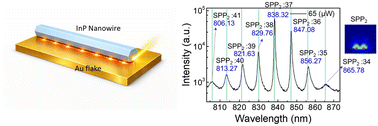
After establishing the dominant transverse mode on bare Au, the workflow in Fig. 1 was further applied to the graphene/Au configuration to examine how interfacial modification influences the same plasmonic mode. This configuration involves introducing a monolayer graphene sheet onto the single-crystalline Au flake, as illustrated in Fig. 5(a). In this image, the area to the right of the red dashed line corresponds to the bare single-crystalline Au flake, while the left side indicates the graphene-covered Au region. As in previous measurements, an InP nanowire was first characterized on the bare single-crystalline Au flake and then transferred to the graphene/Au side for identical measurements. Fig. 5(b)–(e) show the characterization results on the Au surface. The primary lasing peak appears at 838.32 nm, as shown in Fig. 5(b). The far-field polarization for all the lasing peaks is oriented perpendicular to the nanowire axis as shown in Fig. 5(c) The lasing threshold was found to be 35.58 μW, corresponding to an energy density of 63.69 μJ per cm2 per pulse, as shown in Fig. 5(d). Again, we start the analysis procedure by measuring the length of the InP nanowire from the optical microscopy (OM) image as shown in Fig. 5(f) to be approximately 6.3 μm. The simulated result in Fig. 5(e) indicates that this emission is dominated by the SPP2 mode, with a longitudinal mode number of 37. Based on eqn (1), the corresponding cavity length was calculated to be 6.33 μm. The detailed simulation-to-experiment comparisons are presented in the SI. For the bare Au configurations, the large MAE separation enables high-confidence mode identification based on MAE ranking, further supported by the preservation of the same transverse mode family across substrate modification. In Fig. 5(e), the nanowire diameter measured using SEM is 254 nm, which closely matches the 250 nm diameter used in the simulation with the deviation to be only 1.6%.


image file: d5nr04417k-f5.tif
Fig. 5 Photoluminescence (PL) characterization of InP nanowires on a single-crystalline Au flake. (a) The optical microscopy image shows an InP nanowire positioned on a single-crystalline Au flake, with its location marked by a red circle. The area to the left of the dashed line is covered by a monolayer of graphene. (b) Lasing spectrum of the nanowire on the pure Au flake, where emission wavelengths are marked in blue, and the transverse and longitudinal mode numbers are indicated in black. (c) The far-field polarization pattern of the laser emission. The background vertical lines are simulated mode positions extracted from (e). (d) Light-in versus light-out curve illustrating the lasing threshold behavior. (e) Simulated mode profiles and wavelengths, which are matched to the experimental data shown in (b). (f) Nanowire dimensions, with the top image showing the optical microscopy measurement of the nanowire length, and the bottom image displaying the SEM measurement of the nanowire diameter.

After completing the last measurements, the same InP nanowire was transferred to the region of the single-crystalline Au flake covered by a monolayer graphene, and identical PL measurements were performed, as shown in Fig. 6. In Fig. 6(a), a noticeable blue shift in the lasing wavelength is observed, with the peak shifting to 835.28 nm. As shown in Fig. 6(b), the lasing threshold slightly decreases by approximately 1 μW. The far-field polarization of all lasing modes remains perpendicular to the nanowire axis, as indicated in Fig. 6(d). Fig. 6(e) shows the same nanowire transferred onto the single-crystalline Au flake covered by a monolayer graphene. Longitudinal mode analysis, presented in Fig. 6(c), reveals that the dominant lasing mode remains the same—SPP2—with an identical longitudinal mode number of 37 as in the bare Au case. Notably, the comparison in Fig. 6(f) shows a more pronounced blueshift and reduction in threshold behavior. This phenomenon can be understood in terms of the difference in work functions between Au and graphene. Upon contact, the system reaches thermal equilibrium by transferring electrons from graphene to the Au surface, rendering the graphene p-type.40 The schematic band diagram and mechanism can be found in Fig. S5 of the SI. The increased electron concentration at the Au surface enhances the plasma frequency, leading to a reduction in the lasing threshold due to the reduction of metal loss. The plasma frequency ωp is determined by the collective oscillation of free electrons in a material and is given by:

 
image file: d5nr04417k-t3.tif(3)
where N is the free electron density, e is the elementary charge, ε0 is the vacuum permittivity, and m0 is the effective mass of the electron.


image file: d5nr04417k-f6.tif
Fig. 6 Photoluminescence characterization of InP nanowires on a single-crystalline Au flake covered with a monolayer graphene. (a) Lasing spectrum from the nanowire, where emission wavelengths are marked in blue, and the transverse and longitudinal mode numbers are indicated in black. The background vertical lines are simulated mode positions extracted from (c). (b) Light-in versus light-out curve illustrating the lasing threshold behavior. (c) Simulated mode profiles and wavelengths, which are matched to the experimental data shown in (a). (d) Far-field polarization pattern of the laser emission. (e) OM image of a nanowire transferred to the Au flake covered with a monolayer graphene. (f) A comparison of lasing wavelengths for InP nanowires on bare single-crystalline Au flake and on a single-crystalline Au flake covered with a monolayer graphene.

Simultaneously, the blue shift in the lasing wavelength can be explained by the increase in the plasma frequency, which reduces the real part of the dielectric constant. This results in a decrease in the effective refractive index, shifting the lasing wavelength toward shorter values. The effective refractive index, neff, of SPP propagating along a metal–dielectric interface can be expressed as follows:

 
image file: d5nr04417k-t4.tif(4)
where εm and εs are the dielectric constants of the metal and semiconductor, respectively. Based on the observed 3.26 nm blue shift, the increase in the surface electron density is estimated to be approximately 0.73%. By integrating a monolayer of graphene, the lasing threshold of the InP nanowire on single-crystalline Au is slightly reduced, and the emission wavelength exhibits a noticeable blueshift, which is in accordance with the previous report.40 From these experimental results, mode analysis enables us to quickly and accurately identify the specific transverse modes corresponding to each lasing peak in the spectrum while simultaneously providing an estimation of the nanowire's geometric dimensions, including both diameter and length. The results will help in the identification of nanolasers prior to their integration into photonic circuits.

Conclusion

In summary, this study demonstrates that the proposed mode analysis method enables reliable identification of the dominant transverse mode in any type of nanowire laser by leveraging the relationship between the effective refractive index and wavelength. The method also allows for accurate assignment of all measured spectral features to specific transverse modes while simultaneously estimating the nanowire's structural parameters, including diameter and length. Furthermore, experimental results reveal that introducing a monolayer of graphene on the single-crystalline Au flake induces electron transfer from graphene to Au surface, rendering the graphene p-type. This charge redistribution leads to a reduction in the lasing threshold and causes a slight blueshift in the emission wavelength of the InP nanowire laser. The use of a monolayer graphene offers a promising pathway for future electrical tunability, where the lasing threshold and emission wavelength could be modulated via external gating. In addition, the mode analysis method not only reveals the dominant and coexisting transverse modes within the InP nanowire laser but also enables dimensional estimation of the nanowire when structural tools like SEM are not available. Looking ahead, increasing the resolution of nanowire diameter sampling and integrating AI or machine learning algorithms may significantly accelerate the identification of lasing modes and nanowire dimensions based on optical spectra.

Experimental section

Growth of InP nanowires

InP nanowires were synthesized via metal–organic chemical vapor deposition (MOCVD) on a 2-inch (100)-oriented InP substrate. The growth was conducted at a temperature of 500 °C and a chamber pressure of 100 Torr, with a V/III precursor ratio maintained at 80. The resulting nanowires exhibited lengths ranging from 5 to 20 μm and diameters between 100 and 500 nm.

Preparation of single-crystalline Au flakes

Single-crystalline Au flakes were synthesized on (100)-oriented SiO2 or Si substrates using a solution-based reduction method. The SiO2 or Si substrates were first cleaned sequentially with acetone and isopropanol (IPA), followed by oxygen plasma treatment for 30 minutes to eliminate any residual organic contaminants. After thorough cleaning, the substrates were immersed in a solution of ethylene glycol (EG) and chloroauric acid inside a centrifuge tube. The redox reaction was carried out at 95 °C in a conventional oven for 24 hours, during which plate-like Au crystals were formed directly on the substrate. Following growth, the samples were rinsed with IPA and dried under a nitrogen stream. The resulting single-crystalline Au flakes exhibited hexagonal morphology with lateral dimensions ranging from 30 to 60 μm and thicknesses between 40 and 200 nm.

Graphene fabrication

The polymethyl methacrylate (PMMA)/graphene film and filter paper were first wetted with deionized water for 20 minutes to soften the stack for cutting. The cut film was then soaked in water for another 20 minutes to remove air bubbles and flatten the surface. Meanwhile, the target substrate was cleaned and treated with an ozone cleaner to enhance surface hydrophilicity. The film was transferred onto the substrate and baked at 35 °C for 10 minutes to remove moisture, followed by a 160 °C bake for 30 minutes to allow PMMA to soften and adhere tightly. Then, PMMA was removed using acetone and IPA. Water was avoided during this step to prevent graphene delamination. A final bake at 35 °C for 10 minutes ensured complete drying.

PL measurement setup

The 532 nm pump laser beam was first attenuated using a neutral density filter and then focused onto the sample by using an objective lens with a numerical aperture (N.A.) of 0.35. The laser had a pulse width of 1.6 ns and a repetition rate of 4.185 kHz. The resulting pumping spot on the sample was elliptical, with a major axis of 225 μm and a minor axis of 75 μm. The sample was placed on a temperature-controlled stage maintained at room temperature with fluctuations less than 1 °C. Emission was collected using the same objective lens and filtered through a 550 nm long-pass filter to block the pump laser. The collected signal was then split by a beam-splitter and directed to both a spectrometer and an optical microscope. The spectral resolution is 0.1 nm. For far-field polarization measurements, a linear polarizer was inserted between the beam-splitter and the long-pass filter. Then, a three-axis micromanipulator was used to precisely move the nanowire to the desired measurement region. To verify that the micromanipulation process does not introduce structural or optical degradation, repeated transfer and photoluminescence measurements were performed on the same nanowire at different locations on the same substrate, yielding consistent lasing spectra. The variation in the lasing wavelength was found to be within ±0.15 nm.

Simulation method

The eigenmode simulations of the optical fields in the nanowire were performed using the eigenfrequency solver in the commercial finite element software COMSOL Multiphysics, with both the real and imaginary parts of the material refractive indices appropriately defined. The simulation settings and procedures follow those reported in ref. 49–52. A 2D model was employed to calculate the relationship between the effective refractive index and the wavelength. Because the nanowires studied here have a high aspect ratio (length/diameter ≈ 20–40), the transverse modal characteristics and effective refractive indices are primarily determined using the cross-sectional geometry and local metal–semiconductor interface. The length of the nanowire mainly affects the longitudinal Fabry–Pérot mode spacing and does not significantly modify neff. Therefore, a 2D eigenmode solver provides an efficient and physically appropriate framework for transverse mode identification. To determine the far-field polarization direction, a full 3D model was used. The in-plane electric field on the top surface was integrated. The resulting field distribution was then processed using the Jones matrix formalism, where the calculated field was multiplied by the polarizer and incident light matrices to obtain the emission intensity at different polarization angles. This allowed the construction of the far-field polarization profile. A non-uniform mesh with local refinement at metal–semiconductor and metal–dielectric interfaces was used in all simulations. The smallest mesh size was 0.175 nm. Mesh convergence was verified to ensure that the extracted effective refractive indices and mode ordering are insensitive to further mesh refinement. The scattering boundary conditions were applied.

Author contributions

Y.-S. T., H.-J. S., C.-H. W., G.-T. L. fabricated the samples and carried out the optical experiments.

Y.-S. T. performed the calculations. Y.-S. T., K.-P. C., J.-S. Wu, and T.-C. L. analyzed and visualized the data.

T.-C. L. provided funding and supervised the work. Y.-S. T. and T.-C. L. wrote the paper with input from all authors.

Conflicts of interest

There are no conflicts to declare.

Data availability

The data supporting the findings of this study are available within the article and its supplementary information (SI). Supplementary information: raw photoluminescence spectra, optical microscopy and SEM images, and COMSOL simulation files for mode analysis. See DOI: https://doi.org/10.1039/d5nr04417k.

Additional datasets generated and analyzed during the current study are available from the corresponding author upon reasonable request.

Acknowledgements

This work has been supported in part by the Higher Education Sprout Project of the National Yang Ming Chiao Tung University and Ministry of Education (MOE), Taiwan, and in part by the National Science and Technology Council in Taiwan. The authors acknowledge the valuable assistance from Dr Kuo-Bin Hong and Dr Chia-Jui Chang during this work. The authors also thank Prof. Hark Hoe Tan and Prof. Chennupati Jagadish of the Australian National University for their helpful suggestions. The authors also acknowledge the use of facilities and instrumentation at the Center for Nanotechnology, Materials Science, and Microsystems, NTHU. Furthermore, this work was financially supported by Taiwan's National Science and Technology Council under Contract No. NSTC 113-2221-E-A49 -067-MY3, 112-2223-E-007-007-MY3, 114-2112-M-007-037 and NSTC 114-2112-M-A49-025.

References

  1. Y. Ma, Z. Wang, H. Yang and L. Yang, Artificial intelligence applications in the development of autonomous vehicles: A survey, IEEE/CAA J. Autom. Sin., 2020, 7(2), 315–329 Search PubMed.
  2. H. Hua, Y. Li, T. Wang, N. Dong, W. Li and J. Cao, Edge computing with artificial intelligence: A machine learning perspective, ACM Comput. Surv., 2023, 55(9), 1–35 Search PubMed.
  3. S. E. Miller, Integrated optics: An introduction, Bell Syst. Tech. J., 1969, 48(7), 2059–2069 CrossRef.
  4. R. Nagarajan, C. H. Joyner, R. P. Schneider, J. S. Bostak, T. Butrie and A. G. Dentai, Large-scale photonic integrated circuits, IEEE J. Sel. Top. Quantum Electron., 2005, 11(1), 50–65 CAS.
  5. F. Kish, V. Lal, P. Evans, S. W. Corzine, M. Ziari and T. Butrie, System-on-chip photonic integrated circuits, IEEE J. Sel. Top. Quantum Electron., 2018, 24(1), 1–20 Search PubMed.
  6. A. V. Krishnamoorthy and K. W. Goossen, Optoelectronic-VLSI: Photonics integrated with VLSI circuits, IEEE J. Sel. Top. Quantum Electron., 1998, 4(6), 899–912 CrossRef CAS.
  7. J. Hecht, A short history of laser development, Appl. Opt., 2010, 49(25), F99–F122 Search PubMed.
  8. R. Dupuis, An introduction to the development of the semiconductor laser, IEEE J. Quantum Electron., 1987, 23(6), 651–657 Search PubMed.
  9. A. Liu, P. Wolf, J. A. Lott and D. Bimberg, Vertical-cavity surface-emitting lasers for data communication and sensing, Photonics Res., 2019, 7(2), 121–136 CrossRef CAS.
  10. R. W. Wood, On a remarkable case of uneven distribution of light in a diffraction grating spectrum, Proc. Phys. Soc., London, 1902, 18(1), 269–275 Search PubMed.
  11. U. Fano, The theory of anomalous diffraction gratings and of quasi-stationary waves on metallic surfaces (Sommerfeld's waves), J. Opt. Soc. Am., 1941, 31(3), 213–222 CrossRef.
  12. R. H. Ritchie, Plasma losses by fast electrons in thin films, Phys. Rev., 1957, 106(5), 874–881 Search PubMed.
  13. E. A. Stern and R. A. Ferrell, Surface plasma oscillations of a degenerate electron gas, Phys. Rev., 1960, 120(1), 130–136 Search PubMed.
  14. S. I. Azzam, A. V. Kildishev, R.-M. Ma, C.-Z. Ning, R. Oulton, M. Shalaev, M. I. Stockman, J.-L. Xu and X. Zhang, Ten years of spasers and plasmonic nanolasers, Light:Sci. Appl., 2020, 9, 90 Search PubMed.
  15. M. T. Hill, M. Marell, E. S. P. Leong, B. Smalbrugge, Y. Zhu, M. Sun, P. J. Van Veldhoven, E. J. Geluk, F. Karouta, Y.-S. Oei, R. Nötzel, C.-Z. Ning and M. K. Smit, Lasing in metal–insulator–metal sub-wavelength plasmonic waveguides, Opt. Express, 2009, 17(13), 11107–11112 Search PubMed.
  16. R. F. Oulton, V. J. Sorger, T. Zentgraf, R.-M. Ma, C. Gladden, L. Dai, G. Bartal and X. Zhang, Plasmon lasers at deep subwavelength scale, Nature, 2009, 461, 629–632 Search PubMed.
  17. M. A. Noginov, G. Zhu, A. M. Belgrave, R. Bakker, V. M. Shalaev, E. E. Narimanov, S. Stout, E. Herz, T. Suteewong and U. Wiesner, Demonstration of a spaser-based nanolaser, Nature, 2009, 460, 1110–1112 CrossRef CAS PubMed.
  18. D. J. Bergman and M. I. Stockman, Surface plasmon amplification by stimulated emission of radiation: Quantum generation of coherent surface plasmons in nanosystems, Phys. Rev. Lett., 2003, 90(2), 027402 Search PubMed.
  19. J.-W. Liao, Z.-T. Huang, C.-H. Wu, N. Gagrani, H. H. Tan, C. Jagadish, K.-P. Chen and T.-C. Lu, Highly localized surface plasmon nanolasers via strong coupling, Nano Lett., 2023, 23(10), 4359–4366 Search PubMed.
  20. Z. Wu, J. Chen, Y. Mi, X. Sui, S. Zhang, W. Du, R. Wang, J. Shi, X. Wu, X. Qui, Z. Qin, Q. Zhang and X. Liu, All-inorganic CsPbBr3 nanowire based plasmonic lasers, Adv. Opt. Mater., 2023, 6(22), 1800674 CrossRef.
  21. X. Liu, Q. Zhang, J. N. Yip, Q. Xiong and T. C. Sum, Wavelength tunable single nanowire lasers based on surface plasmon polariton enhanced Burstein–Moss effect, Nano Lett., 2013, 13(11), 5336–5343 Search PubMed.
  22. Y. Kurokawa and H. T. Miyazaki, Metal–insulator–metal plasmon nanocavities: Analysis of optical properties, Physical Review B: Condensed Matter and Materials Physics, 2007, 75(3), 035411 Search PubMed.
  23. F. Yao, Y. Pei, C. Hou and X. Sun, Numerical study on a random plasmonic laser in the metal–insulator–metal structure, Opt. Lett., 2022, 47(11), 2770–2773 Search PubMed.
  24. R.-M. Ma, R. F. Oulton, V. J. Sorger, G. Bartal and X. Zhang, Room-temperature sub-diffraction-limited plasmon laser by total internal reflection, Nat. Mater., 2011, 10, 110–113 CrossRef CAS PubMed.
  25. T. P. H. Sidiropoulos, R. Röder, S. Geburt, O. Hess, S. A. Maier, C. Ronning and R. F. Oulton, Ultrafast plasmonic nanowire lasers near the surface plasmon frequency, Nat. Phys., 2014, 10, 870–876 Search PubMed.
  26. X. Yang, P.-N. Ni, P.-T. Jing, L.-G. Zhang, R.-M. Ma, C.-X. Shan, D.-Z. Shen and P. Genevet, Room temperature electrically driven ultraviolet plasmonic lasers, Adv. Opt. Mater., 2019, 7(10), 1801681 Search PubMed.
  27. P. Neutens, P. D. Van Dorpe, I. Vlaminck, L. Lagae and G. Borghs, Electrical detection of confined gap plasmons in metal–insulator–metal waveguides, Nat. Photonics, 2009, 3, 283–286 Search PubMed.
  28. N. B. Nguyen, M. P. Nielsen, L. Lafone, E. Clarke, P. Fry and R. F. Oulton, Hybrid gap plasmon GaAs nanolasers, Appl. Phys. Lett., 2017, 111, 261107 CrossRef.
  29. H. Choo, M.-K. Kim, M. Staffaroni, T. J. Seok, J. Bokor, S. Cabrini, P. J. Schuck, M. C. Wu and E. Yablonovitch, Nanofocusing in a metal–insulator–metal gap plasmon waveguide with a three-dimensional linear taper, Nat. Photonics, 2012, 6, 838–844 CrossRef CAS.
  30. S.-W. Chang, T.-R. Lin and S. L. Chuang, Theory of plasmonic Fabry–Perot nanolasers, Opt. Express, 2010, 18(14), 15039–15053 Search PubMed.
  31. C.-H. Wu, C.-W. Chen, H.-J. Shen, H.-Y. Chuang, H. H. Tan, C. Jagadish, T.-C. Lu, S. Ishii and K.-P. Chen, Reversible carrier modulation in InP nanolasers by ionic liquid gating with low energy consumption, Adv. Sci., 2025, 12(8), 2412340 CrossRef CAS PubMed.
  32. J. Wong-Leung, I. Yang, Z. Li, S. K. Karuturi, L. Fu, H. H. Tan and C. Jagadish, Engineering III–V semiconductor nanowires for device applications, Adv. Mater., 2019, 32(18), 1904359 Search PubMed.
  33. Y.-H. Chou, Y.-M. Wu, K.-B. Hong, B.-T. Chou, J.-H. Shih, Y.-C. Chung, P.-Y. Chen, T.-R. Lin, C.-C. Lin, S.-D. Lin and T.-C. Lu, High-operation-temperature plasmonic nanolasers on single-crystalline aluminum, Nano Lett., 2016, 16(5), 3179–3186 CrossRef CAS PubMed.
  34. Q. Zhang, G. Li, X. Liu, F. Qian, Y. Li, T. C. Sum, C. M. Lieber and Q. Xiong, A room temperature low-threshold ultraviolet plasmonic nanolaser, Nat. Commun., 2014, 5, 4953 Search PubMed.
  35. X. Zhang, R. Yi, N. Gagrani, Z. Li, F. Zhang, X. Gan, X. Yao, X. Yuan, N. Wang, J. Zhao, P. Chen, W. Lu, L. Fu, H. H. Tan and C. Jagadish, Ultralow threshold, single-mode InGaAs/GaAs multiquantum disk nanowire lasers, ACS Nano, 2021, 15(5), 9126–9133 Search PubMed.
  36. Y.-H. Chou, K.-B. Hong, C.-T. Chang, T.-C. Chang, Z.-T. Huang, P.-J. Cheng, J.-H. Yang, M.-H. Lin, T.-R. Lin, K.-P. Chen, S. Gwo and T.-C. Lu, Ultracompact pseudowedge plasmonic lasers and laser arrays, Nano Lett., 2018, 18(2), 747–753 Search PubMed.
  37. M. Li, J. Lu, P. Wan, M. Jiang, F. Lin, X. Wu, X. Liu and C. Pan, Piezoelectric-effect enhanced perovskite plasmonic nanolasers, Adv. Opt. Mater., 2023, 11(7), 2202723 CrossRef CAS.
  38. F. Vitale, D. Repp, T. Siefke, U. Zeitner, T. Pertsch and C. Ronning, Tailoring nanowire lasing modes via coupling to metal gratings, Appl. Phys. Lett., 2023, 122(10), 101104 CrossRef CAS.
  39. E. Eobaldt, F. Vitale, M. Zapf, M. Lapteva, T. Hamzayev, Z. Gan, E. Najafidehaghani, C. Neumann, A. George, A. Turchanin, G. Soavi and C. Ronning, Tuning nanowire lasers via hybridization with two-dimensional materials, Nanoscale, 2022, 14, 6822–6829 Search PubMed.
  40. H. Li, J.-H. Li, K.-B. Hong, M.-W. Yu, Y.-C. Chung, C.-Y. Hsu, J.-H. Yang, C.-W. Cheng, Z.-T. Huang, K.-P. Chen, T.-R. Lin, S. Gwo and T.-C. Lu, Plasmonic nanolasers enhanced by hybrid graphene–insulator–metal structures, Nano Lett., 2019, 19(8), 5017–5024 Search PubMed.
  41. F. Xia, T. Mueller, Y.-M. Lin, A. Valdes-Garcia and P. Avouris, Ultrafast graphene photodetector, Nat. Nanotechnol., 2009, 4, 839–843 Search PubMed.
  42. N. Papasimakis, Z. Luo, Z. X. Shen, F. D. De Angelis, E. Fabrizio, A. E. Nikolaenko and N. I. Zheludev, Graphene in a photonic metamaterial, Opt. Express, 2010, 18(8), 8353–8359 CrossRef CAS PubMed.
  43. M. Liu, X. Yin, E. Ulin-Avila, B. Geng, T. Zentgraf, L. Ju, F. Wang and X. Zhang, A graphene-based broadband optical modulator, Nature, 2011, 474, 64–67 CrossRef CAS PubMed.
  44. K. S. Kim, Y. Zhao, H. Jang, S. Y. Lee, J. M. Kim, K. S. Kim, J.-H. Ahn, P. Kim, J.-Y. Choi and B. H. Hong, Large-scale pattern growth of graphene films for stretchable transparent electrodes, Nature, 2009, 457, 706–710 Search PubMed.
  45. S. Bae, H. Kim, Y. Lee, X. Xu, J.-S. Park, Y. Zheng, J. Balakrishnan, T. Lei, H. R. Kim, Y. I. Song, Y.-J. Kim, K. S. Kim, B. Özyilmaz, J.-H. Ahn, B. H. Hong and S. Iijima, Roll-to-roll production of 30-inch graphene films for transparent electrodes, Nat. Nanotechnol., 2010, 5, 574–578 Search PubMed.
  46. S. A. Church, R. Al-Abri, P. Parkinson and D. Saxena, Optical characterisation of nanowire lasers, Prog. Quantum Electron., 2022, 85, 100408 Search PubMed.
  47. F. Vitale, S. A. Church, C. Repp, K. S. Sunil, M. Ziegler, M. Diegel, A. Dellith, T.-H. Do, S.-D. Lin, J.-S. Huang, T. Pertsch, P. Parkinson and C. Ronning, Optical characterization of size- and substrate-dependent performance of ultraviolet hybrid plasmonic nanowire lasers, Adv. Opt. Mater., 2024, 12(29), 2401301 CrossRef CAS.
  48. S. A. Church, F. Vitale, A. Gopakumar, N. Gagrani, Y. Zhang, N. Jiang, H. H. Tan, C. Jagadish, H. Liu, H. Joyce, C. Ronning and P. Parkinson, Data-driven discovery for robust optimization of semiconductor nanowire lasers, Laser Photonics Rev., 2024, 19(3), 2401194 CrossRef.
  49. G. Ghosh, Dispersion-equation coefficients for the refractive index and birefringence of calcite and quartz crystals, Opt. Commun., 1999, 163, 95–102 CrossRef CAS.
  50. R. L. Olmon, B. Slovick, T. W. Johnson, D. Shelton, S.-H. Oh, G. D. Boreman and M. B. Raschke, Optical dielectric function of gold, Phys. Rev. B: Condens. Matter Mater. Phys., 2012, 86(23), 235147 Search PubMed.
  51. E. Ochoa-Martínez, M. Gabás, L. Barrutia, A. Pesquera, A. Centeno, S. Palanco, A. Zuretuza and C. Algora, Determination of a refractive index and an extinction coefficient of standard production of CVD-graphene, Nanoscale, 2015, 7, 1491–1500 RSC.
  52. S. Adachi, Optical dispersion relations for GaP, GaAs, GaSb, InP, InAs, InSb, AlxGa1−xAs, and In1−xGaxAsyP1−y, J. Appl. Phys., 1989, 66, 6030–6040 CrossRef CAS.

This journal is © The Royal Society of Chemistry 2026
Click here to see how this site uses Cookies. View our privacy policy here.