


 PLATFORM UPDATE:


Dual modulation of lysosomal integrity via alkalization and lipid peroxidation: a promising strategy for tumor inhibition

Abstract
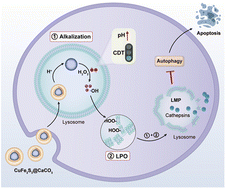
Lysosomes, characterized by their high abundance, large size, and fragile membranes in cancer cells, have attracted increased attention as promising targets for therapeutic strategies involving lysosomal membrane permeabilization (LMP). However, the intrinsic self-protective mechanisms of lysosomes present a major obstacle to achieving complete LMP. To overcome this challenge, a CuFe2S3@CaCO3 nanocomposite was developed. The pH-responsive CaCO3 shell degrades in the acidic lysosomal environment, thereby alkalinizing the lysosomal microenvironment. The released CuFe2S3 exhibits high chemodynamic activity across a broad pH range, which is essential for generating abundant reactive oxygen species (ROS) to induce lysosomal membrane lipid peroxidation (LPO). The combined effects of lysosomal alkalinization and LPO result in complete permeabilization of the lysosomal membrane, structural destruction of cancer cells, and impaired fusion of autophagosomes with lysosomes, thereby suppressing autophagic flux and ultimately inducing cancer cell apoptosis. This study provides a promising strategy to enhance lysosome-related tumor therapeutic efficacy through a rationally designed dual-mechanistic approach for complete LMP.
 Please wait while we load your content...


