


 PLATFORM UPDATE:

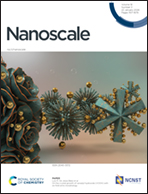
One-step microwave-assisted synthesis of a MoO3−x-covalent organic framework (COF)-based nanocomposite for amplified surface-enhanced Raman spectroscopy in environmental applications

Abstract
This study introduces a novel one-step microwave-assisted (MW-AT) synthesis strategy for a TpTTA COF and demonstrates the fabrication of a MoO3−x-TpTTA COF-based nanocomposite (NC) for the first time. This method significantly reduces synthesis time (∼1 h) while achieving a high yield at a moderate temperature (120 °C). In contrast, traditional solution-based COF synthesis methods may take several days with continuous heating at higher temperatures (≤200 °C). The as-synthesized MoO3−x-COF-based NC was shown to serve as an affordable and straightforward substrate for surface-enhanced Raman scattering (SERS) detection of an organic dye, such as methylene blue (MB), achieving a maximum enhancement factor (EF) of 7.76 × 10⁴. The incorporation of MoO3−x into the COF provides several advantages, including plasmonic enhancement by nonstoichiometric transition metal oxide (TMO) without requiring the addition of noble nanocrystals (e.g., Ag, Au, etc.), improved stability of the SERS substrate, comparable SERS sensitivity, and reduced costs. Furthermore, the as-synthesized MoO3−x-TpTTA COF-based SERS substrate demonstrated exceptional detection capabilities with high reproducibility, achieving a limit of detection (LOD) as low as 12.5 ppm for Mancozeb (Mz), a common commercially used dithiocarbamate insecticide used on various vegetables, fruits, nuts, and field crops. Notably, Mz is classified as a category III carcinogen by the International Agency for Research on Cancer. This highlights the potential for developing TMO-COF-based NCs for next-generation SERS-based applications in environmental and food safety monitoring.

- This article is part of the themed collections: Nanoscale Covers and Celebrating International Women’s day 2026: Women in Nanoscience
 Please wait while we load your content...


