Natural product inspired antibiotics approved for human use – 1943 to 2025
Mark S. Butler
and Robert J. Capon
*
Institute for Molecular Bioscience, University of Queensland, Brisbane, 4072, Australia. E-mail: r.capon@uq.edu.au
Received
1st October 2025
First published on 11th December 2025
Abstract
Covering literature to September 2025
This review provides a comprehensive account of the 217 natural product inspired antibiotics that have been approved for human use from 1943 through to September 2025, inclusive of 52 (24%) that are natural products (NPs) and 165 (76%) that are semi-synthetic or synthetic derivatives of natural products (NP-Ds). These are organized into sixteen categories defined by shared structural motifs and, in many cases, common mechanisms of action. Each antibiotic is classified as either a NP or NP-D, annotated by a molecular structure that, where relevant, highlights the relationships between NPs and NP-Ds. Market details are also provided, including the company that brought each antibiotic to market, the year and country of first approval, the spectrum of usage across pathogen classes, routes of administration, current status, and selected commentary on mechanisms of action. The assembled dataset is further analysed through a series of charts that illustrate insightful trends that document the remarkable history and lasting impact of NP inspired antibiotics. The review concludes with observations on the historic impact and future prospects of natural products as a source of inspiration for the development of new generations of antibiotics.
Mark S. Butler
Mark S. Butler is a casual academic at The University of Queensland, Institute for Molecular Bioscience, and the Director of MSBChem Consulting, with an interest in identifying new lead compounds and advancing them through the preclinical stages of drug development.
Robert J. Capon
Robert J. Capon is a Professorial Research Fellow and Group Leader at The University of Queensland, Institute for Molecular Bioscience, and Director of Microbes Australia. Rob has >40 years of experience working on the detection, isolation and structure elucidation of natural products from Australian marine and microbial biodiversity.
1. Introduction
1.1. The antibiotic challenge
Bacterial infection is a severe medical and societal burden, degrading quality of life, shortening life spans, compromising productivity, and undermining economic prosperity. While early societies had no knowledge of microscopic bacteria, they nevertheless had ample reason to be aware of and fear infectious diseases. These included sexually transmitted infections such as syphilis (Treponema pallidum), gonorrhoea (Neisseria gonorrhoeae), and chlamydia (Chlamydia trachomatis); plagues such as cholera (Vibrio cholerae) and bubonic plague (Yersinia pestis); blood poisoning leading to sepsis/septicaemia (e.g., Escherichia coli); tetanus (Clostridium tetani); meningitis (e.g., Neisseria meningitidis, Streptococcus pneumoniae, Group B Streptococcus, E. coli); pneumonia (e.g., S. pneumoniae); tuberculosis (Mycobacterium tuberculosis); anthrax (Bacillus anthracis); botulism (Clostridium botulinum); leptospirosis (Leptospira spp.); and salmonellosis (Salmonella spp.).
The discovery of the natural product antibiotic penicillin in the early 20th century heralded a revolution in human healthcare. In the decades that followed, multiple natural product (NP) classes were discovered, developed, and approved for use, including the cephalosporins, macrolides, tetracyclines, aminoglycosides, and glycopeptides. In addition to NPs, medicinal chemists employed semi-synthetic and total synthesis strategies to create natural product derivatives (NP-Ds) with improved antibiotic properties. In many cases, the demand for NP-Ds was driven by the rapid and near-ubiquitous emergence of antibiotic resistance.
Fast forward to the present, and virtually all the antibiotic classes that empowered infection control for generations are now heavily compromised by resistance. Few truly new antibiotics have been approved in recent decades, prompting concern that bacterial infections may once again exert devastating impacts, with increased morbidity and mortality. Despite the publication of a number of noteworthy reviews that discuss such topics as antibiotic research strategies,1–6 the antibiotic drug pipeline,7–12 potential antibiotic market issues and solutions,13–16 antibiotic resistance and use,17–21 and antibacterial candidates with new modes of action,22,23 there is scope for a comprehensive review of all natural product inspired antibiotics (NP and NP-D) approved for human use – inclusive of molecular structures, a historical account of their discovery and development, as well as current use status, target pathogens, methods of administration, and mechanisms of action.
This review seeks to meet that need by providing a comprehensive listing of natural product inspired antibiotics approved for human use, organised into 16 categories based on their original NP source and, where relevant, further divided into sub-categories reflecting successive waves of next-generation NPs and NP-Ds. Further information on the review format and definitions follows:
1.2. Review format and definitions
Each category/sub-category is annotated with a consistent set of information, including an:
Introduction: summary of each antibiotic category/sub-category, including where practical when and by whom it was discovered, its natural source, its characteristic NP molecular motif, and additional historical, mechanistic, or contextual commentary.
Table: Column 1: a single reference name for each antibiotic, along with a number linking to its molecular structure in the corresponding figure. Many antibiotics have multiple synonyms (molecular/trivial names, product names, trademarks), and selected additional names are discussed in the accompanying text. Column 2: a binary descriptor indicating whether the antibiotic is an NP or an NP-D. Column 3: the year and country (or countries) of first approval for human use, annotated with supporting references. Column 4: the pathogens targeted, including Gram-positive (G+), Gram-negative (G−), or both (G±), and/or specific pathogens such as Clostridioides difficile (CD), Helicobacter pylori (HP), Mycobacterium tuberculosis (Mtb), and non-tuberculous mycobacteria (NTM). Narrow-spectrum agents are designated as G+(L) or G−(L), with “L” denoting ‘limited’. Column 5: method(s) of administration, designated as topical (T), oral (O), oral non-systemic (O-NS), intravenous (IV), intramuscular (IM), periodontal (P), and/or inhalation (I). Antibiotics included on the 2023 World Health Organization Essential Medicines List (WHO EML) are also marked (WHO). Column 6: usage status (as of 2025), designated as current (C), limited (L), or discontinued (D).
Discussion: brief commentary on each antibiotic, providing contextual details such as the discovering company, development history, and other selected information—all fully referenced.
Figure: structure diagrams for all NP and NP-D antibiotics within a category/sub-category, highlighting NP vs. NP-D status and, for NP-Ds, the parent NP and the structural modifications introduced. All basic compounds (e.g., amines) are shown as free bases, even when marketed as physiologically appropriate salts.
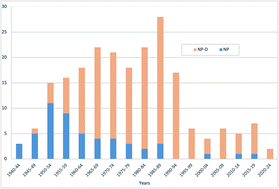
An Analysis section uses the dataset for each antibiotic category/sub-category to construct a series of charts examining trends, patterns, and relationships in the history and status of approved antibiotics, including:
Number of antibiotics and their current usage status (C, L, D), by:
Finally, a Concluding remarks section compiles key observations on the opportunities and benefits offered by renewed investment and engagement in natural products science, highlighting its potential as a platform for discovering new antibiotic classes, while a References section provides the key citations in support of the review.
1.3. Review data sources
The data for all NP and NP-D antibiotics described in this review was sourced from the scientific literature (reviews, research articles, books, patents and publicly available conference presentations), The Merck Index, Kucers' The Use of Antibiotics,24 Bryskier's 2005 book Antimicrobial Agents,25 clinical trial registries (e.g., US NIH ClinicalTrials.gov, WHO International Clinical Trials Registry, ISRCTN, and equivalent national registries in Europe, Japan, China, India, South Korea, and Australia/New Zealand), and biotechnology news aggregators such as ADIS Insights, Synapse, ChemLinked, STAT News, Fierce Biotech, and BioSpace. Additional information was obtained from research organisation and company websites (pipeline disclosures, press releases, investor presentations, and regulatory filings) as well as reports from companies, governments, and non-government organisations (NGOs). While every effort has been made to validate all data with authoritative references, some historical details are less well archived; readers are encouraged to make full use of the bibliography.
2. β-Lactams
2.1. Penicillins
In 1928, a serendipitous discovery at St. Mary's Hospital in London changed medicine. Returning from vacation, Alexander Fleming noticed that bacteria failed to grow near a mould contaminating an agar plate, identified as a Penicillium species. In 1929, he reported that broth filtrates, which he named ‘penicillin’, could kill certain Gram-positive pathogens, including Staphylococcus aureus, S. pneumoniae, and Streptococcus pyogenes, but were not toxic in animal model.26,27 The next chapter in the story started in 1939 when Oxford University's Ernst Chain, Norman Heatley and Howard Florey began a research program to identify the active components of penicillin. In vivo efficacy was demonstrated the following year,28 and the first patients were treated in 1941.29 However, mass production of penicillin was not feasible in wartime Britain, prompting Florey to seek assistance from the United States of America (USA) in June 1941. Researchers at the Northern Regional Research Laboratory (NRRL) were able to improve penicillin yields by incorporating corn-steep liquor into the fermentation medium and by isolating P. chrysogenum NRRL 1951 from a locally sourced mouldy cantaloupe, which became the progenitor of the ‘Wisconsin’ high-yield strain used in production.30,31 After the USA entered World War II (WWII), the government instructed pharmaceutical companies to scale up penicillin production, and by September 1943, there was enough to meet the needs of the Allied Forces.32,33
The structure of penicillin was proposed by Abraham in 1943,34,35 and confirmed by X-ray crystallography in 1945.36,37 Penicillins have a core β-lactam ring fused to a thiazolidine ring, with a variable side chain attached to the α-position of the β-lactam ring, which influences their pharmacokinetics and spectrum of antibacterial activity (see Fig. 1–5 and Tables 1–5). Side chains could be varied by the addition of different substrates to the fermentation media. The first total synthesis of a penicillin, penicillin V (2.04), was reported by Sheehan and Henery-Logan in 1957,38 although traces had been previously synthesised using another route.39 Another major breakthrough came in 1957 when Beecham Research Laboratories isolated 6-aminopenicillanic acid (6-APA) (Fig. 1),40,41 which became the key starting material for all semi-synthetic derivatives and some β-lactamase inhibitors42 and cephalosporins.43
Fig. 1 6-Aminopenicillanic acid (6-APA) and first generation penicillins (β-lactamase sensitive) 2.01 to 2.10. Highlights: NPs (in red boxes); characteristic penicillin bicyclic ring system inclusive of β-lactam (blue); NP-D structural variation from the NP penicillin G (2.01) (grey).
Fig. 2 Second generation penicillins (β-lactamase resistant) 2.11 to 2.16. Highlights: NP-D structural variation from the NP penicillin G (2.01) (grey).
Fig. 3 Third generation penicillins (extended spectrum—aminopenicillins) 2.17 to 2.30. Highlights: NP-D structural variation from the NP penicillin G (2.01) (grey).
Fig. 4 Fourth generation penicillins (extended spectrum—carboxypenicillins) 2.31 to 2.36. Highlights; NP-D structural variation from the NP penicillin G (2.01) (grey).
Fig. 5 Fourth generation penicillins (extended spectrum—ureidopenicillins) 2.37 to 2.40. Highlights: NP-D structural variation from the NP penicillin G (2.01) (grey).
Table 1Marketed first generation penicillin (β-lactamase sensitive) antibiotics
Penicillins inhibit bacterial cell wall synthesis by binding to penicillin-binding proteins (PBPs), essential enzymes involved in catalysing cross-links between peptidoglycan strands. This inhibition weakens the cell wall, causing lysis in actively growing bacteria. Penicillin resistance can occur through the production of β-lactamases, enzymes that hydrolyse the β-lactam ring, or through structural modifications of PBPs. Between 1943 and 1987, 40 penicillin antibiotics were approved globally. These are classified into four generations based on antibacterial spectrum, β-lactamase resistance, and structural modifications: ten first-generation (Section 2.1.1), six second-generation (Section 2.1.2), 14 third-generation (Section 2.1.3), and ten fourth-generation (Sections 2.1.4 and 2.1.5) penicillins.
2.1.1. First generation penicillins (β-lactamase sensitive). Penicillin G (2.01) (benzylpenicillin) was the first clinically used penicillin in 1943,26–29,32,33 and its structure was proposed in 1943 and confirmed by X-ray crystallography in 1945.36,37 Penicillin G is primarily effective against G+ve bacteria and some G−ve cocci and has been formulated in various salt forms,44 including sodium, potassium, procaine, benzathine, benethamine, and hydrabamine. As of 2023, penicillin G remains on the WHO Essential Medicines List (WHO EML) as a first-choice treatment for severe community-acquired pneumonia (CAP), complicated severe acute malnutrition, neonatal and paediatric sepsis, and syphilis.56 Its benzathine salt is also listed as a first-choice syphilis treatment.56
Penicillin O (2.02) is an allylmercaptomethyl analogue of penicillin G, produced by adding allyl-thioacetic acid to the fermentation medium.57,58 Launched in 1950 in the USA by The Upjohn Company under the trade name Cer-O-Cillin,442.02 was named “penicillin O” due to its slight onion-like odour. Penicillin O exhibited an antibacterial spectrum similar to that of penicillin G (2.01) and was initially reported to cause fewer allergic reactions.59,60 However, some adverse effects were later documented,61 and its use declined as other more effective penicillins became available.
Penethamate (2.03) is a diethyl-aminoethyl ester prodrug of penicillin G (2.01) developed by Leo Pharmaceuticals.62,63 It was launched around 1951 by Leo in Denmark as Leocillin, and in 1952 in the USA by Smith, Kline & French as Neo-Penil.44 Although its use in human medicine declined over time due to safety concerns,64 penethamate iodide continues to be used in veterinary practice.65
Penicillin V (2.04) (phenoxymethylpenicillin) was initially produced by fermentation by Eli Lilly (USA) in 1948 (ref. 58) and Biochemie (Austria) in 1953,66 but was later synthesised from 6-APA.45 An in-depth account of the discovery of its oral bioavailability has been published.67 Briefly, the Austrian penicillin manufacturer Biochemie encountered microbial contamination issues and tested various antibacterial agents including phenoxyethanol. Unexpectedly, this increased the yield of an acid-stable penicillin, in contrast to penicillin G (2.01). Further studies revealed that adding phenoxyacetic acid during fermentation produced 2.04 in good yield. When Biochemie patented penicillin V, they discovered that Eli Lilly already held a patent for its potassium salt. The companies decided to cross-license their intellectual property, leading to the first commercial launch in 1955 of penicillin V in France by Theraplix under the trade name Oracilline,45 and by Eli Lilly as V-Cillin in the USA.44,45 Penicillin V continues to be widely used as an oral alternative to penicillin G and is included in the 2023 WHO EML as a preferred treatment for mild to moderate CAP, pharyngitis and progressive apical dental abscess.56
Phenethicillin (2.05) (phenoxyethylpenicillin) was the first semi-synthetic α-phenoxyethyl penicillin derivative prepared from 6-APA.68 It was developed by Bristol and launched in 1959 in the USA under the trade name Syncillin and in the United Kingdom (UK) as Broxil.44,69,70 It was also sold by Pfizer (Maxipen) and Bayer (Syncillin). Over time, its use waned due to increasing preference for penicillin V (2.04).71
Propicillin (2.06) (phenoxypropylpenicillin, PA-248) was first used clinically in the UK and West Germany in 1961.47–49,70,72 It was sold by Beecham as Brocillin and by Pfizer as Ultrapen in the UK,47 and by Bayer as Baycillin in Europe.48
Phenbenicillin (2.07) (fenbenicillin, phenoxybenzylpenicillin) was first used in the UK around 1962 under the trade name Penspek.51,70,73 It was manufactured by Distillers Co. (Biochemicals) Ltd, a division of the Scottish conglomerate The Distillers Company Limited, in their Liverpool penicillin factory that was acquired by Eli Lilly in 1963.
Clometocillin (2.08) (3,4-dichloro-α-methoxybenzylpenicillin) was developed by the Belgium company Recherche et Industrie Thérapeutiques,52,74–76 which started as a penicillin manufacturer, under the trade name Rixapen. There is little information available on clometocillin other than it was later sold by Menarini.77,78
Penamecillin (2.09) (WY-20788) is an acetoxymethyl ester prodrug of penicillin G (2.01) developed by John Wyeth & Brother,79 which was a UK subsidiary of American Home Products/Wyeth. It was launched under the trade name Havapen in the UK in 1966.53
Azidocillin (2.10) (BRL-2534, SPC 97D) was first synthesised at Astra in Sweden while collaborating with Beecham as an intermediate in the synthesis of ampicillin (2.17) and later shown to have promising antibacterial activity.80–82 It was first launched in 1972 in Sweden by Astra (trade name Globacillin)54,83 and by Beecham in West Germany (trade name Nalpen).55 Azidocillin was sold in other Scandinavian countries, the Netherlands, UK, Belgium, Brazil and Mexico.80
2.1.2. Second generation penicillins (β-lactamase resistant). Methicillin (2.11) (meticillin, BRL 1241) was developed by Beecham and first launched in 1960 (ref. 44 and 45) in both the UK (trade name Calbenin) and USA (trade name Staphcillin) to treat penicillin-resistant Staphylococcus infections.85,86 Despite its initial effectiveness, resistance emerged relatively quickly, and methicillin-resistant S. aureus (MRSA) became widespread—a term still used today, even though methicillin itself has not been clinically used since the early 1990s.87,88 Interestingly, MRSA strains are now known to have existed even before methicillin was introduced into clinical practice.89,90
Cloxacillin (2.12) (BRL-1621) is a semi-synthetic isoxazolyl penicillin,91 developed by Beecham to treat penicillinase (a type of β-lactamase) producing Staphylococci,92 that was first launched in the UK in 1962 under the tradename Orbenin.55,84 Cloxacillin is on the 2023 WHO EML as a first choice treatment for bone and joint infections and skin and soft tissue infections (SSTIs).56
Oxacillin (2.13) (BRL-1400) is another isoxazolyl penicillin93 that was first launched in 1962 in the USA by Bristol (trade name Prostaphlin) and Squibb (trade name Resistophen), and in West Germany by Hoechst (trade name Cryptocillin).44,45 Oxacillin is used to treat methicillin-sensitive S. aureus (MSSA) infections.94
Nafcillin (2.14) (Wy-3277) is a naphthoyl penicillin developed by Wyeth95 that was first approved in the USA in 1964 under the trade name Unipen,44,45 which is still used today to treat MSSA infections.94
Dicloxacillin (2.15) is a dichloride isoxazolyl penicillin derivative96 first launched in West Germany in 1965 by Bayer under the trade name Dichlor-Stapenor.55 Dicloxacillin is orally bioavailable and is still used to treat MSSA infections.
Flucloxacillin (2.16) (floxacillin) is a monofluoro-monochloro isoxazolyl penicillin derivative,97,98 which was first approved in 1970 in the UK (Beecham, trade name Floxapen) and Japan (Fujisawa, trade name Clupen).78 It is still used in Australia, New Zealand, UK and several European countries.99,100
2.1.3. Third generation penicillins (extended spectrum—aminopenicillins). Ampicillin (2.17) (BRL-1341) is a semi-synthetic α-aminobenzylpenicillin derivative107 that was first approved in 1962 in the UK by Beecham as Penbritin, and in West Germany by Bayer as Binotal.55,101 Ampicillin is on the 2023 WHO EML as a first choice treatment for severe CAP, complicated intra-abdominal infections (cIAI), complicated severe acute malnutrition, and sepsis in neonates and children.56
Metampicillin (2.18a, 2.18b) is a prodrug of ampicillin (2.17) produced by reaction with formaldehyde.108 However, it was recently shown that metampicillin was likely to be a mixture of the cyclic aminals 2.18a and 2.18b rather than the originally proposed imine 2.18c and/or hemiaminal 2.18d.109 It was first launched in 1969 in Italy by Clin Comar Byla as Magnipen.45
Hetacillin (2.19) (BRL-804) is a prodrug formed by reacting ampicillin (2.17) with acetone.110 Developed by Bristol, hetacillin was first launched in 1970 in three countries: Japan as Natacillin, and Italy and France as Versapen.55
Amoxicillin (2.20) (BRL 2333) is a α-amino-p-hydroxy-benzylpenicillin derivative107,111 that was introduced into the UK by Bencard (part of the Beecham Group) in 1972 under the trade name Amoxil.55,102 Amoxicillin is on the 2023 WHO EML as a first choice treatment for CAP, severe acute malnutrition, otitis media, pharyngitis, progressive apical dental abscess, sepsis in neonates and children, sinusitis and exacerbations of chronic obstructive pulmonary disease (COPD).56 A combination of amoxicillin and the β-lactamase inhibitor clavulanic acid (2.111) (co-amoxiclav, trade name Augmentin) is also on the 2023 WHO EML.56 Amoxicillin is also used in various combination with antibiotics such as clarithromycin (4.09), proton pump inhibitors (e.g. lansoprazole) and anti-inflammatory drugs (e.g. vonoprazan) to treat H. pylori infections.112
Ampicillin pivoxil (2.21) (pivampicillin)113 is a pivaloyloxymethyl ester prodrug of ampicillin (2.17) first launched in 1972 by various companies: Merck, Sharp & Dohme in West Germany (Maxifen) and Italy (Pivatil), Boehringer Ingelheim in West Germany (Berocillin) and Sigma Tau in Italy (Pondocillin).45 Ampicillin pivoxil was available up until 2023 in Denmark as Pondocillin, but it no longer appears to be sold.114
Ciclacillin (2.22) (ciclacillin, Wy-4508) is a 1-aminocyclohexyl penicillin derivative115 that was launched in 1972 in Japan by Wyeth as Wybital, and Takeda as Vastollin, and in West Germany by Grünenthal as UItracillin.55
Epicillin (2.23) (SQ-11302) is a D-2-(1,4-cyclohexadienyl)glycine penicillin derivative116 developed by Squibb that was first approved in France in 1974 under the trade name Dexacilline.55
Talampicillin (2.24) (BRL-8988) is a phthalidyl prodrug117,118 of ampicillin (2.17) developed by Beecham that was first launched in 1975 in the UK and USA under the trade name Talpen.103,104
Pivmecillinam (2.25) (amdinocillin pivoxil, FL-1039) is a pivoxil prodrug119 of mecillinam (2.27) developed by Leo Pharma and first approved in 1977 in the UK as Selexid.45 Pivmecillinam and mecillinam are noteworthy for having relatively broad G−ve activity119 through PBP-2 binding120 and are used to treat UTIs, salmonellosis and pyelonephritis.121 Although pivmecillinam has been used in Europe and Canada since its first launch,121 Utility Therapeutics obtained US FDA approval in April 2024 for the treatment of uncomplicated UTIs (uUTIs) under the trade name Pivya.122
Bacampicillin (2.26) is an ethoxycarbonyloxyethyl prodrug123 of ampicillin (2.17) that was first launched in 1977 in West Germany by Astra as Penglobe.55
Mecillinam (2.27) (amdinocillin, FL-1060) was developed by Leo Pharma and was launched in 1979 in the UK as Selexidin.45,105 It prodrug, pivmecillinam (2.25), had been launched earlier in 1977. Mecillinam is also currently under development in the USA by Utility Therapeutics.
Ampicillin medoxomil (2.28) (lenampicillin, KBT-1585) is a medoxomil prodrug124,125 of ampicillin (2.17) developed by Kanebo, which was first approved in 1987 in Japan under brand names Takacillin and Varacillin.106
Aspoxicillin (2.29) (TA-058) is an N-methyl-D-asparaginyl dervative126 of ampicillin (2.17) with broad spectrum G+ve and G−ve activity developed by Tanabe Seiyaku that was first launched in 1987 in Japan as Doyle.106
Sultamicillin (2.30) (VD-1827, CP-49952) is a bis-ester mutual prodrug of ampicillin (2.17) and the β-lactamase inhibitor sulbactam (2.112a) (Section 2.6) reported by both Leo Pharma and Pfizer.127,128 Pfizer first launched sultamicillin in 1987 in the Philippines as Unasyn.106 Note that Unasyn was also used by Pfizer as the trade name for a sulbactam and ampicillin combination in the USA (Table 16). Sultamicillin provides extended G−ve activity compared to ampicillin alone an still used in some countires.129 For more severe or hospital-based infections, the combination of ampicillin and sulbactam is instead administered IV or IM.130,131
2.1.4. Fourth generation penicillins (extended spectrum—carboxypenicillins). Carbenicillin (2.31) (BRL-2064, CP-15639-2) is an α-carboxy penicillin derivative that was first launched in 1968 in the UK and Switzerland by Beecham as Pyopen, and in West Germany by Pfizer as Carindapen.55 Carbenicillin has broad spectrum activity and was used to treat susceptible G−ve pathogens, including P. aeruginosa.135 α-Carboxy penicillin derivatives have broad spectrum activity against susceptible G−ve pathogens, including P. aeruginosa.136
Carbenicillin indanyl (2.32) (carindacillin, CP-15464) is an indanyl α-carboxyl ester prodrug137–139 of carbenicillin (2.31) first approved to treat UTIs in 1972 in the USA by Pfizer under the trade name Geocillin.44,55
Sulbenicillin (2.33) is an α-sulfobenzylpenicillin140,141 first approved in 1972 in Japan by Takeda under the trade name Lillacillin.45
Carbenicillin phenyl (2.34) (carfecillin, BRL 3475) is a phenyl α-carboxyl ester prodrug138,139,142 of carbenicillin (2.31) developed by Beecham to treat UTIs, first approved in 1974 in the UK under the trade name Uticillin.132
Ticarcillin (2.35) (BRL-2288) is a α-carboxyl-3-thienylmethyl-penicllin derivative143 developed by Beecham and first launched in 1976 in the USA under the trade name Ticar.45,133 Ticarcillin has more potent activity against P. aeruginosa compared to carbenicillin (2.31)143–145 and has also been widely used in combination with the β-lactamase inhibitor clavulanic acid (2.111) (Section 2.6).
Temocillin (2.36) (BRL-17421) is a 6-methoxy analogue146,147 of ticarcillin (2.35) developed by Beecham that was first launched in 1984 in West Germany as Temopen.134 Temocillin is active against G−ve Enterobacteriaceae, particularly ESBL- and AmpC-producing strains, but has only marginal G+ve activity and lacks activity against P. aeruginosa and anaerobes.148,149 It is still used in UK, Belgium, Germany, and France.149,150
Due to their method of synthesis, involving coupling of an activated achiral aromatic diacid to the β-lactam amino moiety, 2.31, 2.32, 2.34 and 2.36 are prepared as epimeric mixtures.
2.1.5. Fourth generation penicillins (extended spectrum—ureidopenicillins). Azlocillin (2.37) (BAY e 6905) is a semi-synthetic acylureido-penicillin developed by Bayer,152 that exhibits broad spectrum activity with enhanced efficacy against P. aeruginosa, enterococci, and anaerobic bacteria compared to third-generation carboxypenicillins such as carbenicillin (2.31) and ticarcillin (2.35).153,154 Azlocillin was first introduced in 1977 in West Germany under the trade name Securopen.55 During the 1980s, it was widely utilized to treat severe infections, including those caused by P. aeruginosa and enterococci;154 however, its use has declined over time but it is still used in China.155
Mezlocillin (2.38) (Bay f 1353) is a methylsulfonyl derivative154,156 of azlocillin (2.37) also developed by Bayer that was first approved in 1977 in West Germany under the trade name Baypen.55 Like azlocillin, mezlocillin was used to treat serious infections.154,157,158
Piperacillin (2.39) (T-1220) is an N-ethyl-dioxo-piperazine-urea derivative159 developed by Toyama Chemical Co that was first approved in 1980 in Japan as Pentcillin, and by Lederle in West Germany and Switzerland as Pipracil.45,151 Piperacillin is now predominantly used in combination with tazobactam (2.113) (Section 2.6) as a broad spectrum antibacterial, especially as a carbapenem-sparing strategy for treating low-risk non-severe infections.160–162
Apalcillin (2.40) (PC-904) is a naphthyridine ampicillin derivative163,164 discovered by Sumitomo that was first launched in West Germany by Dr Karl Thomae GmbH (later fully integrated into Boehringer Ingelheim) under the trade name Lumota.55 Apalcillin is no longer used.
2.2. Cephalosporins
Another breakthrough in β-lactam antibiotics came from a fungus, Chrysogenum (previously Cephalosporium) acremonium, collected from a Sardinian sewerage outflow in 1945 by Giuseppe Brotzu. This fungus, which exhibited in vivo activity (human) against both G+ve and G−ve pathogens,165 was transferred to Florey's and Abrahams's laboratory at Oxford University in 1948, which led to the discovery of three different antibiotic classes.165,166 The first series, cephalosporin P1–P5, were reported in 1951 as nortriterpenes (now classified as fusidanes, Section 10),167,168 were only active against G+ve bacteria and the search continued for the G−ve active components. The first G−ve active component was identified as a penicillin derivative, which was initially called cephalosporin N but is now known as penicillin N.169–171 Newton and Abraham reported another antibiotic related to penicillin N, named cephalosporin C in 1956 with relatively weak activity against G−ve bacteria, which was initially isolated in low yields.172 In 1961, the structure of cephalosporin C (2.41) (Fig. 6) was shown to have the six-membered dihydrothiazine ring fused to a β-lactam (cephem ring system),173,174 compared to the five-membered thiazolidine in penicillins (penem ring system). Analogously to penicillins and 6-APA (Section 2.1), the cephem nucleus, 7-aminocephalosporanic acid (7-ACA) (Fig. 6), was used to produce semi-synthetic derivatives.175 This section outlines the 52 cephalosporin derivatives approved globally between 1964 and 2019, classified into ten first-generation (Section 2.2.1), twelve second-generation (Section 2.2.2), twenty-two third-generation (Section 2.2.3), four fourth-generation (Section 2.2.4), and four fifth-generation cephalosporins (Section 2.2.5) (Tables 6–10 and Fig. 7–10).
Fig. 6 Cephalosporin C (2.41), 7-aminocephalosporanic acid (7-ACA) and first generation cephalosporins (narrow spectrum) 2.42 to 2.51. Highlights: NP-D structural variation from the NP cephalosporin C (2.41) (grey).
Table 6Marketed first generation cephalosporin (narrow spectrum) antibiotics
Table 8Marketed third generation cephalosporin (broad spectrum) antibiotics
Name
Origin
Year (country) first approval
Pathogens
Admin.
Status
aAlso co-administered with sulbactam (2.112a) (Sulperazone) (Section 2.6).bCurrently available in Japan as a rectal suppository.245cAlso used in combination with the β-lactamase inhibitor avibactam (2.71b, Avycaz), either alone or together with the nitroimidazole antibiotic metronidazole (2.71c).
Fig. 7 Second generation cephalosporins (intermediate spectrum) 2.52 to 2.63. Highlights: NP-D structural variation from the NP cephalosporin C (2.41) (grey).
Fig. 8 Third generation cephalosporins (broad spectrum) 2.64 to 2.85. Highlights: NP-D structural variation from the NP cephalosporin C (2.41) (grey); co-formulants (brown, dashed box).
Fig. 9 Fourth generation cephalosporins (broad spectrum) 2.86 to 2.89. Highlights: NP-D structural variation from the NP cephalosporin C (2.41) (grey).
Fig. 10 Fifth generation cephalosporins (extended spectrum) 2.90 to 2.93. Highlights: NP-D structural variation from the NP cephalosporin C (2.41) (grey).
2.2.1. First generation cephalosporins (narrow spectrum). Cefalotin (2.42) (cephalothin), a 7-thiophene-2-acetamido cephalosporin derivative,180 first launched in the USA in September 1964 by Eli Lilly under the trade name Keflin.44,55,181 Cefalotin still retains some utility in treating MSSA infections.182
Cefaloridine (2.43) (cephaloridine) is a zwitterionic pyridinium analogue of cefalotin (2.42) developed by Glaxo183 first launched in November 1964 in the UK under the trade name Ceporin.55,176 It is no longer used in human health due to nephrotoxicity concerns.184,185
Cefaloglycin (2.44) (cephaloglycin) is an α-aminobenzyl cephalosporin derivative186 first introduced by Shionogi in 1969 in Japan as Kefglycin.55 It was also launched in 1970 in the USA by Eli Lilly as Kafocin55 as the first oral cephalosporin, but it is not used today.187
Cefalexin (2.45) is an α-aminobenzyl desacetoxy-cephalosporin derivative188,189 that was first introduced in December 1969 in the UK by Glaxo as Ceporex.55,176 Cefalexin is on the 2023 WHO EML as a first choice treatment for skin and skin structure infections (SSSIs) and a second choice for pharyngitis and exacerbations of COPD,56 and is also used to treat urinary tract, ear and bone infections.190,191
Cefacetrile (2.46) (cephacetrile, CIBA 36278-Ba) is a 2-cyanoacetamido-7-ACA derivative192,193 developed by Ciba-Geigy and marketed using the trade name Celospor.55 There is evidence that cefacetrile was first launched in 1969 in Switzerland with other European and Japanese launches from 1973 to 1978.55
Cefazolin (2.47) (cefazoline, cephazolin) is a tetrazole and 1,3,4-thiadiazole derivative194,195 developed by Fujisawa that was first approved in 1971 in Japan as Cefamedin.55,177 Cefazolin has since been widely used182 and is a 2023 WHO EML first choice for surgical prophylaxis and second choice for bone and joint infections.56
Cefradine (2.48) (cephradine, SQ-11436) is a desacetoxy-cephalosporin derivative closely related to cefalexin (2.45) with a 1,4-cyclohexadienyl instead of the benzyl group.116 Cefradine was first approved in 1972 in the UK and launched by Squibb as Velosef,178 and a few weeks later by Smith, Kline & French as Eskacef.179 Cefradine is currently used in Asia, Africa, and some European nations.191,196
Cefapirin (2.49) (cephapirin, BL-P1322) is 4-pyridylthio-acetamido 7-ACA derivative197 developed by Bristol-Myers first launched in 1974 in the USA under the trade name Cefadyl.44,55 It was also launched by Bristol in France and West Germany in the same year.55 Cefapirin is no longer used in human medicine,196 but is used in veterinary medicine.198
Cefadroxil (2.50) (BL-S578, p-hydroxycephalexin) is an α-amino-p-hydroxy-benzyl-desacetoxy-cephalosporin derivative199,200 that was first launched in 1977 in France by Bristol-Myers as Oracéfal.55 Cefadroxil is still used in Europe to treat skin, urinary tract and respiratory infections.191,201
Cefroxadine (2.51) (CGP 9000) is a 1,4-cyclohexadienyl derivative related to cefradine (2.48) with a 3-methyl ether in place of a 3-methyl group202 developed by Ciba-Geigy that was first approved in 1981 in Switzerland under the trade name Oraspor.55 Cefroxadine is still used in some countries including the UK.191,196
2.2.2. Second generation cephalosporins (intermediate spectrum). Cefamandole nafate (2.52) is a O-formate prodrug of cefamandole207,208 developed by Eli Lilly that was first approved in 1977 in West Germany as Mandokef.55
Cefuroxime (2.53) is a 7-ACA derivative developed by Glaxo where the acetate has been replaced with a carbamoyl and a (Z)-2-(furan-2-yl)-2-methoxyiminoacetamido C-7 sidechain, which enhances activity against Neisseria spp. and H. influenzae.209,210 Cefuroxime was introduced in 1978 in Italy, W. Germany, Switzerland and UK under the tradenames Zinacef and Curoxime,55 and is currently a second choice on the WHO EML for surgical prophylaxis.56,211
Cefoxitin (2.54) is a semi-synthetic derivative of the Streptomyces-derived cephamycin C212 with a 2-(2-thienyl)acetamido side chain.213 It was developed by Merck & Co and first introduced in 1978 into the USA, UK and West Germany under the trade names Mefoxin and Mefotoxitin.55 Cefoxitin provides broad-spectrum coverage and may be included in multidrug regimens to treat Mycobacterium abscessus infection.214,215
Cefaclor (2.55) is a 3-chloro-7-ACA derivative with an α-aminobenzyl sidechain216 developed by Eli Lilly that was first marketed in 1979 in the USA as Ceclor, UK as Distaclor, and West Germany as Panoral.55 Cefaclor is still in use today, though less commonly, to manage infections such as respiratory tract infections, UTIs, and SSTIs.217,218
Cefatrizine (2.56) (SKF-60771, BL-S 640) is a thio-triazole 7-ACA analogue with an α-amino-p-hydroxybenzyl side chain, which was discovered independently by Smith, Kline & French and Bristol Laboratories.219,220 Cefatrizine was first launched in 1980 in Japan by Bristol and Banyu under the trade names Bricef and Cepticol.55
Cefmetazole (2.57) is a thio-tetrazole cephamycin derivative with a 2-(cyanomethyl)thioacetamide side chain developed by Sankyo and first approved in 1980 in Japan as Cefmetazon.203 It is still used to treat some UTIs in Japan221 and less commonly in South Korea, China and Russia.
Cefotetan (2.58) (YM-09330) is a semi-synthetic cephamycin derivative developed by Yamanouchi with N-methyl-thio-tetrazole and 1,3-dithietanecarboxamide side chain, which is synthesised using a rearrangement of an isothiazolethioacetamide precursor.222 Cefotetan was first approved in 1984 in Japan as Yamatecan,134 and is still used for surgical prophylaxis, IAI, and pelvic infections.223,224
Cefbuperazone (2.59) (T-1982) is an N-methyl-thio-tetrazole cephamycin derivative with a L-threonine linked to a 4-(ethyl-2,3-dioxo-1-piperazinyl)carbonyl side chain225 developed by Toyama Chemical Co. Cefbuperazone was first introduced in 1985 in Japan by Toyama as Tomiporan, and by Kaken as Keiperazon.204
Cefminox (2.60) (MT-141) is an N-methyl-thio-tetrazole cephamycin derivative with an S-linked D-cysteine thioacetamide side chain developed by Meiji Seika first launched in 1987 in Japan as Meicelin.106,205 Cefminox is still used in Japan.205
Cefuzonam (2.61) (CL-118523, L-105, LJC-10305) is a 5-thio-1,2,3-thiadiazole 7-ACA derivative with a 2-aminothiazole (Z)-methyloxime side chain developed by American Cyanamid.226 Cefuzonam was introduced in 1987 in Japan by Lederle Japan as Cosmosin,106 but no longer appears to be in clinical use.
Cefuroxime axetil (2.62) is the axetil prodrug of cefuroxime (2.53) developed by Glaxo227,228 that was first approved in 1987 in the UK under the trade name Zinacef.106 It is still used to treat mild to moderately severe infections caused by susceptible bacteria.211,229
Cefprozil (2.63a, 2.63b) (BMY-28100) is a 7-ACA derivative developed by Bristol-Myers with a propenyl group (9:1 ratio of the Z2.63a to E2.63b isomers) and an α-amino-p-hydroxybenzyl side chain.230,231 It was first approved in 1992 in the USA as Cefzil206 and is still widely used.217,232
2.2.3. Third generation cephalosporins (broad spectrum). Cefsulodin (2.64) (SCE-129, CGP-7174) is a zwitterionic 7-(D-α-sulphophenylacetamido) and 3-(4′-carbamoylpyridinium) 7-ACA derivative discovered by collaborative research between Takeda and Ciba Geigy with activity against P. aeruginosa and some G+ve pathogens such S. aureus, S. pneumoniae, and S. pyogenes.246,247 It was first launched in 1980 in West Germany and Switzerland by Ciba Geigy under the trade names Pseudomonil and Monaspor, respectively, and the following year in Japan by Takeda as Takesulin.55 It no longer appears to be in clinical use.
Cefotaxime (2.65) (RU-24756, HR 756) is a 7-ACA derivative with a 2-aminothiazole-O-methyl-oxime side chain248–250 developed by Roussel-UCLAF (now part of Sanofi-Aventis) that was first launched in 1980 in West Germany, France and Italy under the trade name Claforan.55 Cefotaxime is on the 2023 WHO EML as a first-choice treatment for acute bacterial meningitis, cIAI, HAP, pyelonephritis and prostatitis, and second choice for bone and joint infections and sepsis in neonates and children.56,251
Cefoperazone (2.66) (T-1551, CP-52640-2) is an N-methyl-thio-tetrazole 7-ACA derivative with an α-amino[4-ethyl-2,3-dioxo-1-piperazinecarboxamido]-p-hydroxy-benzyl side chain developed by Toyama Chemical.252,253 It was licensed by Pfizer who obtained approvals in 1981 in West Germany, France and Switzerland under the trade names Cefobid, Cefobine and Cefobis, respectively.55 Cefoperazone is primarily used to treat susceptible P. aeruginosa infections and in combination with the β-lactamase inhibitor sulbactam (2.112a) (Section 2.6) for G−ve infections.254
Cefotiam (2.67) (SCE-963) is an N-2-dimethylaminoethyl-thio-tetrazole 7-ACA derivative with a 2-aminothiazole sidechain254,255 developed by Takeda and first approved in 1981 in Japan as Pansporin.233 Cefotiam has broad spectrum antibacterial activity and is still used to treat susceptible infections.233,256
Ceftizoxime (2.68) (FK 749) is a 2-aminothiazole-O-methyl-oxime 7-ACA derivative without a 3-side chain257,258 with broad spectrum antibacterial activity developed by Fujisawa that was first approved in 1982 in Japan as Epocelin,55 and the following year in Europe and the USA,55 but no longer appears to be widely used.196 However, it is sold in Japan as a rectal suppository under the trade name Epothelin.245
Ceftriaxone (2.69) (Ro-13-9904) is a broad spectrum 2-aminothiazole-O-methyl-oxime 7-ACA derivative with a 3,4-dioxo-6-thio-1,2,4-triazine heterocycle at C-3 developed by Roche first approved in 1982 in Switzerland as Rocephin.55 It is still widely used259,260 and is on the 2023 WHO EML as a first choice to treat acute bacterial meningitis, CAP/HAP, cIAI, endophthalmitis, enteric fever and gonorrhoea.56 Ceftriaxone is a WHO EML second choice for acute invasive bacterial diarrhoea, bone and joint infections, pyelonephritis and sepsis in neonates and children.56
Cefmenoxime (2.70) (SCE-1365) is a 2-aminothiazole-O-methyl-oxime 7-ACA derivative with a C-3 thio-N-methyl-tetrazole261,262 developed by Takeda and first approved in 1983 in Japan and West Germany under the trade names Bestcell and Tacef, respectively.55,234 It has broad spectrum activity and is still used today, predominantly in Japan and China.
Ceftazidime (2.71a) (GR-20263) is a C-3 pyridinium 7-ACA derivative with a 2-aminothiazole-O-1-carboxy-1-methylethyl-oxime sidechain263 developed by Glaxo and first launched in 1983 in the UK.55 Ceftazidime remains widely used in hospitals, especially when P. aeruginosa is a concern,264 and is a WHO EML first choice option to treat endophthalmitis.56 A combination of ceftazidime and avibactam (2.71b), a diazabicyclooctane (DBO)-type β-lactamase inhibitor, was first approved in the USA in 2015 under the trade name Avycaz.265 The combination was approved to treat complicated urinary tract infections (cUTI) and in combination with the nitroimidazole antibiotic metronidazole (2.71c) for cIAI.266 Avycaz is also classed as a WHO EML reserve antibiotic.56
Cefonicid (2.72) (SKF-75073) is an α-hydroxybenzyl 7-ACA derivative with a C-3 thio-N-sulfomethyl-tetrazole267,268 developed by Smith, Kline & French and approved in 1984 in the USA as Monocid.134 Cefonicid has good activity against G+ve bacteria and Enterobacteriaceae,256 and still has limited use in some countries.
Ceforanide (2.73) (BL-S786) is a 7-ACA derivative with a C-3 thio-N-carboxymethyl-tetrazole and a 2-aminomethylphenylacetamido side chain269 developed by Bristol-Myers and first launched in 1984 in the USA as Precef.134 It has activity against non-β-lactamase producing G+ve strains and some G−ve bacteria such as E. coli, Klebsiella pneumoniae, Proteus mirabilis and H. influenzae,256,270 but there is little evidence for its use today.
Cefpiramide (2.74) (SM-1652) is a C-3 thio-N-methyl-tetrazole 7-ACA derivative with a (R)-2-(4-hydroxy-6-methyl-nicotinamido)-2-(p-hydroxyphenyl)acetamido side chain271 discovered by Sumitomo Chemical with broad spectrum activity including Pseudomonas.272 It was first launched in 1985 in Japan as Sepatren.204
Cefixime (2.75) (FK-027) is a C-3 vinyl 7-ACA derivative with a 2-aminothiazole-O-carboxymethyl-oxime sidechain273 developed by Fujisawa and first launched in 1987 in Japan as Cefspan.106 Cefixime has broad spectrum activity (but not Pseudomonas)274 and is a 2023 WHO EML second choice antibiotic to treat gonorrhoea and acute invasive bacterial diarrhoea.56
Cefpimizole (2.76) (U-63196E, AC-1370) is a C3 4-(2-sulfoethyl)pyridinium 7-ACA derivative with a 2-(5-carboxyimidazole-4-carboxamido)phenylacetamido side chain.275 It was first launched in 1987 in Japan by Ajinomoto and Mochida Pharmaceutical Co. under the trade names Renilan and Ajicef,106 respectively, but does not appear to have remained in clinical use for long.276
Cefteram pivoxil (2.77) (T-2588) is a pivaloyloxymethyl ester prodrug of a 2-aminothiazole-O-methyl-oxime side chain and C-3 (5-methyl-2H-tetrazol-2-yl)methyl derivative277–279 developed by Toyama Chemical and first launched in 1987 in Japan as Tomiron.106,235 Cefteram pivoxil is still used today in China and Japan.235 The active cephalosporin cefteram was never marketed as a standalone antibiotic.
Cefpodoxime proxetil (2.78) (CS-807, U-76252) is a 7-ACA derivative with a –CH2OCH3 group at position C-3 and a 2-aminothiazole-O-methyl-oxime sidechain280–282 developed by Sankyo and first launched in 1989 in Japan as Banan. It has broad spectrum activity and is still widely used in the US, Europe and Asia to treat acute upper respiratory tract infections.283,284
Cefodizime (2.79) (HR-221, THR-221), developed by Hoechst, is a 5-(carboxymethyl)-4-methyl-2-thiazolyl-thio 7-ACA derivative with a 2-aminothiazole-O-methyl-oxime side chain with broad spectrum activity.285,286 It was first approved in 1990 in Japan by Taiho as Kenicef, and later by Hoechst as Neucef,237 however, cefodizime is not widely used today.
Cefotiam hexetil (2.80) (CTM-HE, CGP-14221/E) is a 1-(cyclohexyloxycarbonyloxy)ethyl ester prodrug238,287 of cefotiam (2.67) developed by Takeda and first approved in 1990 in Japan as Pansporin T.238 No evidence has been found that cefotiam hexetil is widely used today.
Cefdinir (2.81) (FK-482) is a vinyl-substituted 7-ACA derivative featuring a 2-aminothiazole-oxime side chain that was developed by Fujisawa.288 It exhibits broad-spectrum antibacterial activity and was first approved in 1991 in Japan as Cefzon.239,240 Subsequent development in the USA was led by Abbott, resulting in its approval in 1997 as Omnicef.289 Today, cefdinir remains widely used for the treatment of susceptible SSSI, respiratory tract infections, chronic bronchitis, sinusitis, acute otitis media, and pharyngitis.283,290
Ceftibuten (2.82) (7432-S) is a cephalosporin derivative with no C-3 substituent and a 2-aminothiazole-(Z)-4-carboxy-1-oxo-2-buten-1-yl sidechain291,292 developed by Shionogi and first launched in 1992 in Japan as Seftem.206 The cephalosporin ring system of ceftibuten was prepared from penicillin G (2.01) rather than 7-ACA.43 Although ceftibuten is not widely used today, a combination of ceftibuten and a boronate-type β-lactamase inhibitor prodrug, ledaborbactam etzadroxil,293 completed a phase 1 trial in March 2025.
Cefetamet pivoxil (2.83) (Ro-15-8075) is a pivoxil prodrug of cefetamet (discovered by Takeda),294 first reported by Roussel-Uclaf248 as a 7-ACA derivative with a C-3 methyl and 2-aminothiazole-O-methyl-oxime side chain. Roche later identified the favourable oral absorption294 of 2.83 and obtained first approval in 1992 in Mexico under the trade name Globocef.206 Takeda also launched cefetamet pivoxil under the trade name Cefyl. Cefetamet pivoxil no longer appears to be in widespread use.
Cefditoren pivoxil (2.84) (ME-1207) is a pivoxil prodrug of cefditoren, a C-3 (1Z)-2-(4-methyl-5-thiazolyl)ethenyl and a 2-aminothiazole-O-methyl-oxime side chain, developed by Meiji Seika.295–297 It was first approved in 1994 in Japan as Meiact241,242 and is still widely used in Japan, South Korea and some parts of Europe (trade name Spectracef).
Cefcapene pivoxil (2.85) (S-1108) is a pivoxil prodrug of cefcapene,298 which has a C-3 carbamate and a 2-aminothiazole-(1Z)-propenyl side chain,299 developed by Shionogi and first launched in Japan under the trade name Flomox.243,244 It is still used as a broad spectrum antibiotic in Japan.244
2.2.4. Fourth generation cephalosporins (broad spectrum). Cefpirome (2.86) (HR-810) is a cyclopentane pyridinium containing 7-ACA zwitterionic derivative with a 2-aminothiazole-O-methyl-oxime side chain with broad spectrum activity developed by Hoechst-Roussel (later part of Sanofi-Aventis).304,305 It was first launched in 1992 in Sweden under the trade name Cefrom206 and is still used in some clinical settings.254,306
Cefepime (2.87) (BMY-28142) is a zwitterionic N-methyl-pyrrolidine 7-ACA derivative discovered and developed by Bristol-Myers Squibb with broad spectrum activity.307,308 It was first approved in 1993 in Sweden and France under the trade names Maxipime and Axepime, respectively.300 Cefepime is used in hospital settings as a monotherapy,254 with a combination with the β-lactamase inhibitor enmetazobactam (2.114) approved in 2024 (Section 2.6). Combinations with boronate β-lactamase inhibitor taniborbactam is in the pre-registration phase in the USA and China, while combinations with tazobactam (2.113) and DBO β-lactamase inhibitor zidebactam are currently in phase 3 trials.8
Cefozopran (2.88) (SCE-2787) is a zwitterionic imidazo[1,2-b]pyridazinium 7-ACA derivative309 developed by Takeda first approved in 1995 in Japan as Firstcin.301,302 It is still used in Japan as a broad spectrum antibiotic to treat severe infections.302
Cefoselis (2.89) (FK-037) is a zwitterionic 3-amino-2-(2-hydroxyethyl)pyrazolio 7-ACA derivative310 developed by Fujisawa first launched in 1998 in Japan as Wincef.303 Although previously used in Japan and China, it no longer appears to be in clinical use.
2.2.5. Fifth generation cephalosporins (extended spectrum). Ceftobiprole medocaril (2.90) (BAL-5788, Ro-65-5788) is a water-soluble medocaril315 prodrug316 discovered by Roche with broad spectrum activity, including against MRSA and P. aeruginosa. Late-stage clinical development was undertaken by Basilea Pharmaceutica and it was first approved in 2008 in Canada as Zeftera (now called Zevtera) for the treatment of complicated skin and skin structure infections (cSSSI).311 Since 2013, ceftobiprole medocaril has been available in the EU, Switzerland and other countries for CAP/HAP excluding ventilator-associated pneumonia,317 while its first US approval was in April 2024 for MRSA bacteraemia.318
Ceftaroline fosamil (2.91) (PPI-0903, TAK-599) is an N-phosphono (fosamil) prodrug discovered by Takeda with activity against MRSA.319,320 Forest Laboratories (later part of AbbVie) licensed ceftaroline fosamil from Takeda and obtained its first approval in 2010 in the USA as Teflaro for the treatment of G+ve CAP and ABSSIs, including S. pneumoniae and MRSA.312 Ceftaroline fosamil was approved in the EU and Australia in 2012 and 2013, respectively, for the treatment of complicated SSTIs and CAP under the trade name Zinforo.321
Ceftolozane (2.92) (CXA-101, FR264205), discovered by Astellas Pharma and Wakunaga Pharmaceutical Co, has excellent activity against P. aeruginosa.322 When used in combination with the β-lactamase inhibitor tazobactam (2.113) (Section 2.6), the G−ve spectra is broadened to include Enterobacterales (e.g. E. coli, Klebsiella, Enterobacter and Proteus species). Calixa Therapeutics licensed ceftolozane/tazobactam from Astellas in 2007. Cubist Pharmaceuticals later acquired Calixa, and in 2014 secured FDA approval to market the drug—under the trade name Zerbaxa—for the treatment of UTI and cIAI.313,323 Cubist was acquired in 2015 by Merck & Co, who now market Zerbaxa globally. Ceftolozane + tazobactam is on the 2023 WHO EML as a reserve antibiotic.56
Cefiderocol (2.93) (S-649266) is a siderophore containing derivative with activity against P. aeruginosa and other G−ve bacteria that was discovered and developed by Shionogi & Co.324,325 The catechol siderophore facilitates cell entry through ferric iron transporter systems.326 Cefiderocol was first approved in 2019 in the USA to treat cUTIs under the trade name Fetroja. Cefiderocol has subsequently been approved in 2020 in the EU as Fetcroja, and in 2024 in Japan and Taiwan, and in 2025 in South Korea.327 In 2022, Global Antibiotic Research and Development Partnership (GARDP) and the Clinton Health Access Initiative (CHAI) licensed cefiderocol from Shionogi and have sublicensed it to Orchid Pharmaceuticals with the objective of obtaining approval in a further 135 countries around the world.328 Cefiderocol is listed on the 2023 WHO EML as a reserve antibiotic.56
2.2.6. Oxacephem. There are two oxacephems, latamoxef (2.94) and flomoxef (2.95), approved for clinical use (Table 11). Oxacephems are cephamycin derivatives where the sulfur atom in the six-membered ring is replaced with an oxygen atom (Fig. 11).
Fig. 11 Oxacephems 2.94 to 2.95. Highlights: characteristic oxacephem bicyclic system incorporating a β-lactam (blue); NP-D structural variation from the NP cephalosporin C (2.41) (grey).
Latamoxef (2.94) (moxalactam, 6059-S, LY-12735) is a semi-synthetic oxacephem331,332 that was approved in 1981 in four countries: USA by Eli Lilly as Moxam, West Germany by Eli Lilly as Moxalactam and by Shionogi as Festamoxin), France by Eli Lilly as Moxalactam, and Japan by Shionogi as Shiomarin.45,329 Although latamoxef demonstrated broad-spectrum antibacterial activity, its use was discontinued in the USA due to safety concerns, notably bleeding-related adverse effects attributed to interference with vitamin K-dependent clotting pathways.333 Nevertheless, it remains in clinical use in some Asian countries, including China.334,335
Flomoxef (2.95) (6315-S) is a semi-synthetic oxacephem336 developed by Shionogi that was first approved in 1988 in Japan under the trade name Flumarin.330 Compared to latamoxef (2.94), flomoxef has more potent activity against G+ve bacteria including S. aureus,336,337 and it is still used in Japan, China, South Korea and other Asian countries.338
2.2.7. Carbacephem. Loracarbef (2.96) (KT-3777, LY163892, carbacefaclor) is a fully synthetic carbacephem derivative originally discovered by Kyowa Hakko, in which the sulfur atom in the six-membered ring of cefaclor (2.55) is replaced by a carbon atom (Fig. 12).339,340 Developed by Eli Lilly, loracarbef was first approved by the US FDA on 31 December 1991 under the trade name Lorabid for the treatment of otitis media, pharyngitis, sinusitis, bronchitis, SSTIs and UTIs.206,341,342 However, after its patent exclusivity period finished in 2006, it was withdrawn from the US market for commercial factors (Table 12).342
Fig. 12 Carbacephem 2.96. Highlights: characteristic carbacephem bicyclic system incorporating a β-lactam (blue); NP-D structural variation from NP cephalosporin C (2.41) (grey).
In 1981, Workers at Takeda and Squibb & Co independently reported the structures of bacterially derived N-sulfonic acid β-lactam derivations (monobactams), such as sulfazecin (2.97) (SQ 26445) and SQ 26970 (2.98).343–345 There have been two monobactam inspired antibacterial drugs that have been approved, aztreonam (2.99) and carumonam (2.100) (Table 13), which have similar antibacterial profiles.
Table 13Marketed monobactam antibiotics
Name
Origin
Year (country) first approval
Pathogens
Admin.
Status
aA lysine-based formulation of aztreonam (2.99) (Cayston) is used to treat bacterial infections in cystic fibrosis patients, while a combination of aztreonam and the β-lactamase inhibitor avibactam (2.71b) (Emblaveo) has been approved to treat G−ve infections.
Aztreonam (2.99) (SQ 26776) is a synthetic monobactam antibiotic346,347 first launched in 1984 in Italy by Menarini as Primbactam, while Squibb launched it under the trade name Azactam.134 Aztreonam has a narrow spectrum of activity against G−ve aerobes and is used to treat serious infections.347 Aztreonam lysine (also known as Cayston) was developed by Gilead Sciences and approved in 2009 in the EU and 2010 in the USA, for treating cystic fibrosis patients with chronic P. aeruginosa lung infections via nebulisation.348 Emblaveo, a combination of aztreonam and the DBO-type β-lactamase inhibitor avibactam (2.71b), was approved by the EMA in March 2024 for the treatment of cIAI, UTI, HAP, and other aerobic G−ve infections with limited treatment options.349 Emblaveo was also approved by the US FDA in February 2025 for cIAI.350
Carumonam (2.100) (AMA-1080, Ro 17-2301) is another monobactam with activity against G−ve aerobes such as Enterobacteriaceae, H. influenzae and P. aeruginosa discovered independently by Takeda and Hoffmann-La Roche.351,352 Takeda launched carumonam in 1988 in Japan under the trade name Amusulin,330 but it was never marketed outside of Japan and is no longer used today (Fig. 13).
Fig. 13 Monobactams 2.97 to 2.100. Highlights: NPs (in red box); characteristic monobactam β-lactam (blue); NP-D structural variation from the NP SQ 26445 (2.98) (grey).
2.4. Carbapenems
Thienamycin (2.101) was the first reported carbapenem, featuring a β-lactam ring fused to a five-membered unsaturated ring with a carbon (rather than sulfur) at C-1 and a double bond between C-2 and C-3 (Fig. 14)—structural features that distinguish it from penicillins and enhance its stability against many β-lactamases. First reported from Streptomyces cattleya in 1978,353,354 thienamycin exhibited potent antibacterial activity but was unsuitable as a drug due to its chemical instability.355 Moreover, large-scale fermentation was impractical because thienamycin underwent concentration-dependent decomposition during fermentation.355 Since 1985, seven carbapenems have been approved globally, all of which are produced synthetically (Table 14).
Fig. 14 Carbapenems 2.101 to 2.108. Highlights: NP (in red box); characteristic carbapenem bicyclic ring system incorporating a β-lactam (blue); combination antibiotic formulations (brown dashed box); NP-D structural variation from the NP thienamycin (2.101) (grey).
aMarketed as a co-formulation with cilastatin (2.102a) and as a combination with cilastatin and relebactam (2.102b).bMarketed as a co-formulation with betamipron (2.103a).cAlso marketed as a co-formulation with vaborbactam (2.104a).
Imipenem (2.102) (MK-787, N-formimidoyl-thienamycin) is a synthetic thienamycin (2.101) derivative developed by Merck & Co.355,363–365 It was approved by the US FDA in 1985 in combination with cilastatin (2.102a) to treat serious infections caused by susceptible organisms under the trade name Primaxin.204,365 Cilastatin is a renal dehydropeptidase inhibitor that is used to prevent kidney degradation and enhance urinary concentrations.365 A combination of imipenem, cilastatin and the DBO-type β-lactamase inhibitor relebactam (2.102b), also developed by Merck & Co, was approved in 2019 by the US FDA under the trade name Recarbrio for the treatment of G−ve cUTI, cIAI and hospital-acquired/community-acquired bacterial pneumonia (HABP/CABP) infections.366
Panipenem (2.103) (RS-533) is a synthetic derivative355 of thienamycin (2.101) developed by Sankyo, and was first approved in 1993 in Japan as a combination product with betamipron (2.103a) under the trade name Carbenin.241,356 Approved as a broad-spectrum antibiotic for indications including respiratory tract infections and severe UTIs, betamipron, an organic anion tubular transport inhibitor, is co-administered to inhibit renal uptake of panipenem, thereby reducing nephrotoxicity.367
Meropenem (2.104) (SM-7338, ICI-194660) is a synthetic carbapenem discovered by Sumitomo Pharmaceuticals, featuring a β-methyl group on the five-membered ring that confers resistance to degradation by renal dehydropeptidase.368–370 It was co-developed with Zeneca Pharmaceuticals and first approved in 1994 in Italy as Merrem.241 The following year, it was approved in Japan by Sumitomo as Meropen.371 In 2017, the US FDA approved a combination of meropenem with the boronate-type β-lactamase inhibitor vaborbactam (2.104a) to treat cUTIs, including pyelonephritis, under the trade name Vabomere.372
Ertapenem (2.105) (MK-0826) is a 1-β-methyl carbapenem derivative discovered by Zeneca and developed by Merck & Co first approved in 2001 in the USA under the trade name Invanz.357,373
Biapenem (2.106) (LJC10, 627, L-627) is a 1-β-methyl carbapenem derivative374 that was discovered by Lederle (Japan). Developed by Meiji Seika, it was first approved in 2002 in Japan as Omegacin.358,359
Doripenem (2.107) (S-4661) is a 1-β-methyl carbapenem,375,376 that was discovered and developed by Shionogi with first approval in 2005 in Japan for the treatment of respiratory and UTIs under the trade name Finibax.360,376 Doripenem was subsequently approved in 2007 in the USA and 2008 in the EU under the trade name Doribax; however, it is no longer used in these regions.377,378
Tebipenem pivoxil (2.108) (L-084, ME1211) is the orally bioavailable pivoxil prodrug of a 1-β-methyl carbapenem derivative discovered by Lederle (Japan) and developed by Meiji Seika.379 It was approved in 2009 in Japan to treat paediatric infections under the trade name Orapenem361,362 and remains the only oral carbapenem in use. Although currently available only in Japan, GSK and Spero Therapeutics are evaluating tebipenem pivoxil in a Phase 3 trial (NCT06059846) for cUTIs, with commercial rights outside Japan held by GSK.
2.5. Penems
Penems are a synthetic β-lactam class structurally related to carbapenems, distinguished by the presence of a sulfur atom in the five-membered ring instead of a carbon atom (Fig. 15). Currently, two penems have received regulatory approval: faropenem (2.109) and sulopenem etzadroxil (2.110) (Fig. 15 and Table 15).
Fig. 15 Penems 2.109 to 2.110. Highlights: characteristic penem bicyclic ring system incorporating a β-lactam (blue); combination antibiotic formulation (brown dashed box); NP-D structural variation from the carbapenem NP thienamycin (2.101) (grey).
Faropenem (2.109) (ALP-201, SUN-5555, SY-5555, WY-49605), developed by Suntory and Daiichi Asubio Pharma,381 was first approved in 1997 in Japan for the treatment of G−ve and G+ve respiratory tract pathogens under the trade name Farom.243 Faropenem has predominantly been used in Japan and India.382 Attempts to obtain US FDA regulatory approval for the prodrug faropenem medoxomil (faropenem daloxate) in 2006 were unsuccessful due to insufficient clinical evidence of efficacy, coinciding with a period when the agency shifted its antibiotic approval criteria from non-inferiority to favouring superiority trials.383,384
Sulopenem etzadroxil (2.110) (PF-03709270) is a prodrug of sulopenem (CP-70, 429, sulfinyl diastereomers CP 65207), a penem developed by Pfizer and evaluated in clinical trial in 1990s and again in the early 2000s.385–387 Development was restarted by Iterum Therapeutics in 2015 for both oral (sulopenem etzadroxil) and intravenous (sulopenem) formulations. This culminated in the October 2024 US FDA approval of a combination of sulopenem etzadroxil and probenecid (2.110a) for the treatment of uUTIs. Probenecid, a marketed treatment for gout and hyperuricemia, inhibits tubular renal secretion of β-lactam antibiotics, prolonging their half-life and increasing serum concentrations.388,389
2.6. β-Lactamase inhibitors
Clavulanic acid (2.111) (MM 14151) is a β-lactamase inhibitor produced by Streptomyces clavuligerus and first reported by Beecham in 1976.390–393 This organism had previously been studied by Eli Lilly, who identified two new cephalosporin derivatives and penicillin N (adicillin, cephalosporin N),212,394 a biosynthetic precursor to the cephalosporins.395 Structurally, clavulanic acid is a β-lactam that resembles penicillins but has an oxygen atom in place of the sulfur typically found in the penicillin nucleus, forming an oxazolidine ring fused to the β-lactam (Fig. 16). There have been four clavulanic acid related β-lactamase inhibitors used clinically in combination with β-lactam antibiotics: clavulanic acid itself and three synthetic derivatives (Table 16).
Fig. 16 β-Lactamase inhibitors 2.111 to 2.114. Highlights: NP (in red box); characteristic β-lactamase inhibitors bicyclic ring system incorporating a β-lactam (blue); NP-D structural variation from the NP clavulanic acid (2.111) (grey).
Table 16Marketed β-lactamase inhibitors as co-formulants with antibiotics
Name
Origin
Combination trade name: year (country) first approval
Pathogens
Admin.
Status
aCo-administered with amoxicillin (2.20) (Augmentin/Co-amoxiclav) and ticarcillin (2.35) (Timentin).bNone to marginal intrinsic antibacterial activity.160,393,403cCo-administered with cefoperazone (2.66) (Sulperazone), ampicillin (2.17) (Unasyn) and durlobactam (2.112a) (Xacduro).dUnasyn was also as a trade name for sultamicillin (2.30), a bis-ester mutual prodrug of ampicillin and sulbactam, outside of the USA.eCo-administered with piperacillin (2.39) (Tazocilline/Zosyn), ceftolozane (2.92) (Zerbaxa), and ceftolozane + metronidazole (2.71c).fCo-administered with cefepime (2.87).
Clavulanic acid (2.111) was first launched in the UK in 1981 by Beecham as part of the combination product with amoxicillin (2.20) under the trade name Augmentin.396,397 Augmentin is available in oral and IV formulations and has good activity against G+ve bacteria and limited to moderate activity against some G−ve pathogens.404 Clavulanic acid was later also launched in combination with ticarcillin (2.35) under the trade name Timentin (Beecham) in the USA in 1985,398 which was used intravenously to treat severe G+ve and G−ve infections. However, its use has decreased due to a preference for the piperacillin (2.39) and tazobactam (2.113) combination.398
Sulbactam (2.112a) (CP 45899) is semi-synthetic β-lactamase inhibitor discovered by Pfizer derived from 6-aminopenicillic acid (6-APA).405 In addition, sulbactam exhibits intrinsic activity against Acinetobacter and Bacteroides species by targeting essential PBP-1 and PBP-3, which are essential for cell wall synthesis.406,407 In September 1986, a combination of sulbactam and cefoperazone (2.66) (trade name Sulperazone), developed by Pfizer Japan, was approved in Japan. While in December 1986, Pfizer received approval from the US FDA to market sulbactam and ampicillin (2.17) under the trade name Unasyn.408 Recently, in 2023 a combination of sulbactam and durlobactam (2.112a) (Xacduro), a DBO-type β-lactamase inhibitor, was approved in the USA as a treatment of Acinetobacter baumannii-calcoaceticus complex infections.402
Tazobactam (2.113) (YTR-830, CL-307579) is a penicillanic acid sulfone-type β-lactamase inhibitor discovered by researchers from the University of Alberta, Kobe College Research Institute and Taiho Pharmaceutical Co.409 Developed by Lederle, a combination of piperacillin (2.39) and tazobactam with broad spectrum antibacterial activity was first approved in 1992 in France under the trade name Tazocilline (Zosyn).206 Cubist Pharmaceuticals obtained approval from the US FDA in 2014 for a combination of ceftolozane (2.92) and tazobactam under the trade name Zerbaxa.313 Zerbraxa is used to treat cUTIs and HABP/VABP, as well in combination with metronidazole (2.71c) to treat cIAI.323,410
Enmetazobactam (2.114) (OCID5090, AAI 101) is a zwitterionic tazobactam (2.113) derivative discovered by Orchid Research Laboratories and developed by Allecra Therapeutics.411 A combination of enmetazobactam and cefepime (2.87) under the trade name Exblifep was approved to treat cUTIs in the USA in February 2024, and in March 2024 in the EU, UK and India.403,411
3. Tetracyclines
Tetracyclines412–414 are a class of Streptomyces-derived antibiotics characterised by a linear arrangement of four fused six-membered rings, with an amide-enol group (Fig. 17–19) that can undergo tautomerisation and bind divalent metals such as Ca2+ and Mg2+. Although first reported in the late 1940s, tetracycline-derived fluorescent bands have been detected in bones from northern Africa dating back approximately 1500 years, suggesting the use of tetracycline-containing fermentations in ancient practices.415 The ability of tetracyclines to chelate Ca2+ facilitates their incorporation into bones, cartilage, and teeth, a property that can also lead to teeth discolouration.416 To date, eighteen tetracycline antibiotics have been approved, categorised into three generations: ten first generation NP and NP-D tetracyclines (Table 17), four second generation NP-D tetracyclines with longer half-lives (Table 18), and four third generation NP-D tetracyclines with enhanced activity against resistant strains (Table 19). Tetracyclines exhibit broad spectrum antibacterial activity and inhibit bacterial protein synthesis, specifically by disrupting the association of aminoacyl tRNA with the bacterial ribosome. Tetracycline resistance can occur through various mechanisms: (i) efflux, (ii) reduced cell wall permeability, (iii) enzymatic inactivation, and (iv) ribosomal protection and mutations.412–414 Although third generation tetracyclines were developed to overcome resistance to earlier tetracyclines, resistance has continued to rise due to the spread of mobile Tet(X) orthologues (flavin-dependent monooxygenases), which inactivate tetracyclines through hydroxylation.417
Fig. 17 First generation tetracyclines 3.01 to 3.10. Highlights: NP (in red box); characteristic tetracycline tetracyclic ring system (blue); NP-D structural variation from the NPs chlortetracycline (3.01) (tan) and tetracycline (3.03) (grey).
Fig. 18 Second generation tetracyclines 3.11 to 3.14. Highlights: NP-D structural variation from the NPs oxytetracycline (3.02) (pink) and demeclocycline (3.05) (green).
Fig. 19 Third generation tetracyclines 3.15 to 3.18. Highlights: NP-D structural variation from the NP-D minocycline (3.13) (yellow) and demeclocycline (3.05) (green).
Table 17Marketed first generation tetracycline antibiotics
Name
Origin
Year (country) first approval
Pathogens
Admin.
Status
aMarketed as a co-formulation with the macrolide oleandomycin (4.03).
Chlortetracycline (3.01) was isolated from Kitasatospora (formally Streptomyces) aureofaciens and was introduced as aureomycin for clinical use in 1948 by American Cyanamid under the tradename Aureomycin, the same year it was patented.44,423,424
Oxytetracycline (3.02),425 which was first isolated from Streptomyces rimosus, was launched by Pfizer in the USA in 1950 under the trade name Terramycin.
Tetracycline (3.03), isolated from a Streptomyces sp., was first launched in the USA in 1953 by Pfizer (trade name Achromycin).426
Rolitetracycline (3.04) (pyrrolidinomethyltetracycline), is a water soluble N-Mannich base of tetracycline (3.03) and pyrrolidine.427,428 It was launched as Reverin in West Germany in 1958 by Farbwerke Hoechst AG and as Syntetrin in the USA in 1959 by Bristol.44,429 As a prodrug, rolitetracycline is more stable than tetracycline in acidic conditions, making it suitable for IV and IM administration.430,431
Demeclocycline (3.05) was launched by Lederle in 1959 (trade name Declomycin) and produced using a mutant strain of S. aureofaciens.432
Pipacycline (3.06) (mepicycline) was first launched in Italy by Sierochimica in 1962 (ref. 45) (trade name Sieromicin) and was reported to reduce the induction of penicillinases.433 Pipacycline was also used in combination with penicillin V (2.04) named penimepicycline (mepicycline penicillinate, trade name Penetracyne).434,435
Lymecycline (3.07) is a semi-synthetic tetracycline (3.03) formed by condensation of formaldehyde and the ε-amine of lysine developed by Carlo Alba that was first approved in Italy in 1963 (trade name Tetralysal).418 Lymecycline is still used in some European countries today, mostly for the treatment of acne.418
Clomocycline (3.08) is a semi-synthetic chlortetracycline (3.01) derivative synthetised in aqueous formaldehyde, which was first launched in the UK by Pharmax in 1966 under the trade name Megaclor, as well as in Italy.419–421 Clomocycline is no longer used clinically and there is only limited information available on this antibiotic.
Morphocycline (3.09) was approved in the Union of Soviet Socialist Republics (USSR) in 1968 in combination with oleandomycin (4.03) named olemorphocycline;422 however, its use seems to be short lived. Oletetrin, a combination of oleandomycin, tetracycline (3.03) and phosphate, was more widely used in the USSR.436,437
Guamecycline (3.10) (tetrabiguanide) is another semi-synthetic tetracycline derivative launched by Società Prodotti Antibiotic S.p.A. in Italy as Xantociclina around 1968. There is only limited information available on guamecycline.
3.2. Second generation tetracyclines
Methacycline (3.11) (metacycline) is a semi-synthetic oxytetracycline (3.02) derivative439 first launched in the UK in 1963 by Harvey Pharmaceuticals440,441 and by Pfizer in the USA in 1966, both under the Rondomycin trade name.44
Doxycycline (3.12), developed by Pfizer, was first approved in the USA in 1967 as the hyclate and monohydrate salts with the trade name Vibramycin.44 Doxycycline is still widely used today for the treatment of bacterial infections including sexually transmitted diseases and Lyme disease, the treatment and management of acne, and as a prophylaxis and treatment for malaria.442
Minocycline (3.13) was first approved in the USA in 1971 (trade name Minocin).44,443 Developed by Lederle, minocycline was manufactured by a multi-step synthesis from demeclocycline (3.05).45,413,444 Interestingly, minocycline is currently being evaluated in a phase III trial (NCT05836740) for patients who have had a moderate to severe acute ischemic stroke.445
Meclocycline (3.14) was first reported in 1961 by Pfizer.439 Its crystalline 5-sulfosalicylate salt was introduced as a topical acne treatment in Europe in the 1970s by several companies, Basotherm GmbH (Mecloderm/Meclosorb), Biomedica Foscama (Traumatociclina), and ABC Farmaceutici (Meclutin),446,447 but little information is available. Johnson & Johnson (Ortho) obtained US FDA approval for meclocycline 5-sulfosalicylate (trade name Meclan) in 1980,438 but it was later withdrawn from the market.
3.3. Third generation tetracyclines
Tigecycline (3.15) (GAR-936) is a minocycline (3.13) derivative developed by Wyeth Pharmaceuticals, which was the first member of the glycylcycline subclass, with broad-spectrum activity against almost all G+ve and many G−ve bacteria but not Proteus spp. and P. aeruginosa.449–451 Tigecycline (trade name Tygacil) was approved by the US FDA in 2005 for cSSSI and cIAI, followed by CABP in 2009. Tigecycline was specifically designed to overcome mechanisms of resistance such as efflux pumps (e.g., Tet(K) and Tet(A)) and ribosomal protection proteins (e.g., Tet(M)).
Omadacycline (3.16) (PTK-0796) is an aminomethylcycline minocycline (3.13) derivative452–454 discovered and developed by Paratek Pharmaceuticals. It was first approved in the USA as a broad-spectrum antibiotic for acute bacterial skin and skin-structure infections (ABSSSI) and CAP in 2018 (trade name Nuzya).455
Sarecycline (3.17) (P-005672), which was synthesised in several steps starting from demeclocycline (3.05), has activity against G+ve bacteria such as Cutibacterium acnes, but has minimal or no activity against G−ve bacteria.456 Sarecycline, developed by Paratek Pharmaceuticals and Allergan, was approved in the USA in 2018 as an oral treatment of inflammatory lesions of non-nodular moderate to severe acne vulgaris (trade name Seysara).456,457
Eravacycline (3.18) (TP-434), developed by Tetraphase Pharmaceuticals, is the first fully synthetic tetracycline458–460 to receive regulatory approval. Marketed as Xerava, it was approved by the US FDA in 2018 for the treatment of cIAI.461 Eravacycline exhibits broad-spectrum activity against multi-drug resistant (MDR) G+ve and G−ve pathogens, including carbapenem-resistant Enterobacterales (CRE).462,463
4. Macrolides
Naturally occurring macrolides are 14- and 16-membered464,465 polyhydroxylated, glycosylated macrocyclic polyketide lactones exemplified by erythromycin (4.01) and carbomycin (4.13) respectively, which were both discovered in the early 1950s.464–471 There are twelve 14-membered (Table 20 and Fig. 20), one semi-synthetic 15-membered (Table 21 and Fig. 21), and nine 16-membered marketed macrolide antibiotics (Table 22 and Fig. 22). While fidaxomicin (17.01) is also a macrocyclic lactone, it has been assigned its own class due to a different mode of action (MoA) and structural features (Section 17). Macrolides have broad spectrum activity against G+ve bacteria, as well as some G−ve bacteria including Haemophilus influenzae, Moraxella catarrhalis and N. gonorrhoeae. Macrolide antibiotics are protein synthesis inhibitors that reversibly bind to the nascent peptide exit tunnel in the bacterial 50S ribosome; however, relatively recent studies have shown that the nascent peptide exit tunnel is also involved with protein-based translation regulation.472 Like other protein synthesis inhibitors, macrolide resistance can arise from various pathways: (i) target mutation (23S ribosomal RNA residue or a mutation in ribosomal protein L4 or L22), (ii) target modification (mono- or di-methylation of the 23S rRNA by acquired rRNA methyltransferases), (iii) efflux and (iv) macrolide modifications (e.g. lactone hydrolysis or 2′-phosphorylation).473,474
Table 20Marketed 14-membered ring macrolide antibiotics
Fig. 20 14-membered ring macrolides 4.01 to 4.13. Highlights: NP (in red box); characteristic 14-membered macrolide ring system (blue); NP-D structural variation from the NP erythromycin (4.01) (grey) and oleandomycin (4.03) (tan).
Table 21Marketed 15-membered ring macrolide antibiotics
Fig. 21 15-membered ring macrolide 4.14. Highlights: characteristic 15-membered macrolide ring system (blue).
Table 22Marketed 16-membered ring macrolide antibiotics
Name
Origin
Year (country) first approval
Pathogens
Admin.
Status
aMarketed as an antibiotic carbomycin complex inclusive of carbomycins A (4.15a) and B (4.15b).bMarketed as an antibiotic leucomycin complex inclusive of leucomycins A1 (4.16a), plus other leucomycins, and josamycin (4.18).cMarketed as an antibiotic spiramycin complex inclusive of spiramycin I (4.17), plus multiple other spiramycins.dMarketed as an antibiotic midecamycin complex inclusive of midecamycin A1 (4.18), plus multiple other midecamycins.eMarketed as an antibiotic carrimycin complex inclusive of 4′′-O-isovalerylspiramycins (4.23), plus multiple other isovalerated spiramycins.
Fig. 22 16-Membered ring macrolides 4.15 to 4.23. Highlights: NP (in red box); characteristic 16-membered macrolide ring system (blue); NP-D structural variation from the NP josamycin (4.18) (grey), midecamycin A1 (4.19) (tan) and leucomycin A1 (4.16) (green).
4.1. 14-Membered ring macrolides
Erythromycin (4.01) was first reported477 in 1952 from Saccharopolyspora (previously Streptomyces) erythraea,478 derived from a soil sample collected in the Philippines, and used clinically the same year in the USA (Eli Lilly, trade name Ilotycin).44,479 The structure of 4.01 was determined in 1957 (ref. 480) with the absolute configuration confirmed by X-ray crystallography in 1965.481,482 Erythromycin has activity against G+ve bacteria and certain G−ve bacteria such as H. influenzae, M. catarrhalis, N. gonorrhoeae, and is used to treat a range of infections such as respiratory and skin infections, syphilis, and chlamydia.422,483,484 There have also been several erythromycin salts approved, which include erythrocin stearate (1952, Abbott), erythrocin lactobionate (1954, Abbott) and ilotycin gluceptate (1954, Eli Lilly).44 Erythromycin is still used to treat a variety of infections including SSTIs, respiratory tract, chlamydia, syphilis, ear, nose, throat, eye, and gastrointestinal infections.
Erythromycin ethylcarbonate (4.02) (trade name Ilotycin ethyl carbonate) is an erythromycin (4.01) prodrug, developed by Eli Lilly for paediatric use,485 which was first approved by the US FDA in 1954.44
Oleandomycin (4.03) (PA-105) was first reported in 1955 from Streptomyces antibioticus.486 Initially developed by Bristol, oleandomycin received FDA approval in 1956, and its phosphate salt was introduced by Pfizer in 1957.44,45 Although less active than erythromycin, it was primarily used in combination with tetracycline (3.03) under the brand name Sigmamycin.487,488 By the late 1970s, its clinical use had declined significantly. Oleandomycin was also used in combination with other antibiotics (Section 3.1).422,436,437
Erythromycin ethylsuccinate (4.04)489 (trade name erythrocin ethylsuccinate) is an erythromycin (4.01) prodrug developed by Abbott, first approved by the US FDA in 1958. It is still used to treat respiratory tract infections, SSTIs, chlamydia, syphilis and prophylaxis of bacterial endocarditis.
Erythromycin estolate (4.05) (erythromycin 2′-propanoate dodecyl sulfate salt, trade name Ilosone)490 is an erythromycin (4.01) prodrug launched by Eli Lilly in 1958. The mercaptosuccinate salt of 4.05 (RV-11, trade name Zalig) was introduced into Italy by Pierrel in 1988.25,330
Troleandomycin (4.06) (triacetyloleandomycin) is a semi-synthetic, triacetyl derivative of oleandomycin (4.03) developed by Wyeth (trade name Cyclamycin) and Roerig/Pfizer (trade namesTAO) that was first used clinically in the USA in 1958.44
Roxithromycin (4.07) (RU 28965) is an erythromycin (4.01) derivative developed by Roussel where the ketone was converted into a (2-methoxyethoxy)methyl oxime to increase in vivo stability.491–493 Roxithromycin was approved in France in 1987 (trade name Rulid) and has been used in several European countries, Australia, New Zealand, and most of Asia for the treatment of respiratory, urinary tract, and soft tissue infections, but was never approved in the USA.
Erythromycin acistrate (4.08)489 (erythromycin 2′-acetate stearate salt, trade name Erasis) was first introduced in Finland in 1988 by Orion Pharmaceutica;494 however, its use was not widespread and it is no longer sold.
Clarithromycin (4.09) is the 6-O-methyl ether derivative of erythromycin (4.01),495 a modification that significantly reduces the rate of acid-catalysed rearrangement in the stomach, thereby enhancing its stability and bioavailability. Clarithromycin was first launched in Ireland in 1990 by Abbott as Klacid,237 and is used to treat respiratory tract and SSTIs, as well as Mycoplasma pneumoniae, Chlamydia pneumoniae, Legionella pneumophila, Borrelia burgdorferi (Lyme disease), Corynebacterium diphtheriae (diphtheria) and Mycobacterium avium complex (MAC) infections.496,497 Clarithromycin has also been used in combination with other antibiotics and a proton pump inhibitor to treat H. pylori infections.498
Dirithromycin (4.10) (LY 237216, ASE 136) is a 9-N-11-O-oxazine derivative of erythromycin (4.01), synthesised by condensation of erythromycylamine with 2-(2-methoxyethoxy)acetaldehyde.499,500 Developed clinically by Eli Lilly, dirithromycin is a prodrug that rapidly converts to erythromycylamine after oral dosing.501 First approved in Spain in 1993 for respiratory tract and SSTIs under the trade name Nortron, it later received US FDA approval in 1995.300 However, due to its limited clinical advantages over second-generation macrolides, particularly azithromycin (4.14) and clarithromycin (4.09), dirithromycin is rarely used today and is no longer available in the USA.
Flurithromycin ethylsuccinate (4.11) (P 0522), which has a similar antibacterial profile compared with erythromycin (4.01) but has enhanced acid stability, was approved as an oral treatment for respiratory tract infections in Italy in 1997 (trade name Ritro).243,502 Developed by Pierrel, 4.11 was produced using a series of reactions: (i) fluorination of 8,9-anhydroerythronolide A 6,9-hemiketal with CF3OF, followed by acid catalysed formation of (8S)-8-fluoroerythronolide A,503,504 (ii) glycosylation using a mutant S. erythraea,504 and (iii) esterification using ethyl succinyl chloride.505
Telithromycin (4.12) (HMR-3647, RU-66647), developed by Aventis, was the first approved ketolide (3-keto, des-cladinose).506 Marketed under the trade name Ketek, telithromycin received approval to treat respiratory tract infections in Germany in 2001, followed by Japan in 2003 and the United States in 2004. Despite reports of severe liver injuries, additional safety concerns, and issues related to clinical trials,507 it was not until 2016 that telithromycin was permanently withdrawn from the market.508
Nafithromycin (4.13) (WCK 4873), developed by Wockhardt Limited, is a ketolide approved in India on 2 January 2025 for the treatment of CABP under the trade name Miqnaf.476 Nafithromycin has broad spectrum activity against G+ve respiratory pathogens such as macrolide-resistant strains of S. pneumoniae and S. pyogenes, as well as selected G−ve pathogens such as H. influenzae, M. catarrhalis and C. pneumoniae.509–511
4.2. 15-Membered ring macrolides
Azithromycin (4.14) addressed the stability problem of erythromycin (4.01) by substituting the ketone with an N-methyl amine through a Beckman rearrangement of a 9-oxime derivative, forming a 15-membered ring followed by N-methylation.512,513 Azithromycin shows enhanced activity against G−ve bacteria but generally weaker G+ve activity compared to erythromycin (4.01) and clarithromycin (4.09).514 Developed by Pliva and first approved in the former Yugoslavia (trade name Sumamed, later Zithromax) in 1988,3304.14 is commonly used to treat conditions such as acute sinusitis, CABP, otitis media, ophthalmic, and sexually transmitted infections worldwide.515,516 It is on the 2023 WHO EML56 as a first choice treatment for cholera (Vibrio cholerae), enteric fever (Salmonella Typhi), gonorrhoea (N. gonorrhoeae), Chlamydia trachomatis (STD and trachoma) and Yaws (Treponema pallidum). Azithromycin has also been used to treat malaria-like protozoan Babesia microti (babesiosis) in combination with atovaquone,517 as well as an anti-inflammatory.518,519
4.3. 16-Membered ring macrolides
Carbomycin complex (4.15a, 4.15b) is a mixture of carbomycin (magnamycin) A (4.15a) and B (4.15b) first reported in 1952 from Streptomyces halstedii by Pfizer.524–526 The structures, which contain two sugars (mycinose and mycarose), were first proposed in 1957 by Woodward, revised in 1965 and the absolute configuration reported in 1966.527–530 Carbomycin was used clinically in the USA from 1953 (Pfizer, trade name Magnamycin),44 but its use declined after safer and more efficacious antibiotics were discovered.531,532 Today, carbomycin is only sold in combination with oxytetracycline (3.02) for animal health.
Leucomycin complex (4.16) (kitasamycin) consists of around 10% leucomycin A1 (4.16) and A3 (josamycin (4.18)), 60% A4 and A5, and 30% other components,533 was reported in 1953 from Streptomyces kitasatoensis by the Kitasato Institute (Japan).534 The structures and partial stereochemistry of leucomycin components were reported in 1967 and 1968,535,536 the C-9 stereochemistry was revised in 1974, and the absolute configuration finalised by X-ray crystallography in 1976.537,538 Leucomycin was launched by Toyo Jozo in 1955.520,539–542
Spiramycin complex (4.17) (RP 5337, foromacidin) is an antibacterial complex reported from Streptomyces ambofaciens by the Rhône-Poulenc in 1954 (ref. 543–546) first used clinically in France in 1955 (trade name Rovamycin).547 Spiramycin has major components, spiramycin I (4.17), II and III,548–550 that contain a forosamine sugar in addition to mycinose and mycarose sugars usually present in macrolides.464,465 The absolute configuration was finalised in 1974.549,550
Josamycin (4.18) (leucomycin A3, turimycin A5) is a leucomycin component reported from Streptomyces narbonensis var. josamyceticus in 1967,551 which was later shown to be identical to leucomycin A3.552 Josamycin was launched by Yamanouchi Pharmaceutical in 1970 as Josamy and sold internationally as Josacine.521
Midecamycin complex (4.19) is an antibacterial complex first reported from Streptomyces mycarofaciens in 1971 by Meiji Seika.553 The major component of this complex, midecamycin A1 (4.19) (antibiotic SF-837, midecamycin, antibiotic YL 704, espinomycin A1), was first introduced into the Japanese market by Meiji in 1974 with the trade name Medemycin.45
Josamycin propionate (4.20) is a semi-synthetic prodrug josamycin (4.18) launched by Yamanouchi in 1975 (trade name Josamy Dry Syrup).554,555
Miokamycin (4.21) is a semi-synthetic derivative556,557 of midecamycin A1 (4.19) developed by Meiji Seika that was first approved in Japan in 1985 with the trade name Miocamycin.204 Miokamycin has a similar in vitro antibacterial compared to erythromycin (4.01) and has been used for the treatment of respiratory tract infections and non-gonococcal urethritis.558
Rokitamycin (4.22) (TMS-19-Q) is a 3′′-O-propionyl leucomycin A5 derivative471,559,560 developed by Toyo Jozo that was approved in Japan in 1986 (trade name Ricamycin).399,561 Rokitamycin has similar or superior in vitro activity to 14-membered macrolides.561–563
Carrimycin complex (4.23) (bitespiramycin, shengjimycin) is an antibacterial complex produced by a recombinant strain of Streptomyces spiramyceticus that incorporates a 4′′-isovaleryltransferase gene.564,565 The major components of carrimycin are isovalerylspiramycin I (4.23), II and III.566 Shenyang Tonglian Group obtained approval in 2019 (ref. 10 and 567) from the Chinese National Medical Products Administration (NMPA) for the use of carrimycin (trade name ) to treat acute tracheobronchitis, acute sinusitis, and other upper/lower respiratory tract infections caused by bacteria, such as S. pneumoniae, H. influenzae, and M. catarrhalis, and atypical pathogens, including Mycoplasma and Chlamydia species.568,569 Carrimycin was investigated in the Phase III trial (NCT04672564) by Tonglian as a potential COVID-19 treatment,10,570 but the study was discontinued due to a shift in company strategy.
5. Glycopeptides
Glycopeptides are glycosylated non-ribosomal produced bicyclic heptapeptides, which can also incorporate acyl fatty amides (Fig. 23). There have been four NPs, ristocetin complex (5.01), vancomycin (5.02), norvancomycin (5.03) and teicoplanin complex (5.04), and three semi-synthetic glycopeptide antibiotics, telavancin (5.05), dalbavancin (5.06) and oritavancin (5.07), launched (Table 23 and Fig. 23, 24). Glycopeptides have activity against G+ve bacteria by inhibiting cell-wall biosynthesis via binding to the peptidoglycan cell wall component lipid II after self-dimerization.571,572 The emergence of resistance was relatively slow compared to other antibacterial drugs with high level vancomycin resistance reported in Enterococcus spp., so called vancomycin-resistant enterococci (VRE), emerged in 1988, approximately 30 years after its launch. VRE resistance is caused by changes in the residues in lipid II from D-Ala-D-Ala to D-Ala-D-Lac, which significantly reduces vancomycin binding.571–573 This relatively slow rate of resistance emergence is likely to have occurred due to its reduced usage compared to other antibacterial drugs, and the high fitness costs of vancomycin-resistant S. aureus (VRSA), which have horizontally acquired enterococci resistant gene clusters. There are also MRSA that have a moderate reduction in vancomycin susceptibility, so-called vancomycin intermediate-resistant S. aureus (VISA) and hetero-resistant VISA (hVISA) strains, which is caused by a thickening of the peptidoglycan and/or an over-expression of D-Ala-D-Ala, which acts as a decoy target.573,574 Interestingly, it has been shown that glycopeptide resistance precedes modern clinical antibiotic use, with resistance genes identified in ancient DNA recovered from 30000 year-old permafrost.575
Fig. 23 Glycopeptides 5.01 to 5.05. Highlights: NP (in red box); NP-D structural variation from the NP vancomycin (5.02) (grey).
Table 23Marketed glycopeptide antibiotics
Name
Origin
Year (country) first approval
Pathogens
Admin.
Status
aMarketed as an antibiotic ristocetin complex inclusive of ristocetin A (5.01) and other ristocetins.bMarketed as an antibiotic complex inclusive of teicoplanin A2-2 (5.04) and other teicoplanins.
Fig. 24 Glycopeptides 5.06 to 5.07. Highlights: NP (in red box); NP-D structural variation from the NP A40926 Factor B0 (5.06a) (green) and chloroeremomycin (5.07a) (yellow).
Ristocetin complex (5.01), which contains > 90% ristocetin A (5.01), was isolated from Amycolatopsis lurida and approved for clinical use in 1957 in the USA (Abbott, trade name Spontin).44,577 As with vancomycin (5.02), the final structure of ristocetin A was not secured until 1982.578,579 Ristocetin was withdrawn from the market580 after a subset of patients developed thrombocytopenia. It was later shown that 5.01 could also cause platelet aggregation in patients with platelet-type von Willebrand disease.581,582
Vancomycin (5.02), developed by Eli Lilly, was reported from Amycolatopsis orientalis583 in 1955 (ref. 584) and first approved in 1958 for clinical use in the USA under the trade name Vancocin.44,585 Despite years of use, its correct structure was not reported until 1982.586 Initially nicknamed ‘Mississippi mud’ due to its colour,580,585,587 some of vancomycin's early off-target effects were likely caused by impurities, which were reduced as manufacturing techniques improved. Originally vancomycin was primarily used to treat staphylococcal infections alongside β-lactams and tetracyclines; however, the emergence of MRSA in the 1980s led to renewed interest in 5.02 due to its low resistance rates.585 Vancomycin has also been used to treat enterococcal and Clostridioides (formerly Clostridium) difficile infections.585,588
Norvancomycin (5.03) (N-demethylvancomycin), derived from a Chinese A. orientalis strain, has been clinically used in China since 1967. Initially assumed to be vancomycin (5.02), its structure was identified in 1986 as norvancomycin,589–591 which had been reported as antibiotic A51568A in 1984.576,592 The antibacterial activity profiles of vancomycin and norvancomycin are virtually identical.592
Teicoplanin is an antibacterial complex, with teicoplanin A2-2 (5.04) as its major component, first reported from Actinoplanes teichomyceticus in 1978.593 The structures of its components were determined in 1984.594,595 Teicoplanin was approved in Europe in 1988 (Merrell Dow, trade name Targocid) and is available in many countries around the world, with the notable exception of the USA.596
Telavancin (5.05) (TD-6424) is a semi-synthetic derivative of vancomycin (5.02) developed by Theravance Biopharma (trade name Vibativ). It features two key modifications: a hydrophilic (phosphonomethyl)aminomethyl moiety on the C-terminal dihydroxyphenylglycine residue and a lipophilic decylaminoethyl moiety on the vancosamine sugar.597,598 Telavancin has a half-life of around 8h and was approved in 2009 for the treatment of cSSSI and later for S. aureus HAP/CAP infections.599,600
Dalbavancin (5.06) (BI-397) is a semi-synthetic derivative of A40926 factor B (5.06a) first discovered in the mid-1990s by the Lepetit Research Centre.601 It is synthesised by amidation of the peptide-carboxy group with 3-(dimethylamino)-1-propylamine.602,603 A40926 factor B is the major component of the A40926 complex produced by Nonomuraea gerenzanensis.604,605 Dalbavancin has an extended half-life, allowing for once-weekly dosing without the need for therapeutic drug monitoring.606 After a complex developmental history, Durata Therapeutics obtained the first approval of dalbavancin with the US FDA in May 2014 for ABSSSI (G+ve including MRSA and VRE, trade name Dalvance), which was later expanded to include paediatric patients in 2021.607–609 Dalbavancin is also approved in Europe and Canada.
Oritavancin (5.07) (LY333328) is a semi-synthetic derivative of chloroeremomycin (5.07a) (A82846B), which features a hydrophobic chlorophenyl-benzyl moiety attached to the vancosamine sugar.610 Chloroeremomycin is part of a glycopeptide complex produced by A. orientalis, discovered by Eli Lilly in the mid-1990s.611,612 Oritavancin (trade name Orbactiv) received FDA approval from The Medicines Company in August 2014, followed by European approval in March 2015 for the treatment of G+ve ABSSSI infections. It is the only lipoglycopeptide that retains activity against VRSA and VanA-type VRE due to additional binding to the peptidoglycan bridge peptide (Fig. 24).613
6. Aminoglycosides
Aminoglycosides614–616 were among the earliest antibacterial drugs developed, alongside sulfonamides and penicillins (Section 2.1). These aminocyclitol-containing antibiotics feature one or more amino sugars linked to a central aminocyclitol ring (typically 2-deoxystreptamine), resulting in highly polar, polycationic structures (Fig. 25 and 26). A total of 12 NP and seven NP-D aminoglycosides have been marketed, starting with the introduction of streptomycin (6.01) in 1945, the first effective treatment for tuberculosis (TB) (Tables 24 and 25). Aminoglycosides derived from Streptomyces species are given names ending in ‘-mycin’, while those from other actinomycetes end in ‘-micin’. Aminoglycosides are usually administered IV or IM as they are generally poorly absorbed when taken orally. These antibiotics are particularly effective against G−ve bacteria, including Enterobacteriaceae and Pseudomonas species, but can also target G+ve bacteria like MRSA. However, their use is limited by the potential for side effects such as including nephrotoxicity (kidney damage) and ototoxicity (hearing loss), which also necessitates careful monitoring.617 Consequently, aminoglycosides are typically reserved for severe infections, such as sepsis, life-threatening respiratory and MDR infections. In addition to their antibacterial use, aminoglycosides such as gentamicin (6.06) and kanamycin (6.04) are widely used to prevent contamination in tissue and cell cultures, as well as microbiological media preparation. Aminoglycosides bind to bacterial ribosomes, disrupt protein synthesis, and lead to cell death. Like other protein synthesis inhibitors, bacterial resistance to aminoglycosides can arise through several mechanisms: (i) enzymatic inactivation, (ii) target site alterations and (iii) efflux and reduced uptake.614,618,619 Spectinomycin (6.07), a related aminocyclitol, inhibits bacterial protein synthesis by binding to the neck region of the 30S ribosome,620,621 and shares similar resistance mechanisms with aminoglycosides.622,623
Fig. 25 NP aminoglycoside antibiotics 6.01 to 6.12. Highlights: NP (in red box); characteristic aminocyclohexanol (blue) with indicative pendant aminosugar residues (yellow).
Fig. 26 NP-D aminoglycoside antibiotics 6.13 to 6.19. Highlights: NP (in red box); NP-D structural variation from the NP streptomycin (6.13) (grey), kanamycin B (6.14a) (green), kanamycin A (6.04) (yellow), gentamicin B (6.17a) (tan), sisomicin (6.10) (pink), and the NP-D dibekacin (6.14) (blue).
Table 24Marketed NP aminoglycoside antibiotics
Name
Origin
Year (country) first approval
Pathogens
Admin.
Status
aMarketed as an antibiotic neomycin complex inclusive of neomycin A (6.02), framycetin (neomycin B) (6.03), and other neomycins.bMarketed as an antibiotic kanamycin complex inclusive of kanamycin A (6.04) and other kanamycins.cMarketed as an antibiotic gentamicin complex inclusive of gentamicin C1 (6.06) and other gentamicins.dUnder aqueous conditions the spectinomycin ketone moiety is hydrated.
Streptomycin (6.01), the first aminoglycoside, was discovered in 1944 by Schatz, Bugie, and Waksman from Streptomyces griseus.625 It was commercialised by Merck gaining US approval in 1945 for the treatment of TB.44,45,626–628 Selman Waksman was awarded the 1952 Nobel Prize in Physiology or Medicine for his work on Streptomyces-derived antimicrobials, particularly the discovery of 6.01. This recognition, however, has been accompanied by controversy regarding patent inventorship and royalty payments, particularly the contributions of his graduate student, Albert Schatz.629,630 The structure of 6.01 was determined in 1946,631,632, with the glycosidic bond configurations established in 1954.633 Streptomycin is now primarily used in combination therapies for the treatment of MDR-TB and is currently classified on the WHO EML,56 as well as being selective for G−ve (e.g. Francisella tularensis) and G+ve infections (e.g. enterococcal endocarditis). However, its use requires caution due to nephrotoxicity, ototoxicity, and other potential side effects. Streptomycin also has agricultural applications for controlling plant bacterial diseases634 and is used in veterinary medicine for treating livestock infections.635–637
Neomycin complex (6.02, 6.03) is an antibacterial complex first reported from Streptomyces fradiae in 1949 and developed by Upjohn,638,639 which has been available in the USA from 1951 (trade name Myciguent) as a broad spectrum antibiotic.44,45 The neomycin complex predominantly consists of two deoxystreptamine aminocyclitol-trisaccharide epimers framycetin (6.03) (neomycin B) and neomycin C,640,641 along with an aminocyclitol-saccharide neamine (6.02) (neomycin A).642 Although initially used orally and topically,643 neomycin is now predominantly used topically in combination644,645 with polymyxin B (7.05a, 7.05b) and other components such as corticosteroids, bacitracin (7.04) and zinc due to its significant nephrotoxicity risks.
Framycetin (6.03) (framycétine, antibiotique EF 185), which is identical to neomycin B,646 was first reported from Streptomyces lavendulae in 1953 (ref. 647 and 648) after being patented in 1951.649 Framycetin developed by Roussel was introduced in France in 1953 as Soframycin624 and is still used topically for skin and ear infections, as well as in animal health.637
Kanamycin complex (6.04) was first reported from Streptomyces kanamyceticus by the Institute for Microbial Chemistry (Tokyo) in 1957.650,651 It was later developed by Bristol and was approved by the US FDA in 1958 with the trade name of Kantrex.44,55,652 The complex has three closely related components with an aminocyclitol deoxystreptamine with two sugars: kanamycin A (6.04),641,653–655 along with two minor components, kanamycin B and C.656,657 Kanamycin is now mainly reserved for the treatment of MDR-TB and some G−ve bacteria when other antibiotics are not effective.658
Paromomycin (6.05) (neomycin E) is another Streptomyces-derived aminoglycoside first launched in the USA in 1960 by Parke-Davis with the trade name Humatin.45 Paromomycin was also reported as catenulin in 1952 (ref. 659) and was shown to be identical to hydroxymycin and aminosidine in 1961.660,661 The structure of 6.05 was reported in 1959 by workers at Parke Davis662 and its absolute stereochemistry was determined in 1963.641 Paromomycin was used as an oral antibacterial drug for many years, but it is now used as an antiparasitic, often in combination with other drugs, to treat amoebiasis, cryptosporidiosis, giardiasis and leishmaniasis.663–665
Gentamicin complex (6.06) is an antibacterial complex first reported from Micromonospora echinospora in 1963.666,667 It was first launched in the USA by Schering Corporation under the trade name Garamycin and in the UK by Kirby-Warrick under the trade name Garamycin in 1966, primarily to treat G−ve infections.55 The gentamicin complex consists of approximately 80% of three major components: gentamicin C1 (6.06), C1a and C2,668,669 whose structures were reported in 1971.670
Spectinomycin (6.07) (actinospectacin) is an aminocyclitol related to aminoglycosides first reported from Streptomyces spectabilis in 1961,671 its structure in 1962 (ref. 672) and absolute configuration in 1972 by X-ray crystallography.673,674 In aqueous solutions, the ketone group of 6.07 undergoes hydration.673 Discovered and developed by Upjohn, spectinomycin was first approved in the USA in 1971 under the trade name Trobicin for treating uncomplicated anogenital N. gonorrhoeae infections. Although it has not been available in the USA since 2006, 6.07 continues to be used in many countries for treating gonorrhoea,675–677 and is also employed in managing enteric infections in livestock.637
Ribostamycin (6.08) (SF-733) was first reported from Streptomyces ribosidificus in 1970 (ref. 678–681) and launched in Japan in 1972 (trade name Vistamycin) by Meiji Seika.45 Ribostamycin, which is related to the neomycins, is mostly used to treat G−ve and G+ve UTIs and pulmonary infections.682
Tobramycin (6.09) (3′-deoxykanamycin B, nebramycin factor 6) is a component of the nebramycin complex683–685 produced by Streptoalloteichus (formally Streptomyces) tenebrarius.686 Developed by Eli Lilly, 6.09 was first approved in the USA in 1975 (trade name Nebcin).44 Tobramycin is manufactured by alkaline hydrolysis of carbamoyltobramycin687 and is still used in clinical settings primarily to treat severe G−ve bacterial infections, particularly P. aeruginosa.688,689
Sisomicin (6.10) (antibiotic 6640, Sch 13475) was first reported from Micromonospora inyonensis by Schering Corporation in 1970,690 and reported to be a dehydro derivative of gentamicin C1a (6.06) in 1971.691,692 Bayer obtained its first approval in West Germany in 1976 (trade name extramycin)45 and 6.10 was used to treat G−ve bacterial infections, including respiratory and UTIs.693,694
Micronomicin (6.11) (gentamicin C2b, XK-62-2, KW 1062) was first reported in 1973 as a component of the gentamicin C complex produced by Micromonospora sagamiensis subsp. nonreducans.695 It was developed by Kyowa Hakko and was first approved in Japan in 1982 (trade name Sagamicin).45 The structure of micronomicin was shown to be identical with gentamicin C2b in 1975,696,697 and it has predominantly been used to treat ocular infections.698
Astromicin (6.12) (fortimicin A, KW-1070) is a component of an antibacterial complex reported in 1977 from Micromonospora olivoasterospora.699–702 Developed by Kyowa Hakko, astromicin was first approved in Japan in 1985 to treat predominantly G−ve infections (trade name Fortimicin)204,703 and is now used exclusively in animal health.637
6.2. NP-D aminoglycosides
Dihydrostreptomycin (6.13), a semi-synthetic aldehyde reduction product developed by Merck,704,705 was first approved to treat TB in 1948;44,55 Although its use in humans was discontinued due to ototoxicity,706,707 it is still used in animal health.637
Dibekacin (6.14) (3′,4′-dideoxy-kanamycin B) is a semi-synthetic kanamycin B (6.14a) derivative developed by the Institute of Microbial Chemistry (Tokyo) and Meiji Seika that has activity against both kanamycin sensitive and resistant bacteria.708,709 Dibekacin was approved for clinical use in Japan in 1975 (trade name Panimycin)55,652 to treat Enterobacteriaceae and P. aeruginosa infections and is still used today.693
Amikacin (6.15) (BB-K 8, BAY 416651) is a semi-synthetic kanamycin A (6.04) derivative that is amidated with (S)-4-amino-2-hydroxybutanoic acid developed by Bristol-Banyu Research Institute.710 It was first introduced as Amikin in 1976 into the USA, UK, France and West Germany.55 Amikacin is on the 2023 WHO EML56 and is used to treat G−ve, Staphylococcus, Nocardia and NTM infections.711,712
Netilmicin (6.16) (1-N-ethylsisomicin, Sch 20569) is a semi-synthetic 1-N-ethyl sisomicin (6.10) derivative developed by Schering-Plough,713 which was first used in West Germany in 1980 (trade name Netromycin).45 Netilmicin is still used as a broad spectrum antibacterial with activity against most G−ve and some G+ve bacteria,714 as well as in eye drops.
Isepamicin (6.17) (SCH 21420, HAPA-B, 1-N HAPA) is a semi-synthetic gentamicin B (6.17a) derivative developed by Schering-Plough that is amidated at N-1 with (S)-3-amino-2-hydroxypropanoic acid that was first reported in 1978.715,716 Isepamicin was first launched in Japan in 1988 (ref. 330) by Toyo Jozo and Schering as a treatment for various G−ve infections (Isepacin/Exacin).717–719
Arbekacin (6.18) is a (S)-4-amino-2-hydroxybutanamide derivative of dibekacin (6.14) first reported in 1973 by the Institute of Microbial Chemistry and developed by Meiji Seika.720,721 Arbekacin was first approved in Japan in 1990 as Habekacin237,652 to treat bacterial infections and is used to treat S. aureus strains that are resistant to other aminoglycosides, as well as Enterobacteriaceae and P. aeruginosa.722,723
Plazomicin (6.19) (ACHN-490) is a semi-synthetic sisomicin (6.10) derivative with a (S)-4-amino-2-hydroxybutanamide at C-1 and 2-hydroxyethylamine at C-5′, which were designed to reduce resistance.724–726 In particular, plazomicin, along with sisomicin and netilmicin (6.16), lack 3′- and 4′-hydroxyl groups that are enzymatically inactivated in amikacin (6.15), a widely used aminoglycoside with broad spectrum activity. Plazomicin has broad-spectrum G−ve activity, as well as against S. aureus including most MRSA strains.727 Developed by Achaogen, plazomicin was first approved in the USA in 2018 (trade name Zemdri) for the treatment of cUTIs, including pyelonephritis, caused by E. coli, K. pneumoniae, P. mirabilis, or Enterobacter cloacae, with limited or no alternative treatment options.448 Despite showing promising clinical activity Achaogen filed for bankruptcy soon after its approval, which has been discussed in-depth in a recent financial analysis.15
7. Peptides
Peptides, also known as polypeptides, have played a pivotal role in early antibacterial therapy. For example, tyrothricin (7.01) and gramicidin S (7.02) were used topically to treat wounds during WWII, shortly after their discovery. The polymyxin class, first introduced in the 1950s, holds a special place in the antibacterial arsenal due to its selective activity against G−ve bacteria, although toxicity continues to limit its use. In 2003, daptomycin (7.15) emerged as one of the first truly novel antibacterial classes in decades, providing a critical new option for treating MRSA infections. Peptide antibiotics have been categorised into groups: gramicidins and tyrocidines (Section 7.1), bacitracin (Section 7.2), polymyxins (Section 7.3), tuberactinomycins (Section 7.4), streptogramins (Section 7.5), depsipeptides (Section 7.6) and lipopeptides (Section 7.7). While glycopeptides have a peptide core, they are covered separately in Section 5.
7.1. Gramicidins and tyrocidines
Tyrothricin (7.01) is an antibacterial complex first reported from Brevibacillus parabrevis (previously Bacillus brevis and B. aneurinolyticus)728 in 1939 by René Dubos at the Rockefeller Institute.729–732 This complex contains two distinct peptides classes: 50–70% abundance of the basic tyrocidine cyclic peptides (e.g. tyrocidine A (7.01), Fig. 27) and 25–50% of the neutral linear gramicidin peptides.733,734 Twenty-eight analogues were detected by LC-MS from a commercial sample.728,735 The structure of tyrocidine A was proposed in 1954 (ref. 736) and confirmed by synthesis in 1966.737 An X-ray structure published in 2014 revealed that tyrocidine A formed an amphipathic homodimer with a highly curved β-sheet.738 Three different gramicidin/tyrothricin antibiotics, tyrothricin complex, gramicidin S (7.02) and gramicidin D complex (7.03) have been marketed (Table 26).
Fig. 27 Gramicidins and tyrocidines 7.01 to 7.03. Highlights: NP (in red box).
Table 26Marketed gramicidin and tyrothricin antibiotics
Name
Origin
Year (country) first approval
Pathogens
Admin.
Status
aMarketed as an antibiotic tyrothricin complex inclusive of tyrocidine A (7.01) and linear gramicidins.bMarketed as an antibiotic gramicidin/gramicidin D complex inclusive of valine-gramicidin A (7.03) and other gramicidins.
Tyrothricin (7.01) was first marketed in the USA as a topical G+ve antibiotic by Merck in 1942 (trade name tyrothricin),44 three years after its discovery.729–732 Tyrothricin has been used to treat superficial wounds and sore throats,733 but haemolysis precludes its systematic use.740,741
Gramicidin S (7.02) (gramicidin Soviet) was identified by Georgyi Gause and Maria Brazhnikova as part of Russia's WW II efforts to identify tyrothricin producing Bacillus bacteria.739 One of these strains produced this new tyrocidine-like antibiotic that immediately found topical use in 1942 in Russian field hospitals and on the battlefields in 1943.742 Gramicidin S was also isolated in Japan.741,743 At the end of WW II, gramicidin S was brought to the UK by Richard Synge and its structure was proposed in 1947,744 which was confirmed in later studies.745–747 The MoA of 7.02 has been proposed to be via cytoplasmic membrane disruption, facilitated by its β-sheet amphipathic conformation where the ornithine amines interact with anionic groups on the membrane surface.748 This is the same mechanism that causes haemolysis of eukaryotic red blood cells.749 However, as with other membrane-acting antibacterials, multiple mechanisms contribute to these activities.750 For example, 7.02 can also cause transient defects leading to cytoplasmic release, as opposed to the formation of well-defined ion channels.751 In another study, tyrocidines were found to form defined ion-conducting pores, induce lipid phase separation, and significantly reduce membrane fluidity, causing the delocalisation of a wide variety of peripheral and integral membrane proteins, as well as DNA damage and interference with DNA-binding proteins.752 In the same study, 7.02 resulted in only mild lipid de-mixing with minimal effects on membrane fluidity and permeability. Furthermore, 7.02 delocalized peripheral membrane proteins involved in cell division and cell envelope synthesis but did not affect integral membrane proteins or DNA. Clinical resistance to 7.02 has not been reported.750
Gramicidin D complex (7.03) was first approved by the US FDA in 1949 as the topical antibiotic Gramoderm (Schering).44,55 The structures of valine-gramicidin A (7.03) and isoleucine-gramicidin A were first reported in 1965,753,754 quickly followed by valine- and isoleucine-gramicidin B and C.755–757 The MoA of linear gramicidins such as 7.03 has been proposed to be via membrane ion channel formation.758–761 Gramicidin A has also been reported to induce the production of hydroxyl radicals.762 It was recently discovered that certain Bacillus species exhibit intrinsic resistance to 7.03 due to their production of D-stereospecific peptidases.763
7.2. Bacitracins
Bacitracin complex (7.04) is a cyclic peptide (Fig. 28 and Table 27) first reported in 1945 from Bacillus licheniformis by Columbia University researchers with G+ve antibacterial activity, along with some G−ve activity against Neisseria spp., T. pallidum and H. influenzae.764,765B. licheniformis was isolated from a wound sustained by a patient named Margaret Tracy, leading to the name ‘bacitracin’. Bacitracin A forms a ternary 1:1:1 complex with Zn2+ and undecaprenyl pyrophosphate (C55PP), a lipid II intermediate.766,767 This complex disrupts the transport of peptidoglycan across the cell membrane, inhibiting both peptidoglycan and teichoic acid biosynthesis, leading to bacterial cell death.766,767 Despite its long history of use in both human and animal infections, resistance remains relatively rare in human medicine.768 However, bacitracin resistance genes are abundant in food-derived S. aureus strains.769,770 Recent work has suggested a target protection type mechanism whereby BceAB-type antibiotic resistance transporters release lipid II cycle intermediates from bacitracin complexes.771–776 Additionally, upregulation of a bifunctional undecaprenol kinase/phosphatase (UdpK) has been proposed as an alternative source of C55PP.777
Fig. 28 Bacitracin A 7.04. Highlights: NP (in red box).
Table 27Marketed bacitracin antibiotic
Name
Origin
Year (country) first approval
Pathogens
Admin.
Status
aMarketed as an antibiotic bacitracin complex inclusive of bacitracin A (7.04) and other bacitracins.
Bacitracin (7.04) was first launched in the USA in 1948 as topical ointments by both Upjohn (Baciguent) and Commercial Solvents (topitracin).44,55 Zinc is used to stabilise and enhance the effectiveness of bacitracin containing ointments. Although the complex contains more than ten components, bacitracin A (7.04) constitutes 60–80% of commercial products and exhibits the most potent antibacterial activity.778 The structure of 7.04 was secured in 1966, excluding the thiazoline absolute configuration,779 and its synthesis was reported in 1996.780 Bacitracin is topically administered for treating ophthalmic and wound infections, often in combination with neomycin (6.02) and polymyxin B (7.05a, 7.05b), or with corticosteroids.768 Bacitracin was also previously used off label to treat C. difficile infections before superior alternatives such as vancomycin (5.02) and fidaxomicin (15.01) were approved.588 Topical use is preferred due to the nephrotoxicity associated with bacitracin F, an inactive oxidation product of 7.04.781–783 Bacitracin has also been used as a veterinary antibiotic, predominantly in chickens and turkeys, alone, in combinations and formulated as its 5,5′-methylenedisalicylate salt.636,637,784
7.3. Polymyxins
Polymyxins are cationic cyclic lipopeptide complexes featuring a lipophilic side chain (Fig. 29), known for their broad-spectrum activity against G−ve bacteria. They were first reported in 1947 from Bacillus polymyxa (renamed Paenibacillus polymyxa) by three organisations:785 American Cyanamid Company,786,787 Northern Regional Research Laboratory,788 and Burroughs Wellcome.789 Burroughs Wellcome also isolated other polymyxin families and a naming convention for polymyxins from A–E was finalised in 1949.790–792 Another complex, named colistin, was discovered in 1950 in Japan,793 but was later found to be identical to polymyxin E.794,795In vivo studies in humans and animals demonstrated that polymyxin B and E exhibited superior safety profiles compared to other polymyxins.796 Both polymyxin B and colistin (Table 28) have two major components, polymyxin B1 (7.05a) and B2 (7.05b) and polymyxin E1 (7.06a) and E2 (7.06b) respectively, which differ in their fatty acid tails. Detailed reviews on the polymyxins have been published.792,797–800 Both polymyxin B and colistin display nephrotoxic801,802 and neurotoxic803 side effects and their use declined significantly in the 1970s; however, their use has increased as antibiotics of last resort for the treatment of MDR G−ve infections (e.g. K. pneumoniae and Acinetobacter baumannii).792,804 Polymyxins bind to lipid A, a phosphorylated and lipidated saccharide that anchors the lipopolysaccharide to the outer membrane of G−ve bacteria. This binding occurs via the initial electrostatic interaction between positively charged 2,4-diaminobutyric acid residues and the negatively charged lipid A phosphates, which displace the divalent cations (Ca2+ and Mg2+) usually present for cell wall stabilization. Concurrently, the polymyxin fatty acid and lipophilic Phe/Val groups weaken the packing of adjacent fatty acyl chains, which contributes to outer membrane expansion.805 These binding interactions contribute to increased membrane permeability, leading to cellular leakage and cell death.792 The nephrotoxic effects, which are not related to the MoA, have been primarily attributed to excessive uptake into proximal tubule epithelial cells, via megalin endocytic receptor, carnitine/organic cation transporter 2 (OCTN2), and oligopeptide transporter 2 (PEPT2).792,802,806 Excessive polymyxin accumulation within kidney cells leads to oxidative stress, which can result in apoptosis. Potassium channels have also been implicated in the nephrotoxic effects of polymyxins.807 The major polymyxin resistance mechanism is the addition of positively charged 4-amino-L-arabinose, phosphoethanolamine and/or galactosamine residues to lipid A, which interferes with polymyxin binding.808 Resistance can also occur via efflux, enhanced capsule production to shield the outer membrane and the ability in A. baumannii to survive without lipopolysaccharide in its outer membrane.808
Fig. 29 Polymyxins 7.05 to 7.07. Highlights: NP (in red box); characteristic polymyxin peptide ring (blue); NP-D structural variation from the NP polymyxin E (grey).
Table 28Marketed polymyxin antibiotics
Name
Origin
Year (country) first approval
Pathogens
Admin.
Status
aMarketed as an antibiotic polymyxin complex inclusive of polymyxins B1 (7.05a) and B2 (7.05b).bMarketed as an antibiotic polymyxin E/colistin complex inclusive of polymyxins E1 (7.06a) and E2 (7.06b).cMarketed as an antibiotic colistin methanesulfonate complex inclusive of colistin methanesulfonates E1 (7.07a) and E2 (7.07b).
Polymyxin B complex (7.05a, 7.05b) was first introduced by Burroughs Wellcome into the US market in 1951 as Aerosporin.44,45 Polymyxin B (7.05a, 7.05b) is used topically or in eye drops in various combinations with bacitracin (7.04) + zinc, neomycin (6.02 and 6.03), gramicidin (7.03), trimethoprim, as well as with the corticosteroids hydrocortisone and dexamethasone.
Colistin (7.06a, 7.06b) (polymyxin E) was introduced by Kayaku Antibiotic Research Co in Japan in the early 1950s809,812–814 and by Warner-Chilcott in the USA as a paediatric suspension (Coly-Mycin P) in 1962.44 However, a report from the Warner-Lambert Research Institute indicates that colistin was used in the USA as early as 1958.811 Although colistin was once widely used in animal health, its application has significantly declined in recent years due to concerns about promoting the spread of resistance genes.815
Colistin methanesulfonate complex (7.07a, 7.07b) is a prodrug of colistin (polymyxin E) disclosed in a patent published in 1957,810 known as colistimethate, that was used in Japan and Europe from around 1957.810,811 It was also marketed in the USA in 1961 by Warner-Chilcott as Coly-Mycin M.44
7.4. Tuberactinomycins
The tuberactinomycins are cyclic peptide antibiotics that contain non-proteinogenic amino acids and peptidyl nucleoside moieties (Fig. 30). Two tuberactinomycin antibiotics have been used as TB treatments: viomycin (7.08) and the capreomycin complex (7.09a–d) (Table 29). Although both capreomycin and viomycin carry risks of nephrotoxicity and ototoxicity,816 capreomycin has been used in combination with other drugs as a second-line, injectable treatment for MDR-TB,817,818 whereas viomycin is no longer in clinical use. Under these guidelines, capreomycin should only be administered when no better treatment options are available. Tuberactinomycins are protein synthesis inhibitors, targeting multiple ribosomal binding sites in 16S rRNA (small 30S ribosomal subunit) and 23S rRNA (large 50S subunit).816,819,820 Viomycin also interferes with both the initiation and elongation phases of translation, as well as the translocation process.816,821 Tuberactinomycins bind to a similar ribosomal site as aminoglycosides (Section 6), which can lead to cross-resistance.822 Mtb resistance can arise through mutation of the genes encoding rRNA or the methyltransferase TlyA, as well as deletions in a nucleotide loop of the 23S rRNA.816 Additionally, both viomycin and capreomycins can be inactivated by phosphotransferase-mediated phosphorylation in actinomycetes, a mechanism likely derived from self-resistance strategies.823,824
Fig. 30 Tuberactinomycins 7.08 and 7.09a–d. Highlights: NP (in red box); characteristic tuberactinomycin rings (blue).
Table 29Marketed tuberactinomycin antibiotics
Name
Origin
Year (country) first approval
Pathogens
Admin.
Status
aMarketed as an antibiotic capreomycin complex inclusive of capreomycins IA (7.09a), IB (7.09b), IIA (7.09c) and IIB (7.09d).
Viomycin (7.08) (tuberactinomycin B), the first reported tuberactinomycin,816 was independently reported in 1951 by Pfizer and Parke Davis from Streptomyces puniceus and S. floridae, respectively.825,826 Viomycin was approved as an antitubercular by the US FDA in 1953 (Pfizer, trade name Viocin) and was mostly administered IM, though IV administration was also possible.44,45 The structure of 7.08 was determined in 1971 (ref. 827) and confirmed by X-ray crystallography in 1972.828
Capreomycin complex (7.09a–d) was first reported in 1960 from Saccharothrix mutabilis subspecies capreolus (formally Streptomyces capreolus).829 It consists of four components, capreomycin IA (7.09a), IB (7.09b), IIA (7.09c) and IIB (7.09a), and was developed by Eli Lilly and assigned the trade name Capastat.830,831 Capreomycin was first approved as an TB drug in the UK in 1966 and the USA in 1971 and could be administered both IM and IV.44,55 The structures of capreomycin IA and IB were determined in 1976 (ref. 832) and later confirmed by total synthesis.833 In 2018, the WHO updated its treatment guidelines to recommend that capreomycin no longer be used as a second-line drug for MDR-TB.834,835 Under these guidelines, capreomycin should only be administered when no better treatment options are available.
7.5. Streptogramins
Streptogramins are an actinomycetes-derived antibacterial class that contain two synergistic components,836–839 group A (macrolactones) and group B (cyclic hexadepsipeptides), that have activity against G+ve bacteria, as well as against some G−ve bacteria such as H. influenzae, Neisseria spp., and M. catarrhalis. There were two fermentation-derived streptogramin drugs used clinically (Table 30), which differed only in one amino acid of the B type component: staphylomycin/virginiamycin (A: virginiamycin M1 (7.10a), B: virginiamycin S1 (7.10b) and pristinamycin (A: pristinamycin IIA = virginiamycin M1, B: pristinamycin IB (7.11) (Fig. 31). Other group A and B analogues also were present in streptogramin fermentation drug products at levels considered to be acceptable for impurities at that time.836 Type A and B streptogramins bind to adjacent but distinct regions within the P site of 23S rRNA of the 50S ribosomal subunit, which leads to synergistic activity.840,841 Type A streptogramins prevent the attachment of tRNA to both the A and P sites of the peptidyl-transferase centre (PTC), which prevents amino-tRNA binding to the A site and peptide bond formation at the P site. Type B streptogramins inhibit translocation through binding to domains II and V of the 23S rRNA, which results in premature protein release. These binding sites overlap with the macrolide (Section 4) and lincosamide (Section 11) binding sites. The synergy is enhanced when a conformational change in the ribosome near the PTC caused by the binding of type A streptogramins unmasks a high-affinity binding site for type B streptogramins.840,841 Streptogramin resistance can be caused by several different mechanisms, for both A and B types: cell wall permeability, ribosomal modification841 and protection and structure alterations.841–843 G−ve bacteria are usually intrinsically resistant due to their limited outer membrane permeability and multiple efflux mechanisms.
Table 30Marketed streptogramin antibiotics
Name
Origin
Year (country) first approval
Pathogens
Admin.
Status
aMarketed as an antibiotic virginiamycin complex inclusive of virginiamycin M1 (7.10a) and S1 (7.10b), and pristinamycin IA (7.11).bMarketed as a co-formulated antibiotic.cMarketed as a co-formulated antibiotic.
Fig. 31 Streptogramins 7.10 to 7.13. Highlights: NP (in red box); NP-D structural variation from the NPs virginiamycin M1 (7.10a) (grey) and pristinamycin IA (7.11) (green).
Virginiamycin complex (7.10a, 7.10b) was first described in 1953 from Streptomyces virginiae by Sharp & Dohme.848 Although staphylomycin/virginiamycin was used briefly from around 1957 to treat human infections by several manufacturers,837,844,845 it has primarily been used as an animal growth promoter.849,850 Although its use in animal husbandry was discontinued in 1999, virginiamycin remains in use primarily in poultry to help prevent necrotic enteritis caused by Clostridium perfringens.637,838,851
Virginiamycin M1 (7.10a) + pristinamycin IA (7.11), the pristinamycin complex isolated from Streptomyces pristinaespiralis,846,852 was developed by Rhône-Poulenc and used clinically in Europe since 1962 (trade name Pyostacine).853 It was used to treat staphylococcal and streptococcal infections; although it has been used sparingly in the last few years.854,855
Dalfopristin (7.12) (RP 54476) + quinupristin (7.13) (RP 57669) are semi-synthetic streptogramin derivatives developed by Rhône-Poulenc to have increased water solubility and activity against MDR G+ve bacteria. Synercid is a 3:7 mixture of dalfopristin and quinupristin suitable for IV administration856 that was first approved in Europe in 1999 for G+ve nosocomial pneumonia, SSSI and clinically significant Enterococcus faecium. It was approved in the USA in the same year in treatment of bacteraemia caused by vancomycin-resistant E. faecium (VREF) and SSSI caused by MRSA and S. pyogenes.856,857 However, the accelerated FDA approval for VREF bacteraemia was rescinded in 2010.858 Although Synercid was among the few available treatments for MDR G+ve infections at the time of its launch, the subsequent approvals of linezolid, daptomycin (7.15), newer glycopeptides (Section 5), and fifth-generation cephalosporins (Section 2.2.5) have diminished its clinical use.
7.6. Depsipeptides
Fusafungine (7.14) is a mixture of enniatins,859–861 isolated from Fusarium lateririum,862 which are cyclic hexadepsipeptides composed of alternating N-methylated amino acids and hydroxycarboxylic acids (e.g. enniatin B (7.14), Fig. 32). Fusafungine is the only enniatin-type depsipeptide that has been approved for human clinical use (Table 31).
Fig. 32 Depsipeptide 7.14. Highlights: NP (in red box); characteristic enniatin ring (blue).
Table 31Marketed depsipeptide antibiotic
Name
Origin
Year (country) first approval
Pathogens
Admin.
Status
aMarketed as an antibiotic fusafungine complex inclusive of enniatin B (7.13) and analogues.
Fusafungine (7.14) was first used in several EU countries in 1963 as an antibiotic and anti-inflammatory nose and mouth spray for treating upper airway infections (Servier, trade name Locabiotal).863,864 However, due to rare but serious allergic reactions and insufficient evidence of efficacy, it was withdrawn from EU markets in 2016.864,865 While enniatins were long thought to act primarily as ionophores, recent studies suggest enniatin A1 induced Ca2+ influx through store-operated channels (SOC), while enniatin B1 acted on another Ca2+ channel but not on SOC.866,867
7.7. Lipopeptides
Daptomycin (7.15) (LY-146032) is a member of the A21978C complex, produced by S. roseosporus, featuring a cyclic depsipeptide, which has three non-standard (L-ornithine, L-threo-3-methyl-glutamic acid and L-kynurenine) and three D-amino acids cyclised through an ester linkage between the threonine hydroxy and kynurenine carboxy groups, and an amidated n-C10 lipid sidechain (Fig. 33).868,869 There is a calcium binding site, Asp-D-Ala-Asp-Gly, in the cyclic peptide that is critical for the G+ve activity. Daptomycin can be produced via semi-synthesis after enzymatic deacylation or by the addition of decanoic acid to the fermentation.868–870 There are no other daptomycin-related lipopeptides approved (Table 32).
Fig. 33 Lipopeptide 7.15. Highlights: NP (in red box).
Daptomycin (7.15), originally developed by Eli Lilly, was later licensed to Cubist Pharmaceuticals who obtained US FDA approval under the trade name Cubicin in 2003 for the treatment of G+ve cSSSI. It was later approved in 2006 for G+ve bacteraemia, including right-sided infective endocarditis. Daptomycin is now used in most regions around the world.872 The MoA of 7.15 is multifaceted: at higher concentrations, its calcium complex disrupts bacterial membranes, leading to depolarisation, while at lower concentrations, daptomycin inhibits cell wall biosynthesis by interfering with peptidoglycan incorporation (transpeptidases) and maturation (carboxypeptidases).873–878 Although clinical resistance remains relatively rare,879 it usually involves changes in the cell envelope: (i) cell wall modification by phosphatidylglycerol lysinylation and teichoic acid alanylation, which reduces the binding of its positively charged amino acids (also relevant to polymyxins (Section 7.3) and cationic peptides), and (ii) phospholipid biosynthesis gene mutations.19,880,881 Daptomycin can also exhibit cross-resistance with vancomycin (5.02).881,882
8. Amino acids
There are three amino acid related antibiotics, D-cycloserine (8.01) and its prodrug terizidone (8.02a), and taurolidine (8.02) (Table 33 and Fig. 34).
Table 33Marketed amino acid antibiotics
Name
Origin
Year (country) first approval
Pathogens
Admin.
Status
aUsed as a catheter lock solution.bCo-formulation.
Fig. 34 Amino acids 8.01 to 8.03. Highlights: NP (in red box).
D-cycloserine (8.01) was reported almost simultaneously in 1955 by Eli Lilly (called cycloserine, trade name Seromycin)885 and Merck (called oxamycin, D-4-amino-3-isoxazolidone),886,887 as well as by Pfizer (PA-94)888 and Kayaku Antibiotic Research Company (orientomycin);889 all from different Streptomyces species. Cycloserine could be manufactured by fermentation or synthesis and has broad spectrum activity against G+ve, G−ve and mycobacteria. Although 8.01 was approved as an antituberculosis drug by the FDA in 1956 (ref. 44 and 55) and used alone or in combination with other drugs,890 adverse effects such as convulsions, as well as psychotropic effects, were observed.891–894 Cycloserine is currently classified by the WHO as a Group B agent for use as a second-line or reserve drug in longer MDR-TB regimens.895 Cycloserine is a mimic of D-alanine and its primary MoA involves inhibition of two enzymes that play a key role in peptidoglycan synthesis: L-Ala racemase, which is a pyridoxal 5′-phosphate-dependent enzyme that transforms L-Ala into D-Ala, and D-Ala-D-Ala-ligase, that synthesises the critical peptidoglycan component D-Ala-D-Ala dipeptide.896,897 However, the MoA may be more complex as both L- and D-cycloserine can form adducts with the cofactor pyridoxal 5′-phosphate and covalently bind to other pyridoxal 5′-phosphate-dependent enzymes such as Mtb D-amino acid transaminase,898 γ-aminobutyric acid (GABA) aminotransferase,899 and Mtb branched-chain aminotransferase (MtIlvE).900 The psychotropic effects of 8.01 are due to agonism of the N-methyl-D-aspartate (NMDA) receptor.901 Clinical resistance to cycloserine is still rare due to the high fitness costs associated with mutants, but can occur through an overexpression of L-Ala racemase, which acts a cycloserine sink, and point mutations in the target enzymes and the transporter CycA.902–905
Terizidone (8.02) is a prodrug of D-cycloserine (8.01),906,907 formed through a Schiff base reaction with terephthalaldehyde, that was developed by Bracco Industria Chimica.908 A combination of terizidone and phenazopyridine (8.02a) (trade name Urovalidin), a gut analgesic used since the 1920s,909 was launched in Italy in 1965 for the treatment of UTIs. In 1969, Bracco Industria Chimica marketed terizidone as a TB drug under the trade name Terivalidine.910 The past decade has seen a renewed use of terizidone in selected TB treatment regimens, especially in South Africa.911,912D-cycloserine and terizidone are classified as complementary TB drugs on the 2023 WHO EML.56
Taurolidine (8.03), a broad-spectrum antibacterial and antifungal agent, was patented in 1965 and synthesized through the reaction of formaldehyde with taurinamide.913,914 First developed by Geistlich, a 2% w/v solution was approved in Europe around 1988 (Taurolin). Taurolidine was later incorporated into catheter lock solutions such as TauroSept, TauroLock and Neutrolin (the latter two also contain heparin and calcium citrate) and an antimicrobial solution (TauroPace) for cardiac implantable electronic devices.915–917 In late 2023, the US FDA approved a combination of 8.03 and heparin (DefenCath) as a catheter lock solution to reduce catheter-related bloodstream infections in adult patients with kidney failure who are receiving chronic haemodialysis.918 While taurolidine itself has very weak, broad-spectrum activity, it is equilibrium with several species in aqueous solution that contain methylol groups (‘masked formaldehydes’) that can react with peptidoglycan, endotoxins and exotoxins.918–921
9. Phenicols
Chloramphenicol (9.01) was first reported from researchers at Parke Davis from Streptomyces venezuelae in 1947,922 quickly followed by other researchers.923,924 The structure of 9.01 was confirmed by synthesis in 1949.925 Chloramphenicol contains 2-amino-1-(4-nitrophenyl)propane-1,3-diol and dichloroacetamide units (Fig. 35), but only the D(−)-threo (2S,3R) diastereomer exhibits potent antibacterial activity. There have been six approved phenicol antibiotics (Table 34): chloramphenicol and two prodrugs 9.02 and 9.03, thiamphenicol (9.04) and one prodrug 9.06, and azidamfenicol (9.05).
Fig. 35 Phenicols 9.01 to 9.06. Highlights: NP (in red box); characteristic chloramphenicol nitrobenzene ring (blue); NP-D structural variation from the NP chloramphenicol (9.01) (grey).
Chloramphenicol (9.01), developed by Parke Davis, began volunteer dosing in 1947 (ref. 928 and 929) and was approved in March 1949 under the trade name Chloromycetin.930 Notably, 9.01 was the first NP-derived antibiotic to be manufactured by total synthesis,931 which involved chiral resolution of the threo diastereomers using fractional crystallisation. Chloramphenicol was initially used to treat typhoid, rickettsial, urinary tract and respiratory infections,932 however, reports began to emerge in 1950 of a rare but often fatal side effect—aplastic anaemia, a condition in which the bone marrow fails to produce enough blood cells.933 Although the incidence of aplastic anaemia was later estimated to be between 1 in 30000 and 100000 patients, the use of chloramphenicol declined by the late 1960s as safer alternatives became available. Despite its potential to cause aplastic anaemia, 9.01 remained in use for several years, sparking considerable debate,934–936 particularly as it proved highly profitable for Parke Davis, generating US$120 million in its first three years of sales.937 Chloramphenicol is bacteriostatic and active against both G+ve (e.g. S. aureus and S. pneumoniae) and G−ve pathogens (H. influenzae, E. coli, Salmonella Typhi, and N. meningitides). It was one of the first marketed broad spectrum antibacterial drugs along with chlortetracycline (3.01), which was launched only a few months earlier in December 1948.930 Today, chloramphenicol is used sparingly for serious infections, such as meningitis and typhoid fever, as well as topically for bacterial conjunctivitis.
Chloramphenicol palmitate (9.02), also developed by Parke-Davis, was approved in 1951 (trade name Chloromycetin Palmitate) and used clinically as an oral suspension, especially for paediatric patients.938
Chloramphenicol hemisuccinate (9.03) has been used clinically since 1959 (Parke-Davis, trade name Chloromycetin Succinate) to treat severe bacterial infections using IV administration.939
Thiamphenicol (9.04) is a chloramphenicol (9.01) analogue first reported in 1952 where the nitro group has been replaced with a methanesulfonyl group.940 Thiamphenicol, first approved in France in 1967 (Winthrop, trade name Thiocymetin),45 exhibits slightly weaker antibacterial activity compared to chloramphenicol but is associated with an almost zero risk of causing aplastic anaemia. While thiamphenicol is still available today to treat serious bacterial infections, its use is limited due to the availability of more effective antibiotics.
Azidamfenicol (9.05), which has the dichloromethyl changed to an azide, has been used as eye drops and an ointment.926,941 Developed by Bayer, azidamfenicol was approved in Norway in 1967,926 but is now rarely used.
Thiamphenicol glycinate (9.06), developed by Zambon, is a prodrug that has also been used clinically in combination with acetylcysteine (mucus-thinning activity) to treat respiratory infections.942–944
10. Fusidanes
Fusidic acid (10.01) is a 29-nor protostane-type triterpene (Fig. 36 and Table 35) first described from Fusidium coccineum in 1962.63,945,946 The structure of 10.01 was secured in 1965 and its absolute configuration by X-ray crystallography in 1968.947,948 Two related 29-nor protostanes had been previously reported: helvolic acid in 1942 (ref. 949 and 950) and cephalosporin P1 in 1951.165,167,168
Fig. 36 Fusidane 10.01. Highlights: NP (in red box); characteristic fusidane tetracyclic ring system (blue).
Fusidic acid (10.01) began clinical use as a sodium salt in the same year as its first report, 1962.63,945,946 Fusidic acid has topical, IV and oral formulations and is mainly used against G+ve bacterial infections including MRSA, but also has some activity against Mycobacteria and some G−ve bacteria such as M. catarrhalis, H. influenzae, and Bordetella pertussis.951,952 Although fusidic acid is available in various countries in Europe, Asia, and Middle East, as well as in Canada, Australia, and New Zealand, it has not been approved in the USA despite considerable efforts.953,954 Fusidanes inhibit bacterial protein synthesis through binding to elongation factor G (EF-G), which prevents peptide release from the ribosome after translocation.951,955 Resistance can occur via (i) EF-G mutations encoded by fusA, (ii) EF-G binding by the fusB-encoded resistance protein, and (iii) fusE genes that carry truncations or loss-of-function mutations in the rplF gene, which encodes uL6, a ribosomal protein that interacts with EF-G.841,955
11. Lincosamides
Lincomycin (11.01) was first reported in 1962 from Streptomyces lincolnensis,956 and has activity against G+ve and anaerobic bacteria, as well as some protozoa.957,958 Lincomycin has two characteristic structure elements: (i) a rare α-methylthiolincosamine sugar with an anomeric methylthiol, and (ii) a propyl-N-methyl-L-proline group (Fig. 37). There are four lincosamide drugs: 11.01, the semi-synthetic clindamycin (11.02) and two prodrugs 11.03 and 11.04 (Table 36).
Fig. 37 Lincosamides 11.01 to 11.04. Highlights: NP (in red box); characteristic lincosamide rings (blue); NP-D structural variation from the NP lincomycin (11.01) (grey).
Lincomycin (11.01), discovered and developed by Upjohn, was first approved for clinical use by the US FDA in 1965 under the trade name Lincocin;45,957,959 however, its use is now rare due to a preference for clindamycin (11.02). Lincosamides inhibit bacterial protein synthesis by blocking the peptidyltransferase on the 50S ribosomal subunit, in a similar manner to the macrolides (Section 4) and streptogramins (Section 7.5). Lincosamide resistance can occur via target modification, antibiotic modification and/or efflux.958 Not surprisingly, there is often cross resistance observed with macrolides and streptogramins.
Clindamycin (11.02) is a semi-synthetic 7-chloro derivative of lincomycin (11.01) with more potent activity and better oral absorption. It was first approved in Switzerland in 1968 (Pharmacia)55 and the USA in 1970 (Upjohn) with the trade name Cleocin.44 Clindamycin is used to treat infections caused by G+ve bacteria and anaerobes, particularly when the use of β-lactam antibiotics is suboptimal.
Clindamycin palmitate (11.03) is a clindamycin (11.02) prodrug (trade name Cleocin Palmitate) developed by Upjohn for paediatric use to counteract the bitter taste of lincomycin (11.01) and clindamycin.960
Clindamycin phosphate (11.04) is a clindamycin (11.02) prodrug also developed by Upjohn with enhanced water solubility960 first approved in the USA in 1973 (trade name Cleocin Phosphate).44 Clindamycin phosphate is used as a topical treatment for acne (also combined with benzoyl peroxide or retinoids), injectable formulations for severe anaerobic infections and penicillin-allergic patients, and gel for bacterial vaginosis.
12. Ansamycins
The rifamycin complex was isolated from Amycolatopsis mediterranei in 1957.961 Only the least active component, rifamycin B (12.01), could be isolated in a pure form962 and its structure was secured in 1964.963,964 Rifamycins belong to ansamycin NP structure class,965,966 which feature an aromatic ring linked by an aliphatic chain (Fig. 38). There have been six rifamycin-type antibacterial drugs (Table 37), rifamycin SV (12.02), rifamide (12.03), rifampicin (12.04), rifaximin (12.05), rifapentine (12.06) and rifabutin (12.07). Rifampicin, rifapentine and rifabutin are on the 2023 WHO EML.56 All rifamycin drugs inhibit DNA-dependent RNA synthesis by binding to the β-subunit of bacterial RNA polymerase (RNAP), which can result in cross-resistance.967,968 There are enough structural differences between the β-subunits of prokaryotes compared to eukaryotes to avoid non-specific toxicity. Therefore, rifamycin drugs differ mostly on PK, rifamycin-drug interactions and adverse effects rather than being resistance-based. Most rifamycin related clinical resistance is caused by mutations to the rpoB gene, which encodes the β-subunit of RNAP, as well as efflux.967,968 Rifamycin inactivation can occur via ribosylation of the C23-hydroyl group by M. abscessus.969 Actinomycetes also have developed ways to inactivate rifamycins through 23-O-glycosylation,970,971 as well as monooxygenase oxidation of the aromatic core, followed by amide ring opening.972
Fig. 38 Ansamycins 12.01 to 12.07. Highlights: NP (in red box); characteristic ansamycin ring (blue); NP-D structural variation from the NP rifamycin B (12.01) (grey).
Rifamycin SV (12.02) is a minor component of the rifamycin complex discovered and developed by Lepetit that can be manufactured by hydrolysis and mild reduction of rifampicin B (12.01). Rifamycin SV has potent activity against M. tuberculosis, M. leprae, G+ve bacteria and some G−ve bacteria.962,973 Rifamycin SV was introduced in Italy in 1963 (ref. 962) as a treatment for TB and leprosy using both oral and topical administration.966 An orally administered formulation with a gastro-resistant polymer coating (rifamycin SV MMX), which enhances its transit into the caecum, was approved by the EU (2017) and US (2018) for the treatment of traveller's diarrhea.974
Rifamide (12.03) is a semi-synthetic rifamycin B (12.01) derivative introduced by Lepetit in 1965 (ref. 962) to treat TB (trade name Rifocin M); however, on IV/IM administered 12.03 exhibited poor PK properties and its use was limited after the introduction of rifampicin (12.04).
Rifampicin (12.04) (rifampicin) is an orally administered, semi-synthetic rifamycin SV (12.02) derivative also developed by Lepetit that was first clinically used against TB in 1968.966 Launched in the USA in 1971 and China in 1976, rifampicin remains a cornerstone of TB combination therapy and is also used to treat G+ve prosthetic joint and valve infections, particularly those associated with biofilms.975
Rifaximin (12.05) was designed by Alfa to have low gastroenteric absorption976 and was approved for non-invasive traveller's diarrhoea (trade name Normix) in Italy in 1987,106 and in the USA in 2004.977 Rifaximin is also used to treat diarrhoea-predominant irritable bowel syndrome (IBS-D) and to reduce the risk of hepatic encephalopathy recurrence in patients with advanced liver disease.978,979
Rifapentine (12.06) was introduced into the Chinese market (trade name Rifater) by Merrell Dow in 1988,330 and in the USA in 1998.980,981 Rifapentine is more active than rifampicin (12.04) and can be dosed twice or once weekly.966,975
Rifabutin (12.07) was approved (trade name Mycobutin) for the treatment of M. avium complex in AIDS patients in 1992 by Farmitalia Carlo Erba in Italy and Dainippon Pharmaceutical in the USA.206 Rifabutin is also used as a second-line TB treatment, especially in patients who cannot tolerate rifampicin (12.04).966,982
13. Aminocoumarins
Novobiocin (13.01) is a glycosylated amidated coumarin (Fig. 39) with G+ve bacteria activity that was contemporaneously reported in 1955 by three companies: cathomycin (S. spheroides by Merck); streptonivicin (S. niveus, albamycin by Upjohn) and cardelmycin (S. niveus, crystallinic acid, PA-93 by Pfizer).983–986 Novobiocin is the only aminocoumarin that has been approved as an antibiotic (Table 38). Novobiocin has a MoA not found in other marketed antibacterial drugs: competitive inhibition of the ATPase activities of the GyrB subunit of DNA gyrase and the ParE subunit of topoisomerase IV, which could change if zoliflodacin is approved.987,988 Resistance to 13.01 primarily occurs with GyrB and ParE mutations989 and was rapidly observed in the clinic soon after launch.990
Fig. 39 Aminocoumarin 13.01. Highlights: NP (in red box); characteristic aminocoumarin ring (blue).
Novobiocin (13.01) was developed by Merck (Cathomycin) and Upjohn (Albamycin) as sodium and calcium salts, which were both approved by the US FDA in 1956.44,45 However, the use of novobiocin decreased in the late 1960s when newer and safer broad spectrum G+ve antibiotics were available.990 Novobiocin has not been manufactured in the USA since 1999 and in 2011 the FDA announced that they will not accept any further new drug applications.990
14. Fosfomycins
Fosfomycin (14.01) (phosphonomycin) is an epoxide containing propane phosphonic acid derivative (Table 39 and Fig. 40) first reported in 1969 from Streptomyces fradiae through a collaboration between Merck & Co and Compañia Española de Penicilina y Antibioticos (CENA), and its structure was confirmed by synthesis.991,992 Fosfomycin is an analogue of phosphoenolpyruvate that forms a stable covalent bond with a cysteine residue within the active site of MurA (N-acetyl-glucosamine enol-pyruvyltransferase). In the first step of bacterial cell wall synthesis, MurA catalyses the transfer of enolpyruvate from phosphoenolpyruvate to UDP-N-acetylglucosamine, a key precursor in peptidoglycan biosynthesis. MurA inhibition is not used by other antibiotics, which reduces cross resistance. Although bacterial resistance to 14.01 is moderate, it can occur via MurA mutations, cell wall recycling pathways that bypass MurA, inactivation and membrane transporter modification.993
Fig. 40 Fosfomycin 14.01. Highlights: NP (in red box).
Fosfomycin (14.01) was developed by CENA and was first launched in Spain in 1975,994,995 and then in Italy in 1977.55 Fosfomycin has activity against both G+ve and G−ve bacteria and is now predominantly used to treat UTIs. Initially 14.01 was administered IV as its disodium salt (gastric irritation if dosed orally) and orally as its calcium salt.996 A new oral trometamol salt with enhanced bioavailability was introduced in 1988 into Europe and the USA in 1996 for uUTI.997,998 This was the first US approval of fosfomycin, approximately 19 years after its discovery.
15. Pleuromutilins
Pleuromutilin (15.01) was first reported by researchers from Columbia University and The New York Botanical Garden from Pleurotus mutilus (now Clitophilus scyphoides) and P. passeckerianus (C. passeckerianus) in 1951.999 Its structure was determined in 1962 to be a tricyclic (5, 6 and 8-membered rings) diterpene with a hydroxy group acylated with glycolic acid (Fig. 41).1000,1001 Pleuromutilins display activity against G+ve and anaerobic bacteria, as well as mycoplasma. There are two semi-synthetic pleuromutilin derivatives, retapamulin (15.02) and lefamulin (15.03), that have been approved as human medicines (Table 40). Prior to this, two other pleuromutilins, tiamulin (1979) and valnemulin (1999), were used to treat animal respiratory and intestinal infections.1002 Pleuromutilins bind to the peptidyl transferase centre of the bacterial 50S ribosome, which interferes with peptide bond formation and ultimately protein synthesis. Clinical resistance involves several mechanisms: (i) target protection by ribosome binding ABC-F proteins, which can cause the release of the pleuromutilins, streptogramin (Section 7.5) and lincosamides (Section 9) from the ribosome,1003 (ii) ribosomal modification, or (iii) cell efflux.1004
Fig. 41 Pleuromutilins 15.01 to 15.03. Highlights: NP (in red box); characteristic pleuromutilin ring (blue); NP-D structural variation from the NP pleuromutilin (15.01) (grey).
Retapamulin (15.02) (SB 275833) is a semi-synthetic pleuromutilin (15.01) developed by GlaxoSmithKline that was approved in the USA in 2007 as a topical treatment for impetigo caused by G+ve bacteria such as S. aureus and S. pyogenes (trade name Altabax).1006
Lefamulin (15.03) (BC-3781) has activity against G+ve bacteria such as MRSA and S. pneumoniae and selected G−ve pathogens (Chlamydia spp., M. catarrhalis, Neisseria spp. and H. influenzae), as well as mycoplasma.1007,1008 In 2019, Nabriva Therapeutics obtained US FDA approval to treat CABP infections, using IV or oral dosing (trade name Xenleta).
16. Mupirocins
Mupirocin (16.01) (pseudomonic acid A) is a pyranone- and epoxide-containing polyketide with an ester linkage to the terminal hydroxy group of 9-hydroxy-nonanoic acid (Table 41 and Fig. 42). It is the most active and abundant component of an antibacterial complex first described in 1971 from Pseudomonas fluorescens.1009 Its structure and absolute configuration were reported in 1974 (ref. 1010) and 1978 (ref. 1011) respectively. Mupirocin inhibits protein synthesis by targeting isoleucyl-tRNA synthetase (IleRS),1012–1014 a mechanism that remains unique among marketed antibacterial drugs. Bacteria possess two types of IleRS: IleRS1, which is susceptible to 16.01, and IleRS2, which confers resistance.1015 Mutations in IleRS1 lead to low-level clinical resistance, while plasma-mediated acquisition of IleRS2 results in high-level resistance.1015 Interestingly, the producing strain has both IleRS1 and IleRS2.1016
Fig. 42 Mupirocin 16.01. Highlights: NP (in red box).
Mupirocin (16.01), developed by Beecham Laboratories, was first launched in the UK as Bactroban in 1985.204 It remains a key topical treatment for skin infections, such as impetigo, caused by G+ve bacteria, including MRSA.1017,1018
17. Fidaxomicin
Fidaxomicin (17.01) (tiacumicin B) is a glycosylated polyketide macrolide whose structure (Table 42 and Fig. 43) was reported by Abbott Laboratories in 1987 from the actinomycete Dactylosporangium aurantiacum subsp. hamdenensis.1019,1020 Around the same time, this structure was also assigned to clostomicin B1 and lipiarmycin A3 (first reported in 1975 without a structure).1021–1024 Fidaxomicin exhibits high selectivity for C. difficile over other G+ve bacteria, with minimal or no activity against G−ve bacteria, thereby minimising disruption to the gut microbiota.1025 Fidaxomicin inhibits RNA synthesis by binding to the base of the RNAP ‘clamp’ and jamming it in an ‘open’ state.1026–1029 Clinical resistance remains rare, with reduced susceptibility primarily associated with rpoB mutations that alter RNA polymerase binding.1030,1031
Fig. 43 Fidaxomicin 17.01. Highlights: NP (in red box).
Fidaxomicin (17.01) was first approved by the US FDA in 2011 for the treatment of C. difficile infections and diarrhoea. The approval was obtained by Optimer Pharmaceuticals, which was acquired by Cubist Pharmaceuticals in 2013. Cubist was then acquired by Merck & Co in 2014. Fidaxomicin's discovery and clinical development has been reviewed.1024,1028
18. Analysis
Chart 1 lists the countries in which antibiotics were first approved, along with the current status of those antibiotics (i.e. in current or limited use, or discontinued). Where a specific antibiotic was simultaneously first approved in more than one country, all are listed with an equal weighting of 1. As many factors influence the choice of country for first approval it is difficult to attribute trends, other than to note the large number of first approvals in the USA and Japan, and lesser but still noteworthy number of first approvals from the European cluster of the UK, West Germany, Italy, France and Switzerland.
Chart 1 Approved antibiotics (and usage status) per country first approved.
Chart 2 lists the companies that developed two or more approved antibiotics, along with the current status of those antibiotics (i.e. in current or limited use, or discontinued). The following companies approved a single antibiotic whose usage status is (a) current; Allecra Therapeutics, Basilea Pharmaceutica, Nabriva Therapeutics, Beecham/Fujisawa, Optimer Pharmaceuticals, Bracco Industria Chimica, Bristol-Banyu, Pharmacia, Burroughs Wellcome, CENA, Commercial Solvents, Pliva, Roussel-UCLAF, Forest Laboratories, Schering-Plough, GlaxoSmithKline, Iterum Therapeutics, Achaogen, Bristol-Myers Squibb, Soviet government, Durata Therapeutics, Suntory, Geistlich, Beecham/Bayer, Tetraphase Pharmaceuticals, Farmitalia Carlo Erba, The Medicines Company, Alfa, Theraplix, Daiichi Asubio Pharma, Theravance Biopharma, Tonglian Group, Hoechst-Roussel, various, and (b) limited; Zambon, Farbwerke Hoechst, Smith Kline & French, Winthrop, Carlo Alba, and (c) discontinued; Kanebo, Wockhardt, ABC Farmaceutici, Ajinomoto, Merck/Upjohn, Merck, Sharp & Dohme, Orion Pharmaceutica, Pharmax, Pierrel, Dr Karl Thomae, Recherche et Industrie Thérapeutiques, Servier, Sharp & Dohme, Sierochimica, Aventis, Sigma Tau, Boehringer Ingelheim, Società Prodotti Antibiotic, Clin Comar Byla, Takeda/Ciba-Geigy, Tanabe Seiyaku, The Distillers Company, Bristol Laboratories. It is also important to note that overtime, many of these companies have been merged or acquired. For example, the following (selective) list indicates the current name of the company with the merged or acquired companies in parentheses:
Chart 2 Approved antibiotics and usage status per company with >1 antibiotic.
Inferring trends from Chart 2 is challenging and needs to be tempered by many factors, including the longevity of companies, where some have a short existence in and around the early days of antibiotic discovery, while others lasted the distance and are still in business today, and yet others only emerged in recent times. The companies themselves also range from small to medium, to multinationals, and in some cases even governments. The corporate world is further complicated by the prevalence of mergers and acquisitions (see list above), and the ebb and flow of project/product specific partnerships. Notwithstanding the complexity of this landscape, the achievements of Meiji Seika is noteworthy, being in top four based on the number of approved antibiotics, all of which are still in current use. Meiji Seika antibiotics include two groups of β-lactams, the cephalosporins, cefminox (2.60) and cefditoren pivoxil (2.84), and carbapenems, biapenem (2.106) and tebipenem pivoxil (2.108); as well as macrolides, midecamycin complex (4.19) and miokamycin (4.21); and aminoglycosides, ribostamycin (6.08), dibekacin (6.14) and arbekacin (6.18). Of course, numbers alone are not the full story, with other considerations being market share/dominance and economic returns, and the impact that any individual antibiotics may have in the field of medicine and human health. Quantifying these latter attributes is especially challenging, and beyond the scope of this review.
Charts 3 and 4 document the ongoing usage (i.e. in current or limited use, or discontinued) and the origin (i.e. NP or NP-D) of the different categories of antibiotic. Note – given the prevalence of β-lactam antibiotics (51% of all approved NP inspired antibiotics), in Charts 3 and 4 the β-lactams have been expanded to provide independent analyses of the sub-categories of cephalosporins, penicillins, carbapenems, oxacephems, penems and monobactams, as well as β-lactamase inhibitors.
Chart 3 Approved antibiotics and usage status per antibiotic structure category.
Chart 4 Approved antibiotics (NP vs. NP-D) per antibiotic structure category.
Both charts reaffirm the dominant role played by β-lactam antibiotics (especially the penicillins and cephalosporins) followed closely by macrolides, aminoglycosides, tetracyclines and peptides. It is interesting to note that no NP cephalosporins have been approved, which may reflect their approval trailing that of the penicillins – such that knowledge of NP-D penicillins greatly informed industry investment in and the approval of NP-D cephalosporins.
The situation with the β-lactams contrasts with that of the macrolides, aminoglycosides, tetracyclines and peptides, which feature a higher percentage are NPs, and a higher rate of ongoing utility (i.e. current or limited use). Rather than being a negative, these latter two attributes likely reflect the profound impact that β-lactams have had in healthcare, demanding an ongoing commitment to innovation and renewal through waves of next generation NP-Ds.
Chart 5 illustrates the % of each antibiotic category (expanded to include separate β-lactam sub-categories) approved for different methods of administration, noting that many antibiotics have multiple methods of administration. The interesting take away from Chart 5 is that most antibiotic categories enjoy multiple methods of administration, dominated by IV, O, IM and T, with the antibiotic categories most prominent in Charts 3 and 4 (cephalosporins, penicillins, macrolides, aminoglycosides, tetracyclines and peptides) having sparing or no efficacy against G−ve pathogens.
Chart 5 % Approved antibiotics and method of administration per antibiotic structure category.
Similarly, Chart 6 illustrates the % of each antibiotic category (also expanded to include separate β-lactam sub-categories) approved for use against different classes of pathogen (G+, G±). For ease of comparison, where antibiotics have limited usage against specific pathogens (e.g. CD, HP, Mtb etc.…) these have been re-designated an appropriate Gram classification.
Chart 6 % Approved antibiotics and target pathogens per antibiotic structure category.
Charts 7 and 8 illustrates the number of NP inspired antibiotics (NP and NP-D) developed from each taxonomic source, further delineated to indicate the number of NP versus NP-D, and current usage status (i.e. in current or limited use, or discontinued), respectively. What is immediately evident from both these charts is that, despite the prominent role played by plant and even animal natural products in other fields of human health, to date microbes have proven to be unique in their ability to deliver NP inspired antibiotics. Also evident from these charts is the dominant influence of a single genus of Actinomycetes, Streptomyces, and two genera of fungi, Penicillium and Acremonium.
Chart 7 Approved antibiotics (NP vs. NP-D) per taxonomic source.
Chart 8 Approved antibiotics and usage status per taxonomic source.
Charts 9 and 10 provide timeline analyses over five-year windows from 1940 to 2024, documenting the mix of NP versus NP-D antibiotics approved each time period, and the current usage status of these antibiotics as of 2024, respectively. Chart 9 reveals that the discovery phase of NP approved antibiotics peaked in the early 1950s and, with a handful of exceptions, was effectively stalled by 1990. Similarly, the development of new NP-D antibiotics peaked in the 1980s, stalled in the early 1990s, and as of 2024 is at an all-time low. These trends could be seen to justify the broad-based shift in industry interest and investment away from NP inspired drug discovery and development late last century. Alternatively, they might be taken as evidence of a wrong turn, where the move away from NP inspired antibiotics triggered a decline in molecular innovation. Regardless, Chart 10 provides a compelling case for the historic value of NP and NP-D antibiotics — with selected NP inspired antibiotics, first approved in every time period since the 1940s, still in current use as of 2024.
Chart 9 Approved antibiotics (NP vs. NP-D) over time (1940–2024).
Chart 10 Approved antibiotics (usage status) over time (1940–2024).
Chart 11 illustrates number of approved antibiotics sharing the same overall (high level) mechanism of action for each antibiotic category (expanded to include separate β-lactam sub-categories). This analysis demonstrates that most antibiotic categories/sub-categories have a single mechanism of action, and that these are dominated by those that target the cell envelope and/or protein synthesis.
Chart 11 Approved antibiotics (MoA) per structure category.
Chart 12 drills deeper to reveal the number and current usage status of antibiotics sharing common molecular targets, revealing that the majority that target the cell envelope do so via PBP, while those that target protein synthesis do so via the ribosome.
Chart 12 Approved antibiotics and usage status per MoA (molecular target), BLI = β-lactamase inhibitor; PBP = penicillin binding protein; IleRS = isoleucinyl-tRNA synthetase; MurA = UDP-N-acetylglucosamine enolpyruvyl transferase; GyrB = B subunit of bacterial DNA gyrase; ParE = protein component of DNA topoisomerase IV; EL-G = elongation factor G.
19. Concluding remarks
Three major developments profoundly transformed healthcare and extended human lifespan in the 20th century: improvements in public health and sanitation, the advent of antibiotics and other medical therapies, and the widespread adoption of vaccines. As detailed in this review, microbial natural products have played a pivotal role in antibiotic lead discovery and drug development.
Arguably, the start of this revolution in modern healthcare can be traced back to the tale of Alexander Fleming and the contaminated Petri dish, and the scientific achievements of an international team that overcame near insurmountable odds of a World War to bring penicillins to the clinic. If polled, it's likely the public would view penicillins (β-lactams) as natural chemicals, first isolated from bread mould/fungi. While it is certainly true that all β-lactam antibiotics are NP inspired, the vast majority owe their existence to the ingenuity and skill of synthetic organic and medicinal chemists. For example, of the ×217 NP inspired antibiotics approved for human use up to September 2025 (inclusive of four β-lactamase inhibitors) 24% (×52) are NPs and 76% (×164) are NP-D. Furthermore, with the exception of taurine, a ubiquitous non-proteinogenic natural amino sulfonic acid, all are inspired by microbial (bacterial and fungal) natural products.
Some other noteworthy observations that arise from the data assembled in this review, include:
• Of the ×217 NP inspired antibiotics approved for human use to September 2025, the majority were first approved in either the United States (35%, ×76) or Japan (25.8%, ×56), with noteworthy efforts in selected European countries, including the United Kingdom (12.9%, ×28), West Germany (12%, ×26), Italy (9.2%, ×20) and France (7.8%, ×17). This regional bias likely reflects key historical markets and the geographic bases of major pharmaceutical companies.
• Of the ×217 NP inspired antibiotics only ×151 are still in current (58%, ×127) or limited (22%, ×24) use, with many of these being heavily resistance compromised.
• Of the ×151 NP inspired antibiotics still in current or limited use, based purely on numbers these are dominated by five categories: β-lactams (46%, ×70), macrolides (9.9%, ×15), aminoglycosides (9.3%, ×14), tetracyclines (7.9%, ×12), and peptides (6.6%, ×10).
• Of the ×217 NP inspired antibiotics, the category with the largest number is by far the β-lactams (51%, ×110). Of the β-lactams, 100% of those sub-categorised as cephalosporins (×52), carbapenems (×7), oxacephems (×2), penems (×2), monobactams (×2) and carbacephems (×1) are NP-D, as are 75% of β-lactamase inhibitors (×3/4) and 95% of penicillins (×38/40). Indeed, only 2.7% of approved β-lactam antibiotics (×2 penicillins and ×1 β-lactamase inhibitor) are NPs, and one of these penicillins has been discontinued.
• Most NP antibiotics were approved over the 50-year window from 1940 to 1989, with peak productivity occurring early in this timeframe, over the decade 1950 to 1959, and with only three new NP antibiotics approved over the last 35 years.
• Most NP-D antibiotics were approved over the 50-year window from 1950 to 1999, with peak productivity occurring late in this timeframe, from 1980 to 1995, and a dramatic decline in productivity since 2000.
• The majority of NP inspired antibiotics target either bacterial cell wall synthesis or protein synthesis.
Despite a rich NP-inspired legacy, antibiotic innovation faces a critical juncture characterised by stagnation in new drug discovery and challenging market dynamics. Addressing this requires coordinated, multidisciplinary efforts to identify new antibacterial leads. From a NP perspective, this entails access to diverse microbial strains and fermentation conditions to generate chemically diverse compound libraries suitable for high-throughput screening. Future success hinges on access to innovative assays that are capable of shifting the focus from merely killing pathogens, to how we kill pathogens (i.e. new modes of action that overcome challenges in antibiotic resistance). To further ensure success demands the implementation of rapid, cost effective and reliable dereplication strategies, that can differentiate new from known, and rare from common natural product classes – to avoid wasting resources on the rediscovery of either known and/or new natural products that have poor development prospects (i.e. antibiotic incompatible pharmacology or chemistry).
Virtual screening of compounds, including those predicted from biosynthetic gene clusters (BGCs), represents an alternative approach. However, virtual hits must be synthesized or produced in sufficient quantity and purity for biological evaluation. Mode of action studies further inform the development pipeline by clarifying targets and off-target effects.
The progression from hit to lead requires optimization of pharmacokinetics/pharmacodynamics (PK/PD) compatible with human use, retention of antibacterial activity, and minimal toxicity. Past challenges include hits from biochemical assays that failed to translate into potent whole-cell activity, particularly against G−ve bacteria. Recent studies have explored chemical space and strategies to improve bacterial uptake. The well-established clinical development pathways for antibacterials remain a strength in advancing promising candidates.
The extraordinary impact of antibiotics, largely driven by microbial NPs, transformed 20th-century medicine. As antibiotic discovery confronts critical challenges today, lessons from the past offer both inspiration and direction. Advances in genomics have unveiled a vast, largely untapped reservoir of transcriptionally silent BGCs, often unexpressed under standard culture conditions. Coupled with emerging technologies that enable targeted, cost-effective microbial biodiscovery and innovative target-based bioassays, the field is poised for revitalization. These developments provide renewed hope for discovering antibiotic classes that evade current resistance mechanisms while minimizing resistance development risk. With strategic investment and scientific focus, microbial biodiscovery has much to offer, and can once again deliver new classes of life-saving antibiotics.
20. Author contributions
The authors contributed equally to all aspects of this review.
21. Conflicts of interest
There are no conflicts of interest to declare.
22. Abbreviations
ABSSSI
acute bacterial skin and skin-structure infections
BGCs
biosynthetic gene clusters
CABP
community-acquired bacterial pneumonia
CAP
community-acquired pneumonia
cIAI
complicated intra-abdominal infections
CRE
carbapenem-resistant Enterobacterales
cSSSI
complicated skin and skin structure infections
cUTIs
complicated urinary tract infections
COPD
chronic obstructive pulmonary disease
DBO
diazabicyclooctane
EF-G
elongation factor G
GABA
γ-aminobutyric acid
G− or G−ve
Gram-negative
G+ or G+ve
Gram-positive
hVISA
hetero-resistant vancomycin intermediate-resistant S. aureus
HABP
hospital-acquired bacterial pneumonia
IleRS
isoleucyl-tRNA synthetase
MDR
multi-drug resistant
NMDA
N-methyl-D-aspartate
NMPA
National Medical Products Administration (China)
MoA
mode of action
MRSA
methicillin-resistant Staphylococcus aureus
MSSA
methicillin-sensitive Staphylococcus aureus
Mtb
Mycobacterium tuberculosis
MtIlvE
Mtb branched-chain aminotransferase
MurA
N-acetyl-glucosamine enol-pyruvyltransferase
NRRL
Northern Regional Research Laboratory
NTM
non-tuberculous mycobacteria
PBPs
penicillin-binding proteins
PK/PD
pharmacokinetics/pharmacodynamics
PTC
peptidyl-transferase centre
RNAP
RNA polymerase
SOC
store-operated channels
SSSI
skin and skin structure infections
SSTIs
skin and soft tissue infections
TB
tuberculosis
UK
United Kingdom
US FDA
United States Food and Drug Administration
USA
United States of America
USSR
Union of Soviet Socialist Republics
VISA
vancomycin intermediate-resistant S. aureus
VRE
vancomycin-resistant enterococci
VREF
vancomycin-resistant Enterococcus faecium
WHO
World Health Organization
WHO EML
World Health Organization Essential Medicines List
WWII
World War II
23. Data availability
Supplementary information (SI) comprises a table containing the name, ChemDraw structure diagram, SMILES, InChl and InChlKey data for all the antibiotics listed in this review. See DOI: https://doi.org/10.1039/d5np00067j.
24. Acknowledgements
The support of The University of Queensland, Institute for Molecular Bioscience is much appreciated.
25. References
M. I. Hutchings, A. W. Truman and B. Wilkinson, Curr. Opin. Microbiol., 2019, 51, 72–80, DOI:10.1016/j.mib.2019.10.008.
L. J. V. Piddock, Y. Alimi, J. Anderson, D. de Felice, C. E. Moore, J.-A. Røttingen, H. Skinner and P. Beyer, Nature Med., 2024, 30, 2432–2443, DOI:10.1038/s41591-024-03218-w.
K. Ralhan, K. A. Iyer, L. L. Diaz, R. Bird, A. Maind and Q. A. Zhou, ACS Infect. Dis., 2024, 10, 1483–1519, DOI:10.1021/acsinfecdis.4c00115.
N. K. Prasad, I. B. Seiple, R. T. Cirz and O. S. Rosenberg, Antimicrob. Agents Chemother., 2022, 66, e0005422, DOI:10.1128/aac.00054-22.
M. S. Butler, I. R. Henderson, R. J. Capon and M. A. T. Blaskovich, J. Antibiot., 2023, 76, 431–473, DOI:10.1038/s41429-023-00629-8.
X. Yang, C. Li, X. Wang, Z. Zheng, P. Sun, C. Xu, L. Chen, J. Jiang, S. Normark, B. Henriques-Normark and X. You, Engineering, 2024, 38, 52–68, DOI:10.1016/j.eng.2024.02.009.
C. Leonard, N. Crabb, D. Glover, S. Cooper, J. Bouvy, M. Wobbe and M. Perkins, Appl. Health Econ. Health Policy, 2023, 21, 365–372, DOI:10.1007/s40258-022-00786-1.
C. J. L. Murray, K. S. Ikuta, F. Sharara, L. Swetschinski, G. Robles Aguilar, A. Gray, C. Han, C. Bisignano, P. Rao, E. Wool, S. C. Johnson, A. J. Browne, M. G. Chipeta, F. Fell, S. Hackett, G. Haines-Woodhouse, B. H. Kashef Hamadani, E. A. P. Kumaran, B. McManigal, R. Agarwal, S. Akech, S. Albertson, J. Amuasi, J. Andrews, A. Aravkin, E. Ashley, F. Bailey, S. Baker, B. Basnyat, A. Bekker, R. Bender, A. Bethou, J. Bielicki, S. Boonkasidecha, J. Bukosia, C. Carvalheiro, C. Castañeda-Orjuela, V. Chansamouth, S. Chaurasia, S. Chiurchiù, F. Chowdhury, A. J. Cook, B. Cooper, T. R. Cressey, E. Criollo-Mora, M. Cunningham, S. Darboe, N. P. J. Day, M. De Luca, K. Dokova, A. Dramowski, S. J. Dunachie, T. Eckmanns, D. Eibach, A. Emami, N. Feasey, N. Fisher-Pearson, K. Forrest, D. Garrett, P. Gastmeier, A. Z. Giref, R. C. Greer, V. Gupta, S. Haller, A. Haselbeck, S. I. Hay, M. Holm, S. Hopkins, K. C. Iregbu, J. Jacobs, D. Jarovsky, F. Javanmardi, M. Khorana, N. Kissoon, E. Kobeissi, T. Kostyanev, F. Krapp, R. Krumkamp, A. Kumar, H. H. Kyu, C. Lim, D. Limmathurotsakul, M. J. Loftus, M. Lunn, J. Ma, N. Mturi, T. Munera-Huertas, P. Musicha, M. M. Mussi-Pinhata, T. Nakamura, R. Nanavati, S. Nangia, P. Newton, C. Ngoun, A. Novotney, D. Nwakanma, C. W. Obiero, A. Olivas-Martinez, P. Olliaro, E. Ooko, E. Ortiz-Brizuela, A. Y. Peleg, C. Perrone, N. Plakkal, A. Ponce-de-Leon, M. Raad, T. Ramdin, A. Riddell, T. Roberts, J. V. Robotham, A. Roca, K. E. Rudd, N. Russell, J. Schnall, J. A. G. Scott, M. Shivamallappa, J. Sifuentes-Osornio, N. Steenkeste, A. J. Stewardson, T. Stoeva, N. Tasak, A. Thaiprakong, G. Thwaites, C. Turner, P. Turner, H. R. van Doorn, S. Velaphi, A. Vongpradith, H. Vu, T. Walsh, S. Waner, T. Wangrangsimakul, T. Wozniak, P. Zheng, B. Sartorius, A. D. Lopez, A. Stergachis, C. Moore, C. Dolecek and M. Naghavi, Lancet, 2022, 399, 629–655, DOI:10.1016/S0140-6736(21)02724-0.
E. M. Darby, E. Trampari, P. Siasat, M. S. Gaya, I. Alav, M. A. Webber and J. M. A. Blair, Nat. Rev. Microbiol., 2023, 21, 280–295, DOI:10.1038/s41579-022-00820-y.
R. A. Bonomo, F. Perez, A. M. Hujer, K. M. Hujer and A. J. Vila, Clin. Infect. Dis., 2024, 78, 1429–1433, DOI:10.1093/cid/ciad758.
J. R. Strich, A. Mishuk, G. Diao, A. Lawandi, W. Li, C. Y. Demirkale, A. Babiker, A. Mancera, B. J. Swihart, M. Walker, C. Yek, M. Neupane, N. D. Jonge, S. Warner and S. S. Kadri, Ann. Intern. Med., 2024, 177, 559–572, DOI:10.7326/M23-2309.
F. Ruggieri, N. Compagne, K. Antraygues, M. Eveque, M. Flipo and N. Willand, Eur. J. Med. Chem., 2023, 256, 115413, DOI:10.1016/j.ejmech.2023.115413.
M. S. Butler, W. Vollmer, E. C. A. Goodall, R. J. Capon, I. R. Henderson and M. A. T. Blaskovich, ACS Infect. Dis., 2024, 10, 3440–3474, DOI:10.1021/acsinfecdis.4c00218.
Kucers' the use of antibiotics: A clinical review of antibacterial, antifungal, antiparasitic, and antiviral drugs, ed. M. L. Grayson, S. E. Cosgrove, S. M. Crowe, W. Hope, J. S. McCarthy, J. Mills, J. W. Mouton and D. L. Paterson, CRC Press, 7th edn., 2017 Search PubMed.
A. Bryskier, in Antimicrobial Agents, 2005, ch. 1, pp. 1–12 Search PubMed.
A. Fleming, Br. J. Exp. Pathol., 1929, 10, 226–236 CAS.
R. Sykes, Bull. World Health Organ., 2001, 79, 778–779 CAS.
E. Chain, H. W. Florey, A. D. Gardner, N. G. Heatley, M. A. Jennings, J. Orr-Ewing and A. G. Sanders, Lancet, 1940, 236, 226–228, DOI:10.1016/s0140-6736(01)08728-1.
E. P. Abraham, E. Chain, C. M. Fletcher, A. D. Gardner, N. G. Heatley, M. A. Jennings and H. W. Florey, Lancet, 1941, 238, 177–189, DOI:10.1016/S0140-6736(00)72122-2.
The Chemist and Druggist, Notes on new medicaments, December 2, 1961, p. 606, https://archive.org/details/b19974760M4454/page/n15/mode/2up, accessed 3 April 2025 Search PubMed.
E. Auhagen, C. Gloxhuber, G. Hecht, T. Knott, E. Rauenbusch, E. R. Schawartz, J. Schmid, W. Scholtan and A. M. Walter, Arzneim.-Forsch., 1962, 12, 751–770 CAS.
P. B. Schofield, Practitioner, 1962, 188, 115–119 CAS.
The Chemist and Druggist, Guide to new medicaments, August 4, 1962, p. 119, https://archive.org/details/b19974760M4491/page/n15/mode/2up, accessed 3 April 2025 Search PubMed.
P. B. Schofield, Practitioner, 1963, 190, 776–778 CAS.
C. Betourne and F. Hayem, Gaz. Med. Fr., 1963, 70, 2762–2763 CAS.
The Chemist and Druggist, Guide to new medicaments, January 7, 1967, p. 19, https://archive.org/details/b19974760M4733/page/19/mode/2up, accessed 4 April 2025 Search PubMed.
C. E. Nord, Tandläkartidningen, 1972, 64, 472 CAS.
M. Sittig, Pharmaceutical Manufacturing Encyclopedia, A-K, Noyes Publications, Westwood, NJ, USA, 2nd edn, 1988, vol. 1 Search PubMed.
World Health Organization, WHO Model List of Essential Medicines – 23rd list, 2023, https://www.who.int/publications/i/item/WHO-MHP-HPS-EML-2023.02 Search PubMed.
J. H. Ford, B. W. Churchill and D. R. Colingsworth, Antibiot. Chemother., 1953, 3, 1149–1153 CAS.
O. K. Behrens, J. Corse, J. P. Edwards, L. Garrison, R. G. Jones, Q. F. Soper, F. R. Van Abeele and C. W. Whitehead, J. Biol. Chem., 1948, 175, 793–809, DOI:10.1016/S0021-9258(18)57197-0.
E. Brandl, M. Giovannini and H. Margreiter, Wien. Med. Wochenschr., 1953, 103, 602–607 CAS.
D. Greenwood, in Antimicrobial drugs: Chronicle of a twentieth century medical triumph, ed. D. Greenwood, Oxford University Press, 2008, ch. 4, pp. 85–140 Search PubMed.
Y. G. Perron, W. F. Minor, C. T. Holdrege, W. J. Gottstein, J. C. Godfrey, L. B. Crast, R. B. Babel and L. C. Cheney, J. Am. Chem. Soc., 1960, 82, 3934–3938, DOI:10.1021/ja01500a036.
I. M. Rollo, G. F. Somers and D. M. Burley, Br. Med. J., 1962, 1, 76–80, DOI:10.1136/bmj.1.5271.76.
H. Vanderhaeghe, P. Van Dijck, M. Claesen and P. DeSomer, Antimicrob. Agents Chemother., 1961, 581–587 Search PubMed.
P. J. Van Duck, M. Claesen, H. Vanderhaeghe and P. De Somer, Antibiot. Chemother., 1962, 12, 192–203 Search PubMed.
M. Kaplan, Gaz. Med. Fr., 1964, 71, 1621–1625 CAS.
J. Verhaegen and L. Verbist, J. Antimicrob. Chemother., 1998, 41, 381–385, DOI:10.1093/jac/41.3.381.
William Andrew Publishing, Pharmaceutical Manufacturing Encyclopedia, William Andrew Publishing, Norwich, NY, 3rd edn, 2007, vol. 2 Search PubMed.
A. B. A. Jansen and T. J. Russell, J. Chem. Soc., 1965, 2127–2132, 10.1039/JR9650002127.
W. W. Nichols, T. J. Franklin, M. B. Gravestock, B. G. Pring, B. Ekström, T. S. Balganesh, S. A. Kumar, P. Doig and B. Noonan, SIM News, 2010, 1–20 Search PubMed.
The Chemist and Druggist, Guide to new medicaments, November 3, 1962, p. 494, https://archive.org/details/b19974760M4504/mode/2up, accessed 10 April 2025 Search PubMed.
K. Dzintars, in Kucers' The Use of Antibiotics, ed. M. L. Grayson, CRC Press, 7th edn, 2017, ch. 6, pp. 136–142 Search PubMed.
C. P. Harkins, B. Pichon, M. Doumith, J. Parkhill, H. Westh, A. Tomasz, H. de Lencastre, S. D. Bentley, A. M. Kearns and M. T. G. Holden, Genome Biol., 2017, 18, 130, DOI:10.1186/s13059-017-1252-9.
J. Larsen, C. L. Raisen, X. Ba, N. J. Sadgrove, G. F. Padilla-González, M. S. J. Simmonds, I. Loncaric, H. Kerschner, P. Apfalter, R. Hartl, A. Deplano, S. Vandendriessche, B. Černá Bolfíková, P. Hulva, M. C. Arendrup, R. K. Hare, C. Barnadas, M. Stegger, R. N. Sieber, R. L. Skov, A. Petersen, Ø. Angen, S. L. Rasmussen, C. Espinosa-Gongora, F. M. Aarestrup, L. J. Lindholm, S. M. Nykäsenoja, F. Laurent, K. Becker, B. Walther, C. Kehrenberg, C. Cuny, F. Layer, G. Werner, W. Witte, I. Stamm, P. Moroni, H. J. Jørgensen, H. de Lencastre, E. Cercenado, F. García-Garrote, S. Börjesson, S. Hæggman, V. Perreten, C. J. Teale, A. S. Waller, B. Pichon, M. D. Curran, M. J. Ellington, J. J. Welch, S. J. Peacock, D. J. Seilly, F. J. E. Morgan, J. Parkhill, N. F. Hadjirin, J. A. Lindsay, M. T. G. Holden, G. F. Edwards, G. Foster, G. K. Paterson, X. Didelot, M. A. Holmes, E. M. Harrison and A. R. Larsen, Nature, 2022, 602, 135–141, DOI:10.1038/s41586-021-04265-w.
F. P. Doyle, J. C. Hanson, A. A. W. Long, J. H. C. Nayler and E. R. Stove, J. Chem. Soc., 1963, 5838–5845, 10.1039/JR9630005838.
F. P. Doyle, A. A. W. Long, J. H. C. Nayler and E. R. Stove, Nature, 1961, 192, 1183–1184, DOI:10.1038/1921183a0.
Z. A. Yetmar, S. Razi, T. Nayfeh, D. J. Gerberi, M. Mahmood and O. M. Abu Saleh, Int. J. Antimicrob. Agents, 2022, 59, 106486, DOI:10.1016/j.ijantimicag.2021.106486.
S. S. Walkenstein, R. Wiser, E. LeBoutillier, C. Gudmundsen and H. Kimmel, J. Pharm. Sci., 1963, 52, 763–767, DOI:10.1002/jps.2600520811.
J. V. Bennett, C. F. Gravenkemper, J. L. Brodie and W. M. Kirby, Antimicrob. Agents Chemother., 1964, 10, 257–262 CAS.
R. Sutherland, E. A. P. Croydon and G. N. Rolinson, Br. Med. J., 1970, 4, 455–460, DOI:10.1136/bmj.4.5733.455.
S. Park, K. Thursky, L. Zosky-Shiller, R. James, R. Cheah, L. Hall and C. Ierano, J. Gen. Microbiol., 2024, 152, 142–149, DOI:10.1016/j.jhin.2024.06.016.
S. Kalbitz, K. Marx, N. Kellner, A. Glas, M. Fedders and C. Lübbert, Infection, 2025, 53, 1457–1468, DOI:10.1007/s15010-025-02473-4.
The Chemist and Druggist, Guide to new medicaments, December 1, 1962, p. 600, https://archive.org/details/b19974760M4508/page/n21/mode/2up, accessed 10 April 2025 Search PubMed.
The Chemist and Druggist, Notes on new medicaments, May 20, 1972, p. 600, https://archive.org/details/b19974760M5016/mode/2up, accessed 10 April 2025 Search PubMed.
William Andrew Publishing, Pharmaceutical Manufacturing Encyclopedia, William Andrew Publishing, Norwich, NY, 3rd edn, 2007, vol. 1: Q through Z Search PubMed.
The Chemist and Druggist, Prescription specialities, September 27, 1975, p. 424, https://archive.org/details/b19974760M5194/mode/2up, accessed 11 April 2025 Search PubMed.
The Chemist and Druggist, Prescription specialities, October 6, 1979, p. 518, https://archive.org/details/b19974760M5408/mode/2up, accessed 11 April 2025 Search PubMed.
H. H. Ong and R. C. Allen, in Annual Reports in Medicinal Chemistry, ed. R. C. Allen, Academic Press, 1988, ch. 33, vol. 23, pp. 325–348 Search PubMed.
F. P. Doyle, G. R. Fosker, J. H. C. Nayler and H. Smith, J. Chem. Soc., 1962, 1440–1444, 10.1039/JR9620001440.
R. Sutherland, S. Elson and E. A. P. Croydon, Chemotherapy, 2009, 17, 145–160, DOI:10.1159/000220849.
R. Reinbold, T. John, P. Spingardi, A. Kawamura, C. J. Schofield and R. J. Hopkinson, Sci. Rep., 2020, 10, 17955, DOI:10.1038/s41598-020-74990-1.
G. A. Hardcastle Jr, D. A. Johnson, C. A. Panetta, A. I. Scott and S. A. Sutherland, J. Org. Chem., 1966, 31, 897–899, DOI:10.1021/jo01341a060.
A. A. W. Long, J. H. C. Nayler, H. Smith, T. Taylor and N. Ward, J. Chem. Soc. C, 1971, 1920–1922, 10.1039/J39710001920.
J. A. Yurchenco, M. W. Hopper and G. H. Warren, Antimicrob. Agents Chemother., 1968, 7, 602–608 Search PubMed.
J. E. Dolfini, H. E. Applegate, G. Bach, H. Basch, J. Bernstein, J. Schwartz and F. L. Weisenborn, J. Med. Chem., 1971, 14, 117–119, DOI:10.1021/jm00284a008.
J. P. Clayton, M. Cole, S. W. Elson and H. Ferres, Antimicrob. Agents Chemother., 1974, 5, 670–671, DOI:10.1128/aac.5.6.670.
H. Bundgaard, A. Buur, K. T. Hansen, J. D. Larsen, J. Møss and L. Olsen, Int. J. Pharm., 1988, 45, 47–57, DOI:10.1016/0378-5173(88)90033-6.
H. Hanberger, L. E. Nilsson, E. Svensson and R. Maller, J. Antimicrob. Chemother., 1991, 28, 523–532, DOI:10.1093/jac/28.4.523.
K. S. Kaye, A. Santerre Henriksen, M. Sommer and N. Frimodt-Møller, Clin. Infect. Dis., 2025, 80, 280–299, DOI:10.1093/cid/ciae621.
K. Dunleavy, Utility Therapeutics wins FDA nod for UTI antibiotic that has been on the market in Europe for 40-plus years, Fierce Biotech, 25 April, 2024, https://www.fiercepharma.com/pharma/utility-therapeutics-wins-fda-nod-uti-antibiotic-has-been-market-europe-40-plus-years, accessed 11 April 2025 Search PubMed.
N.-O. Bodin, B. Ekström, U. Forsgren, L.-P. Jalar, L. Magni, C.-H. Ramsay and B. Sjöberg, Antimicrob. Agents Chemother., 1975, 8, 518–525, DOI:10.1128/aac.8.5.518.
F. Sakamoto, S. Ikeda and G. Tsukamoto, Chem. Pharm. Bull., 1984, 32, 2241–2248, DOI:10.1248/cpb.32.2241.
Y. Akimoto, Y. Mochizuki, A. Uda, H. Omata, J. Shibutani, K. Kaneko, J. Yamane, A. Fujii and H. Yamamoto, Gen. Pharmacol., 1991, 22, 797–800, DOI:10.1016/0306-3623(91)90208-N.
M. Wagatsuma, M. Seto, T. Miyagishima, M. Kawazu, T. Yamaguchi and S. Ohshima, J. Antibiot., 1983, 36, 147–154, DOI:10.7164/antibiotics.36.147.
B. Baltzer, E. Binderup, W. Von Daehne, W. Godtfredsen, K. Hansen, B. Nielsen, H. Sørensen and S. Vangedal, J. Antibiot., 1980, 33, 1183–1192, DOI:10.7164/antibiotics.33.1183.
S. Hartley and R. Wise, J. Antimicrob. Chemother., 1982, 10, 49–55, DOI:10.1093/jac/10.1.49.
S. Yamamoto, A. Shiroshita, Y. Kataoka and H. Someko, Open Forum Infect. Dis., 2025, 12, ofaf133, DOI:10.1093/ofid/ofaf133.
Y. Abouelhassan, J. L. Kuti, D. P. Nicolau and K. Abdelraouf, J. Antimicrob. Chemother., 2024, 79, 2227–2236, DOI:10.1093/jac/dkae218.
The Chemist and Druggist, Uticillin tablets, September 8, 1974, p. 432, https://archive.org/details/b19974760M5141/page/n19/, accessed 23 April 2025 Search PubMed.
US FDA, Drugs@FDA: FDA-Approved Drugs, Approval Date(s) and History, Letters, Labels, Reviews for NDA 050497, https://www.accessdata.fda.gov/scripts/cder/daf/index.cfm?event=overview.process%26ApplNo=050497, accessed 24 April 2025 Search PubMed.
R. C. Allen, in Annual Reports in Medicinal Chemistry, ed. D. M. Bailey, Academic Press, 1985, ch. 32, vol. 20, pp. 315–325 Search PubMed.
M. J. Basker and R. Sutherland, in Penicillins and Cephalosporins, ed. J. D. Williams and A. M. Geddes, Springer US, Boston, MA, 1976, pp. 51–55 Search PubMed.
D. M. Livermore and P. M. Tulkens, J. Antimicrob. Chemother., 2009, 63, 243–245, DOI:10.1093/jac/dkn511.
T. Lupia, I. De Benedetto, G. Stroffolini, S. Di Bella, S. Mornese Pinna, V. Zerbato, B. Rizzello, R. Bosio, N. Shbaklo, S. Corcione and F. G. De Rosa, Antibiotics, 2022, 11, 493, DOI:10.3390/antibiotics11040493.
A. Dinh, C. Duran, S. Singh, C. Tesmoingt, L. Bouabdallah, A. Hamon, M. Antignac, C. Ourghanlian, M.-C. Loustalot, J. B. Pain, B. Wyplosz, H. Junot, A. Bleibtreu, H. Michelon and The Temocillin Greater Paris Study Group, JAC Antimicrob. Resist., 2023, 5, dlac132, DOI:10.1093/jacamr/dlac132.
PMDA, Medical Drugs Details. F1_Pentcillin Injection 1g/Pentcillin Injection 2g, https://www.pmda.go.jp/PmdaSearch/iyakuDetail/ResultDataSetPDF/400022_6131403D1047_3_04, accessed 6 May 2025 Search PubMed.
B. König, K. Metzger, P. Mürmann, H. Offe and W. Schröck, Infection, 1977, 5, 60, DOI:10.1007/BF01639114.
G. L. Drusano, S. C. Schimpff and W. L. Hewitt, Rev. Infect. Dis., 1984, 6, 13–32, DOI:10.1093/clinids/6.1.13.
Y.-E. Wu, T. Wang, H.-L. Yang, B.-H. Tang, L. Kong, X. Li, Q. Gao, X. Li, B.-F. Yao, H.-Y. Shi, X. Huang, W.-Q. Wang, E. Jacqz-Aigrain, K. Allegaert, J. van den Anker, X.-Y. Tian and W. Zhao, J. Antimicrob. Chemother., 2021, 76, 699–709, DOI:10.1093/jac/dkaa468.
H. B. König, K. G. Metzger, H. A. Offe and W. Schröck, Arzneim.-Forsch., 1983, 33, 88–90 Search PubMed.
R. V. McCloskey, J. L. LeFrock, B. R. Smith and G. R. Aronoff, Pharmacotherapy, 1982, 2, 300–310, DOI:10.1002/j.1875-9114.1982.tb03204.x.
A. Tramontana and K. Thursky, in Kucers' The Use of Antibiotics, ed. M. L. Grayson, CRC Press, 7th edn, 2017, ch. 10, pp. 187–206 Search PubMed.
I. Saikawa, S. Takano, C. Yoshida, O. Takashima, K. Momonoi, T. Yasuda, K. Kasuya and M. Komatsu, Yakugaku Zasshi, 1977, 97, 980–986, DOI:10.1248/yakushi1947.97.9_980.
A. Gin, L. Dilay, J. A. Karlowsky, A. Walkty, E. Rubinstein and G. G. Zhanel, Expert Rev. Anti Infect. Ther., 2007, 5, 365–383, DOI:10.1586/14787210.5.3.365.
P. N. A. Harris, P. A. Tambyah, D. C. Lye, Y. Mo, T. H. Lee, M. Yilmaz, T. H. Alenazi, Y. Arabi, M. Falcone, M. Bassetti, E. Righi, B. A. Rogers, S. Kanj, H. Bhally, J. Iredell, M. Mendelson, T. H. Boyles, D. Looke, S. Miyakis, G. Walls, M. Al Khamis, A. Zikri, A. Crowe, P. Ingram, N. Daneman, P. Griffin, E. Athan, P. Lorenc, P. Baker, L. Roberts, S. A. Beatson, A. Y. Peleg, T. Harris-Brown and D. L. Paterson, JAMA, 2018, 320, 984–994, DOI:10.1001/jama.2018.12163.
M. Gatti, P. G. Cojutti, F. Pea and J. Glob, Antimicrob. Resist., 2024, 39, 27–36, DOI:10.1016/j.jgar.2024.08.002.
H. Noguchi, M. Kubo, S. Kurashige and S. Mitsuhashi, Antimicrob. Agents Chemother., 1978, 13, 745–752, DOI:10.1128/aac.13.5.745.
H. Tobiki, H. Yamada, T. Miyazaki, N. Tanno, H. Suzuki, K. Shimago, K. Okamura and S. Ueda, Yakugaku Zasshi, 1980, 100, 49–55, DOI:10.1248/yakushi1947.100.1_49.
H. S. Burton and E. P. Abrham, Biochem. J., 1951, 50, 168–174, DOI:10.1042/bj0500168.
T. S. Chou, E. J. Eisenbraun and R. T. Rapala, Tetrahedron Lett., 1967, 8, 409–414, DOI:10.1016/S0040-4039(00)90960-2.
E. P. Abraham, G. G. F. Newton and C. W. Hale, Biochem. J., 1954, 58, 94–102, DOI:10.1042/bj0580094.
G. G. F. Newton and E. P. Abraham, Biochem. J., 1954, 58, 103–111, DOI:10.1042/bj0580103.
E. P. Abraham, G. G. F. Newton, J. R. Schenck, M. P. Hargie, B. H. Olson, D. M. Schuurmans, M. W. Fisher and S. A. Fusari, Nature, 1955, 176, 551, DOI:10.1038/176551a0.
G. G. F. Newton and E. P. Abraham, Nature, 1955, 175, 548, DOI:10.1038/175548a0.
D. C. Hodgkin and E. N. Maslen, Biochem. J., 1961, 79, 393–402, DOI:10.1042/bj0790393.
E. P. Abraham and G. G. F. Newton, Biochem. J., 1961, 79, 377–393, DOI:10.1042/bj0790377.
B. Loder, G. G. F. Newton and E. P. Abraham, Biochem. J., 1961, 79, 408–416, DOI:10.1042/bj0790408.
The Chemist and Druggist, Britain's “new major antibiotic”. First commercial launch of a cephalosporin derivative, November 7, 1964, pp. 470–471, https://archive.org/details/b19974760M4613/page/n25/, accessed 6 May 2025 Search PubMed.
PDMA, Summary of Investigation Results. Cefazolin sodium hydrate, Cefazolin sodium, 29 August, 2023, https://www.pmda.go.jp/files/000263947.pdf, accessed 7 September 2025 Search PubMed.
The Chemist and Druggist, New products and packs, October 28, 1972, p. 637, https://archive.org/details/b19974760M5040/, accessed 7 May 2025 Search PubMed.
The Chemist and Druggist, Prescription specilaities, November 18, 1972, p. 771, https://archive.org/details/b19974760M5043/, accessed 7 May 2025 Search PubMed.
R. R. Chauvette, E. H. Flynn, B. G. Jackson, E. R. Lavagnino, R. B. Morin, R. A. Mueller, R. P. Pioch, R. W. Roeske, C. W. Ryan, J. L. Spencer and E. Van Heyningen, J. Am. Chem. Soc., 1962, 84, 3401–3402, DOI:10.1021/ja00876a035.
U.S. District Court for the Eastern District of Pennsylvania, SmithKline Corp. v. Eli Lilly & Co., 427 F. Supp. 1089 (E.D. Pa. 1976), https://law.justia.com/cases/federal/district-courts/FSupp/427/1089/1482339/, accessed 6 May 2025 Search PubMed.
K. J. Denny, J. Lipman and J. A. Roberts, in Kucers' The Use of Antibiotics, ed. M. L. Grayson, CRC Press, 7th edn, 2017, ch. 18, pp. 361–369 Search PubMed.
EMA, List of nationally authorised medicinal products, Active substance(s): cefadroxil, https://www.ema.europa.eu/en/documents/psusa/cefadroxil-list-nationally-authorised-medicinal-products-psusa00000584202207_en.pdf, accessed 7 May 2025 Search PubMed.
O. Zak, W. A. Vischer, C. Schenk, W. Tosch, W. Zimmermann, J. Regös, E. R. Suter, F. Kradolfer and J. Gelzer, J. Antibiot., 1976, 29, 653–656, DOI:10.7164/antibiotics.29.653.
R. C. Allen, in Annual Reports in Medicinal Chemistry, ed. D. M. Bailey, Academic Press, 1986, vol. 21, ch. 31, pp. 323–335 Search PubMed.
PDMA, Medical Drugs Details. Macelin for intravenous injection 1g, https://www.pmda.go.jp/PmdaSearch/iyakuDetail/ResultDataSetPDF/780009_6132422D2035_1_06, accessed 12 May 2025 Search PubMed.
J. D. Strupczewski and D. B. Ellis, in Annual Reports in Medicinal Chemistry, ed. J. A. Bristol, Academic Press, 1993, ch. 34, vol. 28, pp. 325–341 Search PubMed.
W. E. Wick and D. A. Preston, Antimicrob. Agents Chemother., 1972, 1, 221–234, DOI:10.1128/aac.1.3.221.
J. M. Indelicato, W. L. Wilham and B. J. Cerimele, J. Pharm. Sci., 1976, 65, 1175–1178, DOI:10.1002/jps.2600650811.
C. H. O'Callaghan, R. B. Sykes, D. M. Ryan, R. D. Foord and P. W. Muggleton, J. Antibiot., 1976, 29, 39–37, DOI:10.7164/antibiotics.29.29.
C. H. O'Callaghan, R. B. Sykes, A. Griffiths and J. E. Thornton, Antimicrob. Agents Chemother., 1976, 9, 511–519, DOI:10.1128/aac.9.3.511.
M. D. Pezzani, in Kucers' The Use of Antibiotics, ed. M. L. Grayson, CRC Press, 7th edn, 2017, ch. 22, pp. 383–395 Search PubMed.
R. Nagarajan, L. D. Boeck, M. Gorman, R. L. Hamill, C. E. Higgens, M. M. Hoehn, W. M. Stark and J. G. Whitney, J. Am. Chem. Soc., 1971, 93, 2308–2310, DOI:10.1021/ja00738a035.
S. Karady, S. H. Pines, L. M. Weinstock, F. E. Roberts, G. S. Brenner, A. M. Hoinowski, T. Y. Cheng and M. Sletzinger, J. Am. Chem. Soc., 1972, 94, 1410–1411, DOI:10.1021/ja00759a090.
K. Daveson, in Kucers' The Use of Antibiotics, ed. M. L. Grayson, CRC Press, 2017, ch. 24, pp. 403–414 Search PubMed.
B. M. Longo, M. Trunfio and A. Calcagno, J. Antimicrob. Chemother., 2024, 79, 2731–2741, DOI:10.1093/jac/dkae288.
R. R. Chauvette and P. A. Pennington, J. Med. Chem., 1975, 18, 403–408, DOI:10.1021/jm00238a017.
D. L. Paterson and Y. Doi, in Kucers' The Use of Antibiotics, ed. M. L. Grayson, CRC Press, 7th edn., 2017, pp. 376–382 Search PubMed.
T. Saleem, Z. Ammara, R. M. Fawad, I. Imran, S. Hamid and F. Alqahtani, Xenobiotica, 2024, 54, 171–181, DOI:10.1080/00498254.2024.2333009.
G. L. Dunn, J. R. E. Hoover, D. A. Berges, J. J. Taggart, L. D. Davis, E. M. Dietz, D. R. Jakas, N. Yim, P. Actor, J. V. Uri and J. A. Weisbach, J. Antibiot., 1976, 29, 65–80, DOI:10.7164/antibiotics.29.65.
F. Leitner, R. E. Buck, M. Misiek, T. A. Pursiano and K. E. Price, Antimicrob. Agents Chemother., 1975, 7, 298–305, DOI:10.1128/aac.7.3.298.
R. Ito, K. Masato, S. Takumi and S. Fujimura, Infect. Drug Resist., 2022, 15, 5867–5878, DOI:10.2147/IDR.S382142.
M. Iwanami, T. Maeda, M. Fujimoto, Y. Nagano, N. Nagano, A. Yamazaki, T. Shibanuma, K. Tamazawa and K. Yano, Chem. Pharm. Bull., 1980, 28, 2629–2636, DOI:10.1248/cpb.28.2629.
M. Tai, Y. Fukuoka, A. Yotsuji, K. Kumano, M. Takahata, H. Mikami, T. Yasuda, I. Saikawa and S. Mitsuhashi, Antimicrob. Agents Chemother., 1982, 22, 728–734, DOI:10.1128/aac.22.5.728.
F. Leitner, T. A. Pursiano, R. E. Buck, Y. H. Tsai, D. R. Chisholm, M. Misiek, J. V. Desiderio and R. E. Kessler, Antimicrob. Agents Chemother., 1987, 31, 238–243, DOI:10.1128/aac.31.2.238.
W. C. Shyu, U. A. Shukla, V. R. Shah, E. A. Papp and R. H. Barbhaiya, Pharm. Res., 1991, 8, 992–996, DOI:10.1023/A:1015896722170.
PMDA, Medical Drugs Details. Pansporin for Intravenous Injection 0.25g, https://www.pmda.go.jp/PmdaSearch/iyakuDetail/ResultDataSetPDF/400061_6132400F1033_2_05, accessed 20 May 2025 Search PubMed.
R. C. Allen, in Annual Reports in Medicinal Chemistry, ed. D. M. Bailey, Academic Press, 1984, vol. 19, ch. 31, pp. 313–326 Search PubMed.
PMDA, Medical Drugs Details. Tomiron Tablets 100, https://www.pmda.go.jp/PmdaSearch/iyakuDetail/ResultDataSetPDF/400022_6132009F2020_3_05, accessed 21 May 2025 Search PubMed.
H. H. Ong and R. C. Allen, in Annual Reports in Medicinal Chemistry, ed. J. A. Bristol, Academic Press, 1990, ch. 33, vol. 25, pp. 309–322 Search PubMed.
J. D. Strupczewski, D. B. Ellis and R. C. Allen, in Annual Reports in Medicinal Chemistry, ed. J. A. Bristol, Academic Press, 1991, vol. 26, ch. 31, pp. 297–313 Search PubMed.
J. D. Strupczewski and D. B. Ellis, in Annual Reports in Medicinal Chemistry, ed. J. A. Bristol, Academic Press, 1992, ch. 33, vol. 27, pp. 321–337 Search PubMed.
PMDA, Medical Drugs Details. Cefzon Capsules 50mg/Cefzon Capsules 100mg, https://www.pmda.go.jp/PmdaSearch/iyakuDetail/ResultDataSetPDF/171911_6132013M1029_4_06, accessed 22 May 2025 Search PubMed.
X.-M. Cheng, in Annual Reports in Medicinal Chemistry, ed. J. A. Bristol, Academic Press, 1995, vol. 30, ch. 31, pp. 295–317 Search PubMed.
PMDA, Medical Drugs Details. Meiact MS Tablets 100mg, https://www.pmda.go.jp/PmdaSearch/iyakuDetail/ResultDataSetPDF/780009_6132015F1037_1_11, accessed 22 May 2025 Search PubMed.
P. Galatsis, in Annual Reports in Medicinal Chemistry, ed. J. A. Bristol, Academic Press, 1998, ch. 32, vol. 33, pp. 327–353 Search PubMed.
PMDA, Medical Drugs Details. Flomox Tablets 75mg/Flomox Tablets 100mg, https://www.pmda.go.jp/PmdaSearch/iyakuDetail/ResultDataSetPDF/340018_6132016F1023_1_24, accessed 22 May 2025 Search PubMed.
PMDA, Medical Drugs Details. Epothelin Suppository 125/Epothelin Suppository 250, https://www.pmda.go.jp/PmdaSearch/iyakuDetail/ResultDataSetPDF/450064_6132700J1022_4_07, accessed 21 May 2025 Search PubMed.
H. Nomura, T. Fugono, T. Hitaka, I. Minami, T. Azuma, S. Morimoto and T. Masuda, J. Med. Chem., 1974, 17, 1312–1315, DOI:10.1021/jm00258a017.
K. Tsuchiya, M. Kondo and H. Nagatomo, Antimicrob. Agents Chemother., 1978, 13, 137–145, DOI:10.1128/aac.13.2.137.
R. Bucourt, R. Heymes, A. Lutz, L. Pénasse and J. Perronnet, Tetrahedron, 1978, 34, 2233–2243, DOI:10.1016/0040-4020(78)89034-6.
R. Bucourt, D. Bormann, R. Heymes and M. Perronnet, J. Antimicrob. Chemother., 1980, 6, 63–67, DOI:10.1093/jac/6.suppl_A.63.
A. D. Russell and I. Ahonkhai, J. Antimicrob. Chemother., 1979, 5, 473–474, DOI:10.1093/jac/5.4.473.
B.-N. Kim and D. L. Paterson, in Kucers' The Use of Antibiotics, ed. M. L. Grayson, CRC Press, 7th edn, 2017, ch. 26, pp. 426–463 Search PubMed.
I. Saikawa, S. Takano, K. Momonoi, I. Takakura, C. Kutani, H. Ochiai, C. Yoshida, T. Yasuda and H. Taki, Yakugaku Zasshi, 1979, 99, 929–935, DOI:10.1248/yakushi1947.99.9_929.
N. Matsubara, S. Minami, T. Muraoka, I. Saikawa and S. Mitsuhashi, Antimicrob. Agents Chemother., 1979, 16, 731–735, DOI:10.1128/aac.16.6.731.
A. Endimiani and P. Sendi, in Kucers' The Use of Antibiotics, ed. M. L. Grayson, CRC Press, 7th edn, 2017, ch. 31, pp. 578–602 Search PubMed.
K. Tsuchiya, M. Kida, M. Kondo, H. Ono, M. Takeuchi and T. Nishi, Antimicrob. Agents Chemother., 1978, 14, 557–568, DOI:10.1128/aac.14.4.557.
H. Baba and D. L. Paterson, in Kucers' The Use of Antibiotics, ed. M. L. Grayson, CRC Press, 7th edn, 2017, ch. 23, pp. 396–402 Search PubMed.
M. Nishida, T. Kamimura, N. Okada, Y. Matsumoto, Y. Mine and T. Murakawa, J. Antibiot., 1979, 32, 1319–1327, DOI:10.7164/antibiotics.32.1319.
B.-N. Kim, A. M. Peri and D. L. Paterson, in Kucers' The Use of Antibiotics, ed. M. L. Grayson, CRC Press, 7th edn., 2017, ch. 27, pp. 464–529 Search PubMed.
L. Kalatharan, M. Ferman, S. Kumar, S. Rajendra, S. Pripanapong, Y. Wu, H. Richards and B. A. Rogers, Open Forum Infect. Dis., 2023, 10, ofad505, DOI:10.1093/ofid/ofad505.
M. Ochiai, A. Morimoto, T. Miyawaki, Y. Matsushita, T. Okada, H. Natsugari and M. Kida, J. Antibiot., 1981, 34, 171–185, DOI:10.7164/antibiotics.34.171.
K. Tsuchiya, M. Kondo, M. Kida, M. Nakao, T. Iwahi, T. Nishi, Y. Noji, M. Takeuchi and Y. Nozaki, Antimicrob. Agents Chemother., 1981, 19, 56–65, DOI:10.1128/aac.19.1.56.
L. Verbist and J. Verhaegen, Antimicrob. Agents Chemother., 1980, 17, 807–812, DOI:10.1128/aac.17.5.807.
H. Wright and A. Endimiani, in Kucers' The Use of Antibiotics, ed. M. L. Grayson, CRC Press, 7th edn, 2017, ch. 30, pp. 548–577 Search PubMed.
J. Bronson, K. Peese, M. Dhar, A. Pashine, F. J. Duclos, B. A. Ellsworth, R. Garcia and J. R. Merritt, in 2016 Medicinal Chemistry Reviews, ed. C. D. Manoj, MEDI, Inc. Published by American Chemical Society, 2016, ch. 25, vol. 51, pp. 439–540 Search PubMed.
N. Khoshdel, M. Noursalehigarakani, Z. S. Seghatoleslami, F. Hadavand, E. Eghbal, M. J. Nasiri, E. Simula, P. Ahmed and L. A. Sechi, Eur. J. Clin. Microbiol. Infect., 2025, 44, 767–778, DOI:10.1007/s10096-025-05044-5.
R. J. Mehta, D. J. Newman, B. A. Bowie, C. H. Nash III and P. Actor, J. Antibiot., 1981, 34, 202–205, DOI:10.7164/antibiotics.34.202.
W. J. Gottstein, M. A. Kaplan, J. A. Cooper, V. H. Silver, S. J. Nachfolger and A. P. Granatek, J. Antibiot., 1976, 29, 1226–1229, DOI:10.7164/antibiotics.29.1226.
S. S. Weaver, B. M. LeBlanc and G. P. Bodey, Antimicrob. Agents Chemother., 1979, 15, 318–322, DOI:10.1128/aac.15.2.318.
H. Yamada, H. Tobiki, K. Jimpo, T. Komatsu, T. Okuda, H. Noguchi and T. Nakagome, J. Antibiot., 1983, 36, 543–551, DOI:10.7164/antibiotics.36.543.
M. Fukasawa, H. Noguchi, T. Okuda, T. Komatsu and K. Yano, Antimicrob. Agents
Chemother., 1983, 23, 195–200, DOI:10.1128/aac.23.2.195.
H. Yamanaka, T. Chiba, K. Kawabata, H. Takasugi, T. Masugi and T. Takaya, J. Antibiot., 1985, 38, 1738–1751, DOI:10.7164/antibiotics.38.1738.
D. Guay, in Kucers' The Use of Antibiotics, ed. M. L. Grayson, CRC Press, 7th edn, 2017, ch. 29, pp. 539–547 Search PubMed.
N. Yasuda, H. Iwagami, E. Nakanishi, T. Nakamiya, Y. Sasaki and T. Murata, J. Antibiot., 1983, 36, 242–249, DOI:10.7164/antibiotics.36.242.
T. Okubo, S. Motomura, H. Ikeda, S. Odagiri, K. Tarao, T. Kaneko, F. Kodama, M. Nakamura, M. Kurihara, H. Hasegawa, T. Kishii, T. Akagawa, M. Sumitomo and K. Nose, Chemotherapy, 1991, 39, 329–335, DOI:10.11250/chemotherapy1953.39.329.
H. Sadaki, H. Imaizumi, T. Inaba, T. Hirakawa, Y. Murotani, Y. Watanabe, S. Minami and I. Saikawa, Yakugaku Zasshi, 1986, 106, 129–146, DOI:10.1248/yakushi1947.106.2_129.
I. Saikawa, M. Tai, Y. Sugimoto, H. Imaizumi, K. Takeda and H. Sadaki, Yakugaku Zasshi, 1986, 106, 466–477, DOI:10.1248/yakushi1947.106.6_466.
S. Okamoto, Y. Hamana, M. Inoue and S. Mitsuhashi, Antimicrob. Agents Chemother., 1987, 31, 1111–1116, DOI:10.1128/aac.31.7.1111.
K. Fujimoto, S. Ishihara, H. Yanagisawa, J. Ide, E. Nakayama, H. Nakao, S.-I. Sugawara and M. Iwata, J. Antibiot., 1987, 40, 370–384, DOI:10.7164/antibiotics.40.370.
Y. Utsui, M. Inoue and S. Mitsuhashi, Antimicrob. Agents Chemother., 1987, 31, 1085–1092, DOI:10.1128/aac.31.7.1085.
R. N. Jones and A. L. Barry, Diagn. Microbiol. Infect. Dis., 1987, 8, 245–249, DOI:10.1016/0732-8893(87)90056-3.
M. Yilmaz and D. L. Paterson, in Kucers' The Use of Antibiotics, ed. M. L. Grayson, CRC Press, 7th edn, 2017, ch. 28, pp. 530–538 Search PubMed.
A. Farooq, Z. Ammara, I. Imran, S. Hamid, A. Faleh, R. A. Ur, A. Waseem and M. F. and Rasool, Expert Opin. Drug Metab. Toxicol., 2024, 20, 989–1001, DOI:10.1080/17425255.2024.2391389.
J. Blumbach, W. Dürckheimer, E. Ehlers, K. Fleischmann, N. Klesel, M. Limbert, B. Mencke, J. Reden, K. H. Scheunemann, E. Schrinner, G. Seibert, M. Wieduwilt and M. Worm, J. Antibiot., 1987, 40, 29–42, DOI:10.7164/antibiotics.40.29.
T. Nishimura, Y. Yoshimura, A. Miyake, M. Yamaoka, K. Takanohashi, N. Hamaguchi, S. Hirai, T. Yashiki and M. Numata, J. Antibiot., 1987, 40, 81–90, DOI:10.7164/antibiotics.40.81.
Y. Inamoto, T. Chiba, T. Kamimura and T. Takaya, J. Antibiot., 1988, 41, 828–830, DOI:10.7164/antibiotics.41.828.
H. S. Sader and R. N. Jones, Expert Rev. Anti Infect. Ther., 2007, 5, 29–43, DOI:10.1586/14787210.5.1.29.
Y. Hamashima, T. Kubota, K. Minami, K. Ishikura, T. Konoike, M. Yoshioka, T. Yoshida, H. Nakashimizu and K. Motokawa, J. Antibiot., 1987, 40, 1468–1470, DOI:10.7164/antibiotics.40.1468.
R. E. Trout, A. Zulli, E. Mesaros, R. W. Jackson, S. Boyd, B. Liu, J. Hamrick, D. Daigle, C. L. Chatwin, K. John, L. McLaughlin, S. M. Cusick, W. J. Weiss, M. E. Pulse, D. C. Pevear, G. Moeck, L. Xerri and C. J. Burns, J. Med. Chem., 2021, 64, 10155–10166, DOI:10.1021/acs.jmedchem.1c00437.
W. Cullmann, D. J. Edwards, M. Kissling, J. Kneer, K. Stoeckel and H. Urwyler, Int. J. Antimicrob. Agents, 1992, 1, 175–191, DOI:10.1016/0924-8579(92)90004-B.
K. Sakagami, K. Atsumi, A. Tamura, T. Yoshida, K. Nishihata and S. Fukatsu, J. Antibiot., 1990, 43, 1047–1050, DOI:10.7164/antibiotics.43.1047.
K. Sakagami, K. Atsumi, Y. Yamamoto, A. Tamura, T. Yoshida, K. Nishihata and S. Fuatsu, Chem. Pharm. Bull., 1991, 39, 2433–2436, DOI:10.1248/cpb.39.2433.
K. Totsuka, K. Shimizu, M. Konishi and S. Yamamoto, Antimicrob. Agents Chemother., 1992, 36, 757–761, DOI:10.1128/aac.36.4.757.
K. Ishikura, T. Kubota, K. Minami, Y. Hamashima, H. Nakashimizu, K. Motokawa, Y. Kimura, H. Miwa and T. Yoshida, J. Antibiot., 1994, 47, 466–476, DOI:10.7164/antibiotics.47.466.
X.-M. Cheng, in Annual Reports in Medicinal Chemistry, ed. J. A. Bristol, Academic Press, 1994, vol. 29, ch. 34, pp. 331–354 Search PubMed.
X.-M. Cheng, in Annual Reports in Medicinal Chemistry, ed. J. A. Bristol, Academic Press, 1996, vol. 31, ch. 34, pp. 337–355 Search PubMed.
PMDA, Cefozopran hydrochloride for Injection. Firstcin for intravenous injection 0.5 g/Firstcin for intravenous injection 1 g, Japanese Pharmacopoeia, https://www.pmda.go.jp/PmdaSearch/iyakuDetail/ResultDataSetPDF/400061_6132426F1020_2_06, accessed 20 May 2025 Search PubMed.
B. Gaudillière, in Annual Reports in Medicinal Chemistry, ed. A. M. Doherty, Academic Press, 1999, vol. 34, ch. 31, pp. 317–338 Search PubMed.
G. Seibert, N. Klesel, M. Limbert, E. Schrinner, K. Seeger, I. Winkler, R. Lattrell, J. Blumbach and W. Dürckheimer, Arzneimittelforschung, 1983, 33, 1084–1086 CAS.
R. N. Jones, C. Thornsberry and A. L. Barry, Antimicrob. Agents Chemother., 1984, 25, 710–718, DOI:10.1128/aac.25.6.710.
S. Kang, J. Y. Jang, J. Hahn, D. Kim, J. Y. Lee, K. L. Min, S. Yang, J. Wi and M. J. Chang, Antimicrob.
Agents Chemother., 2020, 64, e0024920, DOI:10.1128/aac.00249-20.
N. J. Khan, J. A. Bihl, R. F. Schell, J. L. LeFrock and S. J. Weber, Antimicrob. Agents Chemother., 1984, 26, 585–590, DOI:10.1128/aac.26.4.585.
A. Miyake, Y. Yoshimura, M. Yamaoka, T. Nishimura, N. Hashimoto and A. Imada, J. Antibiot., 1992, 45, 709–720, DOI:10.7164/antibiotics.45.709.
H. Ohki, K. Kawabata, S. Okuda, T. Kamimura and K. Sakane, J. Antibiot., 1993, 46, 359–361, DOI:10.7164/antibiotics.46.359.
S. Hegde and M. Schmidt, in Annual Reports in Medicinal Chemistry, ed. E. M. John, Academic Press, Amsterdam, 2009, ch. 28, vol. 44, pp. 577–632 Search PubMed.
J. Bronson, M. Dhar, W. Ewing and N. Lonberg, in Annual Reports in Medicinal Chemistry, ed. E. M. John, Academic Press, Amsterdam, 2011, ch. 26, vol. 46, pp. 433–502 Search PubMed.
J. Bronson, K. Peese, A. Black, M. Dhar, A. Pashine, B. A. Ellsworth and J. R. Merritt, in 2015 Medicinal Chemistry Reviews, ed. C. D. Manoj, MEDI, Inc. Published by American Chemical Society, 2015, ch. 19, vol. 50, pp. 461–576 Search PubMed.
E. Araujo, C. A. Bolger, M.-G. Braun, G. Castanedo, M. Zeng, A. K. Charnley, A. Converso, I. T. Raheem, A. J. Roecker, A. A. Shah, T. G. M. Dhar, D. C. Grünenfelder, J. R. Merritt and K. M. Peese, in 2020 Medicinal Chemistry Reviews, ed. J. J. Bronson, MEDI, Inc. Published by American Chemical Society, 2020, vol. 55, pp. 625–746 Search PubMed.
T. Bogdanovich, M. Ednie Lois, S. Shapiro and C. Appelbaum Peter, Antimicrob. Agents Chemother., 2005, 49, 4210–4219, DOI:10.1128/aac.49.10.4210-4219.2005.
T. W. L. Scheeren, Future Microbiol., 2015, 10, 1913–1928, DOI:10.2217/fmb.15.115.
J. Zimmerman, C. Giuliano and P. B. Kale-Pradhan, Ann. Pharmacother., 2025, 59, 657–665, DOI:10.1177/10600280241293773.
T. Ishikawa, N. Matsunaga, H. Tawada, N. Kuroda, Y. Nakayama, Y. Ishibashi, M. Tomimoto, Y. Ikeda, Y. Tagawa, Y. Iizawa, K. Okonogi, S. Hashiguchi and A. Miyake, Bioorg. Med. Chem., 2003, 11, 2427–2437, DOI:10.1016/S0968-0896(03)00126-3.
Y. Ikeda, J. Ban, T. Ishikawa, S. Hashiguchi, S. Urayama and H. Horibe, Chem. Pharm. Bull., 2008, 56, 1406–1411, DOI:10.1248/cpb.56.1406.
A. Toda, H. Ohki, T. Yamanaka, K. Murano, S. Okuda, K. Kawabata, K. Hatano, K. Matsuda, K. Misumi, K. Itoh, K. Satoh and S. Inoue, Bioorg. Med. Chem. Lett., 2008, 18, 4849–4852, DOI:10.1016/j.bmcl.2008.07.085.
T. Aoki, H. Yoshizawa, K. Yamawaki, K. Yokoo, J. Sato, S. Hisakawa, Y. Hasegawa, H. Kusano, M. Sano, H. Sugimoto, Y. Nishitani, T. Sato, M. Tsuji, R. Nakamura, T. Nishikawa and Y. Yamano, Eur. J. Med. Chem., 2018, 155, 847–868, DOI:10.1016/j.ejmech.2018.06.014.
T. Sato and K. Yamawaki, Clin. Infect. Dis., 2019, 69, S538–S543, DOI:10.1093/cid/ciz826.
A. Ito, T. Nishikawa, S. Matsumoto, H. Yoshizawa, T. Sato, R. Nakamura, M. Tsuji and Y. Yamano, Antimicrob. Agents Chemother., 2016, 60, 7396–7401, DOI:10.1128/aac.01405-16.
Shionogi, Launch of the Gram-negative bacterial infection treatment “FETROJA® (cefiderocol) 1g” in Taiwan, Press release 21 February 2025, https://www.shionogi.com/global/en/news/2025/02/20250221.html, accessed 19 May 2025 Search PubMed.
GARDP, Critical agreement paves way for new model to accelerate access to important antibiotics for serious bacterial infections, 12 September, 2023, https://gardp.org/critical-agreement-paves-way-for-new-model-to-accelerate-access-to-important-antibiotics-for-serious-bacterial-infections/, accessed 19 May 2025 Search PubMed.
PMDA, Latamoxef Sodium, Patient Drug Guide, SHIOMARIN® for Intravenous Injection, https://www.pmda.go.jp/PmdaSearch/iyakuDetail/GeneralList/6133400F3, accessed 14 April 2025 Search PubMed.
H. H. Ong and R. C. Allen, in Annual Reports in Medicinal Chemistry, ed. R. C. Allen, Academic Press, 1989, vol. 24, ch. 31, pp. 295–315 Search PubMed.
M. Narisada, T. Yoshida, H. Onoue, M. Ohtani, T. Okada, T. Tsuji, I. Kikkawa, N. Haga and H. Satoh, J. Med. Chem., 1979, 22, 757–759, DOI:10.1021/jm00193a001.
A. L. Barry, C. Thornsberry and R. N. Jones, J. Antimicrob. Chemother., 1980, 6, 775–784, DOI:10.1093/jac/6.6.775.
J. Huo, Y. Guo, B. Zhang, Z. Zhao, G. Shi and S. Mei, J. Mass Spectrom., 2023, 58, e4925, DOI:10.1002/jms.4925.
A. Zhang, M. Zuo, Y. Sun, J. Chen, L. Zhu and W. Liu, Front. Pediatr., 2024, 12, 1302087, DOI:10.3389/fped.2024.1302087.
T. Tsuji, H. Satoh, M. Narisada, Y. Hamashima and T. Yoshida, J. Antibiot., 1985, 38, 466–476, DOI:10.7164/antibiotics.38.466.
G. Ruckdeschel and W. Eder, Eur. J. Clin. Microbiol. Infect. Dis., 1988, 7, 687–691, DOI:10.1007/BF01964256.
H. Yamashiro, Y. Kasamatsu, N. Anan, M. Takemura and Y. Yamano, Antimicrob. Agents Chemother., 2023, 67, e0025823, DOI:10.1128/aac.00258-23.
I. Matsukuma, S. Yoshiye, K. Mochida, Y. Hashimoto, K. Sato, R. Okachi and T. Hirata, Chem. Pharm. Bull., 1989, 37, 1239–1244, DOI:10.1248/cpb.37.1239.
U.S. FDA, Orange Book: Approved Drug Products with Therapeutic Equivalence Evaluations, Lorabid (Loracarbef) 200 mg, Product Details for NDA 050668, https://www.accessdata.fda.gov/scripts/cder/ob/results_product.cfm?Appl_Type=N%26Appl_No=050668#5847, accessed 14 April 2025 Search PubMed.
K. Outterson, J. H. Powers, E. Seoane-Vazquez, R. Rodriguez-Monguio and A. S. Kesselheim, J. Law Med. Ethics, 2013, 41, 688–696, DOI:10.1111/jlme.12079.
A. Imada, K. Kitano, K. Kintaka, M. Muroi and M. Asai, Nature, 1981, 289, 590–591, DOI:10.1038/289590a0.
R. B. Sykes, C. M. Cimarusti, D. P. Bonner, K. Bush, D. M. Floyd, N. H. Georgopapadakou, W. H. Koster, W. C. Liu, W. L. Parker, P. A. Principe, M. L. Rathnum, W. A. Slusarchyk, W. H. Trejo and J. S. Wells, Nature, 1981, 291, 489–491, DOI:10.1038/291489a0.
W. L. Parker, C. M. Cimarusti, D. M. Floyd, W. H. Koster, W. C. Liu, P. A. Principe, M. L. Rathnum and W. A. Slusarchyk, J. Antimicrob. Chemother., 1981, 8, 17–20, DOI:10.1093/jac/8.suppl_E.17.
H. Breuer, C. M. Cimarusti, T. Denzel, W. H. Koster, W. A. Slusarchyk and U. D. Treuner, J. Antimicrob. Chemother., 1981, 8, 21–28, DOI:10.1093/jac/8.suppl_E.21.
B. P. O'Sullivan, U. Yasothan and P. Kirkpatrick, Nat. Rev. Drug Discovery, 2010, 9, 357–358, DOI:10.1038/nrd3170.
G. Sangiorgio, M. Calvo and S. Stefani, Clin. Microbiol. Infect., 2025, 31, 971–978, DOI:10.1016/j.cmi.2024.11.006.
Abbvie, U.S. FDA approves EMBLAVEO™ (aztreonam and avibactam) for the treatment of adults with complicated intra-abdominal infections with limited or no treatment options, Press Release 7 February 2025, https://news.abbvie.com/2025-02-07-U-S-FDA-Approves-EMBLAVEO-TM-aztreonam-and-avibactam-for-the-Treatment-of-Adults-With-Complicated-Intra-Abdominal-Infections-With-Limited-or-No-Treatment-Options, accessed 14 April 2025 Search PubMed.
S. Kishimoto, M. Sendai, S. Hashiguchi, M. Tomimoto, Y. Satoh, T. Matsuo, M. Kondo and M. Ochiai, J. Antibiot., 1983, 36, 1421–1424, DOI:10.7164/antibiotics.36.1421.
G. Albers-Schoenberg, B. H. Arison, O. D. Hensens, J. Hirshfield, K. Hoogsteen, E. A. Kaczka, R. E. Rhodes, J. S. Kahan and F. M. Kahan, J. Am. Chem. Soc., 1978, 100, 6491–6499, DOI:10.1021/ja00488a038.
D. B. R. Johnston, S. M. Schmitt, F. A. Bouffard and B. G. Christensen, J. Am. Chem. Soc., 1978, 100, 313–315, DOI:10.1021/ja00469a069.
F. M. Kahan, H. Kropp, J. G. Sundelof and J. Birnbaum, J. Antimicrob. Chemother., 1983, 12, 1–35, DOI:10.1093/jac/12.suppl_D.1.
PDMA, Japanese Pharmacopoeia panipenem betamipron for injection, https://www.pmda.go.jp/PmdaSearch/iyakuDetail/ResultDataSetPDF/430574_6139503D1027_2_08, accessed 22 April 2025 Search PubMed.
C. Boyer-Joubert, E. Lorthiois and F. Moreau, in Annual Reports in Medicinal Chemistry, ed. A. M. Doherty, Academic Press, 2003, ch. 33, vol. 38, pp. 347–374 Search PubMed.
PDMA, Medical Drugs Details. Omegasin 0.3g bag for infusion, https://www.pmda.go.jp/PmdaSearch/iyakuDetail/ResultDataSetPDF/780009_6139401G1026_2_06, accessed 22 April 2025 Search PubMed.
S. Hegde and M. Schmidt, in Annual Reports in Medicinal Chemistry, ed. A. Wood, Academic Press, 2006, vol. 41, pp. 439–477 Search PubMed.
S. Hegde and M. Schmidt, in Annual Reports in Medicinal Chemistry, ed. E. M. John, Academic Press, Amsterdam, 2010, ch. 28, vol. 45, pp. 466–537 Search PubMed.
PDMA, Medical Drugs Details. Orapenem paediatric fine granules 10%, https://www.pmda.go.jp/PmdaSearch/iyakuDetail/ResultDataSetPDF/780009_6139002C1026_1_12, accessed 22 April 2025 Search PubMed.
W. J. Leanza, K. J. Wildonger, T. W. Miller and B. G. Christensen, J. Med. Chem., 1979, 22, 1435–1436, DOI:10.1021/jm00198a001.
William Andrew Publishing, Pharmaceutical Manufacturing Encyclopedia, William Andrew Publishing, Norwich, NY, 3rd edn, 2007, vol. 3: H through P Search PubMed.
J. R. Edwards, P. J. Turner, C. Wannop, E. S. Withnell, A. J. Grindey and K. Nairn, Antimicrob. Agents Chemother., 1989, 33, 215–222, DOI:10.1128/aac.33.2.215.
M. Sunagawa, H. Matsumura, T. Inoue, M. Fukasawa and M. Kato, J. Antibiot., 1990, 43, 519–532, DOI:10.7164/antibiotics.43.519.
PDMA, Japanese Pharmacopoeia meropenem for injection, https://www.pmda.go.jp/PmdaSearch/iyakuDetail/ResultDataSetPDF/400093_6139400D1033_2_16, accessed 22 April 2025 Search PubMed.
Y. Nagao, Y. Nagase, T. Kumagai, H. Matsunaga, T. Abe, O. Shimada, T. Hayashi and Y. Inoue, J. Org. Chem., 1992, 57, 4243–4249, DOI:10.1021/jo00041a033.
Y. Iso, T. Irie, Y. Nishino, K. Motokawa and Y. Nishitani, J. Antibiot., 1996, 49, 199–209, DOI:10.7164/antibiotics.49.199.
US FDA, Orange Book: Approved Drug Products with Therapeutic Equivalence Evaluations, Product Details for NDA 022106, https://www.accessdata.fda.gov/scripts/cder/ob/results_product.cfm?Appl_Type=N%26Appl_No=022106#, accessed 22 April 2025 Search PubMed.
EMA, Doribax, https://www.ema.europa.eu/en/medicines/human/EPAR/doribax, accessed 22 April 2025.
A. Jain, L. Utley, T. R. Parr, T. Zabawa and M. J. Pucci, Expert Rev. Anti Infect. Ther., 2018, 16, 513–522, DOI:10.1080/14787210.2018.1496821.
M. Ishiguro, H. Iwata, T. Nakatsuka, R. Tanaka, Y. Maeda, T. Nishihara, T. Noguchi and T. Nishino, J. Antibiot., 1988, 41, 1685–1693, DOI:10.7164/antibiotics.41.1685.
S. Gandra, S. Takahashi, F. S. Mitrani-Gold, A. Mulgirigama and D. A. Ferrinho, JAC Antimicrob. Resist., 2022, 4, dlac125, DOI:10.1093/jacamr/dlac125.
K. N. Schurek, R. Wiebe, J. A. Karlowsky, E. Rubinstein, D. J. Hoban and G. G. Zhanel, Expert Rev. Anti Infect. Ther., 2007, 5, 185–198, DOI:10.1586/14787210.5.2.185.
M. Minamimura, Y. Taniyama, E. Inoue and S. Mitsuhashi, Antimicrob. Agents Chemother., 1993, 37, 1547–1551, DOI:10.1128/aac.37.7.1547.
G. Foulds, A. K. Knirsch, J. D. Lazar, T. G. Tensfelt and N. Gerber, Antimicrob. Agents Chemother., 1991, 35, 665–671, DOI:10.1128/AAC.35.4.665.
S. J. Brenek, S. Caron, E. Chisowa, M. P. Delude, M. T. Drexler, M. D. Ewing, R. E. Handfield, N. D. Ide, D. V. Nadkarni, J. D. Nelson, M. Olivier, H. H. Perfect, J. E. Phillips, J. J. Teixeira, R. M. Weekly and J. P. Zelina, Org. Process Res. Dev., 2012, 16, 1348–1359, DOI:10.1021/op300131e.
R. C. Wilson, P. Arkell, A. Riezk, M. Gilchrist, G. Wheeler, W. Hope, A. H. Holmes and T. M. Rawson, J. Antimicrob. Chemother., 2022, 77, 2364–2372, DOI:10.1093/jac/dkac200.
P. Huriez, C. Ourghanlian, K. Razazi, W. Vindrios, A. Hulin, R. Lepeule, A. Habibi and S. Gallien, Infect. Dis. Now, 2022, 52, 273–279, DOI:10.1016/j.idnow.2022.05.006.
T. T. Howarth, A. G. Brown and T. J. King, J. Chem. Soc., Chem. Commun., 1976, 266–267, 10.1039/C3976000266B.
A. G. Brown, D. Butterworth, M. Cole, G. Hanscomb, J. D. Hood, C. Reading and G. N. Rolinson, J. Antibiot., 1976, 29, 668–669, DOI:10.7164/antibiotics.29.668.
C. Reading and M. Cole, Antimicrob. Agents Chemother., 1977, 11, 852–857, DOI:10.1128/aac.11.5.852.
J. Finlay, L. Miller and J. A. Poupard, J. Antimicrob. Chemother., 2003, 52, 18–23, DOI:10.1093/jac/dkg286.
C. E. Higgens and R. E. Kastner, Int. J. Syst. Evol. Microbiol., 1971, 21, 326–331, DOI:10.1099/00207713-21-4-326.
J. E. Baldwin and E. Abraham, Nat. Prod. Rep., 1988, 5, 129–145, 10.1039/NP9880500129.
The Chemist and Druggist, Augmentin tablets, September 19, 1981, p. 484, https://archive.org/details/b19974760M5511/page/484/, accessed 23 April 2025 Search PubMed.
A. M. Geddes, K. P. Klugman and G. N. Rolinson, Int. J. Antimicrob. Agents, 2007, 30, S109–S112, DOI:10.1016/j.ijantimicag.2007.07.015.
R. C. Allen, in Annual Reports in Medicinal Chemistry, ed. D. M. Bailey, Academic Press, Amsterdam, 1987, vol. 22, ch. 31, pp. 315–330 Search PubMed.
PDMA, Medical Drugs Details. F1_Sulperazone for intravenous injection 0.5g/Sulperazone for intravenous injection 1g, https://www.pmda.go.jp/PmdaSearch/iyakuDetail/ResultDataSetPDF/672212_6139500F1024_3_03, accessed 23 April 2025 Search PubMed.
A. R. White, C. Kaye, J. Poupard, R. Pypstra, G. Woodnutt and B. Wynne, J. Antimicrob. Chemother., 2004, 53, i3–i20, DOI:10.1093/jac/dkh050.
R. A. Volkmann, R. D. Carroll, R. B. Drolet, M. L. Elliott and B. S. Moore, J. Org. Chem., 1982, 47, 3344–3345, DOI:10.1021/jo00138a035.
W. F. Penwell, A. B. Shapiro, R. A. Giacobbe, R.-F. Gu, N. Gao, J. Thresher, R. E. McLaughlin, M. D. Huband, B. L. M. DeJonge, D. E. Ehmann and A. A. Miller, Antimicrob. Agents Chemother., 2015, 59, 1680–1689, DOI:10.1128/aac.04808-14.
R. G. Micetich, S. N. Maiti, P. Spevak, T. W. Hall, S. Yamabe, N. Ishida, M. Tanaka, T. Yamazaki, A. Nakai and K. Ogawa, J. Med. Chem., 1987, 30, 1469–1474, DOI:10.1021/jm00391a032.
L. Puzniak, R. Dillon, T. Palmer, H. Collings and A. Enstone, Infect. Dis. Ther., 2021, 10, 1227–1252, DOI:10.1007/s40121-021-00491-x.
R. R. Bhandare, B. E. Blass and D. J. Canney, in Medicinal Chemistry of Chemotherapeutic Agents, ed. P. C. Acharya and M. Kurosu, Academic Press, 2023, pp. 115–133 Search PubMed.
L.-X. Fang, C. Chen, C.-Y. Cui, X.-P. Li, Y. Zhang, X.-P. Liao, J. Sun and Y.-H. Liu, BioEssays, 2020, 42, 2000014, DOI:10.1002/bies.202000014.
S. Billié, K. Reversé, S. Chambon, T. Cachot, R. Pierre, T. Gerfaud, D. Longoni, M. Gennari, H. Raynard, E. Talbot, K. Charras, D. Bertin, M. Joly-Battaglini, G. Pedrassi, J.-G. Boiteau, C. Cren and C. S. Harris, J. Pharm. Biomed. Anal., 2022, 220, 114993, DOI:10.1016/j.jpba.2022.114993.
The Chemist and Druggist, Guide to new medicaments, October 1, 1966, p. 332, https://archive.org/details/b19974760M4718/page/332/mode/2up, accessed 3 April 2025 Search PubMed.
F. Banci and E. Tubaro, Boll. Chim. Farm., 1963, 102, 471–477 CAS.
V. R. Guarino and V. J. Stella, in Prodrugs: Challenges and Rewards Part 1, ed. V. J. Stella, R. T. Borchardt, M. J. Hageman, R. Oliyai, H. Maag and J. W. Tilley, Springer New York, New York, NY, 2007, pp. 833–887 Search PubMed.
D. W. Hughes, W. L. Wilson, A. G. Butterfield and N. J. Pound, J. Pharm. Pharmacol., 1974, 26, 79–80, DOI:10.1111/j.2042-7158.1974.tb12830.x.
J. R. D. McCormick, N. O. Sjolander, U. Hirsch, E. R. Jensen and A. P. Doerschuk, J. Am. Chem. Soc., 1957, 79, 4561–4563, DOI:10.1021/ja01573a089.
E. Ferrero and B. Gradnik, Chemotherapia, 1962, 5, 231–241, DOI:10.1159/000219996.
B. Gradnik and E. Ferrero, Chemotherapia, 1962, 5, 242–251, DOI:10.1159/000219997.
Government of Canada, List A: List of certain antimicrobial active pharmaceutical ingredients, https://www.canada.ca/en/public-health/services/antibiotic-antimicrobial-resistance/animals/veterinary-antimicrobial-sales-reporting/list-a.html, accessed 7 September 2025 Search PubMed.
L. K. Rubtsova, O. P. Belozerova, S. I. Eidelshtein, A. I. Semich and I. I. Prokhorova, Antibiotiki, 1965, 10, 79–83 CAS.
I. A. Storozhev, S. I. Eĭdel'shteĭn, M. A. Bykova and V. K. Vasil'ev, Antibiotiki, 1967, 12, 33–39 CAS.
United States General Accounting Office, FDA drug review. Postapproval risks 1976-85, https://www.gao.gov/assets/pemd-90-15.pdf, accessed 11 December 2024 Search PubMed.
R. K. Blackwood, J. J. Beereboom, H. H. Rennhard, M. S. von Wittenau and C. R. Stephens, J. Am. Chem. Soc., 1961, 83, 2773–2775, DOI:10.1021/ja01473a043.
Anonymous, Cosmetics and clothing are shown to stockholders; Pfizer earnings rise 6 per cent; First-quarter net 59c a share, against 56c in '63, https://www.nytimes.com/1964/04/28/archives/cosmetics-and-clothing-are-shown-to-stockholders-pfizer-earnings.html Search PubMed.
M. J. Martell and J. H. Boothe, J. Med. Chem., 1967, 10, 44–46, DOI:10.1021/jm00313a009.
K. Zhao, P. Wang, X. Tang, N. Chang, H. Shi, L. Guo, B. Wang, P. Yang, T. Zhu and X. Zhao, Eur. J. Pharmacol., 2023, 955, 175903, DOI:10.1016/j.ejphar.2023.175903.
D. D. Knutson, L. J. Swinyer and W. H. Smoot, Cutis, 1981, 27, 203–210 CAS.
A. Schimpf, M. Schoog and H. Weih, Arzneim.-Forsch., 1972, 22, 1019–1022 CAS.
E. Araujo, M.-G. Braun, P. S. Dragovich, A. Converso, P. G. Nantermet, A. J. Roecker, T. G. M. Dhar, P. Haile, A. Hurtley, J. R. Merritt and K. M. Peese, in 2019 Medicinal Chemistry Reviews, ed. J. J. Bronson, MEDI, Inc. Published by American Chemical Society, 2019, vol. 54, pp. 469–594 Search PubMed.
P. J. Petersen, N. V. Jacobus, W. J. Weiss, P. E. Sum and R. T. Testa, Antimicrob. Agents Chemother., 1999, 43, 738–744, DOI:10.1128/aac.43.4.738.
G. G. Zhanel, K. Homenuik, K. Nichol, A. Noreddin, L. Vercaigne, J. Embil, A. Gin, J. A. Karlowsky and D. J. Hoban, Drugs, 2004, 64, 63–88, DOI:10.2165/00003495-200464010-00005.
L. Honeyman, M. Ismail, M. L. Nelson, B. Bhatia, T. E. Bowser, J. Chen, R. Mechiche, K. Ohemeng, A. K. Verma, E. P. Cannon, A. Macone, S. K. Tanaka and S. Levy, Antimicrob. Agents Chemother., 2015, 59, 7044–7053, DOI:10.1128/aac.01536-15.
M. P. Draper, S. Weir, A. Macone, J. Donatelli, C. A. Trieber, S. K. Tanaka and S. B. Levy, Antimicrob. Agents Chemother., 2014, 58, 1279–1283, DOI:10.1128/aac.01066-13.
S. K. Tanaka, J. Steenbergen and S. Villano, Bioorg. Med. Chem., 2016, 24, 6409–6419, DOI:10.1016/j.bmc.2016.07.029.
X.-Y. Xiao, D. K. Hunt, J. Zhou, R. B. Clark, N. Dunwoody, C. Fyfe, T. H. Grossman, W. J. O'Brien, L. Plamondon, M. Rönn, C. Sun, W.-Y. Zhang and J. A. Sutcliffe, J. Med. Chem., 2012, 55, 597–605, DOI:10.1021/jm201465w.
R. B. Clark, D. K. Hunt, M. He, C. Achorn, C.-L. Chen, Y. Deng, C. Fyfe, T. H. Grossman, P. C. Hogan, W. J. O'Brien, L. Plamondon, M. Rönn, J. A. Sutcliffe, Z. Zhu and X.-Y. Xiao, J. Med. Chem., 2012, 55, 606–622, DOI:10.1021/jm201467r.
M. Ronn, Z. Zhu, P. C. Hogan, W.-Y. Zhang, J. Niu, C. E. Katz, N. Dunwoody, O. Gilicky, Y. Deng, D. K. Hunt, M. He, C.-L. Chen, C. Sun, R. B. Clark and X.-Y. Xiao, Org. Process Res. Dev., 2013, 17, 838–845, DOI:10.1021/op4000219.
P.-Y. Huang, C.-K. Hsu, H.-J. Tang and C.-C. Lai, Expert Rev. Anti Infect. Ther., 2024, 22, 387–398, DOI:10.1080/14787210.2024.2351552.
M. Brauncajs, F. Bielec, A. Macieja and D. Pastuszak-Lewandoska, Biomedicines, 2023, 11, 1784, DOI:10.3390/biomedicines11071784.
B. Arsic, J. Barber, A. Čikoš, M. Mladenovic, N. Stankovic and P. Novak, Int. J. Antimicrob. Agents, 2018, 51, 283–298, DOI:10.1016/j.ijantimicag.2017.05.020.
D. Vazquez, in Mechanism of action of antimicrobial and antitumor agents, ed. J. W. Corcoran, F. E. Hahn, J. F. Snell and K. L. Arora, Springer Berlin Heidelberg, Berlin, Heidelberg, 1975, pp. 459–479 Search PubMed.
H. A. Kirst and G. D. Sides, Antimicrob. Agents Chemother., 1989, 33, 1413–1418, DOI:10.1128/aac.33.9.1413.
T. Mazzei, E. Mini, A. Novelli and P. Periti, J. Antimicrob. Chemother., 1993, 31, 1–9, DOI:10.1093/jac/31.suppl_C.1.
M. Singhal, M. Agrawal, K. Bhavna, K. S. Gondkar, N. K. Sethiya, K. Joshi, R. Kumar, U. Rai, S. Bhargava and V. S. Rana, in Antibiotics – therapeutic spectrum and limitations, ed. A. K. Dhara, A. K. Nayak and D. Chattopadhyay, Academic Press, 2023, ch. 8, pp. 167–181 Search PubMed.
N. Vázquez-Laslop and A. S. Mankin, Trends Biochem. Sci., 2018, 43, 668–684, DOI:10.1016/j.tibs.2018.06.011.
C. Fyfe, T. H. Grossman, K. Kerstein and J. Sutcliffe, Cold Spring Harbor Perspect. Med., 2016, 6, a025395, DOI:10.1101/cshperspect.a025395.
N. A. Nor Amdan, N. A. Shahrulzamri, R. Hashim, N. Mohamad Jamil and J. Glob, Antimicrob. Resist., 2024, 38, 368–375, DOI:10.1016/j.jgar.2024.07.016.
P. Bernardelli, B. Gaudillière and F. Vergne, in Annual Reports in Medicinal Chemistry, ed. A. M. Doherty, Academic Press, 2002, ch. 26, vol. 37, pp. 257–277 Search PubMed.
Wockhardt Limited, Indian Drug Regulator approves Wockhardt's new generation oral antibiotic Miqnaf® (Nafithromycin) for the treatment of community-acquired bacterial pneumonia (CABP), Press Release 2 January 2025, https://www.wockhardt.com/wp-content/uploads/2025/01/press-release.pdf, accessed 15 January 2025 Search PubMed.
J. M. McGuire, R. L. Bunch, R. C. Anderson, H. E. Boaz, E. H. Flynn, H. M. Powell and J. W. Smith, Antibiot. Chemother., 1952, 2, 281–283 CAS.
M. Oliynyk, M. Samborskyy, J. B. Lester, T. Mironenko, N. Scott, S. Dickens, S. F. Haydock and P. F. Leadlay, Nat. Biotechnol., 2007, 25, 447–453, DOI:10.1038/nbt1297.
P. F. Wiley, K. Gerzon, E. H. Flynn, M. V. Sigal Jr., O. Weaver, U. C. Quarck, R. R. Chauvette and R. Monahan, J. Am. Chem. Soc., 1957, 79, 6062–6070, DOI:10.1021/ja01579a059.
D. R. Harris, S. G. McGeachin and H. H. Mills, Tetrahedron Lett., 1965, 6, 679–685, DOI:10.1016/S0040-4039(00)90018-2.
S. K. Puri and H. B. Lassman, J. Antimicrob. Chemother., 1987, 20, 89–100, DOI:10.1093/jac/20.suppl_B.89.
E. Wuolijoki, U. Flygare, M. Hildén, J. Hurme, H. Jävinen, J. Leskinen, S. Pynnönen, A. Riikonen, V. Salomaa, M. Seuri, K. Syriö, J. Teirllä, R. Antikainen and A. Gordin, J. Antimicrob. Chemother., 1988, 21, 107–112, DOI:10.1093/jac/21.suppl_D.107.
S. Morimoto, Y. Takahashi, Y. Watanabe and S. Omura, J. Antibiot., 1984, 37, 187–189, DOI:10.7164/antibiotics.37.187.
K. Kumar, C. L. Daley, D. E. Griffith and M. R. Loebinger, Eur. Respir. Rev., 2022, 31, 210212, DOI:10.1183/16000617.0212-2021.
S. M. Shakir, F. A. Shakir and M. R. Couturier, Clin. Chem., 2023, 69, 869–880, DOI:10.1093/clinchem/hvad081.
F. T. Counter, P. W. Ensminger, D. A. Preston, C. Y. Wu, J. M. Greene, A. M. Felty-Duckworth, J. W. Paschal and H. A. Kirst, Antimicrob. Agents Chemother., 1991, 35, 1116–1126, DOI:10.1128/aac.35.6.1116.
J. Firl, A. Prox, P. Luger, R. Maier, E. Woitun and K. Daneck, J. Antibiot., 1990, 43, 1271–1277, DOI:10.7164/antibiotics.43.1271.
F. Bariffi, V. Clini, F. Ginesu, P. Mangiarotti, G. Gialdroni-Grassi and L. Romoli, Infection, 1994, 22, 226–230, DOI:10.1007/BF01716716.
L. Toscano, G. Fioriello, S. Silingardi and M. Inolesi, Tetrahedron, 1984, 40, 2177–2181, DOI:10.1016/S0040-4020(01)88462-3.
L. Toscano, G. Fioriello, R. Spagnoli, L. Cappelletti and G. Zanuso, J. Antibiot., 1983, 36, 1439–1450, DOI:10.7164/antibiotics.36.1439.
L. Toscano and L. M. Cappelletti, USA Patent, US 4439426, 1982 Search PubMed.
A. Denis, C. Agouridas, J.-M. Auger, Y. Benedetti, A. Bonnefoy, F. Bretin, J.-F. Chantot, A. Dussarat, C. Fromentin, S. Gouin D'Ambrières, S. Lachaud, P. Laurin, O. Le Martret, V. Loyau, N. Tessot, J.-M. Pejac and S. Perron, Bioorg. Med. Chem. Lett., 1999, 9, 3075–3080, DOI:10.1016/S0960-894X(99)00534-X.
D. B. Ross, New Eng. J. Med., 2007, 356, 1601–1604, DOI:10.1056/NEJMp078032.
D. Ernst, Antibiotic with history of safety issues discontinued, https://www.empr.com/home/news/antibiotic-with-history-of-safety-issues-discontinued/, accessed 7 September 2025 Search PubMed.
M. A. Hackel, J. A. Karlowsky, D. Dressel and D. F. Sahm, J. Clin. Microbiol., 2017, 55, 3021–3027, DOI:10.1128/JCM.00972-17.
S. Kohlhoff and M. R. Hammerschlag, Antimicrob. Agents Chemother., 2021, 65, e00585–00521, DOI:10.1128/AAC.00585-21.
M. Zhou, L. Wu, W. Kang, Y. Li, G. Zhang, J. Zhang, S. Duan, J. Li, T. Wang, Y. Xu and Y. Gu, JAC Antimicrob. Resist., 2022, 4, dlac103, DOI:10.1093/jacamr/dlac103.
S. Djokić, G. Kobrehel, G. Lazarevski, N. Lopotar, Z. Tamburašev, B. Kamenar, A. Nagl and I. Vicković, J. Chem. Soc., Perkin Trans. 1, 1986, 1881–1890, 10.1039/P19860001881.
R. J. Fass, Antimicrob. Agents Chemother., 1993, 37, 2080–2086, DOI:10.1128/aac.37.10.2080.
M. Heidary, A. Ebrahimi Samangani, A. Kargari, A. Kiani Nejad, I. Yashmi, M. Motahar, E. Taki and S. Khoshnood, J. Clin. Lab. Anal., 2022, 36, e24427, DOI:10.1002/jcla.24427.
K. A. Kagkelaris, O. E. Makri, C. D. Georgakopoulos and G. D. Panayiotakopoulos, Ther. Adv. Ophthalmol., 2018, 10, 2515841418783622, DOI:10.1177/2515841418783622.
H. M. Heller, Curr. Opin. Infect. Dis., 2024, 37, 327–332 CrossRefCASPubMed.
R.-M. Ukkonen, M. Renko and I. Kuitunen, Pediatr. Res., 2024, 95, 1441–1447, DOI:10.1038/s41390-023-02953-z.
N. M. S. Sansone, M. N. Boschiero and F. A. L. Marson, Biomedicines, 2024, 12, 2206, DOI:10.3390/biomedicines12102206.
Ashai Kasei Pharma, History, https://www.asahi-kasei.co.jp/pharma/en/aboutus/history/, accessed 10 March 2025.
PDMA, Pharmaceuticals and Medical Devices Safety Information. No. 299, February, 2013, https://www.pmda.go.jp/files/000153900.pdf, accessed 12 December 2024 Search PubMed.
M.-G. Braun, G. Castanedo, S. A. Green, M. Zeng, J. Carpenter, A. Converso, I. T. Raheem, A. J. Roecker, A. A. Shah, L. Debien, T. G. M. Dhar, L. M. Holder, J. R. Merritt, K. M. Peese, D. C. Grünenfelder and J. C. Lo, in 2020 Medicinal Chemistry Reviews, ed. J. J. Bronson, MEDI, Inc. Published by American Chemical Society, 2021, ch. 21, pp. 683–838 Search PubMed.
A. R. English, M. F. Field, S. R. Szendy, N. J. Tagliani and R. A. Fitts, Antibiot. Chemother., 1952, 2, 678–688 CAS.
R. L. Wagner, F. A. Hochstein, K. Murai, N. Messina and P. P. Regna, J. Am. Chem. Soc., 1953, 75, 4684–4687, DOI:10.1021/ja01115a019.
F. A. Hochstein and K. Murai, J. Am. Chem. Soc., 1954, 76, 5080–5083, DOI:10.1021/ja01649a020.
R. B. Woodward, L. S. Weiler and P. C. Dutta, J. Am. Chem. Soc., 1965, 87, 4662–4663, DOI:10.1021/ja00948a058.
W. D. Celmer, J. Am. Chem. Soc., 1966, 88, 5028–5030, DOI:10.1021/ja00973a050.
Z.-L. Li, Y.-H. Wang, J. Chu, Y.-P. Zhuang and S.-L. Zhang, Bioprocess Biosyst. Eng., 2009, 32, 641–647, DOI:10.1007/s00449-008-0287-4.
M.-j. Wang, J. Xue, W.-b. Zou, Y. Wang, C.-q. Hu, J. Hoogmartens and E. Adams, J. Pharm. Biomed. Anal., 2012, 66, 402–410, DOI:10.1016/j.jpba.2012.03.013.
M.-G. Braun, G. Castanedo, S. A. Green, M. Zeng, J. Carpenter, A. Converso, I. T. Raheem, A. J. Roecker, A. A. Shah, L. Debien, T. G. M. Dhar, L. M. Holder, J. R. Merritt, K. M. Peese, D. C. Grünenfelder and J. C. Lo, in 2022 Medicinal Chemistry Reviews, MEDI, Inc. Published by American Chemical Society, 2021, vol. 56, ch. 21, pp. 683–838 Search PubMed.
W. He, C. Yang, X. Zhao and Y. Wang, Bioorg. Med. Chem. Lett., 2017, 27, 4576–4577, DOI:10.1016/j.bmcl.2017.08.046.
W. Zhu, Y. Tian, L. Xiang, L. Cao and L. He, Infect. Drug Resist., 2023, 16, 2365–2369, DOI:10.2147/IDR.S407076.
H. Yan, J. Sun, K. Wang, H. Wang, S. Wu, L. Bao, W. He, D. Wang, A. Zhu, T. Zhang, R. Gao, B. Dong, J. Li, L. Yang, M. Zhong, Q. Lv, F. Qin, Z. Zhuang, X. Huang, X. Yang, Y. Li, Y. Che and J. Jiang, Acta Pharmacol. Sin. B, 2021, 11, 2850–2858, DOI:10.1016/j.apsb.2021.02.024.
M. A. T. Blaskovich, K. A. Hansford, M. S. Butler, Z. Jia, A. E. Mark and M. A. Cooper, ACS Infect. Dis., 2018, 4, 715–735, DOI:10.1021/acsinfecdis.7b00258.
E. van Groesen, P. Innocenti and N. I. Martin, ACS Infect. Dis., 2022, 8, 1381–1407, DOI:10.1021/acsinfecdis.2c00253.
M. S. Butler, K. A. Hansford, M. A. T. Blaskovich, R. Halai and M. A. Cooper, J. Antibiot., 2014, 67, 631–644, DOI:10.1038/ja.2014.111.
V. M. D'Costa, C. E. King, L. Kalan, M. Morar, W. W. L. Sung, C. Schwarz, D. Froese, G. Zazula, F. Calmels, R. Debruyne, G. B. Golding, H. N. Poinar and G. D. Wright, Nature, 2011, 477, 457–461, DOI:10.1038/nature10388.
L. D. Boeck, F. P. Mertz, R. K. Wolter and C. E. Higgens, J. Antibiot., 1984, 37, 446–453, DOI:10.7164/antibiotics.37.446.
J. E. Philip, J. R. Schenck and M. P. Hargie, Antibiot. Annu., 1956, 699–705 Search PubMed.
C. M. Harris and T. M. Harris, J. Am. Chem. Soc., 1982, 104, 363–365, DOI:10.1021/ja00365a098.
T. Prangé and W. B. T. Cruse, J. Crystallogr., 2016, 2016, 4504891, DOI:10.1155/2016/4504891.
Drugs.com, Teicoplanin (International), https://www.drugs.com/international/teicoplanin.html, accessed 7 September 2025 Search PubMed.
J. K. Judice and J. L. Pace, Bioorg. Med. Chem. Lett., 2003, 13, 4165–4168, DOI:10.1016/j.bmcl.2003.08.067.
M. R. Leadbetter, S. M. Adams, B. Bazzini, P. R. Fatheree, D. E. Karr, K. M. Krause, B. M. T. Lam, M. S. Linsell, M. B. Nodwell, J. L. Pace, K. Quast, J.-P. Shaw, E. Soriano, S. G. Trapp, J. D. Villena, T. X. Wu, B. G. Christensen and J. K. Judice, J. Antibiot., 2004, 57, 326–336, DOI:10.7164/antibiotics.57.326.
E. Wenzler and K. A. Rodvold, Clin. Infect. Dis., 2015, 61, S38–S47, DOI:10.1093/cid/civ522.
B. P. Goldstein, E. Selva, L. Gastaldo, M. Berti, R. Pallanza, F. Ripamonti, P. Ferrari, M. Denaro, V. Arioli and G. Cassani, Antimicrob. Agents Chemother., 1987, 31, 1961–1966, DOI:10.1128/aac.31.12.1961.
G. Candiani, M. Abbondi, M. Borgonovi, G. Romanò and F. Parenti, J. Antimicrob. Chemother., 1999, 44, 179–192, DOI:10.1093/jac/44.2.179.
A. Malabarba, R. Ciabatti, J. Kettenring, P. Ferrari, R. Scotti, B. P. Goldstein and M. Denaro, J. Antibiot., 1994, 47, 1493–1506, DOI:10.7164/antibiotics.47.1493.
C. Dalmastri, L. Gastaldo, G. L. Marcone, E. Binda, T. Congiu and F. Marinelli, Int. J. Syst. Evol. Microbiol., 2016, 66, 912–921, DOI:10.1099/ijsem.0.000810.
H. Dong, X. Yue, B. Yan, W. Gao, S. Wang and Y. Li, J. Biotechnol., 2020, 324, 28–33, DOI:10.1016/j.jbiotec.2020.09.017.
K. D. Leuthner, A. Yuen, Y. Mao and A. Rahbar, Expert Rev. Anti Infect. Ther., 2015, 13, 149–159, DOI:10.1586/14787210.2015.995633.
D. Dimopoulou, E. Mantadakis, C. Koutserimpas and G. Samonis, Antibiotics, 2023, 12, 1492, DOI:10.3390/antibiotics12101492.
M. Giorgobiani, M. H. Burroughs, T. Antadze, T. J. Carrothers, T. A. Riccobene, R. Patel, T. Lin and P. Stefanova, Pediatr. Infect. Dis. J., 2023, 42, 199–205, DOI:10.1097/INF.0000000000003798.
R. Nagarajan, D. M. Berry, A. H. Hunt, J. L. Occolowitz and A. A. Schabel, J. Org. Chem., 1989, 54, 983–986, DOI:10.1021/jo00265a050.
R. D. G. Cooper, N. J. Snyder, M. J. Zweifel, M. A. Staszak, S. C. Wilkie, T. I. Nicas, D. L. Mullen, T. F. Butler, M. J. Rodriguez, B. E. Huff and R. C. Thompson, J. Antibiot., 1996, 49, 575–581, DOI:10.7164/antibiotics.49.575.
G. G. Zhanel, F. Schweizer and J. A. Karlowsky, Clin. Infect. Dis., 2012, 54, S214–S219, DOI:10.1093/cid/cir920.
B. Becker and M. A. Cooper, ACS Chem. Biol., 2013, 8, 105–115, DOI:10.1021/cb3005116.
Z. Guo, Y. Tang, W. Tang and Y. Chen, Nat. Prod. Rep., 2021, 38, 1887–1909, 10.1039/D0NP00075B.
R. J. Anderson, P. W. Groundwater, A. Todd and A. J. Worsley, in Antibacterial agents, 2012, ch. 4.1, pp. 147–172 Search PubMed.
T. A. Le, T. Hiba, D. Chaudhari, A. N. Preston, Z. R. Palowsky, S. Ahmadzadeh, S. Shekoohi, E. M. Cornett and A. D. Kaye, Adv. Ther., 2023, 40, 1357–1365, DOI:10.1007/s12325-023-02436-x.
S. G. Zárate, M. L. De la Cruz Claure, R. Benito-Arenas, J. Revuelta, A. G. Santana and A. Bastida, Molecules, 2018, 23, 284, DOI:10.3390/molecules23020284.
Y. Zhang, N. Zhang, M. Wang, M. Luo, Y. Peng, Z. Li, J. Xu, M. Ou, B. Kan, X. Li and X. Lu, Biosaf. Health, 2023, 5, 14–20, DOI:10.1016/j.bsheal.2023.01.001.
M. A. Borovinskaya, S. Shoji, J. M. Holton, K. Fredrick and J. H. D. Cate, ACS Chem. Biol., 2007, 2, 545–552, DOI:10.1021/cb700100n.
D. N. Wilson, Nat. Rev. Microbiol., 2014, 12, 35–48, DOI:10.1038/nrmicro3155.
C. Kehrenberg and S. Schwarz, Antimicrob. Agents Chemother., 2007, 51, 2244–2246, DOI:10.1128/aac.00229-07.
S. Kanchugal P and M. Selmer, Antimicrob. Agents Chemother., 2020, 64, e00371–00320, DOI:10.1128/aac.00371-20.
L. J. Decaris, Bull. Acad. Vet. Fr., 1971, 44, 443–454 CAS.
A. Schatz, E. Bugie and S. A. Waksman, Proc. Soc. Exp. Biol. Med., 1944, 55, 66–69, DOI:10.3181/00379727-55-14461.
H. B. Woodruff, Appl. Environ. Microbiol., 2014, 80, 2–8, DOI:10.1128/AEM.01143-13.
M. Wainwright, Hist. Philos. Life Sci., 1991, 13, 97–124 CAS.
F. A. Kuehl Jr, R. L. Peck, C. E. Hoffhine Jr, E. W. Peel and K. Folkers, J. Am. Chem. Soc., 1947, 69, 1234, DOI:10.1021/ja01197a528.
F. A. Kuehl Jr, R. L. Peck, C. E. Hoffhine Jr and K. Folkers, J. Am. Chem. Soc., 1948, 70, 2325–2330, DOI:10.1021/ja01187a006.
M. L. Wolfrom, M. J. Cron, C. W. DeWalt and R. M. Husband, J. Am. Chem. Soc., 1954, 76, 3675–3677, DOI:10.1021/ja01643a023.
O. Batuman, K. Britt-Ugartemendia, S. Kunwar, S. Yilmaz, L. Fessler, A. Redondo, K. Chumachenko, S. Chakravarty and T. Wade, Phytopathol, 2024, 114, 885–909, DOI:10.1094/PHYTO-10-23-0357-IA.
M. Hennessey, L. Whatford, S. Payne-Gifford, K. F. Johnson, S. Van Winden, D. Barling and B. Häsler, Prev. Vet. Med., 2020, 185, 105174, DOI:10.1016/j.prevetmed.2020.105174.
K. A. Scott, M. H. Qureshi, P. B. Cox, C. M. Marshall, B. C. Bellaire, M. Wilcox, B. A. R. Stuart and J. T. Njardarson, J. Med. Chem., 2020, 63, 15449–15482, DOI:10.1021/acs.jmedchem.0c01502.
WOAH, WOAH List of Antimicrobial Agents of Veterinary Importance (June 2024), https://www.woah.org/app/uploads/2024/05/91gs-tech-03-amr-working-group-report-en.pdf, accessed 11 December 2024 Search PubMed.
S. A. Waksman, H. A. Lechevalier and D. A. Harris, J. Clin. Invest., 1949, 28, 934–939, DOI:10.1172/JCI102182.
K. L. Rinehart, M. Hichens, A. D. Argoudelis, W. S. Chilton, H. E. Carter, M. P. Georgiadis, C. P. Schaffner and R. T. Schillings, J. Am. Chem. Soc., 1962, 84, 3218–3220, DOI:10.1021/ja00875a059.
M. Hichens and K. L. Rinehart, J. Am. Chem. Soc., 1963, 85, 1547–1548, DOI:10.1021/ja00893a043.
H. E. Carter, J. R. Dyer, P. D. Shaw, K. L. Rinehart Jr and M. Hichens, J. Am. Chem. Soc., 1961, 83, 3723–3724, DOI:10.1021/ja01478a042.
R. A. Bonomo, P. S. Van Zile, Q. Li, K. M. Shermock, W. G. McCormick and B. Kohut, Expert Rev. Anti Infect. Ther., 2007, 5, 773–782, DOI:10.1586/14787210.5.5.773.
J. F. Elliott, M. Abbas, P. Hull, G. de Gannes, R. Toussi and A. Milani, J. Cutan. Med. Surg., 2015, 20, 446–452, DOI:10.1177/1203475415623512.
K. L. Rinehart Jr, A. D. Argoudelis, W. A. Goss, A. Sohler and C. P. Schaffner, J. Am. Chem. Soc., 1960, 82, 3938–3946, DOI:10.1021/ja01500a037.
L. J. Decaris, Ann. Pharm. Fr., 1953, 11, 44–46 CAS.
L. J. Decaris, Rev. Pathol. Gen. Physiol. Clin., 1953, 53, 676–679 CAS.
H. Penau, G. Hagemann, H. Velu and L. J. Decaris, France Patent, FR1051202, 1954 Search PubMed.
H. Umezawa, M. Ueda, K. Maeda, K. Yagishita, S. Kondo, Y. Okami, R. Utahara, Y. Osato, K. Nitta and T. Takeuchi, J. Antibiot., 1957, 10, 181–188 CAS.
T. Ito, M. Nishio and H. Ogawa, J. Antibiot., 1964, 17, 189–193 CAS.
K. Urbancic and M. L. Grayson, in Kucers' The Use of Antibiotics, ed. M. L. Grayson, CRC Press, 7th edn, 2017, ch. 51, pp. 949–963 Search PubMed.
J. W. Davisson, I. A. Solomons and T. M. Lees, Antibiot. Chemother., 1952, 2, 460–462 CAS.
R. T. Schillings and C. P. Schaffner, Antimicrob. Agents Chemother., 1961, 4, 274–285 Search PubMed.
H. Maehr and C. P. Schaffner, Anal. Chem., 1964, 36, 104–108, DOI:10.1021/ac60207a031.
T. H. Haskell, J. C. French and Q. R. Bartz, J. Am. Chem. Soc., 1959, 81, 3482–3483, DOI:10.1021/ja01522a087.
R. N. Davidson, M. den Boer and K. Ritmeijer, Trans. R. Soc. Trop. Med. Hyg., 2009, 103, 653–660, DOI:10.1016/j.trstmh.2008.09.008.
A. S. Jain, H. M. Shah, S. V. Joshi and P. S. Kharkar, in Medicinal Chemistry of Chemotherapeutic Agents, ed. P. C. Acharya and M. Kurosu, Academic Press, 2023, pp. 431–460 Search PubMed.
J. C. Carrero, M. Reyes-López, J. Serrano-Luna, M. Shibayama, J. Unzueta, N. León-Sicairos and M. de la Garza, Int. J. Med. Microbiol., 2020, 310, 151358, DOI:10.1016/j.ijmm.2019.151358.
M. J. Weinstein, G. M. Luedemann, E. M. Oden and G. H. Wagman, Antimicrob. Agents Chemother., 1963, 1963, 1–7 Search PubMed.
M. J. Weinstein, G. M. Luedemann, E. M. Oden, G. H. Wagman, J. P. Rosselet, J. A. Marquez, C. T. Coniglio, W. Charney, H. L. Herzog and J. Black, J. Med. Chem., 1963, 6, 463–464, DOI:10.1021/jm00340a034.
A. F. Vydrin, I. V. Shikhaleev, V. L. Makhortov, N. N. Shcherenko and N. V. Kolchanova, Pharm. Chem. J., 2003, 37, 448–450, DOI:10.1023/A:1027372416983.
S. Jana, P. Rajasekaran, K. Haldimann, A. Vasella, E. C. Böttger, S. N. Hobbie and D. Crich, ACS Infect. Dis., 2023, 9, 1622–1633, DOI:10.1021/acsinfecdis.3c00233.
D. J. Copper, P. J. L. Daniels, M. D. Yudis, H. M. Marigliano, R. D. Guthrie and S. T. K. Bukhari, J. Chem. Soc. C, 1971, 3126–3129, 10.1039/J39710003126.
D. J. Mason, A. Dietz and R. M. Smith, Antibiot. Chemother., 1961, 11, 118–122 CAS.
H. Hoeksema, A. D. Argoudelis and P. F. Wiley, J. Am. Chem. Soc., 1962, 84, 3212–3213, DOI:10.1021/ja00875a053.
T. G. Cochran, D. J. Abraham and L. L. Martin, J. Chem. Soc., Chem. Commun., 1972, 494–495, 10.1039/C39720000494.
F. Meng, X. Zhou, Y. Hou, H. Zhao, J. Zhang, Q. Huang, M. Zhang, E. Adams, Y. Yuan and H.-W. Shi, Talanta, 2024, 277, 126359, DOI:10.1016/j.talanta.2024.126359.
I. Kitasato, M. Yokota, S. Inouye and M. Igarashi, Chemotherapy, 2009, 36, 155–168, DOI:10.1159/000238762.
W. M. Stark, M. M. Hoehn and N. G. Knox, Antimicrob. Agents Chemother., 1967, 7, 314–323 CAS.
K. F. Koch and J. A. Rhoades, Antimicrob. Agents Chemother., 1971, 309–313 Search PubMed.
T. Tamura, Y. Ishida, M. Otoguro, K. Hatano and K.-i. Suzuki, Int. J. Syst. Evol. Microbiol., 2008, 58, 688–691, DOI:10.1099/ijs.0.65272-0.
Y. Feng, Y. Jiang, X. Chen, L. Zhu, H. Xue, M. Wu, L. Yang, H. Yu and J. Lin, Appl. Microbiol. Biotechnol., 2024, 108, 304, DOI:10.1007/s00253-024-13141-2.
C. Schwarz, G. Taccetti, P.-R. Burgel and S. Mulrennan, Respir. Med., 2022, 195, 106778, DOI:10.1016/j.rmed.2022.106778.
M. J. Weinstein, J. A. Marquez, R. T. Testa, G. H. Wagman, E. M. Oden and J. A. Waitz, J. Antibiot., 1970, 23, 551–554, DOI:10.7164/antibiotics.23.551.
H. Reimann, R. S. Jaret and D. J. Cooper, J. Chem. Soc., Chem. Commun., 1971, 924–925, 10.1039/C29710000924.
H. Reimann, D. J. Cooper, A. K. Mallams, R. S. Jaret, A. Yehaskel, M. Kugelman, H. F. Vernay and D. Schumacher, J. Org. Chem., 1974, 39, 1451–1457, DOI:10.1021/jo00924a001.
G. S. Tansarli, P. I. Rafailidis, A. A. Papazoglou and M. E. Falagas, Expert Rev. Anti Infect. Ther., 2013, 11, 421–428, DOI:10.1586/eri.13.18.
R. Okachi, I. Kawamoto, S. Takasawa, M. Yamamoto, S. Sato, T. Sato and T. Nara, J. Antibiot., 1974, 27, 793–800, DOI:10.7164/antibiotics.27.793.
R. S. Egan, R. L. Devault, S. L. Mueller, M. I. Levenberg, A. C. Sinclair and R. S. Stanaszek, J. Antibiot., 1975, 28, 29–34, DOI:10.7164/antibiotics.28.29.
P. J. L. Daniels, C. Luce, T. L. Nagabhushan, R. S. Jaret, D. Schumacher, H. Reimann and J. Ilavsky, J. Antibiot., 1975, 28, 35–41, DOI:10.7164/antibiotics.28.35.
P. Marone, V. Monzillo, E. Carretto, E. Haeusler and E. Antoniazzi, Ophthalmologica, 2002, 216, 133–138, DOI:10.1159/000048313.
R. S. Egan, R. S. Stanaszek, M. Cirovic, S. L. Mueller, J. Tadanier, J. R. Martin, P. Collum, A. W. Goldstein and R. L. De Vault, J. Antibiot., 1977, 30, 552–563, DOI:10.7164/antibiotics.30.552.
M. Yamamoto, R. Okachi, I. Kawamoto and T. Nara, J. Antibiot., 1977, 30, 1064–1072, DOI:10.7164/antibiotics.30.1064.
E. T. Kimura, S. Tekeli, J. P. Lewkowski, K. R. Majors and J. W. Kesterson, Toxicol. Appl. Pharmacol., 1980, 53, 399–409, DOI:10.1016/0041-008X(80)90353-1.
T. Nara, R. Okachi, S. Teshiba and Y. Kuratsu, Nippon Nogei Kagaku Kaishi, 1989, 63, 1463–1469, DOI:10.1271/nogeikagaku1924.63.1463.
K. E. Price, Antimicrob. Agents Chemother., 1986, 29, 543–548, DOI:10.1128/aac.29.4.543.
R. L. Peck, C. E. Hoffhine Jr and K. Folkers, J. Am. Chem. Soc., 1946, 68, 1390–1391, DOI:10.1021/ja01211a513.
Q. R. Bartz, J. Controulis, H. M. Crooks Jr and M. C. Rebstock, J. Am. Chem. Soc., 1946, 68, 2163–2166, DOI:10.1021/ja01215a013.
G. E. Shambaugh Jr, E. L. Derlacki, W. H. Harrison, H. House, W. House, V. Hildyard, H. Schuknecht and J. J. Shea, JAMA, 1959, 170, 1657–1660, DOI:10.1001/jama.1959.03010140037010.
W. Marcotti, S. M. Van Netten and C. J. Kros, J. Physiol., 2005, 567, 505–521, DOI:10.1113/jphysiol.2005.085951.
H. Umezawa, S. Umezawa, T. Tsuchiya and Y. Okazaki, J. Antibiot., 1971, 24, 485–487, DOI:10.7164/antibiotics.24.485.
S. Umezawa, H. Umezawa, Y. Okazaki and T. Tsughiya, Bull. Chem. Soc. Jpn., 1972, 45, 3624–3628, DOI:10.1246/bcsj.45.3624.
H. Kawaguchi, T. Naito, S. Nakagawa and K. Fujisawa, J. Antibiot., 1972, 25, 695–708, DOI:10.7164/antibiotics.25.695.
J. Raaijmakers, J. A. Schildkraut, W. Hoefsloot and J. van Ingen, Expert Opin. Pharmacother., 2021, 22, 1961–1974, DOI:10.1080/14656566.2021.1953472.
M. E. Falagas, D. E. Karageorgopoulos, G. G. Georgantzi, C. Sun, R. Wang and P. I. Rafailidis, Expert Rev. Anti Infect. Ther., 2012, 10, 207–218, DOI:10.1586/eri.11.170.
S. Kondo, K. Iinuma, H. Yamamoto, K. Maeda and H. Umezawa, J. Antibiot., 1973, 26, 412–415, DOI:10.7164/antibiotics.26.412.
S. Kondo, K. Iinuma, H. Yamamoto, Y. Ikeda, K. Maeda and H. Umezawa, J. Antibiot., 1973, 26, 705–707, DOI:10.7164/antibiotics.26.705.
Y. Kobayashi, H. Uchida and Y. Kawakami, Int. J. Antimicrob. Agents, 1995, 5, 227–230, DOI:10.1016/0924-8579(95)00014-Y.
K. Okada, T. Kimura, H. Mikamo, K. Kasahara, M. Seki, S. Takakura, I. Tokimatsu, N. Ohmagari, Y. Takahashi, K. Matsumoto, M. Igarashi, M. Kobayashi, Y. Hamada, T. Mochizuki, M. Kimura, Y. Nishi, Y. Tanigawara and Y. Takesue, J. Infect. Chemother., 2014, 20, 1–5, DOI:10.1016/j.jiac.2013.08.008.
A. Endimiani, M. Hujer Kristine, M. Hujer Andrea, S. Armstrong Eliana, Y. Choudhary, B. Aggen James and A. Bonomo Robert, Antimicrob. Agents Chemother., 2009, 53, 4504–4507, DOI:10.1128/aac.00556-09.
J. B. Aggen, E. S. Armstrong, A. A. Goldblum, P. Dozzo, M. S. Linsell, M. J. Gliedt, D. J. Hildebrandt, L. A. Feeney, A. Kubo, R. D. Matias, S. Lopez, M. Gomez, K. B. Wlasichuk, R. Diokno, G. H. Miller and H. E. Moser, Antimicrob. Agents Chemother., 2010, 54, 4636–4642, DOI:10.1128/aac.00572-10.
E. S. Armstrong and G. H. Miller, Curr. Opin. Microbiol., 2010, 13, 565–573, DOI:10.1016/j.mib.2010.09.004.
K. M. Shaeer, M. T. Zmarlicka, E. B. Chahine, N. Piccicacco and J. C. Cho, Pharmacotherapy, 2019, 39, 77–93, DOI:10.1002/phar.2203.
X.-J. Tang, P. Thibault and R. K. Boyd, Int. J. Mass Spectrom. Ion Processes, 1992, 122, 153–179, DOI:10.1016/0168-1176(92)87015-7.
A. Paladini and L. C. Craig, J. Am. Chem. Soc., 1954, 76, 688–692, DOI:10.1021/ja01632a015.
M. Ohno and N. Izumiya, J. Am. Chem. Soc., 1966, 88, 376–378, DOI:10.1021/ja00954a046.
P. J. Loll, E. C. Upton, V. Nahoum, N. J. Economou and S. Cocklin, Biochim. Biophys. Acta Biomembr., 2014, 1838, 1199–1207, DOI:10.1016/j.bbamem.2014.01.033.
G. F. Gause and M. G. Brazhnikova, Nature, 1944, 154, 703, DOI:10.1038/154703a0.
C. H. Rammelkamp and L. Weinstein, J. Infect. Dis., 1942, 71, 166–173, DOI:10.1093/infdis/71.2.166.
F. E. Hunter and L. S. Schwartz, in Antibiotics: Volume I Mechanism of Action, ed. D. Gottlieb and P. D. Shaw, Springer Berlin Heidelberg, Berlin, Heidelberg, 1967, pp. 636–641 Search PubMed.
Y. M. Gall, M. B. Konashev and H. Philos, Life Sci., 2001, 23, 137–150 CAS.
A. R. Battersby and L. C. Craig, J. Am. Chem. Soc., 1951, 73, 1887–1888, DOI:10.1021/ja01148a549.
B. F. Erlanger and L. Goode, Nature, 1954, 174, 840–841, DOI:10.1038/174840a0.
Q. Guan, S. Huang, Y. Jin, R. Campagne, V. Alezra and Y. Wan, J. Med. Chem., 2019, 62, 7603–7617, DOI:10.1021/acs.jmedchem.9b00156.
E. V. Hackl, V. P. Berest and S. V. Gatash, J. Pept. Sci., 2012, 18, 748–754, DOI:10.1002/psc.2461.
M. Berditsch, S. Afonin, J. Reuster, H. Lux, K. Schkolin, O. Babii, D. S. Radchenko, I. Abdullah, N. William, V. Middel, U. Strähle, A. Nelson, K. Valko and A. S. Ulrich, Sci. Rep., 2019, 9, 17938, DOI:10.1038/s41598-019-54212-z.
M. Ashrafuzzaman, O. S. Andersen and R. N. McElhaney, Biochim. Biophys. Acta Biomembr., 2008, 1778, 2814–2822, DOI:10.1016/j.bbamem.2008.08.017.
M. Wenzel, M. Rautenbach, J. A. Vosloo, T. Siersma, C. H. M. Aisenbrey, E. Zaitseva, W. E. Laubscher, W. v. Rensburg, J. C. Behrends, B. Bechinger and L. W. Hamoen, mBio, 2018, 9, e00802–00818, DOI:10.1128/mbio.00802-18.
R. Sarges and B. Witkop, J. Am. Chem. Soc., 1965, 87, 2011–2020, DOI:10.1021/ja01087a027.
R. Sarges and B. Witkop, J. Am. Chem. Soc., 1965, 87, 2020–2027, DOI:10.1021/ja01087a028.
E. Gross and B. Witkop, Biochemistry, 1965, 4, 2495–2501, DOI:10.1021/bi00887a032.
R. Sarges and B. Witkop, J. Am. Chem. Soc., 1965, 87, 2027–2030, DOI:10.1021/ja01087a029.
R. Sarges and B. Witkop, Biochemistry, 1965, 4, 2491–2494, DOI:10.1021/bi00887a031.
R. R. Ketchem, K. C. Lee, S. Huo and T. A. Cross, J. Biomol. NMR, 1996, 8, 1–14, DOI:10.1007/BF00198135.
L. E. Townsley, W. A. Tucker, S. Sham and J. F. Hinton, Biochemistry, 2001, 40, 11676–11686, DOI:10.1021/bi010942w.
D. Sun, S. He, W. F. D. Bennett, C. L. Bilodeau, O. S. Andersen, F. C. Lightstone and H. I. Ingólfsson, J. Chem. Theory Comput., 2021, 17, 7–12, DOI:10.1021/acs.jctc.0c00989.
B. L. Zerfas, Y. Joo and J. Gao, ChemMedChem, 2016, 11, 629–636, DOI:10.1002/cmdc.201500602.
J.-W. Liou, Y.-J. Hung, C.-H. Yang and Y.-C. Chen, PLoS One, 2015, 10, e0117065, DOI:10.1371/journal.pone.0117065.
W. E. Kaman, K. Nazmi, A. I. Voskamp-Visser and F. J. Bikker, Environ. Microbiol. Rep., 2022, 14, 570–576, DOI:10.1111/1758-2229.13069.
M. Kobras
Carolin, H. Piepenbreier, J. Emenegger, A. Sim, G. Fritz and S. Gebhard, Antimicrob. Agents Chemother., 2020, 64, e02241, DOI:10.1128/aac.02241-02219.
A. M. Diagne, A. Pelletier, C. Durmort, A. Faure, K. Kanonenberg, C. Freton, A. Page, F. Delolme, J. Vorac, S. Vallet, L. Bellard, C. Vivès, F. Fieschi, T. Vernet, P. Rousselle, S. Guiral, C. Grangeasse, J.-M. Jault and C. Orelle, PLoS Pathog., 2022, 18, e1010458, DOI:10.1371/journal.ppat.1010458.
J. Gottstein, J. Zaschke-Kriesche, S. Unsleber, I. Voitsekhovskaia, A. Kulik, L. V. Behrmann, N. Overbeck, K. Stühler, E. Stegmann and S. H. J. Smits, Sci. Rep., 2022, 12, 4232, DOI:10.1038/s41598-022-08095-2.
R. Willdigg Jessica, Y. Patel, E. Arquilevich Briana, C. Subramanian, W. Frank Matthew, O. Rock Charles and D. Helmann John, J. Bacteriol., 2024, 206, e00015–00024, DOI:10.1128/jb.00015-24.
G. Fritz, S. Dintner, S. Treichel Nicole, J. Radeck, U. Gerland, T. Mascher and S. Gebhard, mBio, 2015, 6, e00975, DOI:10.1128/mbio.00975-15.
US FDA, FDA requests withdrawal of bacitracin for injection from market, 31 January, 2020, https://www.fda.gov/drugs/drug-safety-and-availability/fda-requests-withdrawal-bacitracin-injection-market, accessed 7 September 2025 Search PubMed.
A. R. Tirrell, J. C. Bekeny, E. A. Tefera, D. H. Song and K. L. Fan, Breast J., 2022, 2022, 1389539, DOI:10.1155/2022/1389539.
J. B. Gallagher, P. W. Love and L. L. Knotts, J. AOAC Int., 2020, 65, 1178–1185, DOI:10.1093/jaoac/65.5.1178.
S. A. Cochrane and J. C. Vederas, Med. Res. Rev., 2016, 36, 4–31, DOI:10.1002/med.21321.
T. Velkov, P. E. Thompson, M. A. K. Azad, K. D. Roberts and P. J. Bergen, in Polymyxin antibiotics: From laboratory bench to bedside, ed. J. Li, R. L. Nation and K. S. Kaye, Springer International Publishing, Cham, 2019, pp. 15–36 Search PubMed.
F. N. Ballı, P. B. Ekinci, M. Kurtaran, E. Kara, G. T. Dizman, M. Ç. Sönmezer, M. Hayran, K. Demirkan and G. Metan, Int. J. Antimicrob. Agents, 2024, 63, 107035, DOI:10.1016/j.ijantimicag.2023.107035.
M. A. K. Azad, R. L. Nation, T. Velkov and J. Li, in Polymyxin antibiotics: From laboratory bench to bedside, ed. J. Li, R. L. Nation and K. S. Kaye, Springer International Publishing, Cham, 2019, pp. 305–319 Search PubMed.
S. Soroudi, G. Mousavi, F. Jafari and S. Elyasi, Naunyn-Schmiedeberg's Arch. Pharmacol., 2024, 397, 3709–3727, DOI:10.1007/s00210-023-02884-w.
M. H. Rigatto, D. R. Falci and A. P. Zavascki, in Polymyxin antibiotics: From laboratory bench to bedside, ed. J. Li, R. L. Nation and K. S. Kaye, Springer International Publishing, Cham, 2019, pp. 197–218 Search PubMed.
T. Velkov, P. E. Thompson, R. L. Nation and J. Li, J. Med. Chem., 2010, 53, 1898–1916, DOI:10.1021/jm900999h.
P. Manchandani, J. Zhou, J. T. Babic, K. R. Ledesma, L. D. Truong and V. H. Tam, Antimicrob. Agents Chemother., 2017, 61, e02391–02316, DOI:10.1128/aac.02391-16.
J. Lu, M. A. K. Azad, J. L. M. Moreau, Y. Zhu, X. Jiang, M. Tonta, R. Lam, H. Wickremasinghe, J. Zhao, J. Wang, H. A. Coleman, L. E. Formosa, T. Velkov, H. C. Parkington, A. N. Combes, J. Rosenbluh and J. Li, Cell. Mol. Life Sci., 2022, 79, 296, DOI:10.1007/s00018-022-04316-z.
J. H. Moffatt, M. Harper and J. D. Boyce, in Polymyxin antibiotics: From laboratory bench to bedside, ed. J. Li, R. L. Nation and K. S. Kaye, Springer International Publishing, Cham, 2019, pp. 55–71 Search PubMed.
T. Kurihara, K. Suzuki, T. Tsukamoto and T. Kawasaki, Yakugaku Zasshi, 1953, 73, 414–415, DOI:10.1248/yakushi1947.73.4_414.
Y. Koyama, A. Kurosawa, J. Shoji and Y. Nohagi, Japan Patent, JP32004898, 1957 Search PubMed.
B. S. Schwartz, M. R. Warren, F. A. Barkley and L. Landis, Antibiot. Annu., 1959, 7, 41–60 Search PubMed.
Y. Koyama, A. Kurosawa, A. Tsuchiya and K. Takakuta, J. Antibiot., 1950, 3, 457–458 Search PubMed.
H. A. Hirsch, C. G. McCarthy and M. Finland, Proc. Soc. Exp. Biol. Med., 1960, 103, 338–342, DOI:10.3181/00379727-103-25511.
S. V. Omar, G. Louw, F. Ismail, X. Liu, D. Ngcamu, T. Gwala, M. van der Meulen and L. Joseph, J. Clin. Microbiol., 2024, 62, e0022924, DOI:10.1128/jcm.00229-24.
L. Fan, M. Yang, Y.-T. Han, F. Ren, H. Wang, J.-B. Ma, G.-H. Zhu, Y.-J. Xiong, X.-X. Fan, S.-X. Chen, H.-Y. Wu, W.-W. Sun, S.-J. Zhang, H. Ke, X.-H. Cheng, B. Xu, Y. Chen and C. Chen, Expert Rev. Anti Infect. Ther., 2024, 22, 353–363, DOI:10.1080/14787210.2024.2303032.
R. E. Stanley, G. Blaha, R. L. Grodzicki, M. D. Strickler and T. A. Steitz, Nat. Struct. Mol. Biol., 2010, 17, 289–293, DOI:10.1038/nsmb.1755.
L. Zhang, Y.-H. Wang, X. Zhang, L. Lancaster, J. Zhou and H. F. Noller, Proc. Natl. Acad. Sci. U. S. A., 2020, 117, 10271–10277, DOI:10.1073/pnas.2002888117.
R. Belardinelli, H. Sharma, F. Peske and M. V. Rodnina, RNA, 2021, 27, 981–990, DOI:10.1261/rna.078758.121.
L. E. Via, S.-N. Cho, S. Hwang, H. Bang, S. K. Park, H. S. Kang, D. Jeon, S. Y. Min, T. Oh, Y. Kim, Y. M. Kim, V. Rajan, S. Y. Wong, I. C. Shamputa, M. Carroll, L. Goldfeder, S. A. Lee, S. M. Holland, S. Eum, H. Lee and C. E. Barry III, J. Clin. Microbiol., 2010, 48, 402–411, DOI:10.1128/jcm.01476-09.
Y.-C. Pan, Y.-L. Wang, S.-I. Toh, N.-S. Hsu, K.-H. Lin, Z. Xu, S.-C. Huang, T.-K. Wu, T.-L. Li and C.-Y. Chang, ACS Chem. Biol., 2022, 17, 138–146, DOI:10.1021/acschembio.1c00799.
S.-I. Toh, J. Elaine Keisha, Y.-L. Wang, Y.-C. Pan, Y.-H. Jhu, P.-Y. Hsiao, W.-T. Liao, P.-Y. Chen, T.-M. Ko and C.-Y. Chang, Commun. Biol., 2023, 6, 1282, DOI:10.1038/s42003-023-05681-6.
A. C. Finlay, G. L. Hobby, F. Hochstein, T. M. Lees, T. F. Lenert, J. A. Means, S. Y. P’an, P. P. Regna, J. B. Routien, B. A. Sobin, K. B. Tate and J. H. Kane, Am. Rev. Tuberc., 1951, 63, 1–3 CAS.
Q. R. Bartz, J. Ehrlich, J. D. Mold, M. A. Penner and R. M. Smith, Am. Rev. Tuberc., 1951, 63, 4–6 CAS.
H. Yoshioka, T. Aoki, H. Goko, K. Nakatsu, T. Noda, H. Sakakibara, T. Take, A. Nagata, J. Abe, T. Wakamiya, T. Shiba and T. Kaneko, Tetrahedron Lett., 1971, 12, 2043–2046, DOI:10.1016/S0040-4039(01)96775-9.
B. W. Bycroft, J. Chem. Soc., Chem. Commun., 1972, 660–661, 10.1039/C39720000660.
T. Shiba, S. Nomoto and T. Wakamiya, Experientia, 1976, 32, 1109–1111, DOI:10.1007/BF01927571.
S. Nomoto, T. Teshima, T. Wakamiya and T. Shiba, Tetrahedron, 1978, 34, 921–927, DOI:10.1016/0040-4020(78)88140-X.
World Health Organization, WHO consolidated guidelines on drug-resistant tuberculosis treatment, World Health Organization, Geneva, Switzerland, 2019 Search PubMed.
E. Pontali, M. C. Raviglione and G. B. Migliori, Eur. Respir. Rev., 2019, 28, 190035, DOI:10.1183/16000617.0035-2019.
Y. Qian, S. Mobashery and J. F. Fisher, in Medicinal Chemistry of Chemotherapeutic Agents, ed. P. C. Acharya and M. Kurosu, Academic Press, 2023, ch. 6, p. 157–213 Search PubMed.
J. N. Johnston, A. T. Mukhtar and D. G. Wright, Curr. Drug Targets, 2002, 3, 335–344, DOI:10.2174/1389450023347678.
B. Mlynarczyk-Bonikowska, C. Kowalewski, A. Krolak-Ulinska and W. Marusza, Int. J. Mol. Sci., 2022, 23, 8088, DOI:10.3390/ijms23158088.
C. Crowe-McAuliffe, V. Murina, K. J. Turnbull, M. Kasari, M. Mohamad, C. Polte, H. Takada, K. Vaitkevicius, J. Johansson, Z. Ignatova, G. C. Atkinson, A. J. O'Neill, V. Hauryliuk and D. N. Wilson, Nat. Commun., 2021, 12, 3577, DOI:10.1038/s41467-021-23753-1.
R. Ero, X.-F. Yan and Y.-G. Gao, Int. J. Mol. Sci., 2021, 22, 5356, DOI:10.3390/ijms22105356.
P. d. De Somer and H. Van De Voorde, Antib. Clin. Therapy, 1957, 4, 786–794 CAS.
G. Jolles, B. Terlain and J. P. Thomas, Nature, 1965, 207, 199–200, DOI:10.1038/207199a0.
P. Bernardelli and B. Gaudillière, in Annual Reports in Medicinal Chemistry, ed. A. M. Doherty, Academic Press, 2000, vol. 37, ch. 30, pp. 331–356 Search PubMed.
J. Charney, W. P. Fisher, C. Curran, R. A. Machlowitz and A. A. Tytell, Antibiot. Chemother., 1953, 3, 1283–1286 CAS.
J. D. Yates and P. J. Schaible, Nature, 1962, 194, 183–184, DOI:10.1038/194183b0.
M. Casewell, C. Friis, E. Marco, P. McMullin and I. Phillips, J. Antimicrob. Chemother., 2003, 52, 159–161, DOI:10.1093/jac/dkg313.
J. Preud'homme, A. Belloc, Y. Charpentié and P. Tarridec, C. R. Hebd. Seances Acad. Sci., 1965, 260, 1309–1312 Search PubMed.
D. Greenwood, Antimicrobial drugs: Chronicle of a twentieth century medical triumph, Oxford University Press, UK, 2008 Search PubMed.
E. Budd, E. Cramp, M. Sharland, K. Hand, P. Howard, P. Wilson, M. Wilcox, B. Muller-Pebody and S. Hopkins, J. Antimicrob. Chemother., 2019, 74, 3384–3389, DOI:10.1093/jac/dkz321.
M. Denis Prevot, E. M. Thillard, J. Walther, G. Veyrac, M. L. Laroche, S. Gautier and M. Auffret, Med. Mal. Infect., 2018, 48, 58–62, DOI:10.1016/j.medmal.2017.09.014.
K. Hedenmalm, X. Kurz and D. Morales, Eur. J. Clin. Pharmacol., 2019, 75, 979–984, DOI:10.1007/s00228-019-02650-z.
EMA, CMDh endorses revocation of authorisations for fusafungine sprays used to treat airway infections, 2016, https://www.ema.europa.eu/en/news/cmdh-endorses-revocation-authorisations-fusafungine-sprays-used-treat-airway-infections, 7 September 2025 Search PubMed.
N. Pérez-Fuentes, R. Alvariño, A. Alfonso, J. González-Jartín, M. R. Vieytes and L. M. Botana, Exposure Health, 2024, 16, 1115–1126, DOI:10.1007/s12403-023-00613-5.
N. Pérez-Fuentes, R. Alvariño, A. Alfonso, J. González-Jartín, M. R. Vieytes and L. M. Botana, J. Agric. Food Chem., 2024, 72, 14975–14983, DOI:10.1021/acs.jafc.4c04242.
R. H. Baltz, in Natural Product Chemistry for Drug Discovery, ed. A. D. Buss and M. S. Butler, The Royal Society of Chemistry, 2009, ch. 14, pp. 395–409 Search PubMed.
R. H. Baltz, V. Miao and S. K. Wrigley, Nat. Prod. Rep., 2005, 22, 717–741, 10.1039/B416648P.
S. Hegde and J. Carter, in Annual Reports in Medicinal Chemistry, ed. A. M. Doherty, Academic Press, 2004, vol. 39, ch. 25, pp. 335–368 Search PubMed.
R. A. Seaton, A. Gonzalez-Ruiz, K. O. Cleveland, K. A. Couch, R. Pathan and K. Hamed, Ann. Clin. Microbiol. Antimicrob., 2016, 15, 18, DOI:10.1186/s12941-016-0130-8.
J. H. Lakey and M. Ptak, Biochemistry, 1988, 27, 4639–4645, DOI:10.1021/bi00413a009.
W. R. P. Scott, S.-B. Baek, D. Jung, R. E. W. Hancock and S. K. Straus, Biochim. Biophys. Acta Biomembr., 2007, 1768, 3116–3126, DOI:10.1016/j.bbamem.2007.08.034.
I. Kotsogianni, T. M. Wood, F. M. Alexander, S. A. Cochrane and N. I. Martin, ACS Infect. Dis., 2021, 7, 2612–2619, DOI:10.1021/acsinfecdis.1c00316.
T. Nakamuro, K. Kamei, K. Sun, J. W. Bode, K. Harano and E. Nakamura, J. Am. Chem. Soc., 2022, 144, 13612–13622, DOI:10.1021/jacs.2c03949.
R. Moreira and S. D. Taylor, Angew. Chem., Int. Ed., 2022, 61, e202114858, DOI:10.1002/anie.202114858.
B. Rimal, J. Chang, C. Liu, R. Rashid, M. Singh and S. J. Kim, Sci. Rep., 2023, 13, 12227, DOI:10.1038/s41598-023-39486-8.
A. Boutet-Dubois, C. Magnan, A. Lienard, C. Pouget, F. Bouchet, H. Marchandin, R. Larcher, J.-P. Lavigne and A. Pantel, Antibiotics, 2023, 12, 1647, DOI:10.3390/antibiotics12121647.
W. R. Miller, A. S. Bayer and C. A. Arias, Cold Spring Harbor Perspect. Med., 2016, 6, a026997, DOI:10.1101/cshperspect.a026997.
A. H. Nguyen, K. S. Hood, E. Mileykovskaya, W. R. Miller and T. T. Tran, Front. Mol. Biosci., 2022, 9, 1035574, DOI:10.3389/fmolb.2022.1035574.
V. Gostev, O. Kalinogorskaya, J. Sopova, O. Sulian, P. Chulkova, M. Velizhanina, I. Tsvetkova, I. Ageevets, V. Ageevets and S. Sidorenko, Antibiotics, 2023, 12, 928, DOI:10.3390/antibiotics12050928.
Bracco Industria Chimica, Presentation letter 'Urovalidin Bracco', https://www.archiviostoricobracco.com/en/oggetti/2690-presentation-letter-urovalidin-bracco, accessed 18 March 2025 Search PubMed.
D. S. Jones, D. F. McCafferty, A. D. Woolfson and S. P. Gorman, Int. J. Pharm., 1990, 64, R1–R4, DOI:10.1016/0378-5173(90)90278-C.
P. H. Hidy, E. B. Hodge, V. V. Young, R. L. Harned, G. A. Brewer, W. F. Phillips, W. F. Runge, H. E. Stavely, A. Pohland, H. Boaz and H. R. Sullivan, J. Am. Chem. Soc., 1955, 77, 2345–2346, DOI:10.1021/ja01613a106.
F. A. Kuehl Jr, F. J. Wolf, N. R. Trenner, R. L. Peck, R. P. Buhs, E. Howe, I. Putter, B. D. Hunnewell, R. Ormond, G. Downing, J. E. Lyons, E. Newstead, L. Chaiet and K. Folkers, J. Am. Chem. Soc., 1955, 77, 2344–2345, DOI:10.1021/ja01613a105.
C. H. Stammer, A. N. Wilson, F. W. Holly and K. Folkers, J. Am. Chem. Soc., 1955, 77, 2346–2347, DOI:10.1021/ja01613a107.
G. M. Shull and J. L. Sardinas, Antibiot. Chemother., 1955, 5, 398–399 CAS.
R. Ori, T. Amos, H. Bergman, K. Soares-Weiser, J. C. Ipser and D. J. Stein, Cochrane Database Syst. Rev., 2015, CD007803, DOI:10.1002/14651858.CD007803.pub2.
D. Caldirola, A. Alciati, A. Riva and G. Perna, Expert Opin. Pharmacother., 2018, 19, 1357–1368, DOI:10.1080/14656566.2018.1504921.
A. Garakani, J. W. Murrough, R. C. Freire, R. P. Thom, K. Larkin, F. D. Buono and D. V. Iosifescu, Front. Psychol., 2020, 11, 595584, DOI:10.3389/fpsyt.2020.595584.
World Health Organization, WHO consolidated guidelines on drug-resistant tuberculosis treatment, 2019 Search PubMed.
J. L. Strominger, E. Ito and R. H. Threnn, J. Am. Chem. Soc., 1960, 82, 998–999, DOI:10.1021/ja01489a058.
F. C. Neuhaus, in Antibiotics: Volume I Mechanism of Action, eds. D. Gottlieb and P. D. Shaw, Springer Berlin Heidelberg, Berlin, Heidelberg, 1967, pp. 40–83 Search PubMed.
D. Peisach, D. M. Chipman, P. W. Van Ophem, J. M. Manning and D. Ringe, J. Am. Chem. Soc., 1998, 120, 2268–2274, DOI:10.1021/ja973353f.
G. T. Olson, M. Fu, S. Lau, K. L. Rinehart and R. B. Silverman, J. Am. Chem. Soc., 1998, 120, 2256–2267, DOI:10.1021/ja972907b.
T. M. Amorim Franco, L. Favrot, O. Vergnolle and J. S. Blanchard, ACS Chem. Biol., 2017, 12, 1235–1244, DOI:10.1021/acschembio.7b00142.
S. Vestring, A. Dorner, J. Scholliers, K. Ehrenberger, A. Kiss, L. Arenz, A. Theiss, P. Rossner, S. Frase, C. Du Vinage, E. Wendler, T. Serchov, K. Domschke, J. Bischofberger and C. Normann, Transl. Psychiatry, 2024, 14, 18, DOI:10.1038/s41398-023-02725-7.
I. Nikolaidis, S. Favini-Stabile and A. Dessen, Protein Sci., 2014, 23, 243–259, DOI:10.1002/pro.2414.
D. Evangelopoulos, G. A. Prosser, A. Rodgers, B. M. Dagg, B. Khatri, M. M. Ho, M. G. Gutierrez, T. Cortes and L. P. S. de Carvalho, Nat. Commun., 2019, 10, 4177, DOI:10.1038/s41467-019-12074-z.
G. Baisa, N. J. Stabo and R. A. Welch, J. Bacteriol., 2013, 195, 1389–1399, DOI:10.1128/jb.01598-12.
C. de Chiara, G. A. Prosser, R. Ogrodowicz and L. P. S. de Carvalho, ACS Bio. Med. Chem. Au, 2023, 3, 233–239, DOI:10.1021/acsbiomedchemau.2c00074.
M. Mulubwa and P. Mugabo, Br. J. Clin. Pharmacol., 2019, 85, 1946–1956, DOI:10.1111/bcp.13975.
L. Zítková and J. Toušek, Chemotherapy, 1974, 20, 18–28, DOI:10.1159/000221787.
S. Bianchi, E. Felder and U. Tiepolo, Farmaco. Prat., 1965, 20, 366–371 CAS.
S. A. Zelenitsky and G. G. Zhanel, Ann. Pharmacother., 1996, 30, 866–868, DOI:10.1177/106002809603000727.
Bracco Industria Chimica, Terivaldin' anti-tuberculosis presentation letter, https://www.archiviostoricobracco.com/en/sfogliatore/976, accessed 18 March 2025 Search PubMed.
T. J. Hwang, D. F. Wares, A. Jafarov, W. Jakubowiak, P. Nunn and S. Keshavjee, Int. J. Tuberc. Lung Dis., 2013, 17, 1257–1266, DOI:10.5588/ijtld.12.0863.
M. L. van der Walt, K. Shean, P. Becker, K. H. Keddy and J. Lancaster, Antimicrob. Agents Chemother., 2020, 65, e00744–00720, DOI:10.1128/aac.00744-20.
S. Borov, B. Baldauf, J. Henke, H. Pavaci, A. Perani, B. Zrenner, J. Dietl, J. Mehilli, E. W. Lau, R. Vonthein and H. Bonnemeier, EP Europace, 2023, 25, euad306, DOI:10.1093/europace/euad306.
E. V. Karpova, N. E. Kolchanova, T. A. Petrovskaya and D. V. Tapalskiy, Clin. Microbiol. Antimicrob. Chemother., 2024, 26, 31–39, DOI:10.36488/cmac.2024.1.31-39.
W. O. Godtfredsen, S. Jahnsen, H. Lorck, K. Roholt and L. Tybring, Nature, 1962, 193, 987, DOI:10.1038/193987a0.
C. N. Kraus and B. W. Burnstead, Clin. Infect. Dis., 2011, 52, S527–S537, DOI:10.1093/cid/cir168.
W. O. Godtfredsen, W. von Daehne, S. Vangedal, A. Marquet, D. Arigoni and A. Melera, Tetrahedron, 1965, 21, 3505–3530, DOI:10.1016/S0040-4020(01)96970-4.
A. González-López, D. S. D. Larsson, R. K. Koripella, B. N. Cain, M. G. Chavez, P. J. Hergenrother, S. Sanyal and M. Selmer, Sci. Rep., 2024, 14, 14253, DOI:10.1038/s41598-024-64868-x.
D. J. Mason, A. Dietz and C. DeBoer, Antimicrob. Agents Chemother., 1962, 2, 554–559 Search PubMed.
B. Bannister, in Kirk-Othmer Encyclopedia of Chemical Technology, 2000, pp. 440–445 Search PubMed.
H. Hoeksema, B. Bannister, R. D. Birkenmeyer, F. Kagan, B. J. Magerlein, F. A. MacKellar, W. Schroeder, G. Slomp and R. R. Herr, J. Am. Chem. Soc., 1964, 86, 4223–4224, DOI:10.1021/ja01073a083.
T. O. Oesterling and E. L. Rowe, J. Pharm. Sci., 1970, 59, 175–179, DOI:10.1002/jps.2600590207.
U. Sood, M. Müller, T. Lan, G. Garg, N. Singhvi, P. Hira, P. Singh, A. Nigam, M. Verma, P. Lata, H. Kaur, A. Kumar, C. D. Rawat, S. Lal, C. Aldrich, A. Bechthold and R. Lal, J. Nat. Prod., 2024, 87, 424–438, DOI:10.1021/acs.jnatprod.3c00686.
R. A. Adams, G. Leon, N. M. Miller, S. P. Reyes, C. H. Thantrong, A. M. Thokkadam, A. S. Lemma, D. M. Sivaloganathan, X. Wan and M. P. Brynildsen, J. Antibiot., 2021, 74, 786–798, DOI:10.1038/s41429-021-00462-x.
A. Rominski, A. Roditscheff, P. Selchow, E. C. Böttger and P. Sander, J. Antimicrob. Chemother., 2016, 72, 376–384, DOI:10.1093/jac/dkw466.
K. Yazawa, Y. Mikami, A. Maeda, M. Akao, N. Morisaki and S. Iwasaki, Antimicrob. Agents Chemother., 1993, 37, 1313–1317, DOI:10.1128/aac.37.6.1313.
P. Spanogiannopoulos, M. Thaker, K. Koteva, N. Waglechner and G. D. Wright, Antimicrob. Agents Chemother., 2012, 56, 5061–5069, DOI:10.1128/aac.01166-12.
K. Koteva, G. Cox, J. K. Kelso, M. D. Surette, H. L. Zubyk, L. Ejim, P. Stogios, A. Savchenko, D. Sørensen and G. D. Wright, Cell Chem. Biol., 2018, 25, 403–412, DOI:10.1016/j.chembiol.2018.01.009.
N. Bergamini and G. Fowst, Arzneim.-Forsch., 1965, 15, 951–1002 CAS.
B. E. Lacy, L. Chang, S. S. C. Rao, Z. Heimanson and G. S. Sayuk, Clin. Ther., 2023, 45, 198–209, DOI:10.1016/j.clinthera.2023.01.010.
F. Calanni, C. Renzulli, M. Barbanti and G. C. Viscomi, J. Antibiot., 2014, 67, 667–670, DOI:10.1038/ja.2014.106.
V. Arioli, M. Berti, G. Carniti, E. Randisi, E. Rossi and R. Scotti, J. Antibiot., 1981, 34, 1026–1032, DOI:10.7164/antibiotics.34.1026.
S. L. Chan, W. W. Yew, J. H. D. Porter, K. P. W. K. McAdam, B. W. Allen, J. M. Dickinson, G. A. Ellard and D. A. Mitchison, Int. J. Antimicrob. Agents, 1994, 3, 267–274, DOI:10.1016/0924-8579(94)90054-X.
H. Lee, S. Ahn, N. Y. Hwang, K. Jeon, O. J. Kwon, H. J. Huh, N. Y. Lee and W.-J. Koh, Int. J. Infect. Dis., 2017, 65, 135–141, DOI:10.1016/j.ijid.2017.10.013.
D. Harris, M. Reagan, M. Ruger, H. Wallick and H. Woodruff, Antibiot. Annu., 1955, 3, 909–917 Search PubMed.
H. Hoeksema, J. L. Johnson and J. W. Hinman, J. Am. Chem. Soc., 1955, 77, 6710–6711, DOI:10.1021/ja01629a129.
T. G. Pridham, C. W. Hesseltine and R. G. Benedict, Appl. Microbiol., 1958, 6, 52–79, DOI:10.1128/am.6.1.52-79.1958.
P. A. Bradford, A. A. Miller, J. O'Donnell and J. P. Mueller, ACS Infect. Dis., 2020, 6, 1332–1345, DOI:10.1021/acsinfecdis.0c00021.
H. Morgan, M. Lipka-Lloyd, A. J. Warren, N. Hughes, J. Holmes, N. P. Burton, E. Mahenthiralingam and B. D. Bax, Int. J. Mol. Sci., 2023, 24, 1634, DOI:10.3390/ijms24021634.
M. Fujimoto-Nakamura, H. Ito, Y. Oyamada, T. Nishino and J.-i. Yamagishi, Antimicrob. Agents Chemother., 2005, 49, 3810–3815, DOI:10.1128/aac.49.9.3810-3815.2005.
G. S. Bisacchi and J. I. Manchester, ACS Infect. Dis., 2015, 1, 4–41, DOI:10.1021/id500013t.
D. Hendlin, E. O. Stapley, M. Jackson, H. Wallick, A. K. Miller, F. J. Wolf, T. W. Miller, L. Chaiet, F. M. Kahan, E. L. Foltz, H. B. Woodruff, J. M. Mata, S. Hernandez and S. Mochales, Science, 1969, 166, 122–123, DOI:10.1126/science.166.3901.122.
B. G. Christensen, W. J. Leanza, T. R. Beattie, A. A. Patchett, B. H. Arison, R. E. Ormond, F. A. Kuehl, G. Albers-Schonberg and O. Jardetzky, Science, 1969, 166, 123–125, DOI:10.1126/science.166.3901.123.
M. E. Falagas, F. Athanasaki, G. L. Voulgaris, N. A. Triarides and K. Z. Vardakas, Int. J. Antimicrob. Agents, 2019, 53, 22–28, DOI:10.1016/j.ijantimicag.2018.09.013.
M. J. Santesmases, in The circulation of penicillin in Spain: Health, wealth and authority, ed. M. J. Santesmases, Springer International Publishing, Cham, 2018, pp. 133–162 Search PubMed.
D. S. Reeves, J. Antimicrob. Chemother., 1994, 34, 853–858, DOI:10.1093/jac/34.6.853.
EFSA Panel on Biological Hazards, K. Koutsoumanis, A. Allende, A. Alvarez-Ordóñez, D. Bolton, S. Bover-Cid, M. Chemaly, R. Davies, A. De Cesare, L. Herman, F. Hilbert, R. Lindqvist, M. Nauta, G. Ru, M. Simmons, P. Skandamis, E. Suffredini, D. I. Andersson, V. Bampidis, J. Bengtsson-Palme, D. Bouchard, A. Ferran, M. Kouba, S. López Puente, M. López-Alonso, S. S. Nielsen, A. Pechová, M. Petkova, S. Girault, A. Broglia, B. Guerra, M. L. Innocenti, E. Liébana, G. López-Gálvez, P. Manini, P. Stella and L. Peixe, EFSA J., 2021, 19, e06860, DOI:10.2903/j.efsa.2021.6860.
S. Paukner, R. E. Mendes, S. J. R. Arends, G. Gassner, S. P. Gelone and H. S. Sader, J. Antimicrob. Chemother., 2024, 79, 360–369, DOI:10.1093/jac/dkad389.
S. Hegde and M. Schmidt, in Annual Reports in Medicinal Chemistry, ed. E. M. John, Academic Press, Amsterdam, 2008, vol. 43, ch. 25, pp. 455–497 Search PubMed.
S. Adhikary, M. K. Duggal, S. Nagendran, M. Chintamaneni, H. S. Tuli and G. Kaur, Curr. Pharmacol. Rep., 2022, 8, 418–426, DOI:10.1007/s40495-022-00297-6.
A. T. Fuller, G. Mellows, M. Woolford, G. T. Banks, K. D. Barrow and E. B. Chain, Nature, 1971, 234, 416–417, DOI:10.1038/234416a0.
E. B. Chain and G. Mellows, J. Chem. Soc., Chem. Commun., 1974, 847–848, 10.1039/C39740000847.
R. G. Alexander, J. P. Clayton, K. Luk, N. H. Rogers and T. J. King, J. Chem. Soc., Perkin Trans. 1, 1978, 561–565, 10.1039/P19780000561.
J. Hughes and G. Mellows, Biochem. J., 1978, 176, 305–318, DOI:10.1042/bj1760305.
J. Hughes and G. Mellows, Biochem. J., 1980, 191, 209–219, DOI:10.1042/bj1910209.
T. Nakama, O. Nureki and S. Yokoyama, J. Biol. Chem., 2001, 276, 47387–47393, DOI:10.1074/jbc.M109089200.
I. Zivkovic and I. Gruic-Sovulj, Biochem. Soc. Trans., 2024, 52, 1109–1120, DOI:10.1042/bst20230581.
T. Yanagisawa and M. Kawakami, J. Biol. Chem., 2003, 278, 25887–25894, DOI:10.1074/jbc.M302633200.
A. Tucaliuc, A. C. Blaga, A. I. Galaction and D. Cascaval, Biotechnol. Lett., 2019, 41, 495–502, DOI:10.1007/s10529-019-02670-w.
R. J. Theriault, J. P. Karwowski, M. Jackson, R. L. Girolami, G. N. Sunga, C. M. Vojtko and L. J. Coen, J. Antibiot., 1987, 40, 567–574, DOI:10.7164/antibiotics.28.543.
J. E. Hochlowski, S. J. Swanson, L. M. Ranfranz, D. N. Whittern, A. M. Buko and J. B. McAlpine, J. Antibiot., 1987, 40, 575–588, DOI:10.7164/antibiotics.40.575.
S. Ōmura, N. Imamura, R. Oiwa, H. Kuga, R. Iwata, R. Masuma and Y. Iwai, J. Antibiot., 1986, 39, 1407–1412, DOI:10.7164/antibiotics.39.1407.
S. Sergio, G. Pirali, R. White and F. Parenti, J. Antibiot., 1975, 28, 543–549, DOI:10.7164/antibiotics.28.543.
A. Arnone, G. Nasini and B. Cavalleri, J. Chem. Soc., Perkin Trans. 1, 1987, 1353–1359, 10.1039/P19870001353.
W. Lin, K. Das, D. Degen, A. Mazumder, D. Duchi, D. Wang, Y. W. Ebright, R. Y. Ebright, E. Sineva, M. Gigliotti, A. Srivastava, S. Mandal, Y. Jiang, Y. Liu, R. Yin, Z. Zhang, E. T. Eng, D. Thomas, S. Donadio, H. Zhang, C. Zhang, A. N. Kapanidis and R. H. Ebright, Mol. Cell, 2018, 70, 60–71, DOI:10.1016/j.molcel.2018.02.026.
A. Dorst and K. Gademann, Helv. Chim. Acta, 2020, 103, e2000038, DOI:10.1002/hlca.202000038.
H. Boyaci, J. Chen, M. Lilic, M. Palka, R. A. Mooney, R. Landick, S. A. Darst and E. A. Campbell, eLife, 2018, 7, e34823, DOI:10.7554/eLife.34823.
J. Schwanbeck, T. Riedel, F. Laukien, I. Schober, I. Oehmig, O. Zimmermann, J. Overmann, U. Groß, A. E. Zautner and W. Bohne, J. Antimicrob. Chemother., 2019, 74, 6–10, DOI:10.1093/jac/dky375.
H. Marchandin, C. Anjou, G. Poulen, J. Freeman, M. Wilcox, H. Jean-Pierre and F. Barbut, J. Antimicrob. Chemother., 2023, 78, 1992–1999, DOI:10.1093/jac/dkad194.
J. Bronson, M. Dhar, W. Ewing and N. Lonberg, in Annual Reports in Medicinal Chemistry, ed. C. D. Manoj, Academic Press, Amsterdam, 2012, vol. 47, ch. 31, pp. 499–569 Search PubMed.