Trimeric natural products: structural diversity, biosynthesis, bioactivities and chemical synthesis

Hidayat Hussain *a, Satyajit D. Sarker b, Lutfun Nahar c and Ishtiaq Ahmed d
aInternational Joint Laboratory of Medicinal Food Development and Health Products Creation, Biological Engineering Technology Innovation Center of Shandong Province, Heze Branch of Qilu University of Technology (Shandong Academy of Sciences), Heze, China. E-mail: hussainchem3@gmail.com
bCentre for Natural Products Discovery, School of Pharmacy and Biomolecular Sciences, Liverpool John Moores University, James Parsons Building, Byrom Street, Liverpool L3 3AF, UK
cLaboratory of Growth Regulators, Palacký University and Institute of Experimental Botany, The Czech Academy of Sciences, Šlechtitelů 27, Olomouc, Czech Republic
dUniversity of Cambridge, Department of Chemical Engineering and Biotechnology, Philippa Fawcett Drive, Cambridge CB3 0AS, UK

Received 25th September 2025

First published on 22nd January 2026


Abstract

Covering: up to December 2024

Trimers constitute a group of natural products with considerable structural variability, formed through homo- or hetero-trimeric coupling of three monomeric units. They usually have complex structures because they are made up of different monomeric natural products as structural units, and undergo trimerization. These secondary metabolites have captured the interest of synthetic chemists and biological scientists due to their rarity and significant biological activities. In this review, we highlight some interesting trimeric natural products, showcasing the diversity of their structures, biosynthesis, and biomimetic synthesis, as well as their biological functions. These pathways could inspire the discovery and synthesis of more trimer secondary metabolites and further biological investigations.
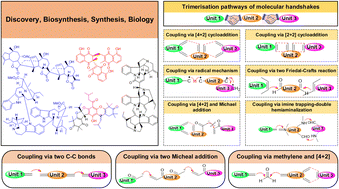

image file: d5np00065c-p1.tif

Satyajit D. Sarker

Prof Satyajit D. Sarker, a Professor of Pharmacy and an extensively cited phytochemist (over 800 publications; h-index 78; i10 index 415), is the Director of the School of Pharmacy and Biomolecular Sciences, Liverpool John Moores University. He is the recipient of the ISE-SFE Outstanding International Ethnopharmacologist 2023 Award. He is the founding Head of the Centre for Natural Products Discovery at LJMU and the founding Chairperson of the Society for Natural Products Discovery, a UK-registered charity. He served as the Editor-in-Chief of Phytochemical Analysis (2010–2024) and is the founding Editor-in-Chief of Natural Products Analysis and Journal of Natural Products Discovery.

image file: d5np00065c-p2.tif

Lutfun Nahar

Prof. Lutfun Nahar, a globally recognised Medicinal Natural Products Chemist (over 615 publications; h-index 67; i10-index 341; Scopus h-index 48), is an Adjunct Professor at Liverpool John Moores University and affiliated with the Czech Academy of Sciences, Palacký University, Saveetha University, and Mae Fah Luang University. She has authored 12 books, including Chemistry for Pharmacy Students and Steroid Dimers. A Fellow of the Higher Education Academy, she has ranked among the World's top 2% of scientists since 2021. She is the founding Editor-in-Chief of the Journal of Medicinal Natural Products and Treasurer of the Phytochemical Society of Europe (2024–2030).

image file: d5np00065c-p3.tif

Ishtiaq Ahmed

Ishtiaq Ahmed obtained his PhD degree in 2007 from Germany working on the synthesis of bioactive oligomeric flavonoids. He carried out his postdoctoral research on the synthesis of chiral macrolide building blocks, isolation of natural products from fungi. Dr Ishtiaq joined Fruk group at Karlsruhe institute of Technology in 2010 and later at cambridge university in 2020. He worked mainly on the design and synthesis of photoswitchable, multifunctional linkers for nanoparticle, DNA origami, nanopores and protein modification. His research interests focus on the development of new synthetic methods and synthesis of the multifunctional organic compounds used for different biological applications.


1 Introduction

Many organisms in nature produce large groups of natural products that have similar molecular structures. This enables them to increase their functional diversity, giving them an evolutionary advantage over competing systems in the same environment. One common pathway used by living systems to produce these large classes of structurally related compounds is oligomerization. In this process, a series of enzyme-catalyzed reactions is used to produce natural products. These metabolites are formed by adding monomers to a growing oligomer chain one after the other.1 Oligomerization is, from an evolutionary perspective, an economically efficient biosynthetic strategy that nature frequently employs to produce complex natural product architectures swiftly. The biosynthetic origin of these compounds involves the combination of a monomeric unit with itself or with another unit that, on occasion, does not constitute a genuine oligomer family.2

Small natural molecules have a propensity to oligomerize via several biosynthetic pathways, giving rise to trimeric natural molecules that exhibit a wide range of structural types and activities. The trimeric natural products are, from a biogenesis standpoint, put together through either homodimerization of the relevant monomers, such as trishizukaol A,3 and trichloranoids B–D,4 or heterodimerization of three distinct monomers, such as inubritantrimer D.5 These monomers are either advanced precursors in biosynthetic pathways or recognized natural substances with unique chemical properties and structural configurations. Two bonds form between three monomers during the trimerization process, followed by the formation of additional intramolecular bonds, which greatly enhances the molecular complexity. Structures of trimeric natural products frequently contain rigid cages, multiple bridged rings, axial chiralities that are sterically hindered, and contiguous tertiary stereocenters.6

Exemplificative examples of trimeric natural products (137 trimers) from different biosynthetic pathways are discussed in terms of source, biosynthesis, and bioactivity. This review does not cover proanthocyanidin-, stilbene-catechin, and resveratrol trimers, which are intermediates in the process of higher oligomerization constructs. The combination of rarity and remarkable biological activity in these exciting structures has led to trimer natural products emerging as targets for chemists in both living organisms (biosynthesis) and the laboratory (synthesis). Trimerization is an essential stage in the biosynthesis of these molecules and is beneficial for biosynthetic processes and chemical conversions. Therefore, studying trimerization reactions should improve our understanding of trimer molecule biosynthesis and relevant biomimetic synthesis. This will speed up the discovery of trimeric molecules in nature and provide practical strategies for their chemical synthesis. This review is prompted by the recent surge in the discovery of trimeric natural products from natural sources. It aims to provide an overview of trimeric natural molecules, focusing on biosynthetic trimerization pathways and biomimetic synthesis.

This review provides a comprehensive and critical coverage of trimeric natural products, focusing particularly on trimerization reactions that are reported to be involved in their biosynthesis. This review seeks to highlight recent advances in the synthesis of complex trimeric secondary metabolites, focusing particularly on effective synthetic methodologies and bioinspired trimerization strategies. Trimerization is a pivotal step in the biosynthesis of trimeric secondary metabolites and is valuable for both biosynthetic applications and chemical transformations. The study of trimerization reactions is anticipated to engender a more profound comprehension of the mechanisms underlying natural product biosynthesis, as well as the potential for their synthesis through synthetic methodologies. In addition, to make this review more comprehensive, only representative or novel characteristic trimers are presented and described in the main text. Information on the other trimer structures, plant resources, and the biological effects of each trimer can be found in the SI. To prevent repetition, terms like “plausible”, “speculative”, “hypothetical”, “postulative”, and “proposed” will not be used in this review, as all biosynthetic schemes discussed are considered speculative.

2 Trimerization pathways of molecular handshakes

Trimeric natural products can be classified, from a chemical perspective, as homotrimers or heterotrimers, depending on the structural characteristics of the constituent monomer units. The term ‘homotrimer’ refers to a trimer that has been derived from the trimerization of identical monomers. In contrast, ‘heterotrimers’ consist of two different monomers with identical or similar skeletons. The carbon skeletons and biosynthetic pathways of the trimers discussed in the review suggest that [4 + 2]3,4 and [2 + 2] cycloadditions,7–9 [6π + 2π] cycloadditions,10,11 carbon linear linkages from Michael addition,12 Rauhut–Currier reaction,13–15 linear C–N linkage (in alkaloids), and oxygen linear linkages from ether or ester bonds16,17 are the primary trimerization patterns in these homo- and heterotrimers. This can be attributed to the presence of highly conjugated units. The trimerization pathways are highlighted in Fig. 1. Other important reactions or strategies involved in trimerization are: the Alder-ene reaction,18 decarboxylative C–C bond,19 Mannich-type reaction,20 Friedel–Crafts reaction,21 enamine-driven nucleophilic attack,21 imine trapping and hemiacetalisation,22 electrophilic aromatic substitution on an iminium,23 ketalization and the Kornblum–DeLaMare rearrangement,24 and coupling via methylene.25
image file: d5np00065c-f1.tif
Fig. 1 Important trimerization pathways.

3 Structure diversity, sources, bioactivities, and biosynthesis of natural trimers

3.1 Sesquiterpenes trimers

3.1.1 Lindenane sesquiterpenoids (LS).
3.1.1.1 Homo-trimers.
3.1.1.1.1 [4 + 2] cycloaddition. Trishizukaol A (1), a compound comprising three lindenane units linked by a [4 + 2] cycloaddition process and a linear C–C linkage, was isolated from the roots of Chloranthus japonicus,3C. spicatus, and C. fortune.4,26 Furthermore, a variety of derivatives of 1, trichloranoids A–D (2–5) and chlofortunins B–D (6–8) were probably produced biogenetically via key vinylcyclopropane rearrangement, free radical coupling, Cope rearrangement, and keto–enol tautomerism (Scheme 1). This was substantiated by their biomimetic transformation from 1–3, 7, and 8 using 365 nm UV radiation and a free radical initiator.4,26 Chlofortunin A (9) is notable as the first trimer connected by an unusual C-15–C-15′ bond.26 The linear C linkage in these natural products, taking inspiration from biomimetic synthesis,27 may be formed through the breaking of a C–C bond via a [4 + 2] cycloaddition reaction (Scheme 1).26–28
image file: d5np00065c-s1.tif
Scheme 1 Biogenetic pathway proposed for 1–9. Reproduced from ref. 28 Royal Society of Chemistry.

Spirolindemer B (10) (Scheme 2a)28 is the first example of a homo-trimer formed by C–C and C–O [4 + 2] cycloaddition. It can be recognized as a hybrid of spirolindemer A (12) and chlotrichene B (13), forming a complex oxaspiro[4.5]decane and spiro[4.5]decane skeleton. The formation of the trimer 10 could occur through two biogenetic pathways (path A or B). First, the intermediate spirolindemer A (12) could undergo a homo-Diels–Alder reaction with molecule 11 to form an intermediate, which would then undergo dehydrogenation (path A). Alternatively, chlotrichene B (13) may be derived from two molecules of 11 undergoing a homo-Diels–Alder reaction, followed by a second hetero-Diels–Alder reaction with 11 and then dehydrogenation to give spirolindemer B (10) (path B).29


image file: d5np00065c-s2.tif
Scheme 2 (a) Second biogenetic pathway proposed for 1, 9, and 10; (b) biosynthetic pathways for 14 and 15. Reproduced from ref. 28–30 with permission from the Royal Society of Chemistry, John Wiley and Sons, and Elsevier respectively.

Trisarcglaboids A (14) and B (15) (Scheme 2b), which were isolated from the roots of Sarcandra glabra, represent lindenane trimers that incorporate a unique 3/5/6/6-fused framework. Scheme 2b presents a putative biogenetic pathway for the formation of trisarcglaboids A (14) and B (15). The biogenetic pathway begins with the oxidation of chloranthalactone A (16) and esterification, generating intermediates 11 and 17. Finally, two [4 + 2] cycloadditions occur: (i) intermolecular [4 + 2] Diels–Alder between Δ15(4),5(6) of 11 and Δ8′(9′) of chloranthalactone A (16), and (ii) between Δ15‴(4‴),5‴(6‴) of 16 and 17, and Δ2″(3″) of 11.30

Trishizukaol A (1) demonstrated potent anti-inflammatory effects and significantly decreased NO production, with an IC50 of 12.5 µM. The expression of COX-2 and inducible NO synthase was significantly reduced by trimer 1, while the expressions of TNF-α and IL-6 were suppressed. On the other hand, trimer 1 promoted the levels of IL-10. ROS levels were also decreased by trimer 1, which achieved this by increasing the levels of Nrf2 protein. Moreover, the NF-κB was regulated by compound 1 through the suppression of the MAPKs signaling pathway. Importantly, the inflammation may be suppressed by this molecule through the TRAF6/MAPKs pathway.31

Cytotoxicity screening revealed that trisarcglaboid A (14) exhibited greater cytotoxicity than trisarcglaboid B (15) against the human cell lines MDA-MB-231, A549, HCT-116, MCF-7, and HepG2, with IC50 values ranging from 1.7 µM (HCT-116) to 6.6 µM (A549). Trimer 14 showed activities with IC50 values ranging from 5.7 to 26.9 µM. western blot results showed that trimer 14 markedly increased Bax/Bcl-2 levels (to 1.10 at 0.625 µM) and simultaneously decreased p-AKT/AKT levels (to 0.61 at 0.625 µM). Furthermore, subsequent experimental findings suggested that trimer 14 facilitates the cleavage of caspase-9 and PARP.30


3.1.1.1.2 Linear linkage. Sarglalactones A–C (18–20), three LS monomers linked by 1,3-dioxolane and esterification, were identified in Sarcandra glabra.16 Compounds 18 and 19 (Fig. 2 and Table S2) originate from the O-linear linkage dimer chlojapolactone A17 by esterification between the free CO2H-12′ and OH-8′′ (trimer 18) or OH-9′′ (trimer 19).
image file: d5np00065c-f2.tif
Fig. 2 Structures of sarglalactones A (18).

Sarglalactone A (18) was found to potentially reverse the multidrug resistance of MCF-7/DOX cells, with a reversal fold value of IC50 at 2.7 µM. Additionally, sarglalactones A–C (18–20) exhibited promising synergistic cytotoxic potential in combination with DOX on U2 OS cells, with combined indexes 0.64, 0.92, and 0,67, respectively.16


3.1.1.2 Hetero-trimers.
3.1.1.2.1 [4 + 2] cycloaddition. The isolation of heterotrimer, holotrichone B (21) (Scheme 3),32 fused by a lindenane sesquiterpene dimer with a 2-geranyl-6-methyl-2,5-cyclohexadien-1,4-dione moiety, was achieved from the Chloranthus holostegius.32
image file: d5np00065c-s3.tif
Scheme 3 Proposed biogenetic pathway of holotrichone B (21). Reproduced from ref. 32 with permission from the Elsevier.

The presence of a large number of sesquiterpenoid monomers in this genus suggests that chloranthalactone A (16) could be used as a precursor.29,33 Intermediate 11 could originate from chloranthalactone A (16) via oxidation, followed by lactone opening and olefination. Furthermore, a key hetero-Diels–Alder reaction could take place, involving two molecules of 11, to construct the oxspiro[4.5]decane skeleton (22). An additional [4 + 2] combination of 22 with the geranylated 1,4-benzoquinone 23 might result in the distinctive hybrid trimer holotrichone B (21).32 The anti-leukaemic effects of holotrichone B (21) against the MV-4-11 cells were notable, with an IC50 of 5.2 µmol L−1. Subsequent findings demonstrated that compound 21 potently induced apoptosis in MV-4-11 cells.32


3.1.1.2.2 Linear linkage. The sesquiterpene hetero-trimers, aggreganoids A (24) and B (25) (Fig. 3 and Table S3)34 and linderalides A–D (26–29) (Fig. 3 and Table S3),35 have been isolated from Lindera aggregate. The two sesquiterpene units (LS units) of trimers 24 and 25 are linked by methine or methylene, which may come from the formaldehyde that is produced naturally inside organisms.6,34 Furthermore, 26–29 constitute the very rare examples of disesquiterpenoid–geranylbenzofuranone hybrids that are directly interconnected by two C–C bonds.35 Although these compounds only contain two LS units, the geranylbenzofuranone unit is dominant, and thus these molecules are called hetero-trimers.
image file: d5np00065c-f3.tif
Fig. 3 Structures of aggreganoid A (24) and linderalide A (26).

The proposed biosynthesis of trimers 24 and 25, illustrated (Scheme S1), that a lindenenol unit could react with formaldehyde, followed by dehydration, forming a methylene group at C-12. Subsequently, the addition to another sesquiterpenoid unit could lead to the formation of a dimeric molecule, followed by coupling with strychnistenolide unit via dehydration, which could eventually produce aggreganoid A (24). In a comparable route to the one outlined above, aggreganoid F (30) could be produced from intermediate 31 and a lindenenol (32) via a coupling reaction. Furthermore, dehydroxylation at C-6′ of 6 could result in the relocation of the terminal double bond and then provide a dimeric molecule, followed by the combination with lindenenol unit, which could generate aggreganoid B (25).34

Lindera aggregata produces four trimeric linderalides (26–29), the possible biosynthetic pathways of which are shown in Scheme S2.35 The biosynthetic building blocks of compounds 26–29 could be homogentisic acid (33), which then produces 34 through geranylation and single-electron transfer. The latter molecule may subsequently undergo a spontaneous radical coupling with a lindenenol (35), followed by single-electron transfer to generate 36. It undergoes methyl esterification, followed by a [4 + 2] hetero cycloaddition with a lindenene-type sesquiterpenoid 37 to produce trimer 29. The intermediate 36 may then undergo radical coupling or electrophilic substitution with different sesquiterpenoid units [lindenenol (35), lindenene (37) or lindestrene (38)] in the presence of specific enzymes, finally yielding compounds 26–28 through lactonization.35

3.1.2 Guaiane sesquiterpenoid trimers.
3.1.2.1 Homo trimer.
3.1.2.1.1 [4 + 2] cycloaddition. Ainsfragolide (39), an unusual zaluzanin C-based sesquiterpene trimer, was isolated from the Chinese plant Ainsliaea fragrans. Zaluzanin C could first be oxidized to give dehydrozaluzanin C (40),12,36 after which dimeric compound gochnatiolide A (42)37 could form via a [4 + 2] cycloaddition of 40 and its oxidative product 41, followed by oxidation. Additionally, a Michael addition could occur between the C-2 of compound 40 (acting as a nucleophile) and the α,β-unsaturated carbonyl group of 40 to produce ainsfragolide (39) (Scheme 4).12 Ainsfragolide (39) exhibited cytotoxic effects against five cell lines, including glioma cells (C6: IC50: 0.7 µM), hepatocellular carcinoma cells (Huh1: IC50: 2.5 µM; HCC-LM3: IC50: 8.3 µM), pancreatic cancer cells (PANC-1: IC50: 0.4 µM) and cervical cancer cells (HeLa: IC50: 1.3 µM).12
image file: d5np00065c-s4.tif
Scheme 4 Biosynthesis of ainsfragolide (39), ainsliatriolides A (43) and B (44). Reproduced from ref. 12 and 38 with permission from the American Chemical Society.

Two guaianolide sesquiterpenoid trimers, named ainsliatriolides A (43) and B (44), were produced by Ainsliaea fragrans. The proposed biosynthetic pathways for these trimers have been described in Scheme 4.38 The joining of two molecules of dehydrozaluzanin C (40) via the [4 + 2] cycloaddition could give 45, which could be followed by hydrolysis to give the dimer 46. Interestingly, the biomimetic synthesis of 46 by the Diels–Alder reaction has already been published.39,40 The dimer 46 could be converted to the trimer 47via reaction with 40 as described for the biosynthesis of ainsfragolide (39).12 In addition, molecule 47 could undergo dehydration and subsequent reduction to give ainsliatriolide A (43). On the other hand, a pathway from molecule 47 to ainsliatriolide B (44) could begin with oxidation followed by ketalization/cyclization, which could lead to ainsliatriolide B (44).

Ainsliatriolide A (43) exhibited significant cytotoxicity against lung cancer (A549: IC50: 1.4 µM), colon cancer (HT-29: IC50: 1.2 µM), hepatocellular carcinoma (BEL-7402: IC50: 1.1 µM), and leukaemia (HL-60: IC50: 0.80 µM). On the other hand, ainsliatriolide B (44) demonstrated good cytotoxic effects towards leukemia (HL-60: IC50: 3.7 µM), and this molecule was moderately active against A549, HT-29, and BEL-7402 with IC50 ranging from 10.6 to 5.0 µM.38

Two trimers, macrocephatriolides A (48) and B (49), with unique linkage patterns, were identified in the Ainsliaea macrocephala.41 Dehydrozaluzanin C (40) was considered the starting material and could undergo a [4 + 2] reaction with 41 to form dimeric architecture 50 (Scheme 5a). This was followed by isomerization and oxidation to produce gochnatiolide A (51).37 Moreover, a Michael addition could occur between the C-2′ of 51 and the α,β-unsaturated ketone of 40, resulting in the trimeric compound macrocephatriolide A (48). Conversely, the [4 + 2] heterocycloaddition of two molecules of 40 followed by hydrolysis could produce the dimer 52, which could subsequently generate another trimeric compound 49 through Michael addition with 40. Macrocephatriolide B (49) demonstrated a remarkable inhibitory effect on PTP1B, exhibiting an IC50 value of 26.2 µM. Kinetic studies revealed trimer that 49 to be a competitive inhibitor (Ki: 16.3 µM). Further studies revealed that trimer 49 enhances insulin-stimulated glucose uptake in C2C12 myotubes.41


image file: d5np00065c-s5.tif
Scheme 5 (a) Biosynthesis of macrocephatriolides A (48) and B (49); (b) proposed biosynthesis of ainsliatrimers A (53) and B (54). Reproduced from ref. 41 with permission from the American Chemical Society.

Scheme 5b shows the structures of the (−)-ainsliatrimers A (53) and B (54), which were isolated from Ainsliaea fulvioides. The two substances have a complicated undecacyclic ring structure with two fascinating spiro[4,5]decane components. Moreover, it is conceivable that these two molecules could be biosynthetically obtained from three monomeric units: one 40 unit and two 41 units through two [4 + 2] Diels–Alder cycloadditions followed by oxidation and double bond isomerization.42 Biological screening of trimers 53 and 54 revealed potent cytotoxicity against the LOVO cell line, with IC50 values of 0.18 and 0.16 µg mL−1, respectively, and against the CEM cell line, with IC50 values of 0.16 and 0.64 µg mL−1, respectively.42

Eight guaiane-type sesquiterpenoid trimers, artemsieverolactones A–H (55–62), were discovered in Artemisia sieversiana (Scheme 6a).43 The putative biosynthetic route of trimers 55–62 could involve 11,13- or 11′,13′-dehydrated absinthin derivatives and their C-10′-epimers, which could be produced from a guaiane-type sesquiterpenoid monomer via a [4 + 2] cycloaddition.44,45 The 11,13- or 11′,13′-dehydrated absinthin derivatives and their C-10′ epimers could undergo [4 + 2] cycloaddition with guaiane-type sesquiterpenoid monomers to produce trimers 55, 56, 58, 60 and 62. Trimers 57 and 59 can then be obtained through the epoxidation of their respective precursors, followed by intramolecular nucleophilic ring opening of the epoxide. An antihepatic fibrosis assay revealed that artemsieverolactone B (56) exhibited notable inhibitory effects on HSC-LX2, with an IC50 value of 37.8 µmol L−1. Interestingly, the activity of molecule 56 was three times higher than standard silybin (IC50: 139.7 µmol L−1). Furthermore, trimers 55, 57, 58, and 61 exhibited IC50 values of 49.2, 94.4, 64.7, and 117.1 µmol L−1, respectively, demonstrating greater efficacy than silybin.43


image file: d5np00065c-s6.tif
Scheme 6 (a) Biosynthesis of artemsieverolactones A–H (55–62); (b) biosynthesis of chrysanolide A (63). Reproduced from ref. 43 and 46 with permission from the John Wiley and Sons, and Royal Society of Chemistry respectively.

Chrysanolide A (63) is an unprecedented sesquiterpenoid trimer that was isolated from Chrysanthemum indicum.46 This molecule comprises three guaianolide sesquiterpene units. The biogenetic pathway for compound 63 demonstrated that this molecule could trimerize via two [4 + 2] cycloaddition reactions: Firstly, a Diels–Alder cycloaddition occurs between the Δ11(13) double bond of the guaianolide unit, cumambrin A (64), and the conjugated Δ1(2),3(4) double bond of the guaianolide unit 65. Secondly, a second [4 + 2] cycloaddition occurs between two guaianolide units 65via a C–C single bond between C-11′ and C-4″, and between C-13′ and C-1″ (Scheme 6b). Chrysanolide A (63) demonstrated potent anti-HBV activity, affecting both HBsAg (IC50: 6.6 µM) and HBeAg (IC50: 6.2 µM).46

3.1.3 Hybrid guaiane–xanthanolide trimers.
3.1.3.1 [4 + 2] cycloaddition. The unusual sesquiterpene trimer inulajaponicolide A (66) (Scheme 7) was reported from Inula japonica. This trimer has an unprecedented carbon skeleton consisting of one xanthanolide and two guaianolide units, linked via a Diels–Alder cycloaddition reaction in the C-11/C-3′ and C-11′/C-1″ positions. The biogenetic pathway for compound 66 indicates that this molecule could trimerize via two [4 + 2] cycloaddition reactions: firstly, a Diels–Alder cycloaddition occurs between the Δ11(13) double bond of the xanthanolide unit A 67 and the conjugated Δ1(5),3(4) double bond of the guaianolide unit B 68, via two C–C single bonds: C-11/C-3′ and between C-13 and C-1′. Secondly, a second [4 + 2] cycloaddition occurs between guaianolide units B 68 and C 69via a C–C single bond between C-11′ and C-1″, and between C-13′ and C-3″.47 Inulajaponicolide A (66) exhibited promising effects on NO production in LPS-induced RAW264.7 cells, with an IC50 of 1.9 µM.47
image file: d5np00065c-s7.tif
Scheme 7 Biosynthesis of inulajaponicolide A (66). Reproduced from ref. 47 with permission from the Elsevier.
3.1.4 Hybrid guaiane–eudesmane trimers.
3.1.4.1 [4 + 2] cycloaddition. The trimer inubritantrimer A (70), which features an unusual exoexo spiro-polycyclic scaffold, was discovered alongside three endoexo [4 + 2] adducts (inubritantrimers B–D, 71–73) from the plant Inula britannica. Inubritantrimers B–C (71–72) comprise one eudesmane unit (unit A 74) and two guaianes (units B1 75 and B2 76). In contrast, inubritantrimer D (73) contains one 1,10-secoeudesmanane unit (unit C 77) and two guaiane units (75) (Scheme 8).5
image file: d5np00065c-s8.tif
Scheme 8 Biosynthesis of inubritantrimers A–D (70–73). Reproduced from ref. 5 with permission from the American Chemical Society.

The hypothetical biosynthetic pathways of the trimerized sesquiterpenoid [4 + 2] adducts 70–73 are outlined in Scheme 8. Inhibitor trimer 70 could be synthesized via two [4 + 2] cycloadditions: first exo [4 + 2] cycloaddition between the Δ11(13) double bond in 74 and the conjugated Δ1(5),3(4) double bonds in 75, via two C–C single bonds: C-11/C-1′ and C-13/C-3′. The second is an exo [4 + 2] cycloaddition between the middle 75 and the side guaianolide unit 75, forming a C–C single bond between C-11′ and C-1″, as well as between C-13′ and C-3″.

Trimers 71 and 72 are formed by the first endo [4 + 2] cycloaddition of 74 and either 75 or 76, involving two C–C single bonds between C-11 and C-3′ and between C-13 and C-1′. A second exo [4 + 2] cycloaddition of 75 or 76 with another 75 could also generate trimers 71 and 72. Similarly, trimer 73 could be formed through two [4 + 2] cycloadditions, such as an exo cycloaddition between 1,10-secoeudesmane 77 and 75, followed by a second [4 + 2] cycloaddition between two molecules of 75.5 The in vitro anticancer activity of inubritantrimers A–D (70–73) was assessed, revealing a modest level of toxicity against breast cancer cells (MDA-MB-468, MDA-MB-231, MCF-7), with IC50 values ranging from 5.8 to 12.0 µM.5

3.1.5 Hybrid guaiane–rotundane–sesquiterpene trimers.
3.1.5.1 Methylene linkage. Two sesquiterpenoid trimers, artematrotrimers A (78) and B (79) (Scheme 9) were produced by Artemisia atrovirens. Biosynthetically, these trimers could presumably be derived from the coexisting compound 80, and epoxide isomerization of the latter compound would produce intermediate 81. The molecule 81 would then undergo ene reaction with a rotundane-type sesquiterpene 82 to generate compounds dimer artematrodimers A (83) and B (84), which were also isolated from Artemisia atrovirens. Artematrotrimers A (78) and B (79) could be obtained via a 1,4-addition reaction involving compounds 83 and 84, as well as intermediate 81. Artematrotrimers A (78) and B (79) demonstrated moderate cytotoxic effects towards liver cancer cells (Huh7 and HepG2), with IC50 values between 94.0 and 105.4 µM.48
image file: d5np00065c-s9.tif
Scheme 9 Biosynthesis of artematrotrimers A (78) and B (79). Reproduced from ref. 48 with permission from the Royal Society of Chemistry.
3.1.6 Xanthanolide sesquiterpene trimers.
3.1.6.1 Homo-trimers.
3.1.6.1.1 [4 + 2] cycloaddition. Trimers xanthanoltrimers A–C (85–87), were found in the fruits of Xanthium italicum, which were collected in Xinjiang, China. A biosynthetic pathway for 85–87 (Scheme 10) was proposed, whereby sesquiterpene trimers could be formed via a two-step [4 + 2] reaction from a xanthanolide sesquiterpene monomer. This could then be followed by a series of reactions, including epoxidation, epoxide opening, dehydration, oxidation, and acetylation.49
image file: d5np00065c-s10.tif
Scheme 10 Biosynthesis of xanthanoltrimers A–C (85–87). Reproduced from ref. 49 with permission from the Royal Society of Chemistry.
3.1.7 Eremophilane sesquiterpene trimers.
3.1.7.1 Homo-trimers.
3.1.7.1.1 [4 + 2] cycloaddition. Trimers ligusaginoids C (88) and D (89), which have a unique 6/6/5/5 polycyclic skeleton, were isolated from Ligularia sagitta.50 The biogenetic origin of trimers 88 and 89 can be traced back to eremophilane sesquiterpene monomers 90 and 91.51 This eremophilane-type sesquiterpenoid 91 and 2-formylacrylic acid can undergo esterification and an [4 + 2] cycloaddition to form intermediate 92. Two intermolecular [4 + 2] cycloadditions can then occur between intermediate 92 and precursors 90 and 91, yielding trimers 88 and 89 (Scheme 11).50
image file: d5np00065c-s11.tif
Scheme 11 Biosynthesis of ligusaginoids C (88) and D (89). Reproduced from ref. 50 with permission from the Elsevier.
3.1.8 Carabranolide sesquiterpene trimers.
3.1.8.1 Methylene linkage. Tricarabrols A–C (93–95), three sesquiterpene trimers, were identified in Carpesium faberi. Tricarabrols A (93) and B (94) are a pair of stereoisomers with a unique C44 skeleton, featuring a methylene-tethered linkage connecting three sesquiterpene units. In addition to the unique spiro cyclopentane ring linkage connecting two sesquiterpene units, tricarabrol C (95) also exhibits a methylene bridge.18 Carabrol (96), a major component of C. faberi, is considered the biosynthetic precursor of tricarabrols A–C (93–95) (Scheme 12). Intermediate 97 could be generated if carabrol (96) undergoes the intermolecular Alder–ene reaction, followed by oxidation and decarboxylation. In addition, the intermolecular Michael addition reaction between intermediate 97 and another carabrol (96) unit then forms a C-11″–C-13′ bond, generating trimers 93 and 94. In the case of tricarabrol C (95), the cyclopentane ring assembly connecting two carabrol (96) molecules in molecule 98 resulted from a [3 + 2] radical cycloaddition. Compound 99 could subsequently be formed through dehydrogenation of dimer molecule 98, followed by a Michael addition with another carabrol (96) molecule to produce trimer 95.18
image file: d5np00065c-s12.tif
Scheme 12 Biosynthesis of tricarabrols A–C (93–95). Reproduced from ref. 18 with permission from the Elsevier.

The production of NO in RAW264.7 macrophages was found to be significantly inhibited by tricarabrols A (93) and B (94), with respective IC50 values of 2.90 and 4.52 µM. It was shown by further investigation that the anti-inflammatory effect of compound 93 was mediated through the inhibition of the phosphorylation and NK-κB. Further studies revealed that trimer 93 effectively reduced the levels of IL-6, TNF-α, and MCP-1 in macrophages stimulated by LPS.18

3.1.9 Heptelidic acid trimers.
3.1.9.1 Linear linkage. The two heptelidic acid-derived trimeric sesquiterpenes, trivirensols A (100) and B (101), were purified from the fungus Trichoderma virens FY06. Trivirensols A (100) and B (101) are heptelidic acid trimers, with three subunits connected by two ester bonds. Studies on the biosynthesis of the compounds indicate that trimers 100 and 101 could be formed from heptelidic acid (102) (Scheme 13 and Table S6). In addition, it was found that other monomers 104 and 105 could also be derived from 102. Trimeric sesquiterpenes 100 and 101 can be produced by trimerization through the esterification of monomers 103-105.52 Trivirensols A (100) and B (101) showed potent inhibitory activities against Colletotrichum musae and C. gloeosporioides, Fusarium oxysporum, F. graminearum.52
image file: d5np00065c-s13.tif
Scheme 13 Biosynthesis of trivirensols A (100) and B (101). Reproduced from ref. 52 with permission from the American Chemical Society.
3.1.10 Hybrid carotane–cyclonerane–cyclofarnesane trimers.
3.1.10.1 Linear linkage. Trivirensols A–G (106−112) are trimeric polyester sesquiterpenes, which have been isolated from the fungus Trichoderma virens CMB-TN16. Monomeric units 113–117 could derive from unit C (115) via a series of reactions including trans-lactonisation, dehydration, hydration, and decarboxylation. Trivirensols A–G (106−112) share a common monomeric structure comprising subunits A–E (113–117), and these trimers can be formed by coupling the five monomers via esterification (Scheme 14 and Table S7).53 Trivirensols A–C (106–108) and G (112) exhibited promising antimicrobial activity against Enterococcus faecalis, with respective IC50 values of 1.0, 1.6, 8.0 and 10.0 µM.53 Moreover, trimers 106 and 107 are the second set of compounds to be assigned the same name, trivirensols A–B, as trimers 100 and 101 have already been reported under the same names.
image file: d5np00065c-s14.tif
Scheme 14 Biosynthesis of trivirensols A–G (106−112). Reproduced from ref. 53 with permission from the American Chemical Society.
3.1.11 Hybrid gurjunene–germacrene sesquiterpene trimers.
3.1.11.1 [4 + 2] cycloaddition. Nudibaccatumone (118) was synthesized by Piper nudibaccatum and this trimer combines two sesquiterpene units and a quinone methide. This molecule also has an unusual fused bicyclo[2.2.2]octenedione core unit and 39 carbons.54 Nudibaccatumone (118) biosynthetically can be derived from (−)-α-gurjunene (120),55 and this latter molecule can be derived from farnesyl diphosphate (119) via a series of reactions, including cyclisation, unsaturation, and epoxidation.

Molecule 120 could then react with quinone methide 122, which could be formed from the oxidation of hydroxychavicol (121), to produce intermediate 123via a 1,8-Michael addition reaction. Furthermore, the oxidation of the hydroxychavicol moiety in intermediate 123 yields the 1,2-benzoquinone intermediate 124. Finally, nudibaccatumone (118) is formed via an intermolecular Diels–Alder reaction between 124 and (+)-bicyclogermacrene (125) (Scheme 15).54


image file: d5np00065c-s15.tif
Scheme 15 Biosynthesis of nudibaccatumone (118). Reproduced from ref. 54 with permission from the American Chemical Society.

3.2 Triterpene trimer

3.2.1 [4 + 2] cycloaddition. Two trimers, triscutins A (126) and B (127), derived from the triterpenoid pristimerin, have been reported from Maytenus scutioides. Both molecules are isomers with two diether bridges linking the three pristimerin triterpenoid subunits in the molecule and with different regio-substitution.56 Shirota et al.57 proposed a biosynthetic route based on a hetero-Diels–Alder reaction for the triterpene dimers xuxuarines Aα and Aβ. This was supported by the synthesis of the 4α-hydroxy-pristimerin dimer via a hetero-Diels–Alder reaction.58 They hypothesized that the quinoid triterpene pristimerin (128) exists in equilibrium with its 2,3-diketone units (ortho-quinones 129 and 130), which could combine to form the corresponding triterpene dimer [2, 3]. Similarly, triscutins A (126) and B (127) could be biosynthesized via two [4 + 2] hetero-Diels–Alder reactions involving three pristimerin units (128–130) with a quinoid double bond (C-3/C-4 as the dienophile), an orthoquinone (2,3-diketone as the diene), and a double bond at C-6/C-7 (as the dienophile) (Scheme 16).56
image file: d5np00065c-s16.tif
Scheme 16 Biosynthesis of triscutins A (126) and B (127). Reproduced from ref. 56 with permission from the American Chemical Society.

3.3 Citrinin trimers

3.3.1 [4 + 2] cycloaddition. Two citrinin trimers, tricitrinols A (131) and B (132), were produced by Penicillium citrinum.19 The proposed biosynthetic plan is shown in Scheme 17. Citrinin exists as a resonance hybrid between two isomers: the o-quinone (133) and the p-quinone (134). A heterocyclic Diels–Alder reaction involving o-quinone (133) as the diene (C-1, C-8, C-8a, and C-8 C[double bond, length as m-dash]O) and p-quinone (134) as the dienophile (C-7 and C-8) could produce the 8,8′-dimer intermediate 135 (Scheme 17).19 This compound could then undergo decarboxylation and dehydration to form molecule 136. This could be followed by decarboxylative coupling with another o-quinone (133), followed by C-10 epimerization via a Michael-type nucleophilic addition of methanol to produce tricitrinol A (131). Similarly, tricitrinol B (132) can be biosynthesized in a similar way to tricitrinol A (131), but in the first step, two molecules of o-quinone (133) join together via a [4 + 2] cycloaddition.
image file: d5np00065c-s17.tif
Scheme 17 Biosynthesis of tricitrinols A (131) and B (132). Reproduced from ref. 19 with permission from the American Chemical Society.

Tricitrinol B (132) displayed cytotoxicity towards sixteen human cell lines, including those of colon, leukemia, liver, lung, gastric, breast, melanoma, prostate, epidermoid, cervical, ovarian, and rhabdomyosarcoma cancers, with an average IC50 value of 4.83 µM.19 Conversely, tricitrinol A (131) exhibited cytotoxic effects towards leukemia (HL-60) and colon cancer (HCT116) with IC50 values of 8.1 and 8.5 µM, respectively. Tricitrinol B (132) induced apoptosis in HCT116 and HL-60 cells mainly via the extrinsic pathway, arresting the G2/M transition. Tricitrinol B (132) induced apoptosis in HL-60 and HCT-116 cells mainly via the extrinsic pathway and by arresting the G2/M transition. Additionally, tricitrinol B (132) exhibited equipotent cytotoxicity towards multidrug-resistant (MDR) cells (KB/VCR and MCF-7/ADM), with RF values of 0.94 and 1.28, respectively.19

Unprecedented citrinin trimers, neotricitrinols A–C (137–139), were isolated from the fungus Penicillium citrinum. As shown by a biosynthetic pathway, dimeric citrinin penicitrinol A (142) can initially be generated via [4 + 2] cycloaddition of monomeric citrin 140 and benzofuran 141 (Scheme 18a).59 The addition of a third 7-decarboxycitrinin (143) moiety was determined via two distinct pathways: firstly, 6-enol–keto tautomerism initiated addition to C-7 of decarboxycitrinin, which could then be oxidized to form the epoxide intermediate. The epoxide was subsequently attacked by a nucleophile, which necessitated the cyclisation of the five-membered linkage. This latter molecule could then undergo ring contraction60 to form neotricitrinol A (137). Secondly, the addition to C-5 decarboxycitrinin was induced by 6′-enol–keto tautomerism, followed by cyclisation, enol–ketol conversion and ring contraction to deliver neotricitrinols B (138) and C (139).59


image file: d5np00065c-s18.tif
Scheme 18 (a) Biosynthesis of neotricitrinols A–C (137–139); (b) biosynthesis of tricitrinol C (144). Reproduced from ref. 59 and 61 with permission from the Elsevier and American Chemical Society respectively.

The citrinin trimer tricitrinol C (144) has been identified in the fungus Penicillium citrinum.61 The biosynthetic pathway (Scheme 18b) begins with citrinin (145), which can undergo decarboxylation and isomerization, providing the intermediate 146. The latter molecule could undergo a double nucleophilic reaction with compound 147, followed by subsequent dehydration, which would afford penicitrinol A (148). The nucleophilic reaction of 148 and 149, followed by sequential dehydration and reduction, would deliver tricitrinol C (144). Neotricitrinol B (138) exhibited potent anti-osteoporotic activity. This compound enhanced the osteogenic mineralisation of primary bone mesenchymal stem cells and suppressed adipogenic differentiation.59 Tricitrinol C (144) showed significant cytotoxic activity against A549 cells, with an IC50 value of 1.34 µM.61

3.4 Tocopherol trimers

3.4.1 [4 + 2] cycloaddition. The trimeric monoterpene (±)-schefflone (150) was produced by Uvaria schefflera,62 while the tocopherol trimers IVb (151) and IVa (152), along with the ferotocotrimers C (153) and D (154), were obtained from Euryale ferox.63 Schefflone (150) is a trimeric derivative of ortho-quinone methide (o-QM, 156) (Scheme 19),63 which is derived from espintanol (155). Compound 150 may be biosynthesized via a [4 + 2] cycloaddition involving three o-QM (156) units, two acting as dienes and one dienophile. Several o-QM-generating enzymes are already known, including flavin-dependent oxidases and α-ketoglutarate-dependent non-heme iron enzymes.64 Liao and his team65 revealed that schefflonene (150) can be synthesized biomimetically via a [4 + 2] cycloaddition of o-QM (156), generated by oxidation of espintanol (155).
image file: d5np00065c-s19.tif
Scheme 19 Proposed biosynthesis of tocopherol trimers 150–154.

The tocopherol trimers IVb (151) and IVa (152)63 are also regarded as trimers of o-QM (158) (Scheme 19). They may form through a double [4 + 2] cycloaddition of (+)-α-tocopherol (157). Liao and colleagues65 reported the biomimetic synthesis of tocopherol trimers IVb (151) and IVa (152) via a double [4 + 2] cycloaddition of o-QM (158), generated from the oxidation of (+)-α-tocopherol (157). In this case, the dienophile is located at C-4′a/C-8′a in the second [4 + 2] cycloaddition, which differs from (±)-schefflone (150). Moreover, trimers IVb (151) and IVa (152) can undergo ring contraction to yield ferotocotrimers C (153) and D (154). The LC50 of (±)-schefflon (150) was determined as 0.0005 mg mL−1, indicating modest larvicidal activity against Anopheles gambiae larvae.62

3.5 Sorbicillinoid trimeric

3.5.1 [4 + 2] cycloaddition. Seven trimeric sorbicillinoids 159–165 (Scheme 20) were isolated from Penicillium chrysogenum, Acremonium citrinum, and Phialocephala sp.66–69 Biosynthetic studies revealed that the natural sorbicillinoid dimer bisvertinolone (168)70 forms via Michael addition and ketalization between sorbicillinol (166) and oxosorbicillinol (167). The biosynthesis of trisorbicillinone A (159) involves an endo-selective [4 + 2] cycloaddition, with sorbicillinol (166a,b) acting as the diene and bisvertinolone (168) acting as the dienophile. The building blocks, including 166a,b, and 168 are used in this strategy to produce trimers 160–162.71 With trisorbicillinone B (160), the endo-selectivity remains, but the regioselectivity shifts towards the Δ4″,5″ double bond. Trisorbicillinone C (161) and the related tetrahydro analogue 162 are derived from an exo-selective [4 + 2] cycloaddition using the same Δ4″,5″ double bond as dienophile.
image file: d5np00065c-s20.tif
Scheme 20 Biosynthesis of trimeric sorbicillinoids 159–165. Reproduced from ref. 69 with permission from the Royal Society of Chemistry.

The cage-like, dimeric core structures of trichodimerols 169a,b could be derived from two Michael reactions and two ketalizations between two sorbicillinol units (166a,b). Trisorbicillinones D (163) and E (164) are derived from sorbicillinols (166a,b) and trichodimerols (169a,b).71 The Diels–Alder adduct 163 resembles trisorbicillinone B (160) in terms of selectivity (endo, Δ4″,5″ dienophile), while trimer 164 shares connectivity (endo, Δ2′,3′ dienophile) with trimer 159. Another trimeric sorbicillinoid, sorbicillamine E (165), is a nitrogen-containing sorbicillamines. It was reported from Penicillium sp. F23-2 alongside sorbicillamine D (170). Sorbicillamine E (165) is highly similar in structure to trisorbicillinone A (159).70 The sole discrepancy lies in the amino functionality inherent within the bisvertinolone scaffold (168), thereby signifying that sorbicillamine D (170) is indispensable as a dienophile in the concomitant [4 + 2] reaction. Trimers 159–163 exhibited cytotoxic activity against various cancer cell lines (HL60, K562, and P388), with IC50 values between 3.14 and 88.2 µM.66,70,71

3.6 Alkaloid trimers

3.6.1 Monoterpene indole alkaloids trimers. Two unprecedented Aspidosperma-type alkaloid trimers, taberdivarines A (171) and B (172), were isolated from Tabernaemontana divaricata. Compound 171 contains three Aspidosperma-type alkaloid units connected via two furan ring linkages, whereas compound 172 has one such linkage.72 Taberdivarine A (171) may form via dihydrofuran generation between three Aspidosperma-type alkaloid units (Scheme 21 and Table S11).72 Monomeric alkaloid 173 undergoes epoxidation at the C-14/C-15 bond, followed by the formation of an iminium ion between the C-3 atom and the tertiary nitrogen atom, resulting in the formation of intermediate 174. Subsequently, C-10′ of alkaloid 175 attacks the iminium ion, forming the C-3/C-10′ bond in molecule 176, which then undergoes intramolecular epoxide cleavage to produce the dihydrofuran structure 177.73 This intermediate converts to taberdivarines A (171) through three steps (steps A-C). Taberdivarine B (172) likely follows a similar pathway. Taberdivarine A (171) exhibited cytotoxic effects against HT-29, SMMC-7721, and A549 cells, with IC50 values of 11.4, 4.9, and 10.4 µM, respectively.72
image file: d5np00065c-s21.tif
Scheme 21 Biosynthesis of taberdivarine A (171).

Ervadivamines A (177) and B (178) have been isolated from Ervatamia divaricate, and these are rare trimeric alkaloids of the vobasine–iboga–vobasine type, exhibiting both C–C and C–N linkage patterns. Ervadivamines A (177) and B (178) are special types of trimeric alkaloids, and the ways these compounds are made (Scheme 22)74 could probably be traced back to these similar building blocks, as pericyclivine (179), ibogamine (181), and ibogaine (182) were found in Ervatamia plants. First, the periclivine (179) could undergo methylation, followed by cleavage of the C-1 and N bonds, resulting in the formation of an active intermediate 180.


image file: d5np00065c-s22.tif
Scheme 22 Biosynthesis pathway for ervadivamines A (177) and B (178). Reproduced from ref. 74 with permission from the American Chemical Society.

Subsequently, nucleophilic attack on the C-11 and C-1 (NH) of 181 and 182 by intermediate 180 (two molecules) at the C-3 position might lead to the formation of trimers 177 and 178. Divaricamine A (183) (Table S11), which was isolated from Tabernaemontana divaricata, may have been biosynthesized in the same pathway as trimers 177 and 178.75 Ervadivamine A (177) showed cytotoxic effects towards HT-29, A549, HepG2/ADM, and MCF-7 with IC50 values in the range of 10.2 and 12.5 µM.74

Strychnohexamine (184) (Scheme 23), a trisindole alkaloid, was isolated from the roots of Strychnos icaja.76 This trimer has three alkaloid units of strychnine (185) and two akuammicine units (186). It also exhibits a further distinctive feature: a toxiferine I-like diazacyclooctadiene inter-akuammicine junction.77 This junction is related to double hemiacetalisation, which is a heteronucleophilic attack involving an indolinic N-1 group attacking the aldehydic C-17 group of the other akuammicine component symmetrically and the following dehydration of these N,O-hemiketal groups. Similarly, the bond between the northern akuammicine and strychnane constituent is indisputably analogous to that previously documented to occur in the biosynthesis of bis-strychnane-type monoterpene indole alkaloid dimers, strychnogucine A78 and sungucine78,79 (viz., hydration-driven Δ17′,23′ enamine nucleophilic attack on a Δ4,5 iminium).


image file: d5np00065c-s23.tif
Scheme 23 Biosynthesis of strychnohexamine (184).

Voatriafricanines A (187) and B (188) (Scheme 24), monoterpene trisindole alkaloids, featuring vobasine–aspidosperma–aspidosperma, were produced by Voacanga africana. The biosynthesis of trimers 187 and 188 may initiate via a ring-closure-driven heteronucleophilic attack of the Δ14,15 functionality of the first aspidospermane unit (unit A, 189 and 190) on the conjugated C-22 site of the second aspidospermane unit (unit B, 191).80 Subsequently, the heteronucleophilic annulation of indolinic nitrogen (N1 of unit B) into the C-3 position of the Δ3,4-iminum (unit A, 189 and 190) occurs after the initial enamine-related reaction. The vobasane unit is incorporated through an electrophilic aromatic substitution initiated by the C-10 site of the northern aspidospermane unit (unit B, 191) on the C-3 position of the vobasane unit (unit C, 192). Voatriafricanine A (187) demonstrated notable antimycobacterial activity against Mycobacterium smegmatis, M. abscessus, and M. bovis.80


image file: d5np00065c-s24.tif
Scheme 24 Biosynthesis of voatriafricanines A (187) and B (188).

As a unique trimeric alkaloid, trirosaline (193) (Scheme 25) is an intriguing example of a tris-ajmalicine-type alkaloid, was isolated from Catharanthus roseus.20 The trimerization pathway involves the condensation of a Δ5,6 enamine in monomer 195, which is generated from a primary ajmalicine unit 194via the retro-Mannich-derived C-5′ aldehyde moiety of a seco-ajmalicine unit 196. A second intermonomeric N–C bond forms via a Mannich-type reaction between the N-4′ of a seco-ajmalicine unit and the C-6 of oxidized ajmalicine unit 197. Ultimately, a hydride abstraction at the N-4′ position, coupled with elimination of the two hydroxyls that formed during trimerization reactions, drives aromatization, resulting in the generation of serpentine units connected to the seco ajmalicine monomer of trimer 193.20


image file: d5np00065c-s25.tif
Scheme 25 Biosynthesis of trirosaline (193). Reproduced from ref. 2 with permission from the Royal Society of Chemistry.

The trimer bousangustine A (198), a symmetrical monoterpenoid indole alkaloid, was isolated from the stems of Bousigonia angustifolia. This trimer structure is characterized by a 6/9/5/6 ring system.21 In addition to trimer 198, two other monoterpene indole alkaloids, rhazinal (199) and rhazinilam (200), have been reported in B. angustifolia. The biosynthetic pathway for trimer 198 may begin with 199 and 200 through a Friedel–Crafts reaction to produce the hydroxylated molecule 201. Compound 201 then undergoes dehydration to produce 202, which subsequently undergoes further coupling with 200 to form trimer 198 (Scheme 26).21 Another possibility is that a nucleophilic attack triggered by a dienamine on a C-5 exomethylene-substituted rhazinilam monomer 200 leads to bousangustine B (203). A further nucleophilic attack, triggered by the dienamine function of a third rhazinilam unit, produces the trimer 198. Bousangustine A (198) showed moderate cytotoxic activity against SMMC-7721, HepG2, HeLa and A549 cells with IC50 values ranging from 10.9 to 16.9 µM.21


image file: d5np00065c-s26.tif
Scheme 26 Biosynthetic pathways for bousangustine A (198). Reproduced from ref. 2 with permission from the Royal Society of Chemistry.

The interesting example of an eburnamine–eburnamine–aspidospermine-type trimeric indole alkaloid, bousigonine B (204), was isolated from Bousigonia mekongensis. The trimeric structure of the trimer 204 (Scheme 27)23 results from two electrophilic aromatic substitution reactions initiated by the C-10 and C-12 sites of the aspidospermane unit 205 on the C-16 electrophilic positions of both peripheral eburnane scaffolds 206.


image file: d5np00065c-s27.tif
Scheme 27 Biosynthesis of bousigonine B (204). Reproduced from ref. 2 with permission from the Royal Society of Chemistry.
3.6.2 Securinega alkaloid trimers.
3.6.2.1 Linear linkage. Zhang et al.13–15 investigated the plant Flueggea virosa and isolated eight C–C-linked trimers fluevirosines A–C (207–209), fluevirosine D (210) and fluevirosines E–H (211–214) (Schemes 28, S3 and Table S12). Close examination of the structure of the securinega alkaloid trimers reveals that they are biosynthesized by a putative Rauhut–Currier reaction (RCR), which involves the generation of a carbon–carbon bond between two Michael acceptors. Some trimers may form by an RCR reaction involving norsecurinine (215) and 216via C-14/C-15′ and C-12′/C-15″ (trimers 207 and 213), or C-14/C-15′ and C-14′/C-15″ (trimer 214). Conversely, trimers 208 and 209 may be generated by the same RCR reaction involving monomers 215–218, with coupling occurring through C-14/C-15′ and C-14′/C-15″. Furthermore, trimers 210–212 may form from three molecules of norsecurinine (215) molecules via C-12/C-15′ and C-14/C-15″ producing trimers 210 and 212, or via C-12/C-15′ and C-12′/C-15″ to produce trimer 211.13–15 Fluevirosines B (208) and C (209) exhibited inhibitory effects of 37% and 35%, respectively, on the splicing of XBP1 mRNA.13 Fluevirosines G (213) and H (214) exhibited anti-HIV activity in vitro with respective IC50 values of 58.7 and 108 µM.15
image file: d5np00065c-s28.tif
Scheme 28 Biosynthesis of fluevirosine A (207).
3.6.3 Myrmicarin trimers.
3.6.3.1 [4 + 2] cycloaddition. Myrmicarin 663 (219), a trimer, was identified in Myrmicaria ant.81 In 1998, Schröder and Francke reported the racemic synthesis of myrmicarin 217 (M217, 221, Scheme 29) via the dehydrative cyclization of myrmicarin 237B (M237B, 220).82 This finding supported the hypothesis that complex myrmicarins, such as dimeric myrmicarin 430A (M430A, 223), may be biosynthetically formed through the dimerization of monomeric myrmicarin 222 (Scheme 29).10,83 As an alternative option, it was thought that dimerization may occur in a one-step cyclopentannulation process involving a concerted [6πa + 2πs] cycloaddition between M215B (224) and the (Z)-azafulvenium ion (225).10,11 During this process, the two bonds of the cyclopentane ring would form simultaneously via an entrefacial antarafacial interaction between the 6π unit of the 225 and one face of the M215B (224) 2π alkene. Finally, myrmicarin 663 (219) may form via [4 + 2] cycloaddition of the resulting dimer 223 and monomer 222.
image file: d5np00065c-s29.tif
Scheme 29 Biosynthesis of myrmicarin 663 (219).
3.6.4 Cyclotryptamine alkaloid trimers. Biosynthetic studies of pyrroloindoline alkaloid trimers revealed that three N-methyl-tryptamine units condense to form hodgkinsine (226) (Scheme 30 and Table S13),84 hodgkinsine B (227),85 (−) idiospermuline (228)86 and psychotrimine (229)87via radical coupling starting from tryptamine (232). Another trimer, calycosidine (230),88 may then be biosynthesized via a cascade of chemical reactions including C-8a′/N-1′ and C-8a″/N-1″ bond cleavage, amination, retroamination, dehydration, and nucleophilic reactions. Finally, bonds formed between C-8a/N-8′ and N1′-CH3/N-8, producing psychotripine (231)89via a nucleophilic addition reaction. This reaction may have initiated via an imine ion intermediate (233).89
image file: d5np00065c-s30.tif
Scheme 30 (a) Biosynthesis of pyrroloindole alkaloid trimers 226–231.

Hodgkinsine (226) is an opioid receptor stimulator and NMDA receptor inhibitor, which has pain-relieving and anti-inflammatory properties. Additionally, it exhibits antiviral, antibacterial, and antifungal properties.90,91 Psychotrimine (229) showed significant antibacterial effects towards Bacillus subtilis, Streptococcus agalactiae, and S. pyogenes with an MIC of 16 µg mL−1.92

3.6.5 Dopamine-derived alkaloid trimers.
3.6.5.1 [4 + 2] cycloaddition. Four pairs of dopamine-derived trimers (±)-cryptamides A–D (234–237) (Fig. 4 and Table S13) were produced by the insect Cryptotympana pustulata. These trimers may be biosynthetically generated from three dopamine molecules via a [4 + 2] hetero-Diels–Alder reaction. Biological activity results demonstrated that only the (−)-cryptamide D (237) exhibited significant anti-inflammatory activity, suppressing NO production. Meanwhile, (±)-235 and (±)-236 exhibited moderate anti-inflammatory properties.93
image file: d5np00065c-f4.tif
Fig. 4 Structures of dopamine-derived alkaloids (+) and (−)-cryptamide A (234).

3.7 Phloroglucinol trimers

Two pairs of novel enantiomeric phloroglucinol trimers, rhodomentosones A (238) and B (239), were isolated from Rhodomyrtus tomentosa.24 These compounds contain a unique 6/5/6/5/5/6 fused ring system. These compounds have certain structural features. These features suggest that the monomeric phloroglucinol leptospermone (240)94 may serve as the initial molecule in the hypothetical biogenetic pathways shown in Scheme 31.24 Initially, compound 240 may undergo reduction, dehydration, and olefinic migration, followed by further oxidation to produce endoperoxides 241a and 241b.95 Following this, 6/5/5/6-fused phloroglucinol dimers 243 and 244 may be produced through the combination of acylphloroglucinol 242 and endoperoxides via a cascade reaction involving dihydroxylation (DH), Michael addition (MA), Kornblum–DeLaMare rearrangement (KDM), and ketalization (KT). Finally, a trimeric scaffold may be obtained by further coupling of the endoperoxides 241a/241b and phloroglucinol dimers 243/244 to form the trimers rhodomentosones A (238) and B (239).
image file: d5np00065c-s31.tif
Scheme 31 Biosynthetic pathways for trimers 238, 239 and 245–250. Reproduced from ref. 24 and 96 with permission from the American Chemical Society.

The phloroglucinol trimers and tomentosones A–F (245–250), which have an unusual 6/5/5/6/6/6-fused hexacyclic ring system, were isolated from Rhodomyrtus tomentosa. Structurally, compounds 245–250 are distinguished by a bisfuran-β-triketone acylphloroglucinol framework linked with an alkyl-substituted β-triketone fragment via a pyran ring (Scheme 31).96 Inspired by the co-isolated dimers 243, 244, 252, and 253 (ref. 24 and 97) and Tan's biomimetic synthesis work,98 it was hypothesized that these trimers may be biosynthesized by joining three proposed biogenetic subunits such as 242, 251, and 241a,b (Scheme 31).

The first step is reduction and dehydration of leptospermone (240) to generate the reactive scaffold 251 and followed by double-bond migration and further autoxidation to produce endoperoxides 241a,b. In path A, scaffold 242 may undergo a Michael addition and annulation reaction with 251 to form dimers rhodomyrtosone B (252) and rhodomyrtone (253).97 Molecules 252 and 253 may subsequently bind with endoperoxides 241a,b, forming trimers 245–250 through a process involving a DH/MA/KDM/KT cascade reaction. As an alternative, in path B, phloroglucinol 242 could first react with endoperoxides 241a,b to form dimers rhodomyrtosones A (243) and G (244).97,99 Subsequently, trimers 245–250 may also be furnished via MA/annulation reaction by the incorporation of dimers 243 and 244 with building block 251. Rhodomentosones A (238) and B (239) demonstrated notable anti-RSV activity, with respective IC50 values of 12.5 and 15.0 µM.24

3.8 Azaphilone trimers

3.8.1 [4 + 2] cycloaddition. The biosynthetic gene clusters of the fungus Penicillium dangeardii produce numerous secondary metabolites, including the five azaphilone trimers tridangelones A–E (254–258) (Scheme 32).25 The biosynthesis pathways suggest that these trimers may be generated by the trimerization of three azaphilone monomers, such as Sch 1385568 (259), talaraculone F (260) and (+)-mitorubrinic acid B (261). The monomers 259–261 were also isolated from Penicillium dangeardii together with the trimers. Initially, two azaphilone monomers may couple via a methylene bridge. Fu and their colleague6 proposed that methylene-linked dimers might form through non-enzymatic dimerization involving a C-1 unit, such as formaldehyde. A third azaphilone monomer unit may then connect to the methylene-linked dimer via a [4 + 2] cycloaddition reaction (Scheme 32).25
image file: d5np00065c-s32.tif
Scheme 32 Biosynthesis of tridangelones A–E (254–258). Reproduced from ref. 25; this is an open access article under the CC BY-NC-ND license.

3.9 Phthalide trimers

3.9.1 [2 + 2] cycloaddition. Phthalide trimers are formed via two [2 + 2] cycloaddition reactions using the monomers Z-lugustilide (262) and its derivative 263. Angesinine A (264) (Scheme 33 and Table S15) was the first phthalide trimer isolated from Angelica sinensis.7 This particular trimer features intricate polycyclic frameworks that concurrently exhibit bridged, fused, and spiro ring systems, featuring multichiral centres. Two pairs of enantiomeric phthalide trimers, triligustilides A and B (265a/265b and 266a/266b), were isolated from A. sinensis.8 Furthermore, four pairs of phthalide trimers with two different connectivities, triangeliphthalides A–D (267a/267b–270a/270b), were isolated from A. sinensis.9 These trimers represent the first example of phthalide trimers originating from different monomer units (262 and 263).
image file: d5np00065c-s33.tif
Scheme 33 Biosynthesis of trimer 264.

Trimer 264 exhibited a potential anticoagulant activity by hindering fibrinogen formation.7 Trimers 265, 266, and 269 and 270 displayed varying degrees of anti-inflammatory activity.8,9 Of these, trimer 265 was found to inhibit the production of the pro-inflammatory cytokine TNF-α in a dose-dependent manner. Nevertheless, compounds 269 and 270 inhibited the production of IL-6.

3.10 Macrodiolide trimers

Acaulin A (271) and its macrolactone ring-opened macrolide trimer acaulin B (272), were identified from Acaulium sp.100 The 10-keto-acaudiol (274) is one of the important precursors for the biosynthesis of trimers 271 and 272, which may be generated (Scheme 34)100 from acaudiolic acid (273) and later compound was also reported from Acaulium sp. together with trimers 271 and 272. Moreover, the epoxidation of 274 is followed by keto–enol tautomerization to give intermediate 275. The methylene group of intermediate 275 is more susceptible to a Michael addition reaction with molecule 274 to furnish intermediate 276, and this may be followed by a subsequent intramolecular aldol reaction to furnish intermediate 277. The latter may undergo another Michael addition reaction, both with macrolide 274, producing acaulin A (271), and with acaudiolic acid (273) to get acaulin B (272). Acaulin A (271) possessed antiosteoporotic activity and decreased the prednisolone-induced skull bone loss in osteoporotic zebrafish.100
image file: d5np00065c-s34.tif
Scheme 34 Biosynthesis of acaulins A (271) and B (272). Reproduced from ref. 100 with permission from the American Chemical Society.

3.11 Napthoquinone trimers

In 1984, plumbazeylanone (278) (Scheme 35) was isolated from Plumbago zeylanica, and this compound is a trimer of the naphthoquinone monomers plumagin (279) and 3-methylplumbagin (280).101 Four years later, Thomson and coworkers102 revised the structure to 281 using X-ray crystallography. The biosynthesis likely involves the formation of a dimer (3,3′-biplumbagin) through the coupling of two plumbagin (279) units, followed by the coupling of a third 3-methylplumbagin (280) unit via a methylene bridge.
image file: d5np00065c-s35.tif
Scheme 35 Biosynthesis of plumbazeylanone (281). Reproduced from ref. 101 with permission from the Elsevier.

3.12 Angucycline trimers

Huang et al.103 demonstrated that expressing the fls-gene cluster from Streptomyces albus J1074 led to isolation of the angucycline trimer trifluostatin A (282). Biosynthetically, trifluostatin A (282), a fluostatins trimer, may form by the coupling of two p-QM species (285) with benzuofluorene 286 (Scheme 36), a product of the AlpJ-catalysed ring contraction reaction. p-QM species (285) may be produced from FST D (283) and FST J (284) through deacyloxylation, and these compounds were also isolated from S. albus cultures. The olefinic bond between C-1″ and C-2″ in trifluostatin A (282) may be produced via an intermediate that undergoes deprotonation-triggered epoxide opening under basic conditions. However, Huang et al.103 demonstrated that trifluostatin A (282) trimers are not true natural products, but instead they result from the non-enzymatic deacylation of biosynthetic fluostatins, such as FST D (283) and FST J (284).
image file: d5np00065c-s36.tif
Scheme 36 Biosynthesis of trifluostatin A (282). Reproduced from ref. 103 with permission from the Springer Nature.

4 Total synthesis of trimers

4.1 Synthesis of trishizukaol A and trichloranoid C

In 2022, Liu's group achieved the successful total synthesis of trimers trishizukaol A (1) and trichloranoid C (4) (Scheme 37).27 In their research, the Pinnick oxidation reaction was employed to facilitate the diastereoselective nucleophilic substitution between substrates 287 and 288, resulting in the formation of the quaternary stereogenic centre (C-11) in molecule 289. Following this, Stille coupling and esterification of the latter compound 289 obtained 290, and subsequent deprotection of MOM ether generated homo-dimer shizukaol J (291). In addition, subjecting substrates 291 and 292 to a [4 + 2] cycloaddition reaction with benzoic acid produced trimer 293. The one-pot deprotection process resulted in the formation of trimer trichloranoid C (4), which was then subjected to a hydrolysis reaction using KOH. This was followed by esterification with trimethylsilyl diazomethane (TMSCHN2), leading to the production of trishizukaol A (1) (Scheme 36).27,104 Interestingly, Liu's group has been able to achieve the successful total synthesis of trimers trishizukaol A (1) and trichloranoid C (4) via two key strategies, such as Stille coupling and [4 + 2] cycloaddition reaction.27
image file: d5np00065c-s37.tif
Scheme 37 Total synthesis of trimers trishizukaol A (1) and trichloranoid C (4).

4.2 Total syntheses of (−)-ainsliatrimers A and B

Previously, Lei and his team reported the biomimetic synthesis of dimers, (−)-gochnatiolides A (42), B (51), C (294), from the monomer dehydrozaluzanin C (40), via one-pot cascade conversions including Saegusa oxidation, [4 + 2] cycloaddition, and allylic oxidation (Scheme 38).39,40 In a separate study, the same researchers105,106 treated monomer sesquiterpene 41 with gochnatiolide B (51) in toluene under open air conditions, affording both (−)-ainsliatrimer A (53) and (−)-ainsliatrimer B (54), with yields of 38% and 11% respectively. Furthermore, Lei and colleagues discovered that 54 could be synthesized from 53 in the presence of Mn(OAc)3 under O2 gas, yielding 56% of the desired product. The [4 + 2] cycloaddition and Saegusa oxidation were key steps in this total synthesis.
image file: d5np00065c-s38.tif
Scheme 38 Total syntheses of (−)-ainsliatrimers A (53) and B (54).

4.3 Biomimetic synthesis of (±)-schefflone and trimers (−)-IVb and (+)-IVa

Schefflone (150) is considered a biosynthetic trimer of ortho-quinone methide (o-QM, 156) (Scheme 19),62 which is obtained from espintanol (155) or 295. The [4 + 2] cycloaddition of three o-QMs (156), two of which are dienes and one is a dienophile, may be biosynthesized via150. Liao and his team65 synthesized (±)-schefflone (150) in a 72% yield using a biomimetic process involving a [4 + 2] cycloaddition of o-QM (156), generated from 155 by oxidation with Ag2O (Scheme 39). Osipov et al.107 also synthesized (±)-schefflone (150) using the same o-QM (156) generation strategy, but they synthesized o-QM (156) from 2,4-dimethoxyphenol (291). Liao et al.65 reported the biomimetic synthesis of the tocopherol trimers (−)-IVb (151) and (+)-IVa (152) via a double [4 + 2] cycloaddition of o-QM (158), which was generated from the oxidation of (+)-α-tocopherol (157). The [4 + 2]-hetero-Diels–Alder reaction was a crucial and key step in the total synthesis of schefflone (150), (−)-IVb (151) and (+)-IVa (152).
image file: d5np00065c-s39.tif
Scheme 39 Biomimetic synthesis of (±)-schefflone (150) and trimers (−)-IVb (151) and (+)-IVa (152).

4.4 Total synthesis of psychotrimine

4.4.1 Takayama's asymmetric total synthesis of psychotrimine. Takayama et al. asymmetrically prepared psychotrimine (229), as depicted in Scheme 40a.108 The synthesis began with the preparation of chiral allylic ester 301, which was derived from 2-bromophenylacetic acid (296). The esterification of this compound, followed by the radical bromination of the benzylic position, resulted in the formation of dibromo molecule 298, with a yield of 98%. After the alkaline hydrolysis of the methyl ester in 298, the resultant carboxylic acid was linked with a chiral allylic alcohol (297) to yield compound 299. After that, indoline unit 300 was put in place in 299, affording precursor 301. This combination was then exposed to the Ireland–Claisen rearrangement (to get 302) and amide formation, leading to the production of target molecule 303.
image file: d5np00065c-s40.tif
Scheme 40 (a) Takayama asymmetric total synthesis of psychotrimine (229); (b) Baran total synthesis of (±)-psychotrimine (229).

Amide 303 undergoes copper-mediated intramolecular amination with bromobenzene to produce oxindole 304. The latter molecule then undergoes oxidative cleavage, followed by reduction with NaBH4 to afford primary alcohol 305 in a 90% yield. Subsequently, an azide group is introduced into molecule 305 in two steps, involving mesylation and treatment with NaN3 to give molecule 306. The indoline function of molecule 306 is quantitatively converted into indole 307 by DDQ oxidation. This is followed by Boc protection (compound 308) and partial reduction of the amide moiety using NaBH4, which affords hemiaminal 309 in a 93% yield. Moreover, reduction of the azide group is accomplished with PPh3, which spontaneously cyclizes to give the pyrrolidinoindoline 310. Reductive methylation of this pyrrolidinoindoline unit affords molecule 311, followed by regioselective iodination, giving compound 312. The introduction of the side chain at the indole ring in the latter molecule via InBr3, resulting in molecule 313. The latter compound is converted into molecule 316via molecules 314 and 315 by reducing the nitro group and protecting the amine group, followed by N-methylation and removal of the Boc group. Compound 316 is then coupled with the tryptamine derivative 317 to produce the trimeric product 318, and removal of the Ns group subsequently yields psychotrimine (229) in a 75% yield. The key strategies for constructing this complex alkaloid-like psychotrimine (229) include the Ireland–Claisen rearrangement and copper-mediated intermolecular amination reactions.

4.4.2 Baran's total synthesis of (±)-psychotrimine. The total synthesis of (±)-psychotrimine (229) starts with direct aniline coupling of 7-bromotryptamine (319), performed on a large scale, to produce adduct 321. This presumably proceeds through ring-chain tautomer 320, yielding 61–67% (Scheme 40b).109,110 In the second step of this sequence, a chemoselective Larock annulation with molecule 322 affords dimer 323. Trimer 325 is formed via the Buchwald–Goldberg–Ullmann reaction through the reaction of compound 323 with the indole analogue 324. In the next step of the synthesis, Red-Al effects triple transformation on the methyl carbamates in trimer 325 to furnish the (±)-psychotrimine (229). The yield of (±)-psychotrimine (229) was 41–45% overall, and this comes from readily available 319, after only four steps. The key strategies used in synthesizing (±)-psychotrimine (229) include chemoselective Larock annulation and Buchwald–Goldberg–Ullmann reaction.

4.5 Total synthesis of (−)-hodgkinsine and (−)-hodgkinsine B

Cyclotryptamine alkaloids are incorporated with contain a unique hexahydropyrrolo[2,3-b]indole (HPI) fragment. The trimeric cyclotryptamine alkaloid typically contains the following three distinctive structural elements: (i) a characteristic HPI unit; (ii) the C-3–C-3′ linkage forming a paired stereogenic quaternary carbon, predominantly in a meso configuration; and (iii) the C-3–C-7′ connection between two HPI units that creates a diaryl-substituted stereogenic quaternary carbon center. The most difficult aspect for synthetic chemists lies in constructing the two oligomeric linkages, C-3–C-3′ and C-3–C-7′. Few syntheses of hodgkinsine (226) and hodgkinsine B (227) are reported, so this section focuses on strategies to construct the C-3–C-3′ and C-3–C-7′ linkages.

Willis and his colleague111,112 accomplished the asymmetric synthesis of hodgkinsine B (227) (Scheme 41a) by generating a C-3–C-3′ connection between two HPI units via the hypervalent iodine-mediated oxidative dimerization strategy of Takayama et al.113 for the preparation of the meso-chimonanthine (326) core. Furthermore, the C-3–C-7′ bond connecting the two HPI units is constructed via palladium-catalyzed oxindole α-arylation. Kodanko and Overman85 reported the enantioselective synthesis of 226 and 227 by generating a C-3–C-7′ connection between two HPI units via Stille cross-coupling and a critical catalyst, [(R)-Tol-BINAP]-controlled Heck cyclization to achieve the desired C-3–C3′ linkage. Additionally, the C-3–C-3′ connection between the two HPI units is formed using a hypervalent iodine-mediated oxidative dimerization strategy (Scheme 41b). The total synthesis of hodgkinsine (226) and hodgkinsine B (227) is achieved from tryptamine in a concise ten-step sequence, yielding an overall yield of 1.5%.


image file: d5np00065c-s41.tif
Scheme 41 (a) Willis total synthesis of hodgkinsine B (227); (b) Overman total synthesis of hodgkinsine (226) and hodgkinsine B (227); (c) Movassaghi total synthesis of (−)-hodgkinsine (226) and (−)-hodgkinsine B (227); (d) MacMillan total synthesis of (−)-hodgkinsine (226) and (−)-hodgkinsine B (227); (e) Xie total synthesis of hodgkinsine B (227). The key reactions involved in constructing C-3/C-3′ and C-3/C-7′ oligomeric bonds are outlined for each strategy.

In 2017, Lindovska and Movassaghi114 described an elegant modular synthesis of 226 and 227, and skilfully constructed the C-3–C-3′ and C-3–C-7′ linkages by nitrogen extrusion of the diazene-tethered HPI precursor (Scheme 41c). In another report, Macmillan and his colleague1 published a collective synthesis of 226 and 227 by using a chiral copper catalyst to construct the C-3–C-7′ linkage and a base-mediated dearomatization of tryptamine to form the C-3–C-3′ linkage (Scheme 41d). Xie et al.115 constructed the C-3–C-3′ linkage through a chiral Ni-catalyzed dearomative cyclization of tryptamine via a [4 + 2] cycloaddition and the C-3–C-7′ linkage via palladium-catalyzed oxindole α-arylation in the formal synthesis of hodgkinsine B (227) (Scheme 41e).

4.6 Biomimetic synthesis of tomentosones A–F and rhodomentosones A and B

Deng et al.96 first synthesized the following three building blocks, such as 241a, 242, and 251, using their previously established protocols.24,116 Deng et al.96 prepared the phloroglucinol dimer (+)-327 (Scheme 42a) via their developed organocatalytic asymmetric Michael addition/annulation reaction.111 Subsequently, the treatment of dimer (+)-327 and monomer 241avia an organocatalytic asymmetric DH/MA/KDM/KT cascade reaction24 led to the regioselective formation of a mixture of trimers (−)-tomentosone E (249) and (+)-tomentosone F (250) with a yield of 50%.
image file: d5np00065c-s42.tif
Scheme 42 (a) Biomimetic racemic syntheses of 241−242 and asymmetric syntheses of 245−246 and via path A; (b) asymmetric syntheses of 243−246via path B; (c) biomimetic synthesis of (+)-rhodomentosones A (238) and B (239).

Treatment of dimer (+)-327 with p-TsOH unexpectedly caused racemization to afford racemic 328. Furthermore, the reaction of (±)-327 with isovaleryl chloride gave (±)-329 as the sole isomer. Moreover, reacting (±)-329 with 241a in the presence of trifluoroacetic acid produced (±)-tomentosone A (245) and (±)-tomentosone B (246). The preparation of tomentosones C–F (247–250) involved the asymmetric synthesis of the phloroglucinol dimers (+)-243 and (−)-244. This was performed using the same synthetic protocols as those employed for the asymmetric synthesis of dimer (+)-327. Furthermore, treating phloroglucinol dimers (+)-243 and (−)-244 with monomer 251 (Scheme 42b) under modified asymmetric reaction conditions after the annulation reaction afforded regioselective formation of trimers (−)-tomentosone C (247) and (−)-tomentosone D (248), as well as (+)-tomentosone E (249) and (+)-tomentosone F (250).

Deng et al.24 also carried out the asymmetric biomimetic synthesis of rhodomentosones A (238) and B (239) (Scheme 42c) by preparing the asymmetric synthesis of phloroglucinol dimers (+)-243 and (−)-244 under the same synthetic protocols as those employed for the asymmetric synthesis of tomentosones A–F (245–250) (Scheme 42a and b).96 Deng et al.,24 finally treated the phloroglucinol dimer (+)-243 with the monomer 241a under conditions similar to those described for tomentosones A–F (245–250) (Scheme 42a and b). This gave a mixture of the trimers rhodomentosones A (238) and B (239), with a combined yield of 45%, a 1[thin space (1/6-em)]:[thin space (1/6-em)]2 ratio, and 90% ee. The bioinspired preparation of rhodomentosones A (238) and B (239) was accomplished in six steps. The key steps of the asymmetric synthesis of tomentosones A–F (245–250) and rhodomentosones A (238) and B (239) involved organocatalytic asymmetric dihydroxylation (DH), Michael addition (MA), Kornblum–DeLaMare rearrangement (KDM), and ketalization (KT).

4.7 Total synthesis of (±)-plumbazeylanone

The synthesis of plumbazeylanone (281) started with the preparation of molecule 331, which was synthesized in two steps from 5-methoxyjuglone (330) (Scheme 43).117,118 Molecule 331 was treated with EtMgBr followed by paraformaldehyde, which produced dimer 332, and subsequent selective methylation provided compound 333. The naphthol group in compound 333 was oxidized with FeCl3 to give compound 334, which was then selectively demethylated with MgBr2 to furnish naphthol 335. The hydroxyl group in the latter compound was protected with TBDPSCl to give 336, and nucleophilic addition of 337 to the C-11 position of 336 afforded 338 in an excellent yield. Deprotection of the TBDPS group on 338, followed by a dienone-phenol-type rearrangement of the resulting molecule 339, furnished trimer 340. Finally, the demethylation of 340, followed by air oxidation, produced (±)-plumbazeylanone (281). The synthesis of (±)-plumbazeylanone (281) consists of 11 steps and has an overall yield of 5.9%, where the dienone–phenol-type rearrangement serves as the key step.
image file: d5np00065c-s43.tif
Scheme 43 Total synthesis of (±)-plumbazeylanone (277).

5 Conclusion and future perspective

This review provides a comprehensive overview of several fascinating trimeric natural products. Various plant and fungal species biosynthesize trimers that exhibit notable chemical diversity. These trimers display a wide range of promising biological activities. However, despite clear evidence that nature employs remarkable pathways to construct these natural products, no literature currently addresses the biosynthetic pathways of trimer natural products or understanding the structures and mechanisms of the numerous enzymes that generate these molecules.

It is noteworthy that some of the Diels–Alder adducts violate the endo rule, and exo adducts exhibit greater stability than endo adducts. A significant hurdle in the cycloaddition domain remains the development of catalytic strategies to precisely control both the absolute and endo/exo configurations of the cycloadducts. Some literature reports suggest that the substrate rather than the enzymes primarily dictates absolute and endo/exo configurations of the products.119 Some enzymes catalyze Diels–Alder reactions on the same substrates, exhibiting opposite endo/exo selectivity.119

This review additionally highlights the latest advances in the total synthesis of trimeric secondary metabolites, which display a range of significant biological functions. Their wide structural variety has inspired numerous conceptually separate approaches to assemble intricate trimeric frameworks. Inspired by their biosynthetic proposals, several efficient and elegant biomimetic syntheses have been established to mimic nature's concise method of combining monomeric entities to form complex trimeric molecular structures. Over the past several decades, several synthetic methodologies have been established and employed for the synthesis of natural products, including conjugate addition, cycloaddition reactions, cationic dimerization and trimerization, and transition metal-catalyzed coupling reactions.

Some progress has been made in the total synthesis of trimeric natural products, but there are still many opportunities in this area. Advances in separation and analytical technology will bring new challenges for total synthesis, driving the discovery and analysis of trimeric secondary metabolites with unique structures and possible bioactivities. Firstly, there is a high demand for efficacious synthetic strategies that feature more concise routes, with a view to minimizing the current long synthetic sequences and frequent use of protecting groups. Furthermore, the practical total synthesis of trimeric natural products is to be accomplished, with a view to ensuring their availability to the scientific community, establishing a robust foundation for structural derivatization and delivering a substantial materials base for drug discovery. Thirdly, it is highly desirable to consider cutting-edge synthetic approaches, including transition-metal and enzyme catalysis, as well as photochemical and electro-mediated conversions, during retrosynthetic planning. Finally, it is imperative to emphasize the paramount importance of collaborative endeavors amongst synthetic chemists, medicinal chemists, computational chemists, and biologists, which should be actively encouraged, as they promise to significantly enhance our comprehension of the biological functions of trimeric natural products and the development of novel therapeutic agents.

Consequently, further in-depth research into oligomerization enzymes, the catalysts of these processes, is set to be an intriguing and challenging area of research for the future of natural products. Moreover, there are still many crucial issues surrounding the mechanisms of oligomerization of enzymes that require complete investigation. Ultimately, future research endeavors must concentrate on genomics and synthetic biology to identify and diversify these trimer molecules. We are convinced that this will engender significant progress in the identification of new lead compounds for potential biomedical applications.

6 Author contributions

HH: conceptualized, supervised, and edited the review process. IA wrote the manuscript and drew the figures/schemes. SS and LN wrote, edited and proofread the manuscript.

7 Conflicts of interest

There are no conflicts to declare.

8 Data availability

There is no new data were created or analyzed in the study and that, therefore, data sharing is not applicable.

Supplementary information (SI): strutures, sources, and bioactivties of all trimers. SI also contain biosynthesis of trimers 24, 25, 26–29, and 207–214 (Schemes S1–S3). See DOI: https://doi.org/10.1039/d5np00065c.

9 Acknowledgments

H. Hussain is thankful to the Alexander von Humboldt Foundation for its generous support in providing the opportunity to do work in Germany which facilitated the writing of this review. L. Nahar gratefully acknowledges the support from the European Regional Development Project ENOCH #CZ.02.1.01/0.0/0.0/16_019/0000868, and the Czech Science Foundation Project #23-05474S.

10 References

  1. C. R. Jamison, J. J. Badillo, J. M. Lipshultz, J. R. Comito and D. W. C. MacMillan, Nat. Chem., 2017, 9, 1165–1169 Search PubMed.
  2. P. L. Pogam and M. A. Beniddir, Nat. Prod. Rep., 2024, 41, 1723–1765 Search PubMed.
  3. J. Kawabata, E. Fukushi and J. Mizutani, Phytochemistry, 1998, 47, 231–235 Search PubMed.
  4. J. S. Zhou, Q. F. Liu, F. M. Zimbres, J. H. Butler, M. B. Cassera, B. Zhou and J. M. Yue, Org. Chem. Front., 2021, 8, 1795–1801 Search PubMed.
  5. C. Guo, R. Y. Qi, J. Y. Ren, D. D. Xu, Q. Zhang, J. M. Gao and J. J. Tang, J. Org. Chem., 2024, 89, 5029–5037 Search PubMed.
  6. Y. Fan, J. Shen, Z. Liu, K. Xia, W. Zhu and P. Fu, Nat. Prod. Rep., 2022, 39, 1305–1324 Search PubMed.
  7. L. B. Zhang, J. L. Lv and J. W. Liu, J. Nat. Prod., 2016, 79, 1857–1861 Search PubMed.
  8. J. Zou, G. D. Chen, H. Zhao, Y. Huang, X. Luo, W. Xu, R. R. He, D. Hu, X. S. Yao and H. Gao, Org. Lett., 2018, 20, 884–887 Search PubMed.
  9. J. Zou, G. D. Chen, H. Zhao, X. X. Wang, Z. J. Zhang, Y.-B. Qu, R. R. He, K. F. So, X. S. Yao and H. Gao, Chem. Commun., 2019, 55, 6221–6224 Search PubMed.
  10. A. E. Ondrus and M. Movassaghi, Chem. Commun., 2009, 4151–4165 Search PubMed.
  11. K. N. Houk, Acc. Chem. Res., 1975, 8, 361–369 Search PubMed.
  12. N. Ding, J. Wang, J. Liu, Y. Zhu, S. Hou, H. Zhao, Y. Yang, X. Chen, L. Hu and X. Wang, J. Nat. Prod., 2021, 84, 2568–2574 Search PubMed.
  13. H. Zhang, C. R. Zhang, K. K. Zhu, A. H. Gao, C. Luo, J. Li and J. M. Yue, Org. Lett., 2013, 15, 120–123 CrossRef CAS PubMed.
  14. H. Zhang, W. Wie and J. M. Yue, Tetrahedron, 2013, 69, 3942–3946 CrossRef CAS.
  15. H. Zhang, C. R. Zhang, Y. S. Han, M. A. Wainberg and J. M. Yue, RSC Adv., 2015, 5, 107045–107053 Search PubMed.
  16. J. Chi, S. S. Wei, H. L. Gao, D. Xu, L. Zhang, L. Yang, W. J. Xu, J. Luo and L. Y. Kong, J. Org. Chem., 2019, 84, 9117–9126 CrossRef CAS PubMed.
  17. Y. Q. Guo, G. H. Tang, Z. Z. Li, S. L. Lin and S. Yin, RSC Adv., 2015, 5, 103047–103051 RSC.
  18. J. Yuan, X. Wen, C. Q. Ke, T. Zhang, L. Lin, S. Yao, J. D. Goodpaster and C. T. Y. Ye, Org. Chem. Front., 2020, 7, 1374–1382 RSC.
  19. L. Du, H. C. Liu, W. Fu, D. H. Li, Q. M. Pan, T. J. Zhu, M. Y. Geng and Q. Q. Gu, J. Med. Chem., 2011, 54, 5796–5810 Search PubMed.
  20. S. Szwarc, A. Jagora, S. Derbré, K. Leblanc, S. Rharrabti, C. Said-Hassane, C. El-Kalamouni, J. F. Gallard, P. L. Pogam and M. A. Beniddir, Org. Lett., 2024, 26, 274–279 Search PubMed.
  21. B. B. Shi, J. S. Lu, J. Wu, M. F. Bao and X. H. Cai, Org. Chem. Front., 2021, 8, 2601–2607 Search PubMed.
  22. G. Philippe, E. Prost, J. M. Nuzillard, M. Zeches-Hanrot, M. Tits, L. Angenot and M. Frederich, Tetrahedron Lett., 2002, 43, 3387–3390 Search PubMed.
  23. Y. L. Wang, C. R. Guo, Y. Mu, Y. L. Lin, H. J. Yan, Z. W. Wang and X. J. Wang, Tetrahedron Lett., 2019, 60, 151042 Search PubMed.
  24. L. M. Deng, L. J. Hu, Y. T. Z. Bai, J. Wang, G. Q. Qin, Q. Y. Song, J. C. Su, X. J. Huang, R. W. Jiang, W. Tang, Y. L. Li, C. C. Li, W. C. Ye and Y. Wang, Org. Lett., 2021, 23, 4499–4504 CrossRef CAS PubMed.
  25. Q. Wei, J. Bai, D. Yan, X. Bao, W. Li, B. Liu, D. Zhanga, X. Qi, D. Yu and Y. Hu, Acta Pharm. Sin. B, 2021, 11, 572–587 CrossRef CAS PubMed.
  26. S. Y. Wang, Y. P. Sun, Y. Q. Li, W. J. Xu, Q. Q. Li, Y. B. Mu, L. Y. Kong and J. Luo, J. Org. Chem., 2023, 88, 347–354 CrossRef CAS.
  27. Z. S. Huang, G. X. Huang, X. Wang, S. Qin, S. M. Fu and B. Liu, Angew. Chem., Int. Ed., 2022, 61, e202204303 CrossRef CAS.
  28. J. Luo, D. Zhang, P. Tang, N. Wang, S. Zhao and L. Kong, Nat. Prod. Rep., 2024, 41, 25–58 RSC.
  29. J. X. Li, J. Chi, P. F. Tang, Y. P. Sun, W. J. Lu, W. J. Xu, Y. Y. Wang, J. Luo and L. Y. Kong, Chin. J. Chem., 2022, 40, 603–608 Search PubMed.
  30. D. Zhang, Z. Xiao, N. Wang, A. Huang, J. Wen, L. Kong and J. Luo, Bioorg. Chem., 2024, 146, 107259 Search PubMed.
  31. R. Tao, P. Tang, J. Gao, J. Li, Y. Sun, J. Luo and Y. Li, Phytomedicine, 2022, 98, 153952 Search PubMed.
  32. X. J. Wang, J. L. Xin, H. Xiang, Z. Y. Zhao, Y. H. He, H. Wang, G. Mei, Y. C. Mao, J. Xiong and J. F. Hu, Chin. Chem. Lett., 2024, 35, 109682 Search PubMed.
  33. W. Y. Tsui and G. D. Brown, Phytochemistry, 1996, 43, 819–821 Search PubMed.
  34. X. Liu, J. Yang, J. Fu, X. J. Yao, J. R. Wang, L. Liu, Z. H. Jiang and G. Y. Zhu, Org. Lett., 2019, 21, 5753–5756 Search PubMed.
  35. X. Liu, J. Yang, X. J. Yao, X. Yang, J. Fu, L. P. Bai, L. Liu, Z. H. Jiang and G. Y. Zhu, J. Org. Chem., 2019, 84, 8242–8247 Search PubMed.
  36. R. Zhang, C. Tang, H. C. Liu, Y. Ren, C. Q. Ke, S. Yao, Y. Cai, N. Zhang and Y. Ye, Org. Lett., 2019, 21, 8211–8214 CrossRef CAS PubMed.
  37. D. Xia, Y. Du, Z. Yi, H. Song and Y. Qin, Chem.–Eur. J., 2013, 19, 4423–4427 Search PubMed.
  38. R. Zhang, C. Tang, H. C. Liu, Y. Ren, C. H. Xu, C. Q. Ke, S. Yao, X. Huang and Y. Ye, J. Org. Chem., 2018, 83, 14175–14180 Search PubMed.
  39. C. Li, X. Yu and X. Lei, Org. Lett., 2010, 12, 4284–4287 Search PubMed.
  40. C. Li, L. Dian, W. Zhang and X. Lei, J. Am. Chem. Soc., 2012, 134, 12414–12417 CrossRef CAS PubMed.
  41. Y. M. Ren, R. Zhang, Z. Feng, C. Q. Ke, S. Yao, C. Tang, L. Lin and Y. Ye, J. Org. Chem., 2021, 86, 17782–17789 CrossRef CAS PubMed.
  42. Y. Wang, Y. H. Shen, H. Z. Jin, J. J. Fu, X. J. Hu, J. J. Qin, J. H. Liu, M. Chen, S. K. Yan and W. D. Zhang, Org. Lett., 2008, 10, 5517–5520 CrossRef CAS PubMed.
  43. W. Dong, X. Y. Huang, T. Z. Li, Y. M. Weng, C. A. Geng and J. J. Chen, Chin. J. Chem., 2024, 42, 1084–1092 CrossRef CAS.
  44. W. Zhang, S. Luo, F. Fang, Q. Chen, H. Hu, X. Jia and H. Zhai, J. Am. Chem. Soc., 2005, 127, 18–19 CrossRef CAS PubMed.
  45. T. Z. Li, X. T. Yang, J. P. Wang, C. A. Geng, Y. B. Ma, L. H. Su, X. M. Zhang and J. J. Chen, Org. Lett., 2021, 23, 8380–8384 CrossRef CAS PubMed.
  46. Q. Gu, Y. Chen, H. Cui, D. Huang, J. Zhou, T. Wu, Y. Chen, L. Shi and J. Xu, RSC Adv., 2013, 3, 10168–10172 RSC.
  47. Q. Jin, J. W. Lee, H. Jang, H. L. Lee, J. G. Kim, W. Wu, D. Lee, E. H. Kim, Y. Kim, J. T. Hong, M. K. Lee and B. Y. Hwang, Phytochemistry, 2018, 155, 107–113 CrossRef CAS.
  48. L. H. Su, T. Z. Li, C. A. Geng, Y. B. Ma, X. Y. Huang, J. P. Wang, X. M. Zhang and J. J. Chen, Org. Chem. Front., 2021, 8, 1249–1256 RSC.
  49. J. Fu, Y. N. Wang, S. G. Ma, L. Li, X. J. Wang, Y. Li, Y. B. Liu, J. Qu and S. S. Yu, Org. Chem. Front., 2021, 8, 1288–1293 Search PubMed.
  50. H. Y. Li, Z. Q. Zheng, W. Wei, J. J. Chen and K. Gao, Tetrahedron Lett., 2018, 59, 3461–3466 CrossRef CAS.
  51. Q. Wang, Q. Mu, M. Shibano, S. L. Morris-Natschke, K. H. Lee and D. F. Chen, J. Nat. Prod., 2007, 70, 1259–1262 Search PubMed.
  52. Z. Hu, Y. Tao, X. Tao, Q. Su, J. Cai, C. Qin, W. Ding and C. Li, J. Agric. Food Chem., 2019, 67, 10646–10652 CrossRef CAS PubMed.
  53. W. H. Jiao, A. A. Salim, Z. G. Khalil, P. Dewapriya, H. W. Lin, M. S. Butler and R. J. Capon, J. Nat. Prod., 2019, 82, 3165–3175 CrossRef CAS PubMed.
  54. H. X. Liu, K. Chen, Q. Y. Sun, F. M. Yang, G. W. Hu, Y. H. Wang and C. L. Long, J. Nat. Prod., 2013, 76, 732–736 CrossRef CAS PubMed.
  55. C. O. Schmidt, H. J. Bouwmeester, N. Bülow and W. A. König, Arch. Biochem. Biophys., 1999, 364, 167–177 CrossRef CAS PubMed.
  56. A. G. Gonzalez, N. L. Alvarenga, I. L. Bazzocchi, A. G. Ravelo and L. Moujir, J. Nat. Prod., 1999, 62, 1185–1187 Search PubMed.
  57. O. Shirota, H. Morita, K. Takeya and H. Itokawa, Tetrahedron, 1995, 51, 1107–1120 Search PubMed.
  58. A. G. Gonzalez, N. L. Alvarenga, A. Estevez-Braun, A. G. Ravelo, I. L. Bazzocchi and L. M. Moujir, Tetrahedron, 1996, 52, 9597–9608 CrossRef CAS.
  59. Z. H. He, C. L. Xie, T. Wu, Y. Zhang, Z. B. Zou, M. M. Xie, L. Xu, R. J. Capon, R. Xu and X. W. Yang, Bioorg. Chem., 2023, 139, 106756 Search PubMed.
  60. B. R. Clark, R. J. Capon, E. Lacey, S. Tennant and J. H. Gill, Org. Biomol. Chem., 2006, 4, 1520–1528 Search PubMed.
  61. J. Wei, X. Chen, Y. Ge, Q. Yin, X. Wu, J. Tang, Z. Zhang and B. Wu, J. Org. Chem., 2022, 87, 13270–13279 CrossRef CAS PubMed.
  62. M. H. H. Nkunya, S. A. Jonker, R. Gelder, S. W. Wachira and C. Kihampa, Phytochemistry, 2004, 65, 399–404 Search PubMed.
  63. L. C. Row, J. C. Ho and C. M. Chen, J. Nat. Prod., 2007, 70, 1214–1217 Search PubMed.
  64. T. N. Purdy, B. S. Moore and A. L. Lukowski, J. Nat. Prod., 2022, 85, 688–701 Search PubMed.
  65. D. Liao, H. Li and X. Lei, Org. Lett., 2012, 14, 18–21 CrossRef CAS PubMed.
  66. D. Li, F. Wang, X. Xiao, Y. Fang, T. Zhu, Q. Gu and W. Zhu, Tetrahedron Lett., 2007, 48, 5235 Search PubMed.
  67. M.-J. Cao, T. Zhu, J.-T. Liu, L. Ouyang, F. Yang and H.-W. Lin, Nat. Prod. Res., 2020, 34, 2880 Search PubMed.
  68. X. P. Peng, G. Li, L. M. Wang, Q. Wang, C. Wang, L. X. Ji, C.-X. Cao, G. F. Lin, Z. Y. Jiang, Z. Qian He, P. Wang and H.-X. Lou, Front. Microbiol., 2022, 13, 800626 Search PubMed.
  69. T. M. Milzarek and T. A. M. Gulder, Nat. Prod. Rep., 2025, 42, 482–500 RSC.
  70. W. Guo, J. Peng, T. Zhu, Q. Gu, R. A. Keyzers and D. Li, J. Nat. Prod., 2013, 76, 2106–2112 CrossRef CAS.
  71. D. Li, S. Cai, T. Zhu, F. Wang, X. Xiao and Q. Gu, Tetrahedron, 2010, 66, 5101–5106 Search PubMed.
  72. J. Chen, Y. Yu, J. Wu, M. F. Bao, S. Kongkiatpaiboon, J. Schinnerl and X. H. Cai, Bioorg. Chem., 2021, 116, 105314 CrossRef CAS PubMed.
  73. Y. Han-ya, H. Tokuyama and T. Fukuyama, Angew. Chem., Int. Ed., 2011, 50, 4884–4887 Search PubMed.
  74. Z. W. Liu, J. Zhang, S. T. Li, M. Q. Liu, X. J. Huang, Y. L. Ao, C. L. Fan, D. M. Zhang, Q. W. Zhang, W. C. Ye and X. Q. Zhang, J. Org. Chem., 2018, 83, 10613–10618 CrossRef CAS PubMed.
  75. Y. Hirasawa, R. Yasuda, W. Minami, M. Hirata, A. E. Nugroho, T. Tougan, N. Uchiyama, T. Hakamatsuka, T. Horii and H. Morita, Tetrahedron Lett., 2021, 83, 153423 CrossRef CAS.
  76. G. Philippe, E. Prost, J. M. Nuzillard, M. Zeches-Hanrot, M. Tits, L. Angenot and M. Frederich, Tetrahedron Lett., 2002, 43, 3387–3390 CrossRef CAS.
  77. A. R. Battersby, Pure Appl. Chem., 1963, 6, 471–482 Search PubMed.
  78. M. Frederich, M.-C. De Pauw, C. Prosperi, M. Tits, V. Brandt, J. Penelle, M.-P. Hayette, P. DeMol and L. Angenot, J. Nat. Prod., 2001, 64, 12–16 CrossRef CAS PubMed.
  79. J. Lamotte, L. Dupont, O. Dideberg, K. Kambu and L. Angenot, Tetrahedron Lett., 1979, 20, 4227–4228 CrossRef.
  80. H. Fouotsa, P. L. Pogam, P. Mkounga, A. M. Lannang, G. Bernadat, J. Vanheuverzwijn, Z. Zhou, K. Leblanc, S. Rharrabti, A. E. Nkengfack, J. F. Gallard, V. Fontaine, F. Meyer, E. Poupon and M. A. Beniddir, J. Nat. Prod., 2021, 84, 2755–2761 Search PubMed.
  81. F. Schröder, S. Franke and W. Francke, Tetrahedron, 1996, 52, 13539–13546 CrossRef.
  82. F. Schröder and W. Francke, Tetrahedron, 1998, 54, 5259–5264 CrossRef.
  83. P. Laurent, J. C. Braekman, D. Daloze and J. Pasteels, Eur. J. Org Chem., 2003, 15, 2733–2743 CrossRef.
  84. E. F. L. J. Anet, G. K. Hughes and E. Ritchie, Aust. J. Chem., 1961, 14, 173–174 CrossRef CAS.
  85. J. J. Kodanko and L. E. Overman, Angew. Chem., Int. Ed., 2003, 42, 2528–2531 CrossRef CAS PubMed.
  86. R. K. Duke, R. D. Allan, G. A. R. Johnston, K. N. Mewett, A. D. Mitrovic, C. C. Duke and T. W. Hambley, J. Nat. Prod., 1995, 58, 1200–1208 CrossRef CAS.
  87. H. Takayama, I. Mori, M. Kitajima, N. Aimi and N. H. Lajis, Org. Lett., 2004, 6, 2945–2948 CrossRef CAS PubMed.
  88. R. R. G. Nascimento, A. T. A. Pimenta, P. L. Neto, J. R. C. Junior, L. V. Costa-Lotufo, E. G. Ferreira, L. W. Tinoco, R. Braz-Filho, E. R. Silveira and M. A. S. Lima, J. Braz. Chem. Soc., 2015, 26, 1152–1159 CAS.
  89. X. N. Li, Y. Zhang, X. H. Cai, T. Feng, Y. P. Liu, Y. Li, J. Ren, H. J. Zhu and X. D. Luo, Org. Lett., 2011, 13, 5896–5899 CrossRef CAS PubMed.
  90. H. E. Saad, S. H. El-Sharkawy and W. T. Shier, Planta Med., 1995, 61, 313–316 CrossRef CAS PubMed.
  91. T. A. Amador, L. Verotta, D. S. Nunes and E. Elisabetsky, Planta Med., 2000, 66, 770–772 Search PubMed.
  92. M. A. Schallenberger, T. Newhouse, P. S. Baran and F. E Romesberg, J. Antibiot., 2010, 63, 685–687 CrossRef CAS PubMed.
  93. J. Luo, W. Wie, P. Wang, T. Guo, S. Chen, L. Zhang and S. Feng, Molecules, 2022, 27, 6707 CrossRef CAS PubMed.
  94. J. W. van Klink, J. J. Brophy, N. B. Perry and R. T. Weavers, J. Nat. Prod., 1999, 62, 487–489 Search PubMed.
  95. S. L. Luo, L. J. Hu, X. J. Huang, J. C. Su, X. H. Shao, L. Wang, H. H. Xu, C. C. Li, Y. Wang and W. C. Ye, Chem.–Eur. J., 2020, 26, 11104–11108 CrossRef CAS PubMed.
  96. L. M. Deng, W. Tang, S. Q. Wang, J. G. Song, X. J. Huang, H. Y. Zhu, Y. L. Li, W. C. Ye, L. J. Hu and Y. Wang, J. Org. Chem., 2022, 87, 4788–4800 CrossRef CAS PubMed.
  97. A. Hirantat and W. Mahabusarakam, Tetrahedron, 2008, 64, 11193–11197 CrossRef.
  98. X. Zhang, C. Dong, G. Wu, L. Huo, Y. Yuan, Y. Hu, H. Liu and H. Tan, Org. Lett., 2020, 22, 8007–8011 CrossRef CAS PubMed.
  99. W. Hiranrat, A. Hiranrat and W. Mahabusarakam, Phytochem. Lett., 2017, 21, 25–28 CrossRef CAS.
  100. T. T. Wang, Y. J. Wei, H. M. Ge, R. H. Jiao and R. X. Tan, Org. Lett., 2018, 20, 2490–2493 CrossRef CAS PubMed.
  101. G. M. Kamal, B. Gunaherath and A. A. Leslie Gunatilika, Tetrahedron Lett., 1984, 25, 4801–4804 CrossRef CAS.
  102. G. M. K. B. Gunaherath, A. A. L. Gunatilaka, P. J. Cox, R. A. Howie and R. H. Thomson, Tetrahedron Lett., 1988, 29, 719–720 CrossRef CAS.
  103. C. Huang, C. Yang, W. Zhang, L. Zhang, B. Chandra De, Y. Zhu, X. Jiang, C. Fang, Q. Zhang, C. S. Yuan, H. Liu and C. Zhang, Nat. Commun., 2018, 9, 2088 CrossRef PubMed.
  104. X. Wang, Z. Wang, X. J. Ma, Z. S. Huang, K. Sun, X. Gao, S. M. Fu and B. Liu, Angew. Chem., Int. Ed., 2022, 61, e202200258 Search PubMed.
  105. C. Li, T. Dong, L. Dian, W. Zhang and X. Lei, Chem. Sci., 2013, 4, 1163–1167 Search PubMed.
  106. C. Li and X. Lei, J. Org. Chem., 2014, 79, 3289–3295 Search PubMed.
  107. D. V. Osipov, V. A. Osyanin and Y. N. Klimochkin, Synlett, 2012, 23, 917–919 CrossRef CAS.
  108. N. Takahashi, T. Ito, Y. Matsuda, N. Kogure, M. Kitajima and H. Takayama, Chem. Commun., 2010, 46, 2501–2503 RSC.
  109. T. Newhouse and P. S. Baran, J. Am. Chem. Soc., 2008, 130, 10886–10887 Search PubMed.
  110. T. Newhouse, C. A. Lewis, K. J. Eastman and P. S. Baran, J. Am. Chem. Soc., 2010, 132, 7119–7137 Search PubMed.
  111. R. H. Snell, R. L. Woodward and M. C. Willis, Angew. Chem., Int. Ed., 2011, 50, 9116–9119 Search PubMed.
  112. R. H. Snell, R. L. Woodward and M. C. Willis, Chem.–Eur. J., 2012, 18, 16754–16764 Search PubMed.
  113. H. Ishikawa, H. Takayama and N. Aimi, Tetrahedron Lett., 2002, 43, 5637–5639 Search PubMed.
  114. P. Lindovska and M. Movassaghi, J. Am. Chem. Soc., 2017, 139, 17590–17596 Search PubMed.
  115. H. Wei, G. Chen, H. Zou, Z. Zhou, P. Lei, J. Yan and W. Xie, Org. Chem. Front., 2021, 8, 3255–3259 Search PubMed.
  116. M. J. Cheng, J. Q. Cao, X. Y. Yang, L. P. Zhong, L. J. Hu, X. Lu, B. L. Hou, Y. J. Hu, Y. Wang, X. F. You, L. Wang, W. C. Ye and C. C. Li, Chem. Sci., 2018, 9, 1488–1495 Search PubMed.
  117. T. Takeya, M. Kajiyama, C. Nakamura and S. Tobinaga, Chem. Pharm. Bull., 1998, 46, 1660–1661 Search PubMed.
  118. T. Takeya, M. Kajiyama, C. Nakamura and S. Tobinaga, Chem. Pharm. Bull., 1999, 47, 209–219 Search PubMed.
  119. L. Gao, Y. Zou, X. Liu, J. Yang, X. Du, J. Wang, X. Yu, J. Fan, M. Jiang, Y. Li, K. N. Houk and X. Lei, Nat. Catal., 2021, 4, 1059–1069 Search PubMed.

Footnote

Dedicated to Prof. Dr. Ludger Wessjohann on the occasion of his 65th birthday.

This journal is © The Royal Society of Chemistry 2026
Click here to see how this site uses Cookies. View our privacy policy here.