


 PLATFORM UPDATE:


Boosting microbial fuel cell performance by improving conductivity and electrogenic bacteria abundance on ZIF-67/Fe-polypyrrole
 *abc
*abc
Abstract
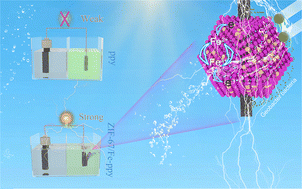
Constructing microbial fuel cells (MFCs) with conductive polypyrrole (PPy) as the anode is a promising strategy for simultaneous wastewater treatment and energy recovery. However, achieving both high loading of electrogenic microorganisms for the generation of electrons and high conductivity for efficient electron transfer is generally difficult for PPy-based anodes, which limits their practical application. We first constructed a bioanode through in situ-synthesized Fe2+-doped zeolitic imidazolate framework-67 (ZIF-67) on PPy (ZIF-67/Fe-PPy). ZIF-67/Fe-PPy increased the conductivity of the bioanode with a charge transfer resistance (Rct) of 36 Ω, lower than that of the PPy anode (75 Ω), which might have been due to the extended conjugated structures formed by pyrrole monomers and the redox cycle of Fe2+–Fe3+. Moreover, the redox cycle of Fe2+–Fe3+ during the treatment of wastewater benefited the enrichment of electrogenic Geobacter species, thereby significantly enhancing the stability and power generation efficiency of the MFC. Besides the high conductivity, the in situ-synthesized ZIF-67/Fe-PPy microporous structure expanded the initial adsorption and biofilm growth surface area. This phenomenon led to a final microbial biomass density of 66.7 mg cm−2 on ZIF-67/Fe-PPy, which was significantly greater than that of the CF electrode (20.9 mg cm−2), and the PPy electrode (40.5 mg cm−2). Consequently, a maximum power density of 2180 mW m−2 was finally observed with 80% of COD removal from food-processing wastewater. This work enhances MFC performance by increasing the conductivity and porosity of a ZIF-67/Fe-PPy-based bioanode, providing a practical strategy for wastewater treatment and electricity recovery.
 Please wait while we load your content...


