


Preparation of AlB12 alloy by vacuum aluminothermic reduction
 *b
*b
Abstract
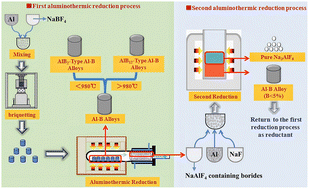
Aluminum dodecaborate (AlB12) alloy is widely utilized in conductor, semiconductor, and aerospace applications due to its unique electronic structure and bonding properties. However, traditional halide salt processes suffer from high raw material costs, low boron recovery, and significant environmental impact. In this study, a low-cost preparation process for AlB12 alloy via the vacuum aluminothermic reduction of sodium tetrafluoroborate (NaBF4) was developed. The reaction mechanisms, phases, and microstructural evolution were investigated using TGA–DSC, XRD, and SEM. The impacts of distillation temperature, distillation time, and the aluminum excess coefficient on the purity of the AlB12 phase were systematically evaluated. The results demonstrate that NaBF4 is easily reduced by aluminum at approximately 400 °C to produce an Al–B alloy and fluoroaluminate by-products. Vacuum distillation effectively separates the fluoroaluminate from the alloy. Under the optimized conditions—a distillation temperature of 1100 °C, a distillation time of 75 min, and an aluminum excess coefficient of −10 wt%—an Al–B alloy containing 98.5 wt% AlB12 was successfully obtained. The prepared alloy exhibited high purity, with a sodium content below 0.03 wt%, and a boron recovery rate of approximately 90% was achieved. This research confirms the feasibility of synthesizing high-purity AlB12 alloy using inexpensive NaBF4 as a raw material. The proposed method is simple, efficient, and environmentally benign, providing a promising path for the full-component utilization of materials in the development of AlB12 alloy.
 Please wait while we load your content...


