


 PLATFORM UPDATE:


A dual-functional nanoplatform for the tracking of formaldehyde and neuroprotection in Parkinson's disease

Abstract
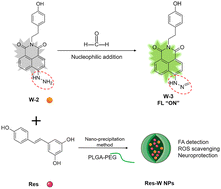
Parkinson's disease (PD), the second most common neurodegenerative disorder, currently affects 6 million people and is expected to reach 10 million by 2030. Mounting evidence indicates that dysregulated dopamine catabolism and mitochondrial dysfunction jointly increase endogenous formaldehyde (FA) levels in the substantia nigra above normal levels. Elevated levels of FA provoke oxidative stress and inflammatory damage, and ultimately result in neuronal apoptosis. Therefore, the detection and intervention of FA levels are of vital importance for the early prevention and treatment of PD. Herein, a theranostic nanoplatform (Res-W NPs) was designed by nano-co-depositing the FA-activatable fluorescent probe W-2 with resveratrol (Res). It exhibited a pronounced fluorescence turn-on response to FA, with a 0.64 µmol L−1 detection limit and high selectivity over potential interferents, which was applied to monitor FA at cellular, tissue, and in vivo levels. In addition, the nanoplatform could relieve rotenone-induced oxidative stress damage and reduce the apoptosis of cells. Therefore, this theranostic nanoplatform, capable of simultaneous FA sensing and neuroprotection, provided a new strategy for the early diagnosis and intervention of PD.
 Please wait while we load your content...


