


Photocatalytic hydrogen evolution and photodegradation performance of Ag and Cu2O co-decorated TiO2 nanotubes

Abstract
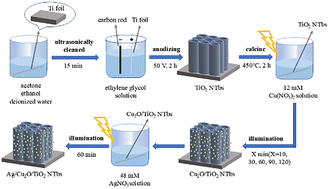
In this study, TiO2 nanotubes were synthesized through anodic oxidation and subsequently coated with Ag and Cu2O nanoparticles via a two-step photochemical deposition process. The photocatalytic performance of the samples was further analyzed by the photocatalytic hydrogen evolution and photodegradation of Rhodamine B. The Ag/Cu2O/TiO2 nanotubes (4.34 at% of Ag and 0.13 at% of Cu) showed optimal photocatalytic performance. The nanocomposite catalyst delivered a photoinduced current density of 0.335 mA cm−2 and achieved 96.7% RhB degradation within 120 minutes of the reaction. The theoretical hydrogen production rate was 5.06 µmol cm−2 h−1, showing a 1.9-fold enhancement over that of pure TiO2. Electrochemical impedance spectroscopy and LSV tests further revealed that the Ag/Cu2O/TiO2 nanotubes exhibited improved charge transfer properties and hydrogen evolution activity. The performance is ascribed to the built-in p–n heterojunction between Cu2O and TiO2 that promotes carrier separation, further amplified by the intense local electromagnetic field generated through the LSPR effect of Ag, which collectively accelerates both photocatalytic degradation and hydrogen production rate over the Ag/Cu2O/TiO2 nanotubes. The methodology developed herein offers a practical guide for constructing novel multifunctional photocatalysts with controlled heterojunctions for diverse applications.
 Please wait while we load your content...


