


Porous WC-Co/N-C composites derived from PW12@ZIF-67 as improved performance anodes for lithium-ion batteries
Abstract
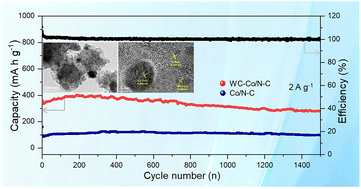
Fast electron and ion transport, along with cycling stability of anode materials, are crucial for achieving high-performance rates in batteries. Here, we successfully fabricated a lithium-ion battery (LIB) anode material WC-Co/N-C consisting of cobalt (Co) and tungsten carbide (WC) with nitrogen-doped carbon by calcination of PW12@ZIF-67 at 700 °C. When evaluated as an anode material for lithium-ion batteries, the WC-Co/N-C electrode demonstrates excellent cycling stability at a high current density of 2 A g−1, maintaining a usable reversible capacity of 283 mA h g−1 over 1500 cycles. In comparison, the reversible capacity of Co/N-C after the same number of cycles is significantly lower at only 99.0 mA h g−1. In addition, the average diffusion coefficient value of WC-Co/N-C is significantly larger than that of Co/N-C during the charging and discharging stages. These results are primarily attributed to the fact that the presence of WC enhances the rate capability and lithiation capacity of materials through multi-electron reaction mechanisms. In addition, the multifunctionality of the MOF-derived carbon layer enables effective synergies by combining high electrical conductivity, cycling stability, and the additional capacity of Co and WC components. Overall, the superior comprehensive performance of WC-Co/N-C (i.e., fast charge transfer, stable cycling) underscores its significant potential for boosting the development of high-rate and long-lasting lithium-ion batteries.
 Please wait while we load your content...


