


Synergistic removal of CO2, H2S and COS from blast furnace gas with a sulfolane-based biphasic absorbent: performance and mechanism
 *a
*a
Abstract
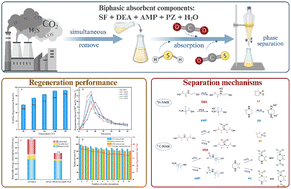
The steel industry faces the dual pressures of carbon reduction and ultra-low emissions throughout production, making integrated CO2 capture and deep desulfurization of blast furnace gas essential. Conventional alcohol amine-based scrubbing agents have limitations such as low absorption capacity, regeneration difficulties, and high corrosivity. To address these issues, a CO2, COS (carbon oxysulfide), and H2S integrated high-efficiency removal biphasic absorbent was developed. The novel biphasic absorbent composed of sulfolane (SF), diethanolamine (DEA), 2-amino-2-methyl-1-propanol (AMP), piperazine (PZ), and H2O, achieved a removal rate of over 90% for CO2, COS, and H2S, under the tested conditions, while exhibiting low rich-phase viscosity and acceptable anti-corrosion performance. Optimal regeneration was attained at 110–120 °C, with regeneration efficiencies exceeding 85% and an estimated energy consumption of approximately 2.51 GJ per ton CO2 (about 33.9% lower than 30 wt% MEA), while exhibiting stable cyclic regeneration. Spectroscopic analyses (FTIR, 1H/13C NMR) indicate that H2S undergoes proton transfer to amine sites to form bisulfide containing quaternary ammonium salts, whereas CO2 and COS react with amine functionalities to yield carbamate and thiocarbamate species that preferentially partition into the aqueous-rich phase; sulfolane remains in the organic phase, enabling liquid–liquid separation. This research provides a promising basis for simultaneous pollution control and CO2 mitigation in the steel sector, aligning ultra-low emission targets with decarbonization efforts and offering potential environmental and economic benefits.
 Please wait while we load your content...


