


Enhanced photochemical therapy of cancer cells using carbon dots integrated with black phosphorus nanosheets
 *a
*a
Abstract
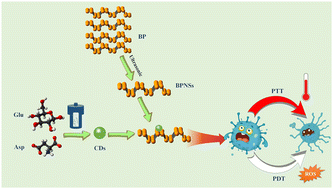
Here, carbon dots exhibiting photothermal properties (PCDs) were synthesized via a hydrothermal process. A composite material, designated as CD-BPNSs, was developed by integrating black phosphorus nanosheets (BPNSs) into a PCD matrix. This integration was designed to augment the photochemical antitumor efficacy of the components, while the PCD coating simultaneously enhanced the stability of the oxygen-sensitive BPNSs. Cytotoxicity assessments demonstrated that CD-BPNSs possess favorable biocompatibility. Upon being exposed to an 808 nm laser (1 W cm−2), CD-BPNSs exhibited significantly enhanced photothermal therapeutic impacts on GL261 cells, surpassing the effects observed with PCDs or BPNSs alone. Additionally, GL261 cells were treated with photodynamic therapy using an incandescent lamp of 6.4 mW cm−2 power density, with the formation of reactive oxygen species (ROS) monitored through labeling with DCFH-DA. The findings indicated that light exposure markedly elevated ROS levels within GL261 cells. Consequently, CD-BPNSs emerge as viable candidates for serving as both photothermal agents in photothermal therapy (PTT) and photosensitizers in photodynamic therapy (PDT) of cancer cells, presenting promising prospects for application in photochemotherapeutic strategies.
 Please wait while we load your content...


