


Temperature effects on size and morphology controlled NiO nanomaterials and their electrocatalytic activity in methanol oxidation reactions

Abstract
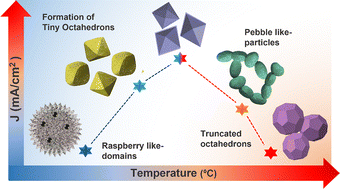
A facile and novel strategy for the morphology controlled synthesis of NiO nanostructures with enhanced electrocatalytic activity for methanol oxidation is demonstrated. By thermally transforming Ni(salen), melamine and vulcan carbon (Vc) composites at varying temperatures, we achieved a systematic evolution of morphologies ranging from raspberry-like Ni nanodots at 300 °C, to highly dispersed octahedral NiO at 500 °C, and ultimately to pebble-like and cubic architectures at elevated temperatures. FTIR confirmed the initial coordination of melamine to Ni centers, while XRD and HRTEM exposed the transition from metallic Ni intermediates to crystalline NiO. FESEM analysis emphasized the critical role of Vc in dispersing NiO and preventing agglomeration. Electrochemical studies established a direct correlation between these structural features and catalytic behavior. The NVM-500 sample composed of octahedral NiO nanocrystals anchored on conductive Vc exhibited the highest ECSA, fastest proton diffusion, and lowest Tafel slope, which indicates enhanced current density and stability for methanol oxidation. The results highlight the importance of controlling precursor coordination chemistry, decomposition dynamics, and facet exposure in designing NiO electrocatalysts. This study provides a mechanistic framework for morphology directed design of transition-metal oxides for DMFC applications.
 Please wait while we load your content...


